Sitting a Coulee Rim in Late Season
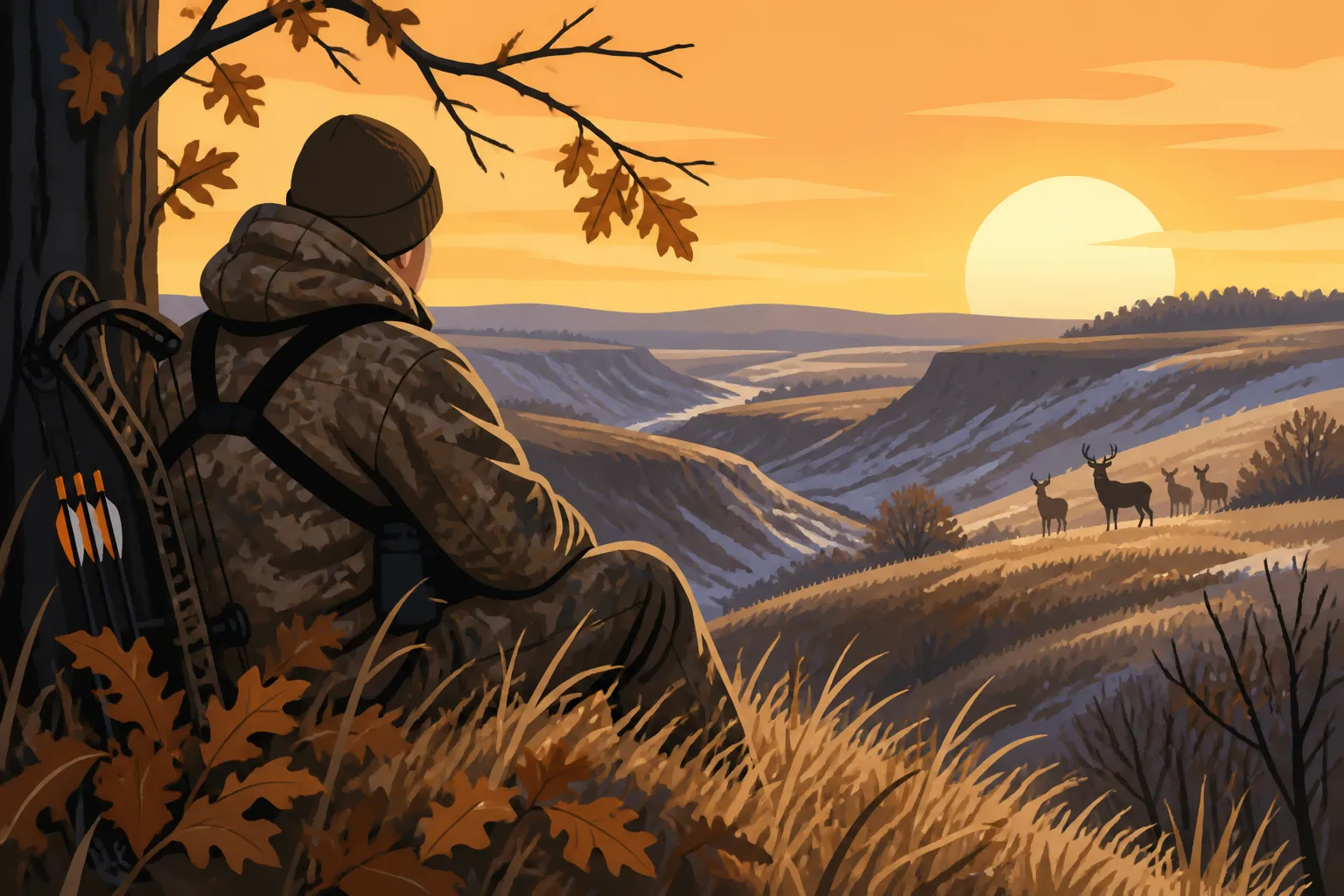
Late season deer hunting in Wisconsin's rugged Driftless Area presents a unique set of challenges, especially when you're perched on a windswept coulee rim. It’s not just the biting cold that wears on you; it’s the fact that deer have seen it all, they’re educated, and their patterns have completely changed. This guide is here to walk you through the nuances of effectively hunting those steep coulees and ridge tops during the late season, helping you stack the odds in your favor when the mercury drops.
Deciphering Late-Season Deer Behavior in Coulees
The deer you're pursuing in late season aren't the same animals that were chasing does in November. Their priorities have shifted dramatically, and understanding these changes is paramount to success. Forget everything you thought you knew about their early season haunts; late season demands a fresh perspective.
The Allure of Food and Thermal Cover
When the land is locked in winter's grip, two things dominate a whitetail's existence: food and warmth. A deer's metabolism is working overtime just to stay alive, and they will gravitate towards areas that offer the most efficient energy intake and protection from the elements.
Often, you'll find deer concentrating on agricultural fields where standing crops, like corn or soybeans, offer both calories and cover. These fields become magnets, drawing deer from miles around, especially after a fresh snowfall reveals their trails. But it’s not just about the fields themselves; it's about the pathways leading to them and the bedding areas nearby. Look for south-facing slopes, which catch more sunlight and are often slightly warmer and have less snow depth, making them ideal bedding spots. These sun-drenched hillsides, often covered in thick cedars or brush, provide crucial thermal cover that helps deer conserve energy. Without this critical combination of accessible food and efficient bedding, deer simply can't survive the harsh Wisconsin winter, so they will absolutely be using these resources. Remember, finding these crucial Late-Season Food Sources for Whitetails is often the lynchpin of a successful late-season hunt.
Adapting to Increased Pressure and Nocturnal Tendencies
By late season, the deer have run the gauntlet of archery, crossbow, and gun seasons. They've heard the shots, smelled the hunters, and adapted to survive. This means increased nocturnal movement, especially in areas with significant hunting pressure. Public land deer, in particular, become ghosts, only moving under the cover of darkness or during severe weather conditions when hunger overrides caution.
When daylight activity does occur, it's often fleeting and concentrated in very specific time windows, usually right at first light or just before dark. The mid-day lull can feel endless, tempting you to abandon your stand, but patience is a virtue. Think about the deer's escape routes and how they might use the topography to avoid detection. They'll often skirt open areas, sticking to thick cover, deep ravines, or the shadowed sides of coulees during their limited daylight forays. Recognizing these patterns and being in your stand before first light and staying until legal shooting hours end is non-negotiable.
Strategic Coulee Rim Stand Selection
Choosing the right spot on a coulee rim isn't just about finding a good view. It’s a chess match with nature, where wind, thermals, and deer movement all play a critical role. One wrong move, and your scent or presence could blow the hunt before it even begins.
Mastering Wind, Thermals, and Scent Control
In the Driftless Area, the topography creates complex air currents that can be incredibly difficult to predict. Thermals, the rising and falling air currents driven by temperature changes, are your biggest challenge and your greatest ally. As the sun rises and warms the earth, air in the coulees starts to rise, carrying your scent up the hillside. In the evening, as the air cools, it sinks down into the coulee bottoms. This means that a stand that's perfect in the morning might be terrible in the afternoon, and vice-versa.
When you're Sitting a Coulee Rim in Late Season, you need to consider this dynamic. For morning hunts, if you're on a rim overlooking a bedding area below, you want a wind that's blowing up the coulee as the thermals rise. For evening hunts, if deer are moving from bedding to a food source in the valley, you want a wind that's blowing down the coulee as the thermals drop. A slight crosswind, combined with these thermal movements, is often your safest bet. Always check the forecast and use a scent eliminator and good quality carbon clothing (if you subscribe to that method) to minimize your human odor. Tools like the GoHunt app can provide detailed wind direction and thermal predictions, giving you a distinct advantage. Understanding Wind and Thermals in a Coulee is truly a game-changer.
Identifying Key Funnels and Travel Corridors
Deer, especially pressured late-season deer, are creatures of efficiency. They will use the path of least resistance or the most concealed route to get from bedding to food and back again. Coulee rims often present natural funnels that can concentrate deer movement. Look for saddles or narrow necks along the ridge line where two coulees nearly meet. These are natural crossing points for deer traveling between drainages.
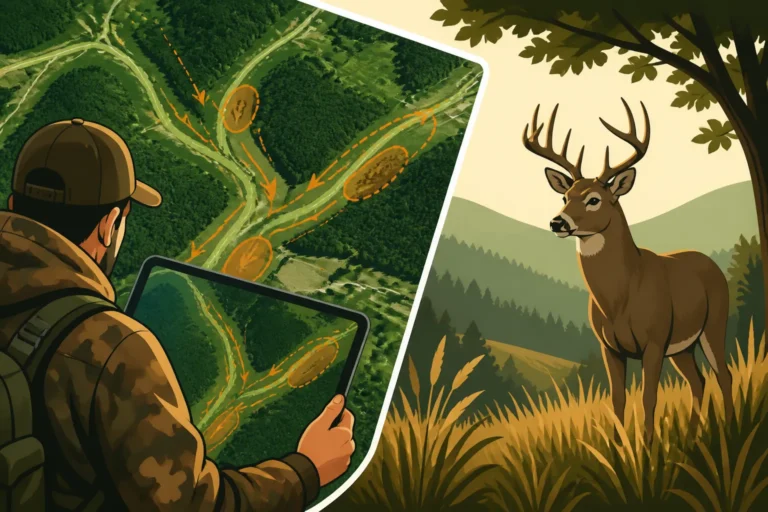
Also, pay close attention to benches—those subtle flat spots that break up a steep hillside. Deer often use these as travel lanes, particularly if they offer cover. Old logging roads or faint game trails that parallel the rim, just below the crest, can also be high-traffic areas. Use aerial maps and topographic features on mapping platforms like GoHunt to scout these areas virtually. Look for changes in vegetation, distinct elevation contours, and proximity to known food sources or bedding areas. These subtle features, often overlooked by less dedicated hunters, are where you'll find consistent late-season deer movement.
Gear and Tactics for Cold Weather Success
Hunting late season in Wisconsin's coulees is as much about endurance as it is about strategy. If you're not comfortable and warm, your focus will wane, and you'll be heading home early, missing out on those critical, fleeting opportunities.
Staying Warm for Extended Sits
The cold in a late-season Wisconsin coulee can be brutal. You need to dress in layers, and I mean serious layers. Start with a good wicking base layer to manage moisture. Add insulating layers like fleece or down, and top it with a windproof, waterproof outer shell. Don't skimp on your extremities. High-quality, insulated boots are non-negotiable, and they should be rated for temperatures well below what you expect. Those Insulated Boots for All-Day Sits are worth every penny. Pack multiple pairs of warm gloves or mittens, and consider heated socks or boot warmers. Hand warmers, placed strategically in your pockets or a muff, are essential.
Remember, once you get cold, it's incredibly hard to warm up in the stand. Bring a thermos of hot coffee, tea, or broth. A small, insulated pad to sit on can make a world of difference in preventing the cold from seeping into your core from the stand seat. This attention to detail in your Cold Weather Sitting Strategy will extend your sit times and keep you focused when that buck finally steps out.
Patience, Precision, and Subtlety
Late-season opportunities are often few and far between. This isn't the chaotic rut where bucks are running wild. You might only get one chance, so patience and precision are paramount. Don't rush a shot. Wait for the deer to offer a clean, ethical angle, even if it means waiting an extra minute in the freezing cold. Every movement you make, every sound you utter, is amplified in the quiet, brittle woods of late season. Move slowly, deliberately, and only when necessary.
As for calling, go minimal. Overly aggressive calling can spook wary deer. A few soft grunts or doe bleats, especially if you see a deer at a distance, might pique their curiosity enough to draw them closer. Don't expect them to come charging in like they might during Hunting the Wisconsin Rut in November. Decoys are generally less effective in bitter cold and can be more hassle than they're worth. Your best bet is to rely on excellent scouting, a well-chosen stand, and unwavering patience.
Tracking and Recovery Challenges in Steep Terrain
The moment of truth arrives, and you've made a good shot. Now comes the hard part: tracking and recovery. In the late season, blood trails can be sparse, especially if there's no snow, or if the snow is crusty. If there's fresh, soft snow, it can make tracking easier, but the cold can quickly clot wounds, reducing the amount of blood. Always mark the spot of the shot, and the last place you saw the deer.
The steep, uneven terrain of coulees adds another layer of complexity. Deer, even fatally wounded ones, can travel surprising distances downhill. You might find yourself on a difficult, dangerous recovery mission into the coulee bottom. Prepare for the worst: bring a good quality headlamp, extra batteries, and a partner if possible. It's not uncommon to need several hours, or even to return the next morning, to find your deer. Remember, Recovering a Deer From a Coulee Bottom can be extremely challenging, so be prepared for a difficult extraction.
Post-Shot Considerations and Extraction
Successfully harvesting a deer in the late season is a triumph, but the work isn't over. Getting that animal out of a steep coulee, especially when frozen or covered in snow, can be one of the most physically demanding parts of the hunt.
Field Dressing and Hauling Out Your Harvest
Once you've located your deer, the next step is field dressing. In cold weather, this is generally less urgent than during early archery season, but it's still important to do it efficiently. The cold helps preserve the meat, which is a blessing. However, working with cold, numb hands can be tough. Make sure you have a sharp knife and possibly a pair of thin gloves to keep your hands from getting too cold. Learn about Field Dressing a Deer in Cold Weather to make the process as smooth as possible.
When it comes to getting the deer out, gravity can be your friend or your worst enemy. If the deer is high on a ridge, and your vehicle access is at the bottom, you can potentially slide or roll it down, but be extremely careful. On the other hand, dragging a deer up a steep coulee wall is brutal work. Consider boning out the deer on site if you have a frame pack, especially if you're alone or if the terrain is particularly nasty. A deer sled can be a lifesaver if there's sufficient snow, allowing you to slide the deer out more easily. However, in rocky, uneven coulees without snow, a sled can be more hindrance than help. Planning your extraction route before you even hunt is a smart move, and something GoHunt can assist with when scouting.
Staying Safe and Legal in Late Season
Late-season hunting often means fewer hunters in the woods, but it also means more challenging conditions. Always let someone know where you're going and when you expect to be back. Carry a fully charged cell phone (though service can be spotty in deep coulees), a first-aid kit, and emergency supplies. The cold can turn a minor injury into a serious problem quickly.
Ensure you're familiar with all the specific regulations for the late season in your chosen Deer Management Unit, as antlerless harvest authorizations and season dates can vary. Check the Wisconsin DNR's website for the most current information regarding Wisconsin Deer Seasons and Zones. Always register your deer legally and promptly after harvest. Adhering to all regulations ensures a safe, successful, and ethical hunt.
| Factor | Morning Thermal Movement | Evening Thermal Movement | Ideal Stand Placement (Scent Control) |
|---|---|---|---|
| Air Flow Direction | Air rises (upslope) | Air sinks (downslope) | |
| Scent Drift | Scent travels up and out of coulee | Scent travels down into coulee | |
| Primary Risk | Bedded deer above you | Deer approaching from below | |
| Strategy for Rim | Hunt with wind pushing scent up into the coulee, away from bedding at bottom. | Hunt with wind pushing scent down into the coulee, away from food source at top. | Crosswind or quartering wind that pushes scent away from expected deer movement. |
| Deer Movement Focus | From food to bedding (up coulee) | From bedding to food (down coulee) |
Disclaimer
Please note that hunting regulations, seasons, and land access can change. Always consult the official Wisconsin Department of Natural Resources (DNR) website and regulations pamphlet for the most current and accurate information before planning any hunting trip. This guide is for informational purposes only and does not replace official state guidelines.