Grouse Hunting Wisconsin Aspen Cover
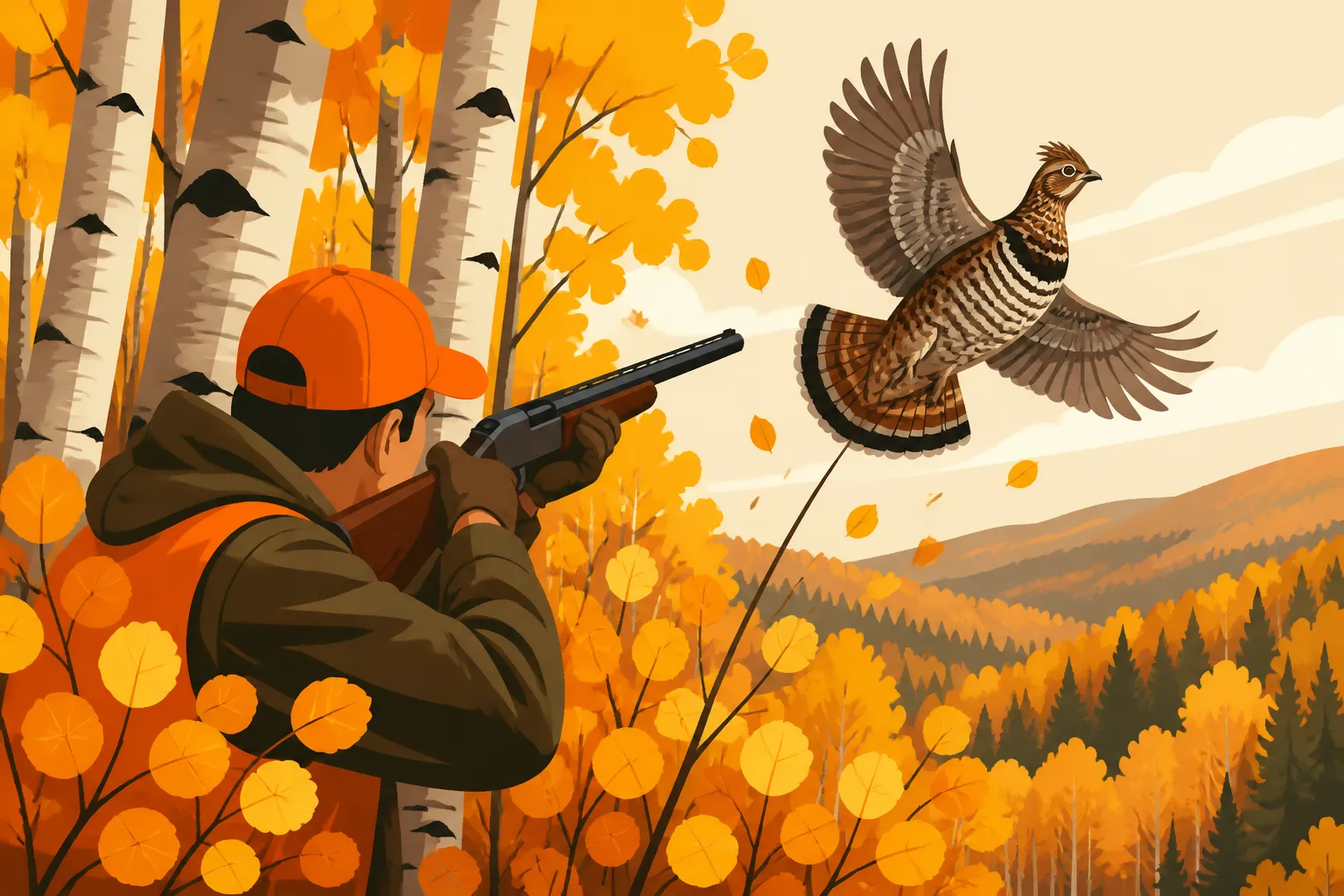
For many of us who cherish the crisp air and vibrant colors of a Wisconsin autumn, the thought of flushing a wild ruffed grouse from its cover is a pure thrill. But let's be honest, finding these elusive birds, especially in the vastness of Wisconsin's woodlands, can feel like searching for a needle in a haystack. This guide is all about cutting through that frustration, focusing on how to effectively hunt ruffed grouse specifically within the critical aspen habitats that dot our beautiful state.
Understanding Wisconsin's Ruffed Grouse Habitat
Ruffed grouse aren't just any woodland birds; they're incredibly specific about where they live. They need a particular kind of habitat, a mosaic of forest types that provide everything they need to survive and thrive. In Wisconsin, when you talk about prime grouse habitat, you're almost always talking about aspen.
The Critical Role of Aspen Forests
Aspen forests are, without a doubt, the bread and butter for ruffed grouse in Wisconsin. It's not just a preference; it's a necessity. These fast-growing trees, particularly trembling aspen and bigtooth aspen, provide a year-round pantry and fortress for grouse. In the fall and winter, the buds of aspen trees become a crucial food source, packed with energy to help birds endure the cold. You'll often hear veteran hunters talk about finding grouse "budding" high in aspen trees on a frigid morning.
Beyond food, aspen provides unbeatable cover. Young, regenerating aspen stands, often growing in dense thickets after a timber harvest or disturbance, create an impenetrable canopy and understory. This dense growth offers protection from aerial predators like hawks and owls, as well as ground predators such as coyotes and bobcats. For grouse, it's the ultimate sanctuary, allowing them to escape danger with an explosive flush. This critical habitat is a huge reason why states like Wisconsin have invested so heavily in Aspen Management and Wisconsin Grouse to ensure these valuable forests continue to support strong grouse populations.
Identifying Prime Aspen Cover for Grouse
Not all aspen stands are created equal in the eyes of a ruffed grouse. When you're looking for birds, you need to be strategic about the age and density of the aspen. The sweet spot for grouse is typically found in younger, vigorously regenerating aspen stands, often those that are anywhere from 5 to 20 years old. These are the areas where the trees are still relatively small but incredibly dense, forming a tangled web that's tough for predators to navigate, yet still allows grouse to move through the undergrowth.
As aspen stands mature, they thin out, and the understory becomes less dense, making them less appealing to grouse. Older stands, say 30 years or more, might still hold a few birds, especially if they have some thick conifer pockets nearby, but they won't be the consistent producers that younger cuts are. A really effective strategy is to look for areas where there's a mix of different age classes of aspen, perhaps older stands providing drumming logs and younger stands offering refuge. Using mapping tools like the Wisconsin DNR's public access maps or even a specialized hunting app like GoHunt can be incredibly helpful for pinpointing clearcuts and timber sales that created these valuable young aspen stands. Look for those distinct blocks of uniform, dense growth on satellite imagery.
Timing Your Grouse Hunts in Aspen
Just like deer, grouse behavior changes throughout the hunting season. Understanding these shifts and knowing when and where to focus your efforts in aspen cover can dramatically improve your success. Wisconsin's grouse season typically opens in mid-September, offering a long window of opportunity, but the tactics you employ should evolve with the calendar.
Early Season Strategies September/October
When the grouse season kicks off in September, and even into early October, Wisconsin's aspen forests are still in full leaf. This means visibility is low, and the cover is at its absolute thickest. Birds during this time might be scattered, enjoying a wide array of food sources like wild berries, clover, and seeds. They haven't yet settled into their strict winter patterns, making them a bit harder to predict.
During these early weeks, focus on walking the edges of aspen stands, especially where they meet other cover types like old logging roads, agricultural fields, or conifer stands. Grouse will often feed in these transitional areas, and the slightly reduced cover might offer you a precious split second to get a shot. Also, keep an eye out for birds "budding" on the lower branches of aspen, even in early fall, particularly on cooler mornings. Hunting slowly and deliberately, pausing frequently, can be highly effective. The sudden silence after your footsteps often makes a nervous bird flush.
Late Season Opportunities November/December
As November rolls around and the leaves finally drop from the aspen trees, the entire game changes. Visibility increases significantly, which can be a huge relief for hunters, but it also means the grouse are feeling more exposed. They tend to tighten up their holding cover, seeking out the densest pockets of young aspen, often intermixed with conifers or thick brush. This is where you'll find them concentrating their efforts on aspen buds as their primary food source.
Late season, especially after a fresh snowfall, can be incredibly productive. Snow not only reveals tracks and droppings, but it also forces birds into the most protective cover, making their locations more predictable. Focus your efforts on those super-dense, impenetrable young aspen thickets, especially those with some evergreens mixed in for thermal cover. These birds will often hold tight, sometimes only flushing when you're almost on top of them. This is also the time when you might encounter grouse burrowing into the snow to stay warm, only to explode from beneath your feet. For those willing to brave the colder temperatures, Wisconsin Grouse Season Dates extend well into winter, offering unique hunting experiences.
Essential Tactics for Hunting Aspen Grouse
Whether you hunt with a seasoned bird dog or prefer the silent approach, having a solid game plan for navigating dense aspen cover is paramount to success. It's less about speed and more about calculated movements and understanding how a grouse will react.
Walking and Flushing Techniques
The most fundamental tactic for grouse hunting in aspen is the walk-and-flush. It sounds simple, but there's an art to it. First, forget about speed. You need to walk slowly, almost like a predator, making frequent stops. These pauses are crucial. Grouse are masters of camouflage and will often let you walk right past them if you maintain a steady pace. When you stop, the sudden silence often makes the bird nervous, causing it to flush. Vary your pace, walk in zig-zag patterns, and work into the wind if possible, as it can help carry your scent away from the birds and improve your dog's ability to scent them.
When hunting with a partner, try to walk parallel to each other, about 20-40 yards apart, depending on the density of the cover. This helps you cover more ground effectively and can funnel birds between you. Always be ready for a flush; these birds are explosive, and shots come quickly in thick cover. Understanding Flushing Grouse Without a Dog often involves using the terrain and natural cover breaks to your advantage, pushing birds towards more open shooting lanes.
Hunting With and Without a Dog
A well-trained bird dog is undoubtedly a grouse hunter's best friend, especially in the thick tangles of Wisconsin's aspen. Breeds like English Setters, Brittanys, German Shorthaired Pointers, and even various spaniels excel at finding and pointing or flushing grouse. A dog's ability to scent birds that you would otherwise walk past is invaluable. They can pinpoint a bird, hold a point, and allow you to move in for a shot, or flush it from cover where you have a better chance. For serious upland hunters, gear like Upland Vests With Water Capacity are essential for long days in the field with a dog.
However, many successful grouse hunters don't use a dog, and that's perfectly fine. If you're hunting without a canine companion, you need to rely even more heavily on strategic walking patterns, keen observation, and those crucial pauses mentioned earlier. Consider a two-person strategy where one hunter acts as the "pusher," walking through the densest cover, while the other walks slightly ahead or to the side, covering potential escape routes where a bird might flush. In exceptionally thick cover, even stomping your feet or crashing through brush can sometimes force a reluctant bird to fly. Remember, persistence pays off, and every flush, even a missed shot, teaches you something about how the birds are using the cover.
Gear and Equipment for Aspen Hunting
Grouse hunting in Wisconsin's aspen cover demands specific gear to maximize your comfort, safety, and success. It's not just about the gun; it's about being prepared for the environment you're stepping into.
Shotgun and Ammunition Choices
When it comes to shotguns for grouse in thick aspen, quick handling and open patterns are key. The action is usually fast and furious, with birds often flushing within 10-25 yards.
- Gauge: Many grouse hunters favor lighter gauges that are quick to shoulder and swing. The 20 gauge is incredibly popular, offering a good balance of shot payload and maneuverability. The 28 gauge is also a fantastic choice, and some even opt for a .410, though it requires precise shooting. While a 12 gauge will certainly do the job, its heavier recoil and larger frame can sometimes feel cumbersome in tight spots.
- Chokes: Forget about tight chokes like full or modified. For close-quarters grouse hunting, you want an open pattern to increase your chances of hitting a fast-flying bird in heavy cover. Improved Cylinder (IC) is a universally favored choke, and many hunters will run an IC in both barrels of a double gun, or an IC/Skeet combination if their gun allows. This ensures a wide spread of shot right off the muzzle. For more insights, look into Choke Choice for Fast Flushes.
- Shot Size: Stick with smaller shot sizes. Number 7.5 or 8 lead shot is ideal for grouse. These smaller pellets create a denser pattern, increasing your chances of connecting with the bird without over-penetrating the small-bodied grouse. You don't need heavy loads; standard field loads are more than sufficient.
Clothing and Navigation Essentials
Hunting in Wisconsin's aspen means dealing with diverse weather and challenging terrain. Your clothing and navigation tools are just as important as your firearm.
- Layering: Wisconsin weather, especially in the fall, can be notoriously fickle. You might start a morning hunt in freezing temperatures, only for it to warm up considerably by midday. The key is layering. Start with a moisture-wicking base layer, add an insulating mid-layer (fleece or wool), and finish with a durable, briar-resistant outer shell. This allows you to shed or add layers as conditions change, preventing overheating or getting chilled.
- Brush Pants/Chaps: This is a non-negotiable item for grouse hunting. Aspen thickets, especially after a timber harvest, are often laced with thorny briars and tough undergrowth that will shred regular pants in a single hunt. Good quality brush pants or briar chaps will protect your legs, allowing you to push through the densest cover comfortably.
- Navigation: In thick aspen, it's incredibly easy to get turned around. A reliable GPS unit, like a Garmin handheld, or a robust mapping app on your smartphone (such as GoHunt or onX Hunt) is absolutely essential. These tools allow you to track your path, mark key areas, and most importantly, find your way back to your vehicle. Always carry a fully charged power bank for your phone, as GPS apps can drain batteries quickly. Remember, Wisconsin law also requires a minimum amount of How Much Blaze Orange Wisconsin Requires to be worn during certain hunting seasons, so make sure your outer layers meet these safety requirements. This blaze orange or fluorescent pink ensures you're visible to other hunters in the dense cover.
Reading the Land: Scouting Aspen Stands
Successful grouse hunting isn't just about showing up on opening day. It's about understanding the landscape, both before and during your hunt. The more you know about the aspen stands you plan to hunt, the higher your chances of finding birds.
Pre-Season Scouting and Map Work
Long before the season opens, you can significantly increase your odds by doing some digital legwork. Start with online resources provided by the Wisconsin DNR. Their public land maps and timber sale reports are invaluable. Look for recent clearcuts or areas designated for timber management in county forests or state lands. These are the future, or current, prime grouse habitats.
Satellite imagery, available on many mapping apps, is your best friend here. Look for those distinct, lighter green patches that indicate young, regenerating forest. These are your aspen clearcuts. Identify access points, potential parking spots, and look for old logging roads or trails that might offer easier walking paths through the otherwise dense cover. Some specialized apps, like GoHunt, offer even more detailed habitat layers and can save you countless hours of unproductive walking. By identifying these areas beforehand, you can focus your limited hunting time on the most promising cover, giving you a real edge.
In-Season Sign and Bird Behavior
Once you're actually in the field, your scouting continues. It's about reading the subtle signs that tell you birds are present and understanding how they're using the aspen habitat.
- Droppings: Look for grouse droppings, which are typically small, dark, and cylindrical, often found on logs, under roosting trees, or near drumming sites. Fresh droppings indicate recent bird activity.
- Dusting Areas: Grouse, like many birds, create small depressions in dry, sandy soil where they dust themselves to help maintain their feathers and remove parasites. Finding these spots means birds are in the vicinity.
- Drumming Logs: Male grouse use specific logs, often in slightly more open areas within the aspen, to perform their drumming display to attract mates. While drumming is most prominent in spring, these logs are often used year after year and indicate a grouse's home territory. Learning to identify a good drumming log can lead you to a resident bird.
- Food Sources: Even in late season, grouse might be feeding on lingering crabapples, hawthorn berries, or even clover if it's still accessible. Understanding the availability of food beyond aspen buds can help you predict where birds might be concentrating.
Remember that grouse behavior is also influenced by external factors like weather and hunting pressure. On cold, windy days, birds might hunker down in the thickest, most sheltered cover. After a lot of hunting pressure, they'll become warier and hold even tighter, or move to more remote, harder-to-reach pockets of aspen. By observing these signs and understanding these behaviors, you'll start to develop a sixth sense for where to find Wisconsin's elusive "thunder chickens." For a deeper dive into their yearly patterns, check out Wisconsin Ruffed Grouse Cycles.
| Aspen Stand Age Class | Grouse Value | Hunting Considerations |
|---|---|---|
| 0-5 Years | Brood Rearing, Extreme Escape Cover | Very dense, almost impenetrable. Difficult to walk through. Birds are usually young, scattered, and often run rather than flush. Best hunted around edges or if you have a very bold dog. |
| 5-15 Years | Prime Grouse Habitat | High density of small stems, excellent food (buds) and cover. This is your target zone for flushes. Birds hold tight. Excellent for both dog and still hunting. |
| 15-25 Years | Good Production, Drumming Habitat | Still good density but starting to thin. Provides good drumming logs. Birds might be slightly easier to see. Great for mixed hunting, especially if conifer pockets are present. |
| 25-40 Years | Declining Habitat Value | Trees are larger, understory thins considerably. Fewer birds will call this home consistently. May find birds if intermixed with younger aspen or other preferred cover. |
| 40+ Years | Minimal Value (unless clearcut) | Over-mature stands offer little in terms of cover or food. Primarily used for travel or if adjacent to younger, more desirable habitat. These areas are prime candidates for future timber sales that will eventually regenerate into new, productive grouse cover. |
Disclaimer
Hunting is a challenging and rewarding activity that carries inherent risks. Always prioritize safety, follow all local, state, and federal regulations, and obtain the necessary licenses and permits. Wildlife populations and hunting regulations can change frequently, so it is the hunter's responsibility to stay informed. The information provided here is for general guidance and educational purposes only.