Upland Vests With Water Capacity
There’s nothing quite like the thrill of a Wisconsin upland hunt – the rustle of leaves underfoot, the anticipation of a flush, and the incredible bond with your bird dog. But let's be real, those long days chasing grouse in aspen cuts or working alder runs for woodcock can leave both you and your canine companion parched and drained. Fumbling for a water bottle or carrying a separate pack just for hydration is a common frustration, which is why this guide is dedicated to exploring upland vests with integrated water capacity, making your time afield more comfortable and productive.
Why Integrated Water Capacity is a Game Changer for Upland Hunters
We've all been there: miles deep into a thick cover, the sun beating down, and suddenly that dry mouth feeling kicks in. It’s not just about comfort; it's about performance and safety, for both you and your invaluable hunting partner. Integrated water capacity in your upland vest can fundamentally transform your experience, turning a potential struggle into a smooth, well-hydrated hunt.
The Frustration of Dehydration in the Field
Imagine you’re out for a long morning, pushing through heavy brush and negotiating tricky terrain in pursuit of ruffed grouse. You’re working up a sweat, your heart is pumping, and your dog is quartering hard, nose to the ground. Suddenly, you feel that familiar dryness in your throat, and you notice your dog's panting has become more labored. Reaching into a tight vest pocket for a small water bottle, or worse, having to shed a backpack to access a hydration bladder, breaks your rhythm and wastes precious hunting time. This kind of dehydration isn't just uncomfortable; it saps your energy, dulls your focus, and can even become a serious health concern in warmer weather, especially for your dog. A dog working hard in the uplands can quickly overheat, and without readily available water, their scenting ability diminishes, their endurance drops, and they risk heatstroke. The feeling of being unprepared for your dog’s thirst, knowing how vital their performance is, can be a real downer.
Traditional methods often fall short. A standard vest might have a small pocket for a bottle, but it’s rarely enough for a full day, let alone for two beings. Backpacks add another layer of gear to manage, often shifting uncomfortably and getting snagged in the thick stuff we love to hunt. These aren’t just minor inconveniences; they can genuinely detract from the enjoyment and effectiveness of your hunt, forcing premature returns to the truck or making you push yourself and your dog beyond safe limits.
Beyond the Water Bottle: The Benefits of a Hydration System
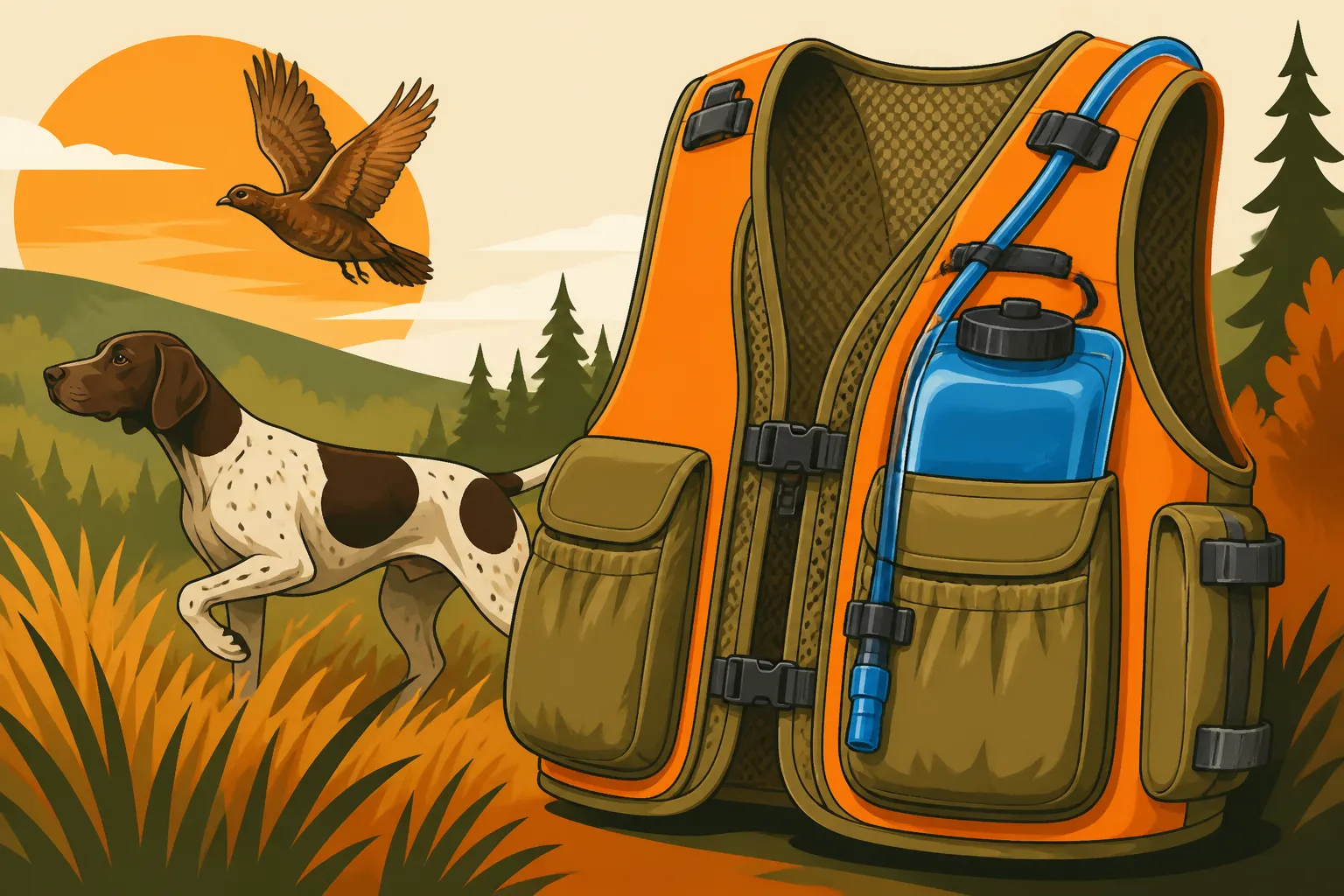
This is where a purpose-built upland vest with integrated water capacity truly shines. Instead of a clunky bottle or separate pack, these vests often feature dedicated sleeves for hydration bladders, complete with a routing system for a drinking tube. This means hands-free access to water whenever you need it. A quick sip from the bite valve attached to your shoulder strap keeps you hydrated without breaking stride, letting you maintain your focus on the cover ahead or your dog's tail. You might be still-hunting along an old logging road, trying to get into position for a flush, and hydration is as easy as lifting the tube.
Beyond convenience, these systems excel in weight distribution. A properly designed vest integrates the water weight across your back and shoulders, often balancing it with the game bag and shell pockets. This thoughtful design prevents the uneven pull or bounce you might experience with a standalone water bottle or a poorly fitted backpack, leading to less fatigue over hours of walking and climbing. This is particularly noticeable when you're covering vast expanses of ground, perhaps exploring different covers for Grouse and Woodcock Hunting in Wisconsin. Most importantly, integrated hydration means immediate access for your dog. With a collapsible bowl stored in an accessory pocket, you can provide water instantly during short breaks, keeping your dog cool, hydrated, and ready to work. This critical support can make the difference between a dog that fades halfway through the morning and one that stays strong and effective, helping you find more birds in challenging environments like a dense Grouse Hunting Wisconsin Aspen Cover.
Key Features to Look for in an Upland Vest with Water Capacity
When you're sifting through the many options available, it can feel a bit overwhelming. But focusing on a few key features related to hydration, comfort, and storage will help you find a vest that truly supports your Wisconsin upland hunting style. Remember, this isn't just about carrying water; it's about seamlessly integrating hydration into your entire hunting system.
Water Reservoir Design and Capacity
The heart of an upland vest with water capacity is, naturally, its water reservoir. You'll primarily encounter two main designs: integrated hydration bladders or dedicated pockets for water bottles. Each has its pros and cons. Hydration bladders, typically ranging from 1 to 3 liters, offer hands-free sipping through a tube and mouth valve. This is fantastic for maintaining a steady pace without breaking to grab a bottle. They distribute weight smoothly across your back and often allow for larger capacities, essential for all-day hunts or when running multiple dogs. Brands like GoHunt often highlight gear that incorporates these efficient hydration solutions, understanding the demands of active hunters. However, bladders can be a bit trickier to fill and clean in the field, and a puncture can mean a soggy day.
Bottle pockets, on the other hand, usually on the sides or rear of the vest, provide easier access for refilling and cleaning individual bottles. They might be a better choice for shorter hunts or if you prefer to carry different liquids (e.g., water for you, electrolytes for your dog). The downside is often less overall capacity, and the weight might feel less balanced than a full bladder. When choosing, consider the typical length of your hunts and your dog's water needs. A full-day hunt in warm weather will demand at least 2-3 liters, especially when you're pushing through cover like Woodcock Hunting Wisconsin Alder Runs. Look for systems that are easy to access even when the vest is fully loaded, and if you opt for a bladder, check for robust construction and a wide opening for cleaning.
Overall Vest Comfort and Fit
A vest, especially one carrying water, shells, and potentially game, needs to be comfortable. A poorly fitting vest quickly becomes a burden, rubbing, sagging, or restricting movement, turning a pleasant hunt into an ordeal. Look for highly adjustable straps, particularly across the shoulders and around the waist, to ensure a snug, balanced fit that keeps the load close to your body. A padded waist belt can transfer a significant portion of the weight from your shoulders to your hips, dramatically increasing comfort during long walks. Shoulder straps should be broad and padded to prevent digging in, especially when the game bag starts to fill.
The materials used are also crucial. Upland hunting often means pushing through nasty briars, thick tangles, and abrasive cover. A durable, briar-resistant fabric on the exterior will protect your investment and prevent snags. However, don't sacrifice breathability for toughness. Strenuous activity in even moderate temperatures can lead to overheating, so look for mesh panels or breathable fabrics in non-load-bearing areas. Most importantly, the vest should allow for a full, unencumbered swing of your shotgun. Test its flexibility and ensure it doesn't bunch up or restrict your arms when mounting your gun. The difference between a comfortable vest and an uncomfortable one is often the difference between a long, successful hunt and an early exit.
Storage for Essential Gear
Beyond hydration, an upland vest must efficiently carry all your other essential gear. Shell pockets are paramount. They need to be easily accessible, ideally with a wide opening that allows you to quickly grab shells without fumbling, even with gloves on. Think about how many shells you typically carry for a day's hunt and ensure the pockets can accommodate them without feeling overstuffed or bulky. Many vests feature divided pockets to separate unused shells from empties, which is a nice touch.
The game bag is another critical component. It should be large enough to comfortably carry a few birds, even a couple of larger pheasants or multiple grouse. A blood-proof lining is a huge plus, as it makes cleaning much easier and prevents blood from soaking into the vest's outer fabric. Consider its placement; a game bag that distributes weight evenly across your lower back is far more comfortable than one that sags or pulls. Finally, don't forget accessory pockets. You'll need space for a whistle, dog treats, a small first-aid kit for both you and your dog, keys, phone, and perhaps a GPS unit or rangefinder. These pockets should be secure, preferably zippered, to prevent losing vital items when you're crashing through cover. A well-designed vest with ample storage for Upland Vests With Water Capacity can truly streamline your hunt, keeping everything you need at your fingertips.
| Hydration System Type | Pros | Cons | Ideal Use Case |
|---|---|---|---|
| Hydration Bladder | Hands-free sipping, large capacity, even weight distribution | Harder to clean/fill in field, potential for punctures, water can warm up | Long, strenuous hunts, warm weather, when running multiple dogs |
| Bottle Pockets | Easy to refill/clean bottles, can carry varied liquids, less risk of full system failure | Less capacity, less balanced weight, requires breaking stride to drink | Shorter hunts, cooler weather, hunters who prefer traditional bottles |
Practical Considerations for Wisconsin Upland Hunters
Hunting in Wisconsin means adapting to a wide range of conditions, from the humid days of early September to the biting cold of late November. Your upland vest, especially its hydration system, needs to be resilient and practical in all these scenarios. Thinking through these practical considerations will ensure your gear performs when you need it most.
Weather and Terrain Adaptability
Wisconsin's upland seasons can throw just about anything at you. Early season hunts for woodcock or sharp-tailed grouse in September can be surprisingly warm and humid. In these conditions, a robust hydration system isn't just nice to have; it's a necessity to prevent overheating for both you and your dog. Look for vests with insulated bladder sleeves to help keep your water cool longer, which makes a huge difference on those scorching days. As the season progresses into October and November, when you’re often focusing on Grouse and Woodcock Hunting in Wisconsin, you might encounter crisp, cold air, or even early snow. Here, the challenge shifts: keeping your water from freezing. A well-insulated bladder sleeve can again help, but for truly cold days, some hunters opt for a bottle system that allows them to store bottles closer to their body heat, or they might simply keep the water tube tucked inside their jacket.
Beyond temperature, Wisconsin's diverse terrain demands adaptability. From the dense aspens and alders of the Northwoods where you're Grouse Hunting Wisconsin Aspen Cover, to the thorny hawthorns and swamp edges in other regions, your vest needs to be snag-resistant. A streamlined profile, with minimal external straps or dangling components, will prevent it from catching on every branch. The material's durability is paramount for pushing through these challenging environments. Brands like GoHunt understand these varied conditions, often designing gear with rugged fabrics and practical features to stand up to the rigors of Wisconsin upland hunting, whether you're navigating heavy deadfalls or wading through tall grasses in a marsh edge.
Maintenance and Durability
Let's face it, hunting gear gets dirty. Especially an upland vest that's seen its share of brush, mud, and game blood. Proper maintenance is key to extending the life of your vest and, more importantly, ensuring hygiene, particularly with your hydration system. Hydration bladders, while incredibly convenient, require diligent cleaning to prevent mold and bacteria buildup. This means thoroughly rinsing and drying them after every use, often requiring a special brush kit or cleaning tablets. Neglecting this step can lead to unpleasant tastes and potentially unhealthy water.
Game bags, too, need attention. A blood-proof lining is fantastic for keeping the mess contained, but it still needs to be wiped down or hosed out after each hunt to prevent odors and bacterial growth. Many modern vests feature game bags that can be easily pulled inside out or even completely detached for washing. Beyond cleaning, regularly inspect your vest for wear and tear. Check stitching, especially on load-bearing seams and around pockets, for any signs of fraying. Test zippers to ensure they're still functioning smoothly. Investing in a high-quality vest means it's built to last through many seasons of hard use, but even the best gear benefits from a little TLC. A well-maintained vest is a reliable vest, ready for whatever the next Wisconsin hunt throws at it.
Integrating Your Dog's Hydration
Your bird dog is often the heart of the upland hunt, and their health and performance are directly tied to proper hydration. An upland vest with integrated water capacity is just half the equation; you also need a way to get that water to your dog. A collapsible dog bowl is an absolute must-have accessory. These bowls fold flat and can be tucked into almost any vest pocket, deploying quickly when it’s time for a water break. Take frequent, short breaks, especially in warmer weather or during intense work, to offer your dog water. Don't wait until they're visibly panting excessively or lagging.
Training your dog to drink on command during these breaks can be incredibly efficient. Some dogs are so driven they might ignore water offers, so gentle encouragement or a short "water break" command can be helpful. Beyond providing water, constantly monitor your dog for signs of dehydration or overheating: excessive panting, bright red gums, thick saliva, or a loss of enthusiasm. Having water readily available in your vest allows you to respond immediately, potentially preventing a serious health crisis and extending your dog's effective hunting time. Whether you're working a field edge for pheasants or Running Beagles on Wisconsin Snowshoe Hares, ensuring your dog stays hydrated is one of the most important things you can do for them.
Choosing the Right Upland Vest for Your Wisconsin Adventures
Selecting the perfect upland vest with water capacity is a personal decision, reflecting your hunting style, the species you pursue, and the conditions you face. It’s about more than just checking off features; it’s about finding a reliable partner that enhances every moment afield.
Matching Capacity to Hunt Style
Your choice in hydration capacity should directly correlate with how and where you hunt. Are you typically out for a quick, two-hour morning hunt, or do you commit to all-day treks across vast public land, maybe in search of Wisconsin Small Game and Furbearer Seasons? For shorter excursions, a vest with bottle pockets or a smaller 1-liter bladder might suffice. However, for those ambitious all-day hunts, especially in early season warmth, a vest accommodating a 2-3 liter bladder is almost essential. Consider if you typically hunt with one dog or multiple. Each dog will require significant water, easily doubling or tripling your hydration needs.
Think about your hunting partners, too. Are you solo, carrying all the necessities yourself, or do you hunt with a group where responsibilities might be shared? If you're often hunting alone, a larger capacity system gives you independence and peace of mind. Conversely, if you hunt with a friend who also carries water, you might be able to scale back your individual capacity slightly. The key is to overestimate rather than underestimate, as it's always better to have too much water than not enough when you're miles from the truck.
Budgeting for Quality
Like most hunting gear, upland vests with water capacity come in a wide range of prices. It can be tempting to opt for the cheapest option, but when it comes to a piece of gear that directly impacts your comfort, safety, and performance, investing in quality often pays dividends. A well-constructed vest from reputable brands will use more durable fabrics, stronger stitching, and better hardware (zippers, buckles), meaning it will stand up to years of abuse in the briars and thick cover that Wisconsin dishes out. This durability translates to a longer lifespan, fewer mid-season failures, and ultimately, better value over time.
While we can't talk specific prices, it's safe to say that a quality vest with an integrated hydration system is an investment. Consider it an essential tool, much like your shotgun or your boots. GoHunt often provides in-depth reviews and comparisons of gear, allowing hunters to research options that balance features, durability, and cost. It's not just about the upfront cost, but the peace of mind knowing your gear won't fail you when you're deep in the Northwoods, far from any resupply. Saving a few dollars upfront might mean replacing a flimsy vest sooner, or worse, dealing with uncomfortable or unsafe conditions in the field.
Trying Before You Buy
While online research and reading reviews are incredibly helpful, nothing beats actually trying on a vest before you commit. Head to a local sporting goods store if possible, or order a few options to try at home with the intention of returning what doesn't fit. When you try it on, wear the layers you typically hunt in – whether it's a thin base layer for early season or a heavy jacket for late season. Load it up with some actual weight: put a full water bladder in, fill the shell pockets with a box of shells, and even put a few pounds in the game bag to simulate carrying birds.
Walk around, bend over, simulate swinging your shotgun, and pay close attention to how it feels. Does it chafe anywhere? Does it restrict your movement? Are the pockets easily accessible? Does the weight feel balanced and comfortable? A vest might look great online, but if it doesn't fit your body and your hunting movements, it's not the right vest for you. Pay attention to how the hydration tube routes and if the bite valve is easy to reach. This hands-on evaluation is crucial, as even the slightest discomfort can become excruciating after miles of walking. A little effort here will save you a lot of discomfort and frustration out in the Wisconsin uplands.
Disclaimer
This article is for general informational purposes only and does not constitute professional advice. Laws, prices and regulations vary by location and change over time. Consult a qualified professional for guidance on your specific situation.