Setting Up on an Aspen Cut Edge
Hunting a freshly cut aspen edge in Wisconsin can feel like trying to solve a dynamic puzzle. One year, it’s a thick, impenetrable wall, and the next, it's a deer magnet, but figuring out where to actually sit to intercept those wary whitetails can be incredibly frustrating. This guide is all about cutting through that confusion, helping you understand how deer use these edges and precisely how to set up for success, ensuring your time in the woods is productive, not just a guessing game.
Understanding the Dynamics of Aspen Cuts and Deer Behavior
Aspen cuts, often called clearcuts, are some of the most overlooked, yet incredibly productive, habitats for deer in Wisconsin. They might look like a messy tangle of downed trees and new growth to the untrained eye, but for whitetails, they represent a buffet and a fortress. The key to hunting them effectively from the edge is first understanding why deer are drawn to them and how they use them throughout the day and the season.
Why Deer Are Drawn to Aspen Cuts
Deer absolutely thrive in aspen cuts, especially in the Northern Forest and parts of the Central Forest zones of Wisconsin. It's a matter of survival and opportunity. As soon as the timber crew moves out, sunlight floods the forest floor, triggering an explosion of new growth. This isn't just a few weeds; it's a smorgasbord of highly palatable browse like young aspen shoots, willow, maple, and countless other forbs and grasses. These tender, nutrient-rich plants are gold for deer, providing essential nutrition, especially during the fall when they're bulking up for winter and bucks are recovering from the rigors of the rut.
Beyond food, these cuts provide unparalleled security cover. Even a few years after a harvest, the regenerating aspens, combined with other brush and downed timber, create an incredibly dense environment. Deer can disappear into these thickets and feel completely safe from predators, including hunters. This dense cover offers thermal protection too, shielding them from biting winds and heavy snow in colder months. It’s a perfect blend of food and refuge, making them prime bedding areas, especially for mature bucks who prize security above all else.
Timing Your Hunt Around Cut Cycles
Not all aspen cuts are created equal, and their attractiveness to deer changes dramatically with age. A very fresh cut, just a year or two old, will be dense but might still be a bit too open and chaotic for prime bedding, though deer will certainly browse the new growth. The sweet spot often lies in cuts that are anywhere from 3 to 15 years old. In this phase, the new aspen regeneration is waist to head-high, creating that perfect balance of browse and impenetrable cover.
As a cut matures beyond 15-20 years, the aspen trees start to grow taller, and the understory thins out as light becomes restricted again. While deer will still use these areas, especially along the edges or where there are natural openings, they lose some of their appeal as primary bedding or feeding zones compared to younger cuts. Therefore, when you're scouting, paying attention to the age of the cut is paramount. I'll often use mapping tools like GoHunt to look at satellite imagery over time or cross-reference timber harvest maps from the Wisconsin DNR or local county forest departments to get a sense of when areas were last cut. This foresight can help you target the most productive cuts for your hunt, whether you’re planning for early season archery or Hunting the Wisconsin Rut in November.
Distinguishing Fresh Cuts from Older Growth
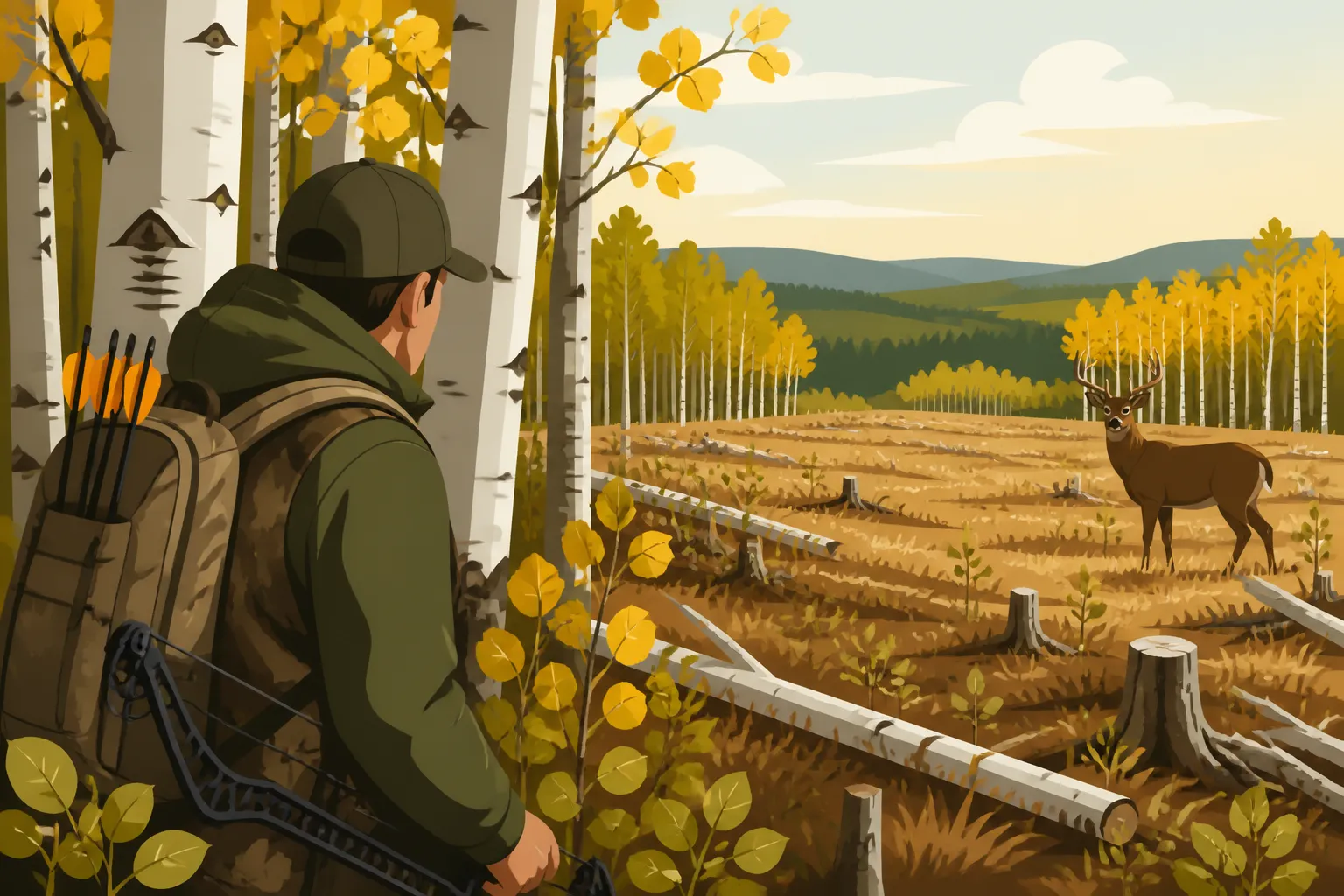
Visually, distinguishing a fresh aspen cut from older growth or even a mixed hardwood stand is usually pretty straightforward. Fresh cuts will have a noticeable jumble of logging slash—tops of trees, broken branches, and stumps—and you'll see a carpet of vibrant green new growth closer to the ground. The trees, if they're there, will be saplings, often only a few feet to a few yards tall.
Older cuts, while still thick, will have taller, denser stands of young aspen and birch, usually 10-20 feet high, forming a near-impenetrable wall of vertical stems. The ground will be less cluttered with slash, as it's had more time to decompose. These older, thicker cuts are typically where those elusive bucks choose to bed during the day. Understanding this progression is vital because it dictates where deer will be spending their time within the cut. For instance, a very young cut might be a feeding hotspot in the evenings, while a 10-year-old cut might be where deer bed during daylight hours, making its edges perfect for intercepting movement.
Reading the Edge: What to Look For
The "edge" of an aspen cut isn't just a straight line; it's a dynamic transition zone where different types of habitat meet, and it’s where deer often move between cover and other feeding or travel areas. Properly reading this edge is crucial for placing your stand or blind where you'll have the best chance of encountering deer.
Identifying Bedding Areas Within or Near the Cut
Deer, especially mature bucks, often bed just inside the thickest part of an aspen cut, seeking thermal cover and visual obscurity. Look for areas where the density of regeneration is highest, forming an almost solid wall of saplings. These are often small rises or slight humps within the cut that offer a vantage point without compromising cover. While you might not want to disturb the core of these bedding areas by walking through them, identifying their general location helps you understand where deer are coming from. The deer often skirt these super-dense areas, using slightly less thick paths to enter or exit. These subtle trails, sometimes only detectable by the bending of saplings or matted grass, become prime locations to focus on.
Sometimes, the primary bedding area might be adjacent to the cut in a cedar swamp or a dense pine plantation. In such cases, the aspen cut acts as a secondary feeding and staging area. Deer will transition from their primary bedding to the aspen cut to browse, and then perhaps to a more open food source. Understanding this larger landscape, possibly by using tools like GoHunt's satellite imagery to see different habitat types, helps connect the dots on deer movement. Consider scouting similar areas, like when Where Northern Forest Bucks Bed, to see how different cover types interact.
Locating Travel Corridors Along the Edge
Deer are creatures of habit and efficiency. They're not going to push through the absolute thickest part of an aspen cut if there's an easier path. Along the edges, look for natural "lanes" or openings within the new growth, often created by old logging roads, drainage ditches, or even just slightly less dense patches. These serve as travel corridors. A slight dip in the terrain or a small break in the brush might funnel deer movement directly past your setup.
You’ll want to scout for fresh tracks, droppings, and even rubs or scrapes if it's during the pre-rut or rut. These signs, concentrated along a particular section of the edge, are clear indicators of preferred travel routes. Deer will often parallel the edge of the cut, especially if the adjoining timber provides a slightly more open but still secure travel path. These transitional zones, where the young aspen meets mature hardwoods or pines, are goldmines for intercepts. Pay attention to how deer move through different densities of cover; they'll seek out the path of least resistance while still feeling secure.
Spotting Feeding Sign Along the Periphery
While deer will bed deep within the cut, they also spend a considerable amount of time feeding on the succulent new growth. Along the periphery of the cut, especially in areas that receive more sunlight or where browse is particularly abundant, you'll often find concentrated feeding sign. This includes clipped branches (browsing), fresh droppings, and sometimes even rubbed saplings if a buck is asserting his dominance.
The key is to look for fresh sign. If you find an area with heavy browsing on young aspen, willow, or maple, coupled with fresh deer droppings, you've likely found a preferred feeding location. These areas might be where deer stage before heading out to a more open food plot or where they spend the last hour of daylight before bedding down. Setting up on an edge overlooking such a feeding area can be incredibly effective, especially in the late afternoon. This is where understanding Late-Season Food Sources for Whitetails also comes into play, as cuts can remain a consistent food source even after agricultural fields are harvested.
Optimal Stand or Blind Placement Strategies
Once you’ve read the cut and identified potential travel routes and feeding zones, the next critical step is choosing where and how to set up your hunting location. This involves a careful consideration of visibility, shot opportunities, and concealment.
Treestands Versus Ground Blinds on Aspen Cut Edges
The choice between a treestand and a ground blind often comes down to the specific conditions of the cut edge and your personal hunting style.
- Treestands: In many Wisconsin aspen cuts, mature trees suitable for treestands might be scarce directly on the edge, especially if the cut was extensive. However, if the cut borders an older stand of hardwoods or pines, a treestand can offer a significant advantage. It provides an elevated vantage point, allowing you to see over some of the initial regeneration and spot deer approaching or moving within the cut. Being elevated also helps with scent control, getting your scent stream above a deer's nose. You'll need to focus on securing your stand in a sturdy, well-camouflaged tree that offers good shooting lanes into the likely travel corridors. Remember the importance of Treestand Setups in Wisconsin Hardwoods and ensuring you're secure and hidden.
- Ground Blinds: Ground blinds can be exceptionally effective on aspen cut edges, particularly if suitable trees for treestands are lacking or if the new growth is simply too tall to see over from a reasonable elevation. A ground blind allows you to brush in effectively, blending into the surrounding tangle of new growth and downed timber. This provides excellent concealment and keeps your movement hidden. They are also less prone to wind sway and can be more comfortable for all-day sits, especially crucial during cold Wisconsin mornings. When thinking about Using a Ground Blind on Wisconsin Public Land, make sure it's placed carefully to offer shooting lanes without exposing you.
| Feature | Treestand on Aspen Cut Edge | Ground Blind on Aspen Cut Edge |
|---|---|---|
| Visibility | Elevated view over initial regeneration, broader sightlines. | Limited to ground level, requires careful lane clearing. |
| Concealment | Blends into tree canopy, scent dispersal aided by height. | Can be heavily brushed in, excellent for hiding movement. |
| Scent Control | Generally better as scent rises, but still impacted by thermals. | More challenging at ground level, requires strict wind awareness. |
| Setup Flexibility | Dependent on suitable trees, can be limited. | Highly flexible, can be set up almost anywhere with cover. |
| Shot Angles | Downward angle, often better for vitals. | Horizontal shots, requires precise placement for clear view. |
| Comfort | Can be less comfortable for long sits, exposed to elements. | Often more comfortable, enclosed from wind/snow, good for cold. |
| Public Land Rules | Check specific rules for permanent vs. portable stands. | Often allowed, but check for restrictions on leaving overnight. |
Considering Shot Angles and Visibility
No matter your choice of setup, optimizing your shot angles and visibility is paramount. When hunting an edge, deer might appear unexpectedly from the dense cover. If using a treestand, you want to be positioned to shoot into the cut along a trail, not just parallel to it. This often means angling your stand slightly inward. Practice shooting from an elevated position to understand how drastically the shot angle changes closer to the tree.
For a ground blind, you need to meticulously clear shooting lanes before the hunt. This means removing small branches, weeds, and anything that might deflect an arrow or bullet. You want clear, unobstructed views of the likely travel paths. Visualize how a deer will approach and where you expect to take a shot. Remember, deer will often hold just inside the thick cover, peeking out before committing, so having a clear lane to that initial peek-out zone is vital. Ensure your blind is positioned so that the sun won't be in your eyes during peak activity times (sunrise/sunset), potentially silhouetting you or making it hard to see a deer.
Using Natural Terrain Features for Concealment
Aspen cuts, especially in rolling terrain or areas with old logging roads, often offer natural concealment opportunities. A subtle dip in the terrain or a slight rise can be perfect for tucking in a ground blind, breaking up its outline. Likewise, a large rock outcropping or a cluster of blowdowns can provide a natural backdrop for your stand or blind, helping you disappear into the landscape.
Don't underestimate the power of using existing vegetation. Instead of placing your stand in a lone tree, look for a cluster of pines or hardwoods that can help break up your silhouette. For ground blinds, utilize existing brush and fallen logs to blend it in. The more your setup looks like a natural part of the environment, the less likely deer are to detect it. This is where diligent pre-season Scouting Wisconsin Public Land Before Season really pays off, allowing you to find these prime, hidden spots. You might even find an area that hasn't seen much hunter traffic, a true gem if you're Finding Ground Others Walk Past.
Wind, Thermals, and Entry/Exit Routes
Understanding and respecting wind and thermals, along with planning meticulous entry and exit routes, are arguably the most critical factors for consistent success when hunting aspen cut edges. Deer, particularly mature bucks, rely heavily on their sense of smell for survival, and a single whiff of human scent will send them packing.
The Importance of Wind Direction for an Edge Setup
The wind is your biggest ally or your worst enemy. When setting up on an aspen cut edge, you absolutely must position yourself so that your scent is blowing away from where you expect deer to approach or bed. This often means setting up on the downwind side of the cut, or at least crosswind to the most active travel paths.
For instance, if deer are typically moving from the dense interior of the cut out into an adjacent field, and the prevailing wind is from the west, you might want to set up on the north or south edge of that transition zone. This allows the wind to carry your scent parallel to the deer's movement or away from their core area. Never, ever set up with the wind blowing directly into the cut if you suspect deer are bedding there, or down a primary travel corridor. Your hunt will be over before it even begins. Always check the forecast and have multiple setup options for varying wind directions. This proactive planning is a cornerstone of successful hunting, especially when considering Hunting Pressure on Wisconsin Public Land and how easily deer can become educated.
Thermal Currents in Varied Topography
While steady wind is important, in areas with varied topography (even subtle hills and hollows along a cut edge), thermal currents can play a significant role, especially during the first and last hours of daylight. Thermals are air currents created by temperature changes. In the morning, as the sun rises and warms the earth, air typically moves uphill. In the evening, as the sun sets and the air cools, air moves downhill.
If your aspen cut is on a hillside or borders a ravine, these thermals will dictate how your scent travels during those crucial low-light periods. For example, if you're on a morning hunt above an aspen cut that extends down into a small draw, your scent might actually be carried downhill into the cut by cooling night air until the sun hits, at which point it could switch and carry your scent uphill. Ignoring thermals can easily bust a hunt. Always try to position yourself so that any potential thermal shift still carries your scent away from the deer. Understanding Wind and Thermals in a Coulee offers great insights that can be adapted to the nuances of an aspen edge.
Planning Quiet, Undetected Access and Egress
Getting to and from your setup without disturbing deer is as important as the setup itself. Aspen cuts, by their nature, are loud places to walk, especially with crunchy leaves, downed branches, and thick underbrush. Your access and egress routes need to be carefully thought out to minimize noise and scent disturbance.
- Access: Try to use existing trails, logging roads, or even old two-track paths to get as close as possible to your stand or blind without entering the deer's immediate comfort zone. Walk into the wind when approaching your setup if possible, especially during morning hunts when deer are often moving back towards bedding. Use natural features like ridges or ditches to hide your approach. In the pre-dawn darkness, move slowly and deliberately, pausing frequently to listen. Use GoHunt's mapping features to mark potential routes that keep you out of known bedding or feeding areas.
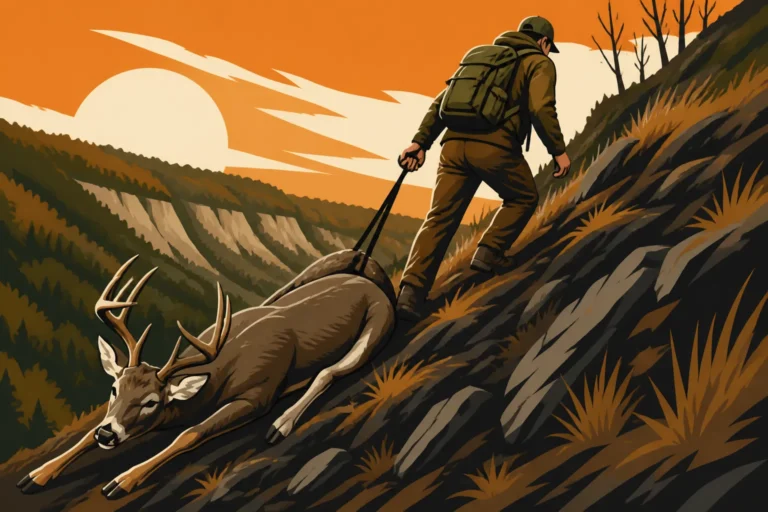
- Egress: After the hunt, especially if you've been unsuccessful, your departure is just as important. If you can, wait until well after legal shooting hours to let deer clear out of the area naturally. If you must leave earlier, try to use a route that takes you away from bedding areas. The goal is to leave the area as undisturbed as possible for future hunts. If you're fortunate enough to harvest a deer, having a clear, low-impact route for extraction is also essential. This might involve Dragging a Deer Up a Coulee Wall or simply navigating tough terrain, so scouting this ahead of time is invaluable.
By understanding the allure of aspen cuts, carefully reading the signs on their edges, strategically placing your stand or blind, and meticulously managing your scent and movement, you’ll significantly increase your odds of success in these often-overlooked Wisconsin whitetail havens.
Disclaimer
Hunting is an activity with inherent risks. Always prioritize safety, understand and follow all Wisconsin DNR regulations, and hunt ethically. This guide provides general information and recommendations, but conditions and regulations can change. Always verify current rules and best practices before heading into the field.