Treestands and Saddles on Public Land
Anyone who has spent time chasing whitetails or even gobblers on Wisconsin's sprawling public lands knows the frustration of finding that perfect pinch point or feeding area, only to realize getting an effective, undetected shot means getting off the ground. But figuring out the best way to elevate yourself, whether with a traditional treestand or a newer saddle system, while adhering to regulations and respecting shared spaces, can feel like a puzzle. This guide aims to unravel that puzzle, offering a comprehensive look at how to effectively and ethically utilize treestands and saddles when hunting Wisconsin's public acreage.
The Public Land Challenge: Mobility and Stealth
Hunting public land in Wisconsin is a unique beast. You're not dealing with private, manicured parcels where deer might be patterned to a specific feeder or food plot. Instead, you're navigating vast tracts often shared with other hunters, hikers, and even other outdoor enthusiasts. This dynamic completely changes the game when it comes to elevated hunting, making mobility and stealth your two most crucial allies.
Why Mobility Matters on Public Ground
Imagine spending hours scouting a beautiful stretch of county forest, only to realize the buck sign you found yesterday has suddenly shifted. Or perhaps a cold front just blew through, pushing deer into a dense cedar swamp you hadn't anticipated. If your hunting setup isn't mobile, you're stuck. On public land, deer patterns can change by the hour due to pressure, weather, or shifting food sources. Being able to pack up and move quickly, quietly, and efficiently to a new location is paramount. This adaptability is where mobile treestands and, especially, hunting saddles truly shine. They allow you to react to fresh sign, avoid other hunters, or chase a new wind direction without being anchored to a single, static location. It's about being a responsive hunter, not a reactive one.
The Need for Stealthy Setup and Take-Down
Public land, by its very nature, means you're often sharing the woods. Slamming truck doors, clanking metal stands, or struggling loudly with climbing sticks before dawn can blow your hunt—and potentially someone else's. The key to successful elevated hunting on public land isn't just about getting up a tree; it's about doing so without making a spectacle of yourself. A stealthy setup minimizes disturbance to the deer you're pursuing and respects the experience of other hunters nearby. This means choosing gear that's quiet to deploy, practicing your setup routine until it's second nature, and being mindful of your movements every step of the way, especially in the dark pre-dawn hours. A quiet entry and exit can make all the difference between seeing that big buck and only seeing his tracks after he's long gone.
Understanding Treestands for Public Land
Treestands have been a staple for elevated hunting for decades, offering hunters a significant advantage by getting them above a deer's primary line of sight and scent cone. However, not all treestands are created equal, especially when you're thinking about the unique demands of Wisconsin's public hunting grounds. Portability, ease of setup, and quiet operation become even more critical than on private land.
Hang-On Stands: Versatility and Installation
Hang-on stands, also known as fixed-position stands, are incredibly popular among public land hunters for their versatility. They consist of a platform and a seat that you manually hang on a tree, typically using straps or chains, after ascending with climbing sticks, sections of a ladder, or an aider. Their main advantage is how lightweight and compact many models are, making them feasible for packing deep into public land. Once installed, they offer a solid, stable platform for long sits.
The challenge with hang-ons on public land often comes down to the installation process. Each time you hunt a new tree, you're attaching sticks and then the stand, which can be time-consuming and generate noise if you're not practiced. Many public land regulations, which we'll delve into later, prohibit leaving stands overnight or damaging trees, meaning you often need to set up and take down your hang-on during each hunt. This makes having a streamlined system—lightweight sticks, easy-to-use straps, and a stand that packs down well—absolutely essential. Brands like Lone Wolf, Millennium, and X-Stand offer excellent lightweight options that are favored by mobile hunters.
Climbing Stands: The Self-Sufficient Option
Climbing stands are the quintessential choice for hunters who prefer a truly self-sufficient, all-in-one system. They're designed to be carried in two pieces (a seat section and a foot platform section) and allow the hunter to "walk" up the tree by alternating movements between the two sections. The major draw here is that you don't need separate climbing aids; the stand itself gets you to hunting height. This makes them incredibly efficient for hunters who want to move to a new tree every hunt or even shift locations mid-day.
However, climbing stands come with their own set of considerations. They are limited to trees that are relatively straight, limbless, and within a certain diameter range. Finding such a tree on public land, especially in heavily hunted areas, can sometimes be a challenge. They also tend to be heavier and bulkier than many hang-on stand setups, which can be a factor if you're hiking significant distances into remote areas. Mastering the climbing technique takes practice, and doing so quietly in the dark is a skill developed over time.
Portable Ladders and Tripods: Niche Solutions
While less common for deep public land excursions due to their weight and bulk, portable ladder stands and tripod stands do have their place in certain public land scenarios, particularly for short walks or specific open country. Portable ladder stands typically consist of multiple sections that connect to form a ladder, leaning against a tree, with a platform and seat at the top. They offer exceptional stability and comfort, often with larger platforms and enclosed seats, making them ideal for all-day sits. Their primary limitation on public land is the sheer effort required to transport and set them up, usually needing two people and a relatively close access point.
Tripod stands, which are freestanding structures, eliminate the need for a suitable tree altogether. This can be a game-changer in open country like old fields, fencerows, or wetland edges where mature, climbable trees are scarce. However, their size, weight, and the visibility of a freestanding structure mean they are generally only practical for very short distances from vehicle access or areas with minimal hunting pressure. They are also subject to specific public land regulations regarding placement and removal. While perhaps not your primary tool for navigating the vastness of the Chequamegon-Nicolet National Forest Hunting, they can be surprisingly effective in localized spots in certain Wisconsin State Wildlife Areas that have more open terrain.
| Treestand Type | Key Advantages for Public Land | Key Disadvantages for Public Land | Ideal Public Land Scenario |
|---|---|---|---|
| Hang-On | Lightweight, compact, versatile for various trees, relatively stable. | Requires separate climbing sticks, setup can be noisy/time-consuming, often requires daily setup/takedown. | Deep woods, varied timber, mobile hunting following fresh sign. |
| Climbing | All-in-one unit, no separate sticks needed, efficient for frequent moves. | Limited to straight, limbless trees, can be bulky/heavy for long hikes, technique takes practice. | Areas with consistent, climbable trees, chasing a specific buck's pattern. |
| Ladder | Very stable, comfortable for long sits, easy access. | Heavy, bulky, requires two people for setup, limited mobility. | Short walks from road, specific field edges, low-pressure areas. |
| Tripod | No tree needed, great for open country, comfortable. | Very heavy/bulky, highly visible, limited mobility, usually needs vehicle access. | Open fields, marsh edges, where trees are scarce. |
Embracing the Saddle Hunting Revolution
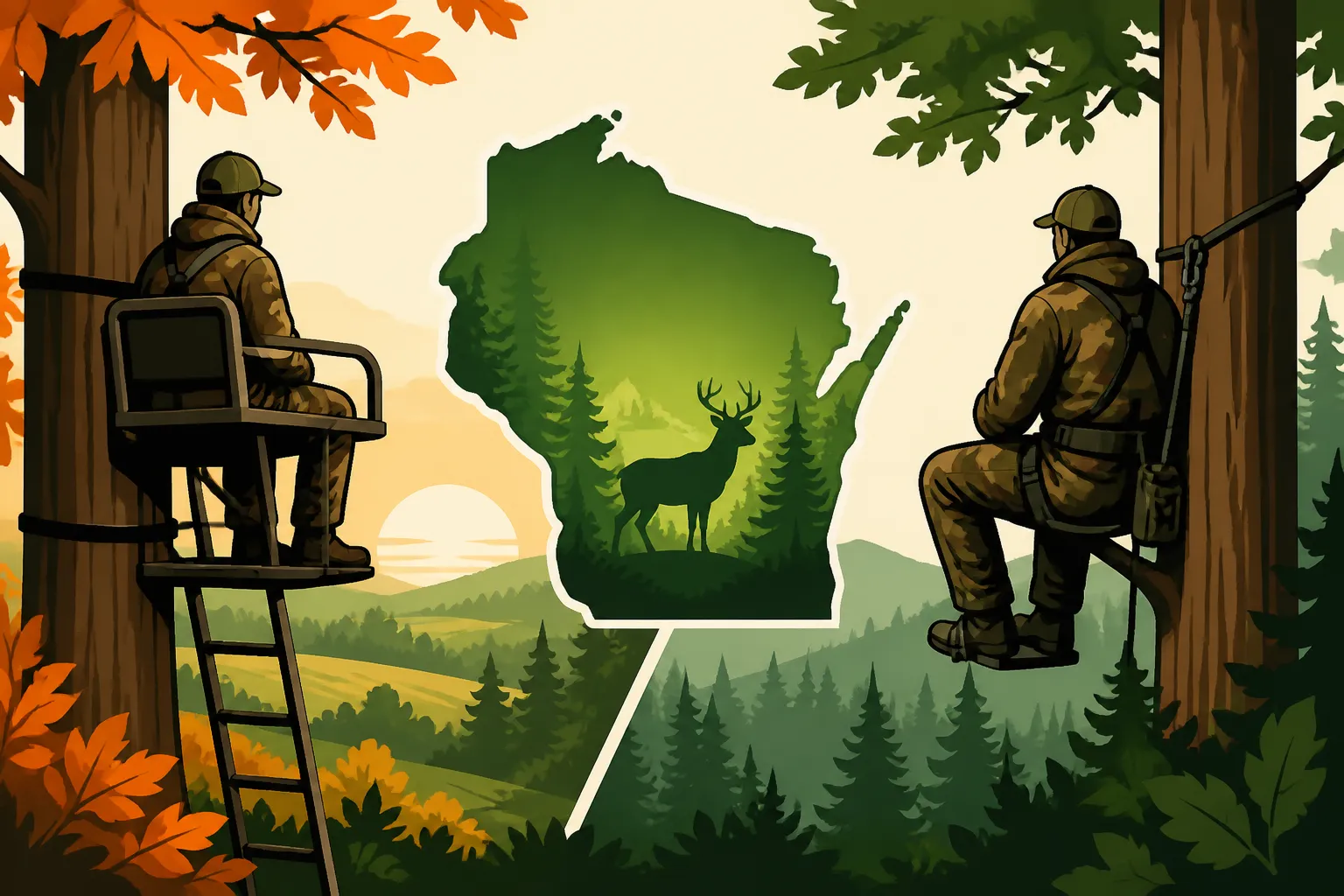
Saddle hunting has rapidly gained popularity among serious public land hunters, and for good reason. It offers an unparalleled combination of mobility, concealment, and adaptability that traditional treestands often can't match. It's not just a different piece of gear; it's an entirely different philosophy of elevated hunting.
The Core Advantages of a Hunting Saddle
The primary advantage of a hunting saddle is its incredible portability and minimalist design. Unlike a treestand, which can be bulky and awkward, a saddle typically packs down into a small, lightweight pouch around your waist. This makes hiking miles into remote public land, traversing rugged terrain like the Driftless Area Deer Hunting in Wisconsin, or navigating thick brush significantly easier and quieter. The reduced weight on your back means less fatigue and more energy for hunting.
Beyond portability, saddles offer superior concealment. Instead of sitting on a defined platform, you're literally strapped to the tree, often leaning into it or sitting suspended, which breaks up your human outline much more effectively. You can silently pivot 360 degrees around the tree for a shot, using the tree itself as natural cover, making you less detectable to wary deer. This flexibility is a game-changer when a buck circles downwind or comes from an unexpected direction. You're part of the tree, not just attached to it.
Essential Saddle System Components
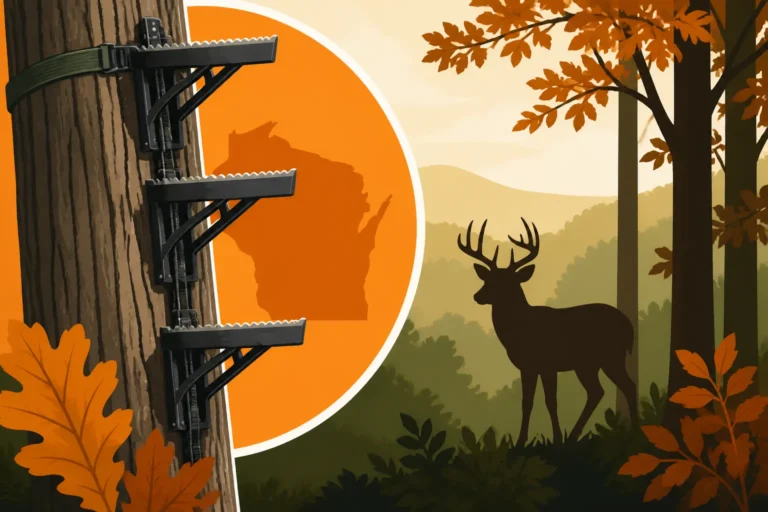
A complete saddle hunting system involves a few key components beyond the saddle itself. First, you'll need climbing sticks or a platform (like a "tree-stepping" method) to ascend the tree. Just like with hang-on stands, lightweight, packable climbing sticks are crucial. Brands like Tethrd, Hawk, and XOP offer popular options. Next, you'll use a lineman's belt for safety and stability during the climb, allowing you to use both hands to place sticks. Once at hunting height, a "tether" strap wraps around the tree and connects to your saddle, providing the suspension and primary safety connection. Finally, a small "platform" or "ring of steps" provides a stable place for your feet to rest and pivot from while hunting, alleviating leg fatigue. GoHunt is a great resource for researching and comparing these components, helping you build a system that perfectly suits your style and the terrain you'll encounter on Wisconsin's public grounds. Each piece is designed for minimal weight and maximum efficiency.
The Learning Curve and Practice for Saddle Hunters
While saddle hunting offers significant advantages, it does come with a learning curve. It's a different way to hunt, and it feels different from sitting in a traditional stand. The initial discomfort or awkwardness can deter some hunters, but with practice, it becomes second nature. It's crucial to spend time in your saddle before the season, practicing your climb, setting up your tether, and taking mock shots from various angles.
You'll need to learn how to adjust your weight distribution, find comfortable resting positions, and manage your gear while suspended. Many saddle hunters find that once they get past the initial learning phase, the comfort and freedom of movement surpass traditional stands. Don't expect to be an expert on your first hunt; consistent practice in your backyard or a local woodlot will build confidence and ensure you're efficient and safe when it counts during the season. This dedicated practice is key to truly leveraging the mobility and concealment benefits of saddle hunting.
Wisconsin Public Land Regulations and Ethics
Hunting on public land comes with a shared responsibility. Beyond just following the law, there's an unwritten code of ethics that ensures everyone can enjoy these precious resources. When it comes to treestands and saddles, Wisconsin has specific regulations you absolutely must know, and understanding public land designations is equally vital.
DNR Rules for Attaching to Trees and Leaving Gear
The Wisconsin Department of Natural Resources (DNR) has clear rules regarding the use of treestands and other hunting equipment on state-owned lands, including state forests, wildlife areas, and natural areas. Generally, on DNR-managed lands, no person may construct, place, or occupy a permanent elevated device. This means you cannot build a permanent treestand or attach anything to a tree in a way that causes damage (e.g., screwing in steps, using lag bolts, nailing platforms). The rule is in place to protect the trees and ensure the land remains usable for all.
Furthermore, on most state-owned lands, portable stands may not be left in place overnight, except for specific periods (usually the gun deer season) or in designated areas. This means if you're bowhunting a Bowhunting Wisconsin's Long Archery Season on a state forest, you're likely packing your stand or saddle in and out every single hunt. This regulation is a primary driver behind the shift toward ultra-light, mobile setups. Always check the specific regulations for the property you plan to hunt, as rules can vary slightly between different types of public land. Ignorance of the law is never an excuse, and violations can result in hefty fines.
Understanding Different Public Land Designations
Wisconsin offers a rich tapestry of public hunting opportunities, but the rules can subtly change depending on the land manager.
- DNR-Managed Lands (State Forests, Wildlife Areas, Natural Areas): These are typically the most restrictive regarding permanent attachments and overnight storage, as described above. Always assume you need to pack your stand/saddle in and out daily unless explicitly stated otherwise for a specific season or area.
- County Forests: Many counties across Wisconsin manage vast tracts of forest land that are open to public hunting. While often mirroring state rules, some county forests might have slightly different regulations regarding treestand placement or leaving stands for short durations. It's crucial to check with the specific county's forestry department or website for their rules. Often, these lands offer some of the most remote and challenging hunting experiences. Marinette County Public Hunting Ground is a good example of extensive county forest lands.
- National Forests (Chequamegon-Nicolet): The federal lands of the Chequamegon-Nicolet National Forest generally follow federal regulations, which often align with state rules regarding minimal impact. While usually allowing portable stands, there are often restrictions on damaging trees or leaving equipment unattended for extended periods.
- Managed Forest Law (MFL) Lands (Open): Some private landowners enroll their timberland in the MFL program, and choose to open parts of it to public recreation, including hunting. These parcels are typically marked as "MFL Open" and often adhere to state regulations for public land regarding treestands, but always confirm any specific landowner requirements if posted. It's a fantastic program that offers additional access, but it's important to treat these lands with the utmost respect.
Ethical Considerations for Shared Hunting Spaces
Beyond the legalities, there's an ethical component to using treestands and saddles on public land.
- Respecting Other Hunters: If you arrive at your spot and find someone already set up, even if it's "your spot," respect their presence and find another area. Similarly, if you encounter another hunter's stand (where legal to leave it), do not disturb it. We're all out there to enjoy the woods.
- Leave No Trace: Pack out everything you pack in. This includes zip ties, flagging tape, and any garbage. Minimize damage to trees. A saddle system generally has a lower impact on a tree than some traditional stands, which is a definite plus for public land ethics.
- Noise and Disturbance: Be mindful of the noise you make, especially during entry and exit. Your hunt shouldn't spoil someone else's.
- Transparency: If you use trail cameras (where legal) or leave a stand (where legal), ensure they are clearly marked with your name and contact information. This also helps with lost and found situations.
Adhering to both the letter of the law and the spirit of ethical hunting ensures that public lands remain enjoyable for everyone, for generations to come. Using tools like GoHunt's mapping features can help you identify public land boundaries and specific designations, ensuring you're always aware of the rules governing your chosen hunting area.
Strategic Placement and Setup for Success
You can have the lightest, quietest stand or saddle, but if you put it in the wrong tree or approach it incorrectly, your hunt is likely doomed. Strategic placement and a well-executed setup are just as important as the gear itself, especially on pressured Wisconsin public land.
Pre-Season Scouting and Tree Selection
The homework starts long before opening day. Scouting Wisconsin Public Land Before Season is absolutely critical. Use aerial photos, topographic maps, and tools like the onX Layers for Wisconsin Land Status to identify potential pinch points, funnels, bedding areas, and food sources. Look for subtle terrain features like benches, ridge saddles, and creek crossings that naturally funnel deer.
Once you have a general area identified, put boots on the ground. Look for fresh sign: rubs, scrapes, tracks, and droppings. This tells you where deer are right now. When selecting a tree for your stand or saddle, consider several factors:
- Cover: Does the tree offer good concealment, both for your approach and while you're hunting? Look for trees with a dense canopy or surrounded by other vertical cover.
- Shot Opportunities: Can you take a shot in your desired shooting lanes without branches obstructing your view? Trim only what's absolutely necessary, and do it discretely.
- Wind Direction: Crucially, your tree choice must allow you to hunt with a favorable wind. There's no point in a perfect setup if your scent is blowing directly into a bedding area.
- Climbability/Stability: For stands, ensure the tree is strong enough and free of dead branches that could break. For climbers, check for straightness and lack of limbs. For saddles, nearly any tree can work, but a tree with some branches for natural concealment is often preferred.
Entry and Exit Routes: The Key to Undetected Hunts
This is where many public land hunts fall apart. No matter how good your stand or saddle setup is, if your approach spooks deer, you might as well have stayed home. Your entry and exit routes should be meticulously planned to be as quiet and scent-free as possible.
- Walk the Path in Advance: Scout your routes during daylight. Look for noisy obstacles like crunchy leaves, downed branches, or gravel. Identify quiet corridors.
- Use Natural Features: Utilize ditches, creek beds, ridge lines, or logging roads to mask your movement. These can also help you manage your scent.
- Go Against the Wind: Always try to approach and exit with the wind in your face or at least quartering to you, away from bedding and feeding areas.
- Timing: Get to your stand early, well before first light, to allow the woods to settle. When exiting, wait until legal shooting hours are over and ensure no deer are in your path. Sometimes, waiting an extra 30 minutes in the stand can prevent busting deer on your way out.
- Distance from Known Deer Sign: Don't walk directly through the area you expect deer to be. Circle wide, and use the terrain to your advantage. Understanding How Far to Walk From a Logging Road can give you an edge in finding undisturbed areas.
Adapting to Different Wisconsin Habitats
Wisconsin's diverse landscape means your setup needs to be adaptable.
- Driftless Area Coulees and Ridge Tops: The steep, broken terrain of the Hunting Wisconsin Coulees and Ridge Tops offers fantastic opportunities. Here, deer often travel along benches, down ridge lines, or through saddles. Your stand or saddle needs to be positioned to intercept these movements, often just off the top or bottom of a ridge, catching deer moving between food and bedding. Wind and thermals are paramount here; morning thermals typically rise, evening thermals fall.
- Northern Forest Cedar Swamps: These dense, often impenetrable areas serve as crucial bedding and thermal cover, especially in winter. Setting up on the edge of a cedar swamp, or identifying subtle travel corridors within it, can be highly effective. A mobile saddle or hang-on allows you to silently penetrate these edges without disturbing the thick cover. Still-Hunting Wisconsin Cedar Swamps also often involves very close-range shots, so ensuring clear shooting lanes is vital.
- Hardwood Timber: In expansive hardwood forests, deer movement can be less predictable. Look for subtle funnels created by changes in timber type, old logging roads, or small drainages. Focusing on acorn crops in the fall is a classic tactic, and a mobile setup allows you to move with the ever-changing mast production. Treestand Setups in Wisconsin Hardwoods often benefit from higher setups to see through the canopy.
- Farmland Edges: In agricultural areas, deer often use fencerows, woodlots, and creek bottoms as travel corridors between bedding cover and expansive crop fields. A mobile setup can be quickly deployed on a field edge, allowing you to react to fresh tracks or observed movement patterns. Remember, Hunting a Standing Cornfield in Farm Country requires careful attention to wind and often involves setting up precisely where deer are entering or exiting.
By thinking strategically about your location and access, you dramatically increase your chances of success on challenging public land.
Prioritizing Safety in the Elevated Pursuit
No matter how experienced you are, hunting from an elevated position carries inherent risks. On public land, where you might be far from immediate help, prioritizing safety isn't just a recommendation—it's an absolute necessity. Your life literally depends on it.
Full-Body Harnesses and Lifelines: Non-Negotiable Safety
Let's be unequivocally clear: if you are hunting from a treestand or saddle, a full-body harness is not optional. It is a mandatory piece of equipment that could save your life in the event of a fall. Never climb without it, and never be disconnected from the tree once you leave the ground.
A full-body harness is designed to distribute the forces of a fall across your entire body, preventing serious injury from impact or from hanging suspended incorrectly. But the harness itself is only one part of the equation. You also need a lifeline for hang-on and climbing stands. A lifeline is a rope that extends from the base of the tree up to your stand, with a Prusik knot or similar sliding attachment that you clip your harness into before you start climbing. This allows you to be connected to the tree from the moment your feet leave the ground until they touch down again. For saddle hunters, the lineman's belt keeps you secure during the climb, and the primary tether keeps you attached while hunting. Safety Harnesses and Lifelines are truly the most important piece of gear you own for elevated hunting. Inspect them regularly for wear and tear, and replace them if there are any doubts about their integrity.
Practicing with Your System Before the Season
Just like you wouldn't head out with a new rifle without zeroing it in, you shouldn't head into the woods with a new treestand or saddle system without extensive practice.
- Backyard Drills: Set up your stand or saddle in your backyard or a safe, private woodlot. Practice climbing, attaching your harness, setting your platform, and positioning yourself for a shot. Do this repeatedly, in daylight and then in the dark, to simulate real hunting conditions.
- Simulate Hunting Scenarios: Practice donning all your hunting clothes, including your heavy outer layers, to ensure they don't impede your movement or snag on your gear. Work on quiet operation, identifying where your gear might clank or scrape.
- Emergency Procedures: Understand how to recover from a fall if you're suspended by your harness. Most harnesses come with a suspension relief strap, which is crucial for standing in to relieve pressure on your legs and prevent suspension trauma. Know how to use it.
- Comfort and Adjustments: Use practice time to adjust your saddle, platform, or stand seat for optimal comfort. A comfortable hunter is a more patient and effective hunter.
Weather Considerations and Emergency Preparedness
Wisconsin weather can change on a dime, especially during the fall. Hunting from an elevated position in adverse conditions adds another layer of risk.
- Wind: High winds can cause trees to sway, making stand hunting uncomfortable and potentially dangerous. Strong gusts can throw off your balance and affect shot placement. If winds are excessively high, it might be safer to hunt from a ground blind or still-hunt. Using a Ground Blind on Wisconsin Public Land can be a great alternative in windy conditions.
- Ice and Snow: Slippery conditions on climbing sticks, stand platforms, or tree bark are a major hazard. Exercise extreme caution, and consider postponing hunts in freezing rain or heavy snow.
- Cold: Layering is essential to stay warm during long sits. Shivering and discomfort can lead to poor decision-making or decreased awareness. Always carry extra layers, even if the forecast seems mild.
- Emergency Kit: Always carry a small emergency kit in your pack. This should include a charged cell phone (though service can be spotty in remote areas), a whistle, a headlamp, a basic first-aid kit, a knife, and fire-starting materials. Let someone know exactly where you are hunting and when you expect to return. Being prepared for the unexpected is part of being a responsible hunter on Wisconsin's public lands.
Disclaimer
This article is for general informational purposes only and does not constitute professional advice. Laws, prices and regulations vary by location and change over time. Consult a qualified professional for guidance on your specific situation.