How Far to Walk From a Logging Road
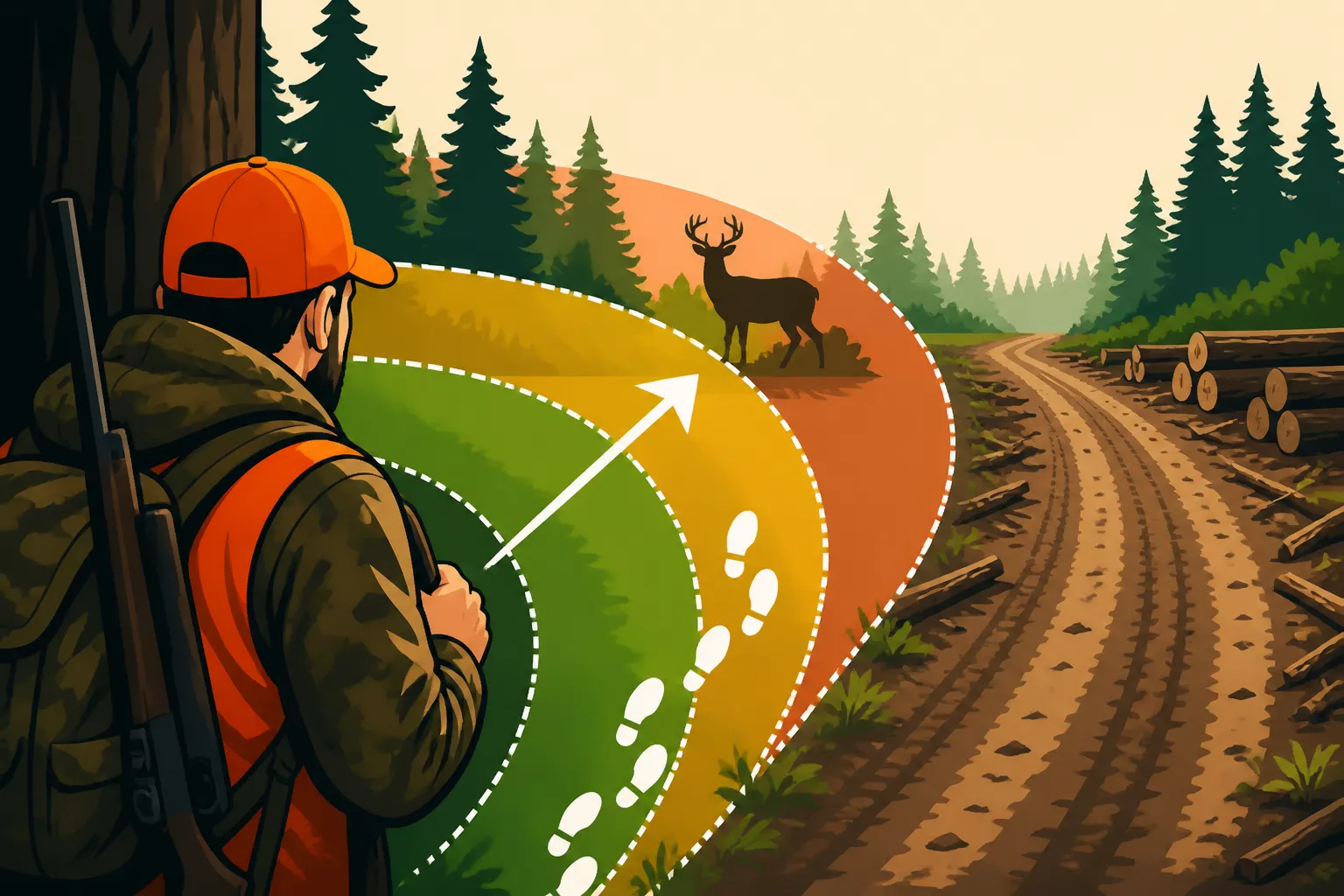
It’s a classic public land dilemma in Wisconsin: you pull up to a logging road, see fresh tire tracks or boot prints, and wonder if you’re already too late. How far do you really need to walk to escape the crowds and find undisturbed deer? This guide dives deep into that very question, helping you strategize your approach to these access points and find success.
The Double-Edged Sword of Logging Roads: Access Versus Pressure
Logging roads are a fact of life in much of Wisconsin's public hunting land, especially in the northern forests and county lands. They offer a convenience that hunters both love and loathe. On one hand, they provide unparalleled access, allowing you to get deeper into vast tracts of timber than you ever could without them. Imagine trying to navigate miles of dense forest or swamp without a cleared path – it would be a slow, arduous bushwhack. Logging roads open up areas that would otherwise be impenetrable for many.
However, this very convenience is also their biggest drawback: hunting pressure. Everyone else sees those logging roads, too. The easier it is to get somewhere, the more people tend to go there. This means the areas immediately adjacent to these roads often get hunted hard, especially during the opening days of various seasons. Deer and other game animals are incredibly adept at sensing this pressure, and they quickly adjust their patterns to avoid it. If you're consistently hunting within sight or sound of a logging road, you're likely seeing the same pressured, wary animals that everyone else is.
Accessibility and Ease of Travel
Let's start with the upside. Logging roads, whether they're well-maintained gravel roads or simply overgrown two-tracks, provide a lifeline into the Wisconsin wilderness. They're excellent for quickly covering ground, hauling gear, or even dragging out a deer after a successful hunt. For hunters with physical limitations, they can be the only way to access certain areas, allowing more people to enjoy the outdoors. During Wisconsin's Nine-Day Gun Deer Season, these roads become vital arteries, allowing hunters to penetrate deep into areas that might otherwise remain untouched.
Think about the gear you can carry when you don't have to bushwhack a mile to your spot. More warm layers for a Cold Weather Sitting Strategy, a bigger thermos, perhaps a more comfortable seat. This added comfort can mean staying on stand longer, which often translates to more opportunities. They also make scouting easier, giving you a starting point for exploring new country before the season. You can drive or walk these roads to quickly cover vast distances, looking for fresh sign or potential stand locations.
The Inherent Challenge of Human Pressure
Now for the flip side. The instant you step out of your vehicle onto a logging road, you're likely in an area already influenced by human activity. Other vehicles, conversations, footsteps, and even the scent of human presence can push game deeper into cover or alter their natural movement patterns. During popular seasons, the amount of traffic on some of these roads can be astonishing.
This pressure isn't just about other hunters. It's about how the game reacts. Whitetail deer, especially mature bucks, become nocturnal or simply vanish from areas that see consistent human intrusion. They learn quickly where it's safe and where it's not. The deer you do see near logging roads early in the morning or late in the evening are often transient, moving quickly, or are less mature animals that haven't learned the full lesson of hunter avoidance yet. If you want to find those older, wiser deer, you often have to go where others are unwilling or unable to go. This often means putting some distance between yourself and that easy access point.
Beyond the Mile Marker: Understanding Effective Walking Distance
The question "How far do I need to walk?" isn't one with a simple, universal answer. There's no magic number like "a half-mile" or "a mile" that guarantees success. The effective walking distance depends heavily on a multitude of factors, and understanding these is far more important than adhering to an arbitrary measurement. What works in the flat, open hardwoods of some parts of central Wisconsin might be completely different from what's needed in the rugged Driftless Area Deer Hunting in Wisconsin or the dense cedar swamps of the north.
The core idea is to get beyond the casual hunter's comfort zone, but also to recognize that "comfort zone" isn't a fixed radius. It's shaped by effort, terrain, and perceived reward.
Dispelling the Universal Distance Myth
Many hunters cling to the idea that if they just walk a mile, they'll be in "unpressured" territory. While walking a mile is certainly better than 100 yards, it's not a guaranteed escape. In areas with easy walking or relatively flat ground, a mile might still be well within the range of other determined hunters, especially during prime hunting times. Conversely, in incredibly rugged or dense terrain, even a quarter-mile might be enough to leave 90% of the other hunters behind.
The myth of a fixed distance can also lead to frustration. You might walk a mile, expecting pristine wilderness, only to find old stands or boot prints. The goal isn't just to cover distance; it's to cover smart distance, using the landscape to your advantage to create natural barriers between you and the general hunting population. A strategic 300-yard walk through a beaver flowage or up a super steep ridge might be more effective than a mile-long stroll down a gentle, open ridge.
Reading the Sign for Local Pressure
Instead of focusing on a number, focus on reading the signs of pressure. As you walk away from the logging road, what do you see? Fresh boot prints everywhere? Orange flagging marking trails? Old pop cans and trash (a definite sign of heavy traffic)? If these signs persist, you haven't gone far enough. Look for areas where the ground is undisturbed, where deer trails seem less worn or less defined by human travel.
Pay attention to deer behavior itself. Are the deer jumpy, bolting at the slightest sound? Are they primarily moving at night, captured on trail cameras? These are all indicators of pressure. Scouting Wisconsin Public Land Before Season is crucial for understanding baseline deer behavior before hunters even arrive. If you can distinguish between natural deer activity and pressure-induced evasive maneuvers, you'll know if you've walked far enough. Sometimes, what looks like great habitat might be a ghost town during daylight hours precisely because it's too accessible.
Reading the Landscape: Factors That Dictate Your Walk
The true answer to "how far" lies in your ability to interpret the specific piece of public land you're hunting. Wisconsin offers an incredible diversity of landscapes, from the flat pinelands of the central region to the rugged coulees of the southwest and the dense, swampy forests of the north. Each of these environments dictates a different approach to walking distance and strategy.
Terrain and Topography as Natural Barriers
This is perhaps the biggest factor. Steep hills, deep ravines, impassable swamps, dense river bottoms – these are your allies. Most hunters take the path of least resistance. If you can identify and traverse terrain that others avoid, you immediately gain an advantage.
- Driftless Area Coulees: In the Driftless Area Deer Hunting in Wisconsin, a logging road might run along a ridge top or at the bottom of a valley. Most hunters will stick to these easier lines of travel. If you're willing to Entry Routes on Steep Driftless Ground and climb or descend steep, broken terrain, you can find pockets of deer that rarely see human disturbance. Often, a 400-yard hike straight up or down a steep coulee wall can put you in far better position than a mile-long walk along a gentle slope. Look for benches or small pockets of hardwoods tucked away on the side of a steep hill.
- Northern Forests: Here, you might find logging roads cutting through vast tracts of pine, spruce, or mixed hardwoods. But tucked between these are often beaver flows, bogs, and dense cedar swamps. While a road might offer easy access for a mile, crossing a 200-yard wide, knee-deep swamp might deter 95% of hunters. If you're geared up for it (good waterproof boots, maybe even waders), that relatively short, difficult walk can be your ticket to untouched territory. Still-Hunting Wisconsin Cedar Swamps requires patience and specialized clothing, but can be incredibly rewarding.
Cover Type and Density
The type and density of vegetation also play a huge role. Thick brush, dense young timber, or heavy thermal cover naturally discourages easy walking and creates visual barriers.
- Thick Regenerating Stands: Clear-cuts or areas of young aspen regeneration can be incredibly thick. Walking through them is noisy and slow. Many hunters will skirt these areas or only venture into the edges. If you're willing to push through the tangle, you might find deer bedding in these seemingly impenetrable areas, especially where they intersect with mature timber or a water source. Hunting Wisconsin Clearcuts and Aspen Cuts can be productive, but requires a different approach than open woods.
- Cedar Swamps and Conifer Blocks: Deer absolutely love thick conifer cover for thermal protection and security. These areas can be very difficult to navigate silently. If a logging road borders such a block, most hunters will only hunt the edge. But if you carefully pick your way into the interior, particularly on a cold, blustery day, you might find deer bedded tight. The density of cover here means that even 100-200 yards can feel like a mile and effectively screen you from other hunters.
Seasonal Influences and Deer Behavior
Deer behavior changes dramatically throughout the hunting seasons, and your walking strategy should adapt accordingly.
- Early Archery Season (September/October): Deer are often still in summer patterns, focused on food sources like acorns or agricultural fields. Pressure might be lower than gun season, but deer can still be sensitive. In early season, they might not need to walk as far from the road if there's abundant, secure food and good cover nearby. However, with warmer temperatures, deer often bed tight and move little during the day, so getting to their secure bedding areas might still require a good hike. Game bags and good coolers are essential for early archery hunting in Wisconsin.
- The Rut (Late October/November): During Hunting the Wisconsin Rut in November, bucks are more mobile and less cautious, covering larger areas. They might expose themselves closer to roads, but general hunter pressure is also at its peak. This is when walking further to find mature bucks looking for does in less disturbed areas can really pay off. Bucks will often cruise deep ravines or thick swamps that other hunters avoid.
- Late Season (December/January): After the gun season, deer are incredibly wary and focused on survival and finding remaining food sources. They will be concentrated in areas with good thermal cover and reliable browse. These areas are often tucked away in drainages, thick swamps, or dense conifer stands, making them harder to access. Hunters who can get into these Late-Season Food Sources for Whitetails far from easy access points will find success. Snow cover often makes deer trails more obvious, allowing you to follow their movements into secure areas.
Species-Specific Considerations
While the primary focus is often deer, other species respond to logging road pressure differently.
- Grouse and Woodcock: These birds thrive in young, regenerating forests often created by logging. Therefore, logging roads can be excellent access points for grouse and woodcock hunting. You don't necessarily need to walk far from the road; often, the best cover is right alongside it or a short walk in. Grouse Hunting Wisconsin Aspen Cuts frequently means walking old logging two-tracks or abandoned skidder trails. The key is finding the right age class of timber and dense alder runs.
- Bear: Bear hunting in Wisconsin, particularly with hounds or bait, often utilizes logging roads for access. Bait sites are often placed a reasonable distance from the road but are still accessible. Bear hounds are typically released from roads or two-tracks. So, while you might not be walking from a logging road to hunt a bear, the roads are integral to the process of Running Bear Hounds in Northern Wisconsin.
- Turkey: Wild turkeys, especially in the spring, can be found anywhere from open fields to deep timber. Logging roads can be good travel corridors for them. You might not need to walk excessively far to call in a gobbler, but getting away from other hunters certainly helps, particularly if you're trying Calling a Wisconsin Gobbler Off the Roost without interference.
Smart Strategies for Hunting Near Logging Roads
Okay, so the magic number is "it depends." How do you actually put this knowledge into practice on your next Wisconsin hunting trip? It's about combining mapping technology, understanding game behavior, and being willing to put in the effort others won't.
Using Mapping Apps to Find Hidden Gems
Modern mapping applications are absolute game-changers for public land hunters. Tools like onX Hunt or GoHunt allow you to scrutinize aerial imagery and topographic maps from the comfort of your home, long before you even set foot in the woods. This is an essential part of Scouting Wisconsin Public Land Before Season.
Here's how they help with logging roads:
- Identify Terrain Features: Look for those natural barriers we talked about. See a thick swamp that parallels a logging road for a half-mile? Zoom in. Is there a narrow, passable pinch point? That might be your entry. Spot a cluster of steep ravines or a particularly dense patch of conifers just a few hundred yards off the beaten path? Mark it. Most hunters will avoid these. You can use the topo lines to find Reading a Ridge Point for Deer Movement or identify deep draws that might funnel deer away from direct road pressure.
- Pinpoint Overlooked Pockets: Sometimes, the best spots aren't miles away, but simply in an area that looks inconvenient. A small, isolated woodlot surrounded by open fields and a logging road, for instance, might hold deer if it offers adequate cover. Or a small, unlogged island of mature timber within a large clearcut. Finding Ground Others Walk Past is made significantly easier with detailed aerial views.
- Track Your Progress: When you're on the ground, these apps let you track how far you've actually walked and keep you oriented. This is vital when you're pushing into unfamiliar, thick cover where it's easy to get turned around. You can lay down a breadcrumb trail and visually see how much distance you're putting between yourself and the road. This capability ensures you're not just walking aimlessly, but consciously targeting those less-pressured areas.
Hunting the Edges and Overlooked Pockets
Sometimes, you don't need to walk miles to get away from the bulk of the pressure. Instead, focus on finding areas that are perceived as less desirable or are simply difficult to access from common points.
- The "Back Side" of Accessible Areas: If a popular logging road runs along one side of a ridge, the other side of that ridge, especially if it drops into a swamp or another difficult-to-access area, might see significantly less pressure. Deer often bed on these "back sides" and move across the ridge during low-light hours.
- Funnels and Pinch Points: Deer, especially pressured ones, often use natural funnels or pinch points to travel. These can be narrow strips of cover between two swamps, a small saddle between two hills, or a strip of timber paralleling a major road or river. If you can locate a funnel that's a few hundred yards off a logging road but requires navigating some tricky terrain, you might be in a prime spot. Hunting a Funnel Between Two Swamps is a classic strategy for catching deer moving between secure bedding and feeding areas.
- Deep Corners and Property Lines: In areas where public land abuts private land, or where a large block of public land has a very deep corner, these spots often see less pressure. Hunters tend to stick closer to known access points. Use your mapping app to find these deep corners and be willing to walk the extra distance to get there.
Timing Your Hunts for Reduced Pressure
Finally, beyond where you walk, when you walk also makes a huge difference.
- Mid-Week Hunts: If you have the flexibility, hunting on a Tuesday or Wednesday after opening weekend will almost always yield fewer encounters with other hunters on the logging roads. The weekend warriors have gone home, and the woods often settle down significantly.
- Mid-Day Pushes: Most hunters are in their stands at first light and last light, or they do a quick still-hunt in the morning and retreat for lunch. A strategic mid-day still-hunt or moving to a new stand location between 10 AM and 2 PM can be incredibly effective, especially if you're pushing deer out of their mid-day bedding areas far from the road. Deer Drives With Three or Four Hunters often occur mid-day, pushing deer that have bedded down.
- Weather Conditions: Nasty weather like rain, heavy snow, or bitter cold keeps many hunters home. These are precisely the days when you might find less competition. If you're properly geared up with good Rain Gear for a Wisconsin Downpour or Insulated Boots for All-Day Sits in the cold, you can leverage these conditions to your advantage. Deer still need to move, and with fewer people out, they might move more freely.
Remember, the distance you walk from a logging road is just one piece of the puzzle. It's the quality of that distance, combined with smart scouting, understanding deer behavior, and a willingness to embrace challenging terrain, that truly leads to success on Wisconsin's public lands.
| Factor to Consider | Impact on "How Far to Walk" | Strategic Approach |
|---|---|---|
| Terrain Ruggedness | More rugged terrain (steep hills, swamps) means less walking distance needed to escape pressure | Embrace the difficult terrain; seek out benches, hidden valleys, or swamp crossings others avoid. |
| Cover Density | Denser cover (thick clear-cuts, conifer swamps) means less walking distance needed | Push into the thickest cover; deer often bed tight here, and it deters other hunters. |
| Hunting Season/Pressure | High pressure (gun season opener, rut weekends) demands more distance or smarter access | Focus on mid-week, mid-day hunts; use mapping apps to find deep corners or overlooked pockets. |
| Species Targeted | Grouse/Woodcock often found near roads; Deer/Bear may require more distance to undisturbed areas | Adjust based on game; for deer, prioritize areas with security and food away from easy access. |
| Weather Conditions | Bad weather reduces pressure, potentially shortening required walking distance | Hunt in challenging weather if you're prepared; take advantage of reduced competition. |
| Available Technology | Mapping apps (onX Hunt, GoHunt) help identify strategic entry/exit points and hidden areas | Use apps to scout remotely, mark waypoints, and navigate tricky terrain efficiently. |
Disclaimer
This article is for general informational purposes only and does not constitute professional advice. Laws, prices and regulations vary by location and change over time. Consult a qualified professional for guidance on your specific situation.