Bow and Crossbow Setups for Wisconsin
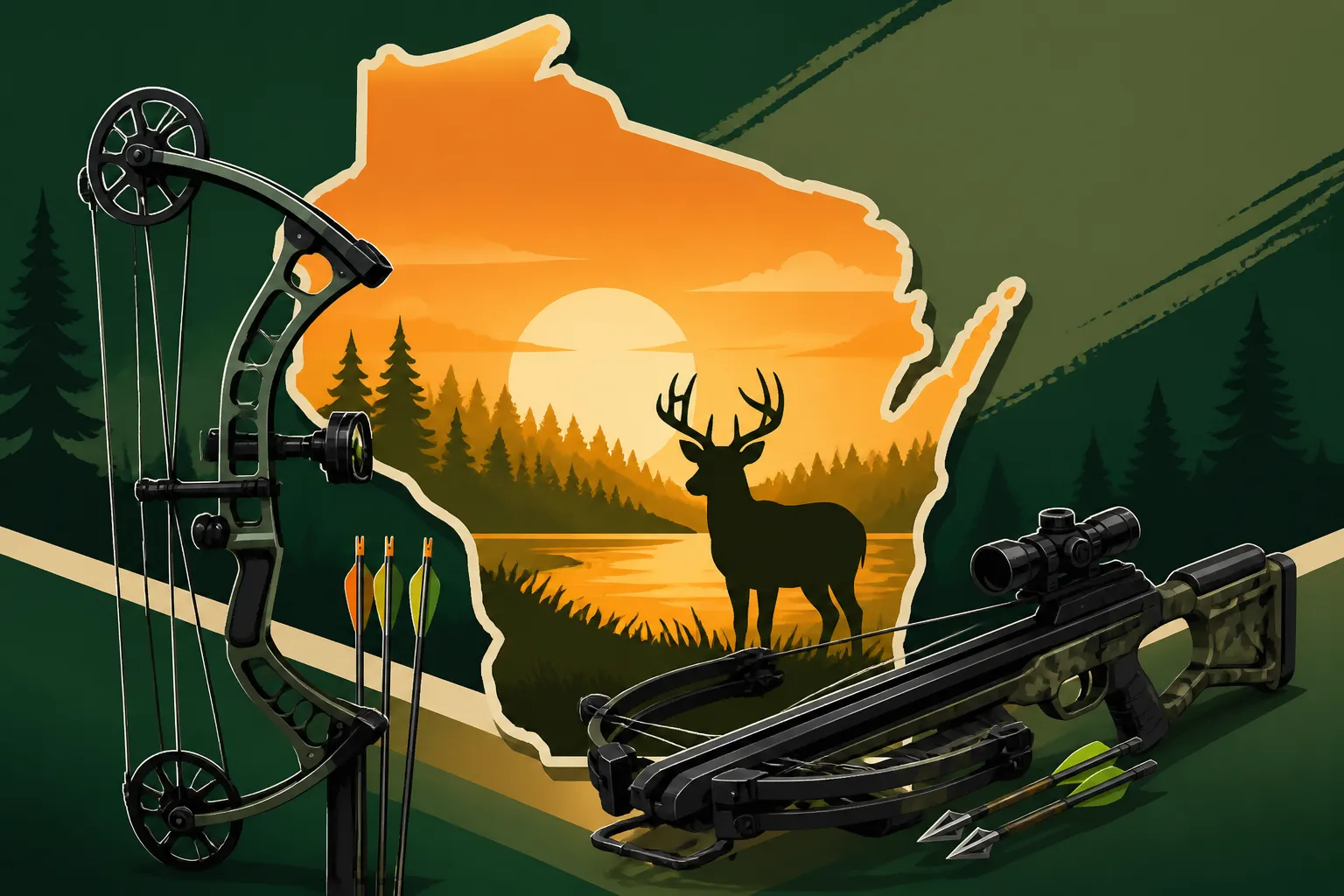
The crunch of leaves underfoot, the crisp Wisconsin air, and the anticipation of a whitetail deer slipping through the timber – these are the moments every bowhunter lives for. But if you’re heading into the woods with a vertical bow or a crossbow in Wisconsin, you know it’s not just about showing up. It’s about having the right gear, set up perfectly for the unique challenges of our state's diverse landscapes, from the thick northern forests to the rolling farmlands and rugged Driftless Area. This comprehensive guide will walk you through everything you need to know to create a bow or crossbow setup that gives you the best chance at success, ensuring you're confident and ethical in the field.
Understanding Wisconsin's Archery Regulations
Before you even think about buying a new bow or tinkering with your current setup, it's absolutely crucial to understand the regulations here in Wisconsin. Our state has specific rules for archery and crossbow hunting, and knowing them inside and out isn't just about avoiding a ticket; it's about being a responsible, ethical hunter. Ignorance of the law is never an excuse, and these rules are designed to ensure fair chase and public safety.
Legal Draw Weight and Equipment Requirements
When it comes to vertical bows, Wisconsin has historically maintained specific legal requirements, primarily focusing on draw weight. For a long time, the minimum draw weight for hunting deer was set to ensure that hunters could deliver enough kinetic energy to achieve a clean, ethical kill. While the specifics can sometimes feel a bit fluid with changes over the years, the spirit of the law remains: your bow must be capable of propelling an arrow with sufficient force. This means checking manufacturer specifications for your bow model and, if you're unsure, visiting a pro shop to have your draw weight measured. You don't want to find yourself in the woods with an illegal setup.
Beyond draw weight, pay attention to arrow length requirements and broadhead minimums. There are often rules about how short an arrow can be and the minimum cutting diameter for broadheads. These seemingly small details contribute significantly to the ethical harvest of game. For instance, a too-short arrow might not achieve full penetration, and a broadhead that's too small might not create a sufficient wound channel. Always double-check the most current regulations published by the Wisconsin Department of Natural Resources (DNR) before you head out.
Crossbows, while often lumped in with "archery," have their own distinct set of rules, particularly regarding their legal use during different seasons. Initially, crossbows had more restrictions, but their use has become more widespread. However, it's still essential to know if there are any specific regulations concerning minimum poundage, safety mechanisms, or even scope magnification limits that might differ from vertical bows. Understanding these nuances is critical, especially if you're transitioning from one type of bow to another or hunting in a mentored situation.
Archery and Crossbow Season Specifics
Wisconsin boasts one of the longest archery seasons in the nation, offering incredible opportunities to be in the woods from early fall through the post-gun season cold. This extended window is a gift, but it also means you need to be aware of how the season dates play out, especially when it comes to early, peak rut, and late-season segments. Each part of the season presents different hunting conditions and, sometimes, different rules, particularly regarding deer tags and what you can harvest. Knowing When Wisconsin's Archery Season Opens is just the start; understanding the ebb and flow of the entire season is key.
Crossbows are generally permitted during the entire archery season, but always confirm this year by year. Historically, there might have been specific restrictions or requirements, but the trend has been towards greater inclusion. It's a huge benefit for hunters with physical limitations or those who simply prefer the crossbow's characteristics. However, the legal use of a crossbow during what's traditionally thought of as "archery season" might still raise eyebrows in some circles, so being able to articulate and demonstrate your compliance with all regulations is part of being a respectful hunter.
Remember that while the archery season is long, there are often periods, like the nine-day gun season, when archery equipment may be used, but blaze orange requirements kick in. This shift in safety gear is non-negotiable and applies to all hunters in the woods during specific firearm seasons, regardless of their chosen weapon. It’s also vital to understand how antlerless harvest authorizations work in different zones and counties, as these can dictate what deer you are legally able to pursue with your bow or crossbow.
Blaze Orange and Other Safety Considerations
Safety in the field is paramount, and Wisconsin has clear rules on hunter safety, especially concerning visibility. During specific firearm seasons, even if you are bowhunting, you must adhere to blaze orange (or blaze pink) requirements. This typically means wearing a minimum amount of material that is brightly colored and visible from all directions. This rule is designed to prevent tragic accidents by making hunters highly visible to one another, especially in dense cover where a deer might be confused with a fellow hunter. It’s not just a suggestion; it’s a legal mandate that can carry serious penalties if ignored.
Beyond blaze orange, general safety practices are crucial. Always use a safety harness when hunting from a treestand. Tree stand falls are one of the leading causes of serious injury (or worse) for hunters. Even a short fall can result in life-altering injuries. Before the season, inspect your harness, straps, and stand carefully for any signs of wear or damage. Practice using it in a controlled environment to ensure you're comfortable and proficient.
When using a crossbow, pay particular attention to safe cocking and decocking procedures. Modern crossbows are powerful, and their stored energy can be extremely dangerous if mishandled. Always point the crossbow in a safe direction. Similarly, for vertical bows, ensure you have a clear shot lane and are aware of your backstop. Never draw your bow if you aren't sure you can safely take a shot. These foundational safety habits protect not only yourself but everyone else who might be in the woods.
Choosing Your Primary Hunting Tool: Vertical Bow vs. Crossbow
The decision between a vertical bow (compound, recurve, or longbow) and a crossbow is a deeply personal one for Wisconsin hunters. Both have passionate advocates and their own set of advantages and disadvantages. There’s no single "best" option; rather, it’s about what best fits your hunting style, physical capabilities, and the specific terrain you typically hunt.
Vertical Bow Advantages and Considerations
Vertical bows, especially compounds, have long been the traditional choice for archery hunters in Wisconsin. Their appeal lies in the active participation required, from drawing the string to executing a smooth release. This engagement fosters a deep connection to the hunt and a profound sense of accomplishment when a shot is successfully made. Compounds offer speed and kinetic energy, along with the benefit of a significant let-off, allowing hunters to hold at full draw for longer periods when a deer is approaching cautiously. This "hang time" can be critical when waiting for that perfect broadside shot.
However, hunting with a vertical bow demands a significant commitment to practice and physical conditioning. Maintaining proficiency with a compound requires consistent shooting throughout the off-season to build and maintain muscle memory, strength, and endurance. Bow Draw Weight for Wisconsin Whitetails is a common concern; you need to be strong enough to draw your bow smoothly and quietly even in cold weather, without spooking game. Shooting accurately under pressure, especially when cold or after a long sit, is a skill honed over countless hours on the range, not just a few shots before season opens.
Furthermore, vertical bows require more maneuverability in a treestand or ground blind. The length of the bow and the drawing motion mean you need ample space, which can be a challenge in tight cover or when a deer approaches from an unexpected angle. Hunters often need to adjust their body position significantly to get a clear shot, increasing the risk of detection. This makes stand placement and understanding deer movement even more critical, as you need to anticipate where a deer will appear to set yourself up for a clean shot.
Crossbow Advantages and Considerations
Crossbows have seen a significant rise in popularity, and for good reason. They offer several distinct advantages that appeal to a wide range of hunters. Perhaps the most prominent is their ease of use and accuracy. Once cocked, a crossbow is essentially a rifle in terms of how it’s aimed and fired, making it much simpler to achieve consistent accuracy, especially for new hunters or those with physical limitations that prevent them from drawing a vertical bow. This allows many individuals who might otherwise be sidelined to continue enjoying the archery season.
The compact nature of many modern crossbows is another huge benefit. Their shorter length makes them much more maneuverable in a treestand, ground blind, or when still-hunting through thick brush. You can often make shots from more awkward angles or in tighter spaces where a vertical bow would be impossible to bring to full draw. This increased flexibility in shot opportunities can be a game-changer, particularly in dense Wisconsin timber or when setting up on a field edge with limited cover.
However, crossbows come with their own set of considerations. One common critique is the loud "thwack" they produce when fired, which can be jarring and may cause a deer to "jump the string," dropping before the bolt arrives. Many manufacturers are addressing this with noise dampening systems, but it’s still a factor. Recocking a crossbow in the field for a follow-up shot can also be a slow and cumbersome process, often requiring a separate cocking device, which means quick second shots are rarely an option. Crossbow Versus Vertical Bow in Wisconsin is a debate that highlights these differences, and understanding them is key to making your choice.
Making the Decision for Your Hunting Style
Ultimately, the choice between a vertical bow and a crossbow for your Wisconsin hunts boils down to what feels right for you and what aligns with your hunting goals. If you cherish the challenge, the physical engagement, and the silent, almost primal connection to the hunt, a vertical bow might be your preferred path. Many hunters find a deep satisfaction in mastering the mechanics and discipline required for consistent accuracy. It's a journey of continuous improvement, and the rewards are profound.
Conversely, if accessibility, consistent accuracy with less practice time, or physical limitations are primary concerns, a crossbow offers an excellent and ethical alternative. It allows hunters to extend their time in the woods, remain effective, and still participate fully in the archery season. It’s also a great option for introducing new hunters to the sport, as the learning curve for accurate shooting is significantly reduced.
Consider your primary hunting areas. If you spend most of your time in tight cedar swamps or small ground blinds, a crossbow's compactness might be a significant advantage. If you hunt open hardwoods from large treestands, a vertical bow might offer sufficient room. Your decision should empower you to hunt safely, ethically, and enjoyably.
| Feature | Vertical Bow (Compound) | Crossbow |
|---|---|---|
| Learning Curve | Moderate to High (requires significant practice) | Low to Moderate (easier to achieve initial accuracy) |
| Physical Demand | High (requires strength to draw and hold) | Low (cocking device aids in drawing) |
| Maneuverability | Moderate (longer limb-to-limb length, full draw motion) | High (shorter length, rifle-like aiming) |
| Noise Level | Relatively quiet (can be further silenced) | Louder "thwack" on release (though improving) |
| Shot Follow-up | Generally quicker second shot possible | Slower, often requires re-cocking device |
| Accuracy | Excellent with practice and proper form | Excellent, often easier for consistent groups |
| Versatility | Good for various shots; requires body adjustment | Excellent for tight spaces and awkward angles |
| Maintenance | String/cable wear, cam timing, peep sight, D-loop | String/cable wear, rail lube, scope calibration |
Essential Bow Setup Components for Wisconsin Hunters
Once you've decided on a vertical bow, selecting and setting up its individual components is the next critical step. Each part plays a vital role in accuracy, consistency, and overall hunting success. Don't skimp on quality or attention to detail here; a poorly set up bow can lead to missed opportunities and, worse, unethical shots.
Bow Selection: Compound, Recurve, and Longbow
For most Wisconsin bowhunters, the compound bow is the workhorse of choice. Modern compounds are engineering marvels, offering impressive speeds, flat trajectories, and a significant "let-off" at full draw. This let-off reduces the holding weight, allowing you to aim steadily for longer periods, which is crucial when waiting for a deer to offer a perfect shot. When selecting a compound, consider its axle-to-axle length. Shorter bows are more maneuverable in tight spaces like a ground blind or a dense cedar swamp, while longer bows can be more forgiving and stable for target shooting. Test several models to see what feels best in your hands and shoulders.
Recurve and longbows, often referred to as traditional bows, offer a different kind of challenge and reward. They demand immense skill, practice, and a deep understanding of shot mechanics. There's no let-off, meaning you hold the full draw weight throughout the aim. This requires exceptional strength and discipline. While they are slower and have a more arching trajectory than compounds, the quiet release and intimate connection to the shot are deeply satisfying for traditional purists. Hunting with a recurve or longbow in Wisconsin’s thick cover is a profound experience, but it’s a path that requires serious dedication.
Regardless of your choice, ensure the bow fits you correctly. This means having the proper draw length and draw weight. An incorrectly fitted bow will lead to poor form, inconsistency, and fatigue. Most pro shops can measure your draw length accurately and adjust your bow to match. Don't fall into the trap of trying to shoot too much draw weight; accuracy trumps power every time. It's far better to shoot a lighter bow with perfect form than to struggle with a heavy one.
Arrow Choice and Fletching for Performance
Your arrows are just as important as your bow. They are the projectiles that deliver your broadhead to the target, and selecting the right ones is crucial for accuracy and penetration. Arrows come in different materials – carbon, aluminum, or a combination – and varying spine (stiffness), weight, and diameter. For deer hunting in Wisconsin, a durable carbon or carbon-aluminum arrow with sufficient weight (typically 400-500 grains for compounds) is a popular choice. Heavier arrows tend to penetrate better and are less affected by wind, which can be a factor on those blustery November days.
Arrow spine is critical and must match your bow’s draw weight and length. An arrow that is too stiff or too weak for your setup will fly erratically, making consistent accuracy impossible. Most arrow manufacturers provide charts to help you determine the correct spine. Don't guess here; consult the charts or a pro shop. An improperly spined arrow will paradoxically flex too much or too little, causing it to plane or kick sideways as it leaves the bow, dramatically impacting flight.
Fletching, the "feathers" or plastic vanes on the back of the arrow, helps stabilize the arrow in flight. Vanes are more durable in wet weather, while natural feathers can provide excellent stability but may require more care. The size and helical (twist) of your fletching can also affect accuracy, especially with broadheads. Larger, more aggressively twisted fletchings stabilize broadheads faster but can also slow the arrow slightly. For hunting, a good balance of stabilization and speed is key. Make sure your fletching is in good condition; damaged fletching will cause erratic flight.
Sight Systems and Rests for Accuracy
A reliable sight system is your link to precise aiming. Most compound bowhunters in Wisconsin use multi-pin sights, which allow for quick aiming at various distances. A common setup might include pins for 20, 30, 40, and 50 yards. When setting up your sight, make sure the pins are perfectly level and that each distance is accurately sighted in. Many hunters mark their sight housing with reference points or use a GoHunt app to input distances, ensuring they have accurate range information for their specific setup. Fiber optic pins gather light, making them visible in low-light conditions, which is often when deer are most active.
Some advanced hunters opt for single-pin adjustable sights, which allow them to dial in the exact yardage for each shot. While this offers incredible precision, it requires an extra step of adjusting the sight before the shot, which might not be feasible in fast-paced hunting scenarios. The choice often comes down to personal preference and how comfortable you are making adjustments under pressure. Regardless of the type, ensure your sight is robust and can withstand the bumps and knocks of hunting in the woods.
The arrow rest supports the arrow as it leaves the bow. For hunting, a "drop-away" rest is extremely popular. These rests support the arrow for a moment at full draw and then quickly fall away as the shot is released, minimizing contact with the fletching and ensuring clean, consistent arrow flight. Full-capture rests are also a good option, especially for new hunters, as they hold the arrow securely, preventing it from falling off the rest while maneuvering. Whatever rest you choose, ensure it is properly tuned with your bow for optimal arrow flight.
Optimizing Your Crossbow Setup for Wisconsin Terrain
Crossbows, while resembling rifles in their operation, still require careful selection and setup of their unique components to perform optimally in Wisconsin’s hunting environments. From the power of the bow itself to the precise aiming system, every element contributes to your effectiveness and confidence.
Crossbow Models and Power Stroke
Modern crossbows come in a variety of designs, from narrow, compact models to wider, more traditional layouts. The "power stroke" – the distance the string travels forward when fired – is a key factor influencing a crossbow’s speed and kinetic energy. Generally, a longer power stroke combined with a higher draw weight results in a faster, more powerful shot. When choosing a model, consider the balance between power, size, and weight. A lighter, more compact crossbow is easier to carry through brush and maneuver in a treestand, which can be critical when Hunting the Wisconsin Northern Forest for Deer.
The overall width of the crossbow, especially axle-to-axle width when cocked, is another important consideration. Narrower crossbows are gaining popularity because they are much easier to handle in confined spaces, making them ideal for ground blinds or thick cover. However, some hunters still prefer wider models, believing they offer greater stability and consistency. Test different models if possible to see what feels comfortable and balanced for your body type and hunting style.
Pay attention to the manufacturer's stated speeds, but also consider the noise level. A very fast crossbow might come with a louder report, which, as mentioned, can cause deer to react. Many brands are now integrating advanced dampening systems to reduce noise and vibration. Look for features like anti-dry fire mechanisms and automatic safety engagement, which are crucial safety features. A reliable cocking mechanism, whether integrated or a separate rope cocker, is also essential for safe and consistent cocking, especially in cold weather.
Bolt Selection and Broadhead Matching
Just like with vertical bows, selecting the right bolts (crossbow arrows) is paramount. Crossbow bolts are generally shorter and heavier than vertical bow arrows and are designed to withstand the immense force generated by the crossbow. They typically come with a flat or half-moon nock, specific to crossbows. Bolt weight and spine are critical. A bolt that is too light can result in excessive noise and vibration, potentially damaging the crossbow, while one that is too heavy might reduce speed and flatten trajectory more than desired. Consult manufacturer charts to match the correct spine and weight to your specific crossbow model.
Broadhead selection for crossbows follows many of the same principles as vertical bows, but with some specific nuances. Due to the high speeds of many crossbows, some mechanical broadheads designed for vertical bows might deploy prematurely or not fly true. It's often recommended to use mechanical broadheads specifically designed for high-speed crossbows, or to opt for fixed-blade broadheads known for their robust construction and reliable flight. Broadheads for Timber Shots need to be durable and capable of penetrating bone if encountered.
Always practice with the exact broadheads you intend to hunt with, or at least a practice version that matches the flight characteristics. Broadhead tuning is just as important with a crossbow as it is with a vertical bow. Ensure your broadheads fly consistently with your field points. Many crossbow hunters find that certain fixed-blade broadheads perform exceptionally well, provided their crossbow is well-tuned.
Scopes and Cocking Mechanisms
The optical sight is arguably the most critical component of a crossbow setup, transforming it into a precise aiming tool. Most crossbows come equipped with a scope, often with multiple reticles or illuminated dots for various distances. Unlike a traditional rifle scope, crossbow scopes are typically calibrated for shorter distances and the specific trajectory of a crossbow bolt. Zeroing your scope accurately for different yardages is vital for success in the field. Remember, the trajectory of a crossbow bolt is more pronounced than a rifle bullet, so precise yardage estimation is key.
Consider factors like low-light performance, eye relief, and field of view when evaluating scopes. Hunting during legal shooting hours in Wisconsin often means low-light conditions at dawn and dusk, so a scope that gathers light well can make all the difference. An illuminated reticle can also be a huge asset in these conditions. Ensure your scope is securely mounted and can hold its zero through repeated firing and field use. A loose scope mount is a recipe for frustration and missed shots.
Cocking mechanisms are essential for safe and consistent crossbow use. Manual rope cockers are common and reduce the draw weight by about 50%, making it easier for most hunters to cock the bow. Some crossbows feature integrated crank cocking devices, which make cocking effortless and silent. These are particularly valuable for hunters who have difficulty with strength or mobility. Whichever method you use, practice cocking your crossbow quietly and efficiently. You don't want to fumble with a cocking device when a deer is approaching within range.
Broadhead Selection: Ethical Harvest in Wisconsin's Diverse Habitat
The broadhead is the business end of your arrow or bolt. Its purpose is to create a sufficient wound channel for a quick, ethical harvest. Choosing the right broadhead for your Wisconsin hunting conditions, and ensuring it flies true, is one of the most important decisions you'll make.
Fixed-Blade Broadheads for Reliability
Fixed-blade broadheads are the traditional choice for many bowhunters, revered for their rugged simplicity and reliability. They consist of a solid cutting head with blades fixed in place, meaning there are no moving parts to fail upon impact. This design typically results in superior penetration, especially when encountering bone, and they hold up well to abuse. For hunting big-bodied Wisconsin whitetails, especially through the shoulders or ribs, a strong fixed-blade broadhead can be incredibly effective.
The key with fixed-blade broadheads is ensuring they are "tuned" to your bow or crossbow. Because of their unyielding blades, any slight imperfection in your bow setup or arrow flight can cause them to plane or drift. This means rigorous practice with your hunting broadheads is non-negotiable. Shoot them at various distances to confirm they fly identically to your field points. If they don't, you'll need to adjust your arrow rest or possibly your fletching. Many hunters swear by fixed blades for their peace of mind and the confidence they inspire in challenging conditions.
For heavy cover hunting, like still-hunting through a pine plantation or from a ground blind in tall cattails, fixed-blade broadheads often penetrate heavy vegetation better without deflecting. Their robust construction can be an advantage when a shot might involve clipping a small branch or sapling, though aiming for clear lanes is always paramount. Hunters who prioritize maximum penetration and reliability, even at the cost of some additional tuning time, often gravitate towards fixed-blade designs.
Mechanical Broadheads for Modern Performance
Mechanical broadheads, also known as expandable broadheads, have gained immense popularity for their accuracy and large cutting diameters. They fly like field points due to their sleek, closed design, and then deploy upon impact, creating a devastating wound channel. This "field point accuracy" is a huge advantage, especially for hunters who struggle with fixed-blade tuning or prefer the consistent flight path. Many mechanical broadheads open to a cutting diameter significantly wider than most fixed blades, which can lead to larger entry and exit wounds and better blood trails.
However, mechanical broadheads do have a few considerations. Being mechanical, there is always a slight chance of failure, though modern designs are incredibly reliable. Factors like blade retention systems, impact deployment, and blade strength are important to evaluate. For high-speed crossbows, some mechanical broadheads are specifically designed with stronger retention collars or mechanisms to prevent premature deployment. Ensure the blades are sharp and deploy reliably every time during practice.
When hunting larger-bodied deer in Wisconsin, especially during the rut when bucks are tougher, ensuring deep penetration with a mechanical broadhead is critical. While they create wider cuts, some designs might not penetrate as deeply as a robust fixed blade if they hit heavy bone or dense muscle. Always choose a mechanical broadhead known for its durability and penetration capabilities. Practice shots through a block of foam or similar material to confirm reliable deployment and adequate penetration for your setup.
Practice Broadheads and Tuning
Regardless of whether you choose fixed or mechanical broadheads, practicing with them is absolutely non-negotiable. You need to know exactly how your hunting broadheads fly with your specific bow and arrow setup. Many broadhead manufacturers offer "practice broadheads" that match the weight and flight characteristics of their hunting versions but are designed for repeated use without dulling the hunting blades. This allows you to fine-tune your setup without sacrificing sharpness on your actual hunting broadheads.
Broadhead tuning involves ensuring your broadheads fly to the same point of impact as your field points. If they don't, your bow or crossbow needs adjustment. For vertical bows, this often involves subtle adjustments to the arrow rest, cam timing, or nocking point. For crossbows, it might mean adjusting the scope or ensuring your bolts are perfectly spined. This tuning process is meticulous but essential for ethical hunting. A broadhead that doesn't fly true is an unreliable broadhead.
Don't wait until the week before the season to start broadhead tuning. Begin well in advance, giving yourself plenty of time to make adjustments and practice. Shoot from various distances, simulating real hunting scenarios. This practice builds confidence, and confidence in your equipment translates directly into better performance in the field. When it comes to Hunting Without Bait in a Banned County, precision is even more critical, as you might have fewer opportunities for a perfect shot.
Accessories That Enhance Your Wisconsin Bowhunting Experience
While the bow, arrows, and broadheads are the core of your setup, a range of accessories can significantly enhance your comfort, safety, and effectiveness in the Wisconsin woods. These tools are often the difference between a frustrating hunt and a successful one.
Quivers, Stabilizers, and Slings
A reliable quiver is essential for safely carrying your arrows or bolts. Many bowhunters prefer a quiver that attaches directly to the bow, keeping arrows readily accessible. For vertical bows, these are often designed to be detached once you're in your treestand to reduce weight and vibration. Ensure your quiver securely holds your arrows, preventing them from rattling and spooking game, especially when still-hunting or walking through brush. For crossbows, quivers are typically side-mounted and designed to remain on the bow, offering quick access to a follow-up bolt.
Stabilizers are rods that extend from the front of a vertical bow, designed to absorb vibration and improve balance, leading to a steadier aim and quieter shot. While not strictly necessary, many hunters find them invaluable for increasing accuracy, especially at longer distances. They come in various lengths and weights, allowing you to customize the feel and balance of your bow to your preference. For crossbows, while less common, some models accept stabilizers to further reduce recoil and improve aiming.
Slings, particularly for crossbows, make carrying your weapon through the woods much more comfortable. A well-padded sling can distribute the weight evenly across your shoulder, reducing fatigue during long walks, especially when hunting vast tracts of public land like the Chequamegon-Nicolet National Forest. For vertical bows, a wrist sling helps keep your hand in the correct position on the grip and prevents the bow from dropping after the shot. These small additions contribute significantly to overall comfort and performance during a long day afield.
Rangefinders and Other Optic Aids
Accurate distance estimation is arguably the single most critical factor for consistent bowhunting success. A high-quality rangefinder is an indispensable tool for every Wisconsin bowhunter. Unlike rifle hunting where a few yards might not make a huge difference, a mere five-yard miscalculation with a bow can result in a clean miss or, worse, a wounding shot. Before taking a shot, range various objects around your stand, creating mental markers. When a deer approaches, you'll have reference points, allowing for a quicker, more accurate shot. Many modern rangefinders feature angle compensation, which is invaluable when shooting from a treestand.
Beyond rangefinders, other optic aids can be a huge asset. Binoculars are essential for scouting, locating game, and evaluating potential shot opportunities without making unnecessary movement. An 8x or 10x power binocular is typically ideal for most Wisconsin hunting conditions, offering a good balance of magnification and field of view. Using a binocular harness can keep your optics secure and readily accessible, preventing them from swinging around and making noise. GoHunt is a great brand known for its mapping and scouting tools, which can integrate rangefinding information to help you plan your approach and shot scenarios even before you step into the woods.
A good pair of optics not only aids in shot placement but also in tracking. After the shot, using binoculars to scan the area for signs of a hit or to spot your deer can significantly aid in recovery. In low light, quality optics can extend your legal shooting time by allowing you to clearly see your target and surroundings. Don't underestimate the value of clear glass; it's an investment that pays dividends in every aspect of your hunt.
Essential Field Tools and Maintenance Kits
Carrying a small field repair and maintenance kit can save your hunt. This might include an Allen wrench set for tightening screws on your sight or rest, a small pair of pliers, extra nocks, and fletching glue. Bows and crossbows are complex machines, and components can loosen or shift. Being able to make minor adjustments in the field can mean the difference between continuing your hunt and having to call it quits. For crossbows, a rail lubricant is crucial for proper maintenance and to ensure consistent string life.
A good sharp knife is another non-negotiable field tool, not just for field dressing but for general utility. Choose a fixed blade or a strong folding knife that holds an edge well. Consider carrying a small sharpening stone or a portable sharpener to keep your blade honed. After the shot, having the right tools for field dressing and preparing your animal for transport is critical, especially when Handling Bear Meat Safely or any other game where quick cooling is important.
Don't forget the importance of a reliable headlamp or flashlight. Legal shooting hours end at sunset, but often the recovery process or walk out extends into darkness. A bright headlamp allows you to keep your hands free for tracking, field dressing, or navigating uneven terrain. Make sure to carry extra batteries! These seemingly minor accessories collectively contribute to a safer, more efficient, and ultimately more enjoyable hunting experience in Wisconsin.
Tuning and Practice: The Key to Success in the Woods
Having the right gear is only half the battle; knowing how to use it proficiently is what truly matters. Proper tuning of your bow or crossbow and a consistent practice regimen are non-negotiable for ethical and successful hunting in Wisconsin.
Paper Tuning and Walk-Back Tuning
Tuning your bow or crossbow ensures that your arrow or bolt flies perfectly straight out of the weapon, without any wobbling or porpoising. This is fundamental for consistent accuracy. For vertical bows, paper tuning is a common method. You shoot an arrow through a piece of paper suspended a few feet in front of your bow. The tear in the paper tells you how the arrow is leaving the rest: a perfect tear indicates straight flight, while horizontal or vertical tears indicate issues with your arrow rest, nocking point, or cam timing. Addressing these issues systematically is key to achieving perfect arrow flight.
Walk-back tuning is another excellent method, particularly for compound bows, that helps confirm your arrow rest's alignment and center shot. It involves shooting at a target from a close distance (e.g., 10 yards) with your sight pin centered, then walking back to a longer distance (e.g., 40 yards) and shooting again, aiming at the same point without moving your sight. If your arrows consistently hit low or high, your arrow rest might need vertical adjustment. If they hit left or right, horizontal adjustment is needed. This method helps confirm your setup is truly dialed in.
For crossbows, tuning often involves ensuring the scope is perfectly aligned with the rail and that the bolts are consistently leaving the string. While paper tuning can be done, often consistent grouping at various distances and broadhead tuning are the primary methods. Any inconsistencies in flight path or point of impact indicate that something in your setup, from bolt spine to fletching, needs attention. A perfectly tuned weapon is a precise weapon, and precision is paramount for a quick, ethical harvest.
Practice Regimen for Different Scenarios
Consistent practice is the bedrock of successful bowhunting. It’s not about shooting a few arrows the week before the season; it’s about year-round commitment. Your practice regimen should simulate real hunting conditions as closely as possible. Practice from a treestand, if that's how you hunt. If you use a ground blind, practice shooting from a seated position through the blind's windows. This helps you understand your space constraints and any unique challenges posed by your hunting setup.
Vary your shooting distances. While most bow shots on deer are within 30 yards, practicing at longer distances (e.g., 50-60 yards) can make those closer shots feel incredibly easy. Also, practice shooting at odd angles – slightly uphill or downhill – as this often happens in the varied terrain of the Driftless Area Deer Hunting in Wisconsin. Using an angle-compensating rangefinder during practice helps you internalize the actual shooting distances.
Crucially, practice under pressure. This doesn't mean having a simulated deer run by, but rather taking a few shots after a brisk walk to simulate an elevated heart rate, or shooting in colder weather to see how your clothing and grip are affected. Every shot should be intentional, focusing on form, aiming, and follow-through, just as you would in a real hunting scenario. This type of practice builds muscle memory and confidence that will serve you well when that big Wisconsin buck finally steps into your shooting lane.
Maintaining Your Equipment Through the Season
Maintaining your bow or crossbow throughout the season is just as important as the initial setup and tuning. Regular inspections can prevent malfunctions and ensure your equipment remains safe and accurate. For vertical bows, regularly check your string and cables for fraying or wear. A damaged string can lead to catastrophic failure. Inspect your cams for any nicks or dings, and ensure they are still in sync. Check all screws on your sight, rest, and quiver for tightness; vibration from shooting and walking can cause them to loosen.
For crossbows, the string and cables are also critical wear items. Regular inspection for fraying, especially where the string contacts the rail, is a must. Applying rail lubricant as recommended by the manufacturer helps reduce friction and extend string life. Keep your scope lenses clean and dry, and periodically check that your scope mounts are tight. Any play in the scope can lead to inconsistencies.
After each hunt, especially if you've been out in wet or snowy conditions, give your equipment a quick wipe-down and inspect it. Pay attention to any unusual sounds or vibrations during shooting. Addressing small issues promptly can prevent them from becoming major problems later. Proper storage of your bow or crossbow, keeping it out of extreme temperatures and away from direct sunlight, will also help prolong its life and maintain its accuracy season after season. Taking care of your gear means your gear will take care of you when it matters most.
Adapting Your Setup for Specific Wisconsin Hunting Scenarios
Wisconsin offers an incredible variety of hunting opportunities, from dense timber to open fields. Your bow or crossbow setup might perform admirably in one scenario but struggle in another. Adapting your gear and tactics to the specific environment and season can significantly increase your chances of success.
Treestand Hunting vs. Ground Blind Hunting Setups
Treestands are a classic choice for bowhunters in Wisconsin, offering an elevated vantage point that improves visibility, helps conceal your scent, and provides a safer shooting platform. When setting up for treestand hunting, focus on quiet access and silent operation. Ensure your stand is securely fastened, and always use a full-body safety harness. Treestand Setups in Wisconsin Hardwoods are often in key funnels, pinch points, or near food sources. You'll want a bow that is not too long, allowing for easy maneuvering for shots in all directions.
Consider a bow-mounted quiver that can be detached once you're in the stand and hung on a hook, reducing noise and obstruction. Practice shooting from an elevated position to understand how angles affect arrow trajectory and your aiming point. Your anchor point and form might need slight adjustments. A rangefinder with angle compensation is invaluable here, as shots from a height can be deceptive. A good, quiet hoist rope is also essential for pulling up your bow and pack silently.
Ground blinds offer excellent concealment and protection from the elements, but they present different challenges. Space is often limited, so a more compact crossbow or vertical bow is generally preferred. Practice shooting from a seated position, through the blind's mesh windows, to understand your shooting lanes and any potential obstructions. Using a Ground Blind on Wisconsin Public Land means you'll need to brush it in effectively to make it blend seamlessly with the environment, and manage your scent meticulously.
Inside a ground blind, every movement is amplified. Stabilizers for vertical bows become even more important for steadying your aim in a cramped space. For crossbows, a shooting rest or bipod can significantly improve accuracy from a seated position. Pay close attention to scent control, as deer will often approach ground blinds from closer distances. Choose dark clothing to avoid being silhouetted through the blind's windows.
Hunting Public Land vs. Private Land Considerations
Hunting public land in Wisconsin often means encountering more hunting pressure. This typically translates to deer that are warier, more nocturnal, and quicker to react to human presence. When preparing your bow or crossbow setup for public land, reliability and stealth are paramount. Consider a bow that is quiet, with dampeners on the string and limbs, and practice silent drawing and releasing. Your clothing should be quiet, too, avoiding anything that rustles as you move or draw. Hunting Pressure on Wisconsin Public Land can be intense, so every little advantage helps.
On public land, you'll likely be doing more walking and potentially still-hunting, so a lightweight and maneuverable setup is beneficial. A durable quiver that holds arrows securely and quietly is crucial. For crossbows, a comfortable sling is a must for covering ground. Being able to make quick, confident shots is important, as opportunities might be fewer and farther between. Also, understand all public land regulations regarding treestand placement, baiting, and trail camera use, as these can impact your setup.
While some private land hunting might involve less pressure, it doesn't mean you can relax on your setup. Often, private land means more specific management goals, like trophy buck hunting, which still demands precision. Hunting Small Private Tracts in Wisconsin might mean more emphasis on quick, close-range shots in thick bedding cover, or longer shots across food plots. Your setup should be versatile enough to handle a range of scenarios. For example, if you're hunting over a carefully cultivated food plot, you might prioritize a super-accurate crossbow scope that can dial in precise yardages.
The main difference on private land is often the ability to control variables like access, stand placement, and potentially food sources. This might allow for more permanent setups or more specialized gear tailored to specific spots. However, the fundamental need for a well-tuned, accurate, and reliable bow or crossbow remains the same, regardless of property boundaries.
Early Season vs. Late Season Adjustments
Wisconsin's long archery season spans vastly different conditions, requiring subtle adjustments to your setup and approach. Early season, particularly September and early October, is often warm. This means deer are still on summer patterns, often around agricultural fields or early mast crops. Your focus might be on stealth and scent control, as deer are less wary but conditions can make scent dispersal problematic. Your setup should be comfortable for warm weather, and you'll need good game bags and coolers to handle your harvested deer quickly.
As the season progresses into late October and November, the Hunting the Pre-Rut in Late October and Hunting the Wisconsin Rut in November bring colder weather and increased deer activity. Your clothing layers will become thicker, and this can affect your shooting form, especially with a vertical bow. Practice shooting with your hunting layers on to ensure your string doesn't catch on bulky clothing and that your anchor point remains consistent. For crossbows, the cold can affect lubricants and potentially batteries in illuminated scopes, so check these beforehand.
By the time the Wisconsin Muzzleloader Season Tactics and late archery season arrive in December and January, conditions can be brutally cold with deep snow. Your bow or crossbow needs to be able to perform in these extreme temperatures. Metal components can become much colder to the touch, and gloves can make fine adjustments difficult. For vertical bows, ensure your release aid functions smoothly with gloved hands. For crossbows, keeping the rail clean and lubed is even more critical in freezing conditions to prevent issues. Cold Weather Sitting Strategy also impacts your gear choices, emphasizing insulation and warmth for those long, frigid sits.
Finally, consider how cold affects your body and mental focus. Numb fingers can compromise shooting form, and shivers can make holding steady difficult. Your setup should minimize points of potential failure and maximize comfort to keep you effective when the temperatures plummet. These seasonal adjustments ensure your bow or crossbow setup is always optimized for the conditions you're facing.
Disclaimer
This article is for general informational purposes only and does not constitute professional advice. Laws, prices and regulations vary by location and change over time. Consult a qualified professional for guidance on your specific situation.