Muzzleloaders for a Wisconsin December
The crisp bite of a Wisconsin December morning brings with it a unique set of challenges for deer hunters, especially those choosing to extend their season with a muzzleloader. The deer have seen it all by now, the rut is a fading memory, and the weather can be brutal, turning what was once a simple shot into a complicated equation of cold fingers, wet powder, and weary whitetails. This comprehensive guide is here to walk you through everything you need to know to not just endure, but thrive, during Wisconsin's late muzzleloader season, from selecting the right firearm and gear to mastering tactics for elusive winter deer.
The Allure of Late-Season Muzzleloader Hunting in Wisconsin
There’s something undeniably special about heading into the Wisconsin woods with a muzzleloader in December. It’s a return to a more primitive style of hunting, where every shot counts in a way modern firearms sometimes let us forget. The landscape itself transforms, often blanketed in pristine snow, offering a stark beauty that's absent during the earlier, warmer seasons.
Why December Muzzleloader Hunting is Unique
By December, the vibrant reds and golds of autumn have long faded, replaced by the hushed tones of winter. The woods are quieter, stripped bare, and often covered in a fresh layer of snow that acts as a natural mute button. This means fewer leaves to rustle, fewer squirrels to chatter, and an overall sense of profound stillness that can be both peaceful and intensely focused. The hunting pressure from the earlier gun season has largely dissipated, leaving behind a profound sense of solitude. You might go an entire day without seeing another hunter, which is a rare luxury on many public lands these days. Deer, too, have settled into a different rhythm. The frantic chaos of the rut is over, and their primary focus shifts entirely to survival: finding adequate food sources, conserving energy, and seeking thermal cover from the biting cold. They become more predictable in their movements, yet also far warier and more attuned to their surroundings, making the hunt a true test of stealth and patience. This quiet challenge, coupled with the stark beauty of the winter landscape, makes muzzleloader hunting in December an experience unlike any other.
Understanding the Wisconsin Muzzleloader Season
Wisconsin's muzzleloader season typically follows directly on the heels of the nine-day gun deer season, often extending well into December. While the exact dates can shift slightly year to year, the general timeframe puts hunters in the woods during some of the coldest and often snowiest periods. It's crucial to consult the current year's regulations for precise season dates and any specific zone restrictions, as these details are the foundation of legal and ethical hunting. Generally, during this season, hunters are allowed to use caplock, flintlock, or in-line muzzleloading firearms. The regulations are usually quite specific about what constitutes a legal muzzleloader, often requiring that it be loaded from the muzzle with black powder or a black powder substitute, and using a single projectile. Sabots are generally permitted, which means you're not restricted to traditional patched round balls or full-bore conical bullets if your firearm is designed for them. However, understanding these nuances is key. For example, some hunters might wonder about optics: generally, scopes are allowed, but it's always wise to double-check. The spirit of the muzzleloader season is to offer an extended opportunity with a more traditional weapon, challenging hunters with a single-shot opportunity and the added complexity of powder and projectile management in cold weather. Getting familiar with Wisconsin Muzzleloader Season Tactics will give you an edge, but first, you need to know the rules.
Preparing Mentally and Physically for the Cold
Hunting in Wisconsin in December is not for the faint of heart, and that goes beyond just having the right gear. It requires a significant mental and physical fortitude to sit still for hours in freezing temperatures, often with wind and snow trying to seep into every layer. Mentally, you need to cultivate extreme patience. Deer movement can be slow and deliberate in winter, and they might only appear for short windows around prime feeding times. It’s easy to get discouraged when your fingers are numb and the deer seem non-existent, but resilience is key. Remind yourself that the opportunity will come if you stick it out. Physically, conditioning is paramount. Long walks through deep snow, especially if you're still-hunting or tracking, can be incredibly taxing. Core strength and endurance will help you manage the cold more effectively, as your body will be better equipped to generate and retain heat. It's also vital to practice staying alert despite the cold-induced lethargy. Simple things like doing isometric exercises in your stand or periodically swinging your arms can help maintain circulation. Staying well-hydrated, even when it’s cold, is also crucial, as dehydration can sneak up on you and accelerate the effects of the cold. A small thermos of hot coffee or broth can work wonders for both morale and core temperature.
Choosing the Right Muzzleloader for Wisconsin's Winter
The choice of muzzleloader for a Wisconsin December hunt is more than just personal preference; it’s about reliability in challenging conditions. The freezing temperatures, potential for wet snow, and the need for consistent ignition demand careful consideration.
In-line vs. Traditional Percussion/Flintlock
When you're braving the Wisconsin December woods, your choice of muzzleloader style plays a significant role in your hunting experience and success. The two main categories are in-line muzzleloaders and the more traditional percussion or flintlock systems. In-line muzzleloaders are, by far, the more popular choice for many modern hunters, and for good reason. They are designed for greater reliability, especially in adverse weather conditions. Their sealed breech designs, often utilizing 209 primers, keep the powder charge and ignition system much drier and better protected from snow, sleet, and freezing rain. This translates to a significantly reduced chance of a misfire when you’ve finally got that trophy buck in your sights after hours of enduring the cold. They are also generally more accurate and easier to clean, resembling modern cartridge firearms in their operation.
On the other hand, traditional percussion and flintlock muzzleloaders offer a romantic connection to hunting history, but they come with increased challenges in cold, wet Wisconsin weather. Flintlocks, with their exposed pan of priming powder, are particularly susceptible to moisture, making them notoriously finicky in snow or heavy humidity. Percussion caps are slightly more robust but still more exposed than a 209 primer in an in-line system. If you choose a traditional firearm, be prepared for meticulous waterproofing of your powder and ignition components. Many traditionalists will carry small leather pouches with pre-measured powder charges and waterproof containers for caps or flints. The satisfaction of harvesting a deer with a traditional muzzleloader in such conditions is immense, but it demands a higher level of skill and preparation. For sheer reliability and ease of use in a frigid December, an in-line muzzleloader like a CVA Accura or a Traditions Pursuit is often the more practical choice for the majority of hunters heading out into the Wisconsin winter. If you're pondering the options, diving deeper into Choosing a Muzzleloader for December Cold can help solidify your decision.
Caliber and Projectile Selection
When you've finally connected with a deer in the late season, you want to ensure a clean, ethical kill. This is where caliber and projectile selection become paramount for your muzzleloader. For white-tailed deer, the .50 caliber is widely considered the standard, and for good reason. It offers an excellent balance of bullet weight, energy transfer, and manageable recoil. A .50 caliber projectile delivers ample kinetic energy to humanely dispatch a deer, even a large, mature Wisconsin buck, particularly at the typical muzzleloader ranges of under 150 yards. While other calibers like .45 or even .54 exist, the .50 cal is generally the most common and offers the widest variety of projectile choices.
Within the .50 caliber, you'll mainly choose between sabots and full-bore conical bullets. Sabots encase a smaller, typically .45 caliber bullet in a plastic sleeve, allowing it to be fired through a .50 caliber barrel. These bullets are often aerodynamically designed, similar to modern rifle bullets, and can offer superior accuracy and flatter trajectories, making them a popular choice for hunters seeking maximum range and precision. Many saboted projectiles are designed for controlled expansion, ensuring good penetration and tissue damage. Conical bullets, such as PowerBelts or traditional lead conicals, are full-diameter projectiles that engage the rifling directly. They tend to be heavier than saboted bullets, often carrying more momentum, which can be beneficial for breaking bone and achieving deep penetration, especially on larger-bodied deer. They also typically load more easily down a fouled barrel, which can be a consideration for follow-up shots or if you're unable to clean meticulously in the field. Ultimately, the best projectile is one that consistently groups well from your muzzleloader. Always test various combinations of powder charge and bullet type to find what your specific firearm prefers. Understanding the nuances of Sabot Versus Conical for Deer will provide more insight into making the right choice for your December hunt.
Ignition Systems: Percussion Caps vs. 209 Primers
The ignition system of your muzzleloader is arguably the most critical component for reliability, especially when faced with the cold and dampness of a Wisconsin December. A misfire when that big buck steps out can be heartbreaking, and often, the cause lies in insufficient or compromised ignition. Traditional percussion systems typically use #11 or musket caps. These caps sit on a nipple, and when struck by the hammer, they ignite the main powder charge. While they are reliable in fair weather, their exposed nature makes them vulnerable to moisture. A bit of snow or freezing rain can easily dampen the cap or the powder around the nipple, leading to a hangfire or, worse, a complete misfire. Hunters using percussion caps in winter often take extra precautions, such as covering the hammer and nipple with a piece of electrical tape or a rubber cap until the moment of the shot, or using waterproofed musket caps.
In contrast, 209 primers, commonly used in modern in-line muzzleloaders, offer a significantly more robust and weather-resistant ignition. These primers are essentially large shotgun primers, sealed within a primer pocket, offering a much hotter and more consistent spark to ignite the powder charge. Their sealed design drastically reduces the risk of moisture ingress, making them far more reliable in wet, snowy, and freezing conditions. This is a huge advantage for December hunting, where reliability can make or break your hunt. Furthermore, the hotter flame from a 209 primer can sometimes help overcome slight inconsistencies in powder compression or slightly damp powder, though no primer can fully compensate for soaking wet powder. For a Wisconsin December hunt, the superior reliability of 209 primers is often a deciding factor for hunters prioritizing consistent ignition and peace of mind in harsh conditions.
Essential Muzzleloader Accessories for December Success
Having the right muzzleloader is only half the battle. A host of critical accessories can make the difference between a successful hunt and a frustrating day of misfires and frozen fingers in the Wisconsin winter.
Keeping Your Powder Dry and Primers Secure
Imagine spending hours in the frosty Wisconsin woods, enduring the biting wind, only to finally have a deer step into your shooting lane, pull the trigger, and hear nothing but a click. This is often the cruel reality when powder gets damp or primers are compromised. Keeping your powder dry is absolutely paramount in December. If you're using pelletized powder, such as Triple Seven or Hodgdon Pyrodex, store them in a small, waterproof container with a tight-sealing lid. Even a Ziploc bag inside a hard plastic case can offer double protection. For loose powder users, a waterproof powder flask or pre-measured charges in sealed vials are essential. Exposure to humidity, snow, or rain for even a short period can render black powder or its substitutes inert or cause dangerous inconsistencies in ignition.
Primers, whether they are #11 percussion caps or 209 primers, also need diligent protection. While 209 primers are more robust, they aren't impervious to constant moisture. Carrying them in a dedicated, waterproof primer caddy or a small, sealed plastic box ensures they remain dry and ready. Many hunters will load a fresh primer just before they expect a shot, keeping their ready-to-fire primer in a separate, easily accessible, waterproof pouch. The key is redundancy and vigilance. Never assume your powder or primers are dry just because they were when you left the house. Always check, and always protect them from the elements. This seemingly small detail is perhaps the most critical for reliable muzzleloader performance in the cold, damp conditions of a Wisconsin December. For more specific advice, check out Keeping Powder Dry in Wet Snow.
Cleaning and Maintenance in Freezing Conditions
The challenges of muzzleloader hunting in December extend to cleaning and maintenance, which can be significantly more difficult in freezing conditions. Black powder and its substitutes are corrosive, and leaving residue in the barrel or action, especially in damp conditions, can lead to rust and pitting. However, a full cleaning in the field isn't always practical or safe. Your best bet is to carry a small, basic field cleaning kit. This might include a bore snake, some pre-moistened patches, and a small bottle of black powder solvent that won't freeze solid. After a shot, especially if you anticipate being out for a while, running a solvent-soaked patch down the bore can prevent excessive fouling buildup that could hinder subsequent loading.
Pay particular attention to the breech plug and the firing pin channel if you have an in-line muzzleloader. These areas can accumulate significant fouling, leading to ignition problems. A dedicated breech plug wrench is essential, but try to avoid removing the plug in freezing conditions unless absolutely necessary, as re-sealing it properly with cold, stiff hands can be difficult. The biggest challenge is that water-based solvents can freeze. Consider carrying a small amount of non-freezing lubricant or oil for critical moving parts, like the hammer or trigger mechanism, to prevent them from seizing. Wipe down all external metal surfaces frequently with an oily cloth to prevent rust from moisture. Once you're back at camp or home, a thorough cleaning is non-negotiable. Ensure all components are completely dry before re-lubricating and storing your muzzleloader.
Loading Aids and Speedloaders
One of the unique aspects of muzzleloader hunting is the time it takes to reload, and in December, cold, numb fingers can turn a quick reload into a frustrating ordeal. This is why having reliable loading aids and speedloaders is incredibly important. A muzzleloader speedloader typically holds a pre-measured powder charge, a projectile, and sometimes even a primer, all in one compact unit that can be quickly poured or loaded into the muzzle. Many hunters will carry several of these, especially if they anticipate the rare need for a follow-up shot or if they are hunting in an area where multiple deer might present themselves.
It’s not just about speed; it's also about ease of use with cold hands. Fumbling with individual powder bottles, sabots, and primers is a recipe for disaster. Practice loading your muzzleloader at home, wearing the gloves or mittens you plan to hunt with. See how easily you can manipulate your loading components. Some speedloaders have specific designs that make them easier to grip and use with reduced dexterity. Additionally, a sturdy, solid ramrod is invaluable. Many factory ramrods are flimsy and prone to breaking, especially when trying to seat a tight projectile in a cold barrel. An aftermarket, solid aluminum or carbon fiber ramrod, often with a T-handle, provides better leverage and prevents injury. Carrying a small, rubber-headed mallet can also be helpful for seating particularly stubborn projectiles, allowing you to tap the ramrod gently rather than straining your arm in the cold. Having these tools ready and familiar with their use can save precious seconds and prevent frustrating fumbles when it matters most.
Optics and Sighting for Muzzleloaders in Winter
Visibility in a Wisconsin December can range from bright, sun-drenched snowscapes to heavy, low-hanging fog and swirling snow. Your choice of sighting system and how you manage your optics will profoundly impact your ability to make an accurate shot.
Open Sights, Peep Sights, and Scopes
The choice of sighting system for your muzzleloader depends largely on your hunting style and the typical terrain you navigate in Wisconsin. Many traditional muzzleloaders come equipped with open sights – a front blade and a rear notch. These are rugged, simple, and excellent for quick, close-range shots in thick timber or dense brush, where shots are typically under 50 yards. They are less prone to fogging or moisture issues than scopes, making them reliable in almost any weather. However, their precision diminishes rapidly with distance and in low-light conditions, which are common in December mornings and evenings.
Peep sights offer a significant step up in precision from open sights, especially for older eyes or for extending your effective range slightly. A small rear aperture (the peep) combined with a front post or fiber optic allows for faster target acquisition and improved accuracy, particularly when targets are partially obscured or in dim light. They provide a clearer sight picture than open sights and are still quite robust and weather-resistant. For hunters who want a blend of tradition and improved accuracy without the complexity of a scope, peep sights are an excellent compromise.
However, for most modern muzzleloader hunters, a scope is the preferred option. Scopes provide unparalleled precision, especially at longer distances (out to 150-200 yards, which is common for in-lines) and in the critical low-light conditions of early morning and late afternoon when deer are most active. A scope with a good low-light gathering capability and appropriate magnification can make a huge difference in target identification and shot placement. However, scopes are susceptible to fogging, condensation, and can be cumbersome in dense cover. A low-power variable scope (e.g., 1-4x, 2-7x, or 3-9x) is often ideal for muzzleloaders, offering a wide field of view at lower magnifications for timber, and enough zoom for open-field shots. When selecting a scope, consider its durability and weatherproofing. Learning more about Rifle Scope Magnification for Wisconsin Deer can help you choose wisely.
Battling Fog and Condensation
One of the most frustrating aspects of hunting with optics in a cold Wisconsin December is battling fog and condensation. Walking briskly to your stand, only to have your scope or binoculars completely fog up when you stop, is a common and infuriating problem. The key is to minimize rapid temperature changes and moisture exposure. First, invest in optics with good anti-fog coatings from reputable brands; while not foolproof, they help significantly. Secondly, consider using lens caps that you only remove when you need to view or shoot. This keeps the warm, moist air from your face or breath from condensing directly onto the cold lenses.
When moving, keep your binoculars tucked inside your jacket or under a vest, close to your body heat. This helps keep them at a more consistent temperature, reducing the shock when exposed to the cold air. For your scope, avoid breathing directly onto the lenses, especially if you're excited and breathing heavily. Carry a small, soft lens cloth, but use it sparingly and gently, as wiping can sometimes make fogging worse if not done correctly. Some hunters even use commercial anti-fog wipes or solutions on their lenses before heading out. Another practical tip is to store your rifle outside your vehicle or tent overnight if it's colder outside than inside. This way, the rifle and scope acclimate to the ambient temperature, reducing the likelihood of sudden fogging when you step out into the cold morning air.
Rangefinding in Snow-Covered Landscapes
Accurately judging distance is always important in hunting, but in a snow-covered Wisconsin landscape, it can become particularly challenging. The pristine white blanket of snow can play tricks on your eyes, often making objects appear closer or further away than they actually are, especially on bright, overcast days. Without clear reference points like dark trees or varying terrain, a 100-yard shot can easily be misjudged as 75 or 125 yards, which can be the difference between a clean kill and a miss or, worse, a wounded animal with a tough track job ahead.
A reliable rangefinder is an indispensable tool for December muzzleloader hunting. Before the season, take your rangefinder to various snow-covered fields and woods and practice ranging objects at different distances. Get a feel for how the snow affects your perception. When you're in your stand, range key landmarks around your shooting lanes – prominent trees, fence posts, changes in elevation – before deer even appear. Note these distances. This eliminates guesswork in the heat of the moment. Many modern rangefinders, including those from GoHunt, offer angle compensation, which is particularly useful in the rolling terrain of areas like Wisconsin's Driftless Area, where shots up or down steep hills can alter the effective shooting distance. Remember, a muzzleloader's trajectory is much more pronounced than a modern rifle's, so precise rangefinding is critical to ensure your projectile hits its mark. Don't rely solely on your eyes; let technology confirm your distances.
Cold Weather Apparel and Staying Comfortable
Success in late-season muzzleloader hunting in Wisconsin often hinges on your ability to remain comfortable and focused in the face of brutal cold. Improper clothing can quickly turn an enjoyable hunt into a miserable, short-lived ordeal.
Layering Strategies for Static Hunting
The cornerstone of staying warm during static hunting in a Wisconsin December is a well-thought-out layering system. You'll be expending energy walking to your stand, then sitting completely still for hours, during which your body temperature will drop significantly. A proper layering system allows you to adapt to these fluctuations. Start with a moisture-wicking base layer against your skin. This is critical for drawing sweat away from your body; if sweat dries and chills on your skin, you'll quickly become cold. Merino wool or high-quality synthetic materials are excellent choices. Avoid cotton, which absorbs moisture and holds it, making you cold.
Next, add insulating mid-layers. These are designed to trap warm air. Fleece, down, or synthetic insulation are all good options. You might have several mid-layers of varying thickness depending on the expected temperatures. For instance, a thin fleece vest, followed by a heavier fleece jacket. Finally, an outer layer that provides both insulation and protection from the elements is essential. This should be windproof and waterproof, capable of shedding snow and blocking icy gusts. Look for quiet materials that won't rustle when you move. The beauty of this system is its versatility; you can shed or add layers as needed, regulating your body temperature to prevent both overheating (which leads to sweating) and freezing. For a deeper dive into this critical topic, refer to Layering for a Wisconsin Deer Stand.
Footwear and Hand Protection
Your feet and hands are often the first parts of your body to succumb to the cold, and once they're numb, the rest of your body quickly follows. Investing in high-quality, insulated, and waterproof footwear is non-negotiable for December hunting in Wisconsin. Look for boots with at least 800-1200 grams of Thinsulate or equivalent insulation, and ensure they are genuinely waterproof with a breathable membrane. Leather boots should be regularly treated to maintain their water resistance. Crucially, ensure your boots are slightly larger than your normal shoe size to allow for thick wool socks and to prevent constriction, which restricts blood flow and makes your feet colder. Carry an extra pair of dry socks in your pack; nothing is worse than wet feet in freezing conditions.
For hands, the challenge is maintaining warmth while retaining dexterity for shooting and reloading. Many hunters opt for a two-glove system: a thin, fitted liner glove that allows for fine motor skills, worn inside a thick, insulated, waterproof mitten or an "accordion" style shooting mitten that folds back to expose your fingers when needed. Hand warmers are also a lifesaver; place them inside your mittens or a dedicated hand muff. Some hunters swear by a simple fleece muff that hangs around the neck, allowing bare hands to be slipped in quickly for warmth while keeping them readily available for action. Remember, once your extremities get cold, it's very difficult to warm them up in the field. Proactive protection is key. If you're struggling with cold feet, Insulated Boots for All-Day Sits offers some great solutions.
Blaze Orange/Pink Requirements and Visibility
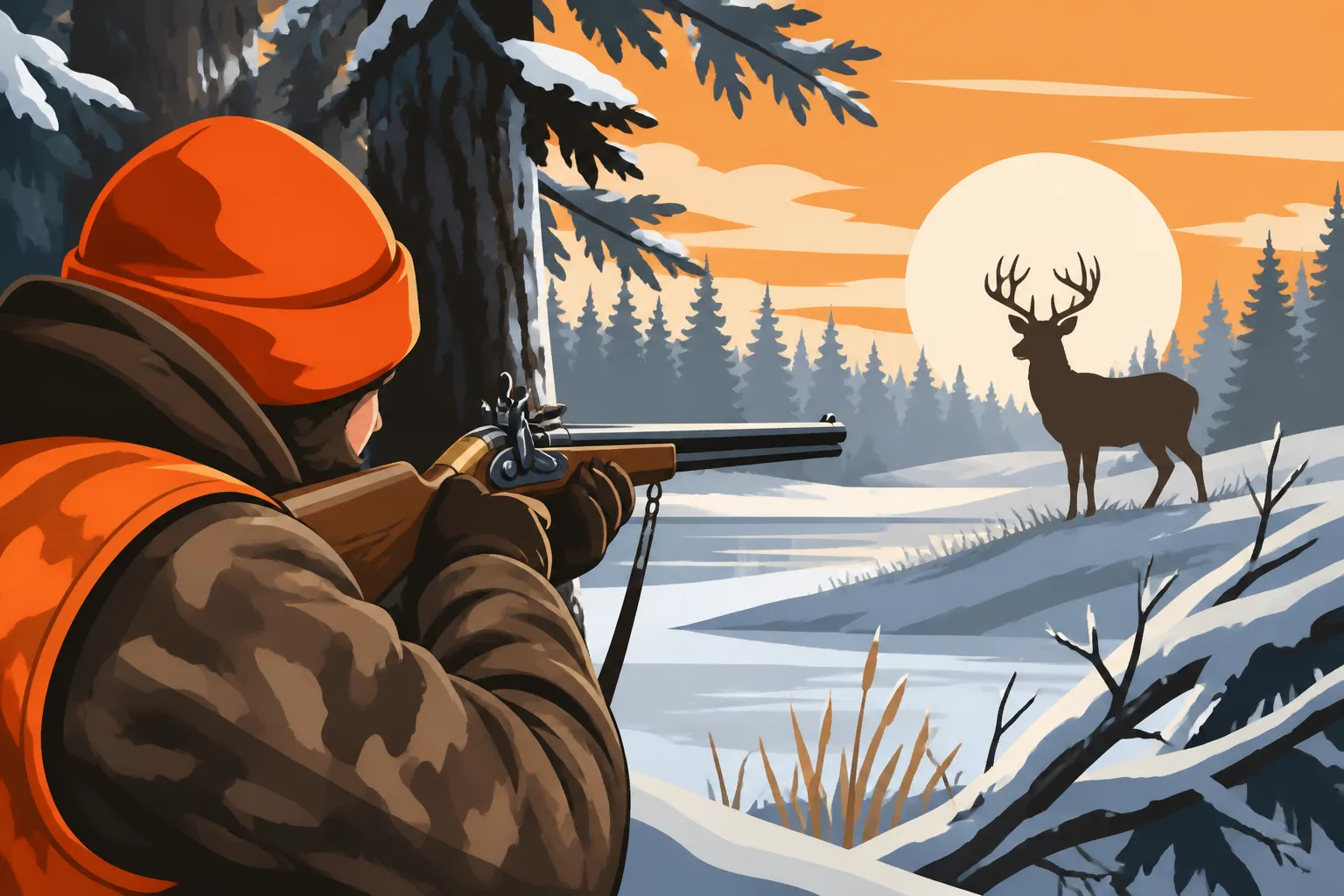
Safety is paramount during any hunting season, and Wisconsin has specific regulations regarding blaze orange or fluorescent pink clothing. These requirements are in place to ensure hunters are highly visible to one another, particularly during seasons where firearms are in use. While muzzleloader season might feel more solitary, it still falls under these rules. Typically, hunters during any gun deer season in Wisconsin are required to wear at least 50% of their outer clothing above the waist in blaze orange or fluorescent pink. This includes hats, jackets, or vests. It's not just about meeting the minimum; think about maximizing your visibility. A solid blaze orange or pink hat combined with a vest or jacket ensures you stand out prominently against the muted backdrop of winter woods, especially if there's snow on the ground.
Beyond legal compliance, wearing bright colors is a critical ethical consideration. Even if you're the only hunter for miles, unforeseen circumstances or other recreational users can put you in harm's way if you're not visible. The stark contrast of blaze orange or pink against white snow or dark timber makes it much easier for other hunters to identify you as a human, not a deer. Ensure your outer layers remain clean and bright throughout the season; dirty or faded blaze wear loses its effectiveness. Embracing these safety colors is not just a rule, but a core tenet of responsible hunting that protects everyone in the field. For a deeper understanding of the color options, refer to Blaze Pink Gear and Where to Find It.
Muzzleloader Hunting Tactics for Wisconsin's Late Season
December hunting in Wisconsin requires a shift in tactics. Deer behavior changes drastically after the rut and with the onset of cold weather, demanding a more strategic approach from muzzleloader hunters.
Understanding Late-Season Deer Behavior
By December, the frenetic energy of the rut has largely dissipated, and deer are focused squarely on two things: food and thermal cover. Bucks, often exhausted and lighter from the rigors of breeding, are trying to regain weight and energy. Does, while no longer receptive, are also seeking sustenance. Food sources that were abundant in earlier seasons may now be depleted or buried under snow. Deer will concentrate their feeding efforts on the most available and nutritious options, which can include standing corn, soybean fields (if not completely picked over), browse in clear-cuts, or mast crops like acorns if they're still accessible under light snow. Identifying these prime late-season food sources is absolutely critical for successful December hunting.
Beyond food, thermal cover becomes extremely important. Deer will seek out dense stands of conifers like cedar swamps, pine plantations, or thick alder thickets to escape the biting wind and conserve body heat. These areas offer both protection from the elements and a place to bed down out of sight. Their daily patterns become very predictable: move from dense thermal cover to a primary food source, back to cover. They typically move less during the coldest parts of the day, often becoming most active during the warmest hours of the afternoon or making quick, concentrated movements at dawn and dusk. Understanding this shift from rut-driven chaos to survival-driven patterns is the key to effectively targeting late-season deer. Delve into Late-Season Food Sources for Whitetails for more detail on what deer are looking for.
Still-Hunting and Tracking in Snow
One of the greatest advantages of hunting in Wisconsin in December, especially after a fresh snowfall, is the opportunity for still-hunting and tracking. A blanket of snow transforms the woods, making deer sign incredibly easy to read and muffling your footsteps. Still-hunting involves moving very slowly and deliberately through the woods, taking only a few steps, then pausing for several minutes to observe and listen. This allows you to scrutinize every detail, looking for the flick of an ear, the horizontal line of a deer's back, or the subtle movement of a tail. The snow acts as a perfect canvas, highlighting fresh tracks, rubs, and scrapes (though scrapes are less active in December).
Tracking, especially after a fresh snow, can be an incredibly effective method. Find a set of fresh deer tracks, particularly a large, solitary track (potentially a mature buck), and commit to following it. This is a game of patience and observation. Pay attention to the deer's pace: if tracks are widely spaced and deep, the deer is likely moving quickly and might be alarmed. If tracks are closer together and shallower, the deer is likely feeding or casually browsing. Look for subtle cues like disturbed snow where it stopped to browse, or a sudden change in direction that might indicate it's trying to circle back on its trail to detect a follower. Move into the wind, if possible, and use terrain to your advantage, peeking over ridges or around thickets carefully. The silence of the snowy woods amplifies every sound, making it easier to detect a deer before it detects you. If you're interested in honing this skill, exploring Still-Hunting After a Wisconsin Snow offers valuable insights.
Stand Placement Near Food and Thermal Cover
Effective stand placement in December revolves around intercepting deer as they move between their two primary late-season needs: food and thermal cover. Forget about rut-related funnel points or traditional travel corridors that were hot in October; late-season deer are driven by survival. Your scouting efforts should be intensely focused on identifying the most consistently used food sources. This might be a standing cornfield that hasn't been harvested, a section of timber with remaining acorns under a light snow, or an area with abundant regenerating browse, like a young clear-cut. Once you've identified these food sources, the next step is to locate the nearest, densest thermal cover – often a pine plantation, a thick cedar swamp, or a dense thicket of spruce.
Deer will typically emerge from this cover in the late afternoon, head directly to feed, and then return to cover, sometimes spending the entire day hunkered down in the thick stuff if temperatures are extreme. Your stand should be positioned to intercept them along these very specific travel routes. Look for tracks leading out of the bedding cover towards the food. Consider the prevailing wind direction, which can be fickle and strong in December, ensuring your scent is carried away from their approach. Setup closer to the bedding cover than you might in earlier seasons, as deer will often stage just inside the thermal cover before venturing out into the open, especially when light is fading. Ground blinds can be highly effective in these situations, offering excellent concealment and much-needed warmth, particularly if you're positioned on the edge of a field or a dense thicket.
Safety and Ethical Considerations in December Muzzleloader Hunting
Hunting in the extreme conditions of a Wisconsin December with a muzzleloader comes with unique safety challenges. Beyond the usual firearm safety rules, specific considerations for cold weather and the nature of black powder firearms are crucial.
Muzzleloader Safety in Cold and Snow
Muzzleloader hunting always demands careful attention to safety, but when you introduce freezing temperatures and snow, those demands intensify. Cold, numb fingers can make handling small components like primers and powder charges awkward, increasing the risk of fumbling or dropping them. Always keep your muzzle pointed in a safe direction, especially during the loading process. A common safety concern with muzzleloaders in winter is dealing with a misfire. If your muzzleloader clicks but doesn't fire, resist the urge to immediately open the breech or look down the barrel. A hangfire (a delayed ignition) can occur, especially with cold or damp powder. Keep the muzzle pointed safely downrange or at the ground for at least 30-60 seconds before attempting to clear the misfire.
When clearing a misfire, follow your firearm's instructions carefully. This usually involves removing the primer, then carefully removing the powder and projectile, which can be tricky in the cold. Some hunters carry a specialized tool for this purpose. Be especially careful not to accidentally create an obstruction in the barrel with snow or ice. If you fall, quickly check your muzzle to ensure it hasn't picked up any debris. Also, ensure your hands are clean and dry when handling powder and primers to prevent contamination. The corrosive nature of black powder means that moisture combined with residue can quickly lead to rust, but more immediately, it can lead to dangerous ignition problems. Always assume your muzzleloader is loaded and handle it with the utmost respect.
Tracking Wounded Game in Winter
One of the most profound ethical responsibilities of any hunter is to make a clean, humane kill and to diligently track any wounded animal. In a Wisconsin December, with potential snow on the ground, this responsibility takes on an added layer of complexity and urgency. While snow can make blood trailing easier by highlighting sign, falling snow or freezing temperatures can quickly obscure or freeze a blood trail, making recovery incredibly difficult. Therefore, making a good shot is more critical than ever. Take only high-percentage shots, within your effective range, and wait for the animal to present a clear, broadside opportunity.
If you do wound a deer, immediately mark the spot where the deer was standing and where you last saw it. Then, wait. Give the animal time to lie down and stiffen up. In cold weather, deer can bleed out quicker, but they can also travel farther if pushed immediately. An hour or two is often recommended, but use your judgment based on the shot placement. When you begin tracking, move slowly and methodically. Look for blood, hair, bone fragments, and disturbed snow. If snow is actively falling, you might need to track more aggressively to avoid losing the trail completely. If you lose the trail, spread out and search in concentric circles from the last confirmed sign. If you still can't find the deer, consider calling for help. Many local resources and experienced trackers are available, and using a tracking dog (where legal) can be a game-changer. Do everything in your power to recover the animal. For more detailed advice, read up on Tracking a Deer in Wisconsin Snow.
Respecting the Resource and Other Hunters
Hunting in Wisconsin, particularly on public lands, means sharing the experience and respecting the wild resources we cherish. Ethical behavior extends beyond just legal compliance; it involves a deep respect for the land, the animals, and fellow outdoors enthusiasts. This includes leaving no trace of your presence – packing out everything you pack in, including spent primers, empty powder vials, and any trash. Do not cut branches or damage trees for shooting lanes on public land without explicit permission. Your goal should be to leave the area as, or better than, you found it.
Respect for other hunters means giving them space. If you arrive at a hunting area and see someone else already set up, find another spot. Acknowledge their presence and avoid infringing on their hunt. During December, with fewer hunters in the woods, the opportunities for solitude are greater, but courtesy remains essential. Be mindful of property boundaries, especially when tracking wounded game onto private land. Always obtain permission before crossing a fence or boundary onto private property. Finally, teach and model ethical behavior to younger or less experienced hunters. The future of our hunting heritage depends on responsible actions and a commitment to conservation. This resource isn't just for us; it's for generations to come.
Maximizing Your Late-Season Success with Strategic Planning
Success during Wisconsin's December muzzleloader season isn't just about showing up with a firearm; it's the culmination of careful planning, meticulous preparation, and continuous practice. The challenges of the late season demand a strategic mindset.
Pre-Season Scouting and Identifying Key Areas
Your success in December begins long before the first snowflake falls. Pre-season scouting is absolutely critical for late-season muzzleloader hunting in Wisconsin. While summer and early fall scouting focuses on rub lines and scrapes, late-season scouting shifts its focus almost entirely to food sources and thermal cover. Before the leaves drop and the snow flies, identify standing cornfields that might not be harvested until late, areas with persistent mast crops (like white oak acorns), or dense stands of conifers that offer sanctuary from the cold. Walking these areas in September and October, even without a gun, will give you invaluable insight into deer movement patterns when they are seeking survival.
Pay close attention to pinch points, funnels, and natural barriers between these food and cover areas. Deer will often use the path of least resistance. Observe existing trails and try to envision how deer will navigate the landscape once snow is on the ground. Using mapping applications like GoHunt can be incredibly beneficial. These tools allow you to study satellite imagery, identify potential bedding areas (dense dark timber), likely food sources (open fields, agricultural plots), and the travel routes in between. You can mark potential stand locations, measure distances, and even check topography to understand wind and thermal drafts. The more you know about the terrain and deer habits before the season, the better positioned you'll be to intercept them when the real hunting begins.
Practice, Practice, Practice
One shot. That's the reality of muzzleloader hunting. Unlike modern repeating firearms, you typically get one good opportunity. This makes practice not just important, but absolutely essential. It's not enough to just sight in your muzzleloader at the range once. Practice under conditions that simulate your hunting environment as closely as possible. If you plan to wear heavy gloves or mittens, practice loading and shooting with them on. Experience how the cold affects your dexterity and your ability to manipulate the ramrod and primer.
Practice shooting from various positions: standing, kneeling, and from a seated position, simulating what you might encounter in a tree stand or ground blind. Pay particular attention to your muzzleloader's accuracy at different ranges that you anticipate hunting. Load and unload your muzzleloader repeatedly to build muscle memory, especially in the cold. Knowing instinctively how to quickly and safely reload, even if you never need to, builds confidence. Don't forget to practice with the exact powder charge and projectile you intend to hunt with, as even slight variations can impact accuracy. Consistent practice builds proficiency and confidence, ensuring that when that December buck finally steps out, you're ready to make that one shot count.
Post-Harvest Care in Frigid Temperatures
Successfully harvesting a deer in the freezing temperatures of a Wisconsin December presents a unique set of challenges for post-harvest care. While the cold works in your favor for preserving the meat, it can also make field dressing and transportation difficult. Your first priority, once the deer is down, is to field dress it as quickly and efficiently as possible. This removes the internal organs, allowing the carcass to cool down rapidly and prevent bacterial growth. While it might be tempting to rush in the cold, take your time to be thorough; clean cuts and removal of all organs are vital for meat quality. For more specific instructions, consider reading Field Dressing a Deer in Cold Weather.
Once field dressed, the cold air will quickly chill the meat. This is generally a good thing, but you need to prevent the outside of the carcass from freezing solid before the deep muscle tissue has had a chance to cool completely. If the outside freezes too quickly, it can "insulate" the warmer interior, leading to potential spoilage or "sour" meat. If temperatures are extremely low (well below freezing), consider covering the deer with a tarp or game bags to slow down the freezing process slightly while still allowing air circulation. When transporting, protect the carcass from road grime and salt if you're driving on treated roads. Once back home, hang the deer in a cool, clean environment (ideally above freezing but below 40°F) to allow it to age properly. If you plan to butcher it yourself, ensure your workspace is clean and warm enough to work safely without the meat freezing on your hands.
Disclaimer
This article is for general informational purposes only and does not constitute professional advice. Laws, prices and regulations vary by location and change over time. Consult a qualified professional for guidance on your specific situation.