Bow Cases for Travel to Wisconsin
There's nothing quite like the excitement of heading off on a Wisconsin bowhunting adventure, is there? Whether you're chasing whitetails in the sprawling Northern Forest or patiently waiting in a Driftless Area coulee, your bow is your trusty companion. But let's be real, getting that precious piece of archery equipment from your home to your hunting spot, especially if it involves any real distance, can be a source of real anxiety. A damaged bow before your hunt even begins is a nightmare scenario. That's why today, we're going to dive deep into the world of bow cases, making sure your gear arrives safely and soundly, ready for action in the Badger State.
The Non-Negotiable Necessity of a Quality Bow Case for Your Wisconsin Hunt
I've seen it happen too many times: a hunter arrives at camp, pulls their bow out of a flimsy case, and finds a sight pin bent, a rest tweaked, or worse, a cam damaged. It’s enough to make you want to pack up and go home before you even start. Your bow isn't just a piece of sporting equipment; it's a precision instrument, an investment of your hard-earned money and countless hours of practice. Protecting that investment, especially during travel, is absolutely paramount.
Protecting Your Investment from the Rigors of Travel
Let's face it, travel can be rough. Whether you're loading your truck for a weekend getaway to the Black River State Forest Hunting or planning a longer trip that involves air travel, your bow is going to encounter bumps, jostles, and potential drops. Think about the baggage handlers at the airport – they're not always as gentle with your gear as you'd be. Or even just the simple act of driving down a bumpy gravel road to your favorite public land parcel; vibrations alone can loosen screws or throw your delicate sights out of whack. A quality bow case acts as a personal bodyguard for your gear, absorbing impacts and keeping everything precisely where it should be.
It’s not just about cosmetic scratches, though those are frustrating enough. We’re talking about the internal components, the finely tuned mechanics that make your bow shoot true. A slight tweak to a cam, a bent sight pin, or even a damaged limb can render your bow inaccurate or, in the worst case, completely unusable. Imagine drawing back on a mature Wisconsin buck only to realize your arrow is flying wildly because something shifted in transit. It’s a heartbreaking thought, and one that a robust case is designed to prevent.
Even seemingly minor issues can snowball. An accidental bump could knock your peep sight off-center, or cause a micro-fracture you can't see until it’s too late. The cost of a good bow case pales in comparison to the potential repair costs, not to mention the value of a ruined hunting trip. This isn't an accessory; it's essential insurance for your hunting success.
Navigating Wisconsin's Varied Landscapes and Weather Conditions
Wisconsin is a state of incredible natural beauty, offering diverse hunting opportunities from the dense cedar swamps of the north to the rolling hills and agricultural fields of the south. Each of these unique landscapes presents its own set of challenges for transporting your gear. Picture driving through a muddy two-track road in the Chequamegon-Nicolet National Forest Hunting after a heavy rain, or navigating icy, snow-covered trails in December. Your bow case needs to be more than just impact-resistant; it needs to be weather-resistant.
Rain, snow, dust, and mud are all common companions on a Wisconsin hunt. A cheap case might offer minimal protection from a light drizzle, but what about a full-on downpour or driving snow? Moisture can wreak havoc on your bow's strings, cables, and even corrosion on metal parts over time. A good case will seal out the elements, ensuring your bow stays dry and clean, no matter what Mother Nature throws at you.
Consider the vibrations from miles of gravel roads or the constant shifting in the back of a pickup truck. A poorly secured bow in a flimsy case is prone to constant movement, which can lead to friction damage, loosened components, or simply a dirty, grimy bow upon arrival. You want to spend your time scouting and hunting, not cleaning and re-tuning your equipment.
Adhering to Travel Regulations and Ensuring Peace of Mind
Beyond physical protection, there's the practical matter of legal compliance and personal peace of mind. If your hunting adventure involves flying, you'll quickly learn that specific regulations govern the transport of archery equipment. Most airlines require bows to be in a hard-sided, lockable case, declared at check-in, and often subject to TSA inspection. Failing to comply can lead to frustrating delays, missed connections, or even your bow not making it to your destination. It's a hassle no one needs before a hunt.
Even for road trips, while regulations are generally less stringent, a cased bow is always a safer bet. It protects your bow from prying eyes and opportunistic theft when your vehicle is parked at a gas station or restaurant. Furthermore, some states might have specific rules about transporting bows, especially if strung, visible, or near ammunition (for those also carrying firearms for other hunts). It's always best practice to keep your bow securely cased.
Ultimately, a quality bow case buys you peace of mind. Knowing that your bow is safely nestled, protected from impacts, weather, and theft, allows you to focus on the exciting prospect of your hunt. You can review your Scouting Wisconsin Public Land Before Season notes, check the weather, and dream of that perfect shot, rather than worrying about the condition of your most vital piece of gear.
Deciding on Your Bow Case Style: Hard, Soft, or Hybrid for Wisconsin Adventures
The world of bow cases offers a spectrum of choices, each with its own advantages and disadvantages. The "best" case for you really depends on how you plan to travel, the type of hunting you do, and your budget. Let's break down the main categories to help you find your ideal match for Wisconsin.
Hard Cases: The Ultimate Fortress for Your Archery Gear
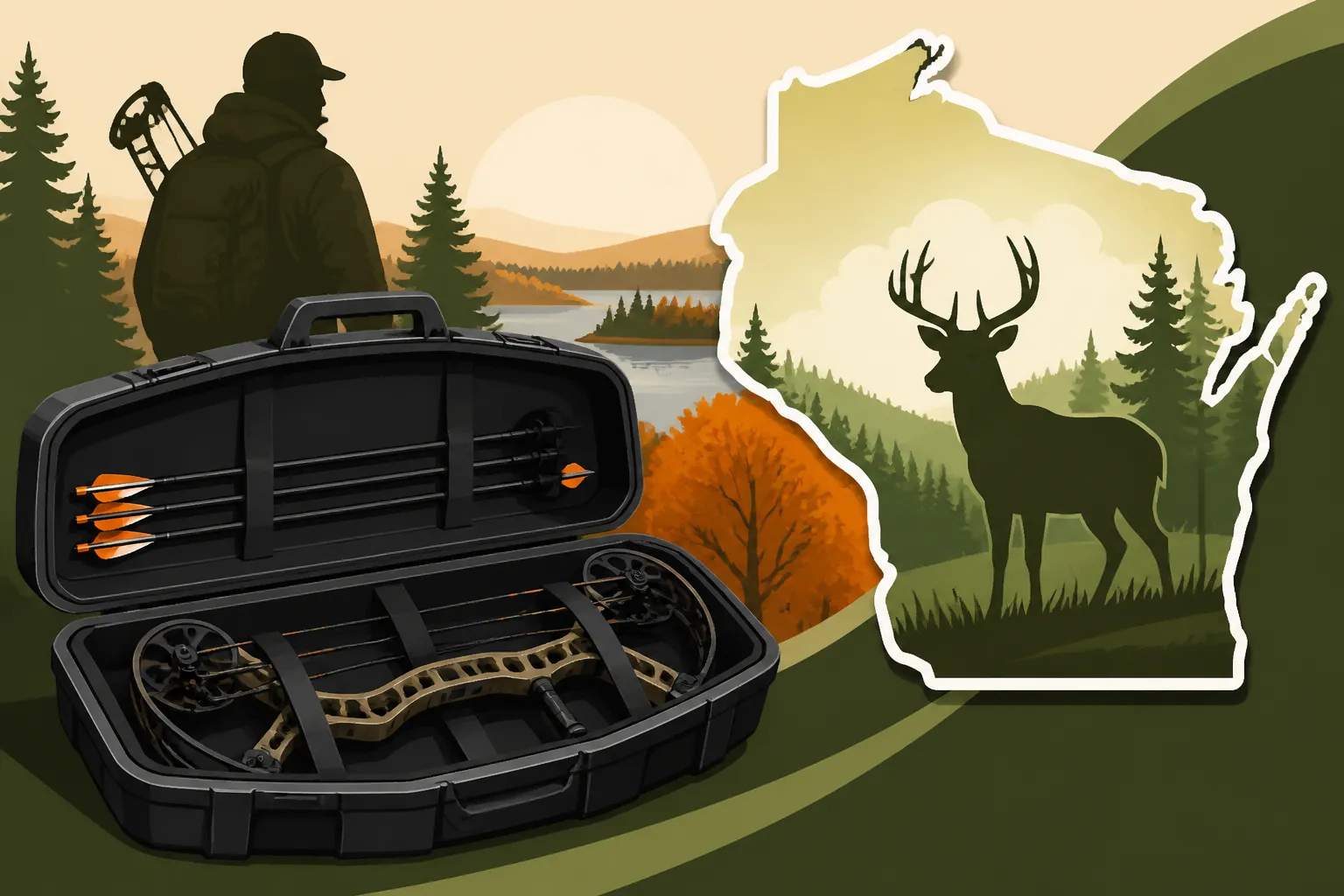
When it comes to maximum protection, hard cases are king. These cases are typically constructed from robust materials like molded high-density plastic, reinforced polypropylene, or even aluminum. They feature rigid walls, often with customizable foam interiors (like pluck-and-fit foam or Velcro dividers) that cradle your bow securely, preventing any movement during transit. Many are designed to be airtight and waterproof, protecting your bow from immersion and fine dust.
Hard cases are absolutely essential for air travel. Airlines almost universally require them for checking archery equipment, due to their ability to withstand significant impacts and provide a secure, lockable enclosure. If you're flying into an airport like Green Bay or Milwaukee to hunt in the Northern Highland Forest Deer Ground or beyond, a good hard case is non-negotiable. They're also fantastic for long road trips where your gear might be exposed to heavy loads, rough roads, or simply needs to be locked up securely overnight. I've seen these cases survive incredible abuse, keeping precious cargo pristine.
The main advantages are clear: superior protection against crushing, impacts, and environmental elements, and excellent security with multiple lockable latches. The downsides? They can be heavy, bulky, and often more expensive than other options. They're not exactly grab-and-go for a quick jaunt to the backyard range, but for serious travel and protection, they simply can't be beat. When looking at specific models, trusted brands often receive high marks in GoHunt reviews for their ability to protect gear in extreme conditions.
Soft Cases: Lightweight Convenience for Local Hunts
On the other end of the spectrum, we have soft cases. These are typically made from durable, padded fabric (like Cordura or heavy-duty nylon) with zipper closures and sometimes exterior pockets. They offer a lighter form of protection, mainly guarding against scratches, minor bumps, and dust.
Soft cases are perfect for short drives to your local archery range, a quick scouting trip to a nearby woodlot, or when you’re simply transporting your bow from your house to your vehicle for a quick hunt in a close-to-home public access area like some of the Wisconsin State Wildlife Areas. They're lightweight, flexible, and easy to store when not in use. If you're just driving across town to meet a buddy for a practice session or heading to an accessible public ground, a soft case might be all you need.
The pros are their affordability, lightweight design, and ease of carrying—many come with shoulder straps. They're quick to access and don't take up much space. However, their cons are significant for serious travel: minimal impact protection, usually not waterproof or dustproof, and they offer very little security against theft or unauthorized access. They are definitely not suitable for air travel or any situation where your bow might be subject to significant impact.
Hybrid Cases: Blending Protection and Portability
Hybrid cases represent a smart middle ground, attempting to combine the best features of both hard and soft cases. These often feature a semi-rigid internal frame for structural integrity, surrounded by a padded fabric exterior. They might have more substantial padding and reinforcement than a typical soft case, but without the full bulk and weight of a hard case.
This type of case can be a fantastic option for hunters who frequently travel by car but want more protection than a soft case offers. If you’re regularly making multi-hour drives to different parts of Wisconsin, say from Madison to hunt in the Driftless Area Deer Hunting in Wisconsin, a hybrid case can give you added peace of mind without the full commitment of a heavy hard case. They offer improved impact resistance over soft cases and often boast better weather protection, too.
Many hybrid cases also come equipped with multiple external pockets, which are incredibly handy for storing accessories like your Bow Sights for Timber Shots, releases, or even compact Optics for Wisconsin Timber and Coulees. This makes them highly versatile. While they are usually more expensive than soft cases, they tend to be more affordable than premium hard cases, making them a balanced choice for many Wisconsin bowhunters.
| Case Type | Protection Level | Ideal Use Cases | Pros | Cons |
|---|---|---|---|---|
| Hard Case | Maximum | Air travel, long road trips, extreme conditions | Superior impact/crush/weather protection, secure, lockable | Heavy, bulky, more expensive, less convenient for quick access |
| Soft Case | Light | Local range trips, short drives, backyard practice | Lightweight, affordable, easy to carry/store, quick access | Minimal impact protection, not weather/theft resistant, not for air travel |
| Hybrid Case | Medium to High | Frequent car travel, enhanced local protection | Good balance of protection and portability, often feature-rich | More expensive than soft, less protection than hard, still some bulk |
Essential Features for a Wisconsin-Ready Bow Case
Once you've decided on the general style of case that fits your needs, it's time to dig into the specifics. Not all cases are created equal, and paying attention to these features can make a huge difference in how well your bow is protected and how convenient your travel becomes.
Durability and Weather Resistance for Wisconsin's Elements
Wisconsin weather can be unpredictable. You might start your day with crisp autumn sunshine and end it slogging through slushy snow or pouring rain. Your bow case needs to be built to withstand these conditions. For hard cases, look for high-density, impact-resistant plastics that won't crack in cold weather. Pay close attention to the seals and gaskets; these are what keep moisture and dust from creeping in. A continuous O-ring seal, for example, is far more effective than just a tight-fitting lid.
For soft and hybrid cases, the fabric material is key. Look for heavy-duty, water-resistant fabrics like Cordura or ballistic nylon. "Water-resistant" isn't the same as "waterproof," but it's a huge step up from basic canvas. Check the zippers, too. Are they robust, self-healing, and ideally, weather-resistant or covered by a storm flap? A flimsy zipper is often the first point of failure. Reinforcing stitching at stress points like handles and strap attachments is also crucial. A handle failing when you're carrying hundreds of dollars of gear over slick ground is not something you want to experience. GoHunt often provides detailed material specs in their product reviews, which can be really helpful here.
Interior Organization and Customization for All Your Gear
A great bow case isn't just about the shell; it's also about what's inside. How well does it secure and organize your bow and all its delicate accessories? For hard cases, customizable foam inserts are incredibly valuable. Pluck-and-fit foam allows you to create a perfect, snug cavity for your specific bow model, ensuring no movement. Velcro-adjustable dividers offer similar flexibility. This snug fit prevents your bow from shifting and bumping against the case walls or, worse, against its own delicate components.
Beyond the bow itself, think about your accessories. Do you have dedicated pockets or compartments for your release, your spare broadheads (stored safely, of course!), your small tool kit, and your Rangefinders Under 100 Yards? Loose accessories rattling around inside a case are a recipe for disaster, potentially damaging your bow or getting damaged themselves. Look for cases with thoughtful interior layouts, secure straps, and internal pouches.
Integrated arrow storage is another critical feature. Some cases have dedicated tubes or compartments that keep your arrows straight and protected, preventing fletching damage and keeping your Fixed Versus Mechanical Broadheads from dulling or poking through fabric. If your case doesn't have this, consider a separate arrow case that can be stowed alongside your bow case.
Security and Ease of Transport: Considerations for Your Trip
Finally, consider how you'll move and secure your case. For hard cases, strong, reliable latches are paramount. Look for cases with multiple latches, ideally with integrated locking mechanisms or reinforced points for external padlocks. If you're flying, TSA-approved locks are a must. These locks allow TSA agents to open and inspect your case without damaging your lock. Even for vehicle travel, a lockable case deters theft, providing an extra layer of protection.
Ease of transport is also a big one. Heavier hard cases often benefit immensely from sturdy, smooth-rolling wheels and a retractable handle, similar to good luggage. This makes navigating airports, hotel lobbies, and even long walks from the parking area to your camp much less strenuous. For cases without wheels, ergonomic, comfortable handles that don't dig into your hand are important.
For soft and hybrid cases, consider the strap system. A well-padded shoulder strap or, even better, backpack-style straps can free up your hands to carry other gear, whether that's a cooler with your lunch or your calls. This is particularly useful when you're hiking into public land or navigating uneven terrain on your way to a Treestand Setups in Wisconsin Hardwoods.
Smart Packing Strategies for Your Wisconsin Bowhunting Trip
So, you've picked out the perfect bow case. Congratulations! But the job isn't done yet. How you pack your bow and its accessories is just as important as the case itself. A well-packed case ensures everything stays safe and organized, making your hunting trip smoother from the moment you unpack.
Preparing Your Bow for Its Journey
Before your bow even touches the inside of the case, take a few moments to prepare it. Start by removing any detachable accessories that could snag, get bent, or simply take up unnecessary space. This typically includes your stabilizer, quiver (with arrows removed), and any particularly fragile or bulky sights if they can be easily detached without affecting your zero. Store these items in designated accessory compartments within your case or in a separate bag if needed.
Next, a light inspection and maintenance. Give your bow's strings and cables a quick wax, and check for any loose screws on your sight, rest, or other components. Some manufacturers recommend backing off limb bolts by a quarter or half turn to relieve tension during significant temperature or pressure changes, especially for air travel, but check your bow's manual first – it's not always necessary for modern compounds. The goal is to minimize any potential stress or movement.
Finally, once your bow is inside its chosen compartment, ensure it's nestled snugly. If you have customizable foam, make sure it completely cradles the bow, with no significant gaps where it could shift. Pay special attention to cams and strings, ensuring they are not pressed against the case walls or other objects, which could cause damage or throw off tuning.
Organizing Essential Archery Accessories
Those accessory pockets and compartments aren't just for show; they're vital for organization and protection. Use them! Store your release aid in a padded pouch or pocket to prevent it from getting scuffed or damaged. Your small tool kit (Allen wrenches, string wax, spare D-loop material) should have its own designated spot, keeping it handy but out of the way.
Broadheads require special attention. Never, ever, let them be loose in your case. They can damage your bow, your arrows, and even poke through the case itself. Always store them in a secure, broadhead-specific box or a dedicated, reinforced pocket. This protects both the broadheads and everything else in your case. Your arrows, if not in an integrated tube within the case, should be in a separate, dedicated arrow case. This prevents fletching damage, bending, and keeps them from rattling against your bow.
Don't forget your critical Optics for Wisconsin Timber and Coulees. Binoculars and rangefinders often come with their own soft cases; keep them in these cases and then nestle them securely within your bow case or pack them in your carry-on for flights. Protecting these valuable items is key to a successful hunt.
Final Checks and Regulatory Compliance
Before sealing up your case for good, do a final mental walkthrough. For air travel, ensure all locks are properly secured, and that you have removed any prohibited items (e.g., certain types of batteries, or liquids that exceed TSA limits from your carry-on if you mistakenly placed them in your bow case). Always declare your bow at the airline check-in counter. It's classified as a firearm (even though it's not), and needs to follow their specific protocol.
For vehicle travel, once your case is in the truck, take steps to secure it. Use tie-downs or straps to prevent it from sliding around in the bed or cargo area, especially if you're hitting those back roads in the Hunting the Wisconsin Rut in November. If your case isn't fully waterproof, consider covering it with a tarp if it's exposed to the elements in an open truck bed. This also adds a layer of discretion, keeping your valuable gear out of sight.
Finally, before you even leave home, take a moment to confirm any specific hunting regulations for the area of Wisconsin you'll be visiting. Use the Wisconsin DNR website or a reliable app like GoHunt to double-check everything from Wisconsin Deer Seasons and Zones to any local rules regarding transport or storage of hunting equipment. A little pre-trip research can save a lot of headaches, ensuring your focus remains on the thrill of the chase.
Disclaimer
This article is for general informational purposes only and does not constitute professional advice. Laws, prices and regulations vary by location and change over time. Consult a qualified professional for guidance on your specific situation.