Why Buffalo County Grows Big Bucks
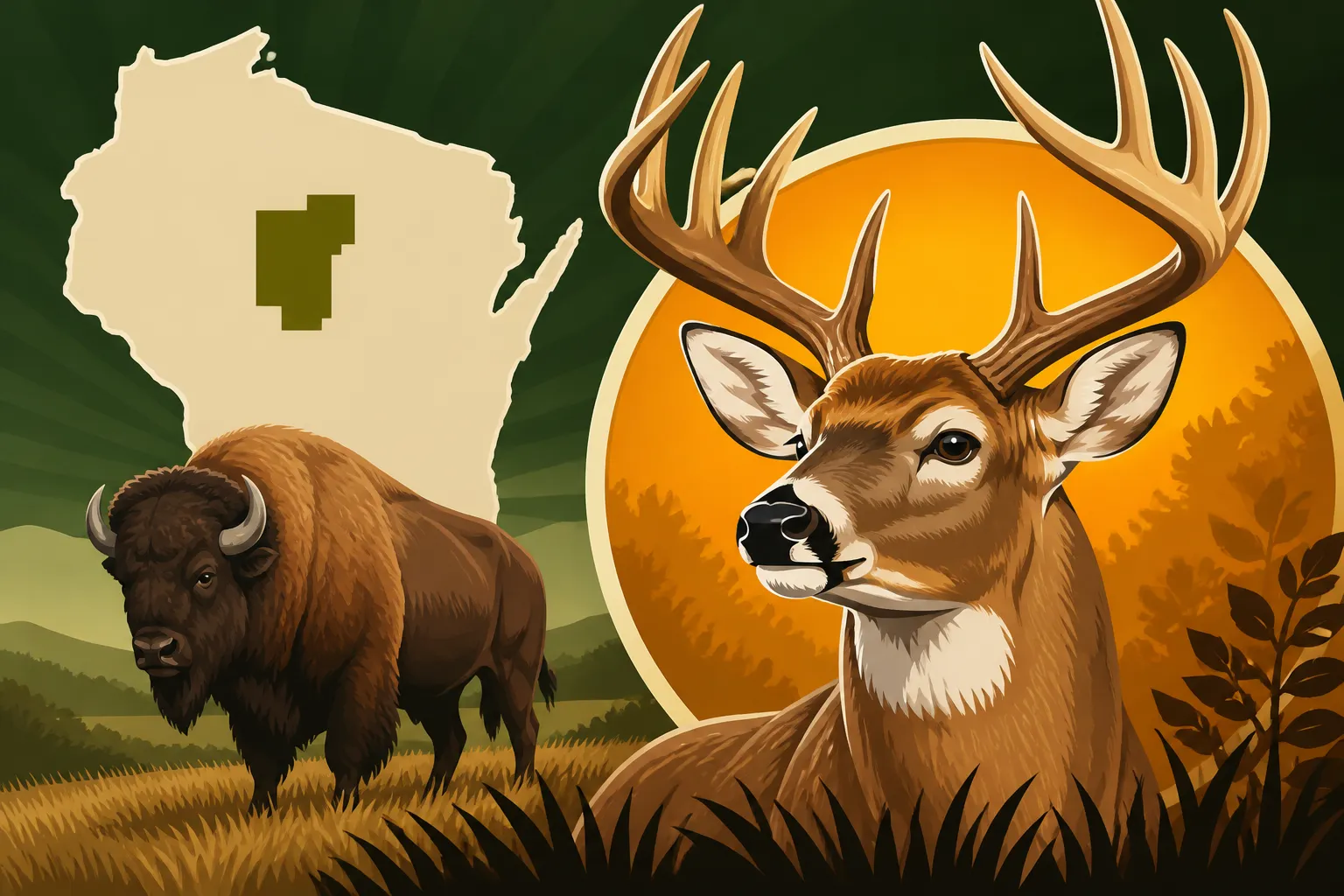
It's no secret that hunters dream of connecting with a mature whitetail, the kind with heavy antlers that tell a story of age and wisdom. Many of us chase that dream every season, often coming up short and wondering what makes some places so consistently productive for truly enormous bucks. When it comes to Wisconsin, one name almost always rises to the top: Buffalo County. This guide dives deep into the unique blend of factors that makes this corner of the state a legitimate giant factory, exploring why it truly is a legendary place for big bucks.
The Unique Geography of Buffalo County
The very landscape of Buffalo County is a primary character in its big buck story. Nestled in the heart of Wisconsin's renowned Driftless Area, this region escaped the flattening effects of the last glaciers, leaving behind a dramatic, rugged topography unlike much of the rest of the state. It’s not just pretty; it’s prime deer habitat.
Driftless Area Topography and its Impact
Imagine a land carved by centuries of erosion, where steep, heavily wooded ridges plunge into deep, winding valleys known locally as "coulees." These aren't gentle slopes; we're talking about serious climbs and descents that make simply walking a workout. This challenging terrain, often bordering the majestic Mississippi River, creates a natural fortress for deer. The sheer difficulty of access in many areas means that mature bucks can find significant sanctuary from human pressure, allowing them to grow old.
The intricate network of these coulees and ridges also acts as natural travel corridors and pinch points. Deer, being creatures of efficiency, will use the paths of least resistance, often following the contours of a ridge or the bottom of a coulee. Hunters who learn to read this landscape, understand Hunting Wisconsin Coulees and Ridge Tops and how wind and thermals play on these features, can gain a significant advantage. The countless hidden pockets and sheltered benches also provide ideal bedding areas, often out of sight and scent of all but the most dedicated hunters.
Diverse Habitats and Food Sources
Beyond the topography, Buffalo County boasts an incredible diversity of habitats that provide year-round nutrition for its deer herd. This isn't just a patch of woods; it's a mosaic of agricultural fields, mature timber, and river bottomlands, all contributing to a rich buffet.
You’ll find sprawling fields of corn, soybeans, and alfalfa dominating the flatter valley floors and ridge tops. These agricultural crops provide high-protein nutrition during the summer and early fall, building robust body mass and supporting antler growth. As the seasons progress, the waste grain from harvested fields becomes a critical late-season food source, helping deer pack on calories for the harsh Wisconsin winter. This consistent, high-quality food source is an absolute game-changer for growing deer to their full potential.
But it’s not just agriculture. The steep hillsides are covered in hardwoods, particularly oak species, which produce abundant acorn crops in good years. Acorns are a deer magnet, offering high fat and carbohydrate content, essential for pre-rut conditioning and winter survival. Mixed in are areas of thick brush, cedar swamps in some low-lying areas, and river bottom browse, all contributing to a varied diet. This nutritional abundance, combined with protective cover, is a significant reason Why the Driftless Grows Bigger Bucks.
Strategic Deer Management and Hunter Culture
Geography and food alone aren't enough to explain the legendary status of Buffalo County. A crucial component lies in how deer have been managed and, perhaps even more importantly, the deeply ingrained hunter culture that prioritizes letting younger bucks walk. It’s a collective mindset that has truly shaped the herd.
Historical Context of Quality Deer Management (QDM)
While not always formalized by official regulations, the principles of Quality Deer Management (QDM) have been practiced, often informally, by Buffalo County hunters for decades. Long before QDM became a widespread buzzword, many landowners and hunting clubs in the area recognized the value of allowing bucks to mature. They understood that big antlers don't just magically appear; they require age. This meant a conscious effort to pass on yearling and even 2.5-year-old bucks, allowing them to reach their full potential.
This grassroots QDM philosophy wasn't just about growing bigger antlers; it was about creating a healthier, more balanced deer herd. By reducing pressure on younger bucks, more older, mature animals remained in the population, leading to a better buck-to-doe ratio and more intense, prolonged rut activity. This historical commitment to selective harvest, often fueled by local pride and friendly competition for bragging rights, created a positive feedback loop that continues to yield impressive results. It's a testament to what a community of hunters can achieve when they share a common goal.
Private Land Holdings and Controlled Access
A significant portion of Buffalo County's deer habitat is privately owned, and this plays a massive role in its big buck reputation. Unlike heavily pressured public lands where any legal buck is often fair game, private land ownership allows for much greater control over harvest strategies. Many of these landowners, whether individuals or hunting clubs, actively manage their properties for quality deer, often adhering to strict harvest guidelines that go beyond state regulations.
Hunting leases are common, allowing groups of hunters to invest in a piece of land and implement their own management practices. This controlled access reduces overall hunter pressure on the deer herd, especially on the mature bucks. Deer on these managed private parcels learn where they are safe, often retreating to these havens when hunting pressure intensifies on surrounding public or less-managed land. While there is Public Hunting Land in Wisconsin available, the extensive private land network in Buffalo County provides critical refuges that contribute significantly to the high number of mature animals available for harvest.
The Role of Genetics and Age Structure
When we talk about big bucks, it's a trifecta: nutrition, age, and genetics. Buffalo County checks all three boxes with flying colors, but the interplay between genetics and the ability for bucks to reach maturity is particularly important.
Healthy Deer Genetics in the Region
Deer genetics are often debated, but it's clear that a healthy, well-fed deer herd with good genetics and the opportunity to age will produce impressive antlers. In Buffalo County, the combination of abundant, high-quality food sources and reduced pressure allows the genetic potential of the local deer to truly shine through. Bucks aren't just surviving; they're thriving.
While there isn't a specific "Buffalo County super gene" that makes deer inherently bigger, the consistent environmental conditions allow any latent genetic potential for larger body size and antler growth to be expressed. When a buck consistently has access to protein-rich crops, acorns, and natural browse, its body doesn't have to divert energy from antler growth to simply surviving. This optimal environment means that those deer with good antler-growing genes are able to develop impressive racks year after year, reinforcing the region's reputation.
The Importance of Age to Antler Growth
This is arguably the most critical factor. A deer, like any animal, needs time to grow. A yearling buck (1.5 years old) might have spikes or a small fork horn, while a 2.5-year-old might carry a respectable 8-point rack. But to see those truly enormous, heavy-beamed antlers, a buck needs to reach 3.5, 4.5, or even 5.5+ years old. This is when a buck's antler growth typically peaks, and its full genetic potential is realized. Wisconsin Buck Age Structure is a key indicator of a healthy deer population capable of producing trophy animals.
In Buffalo County, the combination of private land management, hunter selectivity, and challenging terrain means a higher percentage of bucks survive to these older age classes. Hunters are often willing to pass on smaller bucks in hopes of encountering a true giant. This patience and foresight directly contribute to the impressive statistics Buffalo County boasts in various Wisconsin Boone and Crockett Whitetails record books. Without bucks reaching maturity, even the best genetics and nutrition wouldn't produce the monster racks this area is famous for.
Abundant Food Sources and Nutrition
We've touched on it already, but let's really dig into the smorgasbord that Buffalo County offers its deer herd. It's not just that there's food; it's the quality and variety of it throughout the entire year that makes a monumental difference.
Agricultural Fields as a Primary Food Source
Drive through Buffalo County, and you'll immediately notice the vast expanse of agricultural fields. Corn, soybeans, and alfalfa are king here, and they are literally a lifeline for the deer. From spring green-up through late fall, these crops provide an incredible amount of high-energy and protein-rich forage.
During the spring and summer, young soybean and alfalfa plants are packed with protein, crucial for fawn development and antler growth in bucks. As summer progresses into fall, cornfields offer a bounty of carbohydrates, helping deer build up fat reserves for the breeding season and the lean winter months. After harvest, the waste grain left in the fields provides an easily accessible and highly palatable food source. This continuous supply of diverse, high-quality forage throughout the growing season allows deer to reach their maximum body size and antler potential. It's a nutritional goldmine that few other areas can match in consistency and volume.
Natural Forage and Mast Crops
While agriculture provides the bulk of the calories, the natural landscape offers critical supplements. The oak-dominated ridges and hardwood forests are hugely important for mast crops, especially acorns. During years of heavy acorn production, these areas become prime feeding grounds, providing deer with fat and energy-dense food that's highly digestible. Hunting After an Acorn Failure presents different challenges, but in a normal year, the natural mast is a powerful draw.
Additionally, the diverse understory within the wooded coulees and river bottoms offers a variety of natural browse, from woody stems to forbs and grasses. This natural forage provides essential vitamins and minerals that complement the agricultural diet. Thickets of dogwood, sumac, and young maples, often found in early successional habitats or along field edges, are frequently browsed by deer. The combination of both cultivated and wild food sources ensures a balanced and robust diet, vital for sustaining a healthy, trophy-producing deer herd.
Hunter Pressure and Smart Tactics
With a reputation like Buffalo County's, it's inevitable that hunter numbers will be high. This creates a unique dynamic where deer are pressured, but the landscape itself often provides the solutions for both the deer and the savvy hunter.
Navigating High Expectations and Competition
Let's be real: everyone wants a Buffalo County monster. This means the area sees significant hunter interest, especially during the Wisconsin's Nine-Day Gun Deer Season and the early archery season. You'll encounter more hunters here than in many other parts of the state. This high expectation can lead to frustration if you're not prepared for the competition. However, this pressure also means deer are smart, elusive, and incredibly adaptive.
Hunters often have to work harder, walk further, and think smarter to outwit a mature buck in this environment. It's not uncommon for individuals and hunting groups to spend countless hours Scouting Wisconsin Public Land Before Season, analyzing aerial maps, and employing game cameras to understand deer movement patterns. The intense competition also fosters a culture of innovation among hunters, constantly seeking new tactics and overlooked spots. It's a challenge, but for many, the potential reward is worth the extra effort.
The Advantage of Challenging Terrain
While the steep coulees and dense woods can be daunting for hunters, they are a massive advantage for the deer. The rugged topography naturally disperses hunters, meaning that even with high overall numbers, many areas remain relatively untouched. Bucks quickly learn to utilize the steepest, thickest, and most inaccessible portions of the landscape as bedding and escape cover.
A hunter willing to put in the physical effort to access these remote spots, often far from roads and trails, stands a much better chance of encountering an unpressured mature deer. The terrain also breaks up sound and sight, allowing deer to move with greater confidence within their home range. This natural defense mechanism of the landscape ensures that a significant portion of the deer herd, especially the older bucks, has ample opportunity to evade hunters throughout the season, further contributing to their longevity and, ultimately, their antler size. It's tough on the legs, but good for the deer.
Here's a quick comparison of factors influencing big bucks in Buffalo County versus some typical regions:
| Factor | Buffalo County (Driftless) | Northern Forest Zone | Farmland Zone (e.g., Eastern WI) |
|---|---|---|---|
| Topography | Steep coulees, ridges, river bluffs | Flat to rolling, dense timber, swamps | Flat, open agricultural fields, small woodlots |
| Food Sources | Abundant agriculture (corn, beans, alfalfa), diverse mast | Predominantly natural browse, some logging cuts | Intense agriculture, limited diverse natural mast |
| Age Structure | High percentage of older bucks (3.5+), QDM culture | Can be lower due to harsher winters, less QDM focus | Varies; sometimes higher pressure on younger bucks |
| Hunter Pressure | High overall, but terrain disperses; extensive private QDM | Moderate to high, esp. on public land | Moderate to high, varying by county |
| Genetics | Excellent potential realized due to nutrition/age | Good, but often limited by nutrition/harsh winters | Good, but often limited by age/pressure |
| Cover/Sanctuary | Extensive, rugged, hard-to-access pockets | Vast, dense timber, thick swamps | Scattered, smaller woodlots, standing crops |
| Big Buck Potential | Exceptionally High | Moderate to High | Moderate to High |
A Legacy of Giants
Buffalo County isn't just a place where big bucks can be found; it's a place where they are consistently harvested, adding to a rich legacy and a compelling vision for the future.
Record Book Bucks and Local Legends
The proof is in the numbers, and Buffalo County consistently produces more record-book whitetails, both typical and non-typical, than almost any other county in the nation. It's not just a few outliers; it's a steady stream of deer that meet or exceed the rigorous scoring requirements of organizations like Boone & Crockett and Pope & Young. This incredible track record has cemented its status as a premier destination for trophy deer hunters.
Every year, new legends emerge from the coulees and ridge tops. Local hunters have their own stories, passed down through generations, of particular bucks, or "ghosts," that roamed certain properties for years before finally being taken. The widespread use of trail cameras by hunters and landowners has also brought these giants out of the shadows, showcasing their incredible size and giving hunters a glimpse of the potential that exists in the county. This tangible evidence fuels the passion and commitment to the region's unique hunting culture.
The Future of Big Buck Hunting in Buffalo County
So, what does the future hold for this legendary deer hunting mecca? The commitment to managing for quality deer, both by the Wisconsin DNR through its broader Wisconsin Deer Management Zones and especially by private landowners, remains strong. As hunting technology advances and more hunters adopt sophisticated scouting and hunting tactics, the challenge to consistently harvest truly mature bucks will continue.
However, the core ingredients for success in Buffalo County aren't going anywhere: the rugged, deer-friendly landscape, the rich agricultural bounty, and the deeply ingrained hunter ethic of patience and quality management. It's a place that teaches you to hunt harder, to respect the deer, and to understand that a truly magnificent animal is often the result of years of careful stewardship and a little bit of magic from Mother Nature. Whether you're planning your first trip or have hunted its hills for decades, Buffalo County will always offer the tantalizing promise of a lifetime buck.
Disclaimer
Please note that hunting regulations, season dates, and access rules can change. Always consult the official Wisconsin Department of Natural Resources (DNR) regulations and guidelines before planning any hunting trip. This content is for informational purposes and should not be considered legal or definitive advice.