Shotgun Slugs for Wisconsin Deer
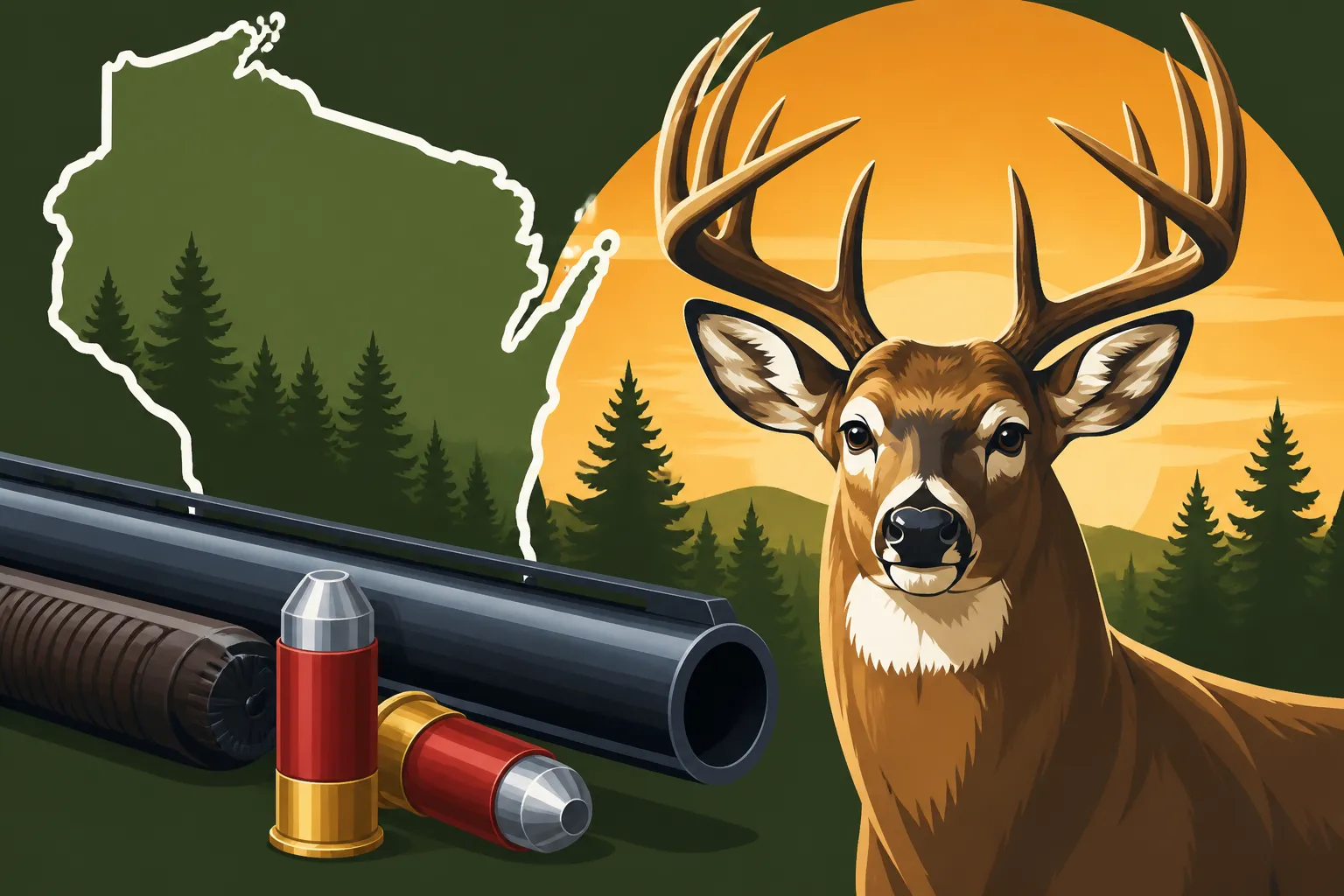
For many Wisconsin deer hunters, the sound of a shotgun slug thundering through the timber is as iconic as the crunch of frosted leaves underfoot. While modern rifles often grab the spotlight, there are still vast swaths of our beautiful state where shotguns, loaded with slugs, are not just a preference but a legal necessity for deer hunting. If you've ever felt overwhelmed by the sheer variety of slugs on the market, or confused about where and when you can even use a shotgun for deer, you're not alone. This comprehensive guide is here to demystify shotgun slugs for Wisconsin deer hunting, covering everything from the regulations to the ballistics, helping you confidently head into the woods.
Understanding Wisconsin's Shotgun-Specific Zones and Rules
Wisconsin’s diverse landscapes mean diverse hunting regulations, and understanding where you can legally carry a slug gun for deer is paramount. It’s not just about what you can use, but where you can use it, and these rules are in place for safety, especially in more populated or agricultural areas.
Where Shotguns Are King: The No-Rifle Areas
Historically, certain areas of Wisconsin, particularly those with higher population densities, smaller parcels of land, or significant agricultural development, have restricted the use of rifles for deer hunting. The rationale is often safety: a rifle bullet can travel for miles, while a shotgun slug's effective range is significantly shorter, reducing the risk of accidental damage or injury beyond your intended target. These areas are typically found in the southern, central, and eastern parts of the state, often referred to as "shotgun-only" zones or counties. It’s crucial to check the current Wisconsin Department of Natural Resources (DNR) regulations each year, as zone boundaries and specific county rules can change. A great resource for this kind of information, including mapping tools, is often available through platforms like GoHunt, which can help you visualize these zones clearly.
Imagine you're hunting a small woodlot adjacent to a sprawling cornfield in southeastern Wisconsin. A rifle shot, even at a deer standing well within the property line, carries the potential to travel across the field and into a distant farmhouse or road. A shotgun slug, while still powerful and deadly, dissipates energy much faster, making it a safer choice in these environments. This is why many hunters in these regions have become absolute masters of their slug guns, learning to get maximum performance out of them. They know that while their northern counterparts might be reaching out with a .30-06, their 12-gauge slug is the perfect tool for the job at hand. For a broader understanding of how these designations fit into the larger picture, you might want to read up on Wisconsin Deer Management Zones.
The Legalities of Slug Ammunition
When we talk about shotgun slugs for deer, we're specifically referring to solid projectiles, not birdshot or buckshot. Wisconsin regulations are quite clear that for deer, you must use a single projectile. This means no buckshot, which consists of multiple large pellets. While buckshot is legal for some other game animals in Wisconsin, it is expressly forbidden for deer. Always double-check your ammunition to ensure you’re loading slugs, not buckshot, especially if you also hunt other game with the same shotgun. The last thing any hunter wants is to be caught unknowingly violating a regulation due to a simple ammunition mistake.
Beyond ensuring it’s a single projectile, there aren't many restrictions on the type of slug, which opens up a world of choices. Whether it's a traditional Foster-style slug or a more aerodynamic sabot slug, as long as it's a single projectile designed for deer, you're generally good to go. The challenge, then, becomes choosing the right slug for your specific shotgun and hunting conditions. This flexibility in slug choice is a boon for hunters, allowing for customization to maximize accuracy and effectiveness. However, it also means a bit of homework is required to understand which slugs will perform best with your setup. For a deeper dive into the broader legal aspects of what you can bring into the woods, check out Legal Firearms for Wisconsin Deer.
The Science of the Slug: Sabots vs. Foster
Understanding the different types of slugs available is crucial for any deer hunter. The choice between a sabot and a Foster slug isn't just a matter of brand preference; it dictates what kind of barrel you should be using and, ultimately, your effective range and accuracy in the field.
Foster (Rifled) Slugs: The Classic Smoothbore Choice
Foster slugs are what most people picture when they think of a "shotgun slug." These are solid lead projectiles, often with distinctive external "rifling" or grooves, though these grooves don't actually impart spin. Their primary purpose is to allow the slug to compress slightly when passing through a choked barrel, and to centralize the mass for stability during flight. Foster slugs are designed for smoothbore shotgun barrels, meaning barrels without internal rifling. They achieve some stability through a "shuttlecock" effect, where the heavier front end and lighter, hollowed rear act like a badminton shuttlecock, flying nose-forward.
These slugs are generally effective out to about 75-100 yards, sometimes a bit further with a well-matched gun and hunter. Beyond that, their accuracy falls off significantly due to their relatively poor aerodynamic properties. For many years, and still today in some areas, the smoothbore shotgun with Foster slugs was the workhorse of deer hunting, particularly in brushy timber where shots were typically close. They deliver a massive amount of energy on impact, creating a large wound channel and often dropping deer quickly. If your shotgun has a smoothbore barrel, and you hunt in thick cover where shots are almost always under 75 yards, Foster slugs are a reliable, economical, and highly effective choice. They are also less sensitive to choke constriction than sabot slugs, generally performing best with improved cylinder or modified chokes.
Sabot Slugs: Precision for Rifled Barrels
Sabot slugs are a completely different animal, designed to maximize accuracy and extend the effective range of a shotgun. Unlike Foster slugs, the projectile itself is typically a smaller, rifle-like bullet made of lead, copper, or a combination, encased in a plastic "sabot" (a French word for shoe). When fired, the sabot engages the rifling of a rifled shotgun barrel, imparting a stabilizing spin to the projectile, much like a rifle bullet. Once the slug exits the barrel, the sabot peels away, leaving the aerodynamic projectile to fly true to the target.
This design allows sabot slugs to achieve significantly greater accuracy and range compared to Foster slugs, often pushing effective distances out to 150-200 yards, and even beyond with highly specialized setups and skilled shooters. Many hunters find that a dedicated rifled slug barrel, paired with high-quality sabot slugs, can rival the accuracy of some centerfire rifles at moderate ranges. However, they are more expensive than Foster slugs and are absolutely not designed for smoothbore barrels; firing them through a smoothbore will result in poor accuracy and potential safety issues due to the sabot not engaging rifling. If you're serious about extending your shotgun's range and precision in Wisconsin's open agricultural fields or long timber lanes, investing in a rifled barrel and matching it with sabot slugs is the way to go. This distinction is so important that we often delve into Rifled Versus Smoothbore Slug Barrels as a topic all its own.
Optimizing Your Shotgun for Deer: Beyond the Barrel
Having the right slug is only half the battle; your shotgun itself needs to be set up to deliver that slug accurately. This means thinking about the firearm’s type, the gauge you choose, and critical accessories like sights and optics.
Shotgun Types and Gauge Considerations
When it comes to shotguns for deer, you primarily have two gauges to consider: 12-gauge and 20-gauge. Both are perfectly capable of ethically taking a deer, but they each have their pros and cons.
-
12-Gauge: The 12-gauge is the most common and versatile shotgun gauge, offering the widest array of slug options and delivering maximum kinetic energy. Historically, the recoil of 12-gauge slugs could be quite stout, but modern ammunition and shotgun designs have made them more manageable. If you want the most power and broadest selection of slugs, and you can handle the recoil, the 12-gauge is an excellent choice. Its heavier slug mass generally translates to excellent knockdown power. For example, a big Wisconsin buck hit cleanly with a 12-gauge sabot slug is very likely to drop on the spot or within a very short distance, reducing tracking efforts, which can be crucial on cold November days.
-
20-Gauge: The 20-gauge has gained significant popularity in recent years, especially with the advancement of sabot slug technology. Modern 20-gauge sabot slugs can achieve velocities and energies that rival or even exceed older 12-gauge slug designs, but with noticeably less recoil. This makes the 20-gauge an excellent option for smaller-framed hunters, youth hunters (especially during Hunting the Wisconsin Youth Deer Hunt), or anyone looking for a more comfortable shooting experience without sacrificing performance. The lighter recoil often leads to better accuracy from the shooter, as flinching is reduced, and faster follow-up shots are more manageable. Many hunters find that a well-placed 20-gauge slug is just as effective as a 12-gauge, and the reduced recoil allows for more practice, which always improves field performance. When you’re putting in time at the range, trying to dial in your setup, that reduced recoil really makes a difference.
Beyond gauge, the action type also plays a role. Pump-action shotguns are rugged, reliable, and generally more affordable, making them a common choice. Semi-automatic shotguns can offer faster follow-up shots and often absorb recoil better due to their gas-operated systems, but they can be more complex to clean and maintain. Break-action (single or double barrel) shotguns are simple and reliable but limit shot capacity.
Chokes, Sights, and Scopes for Slug Accuracy
To maximize the accuracy of your shotgun for deer, especially when using slugs, you'll need to pay attention to your barrel, choke, and sighting system.
-
Chokes: For smoothbore barrels using Foster slugs, a cylinder, improved cylinder, or light modified choke is generally recommended. Tighter chokes can deform the slug, leading to reduced accuracy and potentially unsafe pressure. Never use a full or extra-full choke with Foster-style slugs. For rifled barrels using sabot slugs, the choke tube is usually removed entirely, or a specialized rifled choke tube might be used (though a full rifled barrel is superior). Always consult your shotgun and slug manufacturer's recommendations.
-
Sights: For closer-range smoothbore hunting, simple bead sights can work, but they are not ideal for precision. Improved options include rifle-style open sights (a front blade and a rear notch) or ghost ring sights, which offer faster target acquisition and better accuracy than a simple bead. These are a significant upgrade for any shotgun dedicated to slug use. For instance, a peep sight paired with a fiber optic front sight can be incredibly quick to acquire a target in the thick woods of northern Wisconsin.
-
Optics: This is where you can truly transform a slug gun's accuracy. A low-power variable scope (e.g., 1-4x, 1.5-5x, or 2-7x) is a game-changer for slug hunting. It magnifies the target, allows for precise aiming, and helps in low-light conditions. Many scopes designed for shotguns feature specialized reticles with bullet drop compensation markings for slugs, making it easier to hold over for longer shots. Mounting a scope on a shotgun often requires a sturdy base and rings, as shotguns, especially 12-gauges, produce significant recoil. A fixed power scope around 2.5x or 3x can also be an excellent, rugged choice for timber hunting. When zeroing in your scope, remember the ballistic differences between slugs and rifle cartridges; slugs drop much faster. You'll definitely want to spend time at the range, much like you would if you were Zeroing at 100 Yards for Woods Hunting with a rifle, to understand your slug's trajectory. You might even use a resource like GoHunt's gear reviews to find scope recommendations specific to slug guns.
On the Stand: Practical Slug Shooting and Ethical Considerations
Now that your shotgun is dialed in, it's time to talk about what truly matters: making an ethical, clean kill in the field. This involves understanding your effective range, precise shot placement, and managing the unique characteristics of slug shooting.
Effective Range and Shot Placement
Knowing your personal effective range with your slug gun is paramount. This isn't just about what the manufacturer claims the slug can do, but what you can consistently do under field conditions. For most hunters with a smoothbore shotgun and Foster slugs, this means practicing regularly and limiting shots to 75-100 yards. For those with a rifled barrel and sabot slugs, that range might extend to 150-200 yards, but only with diligent practice. Don't push your limits. An ethical hunter knows when to pass on a shot that's beyond their capabilities.
Practice shooting from various field positions – standing, kneeling, sitting, and even off a sturdy rest – not just from a bench. This will give you a realistic idea of your true accuracy. When you're out in the woods, finding a good, stable rest, whether it's a tree, a fence post, or shooting sticks, can drastically improve your accuracy, especially for those longer shots across a field or down a logging road.
As for shot placement, the goal remains the same as with any other firearm: a clean shot to the vital organs (heart and lungs). The large diameter of a shotgun slug creates a substantial wound channel, which is highly effective. Aim for the "crease" behind the shoulder, targeting the deer's vitals. Avoid "Texas heart shots" or shots at the deer's neck unless you are absolutely confident in your ability and the range is extremely close. A well-placed slug will typically result in a quick, humane harvest, minimizing tracking and suffering. If you do have to track, knowing how to do so effectively, especially if the weather turns, is crucial. For instance, Tracking a Deer in Wisconsin Snow can be a demanding task, and minimizing the distance a deer travels is always the goal.
Managing Recoil and Follow-Up Shots
One of the most common complaints about shotgun slugs, especially 12-gauge, is the recoil. It's significant, and if not managed properly, it can lead to flinching, poor accuracy, and a reluctance to practice.
Here are some tips for managing recoil:
- Proper Stance and Grip: Stand with a solid, athletic stance, leaning slightly into the gun. Hold the fore-end firmly, and pull the buttstock tightly into your shoulder pocket, not just resting it on your bicep. This distributes the recoil over a larger area and prevents the gun from slamming back into you.
- Good Recoil Pad: Most modern shotguns come with decent recoil pads, but some older models or budget guns might benefit greatly from an aftermarket pad. This is one of the most cost-effective upgrades for comfort.
- Muzzle Brakes: Some specialized slug guns, particularly those with rifled barrels, can be fitted with muzzle brakes that significantly reduce felt recoil.
- Gauge and Load Choice: As mentioned, a 20-gauge offers significantly less recoil. Even within the 12-gauge, some "reduced recoil" slug loads are available, though they might sacrifice a bit of velocity and energy. For more intense shooting, heavier shotguns naturally absorb more recoil.
- Hearing Protection: Always, always wear adequate hearing protection. Muzzle blast contributes to the perceived "kick" and can make recoil feel worse than it is, not to mention causing permanent hearing damage.
Practicing follow-up shots is also important. While a well-placed slug often anchors a deer, sometimes a second shot is necessary. Familiarize yourself with smoothly cycling your pump-action or letting your semi-auto operate while maintaining your sight picture. The ability to quickly and accurately send a second slug can prevent a wounded animal from escaping. Remember, hunting is about efficiency and respect for the animal, and being proficient with your firearm for both the first and subsequent shots is part of that responsibility.
Here’s a quick overview of slug types:
| Slug Type | Barrel Type Recommended | Primary Use | Typical Effective Range | Advantages | Disadvantages |
|---|---|---|---|---|---|
| Foster | Smoothbore | Close-range, thick cover | 50-100 yards | Economical, good knockdown power, reliable | Less accurate at longer ranges, slower |
| Sabot | Rifled Barrel | Longer range, open country/fields | 100-200+ yards | High accuracy, extended range, flat trajectory | More expensive, requires rifled barrel, lighter |
This table provides a generalized view; individual shotgun and slug combinations will vary in performance. Always test different brands and types of slugs in your specific firearm to see what performs best. This kind of testing is where tools from companies like GoHunt, which often compile ballistic data and user reviews, can be really helpful.
In conclusion, navigating the world of shotgun slugs for Wisconsin deer hunting doesn't have to be confusing. By understanding the regulations for your specific hunting area, selecting the right slug type for your barrel, and diligently practicing with your setup, you can become a highly effective and ethical slug gun hunter. Whether you're in the rolling farmlands of southern Wisconsin or the dense woods of the central part of the state, your shotgun can be a formidable tool for deer season.
Disclaimer
This article is for general informational purposes only and does not constitute professional advice. Laws, prices and regulations vary by location and change over time. Consult a qualified professional for guidance on your specific situation.