Gray Versus Fox Squirrels in Wisconsin
If you've ever spent time observing the tree line at the edge of a Wisconsin woodlot or sat quietly in a sprawling oak forest, you've probably noticed squirrels. But have you ever paused to truly consider if that bushy-tailed critter gathering nuts is a gray squirrel or a fox squirrel? It's a common moment of curiosity for many, and sometimes, a crucial distinction for hunters looking to understand the habits and habitats of their quarry. This guide will help you easily tell the difference between these two common and popular small game animals in Wisconsin, and what those differences mean for finding them in the field.
Understanding the Gray Squirrel: The Forest Dweller
The gray squirrel, Sciurus carolinensis, is probably what most people picture when they think of a squirrel. They're widespread, often seen scampering through urban parks just as readily as deep timber. But don't let their commonality fool you; these are intelligent, agile creatures perfectly adapted to life in the trees. For hunters, knowing their habits is key to a successful outing.
Distinctive Appearance of the Gray Squirrel
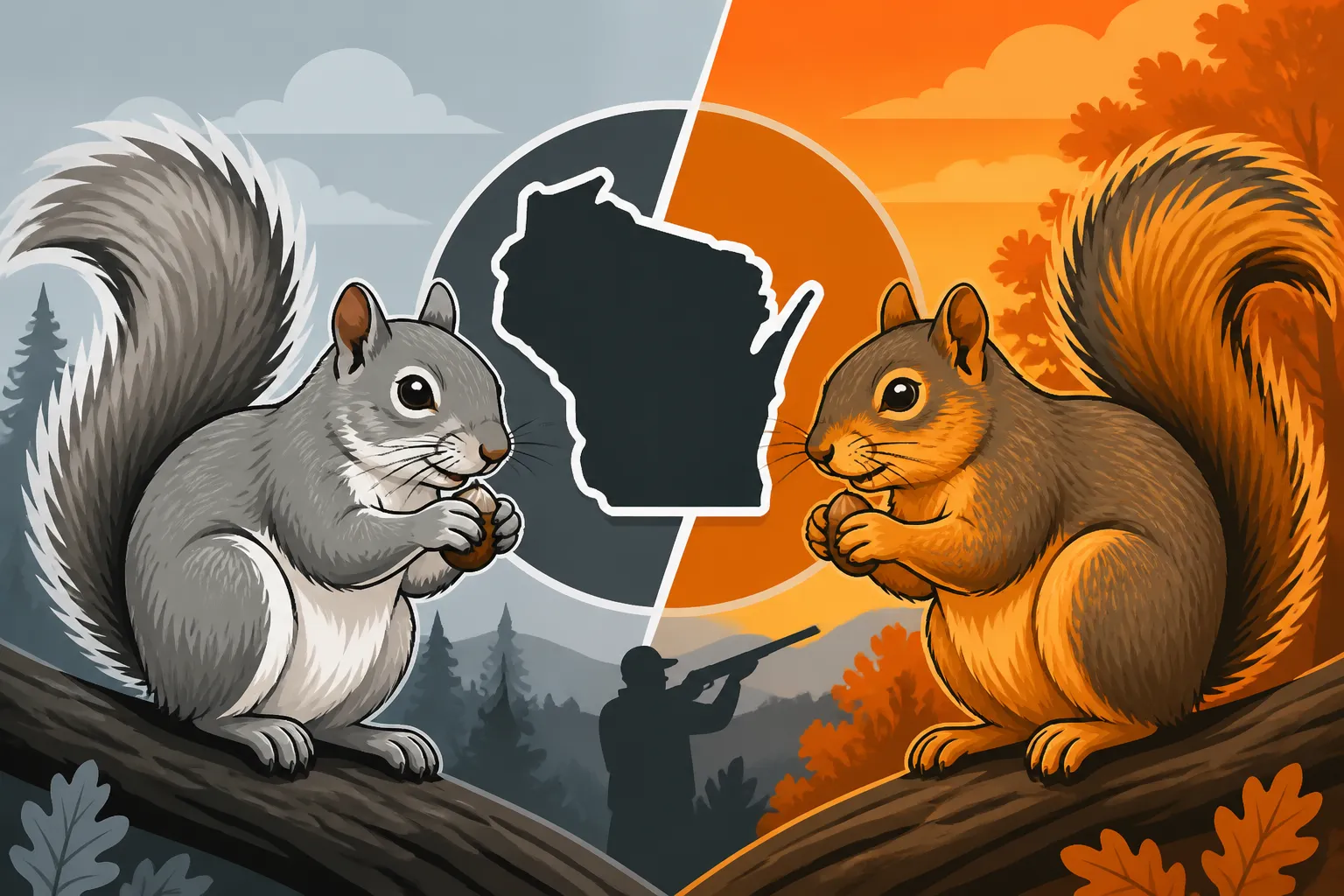
When you're trying to identify a gray squirrel, the first thing that usually jumps out at you is, well, its gray color! They typically have a salt-and-pepper gray coat on their back and sides, often with a subtle reddish wash along the hips and face, especially in winter. Their belly is usually a clean white or light gray. They are generally smaller and more slender than their fox squirrel cousins, with a somewhat sleeker build.
One fascinating aspect of gray squirrels in Wisconsin, particularly in certain regions, is the presence of melanistic individuals – what we commonly call "black squirrels." These aren't a different species; they're simply a genetic variation of the eastern gray squirrel, exhibiting an abundance of melanin that makes their fur dark black. If you see a solid black squirrel, it's almost certainly a gray squirrel in its melanistic phase. Their bushy tail, while also gray, often has white-tipped hairs that give it a distinctive frosted look, especially when compared to the more reddish-orange fringe of a fox squirrel's tail.
Preferred Habitat and Behavior
Gray squirrels are true creatures of the mature hardwood forest. They absolutely thrive in timber stands dominated by nut-producing trees like oaks, hickories, walnuts, and beech. These trees provide not only their primary food source but also the dense canopy and tree cavities they rely on for shelter and nesting. You'll find them in extensive tracts of forest, from the river bottoms of the Driftless Area to the larger woodlots scattered across the state. They are incredibly arboreal, meaning they spend a significant portion of their lives in the trees, often leaping from branch to branch with astonishing agility.
Their behavior is often characterized by frantic energy, especially during the morning and late afternoon hours when they are most actively foraging. They're notorious for chattering and scolding, often letting out a series of barks and chirps when they spot a perceived threat (like a hunter!). When it comes to caching food, gray squirrels are "scatter hoarders." They bury individual nuts in numerous locations, relying on their excellent memory and sense of smell to retrieve them later. This behavior keeps them moving across the forest floor, constantly searching for new burying spots or old caches, making them a dynamic target for a still-hunter. Understanding these patterns is critical when you're Squirrel Hunting a Wisconsin Oak Ridge or trying to figure out where they might be feeding.
Unpacking the Fox Squirrel: The Edge Dweller
The fox squirrel, Sciurus niger, often shares territory with its gray cousin, but it has a distinct preference for slightly different environments and often exhibits a bolder, more ground-oriented demeanor. They are the largest tree squirrel in North America, and their robust size often makes them a prize for small game hunters.
Distinguishing Features of the Fox Squirrel
When you encounter a fox squirrel, its size is usually the first indicator. They are noticeably larger and heavier-bodied than gray squirrels, often appearing stockier and more robust. Their fur coloration can be quite variable, ranging from a grizzled brownish-gray with hints of rust to a vibrant reddish-orange on their belly, sides, and tail. This rusty or foxy coloration is where they get their name and is a key identifier. Some fox squirrels might have darker patches, but the prominent reddish or orange tones are often present, particularly on the underside and around the ears.
Their tail, while bushy, tends to be less uniformly gray and frosted than a gray squirrel's. Instead, it often has a more pronounced reddish-orange fringe along the edges, and the overall tail might appear slightly less dense. Unlike gray squirrels, melanistic (black) fox squirrels are far less common. If you're looking at a large, reddish-bellied squirrel with a somewhat "patchy" or mixed-color coat, you're almost certainly looking at a fox squirrel.
Habitat Preferences and Behavioral Traits
Fox squirrels generally prefer more open woodlands, woodlots, and forest edges, especially those bordering agricultural fields or open prairies. You'll often find them along fence rows, in smaller stands of mature trees, or in river bottomlands where the forest transitions into open areas. They are more tolerant of fragmented habitats and seem to prefer spaces with less dense canopy, allowing more sunlight to reach the forest floor. This makes them a common sight in the farm country of southern Wisconsin, where they frequent the edges of cornfields and soybean plots, especially if there are scattered mature nut trees nearby.
While they are adept climbers and will seek refuge in trees, fox squirrels spend considerably more time on the ground compared to gray squirrels. They forage extensively on the forest floor, often digging for buried nuts, seeds, and even agricultural crops like corn. This makes them a prime target if you're Hunting a Standing Cornfield in Farm Country. They can be quite bold and curious, sometimes allowing a closer approach than their more skittish gray counterparts. Fox squirrels are also "scatter hoarders," burying nuts individually like grays, but they might also dig larger, communal middens where they cache multiple nuts, especially around the base of a favorite tree. Their foraging often involves a lot of digging, and you'll often see the tell-tale signs of their activity, such as Reading Cuttings Under an Oak or disturbed leaf litter.
Where to Find Each Species in Wisconsin
While there's certainly overlap in their ranges, understanding the general preferences of each squirrel species can greatly improve your scouting and hunting success in Wisconsin. It's not uncommon to find both species in the same general area, but one will often be more dominant depending on the specific microhabitat.
Gray Squirrel Strongholds
Gray squirrels are most prevalent in areas with extensive, mature hardwood forests. Think of the larger state and county forests, or even larger private woodlots that have been relatively undisturbed for decades. The deep timber of central and northern Wisconsin, wherever nut-bearing trees like oaks and hickories are found, will hold gray squirrels in good numbers. They are also common in the more densely forested parts of the Driftless Area Deer Hunting in Wisconsin, particularly in the steep coulees and valley floors with abundant mast crops.
These squirrels rely heavily on the tree canopy for travel and escape, so areas with a continuous overhead network of branches are ideal. If you're in a big timber stand, listening for their distinct barks and scolding chatter can often lead you to a population. Remember, these are the squirrels that really appreciate vast, unbroken stretches of woods.
Fox Squirrel Territory
Fox squirrels, on the other hand, tend to dominate in more open, fragmented woodlands, especially in the agricultural regions of southern and western Wisconsin. They thrive in smaller woodlots, riparian corridors along rivers and streams, and timber fringes bordering fields of corn, soybeans, or even hay. If you're hunting in a county known for its rich farmland, like much of southeastern Wisconsin, you're more likely to encounter fox squirrels.
Their preference for edges means you'll often find them where the woods meet a field, or where a narrow strip of timber follows a creek through open country. They are less reliant on a continuous canopy, often traversing open ground between trees, which makes them a bit more predictable for hunters who are willing to sit and watch. They also do well in urban and suburban areas with mature trees and less dense forest, adapting to life near humans quite readily.
Hunting Strategies Tailored to Each Squirrel
Hunting squirrels in Wisconsin can be a fantastic way to sharpen your woodsmanship, enjoy the outdoors, and put some delicious meat on the table. The state's Wisconsin's Long Squirrel Season Explained offers ample opportunity, overlapping with much of the deer season, which means you can often combine hunts or enjoy small game pursuit before or after your big game efforts. But knowing whether you're after a gray or a fox squirrel can help refine your approach. Remember, before heading out, ensure you have your Wisconsin Hunting Licences and What They Cost and are familiar with the Small Game Seasons and Bag Limits.
Tactics for Gray Squirrels
Hunting gray squirrels often involves a bit more patience and stealth in the deeper woods. Since they are highly arboreal, your eyes should be constantly scanning the tree limbs and trunks.
- Still-Hunting: This is a classic method. Move slowly and deliberately through a mature oak or hickory stand, pausing frequently (every 10-20 yards) to scan for movement. Often, you'll spot a gray squirrel freezing against a tree trunk or peeking around a branch. Focus on areas where you see fresh nut cuttings or signs of digging on the forest floor, as detailed in Reading Cuttings Under an Oak.
- Sitting: Find a good vantage point within a dense nut-producing woodlot, perhaps near a natural funnel or a series of old, hollow trees. Sit quietly and let the woods come alive. Gray squirrels, particularly after an initial disturbance, will often resume activity if you remain still. This is especially effective in the early morning or late afternoon when they are most active.
- Calling: While not as common as for turkeys or predators, some hunters use squirrel calls—often a simple bark or chatter—to get a gray squirrel to reveal its position, especially if it's "treed" and hiding. Just a few barks can sometimes make them curious enough to peek.
Strategies for Fox Squirrels
Fox squirrels, due to their larger size and more ground-oriented habits, can sometimes present different opportunities, especially in diverse habitats.
- Spot and Stalk in Open Woods: Because they spend more time on the ground and often frequent edges, you might spot fox squirrels from a greater distance, particularly along wood lines or in open timber. Use binoculars to scan for their reddish-orange coats. Once spotted, a careful stalk can bring you into shooting range.
- Sitting on Field Edges: If you're hunting near agricultural fields, setting up on the edge of a woodlot overlooking a corn or soybean field can be incredibly productive. Fox squirrels will often move from the trees to the fields to forage, offering clear shots. Patience is key here, as they may not appear immediately.
- Woodlot Exploration: Focus your efforts on smaller, fragmented woodlots, groves of trees around old homesteads, or timber along creeks. These are prime fox squirrel territories. Walk through these areas, paying close attention to the ground for fresh digs and nut debris.
A Quick Comparison: Gray vs. Fox Squirrels
To help cement the differences, here's a handy comparison table. This isn't exhaustive, of course, as there can always be variations, but it covers the main points you'll notice in the field when pursuing Wisconsin Small Game and Furbearer Seasons. Knowing these distinctions can help you better understand the overall Wisconsin Squirrel Harvest Numbers and how populations might shift based on habitat changes.
| Feature | Gray Squirrel (Sciurus carolinensis) | Fox Squirrel (Sciurus niger) |
|---|---|---|
| Size | Smaller, more slender | Larger, heavier-bodied, stockier |
| Primary Color | Salt-and-pepper gray, often reddish wash | Variable: grizzled brown-gray to reddish-orange |
| Belly Color | Usually white or light gray | Often rusty, reddish-orange |
| Tail | Bushy, typically gray with white-tipped hairs | Bushy, often reddish-orange fringe along edges |
| Melanistic Form | Common (black squirrels) | Rare |
| Preferred Habitat | Dense, mature hardwood forests (oaks, hickory) | Open woodlands, woodlots, forest edges near fields |
| Arboreality | Highly arboreal (spends more time in trees) | More terrestrial (spends more time on the ground) |
| Behavior | Often skittish, chattering, quick arboreal escapes | Bolder, often seen foraging on ground, deliberate moves |
Conclusion
Whether you're after the nimble gray squirrel in the depths of a Wisconsin oak stand or the robust fox squirrel working the edge of a cornfield, understanding their unique characteristics and preferences will make you a more effective and observant hunter. Both species offer a rewarding challenge and a chance to immerse yourself in the natural world, even if it's just in a small woodlot. Take the time to identify them, observe their habits, and appreciate the diversity they bring to Wisconsin's small game hunting opportunities.
Disclaimer
This article is for general informational purposes only and does not constitute professional advice. Laws, prices and regulations vary by location and change over time. Consult a qualified professional for guidance on your specific situation.