Wisconsin Buck Age Structure
It's a common frustration for many Wisconsin deer hunters: you've put in the time scouting, maybe you've even passed on a few younger deer, but you're still wondering if the "big one" is truly out there in your hunting area. Understanding the age structure of the buck population in Wisconsin isn't just a biological curiosity; it's a fundamental piece of information that can profoundly influence your hunting strategy, success, and overall enjoyment. This guide will help you decipher what buck age structure means, why it's so important, and how you can use this knowledge to become a more effective and informed hunter in the Badger State.
Why Buck Age Structure Matters to Wisconsin Hunters
For years, the conversation around deer hunting often revolved solely around antler size, with little thought given to the age of the buck growing those antlers. But the truth is, a buck's age is a far more critical indicator of its potential and its role in the herd than simply the number of points or spread. When you start thinking about the age structure of bucks in your hunting area, you begin to see the deer herd through a different lens, moving beyond just antler inches to a deeper understanding of the animals themselves.
Beyond Antler Size: The True Indicator of Maturity
Antlers are magnificent, no doubt, and a big rack is certainly a prized trophy. However, antlers are ultimately a product of three things: age, nutrition, and genetics. Of these, age is arguably the most consistent factor in determining a buck's antler potential. A 1.5-year-old buck, sometimes called a "yearling," will typically have small antlers, if any, regardless of how good his genetics are or how much food he eats. Give that same buck three, four, or even five more years, with good nutrition, and his antlers can explode into something truly impressive.
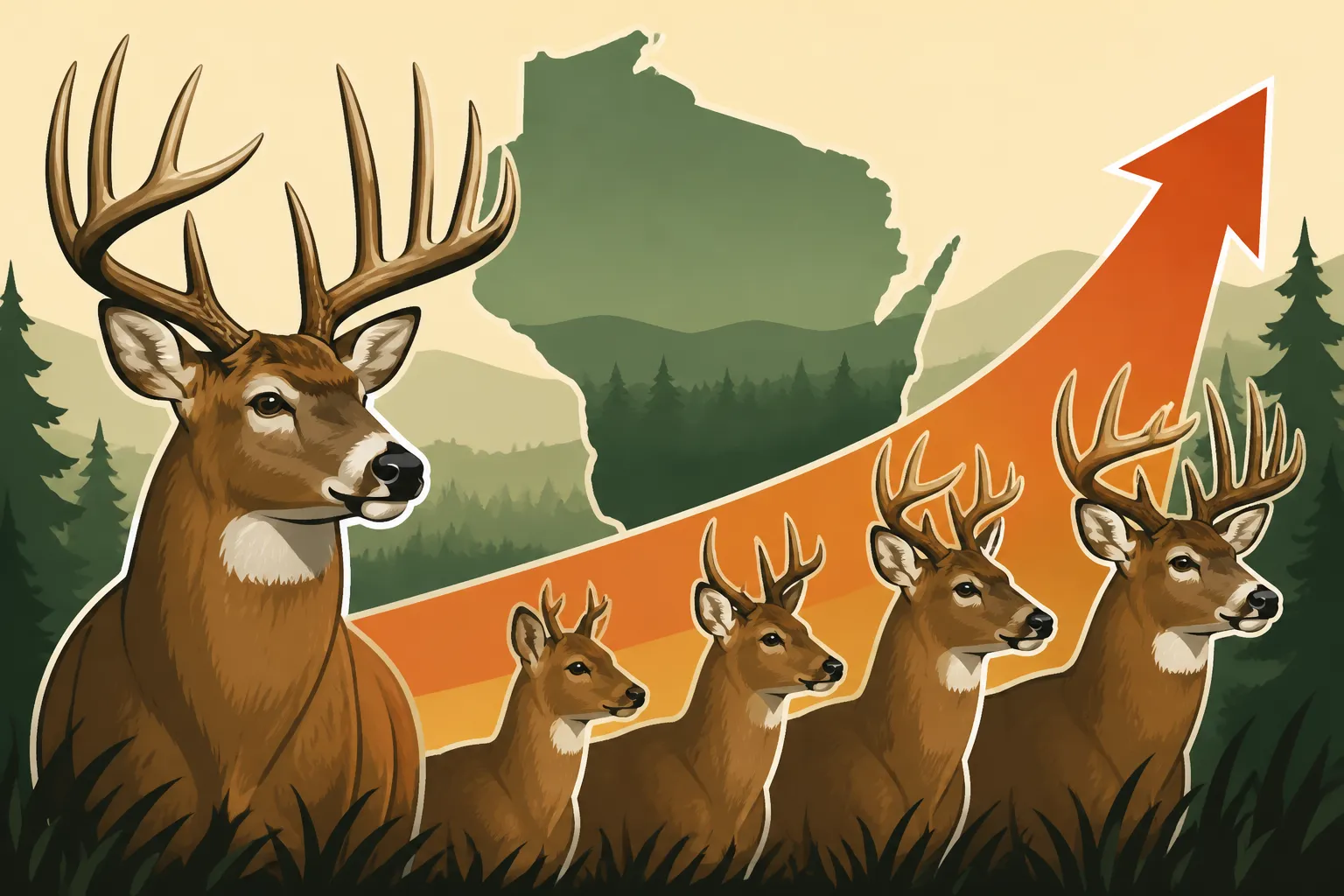
Focusing on age structure helps you understand the potential of the deer herd in your specific region of Wisconsin. If you're consistently seeing only 1.5-year-old bucks, it tells you something about the hunting pressure and harvest patterns in that area. It's not that big bucks don't exist, but rather that very few are surviving long enough to reach their prime. A balanced age structure, on the other hand, means you're likely to encounter bucks from all age classes, including those older, more mature animals that have fully developed antlers and body size.
Impact on Hunting Strategy
Understanding the age structure available can fundamentally shift your hunting strategy. If you're hunting in an area where the data, or your own observations, suggest a very young buck age structure, you might adjust your expectations. Perhaps your goal becomes harvesting a healthy young buck for venison, rather than holding out for a wall-hanger that might not exist in significant numbers.
Conversely, if you're in a region known for a more mature age structure, like some parts of the Driftless Area Deer Hunting in Wisconsin, you might feel more confident in implementing strategies geared towards older, warier animals. This could mean dedicating more time to scouting for larger tracks and rubs, focusing on low-pressure bedding areas, or being more patient in your stand. Knowing that there's a higher chance of encountering a 3.5-year-old or older buck can fuel your dedication to more disciplined hunting tactics. It encourages you to think about how you approach your stand, how long you stay, and even what calls you use, such as the timing and volume of Rattling and Grunting in Wisconsin during the rut.
Deciphering Wisconsin's Buck Age Data
It might sound a bit academic, but understanding how buck age data is collected and what the numbers actually mean can provide a fantastic edge in your hunting endeavors. The Wisconsin Department of Natural Resources (DNR) and other researchers gather a lot of information that, when properly interpreted, paints a clear picture of the state's deer population dynamics. This isn't just abstract science; it's tangible information that directly affects what you might see from your treestand.
The Role of the DNR and Data Collection
The Wisconsin DNR works diligently to monitor deer populations across the state, and part of that involves understanding the age distribution of harvested bucks. One of the primary methods for determining deer age, especially for younger animals, is through dental analysis. After a deer is harvested, hunters may be asked to voluntarily submit a jawbone or incisors. By examining the wear and replacement patterns of the teeth, wildlife biologists can determine a deer's age with reasonable accuracy, often to the nearest half-year (e.g., 1.5, 2.5, 3.5 years old).
This collection, while often voluntary and thus subject to some biases, provides a robust dataset over time and across different regions. It helps the DNR track trends, understand the effectiveness of management strategies, and ultimately, helps set quotas and season structures. For hunters, this means the information, while perhaps not perfect for every square mile, gives a valuable macro-level perspective that can be incredibly useful when planning hunts in different parts of Wisconsin.
What the Numbers Tell Us
When you look at buck age structure data, you'll typically see percentages of bucks harvested in different age classes. For example, a report might show:
- 1.5-year-old bucks: These are typically the most abundant in most hunted populations, representing deer that have survived their first year and are legal game. A high percentage (say, 60-70% or more) suggests significant hunting pressure and a younger overall herd.
- 2.5-year-old bucks: These deer are just starting to mature, showing significant body growth and often a noticeable jump in antler development compared to yearlings. A healthy percentage here indicates some bucks are making it past their first hunting season.
- 3.5-year-old and older bucks: These are the truly mature animals, typically expressing their full antler potential. A higher percentage in these age classes points to a more balanced, older age structure, which often correlates with higher quality hunting experiences and larger deer.
Consider this hypothetical comparison of buck age structures:
| Age Class (Years) | Area A (High Pressure) | Area B (Managed/Lower Pressure) | Typical Characteristics | Hunting Implications |
|---|---|---|---|---|
| 0.5 (Fawn) | 0% | 0% | Not legal to harvest | Scouting for future hunts |
| 1.5 (Yearling) | 70% | 35% | Small rack, thin body | Abundant, good for venison |
| 2.5 | 20% | 30% | Medium rack, filling out | Challenging, but possible |
| 3.5 | 7% | 20% | Good rack, solid body | Warier, harder to find |
| 4.5+ | 3% | 15% | Large rack, mature body | Elusive, trophy potential |
Area B, with a significantly higher percentage of 2.5-year-old and older bucks, clearly offers a different hunting experience than Area A. Understanding these numbers helps you calibrate your efforts and expectations. If you're consistently hunting in an "Area A" scenario, you might want to consider changing your tactics or exploring new public lands like those mapped out by platforms such as GoHunt, or looking into specific public land opportunities listed on the Wisconsin Public Access Lands Maps.
Tools for Hunters: Going Deeper with Data
While the DNR provides annual harvest reports and population estimates, dedicated hunters can dive even deeper. Websites, apps like the Scouting With the Wisconsin Hunt Wild App, and mapping platforms often integrate or allow you to layer information about deer harvest data by county or even by deer management unit. These tools, which might include features from services like GoHunt, can help you visualize where older age-class bucks are more prevalent. This is especially useful if you're researching potential new hunting grounds or trying to understand why your current spot isn't producing the types of bucks you're hoping for.
By looking at these detailed reports, perhaps even comparing Wisconsin Deer Harvest Records across different years, you can identify trends. Is the age structure improving in your chosen unit? Has CWD or a particularly harsh winter impacted the older age classes? These insights empower you to make more informed decisions about where and how you hunt.
Factors Influencing Buck Age in Wisconsin
The age structure of bucks in any given area isn't random; it's a dynamic reflection of several key environmental and human-induced factors. In a state like Wisconsin, with its diverse landscapes ranging from the heavily forested north to the agricultural fields of the south, these factors can vary dramatically, creating vastly different hunting opportunities. Understanding these influences can help you predict where you might find older bucks and why.
Hunting Pressure: The Silent Architect of Age Structure
Perhaps the most significant factor influencing buck age structure in Wisconsin is hunting pressure. Simply put, areas with very high hunter numbers and a high propensity for hunters to harvest the first legal buck they see will inevitably have a younger buck population. Young bucks are less experienced, often less wary, and more likely to make mistakes that put them in front of a hunter.
Think about public lands close to urban centers or popular hunting regions during the busy Wisconsin's Nine-Day Gun Deer Season. These areas often see intense pressure, leading to a high harvest rate of younger bucks. Conversely, remote pockets of public land, large private tracts where landowners manage for older deer, or areas with difficult access might naturally hold a higher percentage of older, more elusive bucks. These older bucks have learned to adapt to human presence, often becoming almost nocturnal or retreating to dense cover during daylight hours. This is a common phenomenon in areas like the Hunting Pressure on Wisconsin Public Land, where a few extra miles walk can make all the difference.
Habitat and Nutrition: Fueling Growth and Longevity
While hunting pressure dictates how many bucks survive to older ages, habitat and nutrition determine the quality of those older bucks. An area with abundant, high-quality food sources and ample secure cover can allow bucks to express their full genetic potential much earlier in life. This means that a 2.5-year-old buck in a rich agricultural area, like some parts of the Farm Zone, might carry antlers that are larger than a 3.5-year-old buck in a nutritionally poorer environment, such as some parts of the Northern Forest Deer Density in Wisconsin.
Excellent habitat provides not only the nutritional building blocks for antler growth and body mass but also the necessary refuge for bucks to avoid hunters. Swamps, dense conifer thickets, vast timber cuts, and rugged terrain all offer sanctuary where older bucks can ride out hunting seasons. Areas like Why Buffalo County Grows Big Bucks are prime examples of regions where a combination of excellent nutrition and varied topography allows bucks to reach older ages and impressive sizes. Healthy habitats mean fewer stress factors, which means deer are generally more robust and better equipped to survive.
Hunter Harvest Choices: The Human Element of Management
Increasingly, hunter choices are playing a significant role in shaping Wisconsin's buck age structure. The rise of quality deer management (QDM) principles, where hunters voluntarily choose to pass on younger bucks to allow them to mature, has had a noticeable impact in many areas, particularly on private lands. While Wisconsin doesn't have widespread antler point restrictions, the personal choice to let younger deer walk means more bucks are surviving to older age classes.
This shift in hunter mindset can be powerful, especially in local areas or within hunting clubs. When a group of hunters collectively decides to pass young bucks, they effectively create their own local QDM program. This can result in a dramatic improvement in the age structure of bucks seen on their property and even spill over into adjacent lands. This isn't just about growing bigger antlers; it's about creating a more natural and exciting hunting experience, where encounters with truly mature deer become more frequent.
Applying Age Structure Knowledge to Your Hunt
So, you've absorbed the data, you understand the influences, but how do you actually put this knowledge into practice when you're out in the Wisconsin woods? It's about translating those statistics into actionable strategies that can enhance your hunting success and satisfaction. It's about being a smarter hunter, not just a harder hunter.
Scouting with Age in Mind
When you're out Scouting Wisconsin Public Land Before Season, or even during the early archery periods, don't just look for any deer sign; start looking for signs of older deer. This means paying attention to details. A young buck's rub will often be small and sparse, whereas an older buck will typically leave larger, more aggressive rubs on saplings and small trees. Their scrapes, too, tend to be more numerous and substantial. Pay attention to track size; larger, more splayed tracks often belong to older, heavier deer.
Consider the location of these signs. Older bucks are often found in more secluded, secure areas—places that might require a longer walk or traversing more difficult terrain. They're masters of using cover and topography to their advantage, often bedding on ridges where they can smell danger below and above them, or in dense thickets within a Hunting a Funnel Between Two Swamps. Tools like GoHunt can help you overlay public land maps with topographical features, allowing you to identify these potential sanctuary areas where older bucks might feel safe enough to survive for years.
Setting Realistic Expectations
One of the most valuable aspects of understanding buck age structure is the ability to set realistic expectations. If you're hunting a small, heavily pressured piece of public land in a county with a very young buck age structure, then holding out for a 4.5-year-old Boone and Crockett buck might lead to frustration and an empty freezer. In such areas, a 2.5-year-old buck might be the oldest age class you can reasonably expect to encounter.
Adjusting your goals doesn't mean lowering your standards, but rather aligning them with the reality of the local deer population. Perhaps in this scenario, success is measured not just by antler size, but by the challenge of outsmarting a wary 2.5-year-old. On the other hand, if you're hunting an area known for an older age structure, perhaps during Hunting the Peak Rut Week in Wisconsin, you might be justified in being more selective and waiting for that truly mature animal. This knowledge helps you define what a "successful" hunt looks like for you in that specific location and time.
Contributing to Better Management
Every hunter's decision contributes to the overall age structure of the deer herd. While you might feel like one person can't make a difference, collective hunter behavior over time absolutely shapes the future of the herd. If you choose to pass on younger bucks, you're directly contributing to the potential for older bucks in that specific area for future seasons. This doesn't mean everyone has to be a trophy hunter; it simply means being mindful of the impact of your harvest decisions.
For example, when considering Filling a Wisconsin Antlerless Tag, you're often helping to balance the herd, which can lead to healthier bucks that have more resources available to them. Participating in DNR surveys, reporting your harvest accurately, and even supporting organizations that focus on habitat improvement all contribute to better deer management and, ultimately, a healthier, more balanced buck age structure across Wisconsin.
Disclaimer
This article is for general informational purposes only and does not constitute professional advice. Laws, prices and regulations vary by location and change over time. Consult a qualified professional for guidance on your specific situation.