Which Wisconsin Counties Ban Baiting
It's tough to keep up with all the hunting regulations in Wisconsin, especially when it comes to baiting and feeding deer. One minute it feels like you can put out a pile of apples, and the next, your buddy in the next county is telling you it's a huge fine. This constant shifting of rules, particularly the county-by-county bans, can be incredibly frustrating and confusing for even the most seasoned hunter. This guide is here to clear the air, breaking down exactly which Wisconsin counties currently ban baiting, why those bans are in place, and how you can stay on the right side of the law, ensuring your hunting season is successful and worry-free.
Understanding Wisconsin's Baiting and Feeding Regulations
Navigating Wisconsin's baiting and feeding regulations can feel like trying to hit a moving target sometimes. The rules are complex, they change, and what's legal in one county might land you in hot water just a few miles down the road. It's a source of constant discussion and often, a little bit of headache for hunters across the state. But at its core, these regulations are a direct response to a serious threat to our deer herd: Chronic Wasting Disease (CWD).
The Core Rules: Baiting vs. Feeding
First off, let's untangle the two main terms the DNR uses: "baiting" and "feeding." While they sound similar and both involve putting out food for deer, the regulations treat them differently, especially when you're talking about hunting.
- Baiting refers specifically to placing food, salt, mineral, or other materials to attract wild animals for hunting purposes. This is the big one that affects deer hunters directly. The intent here is to draw an animal to a specific spot to improve your chances of a shot. This could be a pile of corn, a sugar beet, or even a mineral block. The moment you introduce these items with the intention of harvesting an animal, you're baiting. And this is where the county-specific bans truly hit home. If a county has a baiting ban, it means you absolutely cannot use any of these materials for hunting purposes.
- Feeding, on the other hand, is generally defined as placing food or other materials to attract wild animals for viewing purposes, or simply because you enjoy watching them. This is where it gets a little trickier, as Wisconsin Deer Feeding Rules Outside Season can vary. While feeding deer outside of hunting season might seem innocuous, it can still contribute to congregating deer in unnaturally high numbers, which in turn can exacerbate disease transmission. Some counties have year-round feeding bans, regardless of hunting season, due to CWD concerns. This means even putting out a handful of birdseed that deer might get into could be problematic in certain areas. It's crucial to understand that even when a baiting ban for hunting is lifted, feeding bans might still be in effect, or there could be a general statewide ban on feeding within a certain distance of residences during hunting season. It's a layered cake of regulations, and it's easy to get confused.
The primary driver behind these distinctions and the subsequent bans is the effort to control the spread of CWD. When deer congregate around a bait site or feeding station, they're essentially creating a CWD hotspot. The disease is spread through prions in saliva, urine, and feces. The more deer that gather and share these contact points, the higher the chance of transmission. That's why these rules, while sometimes a hassle, are ultimately in place to protect the long-term health of Wisconsin's deer herd, which we all cherish.
How Baiting Bans Are Triggered and Lifted
It often feels like these baiting bans just appear overnight, leaving hunters scrambling to adjust their plans. But there's a very specific, and somewhat disheartening, process that triggers these restrictions. It all comes down to the grim reality of CWD detections.
When a wild or farm-raised deer tests positive for CWD in a particular county, it sets off a chain reaction within the Wisconsin DNR's regulatory framework. The discovery of a CWD-positive deer, whether through hunter-submitted samples or surveillance efforts, is a serious event. This positive test triggers an immediate baiting and feeding ban in that county. This initial ban is typically put in place for a minimum of two years. It’s a necessary, albeit unpopular, measure to try and curb the spread of the disease where it has been identified. You can find more detailed information on How Wisconsin Baiting Bans Are Triggered.
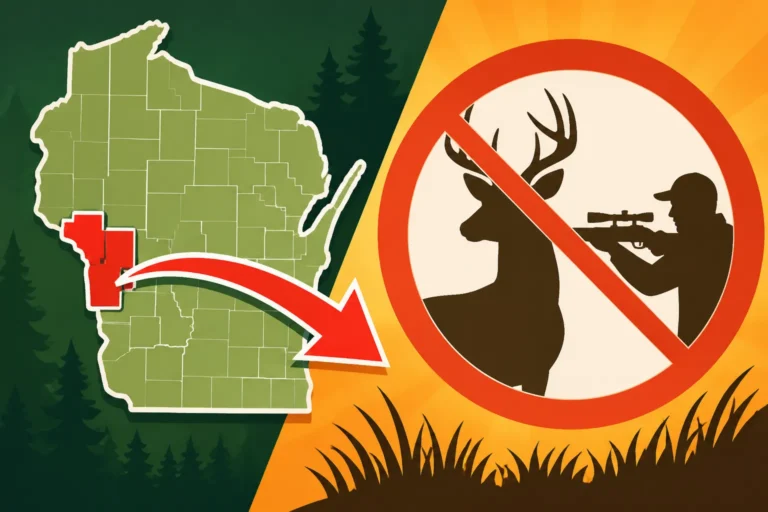
What often catches hunters by surprise, and adds to the frustration, is the "adjoining county" rule. If a CWD-positive deer is found in one county, any adjacent county also becomes subject to a baiting and feeding ban, even if no CWD has been detected within its own borders yet. This ban on adjoining counties is also set for a two-year period, as explained in Why an Adjoining County Gets a Two-Year Ban. The logic here is that deer don't recognize county lines, and a CWD-infected deer could easily travel from the positive county into a neighboring one, spreading the disease before it's even detected there. This rule dramatically expands the geographic scope of the bans, meaning a single CWD detection can impact a wide area.
The lifting of these bans is less common and more complex. For a ban to be lifted, the county must have no new CWD detections for a certain period, often three years, after the initial two-year ban expires. So, effectively, if CWD keeps popping up, the ban simply continues, sometimes indefinitely. This is why many southern and central Wisconsin counties have been under continuous bans for years. Understanding How Long a Wisconsin Baiting Ban Lasts truly highlights the long-term impact of CWD on our hunting traditions. This system aims to create a buffer zone and limit human activities that could facilitate the disease's transmission, buying time for monitoring and potentially, containing outbreaks.
The Current Landscape: Which Wisconsin Counties Ban Baiting
It’s fair to say that the CWD situation has profoundly reshaped hunting in Wisconsin, particularly when it comes to baiting. A significant portion of the state, especially the southern and central regions, remains under baiting and feeding bans due to CWD detections. This isn't just a handful of counties; it's a large, contiguous block where traditional baiting practices are completely off-limits for deer hunters.
Navigating the DNR's CWD Map
The Wisconsin DNR maintains an interactive map that is, without a doubt, your single most important tool for knowing the current baiting and feeding regulations. Relying on hearsay or what was true last year is a recipe for trouble. These bans can shift, albeit slowly, so always check the official source.
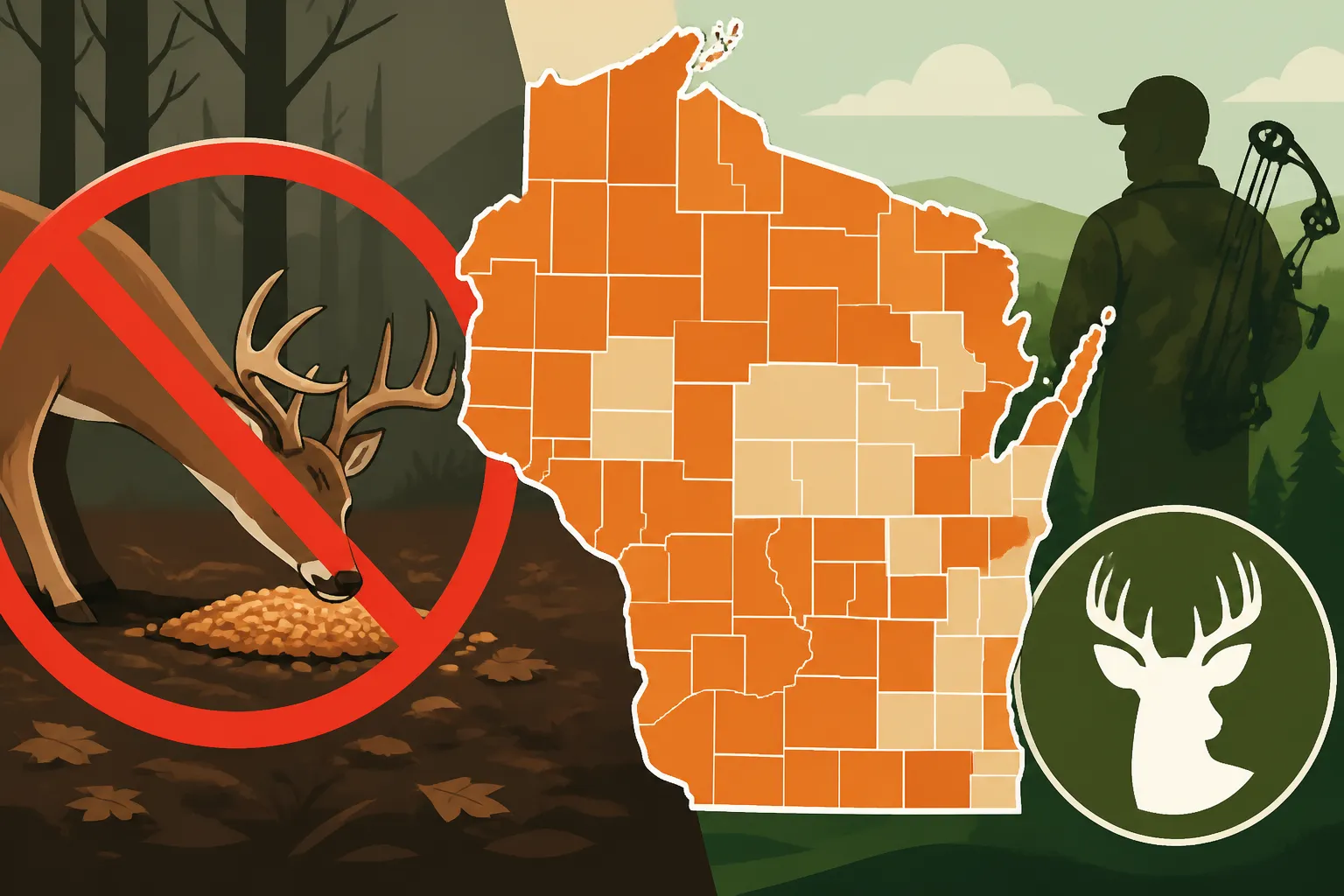
The DNR's CWD map visually displays which counties are under a ban (often highlighted in a distinct color) and provides detailed information about when the ban was initiated and the specific CWD detection that triggered it. It's designed to be updated regularly, so it's the most accurate resource available. I always tell folks to bookmark it on their phone or computer. When planning a hunt, especially if you're venturing into a new area or a county you haven't hunted in a while, this map should be your first stop.
To give you an idea of the prevalence, here’s a table outlining some of the counties that have faced consistent baiting bans, often for many years:
| Region | Example Counties Under Consistent Ban | Reason for Ban (Typical) |
|---|---|---|
| Southwest | Dane, Iowa, Richland, Sauk, Columbia, Rock, Lafayette, Green, Grant, Crawford | Long-standing CWD detections, high prevalence, and surrounding buffer zones |
| Southeast | Walworth, Kenosha, Racine, Jefferson, Waukesha, Milwaukee, Washington, Dodge, Fond du Lac | CWD detections, proximity to high-prevalence areas, and urban deer populations |
| Central | Juneau, Adams, Marquette, Waushara, Portage, Wood, Monroe, Jackson | CWD detections spreading northward, often due to adjoining county rules or new detections |
| West Central | Trempealeau, Buffalo (though some of these might shift depending on recent detections, always check the map!) | Adjoining county rule, occasional localized detections |
| North Central | Occasional, but less frequent; however, adjoining rules could pull in counties like Clark, Marathon, Langlade if CWD moves further north | Typically triggered by new, isolated detections or if CWD migrates into new areas |
Note: This table is for illustrative purposes. Always refer to the official Wisconsin DNR website's CWD map for the most current and precise information on specific county bans. The situation is dynamic.
Beyond the DNR website, there are excellent third-party tools that can help. Many hunters find the GoHunt app incredibly useful for layering public and private land boundaries, and often, these apps integrate or link directly to the DNR's CWD data, making it a one-stop shop for crucial hunting information. Checking apps like GoHunt can help you quickly identify the rules for the specific parcel you're planning to hunt, whether you're scouting with the Scouting With the Wisconsin Hunt Wild App or just checking boundaries before a trip.
It's a harsh reality that counties like Dane, Iowa, and Richland have been under continuous baiting bans for well over a decade due to the persistent presence of CWD. These areas represent the epicenter of the disease in Wisconsin. Even counties further afield, like portions of Juneau and Marquette, have seen bans come and go, or simply stick around due to new detections or their proximity to other affected areas. The key takeaway is: assume a ban is in place until you verify otherwise, especially if you're hunting anywhere south of Highway 29.
Beyond Deer: Other Game and Baiting Exceptions
While our focus is often on deer, it’s worth noting that the CWD-driven baiting and feeding bans primarily target deer, elk, and moose. However, the general spirit of these regulations is to minimize unnatural congregation of wildlife.
For other game species, baiting rules can differ significantly, and it’s important not to assume that a deer baiting ban applies across the board, or that it doesn't. For instance, baiting for bear hunting is a long-standing tradition in Wisconsin and is explicitly allowed under specific rules and licensing, typically in the northern zones not impacted by CWD bans for deer. Hunters pursuing black bears need to understand the distinct regulations for baiting, including specific start dates, types of bait allowed, and licensing requirements, as outlined in guides like Building and Freshening a Wisconsin Bear Bait. Similarly, trapping furbearers often involves the use of bait, which is governed by a separate set of rules and isn't usually impacted by deer-related CWD bans.
However, a critical nuance to remember is that even in counties where deer baiting is banned, there are generally specific rules for certain other activities that might seem like baiting but are legally distinct. For example, planting food plots is usually still permitted, as it's considered habitat manipulation rather than direct baiting. A food plot is a long-term agricultural planting intended to provide forage, not a pile of corn dumped on the ground. This distinction is crucial for hunters looking for alternative ways to attract deer in banned counties. For those wondering What Replaced Bait Piles for Wisconsin Hunters, food plots are a prime example. The DNR also has specific regulations around feeding birds or other small animals, which typically allow for small feeders for non-game species, provided they are not attracting deer.
The takeaway here is that while the CWD-related baiting and feeding bans are broad and impactful for deer hunters, they don't necessarily apply to all hunting or wildlife-related activities for all species. If you're planning to use any attractant for any species, always double-check the specific regulations for that animal and your county to avoid any unintentional violations.
Practical Implications for Hunters in Banned Counties
Let’s be honest, hunting without bait in an area where you’re used to it can feel like trying to run a race with one hand tied behind your back. It forces a complete rethinking of your strategy, from scouting to stand placement. But don't despair; it's entirely possible to be successful. It just means going back to some fundamental hunting principles.
Adapting Your Hunting Strategy Without Bait
When baiting is off the table, your focus has to shift to understanding natural deer behavior and the landscape itself. This is where truly becoming a student of the whitetail pays off.
- Become a Scouting Machine: This is non-negotiable. Without bait, you need to know where deer are naturally feeding, bedding, and traveling. This means extensive preseason scouting, both on foot and using aerial maps. Look for natural food sources like acorns, wild apples, brassicas left in agricultural fields, and browse. Pay attention to changes in agriculture throughout the season—a cut cornfield can quickly become a magnet. Identify bedding areas—often thick cover, south-facing slopes in winter, or secluded pockets—and the travel corridors connecting them. Use tools like the Wisconsin Hunt Wild App and aerial photography to dissect the land before you even step foot in it.
- Focus on Natural Food Sources: Deer are constantly seeking calories. In a banned county, your stand placement should be dictated by what the deer are naturally eating. If it's early fall, find the oak flats dropping acorns. Later in the season, after a heavy frost, standing beans or corn fields become prime targets. Pay attention to transition zones where two different forest types meet, or where timber meets agriculture. These are natural deer magnets. A guide like Late-Season Food Sources for Whitetails can provide specific insights.
- Identify Funnels and Travel Corridors: Deer are creatures of habit and efficiency. They'll use the path of least resistance or the most secure route between food and bedding. Look for natural funnels like narrow strips of timber between open fields, creek bottoms, saddlebacks on ridges, or pinch points where thick cover forces them into a specific path. These are high-traffic areas, perfect for ambush points. Even small terrain features can create predictable movement patterns.
- Embrace Still-Hunting and Drives: For those who traditionally relied on sitting over bait, this might be a big shift. Still-hunting—moving slowly and deliberately through the woods, stopping frequently to look and listen—becomes a highly effective tactic, especially in thicker cover. On public lands, where deer are more pressured, coordinated deer drives with a small group of hunters can also be very successful. A strategy like Deer Drives With Three or Four Hunters can be surprisingly effective in forcing deer past strategically placed standers.
- Utilize Scrapes and Rub Lines: While you can't create artificial scrapes, you can certainly hunt natural ones. During the rut, bucks will actively check and freshen scrape lines, making these areas prime for a stand. Similarly, rub lines indicate a buck’s travel path and can clue you into where mature deer are moving.
- Think Thermals and Wind: Without the fixed attraction of bait, understanding how wind and thermals carry scent is absolutely critical. In hilly terrain, thermals will rise in the morning as the ground warms and fall in the evening as it cools. Always plan your approach and stand placement to keep your scent out of the deer's nose, recognizing that these air currents can be complex and change throughout the day. The article on Wind and Thermals in a Coulee offers great insights into this.
Ultimately, hunting in a banned county is about returning to a more primal form of hunting, one that relies heavily on woodsmanship, patience, and a deep understanding of deer ecology. It’s challenging, but incredibly rewarding when you succeed. For a deeper dive into adapting your approach, check out Hunting Without Bait in a Banned County.
Avoiding Accidental Violations and Common Pitfalls
It's easy to accidentally slip up, especially if you're used to hunting in areas where baiting is legal or if you're not meticulous about checking the current regulations. An "oops" moment with baiting can lead to significant fines and even loss of hunting privileges, so vigilance is key.
One of the most common pitfalls is simply assuming the rules haven't changed since last year or that they're the same in a neighboring county. CWD bans are dynamic. A county that was open to baiting last season might be closed this year due to a new CWD detection. Always, always check the DNR's CWD map for the exact county and current date before you even think about putting anything out. If you use a tool like GoHunt, ensure its CWD layer is up to date.
Another subtle but critical area is the handling of deer carcasses. When you harvest a deer in a CWD-positive or banned county, there are strict rules about how you can transport the carcass, especially across county lines. This is designed to prevent the physical spread of CWD-infected material. Generally, you cannot transport whole carcasses out of a CWD-affected county. Instead, you're usually limited to transporting deboned meat, hides, and cleaned skulls. Many hunters now opt for the "gutless method" in the field to simplify transport. Familiarize yourself with the Wisconsin Carcass Transport Rules well before your hunt, especially if you plan to process your deer at home in a different county. This also extends to bait or feed from a previous year. If you find an old mineral block or corn pile from a legal past season, it needs to be removed and properly disposed of, as its continued presence could be a violation.
Finally, be mindful of the difference between baiting and accidental feeding or simply having things on your property. While a small bird feeder in your yard is generally fine, having large quantities of spilled corn or other deer attractants (even if not intended for hunting) can create a legal gray area, especially if deer are routinely congregating there. When in doubt, err on the side of caution. Remove anything that could be construed as bait or feed if you're in a banned county and hunting deer. Even a few dropped kernels from a lunch sandwich can become a problem if concentrated. Ignorance of the law is not an excuse, and game wardens are well-versed in spotting the tell-tale signs of illegal baiting.
Staying Informed: Your Role in Responsible Wisconsin Hunting
Being a responsible hunter in Wisconsin means more than just knowing how to track and shoot. It means understanding and respecting the regulations designed to protect our wildlife, especially when it comes to something as serious as CWD. The hunting landscape is constantly evolving, and staying informed is your best defense against unintended violations and your best contribution to herd health.
Resources for Up-to-Date Information
The absolute best and most reliable source for current baiting and feeding bans, as well as all other Wisconsin hunting regulations, is the Wisconsin Department of Natural Resources (DNR) website. Seriously, bookmark it.
- Wisconsin DNR Website: This is your primary hub. The DNR's official CWD map is updated whenever a new detection occurs or a ban status changes. It's often the first place new information appears. You can typically find it under the "Hunting" section, specifically within the "Deer Hunting" or "CWD" pages. They also publish the annual hunting regulations pamphlets, which are invaluable, but remember those are printed well in advance and CWD bans can change after printing. So, the online map is the most current.
- DNR Email Updates: Many hunters find it incredibly helpful to sign up for DNR email newsletters and alerts. These often include updates on regulation changes, CWD detections, and other important news that could affect your hunting plans. It’s a proactive way to get information delivered right to your inbox without constantly checking the website.
- Local DNR Offices: Don't hesitate to call or visit your local DNR service center. The staff there are often very knowledgeable about specific local conditions and can answer nuanced questions about regulations in your area. They are there to help clarify complex rules.
- Reliable Hunting Forums and Groups: While the DNR is the official source, active online hunting communities and reputable hunting organizations can be great places to discuss practical interpretations of rules and share experiences. However, always cross-reference any information found in these forums with official DNR sources before acting on it.
Making a habit of checking the DNR's CWD map annually, if not before every hunt into a new area, is a crucial part of being a prepared and legal hunter in Wisconsin. Don't let a misunderstanding ruin your season or, more importantly, compromise the health of the deer herd for future generations.
The Importance of CWD Management
It’s easy to get frustrated with baiting bans, especially if you've been doing it a certain way for years. But it’s vital to remember why these regulations exist: CWD is a serious, fatal neurological disease affecting deer, elk, and moose. There is no vaccine and no cure. Once an area becomes endemic with CWD, it’s incredibly difficult to eradicate.
The measures Wisconsin has implemented, including baiting and feeding bans, carcass movement restrictions (Wisconsin Carcass Movement Restrictions), and mandatory CWD testing in certain areas, are all part of a larger strategy to contain the disease. While the effectiveness of each measure can be debated, the collective goal is to slow the spread, reduce prevalence, and protect both the health of the deer herd and the future of deer hunting in our state. You can learn more about the disease's history and impact in Chronic Wasting Disease in Wisconsin.
Every hunter plays a critical role in CWD management. By adhering to baiting bans, submitting deer for CWD testing (especially in affected areas at Wisconsin CWD Sampling and Test Sites), and properly disposing of carcasses, we contribute to better surveillance and limit the anthropogenic spread of the disease. This commitment helps the DNR gather crucial data to understand prevalence and distribution, which in turn informs future management decisions. It’s not just about avoiding a ticket; it’s about being a steward of the land and its wildlife, ensuring that our children and grandchildren can enjoy the same rich hunting heritage we do today.
Disclaimer
This article is for general informational purposes only and does not constitute professional advice. Laws, prices and regulations vary by location and change over time. Consult a qualified professional for guidance on your specific situation.