Wisconsin Carcass Transport Rules
Bringing your deer home after a successful hunt in Wisconsin is a huge part of the tradition, but the thought of navigating all those carcass transport rules, especially with CWD in the picture, can really dampen the excitement. It’s a genuine headache trying to figure out what you can and can't do, and many hunters worry about making an honest mistake that could lead to trouble. This guide is here to untangle the complexities of Wisconsin's deer carcass transportation regulations, helping you confidently and legally get your venison from the woods to your table.
Understanding the "Why" Behind Carcass Transport Rules
It’s easy to feel frustrated by all the regulations, wondering why they make it so complicated. But at its heart, Wisconsin's deer carcass transport rules are all about protecting our deer herd and slowing the spread of Chronic Wasting Disease (CWD). This isn't just some bureaucratic red tape; it's a vital effort to preserve the health of the very animals we love to hunt.
The Threat of Chronic Wasting Disease
CWD is a serious, fatal neurological disease affecting deer, elk, and moose. It's caused by abnormal proteins called prions, which can persist in the environment for years, making it incredibly difficult to eradicate once it takes hold. When deer carcasses, especially certain high-risk parts, are moved from an infected area to a clean one, those prions can hitch a ride and establish new infection sites. Think of it like trying to contain a wildfire; you need to prevent sparks from jumping to new areas. The Chronic Wasting Disease in Wisconsin situation is one that the DNR takes very seriously, and for good reason. It's not just about the deer harvested this year, but about the future of hunting in our state.
The prions are most concentrated in specific tissues like the brain, spinal cord, lymph nodes, and spleen. These are the parts that pose the highest risk for transmitting the disease. So, when the Department of Natural Resources (DNR) sets rules about what parts you can move, they're directly targeting these high-risk materials. It’s a challenging balance, trying to allow hunters to enjoy their harvest while also implementing necessary biosecurity measures. We all want healthy deer, and these rules are designed with that ultimate goal in mind, even if they sometimes feel like a hassle.
Protecting Wisconsin's Unaffected Areas
One of the biggest motivations for strict transport rules is to prevent CWD from spreading into new regions of Wisconsin that are currently CWD-free. We’ve seen How CWD Spread Across Southern Wisconsin over the years, and it's a sobering reminder of how easily this disease can expand its footprint. Imagine you harvest a deer in a CWD-affected county, pack up the entire carcass, and drive it straight to your cabin in a pristine northern county. If that deer happened to be CWD-positive, any discarded high-risk parts could potentially contaminate the soil and environment there, creating a new focal point for the disease.
The DNR has established CWD Management Zones and sets specific rules for Which Wisconsin Counties Have CWD. These zones are crucial for hunters to understand, as the rules often differ based on where you harvest your deer. The goal is to contain the disease where it already exists and prevent its introduction into areas where it doesn't. This means that hunters become part of the solution by adhering to these regulations, even if it adds a few extra steps to their post-harvest routine. It’s a collective responsibility, really, to keep Wisconsin's deer strong and healthy for generations to come.
What Deer Carcass Parts Can and Cannot Be Transported
Navigating the specifics of what you can and can't transport is often the most confusing part for hunters. It basically boils down to removing the "high-risk" parts of the carcass before leaving certain areas. This isn't about ruining your trophy or making meat processing impossible; it's about targeted prevention.
High-Risk vs. Low-Risk Parts
Let's break down what the DNR considers high-risk versus low-risk when it comes to CWD prions. Understanding this distinction is key to complying with the rules.
High-Risk Parts (Generally NOT allowed to be transported out of CWD-affected areas):
- Brain: This is where prions are heavily concentrated.
- Spinal Cord/Backbone: The entire vertebral column (spinal column) contains nervous tissue highly susceptible to CWD prions.
- Lymph Nodes: These are often found throughout the carcass and can harbor prions.
- Spleen: Another organ that can contain prions.
- Eyes: Prions can be found in ocular tissues.
Essentially, any part containing nervous tissue or a high concentration of lymph nodes is considered high-risk. This is why you can't just throw an entire un-processed deer in the back of your truck and drive across the state if you're coming from a CWD-affected area. The danger isn't the muscle meat itself, but the associated neurological and lymphatic tissues.
Low-Risk Parts (Generally ALLOWED to be transported):
- Deboned Meat: All muscle meat that has been completely separated from the bone. This is the ultimate goal for most hunters anyway – delicious venison!
- Clean Skulls and Antlers: If you want to keep the skull for a European mount or just the antlers, they must be free of all brain tissue, hide, and any other nervous system tissue. This usually means a good cleaning and boiling.
- Hides/Capes: As long as there's no head or backbone attached, the hide is considered low-risk.
- Finished Taxidermy Mounts: Once a mount is completely processed and cleaned, it's generally safe for transport.
- Teeth: If you're collecting teeth for aging, these are fine.
The rule of thumb here is: if it's not muscle meat, and it could contain nervous tissue or lymph nodes, you probably shouldn't be transporting it out of a CWD-affected area without proper processing. This is where Butchering a Deer at Camp or using a local processor becomes incredibly important.
The Importance of Field Dressing vs. Full Processing
Many hunters are used to field dressing a deer where it falls, removing the entrails, and then transporting the carcass whole back home or to a processor. While this is standard practice in non-CWD areas, it changes dramatically in CWD-affected zones.
-
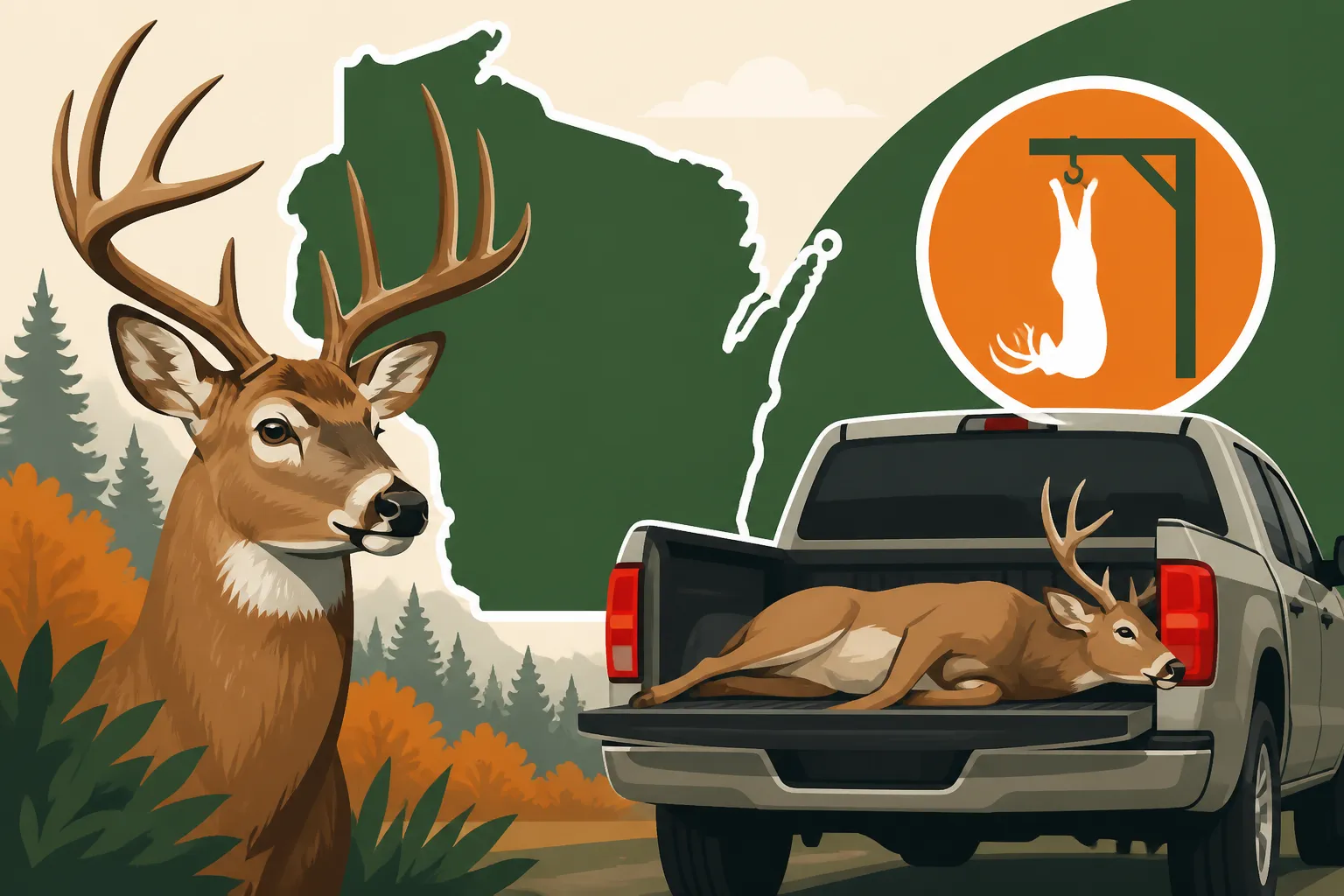
Field Dressing: This involves removing the internal organs (stomach, intestines, heart, lungs, liver). This is always allowed and encouraged, as it helps cool the meat quickly. However, field dressing alone does not remove the high-risk parts like the brain or spinal cord. So, a field-dressed deer is still considered a "whole carcass" for transport purposes. If you hunt in a CWD-affected county, you cannot take that field-dressed carcass out of the county or adjacent counties unless it’s to a licensed processor or taxidermist, or if you're taking it directly to a CWD sampling station.
-
Full Processing (Deboning): This is the game-changer. By deboning your deer in the field or at a local camp/processing site within the CWD zone, you're removing the high-risk spinal column and other bones. Once you have only deboned meat, it can be transported anywhere in the state. This takes more time and effort, especially if you're not used to it, but it's the safest and most compliant method for long-distance transport from CWD zones. You can find resources from the DNR or use mapping tools like those on GoHunt to clearly delineate these CWD-affected areas. Knowing your specific Wisconsin Deer Management Units by County is really helpful here.
Specific Carcass Transport Rules by Zone and County
Wisconsin’s rules aren't uniform across the entire state. They are highly dependent on where you harvested your deer, due to the varying prevalence of CWD. This can be confusing, but understanding your location is paramount.
CWD-Affected Counties and the Two-Year Rule
When CWD is detected in a county, that county, along with any contiguous (neighboring) counties, falls under specific carcass movement restrictions. These restrictions typically last for at least two years after a detection, but often longer if CWD remains prevalent. The rules are designed to create a buffer zone around known CWD areas.
-
Harvesting in a CWD-affected or contiguous county: If you harvest a deer in one of these counties, you are generally restricted from transporting the whole carcass (meaning anything with a brain or spinal column intact) out of that county or a contiguous county, unless it's directly to a licensed taxidermist or meat processor within that CWD-affected or contiguous zone. This also applies if you are taking it to an approved CWD sampling station. The goal is to contain those high-risk parts within the affected area. Many hunters find it easier to simply de-bone their deer in the field or at their hunting camp before heading home, especially if they live outside the CWD zone. The DNR's website and tools like GoHunt provide regularly updated maps of these zones.
-
Deboning in the Field: This is where the rubber meets the road. If you're hunting in a CWD-affected area and want to take your venison home to a non-CWD county, you must debone the animal before leaving the CWD zone. This means removing all muscle meat from the bone, skull, and spinal column. Only the deboned meat, clean skull/antlers (free of brain tissue), and hide can then be transported. This requires a bit more effort on site but ensures you're complying with the rules. This also touches on rules for Wisconsin Carcass Movement Restrictions which are in place to try and minimize spread.
Transporting for CWD Testing
Many hunters want to get their deer tested for CWD, which is a commendable and important step in monitoring the disease. The DNR has specific provisions for transporting carcasses for testing:
-
Taking a carcass to a CWD sampling station: If you harvest a deer in a CWD-affected or contiguous county and wish to get it tested, you are allowed to transport the whole carcass directly to an active CWD sampling station. These stations are often located within or very close to CWD zones. You can find a list of Wisconsin CWD Sampling and Test Sites on the DNR website, which is invaluable. GoHunt also often integrates this information into their platform, making it easy to find the closest station. Once the sample is collected, you’ll then need to dispose of the high-risk parts at the station (if they offer that service) or process the carcass according to the transport rules before continuing your journey.
-
Retrieving results and next steps: After submitting a sample, results can take some time. How Long Wisconsin CWD Results Take can vary, so plan accordingly. If your deer tests positive, the DNR will provide guidance on proper disposal, which typically involves leaving the high-risk parts at an approved landfill or rendering facility. Hunters are often encouraged to still consume the meat if they choose, as current scientific evidence does not indicate a risk to humans, but it’s a personal decision. The important thing is preventing further spread of the prions.
Rules for Non-CWD Counties and Inter-State Travel
If you harvest a deer in a county not designated as CWD-affected or contiguous, the rules are generally more relaxed for in-state travel. You can typically transport a whole, field-dressed deer across Wisconsin. However, things change if you're traveling into Wisconsin from another state or out of Wisconsin to another state.
-
Bringing a deer into Wisconsin: If you harvest a deer, elk, or moose in another state and want to bring it into Wisconsin, you face similar restrictions to those within CWD-affected areas. You cannot bring whole carcasses into Wisconsin. Only deboned meat, clean skulls/antlers, hides, and finished taxidermy mounts are allowed. This is a critical rule to prevent the introduction of CWD from other states that might have higher prevalence rates or different management strategies.
-
Taking a deer out of Wisconsin: If you're a nonresident hunter or a Wisconsin resident taking your deer to another state, you need to check the carcass transport rules for that destination state. Wisconsin's rules won't protect you from the laws of Minnesota, Michigan, or Illinois. Many states have similar restrictions on bringing whole carcasses across their borders, especially from states with CWD. Always check the regulations of your destination state before you leave Wisconsin. This foresight can save you a lot of headache and potential legal issues.
Practical Tips for Hunters and Processors
Dealing with carcass transport rules, especially for hunters who travel, can feel like a logistical nightmare. But with a bit of planning and the right tools, it doesn't have to be.
Preparing Your Carcass for Transport
The moment of truth comes after the shot. How you handle your deer in those initial hours can significantly impact your transport options.
-
Immediate Field Dressing: Regardless of where you hunt, always field dress your deer promptly. This removes heat from the carcass, which is crucial for meat quality, especially in warmer early season hunts. Field Dressing a Deer in Cold Weather is a bit different, but the principle of heat removal remains. Dispose of the entrails in a way that minimizes scavenger access, ideally leaving them deep in the woods or where local regulations allow.
-
Strategic Processing on Site: If you're in a CWD-affected zone and plan to transport your deer out of that zone yourself, preparing for field processing is key. This means bringing the right tools: a sharp knife, a bone saw (or even a hand saw), game bags, and a clean tarp or surface. Many hunters are learning the "gutless method" to remove deboned meat without opening the body cavity, which can simplify things immensely, especially for a large buck or a long pack out. The goal is to leave all the high-risk parts (bones, spinal column, skull) behind in the CWD-affected area, ensuring only clean meat and properly processed trophy parts leave with you. This also ties into being prepared with the right Meat Care Gear for Wisconsin Hunters, especially when early archery season means warmer temperatures.
-
Utilizing Local Processors and Taxidermists: This is often the easiest option for hunters in CWD zones. Find a licensed meat processor or taxidermist within the CWD-affected or contiguous county. They are equipped to handle and dispose of the high-risk parts properly. Most local businesses are well-versed in CWD regulations and can ensure your harvest is processed legally. Plan ahead and call processors before your hunt to confirm their availability and current CWD protocols. Sometimes, booking a spot ahead of time, particularly during the busy Wisconsin's Nine-Day Gun Deer Season, can save you a lot of grief.
Using Technology to Stay Informed
The DNR provides a wealth of information, but it can be overwhelming to sift through. Thankfully, several digital tools can make navigating these rules much easier.
-
DNR Website and Maps: The Wisconsin DNR website is the official source for all regulations, including up-to-date CWD zone maps, lists of CWD sampling stations, and detailed carcass transport rules. Make it a habit to check this annually before hunting, as regulations can change.
-
Hunting Apps and Digital Platforms: Apps like GoHunt are incredibly useful. They often integrate DNR CWD maps directly into their platform, allowing you to see in real-time if you're in a CWD-affected county. Some even provide location-specific alerts or direct links to county-specific regulations. This can be a lifesaver when you're out in the field without reliable cell service, as many apps allow for offline map downloads. Checking these resources can help you understand Where CWD Was First Found in Wisconsin and how its presence impacts regulations in specific regions.
-
Wisconsin Hunt Wild App: The official DNR app, "Hunt Wild Wisconsin," also offers valuable resources, including maps, regulations, and often CWD information. Using Scouting With the Wisconsin Hunt Wild App can help you plan your hunt with CWD zones in mind. Keeping this app updated on your phone is a smart move for any hunter in the state.
Preventing Cross-Contamination
Beyond just legal compliance, preventing cross-contamination is a responsible hunting practice.
- Dedicated Tools and Cleaning: If you process deer from both CWD-affected and non-CWD areas, or if you use reusable processing equipment, thoroughly clean and disinfect all tools (knives, saws, cutting boards) and surfaces between animals. Prions are notoriously difficult to destroy, so a strong bleach solution or commercial prion-deactivating cleaner is recommended.
- Proper Disposal of High-Risk Parts: Always dispose of high-risk carcass parts in an approved manner. This typically means leaving them at the harvest site in a CWD-affected area, taking them to a CWD sampling station that offers disposal, or utilizing a licensed landfill or rendering facility. Never just dump high-risk parts haphazardly, as this can directly contribute to the spread of the disease. This is part of being a responsible steward of our wildlife.
Frequently Asked Questions About Carcass Transport
It's natural to have questions, and some situations always seem to cause confusion. Let’s tackle a few of the most common ones.
Can I really not take my deer head home from a CWD zone?
This is a common point of contention, especially for hunters who want to do European mounts or full shoulder mounts. The answer is nuanced: you can take your deer head home from a CWD-affected zone, but it has to be properly processed first.
For a European mount, the skull must be completely cleaned of all brain tissue, hide, and any other attached nervous system material. This often means boiling or pressure washing the skull thoroughly until it’s bone-white and clean. If you're doing this yourself, ensure all brain matter is removed before transport. Many hunters prefer to take the head to a local taxidermist within the CWD-affected or contiguous county who can perform this cleaning on-site. Once the skull is clean, it's considered low-risk and can be transported statewide.
For a shoulder mount, the cape (hide) can be transported if separated from the skull. The skull, with brain material intact, must remain in the CWD-affected or contiguous county, or be taken directly to a taxidermist within that zone, or to a CWD sampling site. The taxidermist will then remove the skull cap and clean it, returning it to you once properly processed. This is why planning ahead with a local taxidermist is crucial if you're hunting in a CWD-affected area and want a full mount.
What about parts like the heart and liver?
These are muscle organs, and they do not concentrate CWD prions like nervous tissue or lymph nodes. Therefore, the heart and liver, along with other edible organs, are generally considered low-risk and can be transported as long as they are cleaned and separated from high-risk parts. Many hunters enjoy these parts as delicacies, and thankfully, you usually don't have to leave them behind due to CWD rules. Always ensure they are properly cleaned and stored for consumption.
Is it legal to leave high-risk parts in the woods where I shot the deer?
Yes, in most cases, leaving high-risk parts (like the spinal column, skull, and other bones after deboning) at the kill site in a CWD-affected or contiguous county is permissible. In fact, it's often the preferred method of disposal, as it keeps the prions contained to the area where the deer was harvested. The DNR encourages responsible disposal, which includes leaving these parts scattered rather than piled up to minimize attraction for scavengers. Just be sure you're not on private land without permission, or violating any local ordinances for carcass disposal. For specific guidance on Wisconsin CWD Prevalence Rates, understanding that leaving parts on site helps prevent further spread is key.
What if I'm just driving through a CWD zone with my deer?
This is a tricky one and depends heavily on your start and end points. If you harvested a deer in a non-CWD county and are merely driving through a CWD-affected county to get home, that's generally fine. The rules apply to harvesting in a CWD-affected area and moving it out of that area. However, if you start in a CWD-affected county, you can't transport the whole carcass out of that CWD-affected or contiguous zone into a non-CWD zone.
The simplest approach if you're ever in doubt is to assume the strictest interpretation of the rules, or better yet, plan to debone your deer before any significant travel if coming from a CWD-affected zone. When in doubt, call the local DNR warden or check the DNR website, or use the GoHunt app for current maps and regulations.
Can I get CWD by eating venison?
Currently, there is no scientific evidence that CWD can be transmitted to humans. However, public health agencies like the CDC and Wisconsin's Department of Health Services recommend that people avoid eating meat from CWD-positive animals. It's a "better safe than sorry" approach. This is why Wisconsin CWD Testing for Hunters is so important; it gives hunters the information they need to make informed choices about their venison. Many hunters still choose to eat their venison even if it tests positive, but it’s a personal decision that should be made after consulting with health advisories.
Summary of Carcass Transport Rules
To help clarify the various rules, here's a quick reference table. Remember, always double-check the most current regulations on the Wisconsin DNR website, as CWD zones and rules can change.
| Carcass Part | Harvested in Non-CWD County (In-State) | Harvested in CWD-Affected or Contiguous County (In-State) | Harvested Out-of-State (Bringing into WI) |
|---|---|---|---|
| Whole, Field-Dressed Carcass | YES (Statewide) | NO (Must remain in CWD/contiguous zone or go to local processor/sampling station) | NO (Deboned meat, clean skull/antlers only) |
| Deboned Muscle Meat | YES (Statewide) | YES (Statewide, after deboning in CWD zone) | YES |
| Clean Skull / Antlers | YES (Statewide) | YES (Statewide, must be free of brain/nervous tissue) | YES |
| Hide / Cape (no head/backbone attached) | YES (Statewide) | YES (Statewide) | YES |
| Heart / Liver | YES (Statewide) | YES (Statewide) | YES |
| Finished Taxidermy Mounts | YES (Statewide) | YES (Statewide) | YES |
| High-Risk Parts (Brain, Spinal Cord, etc.) | YES (Statewide, if properly disposed) | NO (Must remain in CWD/contiguous zone or go to local processor/sampling station for disposal) | NO |
Conclusion: Being a Responsible Wisconsin Hunter
Navigating Wisconsin's carcass transport rules can certainly feel like an extra layer of complexity to an already challenging pursuit. From remembering When Wisconsin's Archery Season Opens to understanding specific county rules, it's a lot to keep track of. But at the end of the day, these regulations are designed to protect our cherished deer herds from Chronic Wasting Disease. As hunters, we are the frontline stewards of our wildlife, and adhering to these rules is a critical part of that responsibility.
By taking the time to understand the CWD zones, planning your post-harvest processing, and utilizing the excellent resources provided by the DNR and tools like GoHunt, you can ensure you’re doing your part to keep Wisconsin’s deer healthy. Whether that means deboning your deer in the field, utilizing a local processor, or simply taking your deer to a sampling station, a little planning goes a long way. Let's all work together to preserve the future of deer hunting in Wisconsin for generations to come.
Disclaimer
The information provided in this article is for general guidance and informational purposes only. While every effort has been made to ensure accuracy, hunting regulations, CWD zones, and carcass transport rules in Wisconsin are subject to change. Always consult the official Wisconsin Department of Natural Resources (DNR) website or contact the DNR directly for the most current and accurate regulations before your hunt. Adherence to all applicable laws and regulations is the sole responsibility of the hunter.