Wisconsin CWD Sampling and Test Sites
It can be incredibly disheartening to harvest a deer you’ve worked hard for, only to have a nagging worry in the back of your mind about Chronic Wasting Disease (CWD). This invisible threat has changed how many of us approach deer hunting in Wisconsin, adding an extra layer of responsibility and concern that wasn't there for previous generations. This comprehensive guide will walk you through everything you need to know about CWD sampling and test sites across Wisconsin, ensuring you can make informed decisions and enjoy your venison with peace of mind.
Understanding CWD and Its Impact in Wisconsin
Let's face it, CWD is a scary topic. It's a disease that doesn't just affect the deer we hunt; it touches the very fabric of our hunting traditions and the health of Wisconsin's beloved deer herd. Understanding what it is and how it impacts our state is the first step in addressing this challenge head-on.
What is Chronic Wasting Disease?
Chronic Wasting Disease is a transmissible neurological disease that affects cervids, which include deer, elk, and moose. It's not caused by bacteria or a virus, but by abnormal proteins called prions. These prions essentially turn the animal's brain into a spongy mess over time. The insidious nature of CWD is that it's always fatal, and once an animal contracts it, there's no recovery. It's a slow killer, often taking months, sometimes years, to show visible signs.
Imagine a deer that looks perfectly healthy one season, then slowly, almost imperceptibly, starts to decline. The symptoms are often subtle at first – a deer might start to look a bit thin, show behavioral changes like reduced interaction with other deer, or stand with a droopy head and ears. As the disease progresses, these symptoms become more pronounced: extreme emaciation, excessive drooling, difficulty walking, and a general lack of fear of humans. It’s a truly tragic end for these animals, and the thought of it spreading through our herds is what keeps many hunters up at night. The big concern isn't just for the individual animal, but for the potential long-term impact on the entire deer population and the integrity of hunting.
CWD's History and Spread in Wisconsin
The discovery of CWD in Wisconsin was a watershed moment that forever changed deer management in our state. It was first detected in February 2002 in three wild deer harvested in southwestern Wisconsin, specifically in parts of Dane, Iowa, and Columbia counties. This wasn't just a minor blip; it sent shockwaves through the hunting community and the Wisconsin Department of Natural Resources (DNR). Before this, CWD had been primarily confined to western states, and its appearance in the Midwest raised serious alarms.
Since that initial discovery, the disease has steadily, and unfortunately, spread. Despite extensive efforts by the DNR, including intensive culling strategies in the early years and ongoing surveillance, CWD has continued to expand its footprint. Today, it's primarily concentrated in the southern and central parts of the state, particularly in the How CWD Spread Across Southern Wisconsin counties that make up the CWD-endemic zone. The disease moves slowly, but relentlessly, and its presence dictates many of the hunting regulations and management strategies in place today, from carcass movement rules to local baiting and feeding bans. This continuous spread means hunters need to stay vigilant and informed about the status of CWD in their specific hunting areas, which is why regular testing and reporting are so critical. You can learn more about Where CWD Was First Found in Wisconsin and its progression.
The Importance of CWD Sampling for Hunters
As hunters, we often feel a deep connection to the land and the animals we pursue. CWD has brought a new dimension to this stewardship, making our role in monitoring and managing the deer herd more crucial than ever. Sampling isn't just a recommendation; it's a vital contribution.
Why Your Participation Matters
When you choose to have your deer tested for CWD, you're doing much more than just getting peace of mind for your venison. You're actively participating in a massive, collaborative effort to monitor and manage the disease across Wisconsin. Every sample collected provides valuable data points that the DNR uses to track the prevalence and geographic spread of CWD. This information directly informs their management decisions, from setting antlerless quotas in specific Deer Management Units (DMUs) to implementing Wisconsin Baiting and Feeding Bans in affected areas. Without widespread hunter participation, the picture of CWD in our state would be incomplete, making effective management incredibly difficult.
Think about it: the more data points the DNR has, the more accurately they can assess where CWD is concentrated, if prevalence rates are increasing or decreasing, and whether existing strategies are working. This collective effort is truly a testament to the hunting community's dedication to wildlife conservation. Your decision to submit a sample contributes to the health of the entire herd, helping to protect the deer you love to hunt for future generations. It's a small act that has a huge impact on the long-term sustainability of Wisconsin's deer population and hunting traditions.
Personal and Public Health Concerns
Let's address the elephant in the room: is CWD dangerous to humans? The short answer is that there has been no direct, confirmed case of CWD jumping to humans. However, the Centers for Disease Control and Prevention (CDC) and the World Health Organization (WHO) strongly recommend against consuming meat from CWD-positive animals. This recommendation is based on an abundance of caution, given that CWD is a prion disease, similar in some ways to Bovine Spongiform Encephalopathy (BSE), or "Mad Cow Disease," which did cross species barriers.
For many hunters, the thought of potentially consuming CWD-positive venison is enough to make them think twice. Getting your deer tested provides invaluable personal peace of mind. Knowing that the venison you're preparing for your family is free of CWD prions allows you to enjoy the fruits of your hunt without that lingering worry. Imagine the joy of sharing a venison stew with loved ones, knowing you've taken every reasonable step to ensure its safety. It's about respecting the animal, protecting your family, and upholding responsible hunting practices. This is why Wisconsin CWD Testing for Hunters is such a critical step.
Finding CWD Sample and Test Sites
Navigating the landscape of CWD sampling can feel a bit overwhelming, especially when you've just harvested a deer and your mind is already on field dressing and processing. Thankfully, Wisconsin offers several convenient options designed to make the sampling process as straightforward as possible.
Types of Sampling Locations
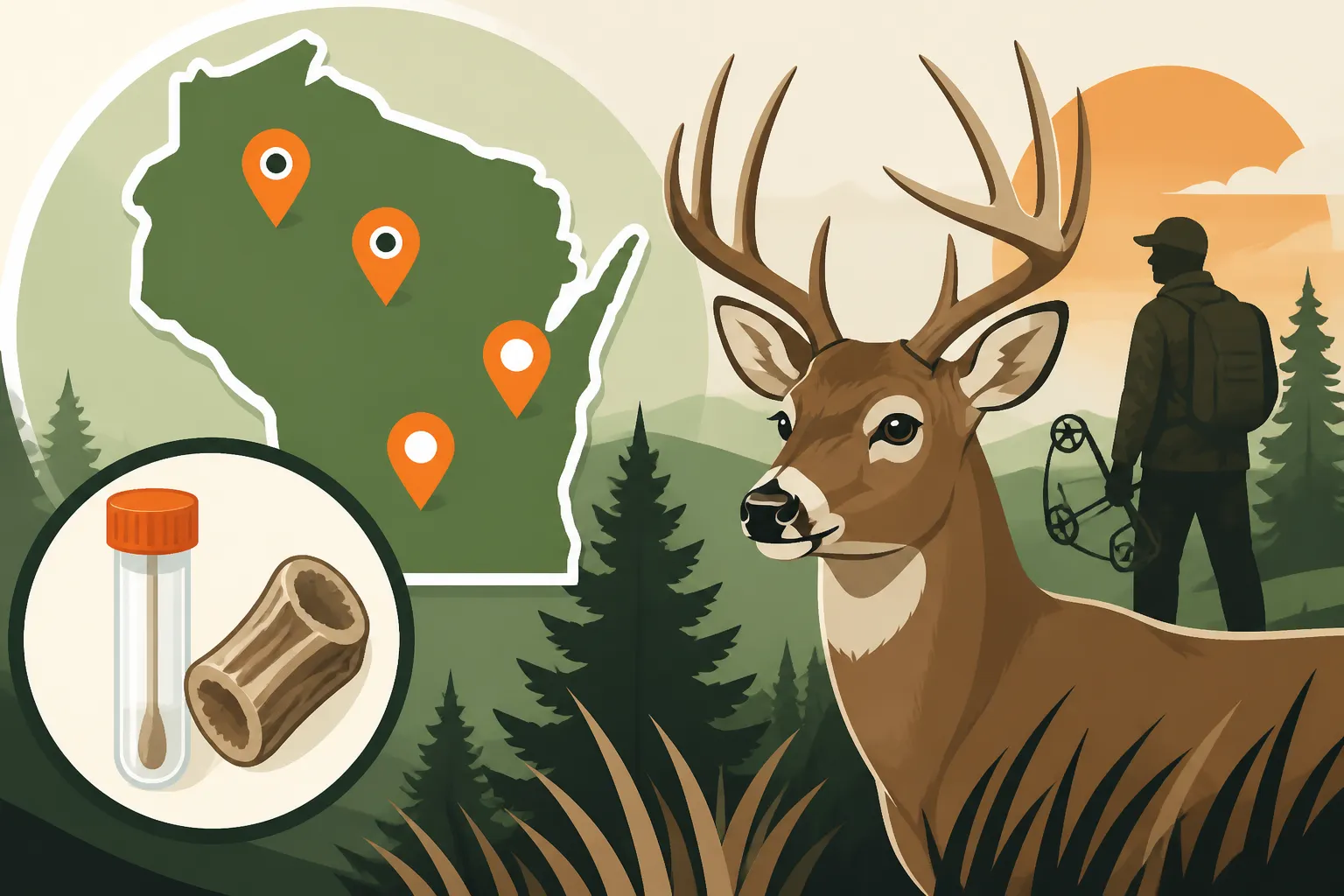
The Wisconsin DNR has established a robust network of sampling locations to accommodate hunters across the state. The most widespread and accessible are the self-service kiosks. These are often available 24/7, located at public access points, ranger stations, or local businesses. They're essentially drop-off points where you can collect a sampling kit, follow simple instructions to prepare your deer's head, and deposit it in a secure collection tube. While they require a bit of DIY effort, their constant availability makes them incredibly convenient, especially during off-peak hours or in remote areas.
In addition to kiosks, you'll find staffed sampling stations, particularly during the peak of the deer seasons, such as the opening weekend of the gun deer hunt. These stations are usually set up at specific locations, like DNR service centers, county forest headquarters, or sometimes even local fairs or events. At these locations, DNR personnel or trained volunteers are on hand to assist you, answer questions, and often perform the sample collection themselves. This can be a great option if you're unsure about the process or prefer a more hands-on interaction. Lastly, many taxidermists and meat processors throughout the state are certified to collect CWD samples. This is often the most convenient route for hunters who plan to take their deer to a professional for caping or butchering anyway. These businesses integrate sampling into their services, streamlining the process for you.
How to Locate the Nearest Site
Finding the closest CWD sampling location is easier than ever, thanks to modern technology and the DNR's commitment to accessibility. Your first stop should always be the Wisconsin DNR's official website, which hosts an interactive map specifically designed to show all CWD sampling locations. This map is continuously updated and allows you to search by county, address, or even filter by type of site (kiosk, staffed station, processor). It's an indispensable tool for planning your post-harvest steps.
Another excellent resource, especially for hunters who like to plan on the go, is the GoHunt app. This mobile application often integrates with DNR data, providing real-time information on public lands, regulations, and, yes, CWD sampling sites. It's like having a digital hunting companion in your pocket. Beyond digital tools, don't overlook local resources. Your County Deer Advisory Council (CDAC) website or local DNR service center can also provide specific information for your area. They might even list seasonal staffed stations that pop up during the gun deer season or provide details on local taxidermists and processors that offer sampling services. The key is to check these resources before you head out, so you have a plan in place for your deer. For more details on locating these critical facilities, check out Where to Find a Wisconsin CWD Kiosk.
| Sampling Site Type | Accessibility | Hunter Effort | Support Level | Best For |
|---|---|---|---|---|
| Self-Service Kiosk | 24/7, widespread | High (DIY) | Low (instructions provided) | Independent hunters, rural areas, after-hours |
| Staffed Station | Limited hours (seasonal) | Low (DNR assists) | High (direct assistance) | First-time testers, questions, peak season |
| Taxidermist/Processor | Business hours | Very Low (integrated service) | High (professional handles) | Hunters already using professional services |
The Sampling Process: What to Expect
Once you've located your sampling site, understanding the actual process will save you time and ensure your sample is correctly submitted. The goal is to obtain specific lymphatic tissues or brainstem tissue, as these are where CWD prions accumulate.
Preparing Your Deer for Sampling
Proper preparation of your deer is crucial, especially if you're planning to use a self-service kiosk. The most common sample collected is from the obex, a specific part of the brainstem, or from lymph nodes in the throat region. For self-service kiosks, the deer's head is usually required, with a portion of the neck still attached. This ensures that the necessary tissues for sampling are present. You'll need to remove the head carefully, ensuring at least 4-6 inches of neck are still connected.
Once the head is removed, it's essential to keep it cool and clean until you can get it to a sampling site. If you're hunting in warmer early archery season temperatures, this means getting it on ice or in a cooler as quickly as possible. Don't freeze the head before sampling, as this can damage the tissues and make analysis more difficult. Always ensure your deer's harvest tag is securely attached to the head, and it's clearly labeled with all the required information. This tag is your deer's unique identifier and is critical for tracking the sample. Remember, careful preparation ensures a valid sample and faster results.
Step-by-Step at a Self-Service Kiosk
Using a self-service kiosk for CWD sampling is surprisingly straightforward, but it helps to know the steps beforehand. First, upon arriving at the kiosk, you'll typically find a clear container or dispenser with sampling kits. Grab one! Each kit usually contains a plastic bag for the head, a detailed instruction sheet, a pre-printed submission tag, a zip tie, and sometimes a marker. Carefully read the instructions provided – they are your best friend here.
Next, you'll fill out the submission tag completely and accurately. This includes your name, contact information, the deer's harvest tag number, the county and Deer Management Unit (DMU) where the deer was harvested, and the date of harvest. Accuracy here is paramount, as this information is used to link your sample to you and to track CWD geographically. Once the tag is filled out, securely attach it to the deer's head using the provided zip tie. Then, place the entire head, with the tag attached and the neck portion pointing down, into the plastic bag. Finally, deposit the bagged head into the designated collection tube or container at the kiosk. It's designed to be a simple, secure drop-off, ensuring your sample gets to the lab. While you're at it, remember to complete your official Wisconsin Deer Registration Rules as well, as these processes are separate but equally important for deer management.
Staffed Station or Processor Experience
If you opt for a staffed sampling station or take your deer to a certified taxidermist or meat processor, the process is generally even easier for you. At a staffed station, you'll present your deer (either whole or just the head, depending on their specific instructions) to the DNR staff or volunteers. They are trained to properly remove the necessary tissue samples – typically the retropharyngeal lymph nodes from the throat or the obex from the brainstem – with specialized tools. They'll handle all the labeling and packaging, ensuring the sample is correctly submitted to the diagnostic lab. This is a great option if you have questions, want to ensure the sample is taken correctly, or prefer not to handle the dissection yourself.
Similarly, if you're utilizing a taxidermist or meat processor that offers CWD sampling, they will integrate it seamlessly into their services. When you drop off your deer, simply inform them that you wish to have it tested for CWD. They will take care of extracting the sample during their normal processing or caping procedures, attach the necessary paperwork, and submit it on your behalf. Before you leave, make sure you receive a confirmation number or a copy of the submission form. This documentation is crucial, as it will allow you to track your results online. This convenience makes these businesses invaluable partners in CWD surveillance, saving you an extra trip and ensuring professional handling.
Interpreting Your CWD Test Results
After the effort of harvesting and submitting a sample, the waiting game begins. Knowing how and when to access your results, and what to do if they come back positive, is a crucial final step in the CWD sampling process.
How to Access Your Results
Once your CWD sample has been submitted, the clock starts ticking on receiving your results. The good news is that accessing them is usually a straightforward online process. The Wisconsin DNR maintains an online CWD test results lookup tool on their official website. You'll typically need the unique sample identification number that was generated when your deer was sampled, or sometimes your harvest tag number. This number will be on the receipt you received from a staffed station, processor, or noted on your self-service kit form. Simply enter this ID into the lookup tool, and it will display your deer's test status and results.
The time it takes to get results can vary, especially during the peak of the deer seasons. During the frenzied weeks of the gun deer hunt, the diagnostic labs are inundated with samples, which can extend wait times. Generally, you can expect results within 2-4 weeks, but it's not uncommon for it to take a bit longer during high-volume periods. The DNR aims to process samples as quickly as possible, but quality control is paramount. If you're worried about the waiting period, you can always check the DNR website for current estimated turnaround times. For specific information on timelines, refer to How Long Wisconsin CWD Results Take.
What a Positive Result Means
Receiving a positive CWD test result for your harvested deer can be incredibly disappointing and, frankly, a bit upsetting after all your hard work. The most important thing to remember is that if your deer tests positive, you should not consume the meat. As previously mentioned, while there's no confirmed human transmission, health organizations strongly advise against it as a precautionary measure. It's a tough pill to swallow, but it's the safest course of action for you and your family.
So, what do you do with a CWD-positive carcass? The DNR will typically contact you directly if your deer tests positive to discuss your options. Generally, the recommendation is to properly dispose of the carcass. This usually means either taking it to a landfill that accepts animal waste or, in some cases, burying it on your property (check local ordinances for specific requirements). Do not discard it in open areas, as this can contribute to environmental contamination and the further spread of prions. While a positive result can feel like a setback, it reinforces the importance of your sampling effort and provides valuable data that helps the DNR understand Wisconsin CWD Prevalence Rates and target management efforts.
CWD Carcass Transport and Regulations
One of the most complex and often confusing aspects of CWD management for hunters is understanding the carcass transport regulations. These rules are not arbitrary; they are specifically designed to limit the artificial spread of CWD prions from affected areas to disease-free ones.
Understanding Carcass Movement Restrictions
Imagine accidentally moving a CWD-infected carcass from a high-prevalence county into an area where the disease is currently absent. That's precisely what these regulations are trying to prevent. Wisconsin has strict rules regarding the movement of certain deer parts, particularly from CWD-affected counties. The core idea is that parts most likely to contain CWD prions – specifically the brain, spinal cord, eyes, spleen, and lymph nodes – should not be transported out of an affected county unless they are completely processed.
This means you cannot simply harvest a deer in a CWD-affected county and transport the whole carcass, or even just the head and spine, across county lines into a CWD-free area. These regulations are regularly updated, and it's absolutely crucial to check the latest Wisconsin DNR regulations annually, or even more frequently, as county statuses can change. The DNR website and the GoHunt app are excellent resources for the most up-to-date maps of CWD-affected counties and corresponding transport restrictions. Ignoring these rules, even unintentionally, can lead to significant penalties and, more importantly, put other deer herds at risk. For a detailed overview, be sure to read up on Wisconsin Carcass Movement Restrictions.
Legal Transport of Deer Parts
While the restrictions might seem daunting, it's important to understand what you can legally transport from a CWD-affected county. The key is removing the parts most likely to harbor CWD prions. Essentially, if you can get your deer boned out, you're usually good to go. This means you can legally transport:
- Boned-out meat: All the muscle tissue separated from the bone, with no visible brain or spinal cord tissue attached.
- Hides: As long as there's no brain or spinal cord tissue attached.
- Antlers: If they are clean and free of brain tissue. Skull plates are also allowed if cleaned completely (no brain tissue).
- Finished taxidermy mounts: Once the taxidermist has fully processed and mounted the animal, it's considered safe for transport.
- Teeth: For use as trophies or for age determination.
Many hunters in CWD-affected areas will field dress their deer and then take it immediately to a professional meat processor within that same county. These processors are typically well-versed in CWD regulations and can ensure the meat is properly boned out before it leaves the area. The same goes for taxidermists. This approach not only ensures compliance but also minimizes the risk of spreading CWD. Thinking ahead about how you'll process your deer and adhere to these rules is an essential part of responsible hunting in Wisconsin's CWD landscape. This kind of careful handling is similar to precautions taken when Handling Bear Meat Safely to avoid spoilage.
Disclaimer
This guide is intended for informational purposes only and does not supersede official Wisconsin Department of Natural Resources (DNR) regulations. Hunting laws and CWD management protocols are subject to change. Always consult the current Wisconsin hunting regulations pamphlet and the Wisconsin DNR website for the most up-to-date and legally binding information before engaging in any hunting activities.