When Wisconsin’s Muzzleloader Hunt Runs
It's always a bit confusing to keep track of all the different hunting seasons in Wisconsin, especially when you're trying to squeeze in every possible opportunity. One season that often sparks questions about its exact timing and rules is the muzzleloader hunt. This guide will clear up exactly when Wisconsin's muzzleloader season typically runs, giving you the solid information you need to plan your late-season deer hunting adventures.
Understanding the Muzzleloader Season Dates
The Wisconsin muzzleloader season is a distinct period for deer hunting that falls outside the traditional nine-day gun season. It's often seen as a bridge between the regular gun season and the late archery and antlerless-only hunts, offering a unique opportunity for hunters who appreciate the challenge and tradition of black powder firearms.
The Traditional December Slot
Historically, Wisconsin's muzzleloader season opens a few days after the close of the general nine-day gun deer season and typically runs for about ten days into early December. For example, if the gun season wraps up on a Sunday, the muzzleloader season might kick off the following Monday or Tuesday and extend through the second full weekend of December. These dates are pretty consistent year to year, but it's crucial to check the Wisconsin Department of Natural Resources (DNR) regulations pamphlet each season for the exact calendar. The reason for this specific timing is to provide a dedicated period for muzzleloader enthusiasts without overcrowding the woods directly after the main gun season, allowing deer a bit of a breather and different patterns to emerge. This timing also usually aligns with colder weather, adding another layer of challenge and requiring hunters to prepare for winter conditions.
Overlap with Other Seasons
While the muzzleloader season has its distinct window, it's important to remember that it often overlaps with other ongoing deer hunting opportunities. For instance, the statewide archery and crossbow seasons are still open during this time, extending well into January. This means you might be sharing the woods with archers, which emphasizes the need for extra caution and clear identification of blaze orange or pink requirements. The late archery season offers quite a long duration, but the muzzleloader season provides a different hunting experience with specific equipment rules. Additionally, certain antlerless-only hunts, like the four-day statewide antlerless-only hunt, sometimes either precede or are concurrent with the muzzleloader season, depending on the year's calendar. Hunters participating in the muzzleloader hunt are usually authorized to harvest antlered deer with their statewide buck authorization, and antlerless deer with specific antlerless harvest authorizations for the deer management unit they are hunting in.
Why the Muzzleloader Season Matters in Wisconsin
For many, the muzzleloader season isn't just another hunt; it's a cherished tradition and an opportunity to experience deer hunting in a slightly different, often more primitive, way. It extends the deer hunting calendar and provides a unique challenge.
Extended Opportunity for Deer
After the intensity of Wisconsin's Nine-Day Gun Deer Season, deer patterns can change dramatically. Bucks, often nocturnal and wary during the main gun season, might start to relax a bit, especially if hunting pressure subsides in certain areas. The muzzleloader season provides an excellent chance to target these deer. It allows hunters to be out in the woods during what can be a prime time for late-season movement, particularly if temperatures drop and deer need to feed more aggressively to build up fat reserves. This extended opportunity is especially valuable in areas where deer densities are high or in northern forests where a late-season deer can be a hard-earned reward. It's also a chance to fill an antlerless tag if you haven't yet, contributing to herd management goals.
Unique Hunting Experience
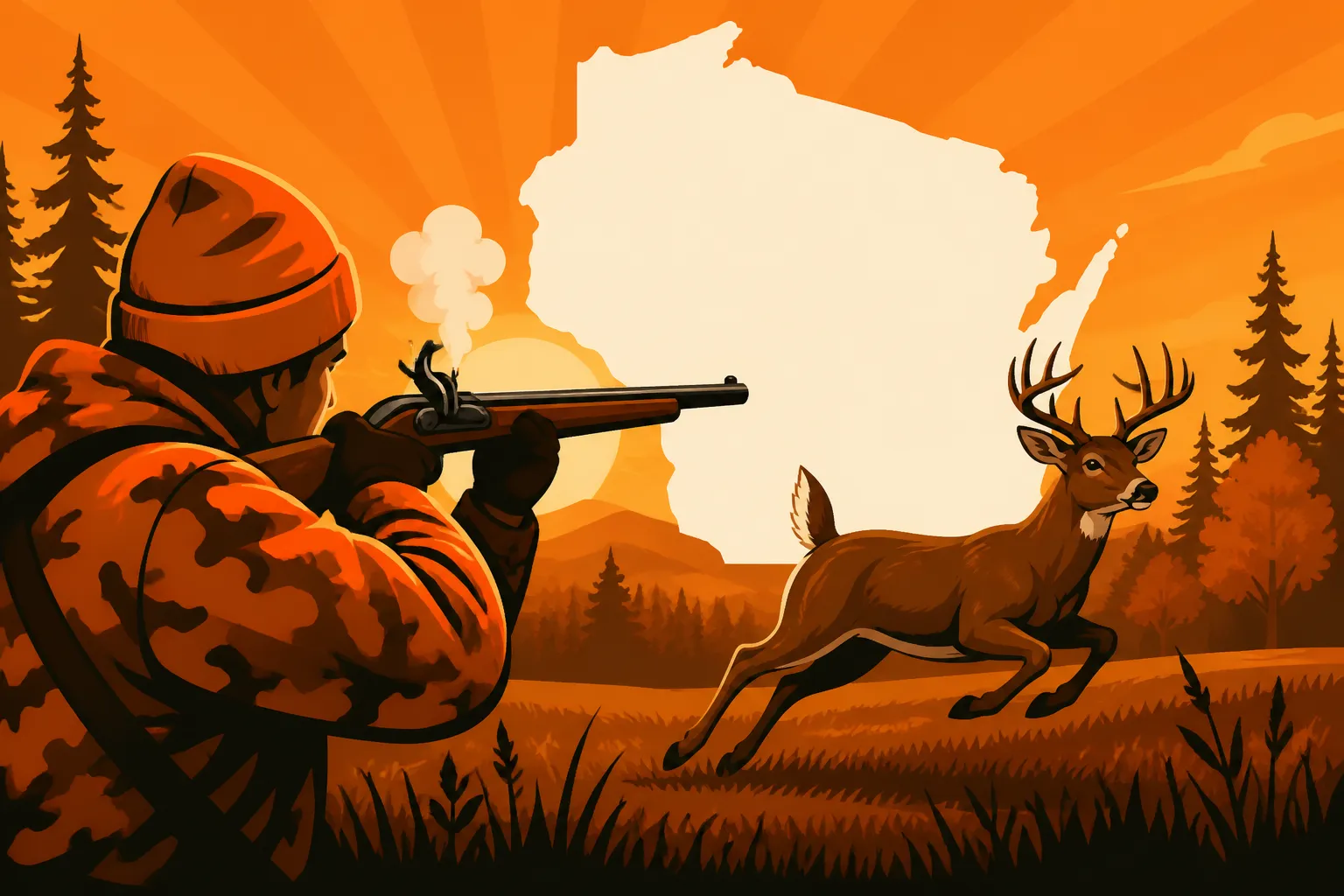
Hunting with a muzzleloader adds a distinctive element to the pursuit of whitetails. The single-shot nature of these firearms demands a heightened sense of patience and precision. There’s no quick follow-up shot, so every decision, from stalking to shot placement, becomes amplified. The slower loading process, the cloud of smoke, and the unique sound all contribute to a hunting experience that harks back to earlier times. Many hunters find a profound satisfaction in harvesting a deer with a muzzleloader, feeling a deeper connection to the hunting heritage. It’s also a time when the landscape transforms, often covered in fresh snow, offering quieter stalking conditions and making tracking much easier. The quiet of the winter woods, punctuated only by the crack of a muzzleloader, is an experience truly unlike any other in Wisconsin.
Navigating the Regulations and Tagging
Understanding the specific rules for the muzzleloader season is paramount to a legal and ethical hunt. Wisconsin's regulations can be detailed, and it's essential to stay informed about licensing, carcass movement, and baiting restrictions.
Licensing and Authorizations
To participate in Wisconsin's muzzleloader hunt, you'll need the appropriate licenses and harvest authorizations. Typically, a valid gun deer license (which includes an archery/crossbow license) is sufficient, provided you also possess the required statewide buck or antlerless authorizations for the zone or unit you're hunting in. The cost of Wisconsin Hunting Licences and What They Cost can vary, so always check the current fee schedule. For antlerless deer, these authorizations are crucial and often specific to a county or Deer Management Unit (DMU). Hunters are encouraged to secure their antlerless tags early, especially if hunting in popular areas. Platforms like GoHunt can be useful for looking up regulations and checking the availability of specific tags, though always confirm with official DNR resources. Remember, proper tagging immediately after harvesting a deer, followed by registration, is a legal requirement. You can find more details on how Antlerless Authorizations Are Allocated for different areas of the state.
Carcass Transport and CWD Considerations
One of the most critical aspects of hunting in Wisconsin, especially in the late season, involves regulations surrounding Chronic Wasting Disease (CWD). The state has stringent rules for Wisconsin CWD Sampling and Test Sites and Wisconsin Carcass Transport Rules, particularly for deer harvested in CWD-affected counties. If you harvest a deer in a CWD-affected county, there are restrictions on transporting the whole carcass out of that county. This means you might need to debone your deer or take it to a CWD sampling station within the county of harvest. These rules are in place to help prevent the further spread of this always-fatal neurological disease among the deer herd. Hunters should always check the most current CWD maps and regulations, which are updated annually by the DNR. Using detailed mapping tools, even general ones found on platforms like GoHunt, can help you understand county boundaries in relation to CWD zones before you even step into the woods. Additionally, you must be aware of Wisconsin Baiting and Feeding Bans, as these regulations are triggered by CWD detections and can change which counties allow baiting. These bans are critically important, especially for late-season hunts where hunters might be tempted to use attractants.
Tactics for Success in Late-Season Muzzleloader
The late muzzleloader season presents a unique set of challenges and opportunities. Adapting your strategy to the colder weather and altered deer behavior is key to filling your tag.
Cold Weather Strategies
Hunting in December in Wisconsin almost guarantees cold weather, and sometimes, deep snow. This dramatically impacts both deer and hunters. For deer, survival becomes paramount, driving them to seek out reliable food sources and thermal cover to conserve energy. This can mean predictable travel routes. For hunters, a successful cold weather sitting strategy involves layering proper clothing, using insulated boots, and bringing hand and foot warmers to endure long sits. Wool versus synthetics in wet snow is a common debate, but both have their place in a good layering system. Consider a quality insulated hunting suit that can handle single-digit temperatures. Keeping a Muzzleloader Dry in Wet Snow is also a significant concern; moisture can render your firearm useless. Many hunters use tape over the muzzle and waterproof covers for their actions to protect the powder. Remember, sitting still for hours in freezing temperatures demands more physical preparation and mental toughness than an early archery hunt.
Finding Late-Season Food Sources
With most crops harvested and natural browse becoming scarce, deer will concentrate on the remaining high-energy food sources. These can include standing corn, soybean fields (if not yet completely picked over), browse in clear-cuts, or mast crops like acorns if they're still available and not buried under too much snow. Evergreen swamps and cedar thickets not only offer excellent thermal cover but also provide browse that deer will seek out when other food is scarce. Scouting before the season, perhaps even using a platform like GoHunt to analyze satellite imagery for potential food plots or unharvested fields, can give you a significant advantage. Focus on transition areas between bedding cover and these food sources. Deer movement will often be dictated by hunger, especially in the afternoons as they move out to feed before nightfall. Understanding late-season food sources for whitetails is crucial.
Hunting Pressure and Deer Movement
While the muzzleloader season typically sees less hunting pressure than the opening weekend of the gun season, it's not devoid of other hunters. Many archers are still out, and some public land areas can still be quite busy. Deer that have survived the gun season are incredibly wary. They've learned to avoid open areas during daylight and stick to thick cover. This means hunters need to adjust their tactics, often by focusing on dense bedding areas, thick swamp edges, or deep draws in the Driftless Area. Still-hunting through thick cover can be very effective, but it requires patience and stealth. Consider hunting without bait in a banned county, relying instead on natural deer movement. Look for trails leading to hidden food plots or thermal cover. Using elevated stands, like those used for treestand setups in Wisconsin hardwoods, can give you a better vantage point over thick cover, but entry and exit routes must be carefully planned to avoid alerting deer. The best way to beat hunting pressure is often to go where others won't, or can't, venture—deeper into public land, across difficult terrain, or through dense vegetation.
| Muzzleloader Season Key Details | General Overview | Considerations |
|---|---|---|
| Dates | Typically follows the 9-day gun season, running into early-to-mid December. | Check current DNR regulations annually for exact dates. |
| Allowed Firearms | Muzzleloading rifles, smoothbore muzzleloaders, and muzzleloading pistols. | Must be loaded from the muzzle. Specific caliber/load restrictions may apply (check regs). |
| Required Clothing | Blaze orange or fluorescent pink required for all hunters during daylight hours. | Visible from all directions. Same as gun season requirements. |
| Tags/Authorizations | Statewide buck authorization for antlered deer; antlerless authorization for antlerless. | Antlerless tags are DMU-specific; public vs. private land tags. |
| Overlap with Other Seasons | Concurrent with late archery/crossbow season and sometimes late antlerless-only hunts. | Be aware of other hunters in the woods. |
| Baiting/Feeding | Follow all Wisconsin Baiting and Feeding Bans. | Bans are county-specific and triggered by CWD; check current status before hunting. |
| CWD Rules | Carcass transport restrictions in CWD-affected counties. | Plan for deboning or in-county CWD testing if hunting in a CWD-affected area. |
Disclaimer
Please note that hunting regulations, season dates, and license requirements in Wisconsin are subject to change by the Wisconsin Department of Natural Resources (DNR). While every effort has been made to provide accurate and up-to-date information, it is the hunter's responsibility to consult the official Wisconsin DNR hunting regulations pamphlet and website for the most current and complete rules before participating in any hunting activity.