Why an Adjoining County Gets a Two-Year Ban
It’s incredibly frustrating when you’ve got your hunting plans laid out, perhaps even a favorite spot you’ve been baiting for years, only to find out your county, or even one next to it, has suddenly fallen under a baiting and feeding ban. This isn’t just an inconvenience; it can feel like a direct hit to your hunting traditions and strategies. This guide will walk you through the specifics of Wisconsin's baiting and feeding regulations, especially focusing on why an adjoining county can end up with a two-year ban, and how these rules aim to protect our deer herd from diseases like Chronic Wasting Disease (CWD).
Understanding Wisconsin's Baiting and Feeding Regulations
Wisconsin has some pretty stringent rules about baiting and feeding deer, and for good reason. These aren't arbitrary regulations designed to make your life harder; they're critical tools in managing the health of our deer population, especially concerning the spread of Chronic Wasting Disease.
The Rationale Behind Baiting Bans
Let's be honest, baiting works. Piling up corn, apples, or other attractants can draw deer into a specific spot, making them easier to observe and, for hunters, often easier to harvest. But therein lies the problem from a disease management perspective. When deer congregate around a bait site, they share saliva, urine, and feces, creating a perfect petri dish for disease transmission. CWD, in particular, is spread through prions, which are shed by infected deer and can persist in the environment for years.
Imagine a busy gas station coffee bar during flu season. If everyone is sharing the same creamer dispenser and stirring spoons, the chances of getting sick skyrocket. It's the same principle with deer and bait piles. A single infected deer visiting a bait site can leave behind prions that can then infect other deer for a long time. The goal of a baiting ban is simple: reduce unnatural concentrations of deer to minimize nose-to-nose contact and environmental contamination, thereby slowing the spread of diseases like CWD. It’s a tough pill to swallow for many of us who've used baiting as a strategy, but the science behind it is pretty clear when it comes to disease mitigation. If you're looking for more context on the big picture, our article on Wisconsin Baiting and Feeding Bans dives deeper into the statewide rules.
Initial CWD Detection and Immediate Impact
When CWD is first detected in a county, it's a big deal, and the Wisconsin DNR acts swiftly. The discovery of even a single CWD-positive deer in a county immediately triggers a mandatory three-year baiting and feeding ban for that specific county. This rapid response is crucial because CWD is a fatal neurological disease that has no cure, and it can decimate deer populations over time.
Think of it like a wildfire. When a small fire starts, the first priority is to contain it as quickly as possible before it spreads out of control. The immediate three-year ban for the affected county is that initial, aggressive containment effort. It's meant to break the cycle of congregation and transmission where the disease has already been confirmed. During this time, the DNR ramps up CWD surveillance, often encouraging hunters to utilize Wisconsin CWD Sampling and Test Sites and offering incentives for submitting deer for testing. Understanding the history and impact of this disease is paramount, and you can learn more by reading our comprehensive piece on Chronic Wasting Disease in Wisconsin.
Differentiating Baiting and Feeding
It’s easy to get these terms mixed up, but in Wisconsin, there’s a distinct legal difference between "baiting" and "feeding," and both are addressed by the bans.
- Baiting refers specifically to placing food or other attractants for the purpose of hunting. This means if you're putting out corn to draw deer closer for a shot during deer season, that's baiting. The ban directly prohibits this practice.
- Feeding, on the other hand, is the act of providing food for deer and other wildlife for non-hunting purposes, such as wildlife viewing or simply helping animals through winter. While seemingly innocent, feeding still causes deer to congregate, increasing disease transmission risk. Therefore, feeding bans often accompany baiting bans in CWD-affected areas and their adjoining counties.
The distinction is important because you might think, "Well, I'm not hunting over it, I'm just putting out corn for the deer to enjoy." But if your county is under a ban, both baiting and feeding are prohibited because both activities create those dangerous congregation points. The rules are designed to prevent any intentional provision of food that could draw deer together, regardless of the intent behind it. This ensures a consistent approach to minimizing interaction, which is key to containing CWD. For a deeper dive into the legal nuances, our article on How Wisconsin Baiting Bans Are Triggered explains the conditions that lead to these restrictions.
The "Adjoining County" Rule Explained
This is where things can get particularly confusing and, for many hunters, quite frustrating. You might be hunting in a county where no CWD has ever been detected, only to find out you're under a baiting ban because a neighboring county had a positive test. This isn't an oversight; it's a deliberate and strategic measure.
The Two-Year Ban Mechanism
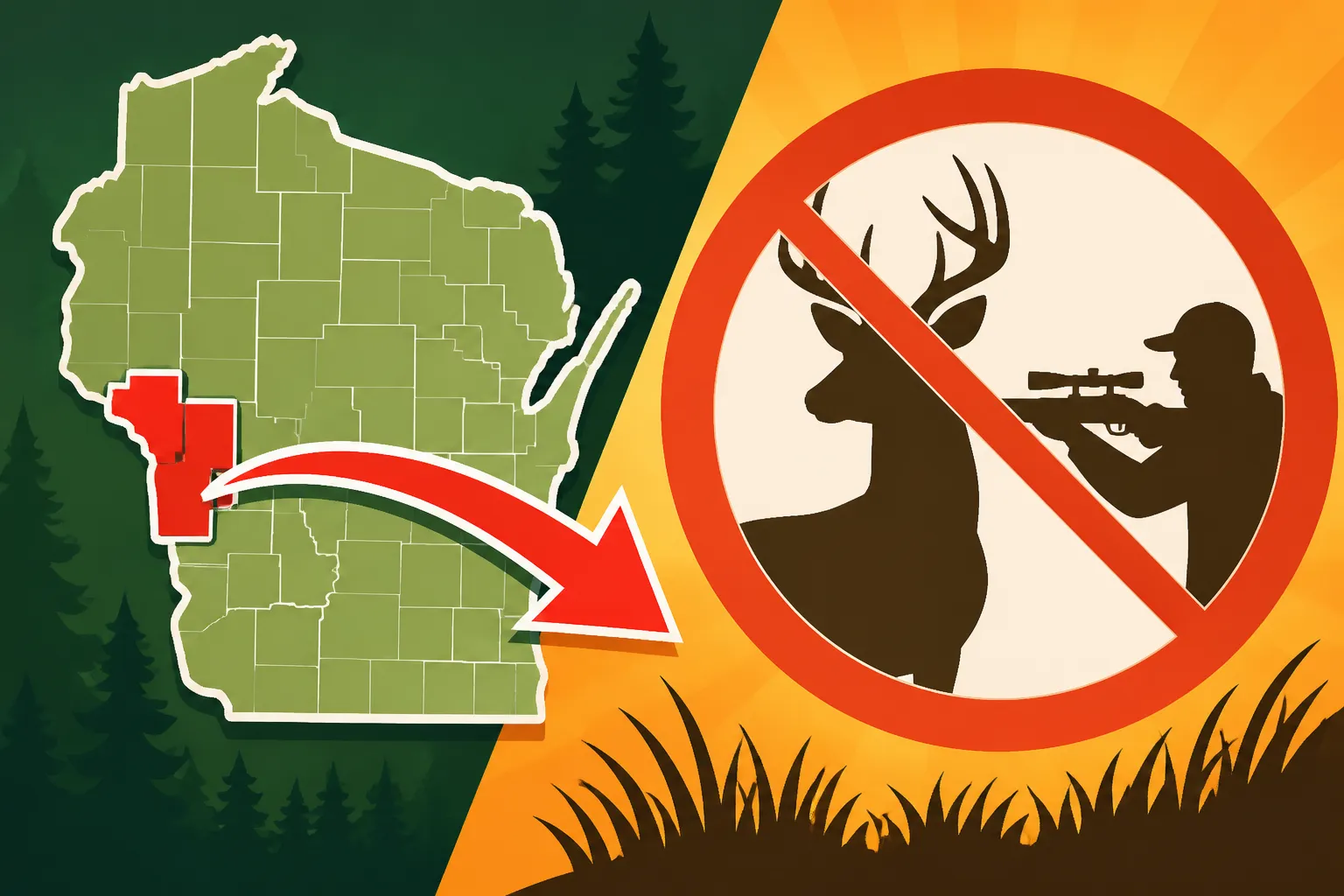
The core of the "adjoining county" rule is preventative. When CWD is confirmed in a county, all adjoining counties—meaning any county that shares a border with the CWD-positive county—are automatically placed under a two-year baiting and feeding ban. This ban runs concurrently with the CWD-positive county's initial three-year ban. So, if your neighbor county tests positive, your county gets a two-year ban starting at the same time.
Why two years instead of three? It's a pragmatic approach. While the direct CWD county gets a longer initial ban for active management and surveillance, the adjoining counties are viewed as buffer zones. Deer don't respect county lines. A buck can easily travel a few miles across a border in a day. The two-year ban in adjacent counties is an attempt to create a wider "disease-free" buffer where deer aren't artificially concentrated. The idea is to reduce the chances of CWD spreading from the known infection zone into new territory by limiting congregation points in the immediate vicinity. It acknowledges that while CWD might not be detected there yet, the risk of it being present, but simply undetected, is high due to deer movement. You can find more details on how long these bans typically last in How Long a Wisconsin Baiting Ban Lasts.
What Constitutes an "Adjoining County"?
An "adjoining county" is pretty straightforward: it's any Wisconsin county that shares a physical border with a county where CWD has been detected. This includes counties that meet at a single point, not just those with a long shared boundary.
Let's look at a hypothetical example. Historically, counties in southern Wisconsin like Iowa, Dane, and Sauk have been CWD epicenters. If, for instance, a CWD-positive deer is found in western Dane County, then any county bordering Dane County, such as Columbia, Dodge, Jefferson, Rock, Green, Iowa, and Sauk, would automatically fall under a two-year baiting and feeding ban. Even if the majority of that adjoining county is far from the CWD detection site, the rule applies to the entire county. This broad stroke ensures that the buffer zone is comprehensive and accounts for potential deer movement across the entire shared boundary. Knowing which counties are under these restrictions is vital for planning your hunt, and our guide on Which Wisconsin Counties Have CWD provides a current overview. Hunters often use mapping tools like those offered by GoHunt to visualize county lines and CWD zones, helping them stay compliant.
The Goal of the Extended Ban
The primary goal of the extended ban in adjoining counties is proactive disease management. By restricting baiting and feeding in these buffer zones, the DNR hopes to:
- Reduce outward spread: Prevent CWD from migrating from infected areas into new, currently disease-free regions.
- Delay establishment: Even if CWD eventually makes it into an adjoining county, the absence of bait piles means it might take longer for the disease to become established and widespread, buying time for monitoring and management efforts.
- Encourage natural behavior: Without artificial attractants, deer are more likely to disperse and behave in ways that naturally limit close contact, relying on natural food sources and movement patterns.
It's a long-term strategy aimed at protecting the health of the broader Wisconsin deer herd, even if it causes short-term inconvenience for hunters. While the direct CWD county is fighting an active infection, the adjoining counties are essentially on high alert, working to keep the front line from advancing. It's about protecting the future of our deer hunting heritage, even if it feels restrictive in the present. This also ties into broader concerns about Wisconsin Carcass Movement Restrictions which aim to prevent the physical transport of prions across county lines.
Navigating Hunting in a Banned County
So, you find yourself in an adjoining county under a two-year baiting ban. What now? It definitely changes the game, but it doesn't mean your hunting season is ruined. It simply means adapting your approach.
Practical Implications for Hunters
The most obvious implication is that your trusty bait piles are out. This forces a shift in strategy that can be challenging, especially if you've relied on bait for years. Instead of waiting for deer to come to a specific spot for food, you'll need to focus on understanding their natural movement patterns, food sources, and bedding areas.
This is where scouting becomes even more critical. You'll need to spend more time in the woods before the season, identifying natural funnels, rub lines, scrape lines, and preferred browse. Learning to read the landscape for natural food sources like acorns, brassicas, or standing corn in agricultural areas (where legal) becomes paramount. Hunters might start investigating alternatives like Food Plots Instead of Bait if they have private land access, or honing their still-hunting techniques. For public land hunters, it means truly getting to know your hunting spot, identifying bedding cover, and understanding how deer travel through it. This requires a different kind of effort, but many hunters find it ultimately makes them more skilled and knowledgeable about deer behavior. It can feel like a steep learning curve, but it's an opportunity to grow as a hunter.
Staying Informed About County Status
Given how quickly CWD bans can be implemented or change, staying up-to-date on your county’s status is absolutely essential. Nothing ruins a hunt faster than finding out you've unknowingly violated regulations. The Wisconsin DNR is the official source for this information, and they provide updates through various channels.
The best way to stay informed is by regularly checking the Wisconsin DNR website, especially the CWD section. They often have interactive maps and lists that show which counties are currently under baiting and feeding bans. Additionally, many hunters find applications like the Wisconsin Hunt Wild App incredibly useful. These apps often integrate real-time or frequently updated boundary information, allowing you to quickly check your location against current regulations. Using tools like GoHunt's mapping features can also provide visual overlays of CWD management zones, helping you plan your hunts responsibly and avoid any unintentional infractions. Make it a habit to check the status of any county you plan to hunt in a few weeks before the season, and even during the season, just in case.
Dealing with Frustration and Adapting Strategies
It’s completely normal to feel frustrated by these bans. After all, hunting is often about tradition and familiar methods. Having a favored tactic suddenly taken away can feel unfair. However, viewing these restrictions as a challenge rather than an insurmountable obstacle can change your entire outlook.
Instead of focusing on what you can’t do, focus on what you can. This is a prime opportunity to hone different hunting skills. Consider trying methods like still-hunting, glassing from a vantage point in the Driftless Area Deer Hunting in Wisconsin, or focusing on natural pinch points and funnels. Learn to interpret deer sign more effectively, identifying fresh tracks, rubs, and scrapes that indicate active deer movement. Practicing Scouting Wisconsin Public Land Before Season becomes more important than ever. This forced adaptation often makes hunters more versatile and ultimately more successful in the long run, even if it means a few lean seasons initially. It's about becoming a better woodsman, not just a better baiter. Embrace the change, and you might discover new favorite ways to hunt. Even when managing your licenses and harvest reports, GoHunt's platform integrates well with The Wisconsin Go Wild Licence System, making compliance a bit smoother.
Here’s a quick overview of the distinctions in CWD-related baiting bans:
| Factor | CWD-Positive County | Adjoining County |
|---|---|---|
| Trigger | CWD-positive deer detected within county. | Shares a border with a CWD-positive county. |
| Initial Ban Length | Three years. | Two years. |
| Purpose | Active disease containment and surveillance. | Preventative buffer zone, slow outward spread. |
| Reassessment | Reviewed annually after initial three years. | Reviewed concurrently with CWD-positive county's status. |
| Activities Banned | Both baiting and feeding of deer. | Both baiting and feeding of deer. |
| Renewal | Can be renewed if CWD is still detected or prevalent. | Renews if the bordering county's CWD status remains active. |
Disclaimer
This information is intended for general guidance and informational purposes only. Hunting regulations in Wisconsin are subject to change. Always consult the official Wisconsin Department of Natural Resources (DNR) regulations and guidelines before participating in any hunting activities. It is the hunter's responsibility to know and follow all applicable laws.