Dove Hunting a Cut Wisconsin Field
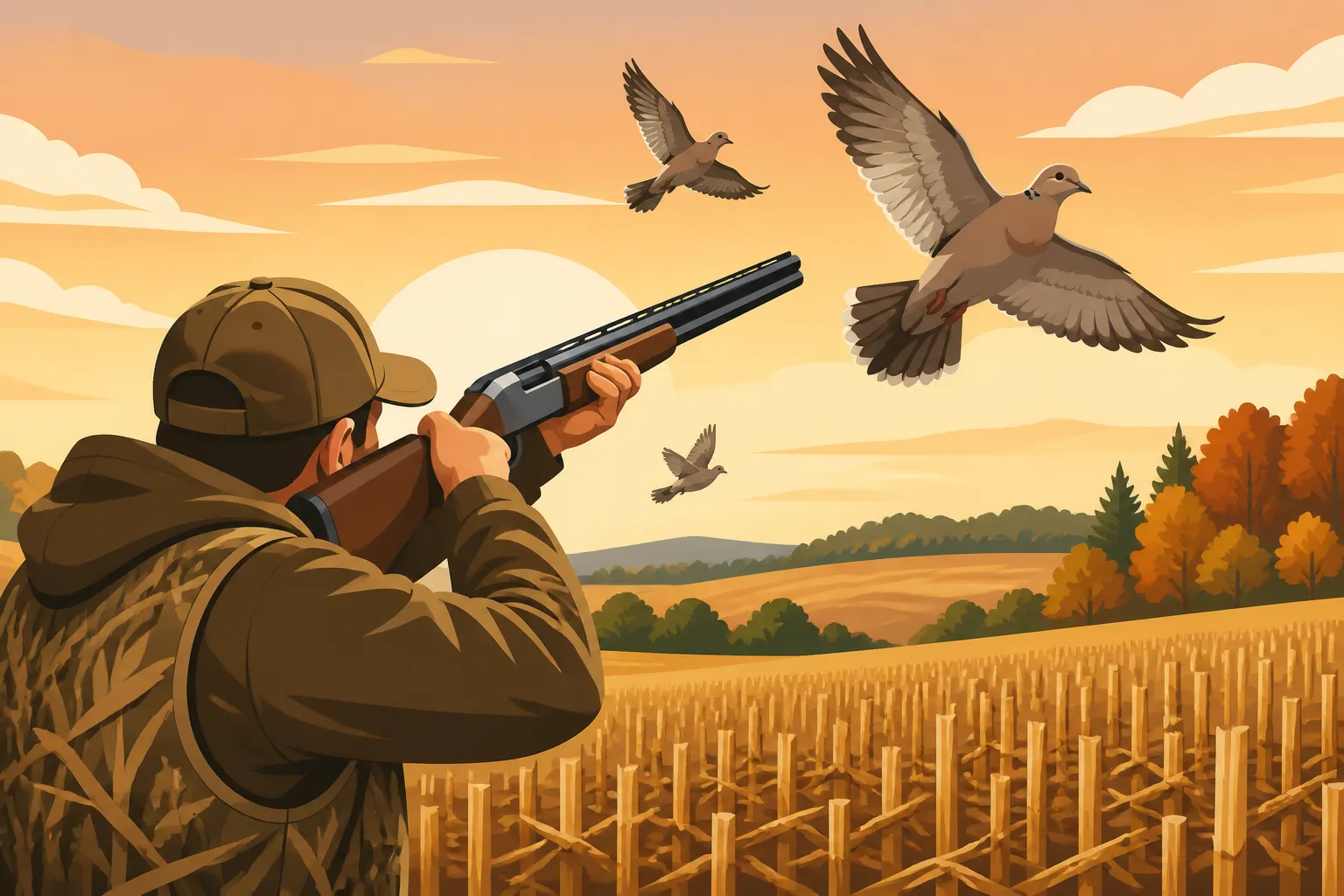
Dove hunting in Wisconsin is a hidden gem that far too many hunters overlook, often dismissing it as a southern tradition. But let me tell you, there's nothing quite like the fast-paced action and camaraderie of a good dove hunt, especially when you find that perfect cut field. Many folks get frustrated trying to find consistent bird activity or securing access, leading them to believe Wisconsin isn't a prime dove state. This comprehensive guide is here to change that, showing you exactly how to find, scout, and successfully hunt mourning doves in Wisconsin's agricultural landscapes.
Unlocking Wisconsin's Dove Hunting Potential
For many of us, the end of August often feels like the quiet before the storm of deer season, a lull where we're itching to get out but the big game is still a ways off. That's precisely where dove hunting shines, offering a fantastic opportunity to shake off the off-season rust, pattern your shotgun, and enjoy some thrilling bird action long before the leaves even begin to think about turning. It's an often-underestimated resource right here in Wisconsin, providing an accessible and exciting way to spend those gorgeous early autumn days.
The Allure of Early Season Dove Hunting
The opening of dove season in Wisconsin, typically September 1st, signals the true start of the hunting year for many. Unlike the often solitary pursuit of deer or the specialized gear needed for waterfowl, dove hunting is relatively straightforward and social. It's a chance to gather with friends or family, enjoy the crisp morning air, and engage in some exhilarating, rapid-fire shooting. There's a certain charm to sitting on a stool at the edge of a field, watching the sun rise, and anticipating the first flurry of birds. The frustration of waiting for deer season can be intense, but doves offer an immediate remedy, a high-volume shooting experience that tests your reflexes and marksmanship. It's also a fantastic way to introduce new hunters, especially youth, to the sport, as the action can be consistent and less demanding than other types of hunting.
Wisconsin's Dove Population and Migration Patterns
Wisconsin isn't typically thought of as a traditional dove hunting state like some in the south, but our resident mourning dove population is robust, and we also see migratory birds passing through. These slender, fast-flying birds are drawn to our agricultural areas, particularly in the southern and central parts of the state where vast corn, wheat, and sunflower fields provide abundant food. Counties like Columbia, Dane, Rock, and even parts of Sauk and Dodge, with their mix of farmling and open country, can hold significant numbers of doves. As the season progresses into late September and October, you'll notice a shift. Many of our resident birds will have already headed south, but depending on the weather patterns, we can still experience pushes of migratory doves moving through, especially after a cold front. Understanding these migration patterns, which often align with dropping temperatures further north, is key to finding success later in the season.
Legalities and License Requirements for Dove Hunters
Before you even think about stepping into a field, it’s crucial to understand the legal requirements. To hunt doves in Wisconsin, you'll need a valid Wisconsin Small Game and Furbearer Seasons license. Beyond that, because doves are migratory game birds, you must also be Harvest Information Program (HIP) certified. This is a free, quick process you can complete when purchasing your license through the Go Wild system. Don't skip this step; it's a federal requirement, and conservation wardens do check for it. Unlike waterfowl hunting, you generally don't need a federal duck stamp for doves, but always double-check the latest regulations in case anything changes. It's also vital to be aware of shooting hours, which typically align with other game bird seasons, and daily bag limits, which are usually quite generous for doves. Always keep a physical copy or digital proof of your licenses and certifications on you in the field.
Deconstructing the Anatomy of a Productive Cut Field
Finding the right piece of ground is the absolute cornerstone of successful dove hunting. Doves aren't just randomly scattered across the landscape; they have specific needs for food, water, and roosting, and the best cut fields offer a perfect trifecta of these elements. You might drive past dozens of seemingly similar fields, but only a few will consistently hold birds. Learning to "read" the landscape and identify these critical features is what separates an average hunt from an unforgettable one.
Identifying Ideal Crop Types and Residue
Doves are primarily seed-eaters, and certain agricultural crops are absolute magnets for them. Top of the list are wheat, sunflowers, corn, and milo (sorghum).
- Wheat fields are often the earliest to be harvested in Wisconsin, making them prime candidates for the September 1st opener. The combines leave behind a scattering of fallen wheat grains, which doves absolutely adore. A recently cut wheat field, especially one that's a bit dusty, will often pull in doves from miles around.
- Sunflowers are arguably the single most attractive crop for doves. The seeds are a high-energy food source, and doves will gorge on them. Look for fields that have been cut, or even those where the heads are starting to droop and dry, making the seeds accessible. These fields can be dove hunting gold, but they can also be challenging to find public access to, or private landowners may guard them closely.
- Corn fields, particularly those cut for silage (where the whole plant is chopped) or shelled corn fields after harvest, can be excellent. The birds will pick through the leftover kernels. However, doves often prefer smaller seeds, so a shelled cornfield might not be as immediately attractive as wheat or sunflowers, but it can still hold a lot of birds, especially if combined with other factors.
- Even recently mowed hay fields or soybean fields after harvest can attract doves, particularly if there are other weeds that have gone to seed. The key is exposed, accessible seeds. Doves are ground feeders and rarely forage in tall, dense vegetation.
The crucial element is that the field must be cut. Doves prefer open ground where they can easily spot and access seeds, and also quickly spot predators. A standing field, no matter how much seed it contains, will rarely hold many doves.
The Importance of Water and Roosting Cover
Doves, like all birds, need water, and they need it frequently, especially in warm weather to aid in digestion. A cut field that has a reliable water source nearby is exponentially more attractive. This could be:
- A small farm pond
- A drainage ditch
- A shallow creek or river
- Even a temporary puddle after a rain shower
Doves will often fly from a feeding field to a water source and then to a roosting area, creating predictable flight patterns. Identifying these "flyways" between food, water, and roosts is a critical scouting step.
Speaking of roosting cover, doves prefer elevated perches where they can survey their surroundings. Look for:
- Dead trees or snags
- Power lines (these are huge dove magnets, offering clear views and easy perches)
- Isolated clumps of trees
- Woodlots bordering the field
A perfect scenario is a cut wheat field, backed by a small woodlot, with a pond or creek just a short flight away. Birds will typically feed in the morning and late afternoon, flying to water around midday or before returning to roost in the evening.
Edge Habitat and Flight Paths
Doves are creatures of habit and often follow predictable flight paths. These paths are usually dictated by natural or man-made features that offer protection, guidance, or simply an easier route. When scouting a cut field, pay close attention to:
- Tree lines and hedgerows: Doves will often fly along these edges, using them as a navigation guide or for quick cover from predators.
- Power lines and utility poles: As mentioned, these are fantastic perches and doves will frequently fly along them. Setting up within shooting distance of a power line running through or adjacent to a field can be incredibly effective.
- Fencelines and field roads: Even subtle changes in terrain or structure can act as funnels for dove movement.
- Changes in elevation: A slight rise or dip in the land might create a natural corridor that doves prefer.
Your goal is to position yourself along one of these natural flight paths, intercepting birds as they move into or out of the field, or between food and water. This is where scouting really pays off, allowing you to observe these patterns before the hunt begins.
| Crop Type (Cut Field) | Primary Attraction | Peak Hunting Timing (Wisconsin) | Ideal Setup Proximity to… |
|---|---|---|---|
| Wheat (Stubble) | Abundant small seeds | Early September | Tree lines, power lines, water |
| Sunflowers (Harvested) | High-energy seeds | Mid-September | Roosting trees, water holes |
| Corn (Silage/Shelled) | Leftover kernels | Late September – October | Edges with lighter cover, water |
| Hay/Alfalfa (Mowed) | Weed seeds | Late August – Early September | Adjacent woods, drainage ditches |
Scouting and Setup Strategies for Dove Hunting Success
You wouldn't head out for Wisconsin's Nine-Day Gun Deer Season without some serious scouting, would you? The same principle applies to dove hunting, though the methods might differ. Doves are highly mobile, and their activity can shift daily based on weather, pressure, and food availability. Effective scouting, both before the season and in the days leading up to your hunt, is paramount to putting birds in the bag.
Pre-Season Scouting with Technology and Boots on the Ground
Long before the season opens, you can start your scouting from the comfort of your home. Online mapping tools like GoHunt or OnX Hunt are invaluable resources. Zoom in on agricultural areas, looking for those tell-tale rectangular shapes that indicate fields. Pay attention to:
- Crop type indicators: While satellite imagery might not tell you the exact crop in real-time, it can show patterns of agriculture. Look for fields that were likely wheat or sunflowers in previous years, as rotations might repeat.
- Proximity to water: Identify ponds, creeks, and rivers near potential feeding fields.
- Roosting cover: Spot small woodlots, isolated trees, or stretches of power lines near fields.
- Access: Use the public land layers on apps like GoHunt to identify Public Hunting Land in Wisconsin or Managed Forest Law Land Open to Hunters. If looking at private land, note property boundaries for Asking a Wisconsin Farmer for Permission.
Once you've identified some promising spots on the map, it's time for boots on the ground. A week or two before the season opens, drive or walk around these areas, observing which fields are actually being cut.
- Look for active harvest: Farmers work quickly, so a field that was standing corn yesterday might be a stubble field today.
- Spot fresh sign: Look for dove droppings, especially on power lines, fence posts, or bare patches of ground.
- Observe bird activity: Crucially, spend some time glassing the fields in the early morning or late afternoon. Are doves flying in and out? Are they watering? This is how you confirm your hunches. Remember, Scouting With the Wisconsin Hunt Wild App can also help identify public access points and property lines.
Observing Dove Behavior and Flight Lines
Once you've identified a promising cut field with good dove activity, the next step is to refine your setup by carefully observing their behavior. Don't just rush in. Take an hour, or even two, to sit back with binoculars and watch the doves.
- Identify entry and exit points: Doves will often approach a field from a certain direction, possibly following a treeline or crossing a low spot. They'll also typically leave via consistent routes.
- Pinpoint feeding zones: Within a large cut field, doves might concentrate their feeding in a particular area – perhaps a corner, along a low spot where water collects, or near a patch of specific weeds.
- Recognize watering holes: Watch where they fly to get a drink. Sometimes, a tiny puddle you'd overlook is a major draw.
- Note roosting areas: Where do they go to rest between feeding sessions, or at the end of the day? Often, it's those isolated dead trees or power lines.
The goal is to understand the "flow" of the doves on that specific field. Are they primarily feeding? Flying through? Watering? Your setup should intercept them along their most frequent flight paths. This meticulous observation is key to placing yourself in the hot zone rather than just hoping for a stray bird.
Camouflage, Concealment, and Strategic Setup
Doves have incredibly sharp eyesight. They will spot you a mile away if you're standing silhouetted against the skyline. Therefore, concealment is paramount.
- Blend in with the background: Natural cover is often best. Look for a fenceline with tall weeds, a small clump of brush, the edge of a standing cornfield, or even a deep ditch. Anything that breaks up your outline is your friend.
- Consider a ground blind: A lightweight, portable ground blind can be a game-changer, especially in open fields where natural cover is sparse. Make sure it's brushed in well. If you're on public land, remember the rules for Using a Ground Blind on Wisconsin Public Land.
- Position for the sun and wind: Try to keep the sun at your back. Not only does it make it easier for you to see incoming birds, but it makes it harder for doves to see you. Also, doves often fly into the wind, so positioning yourself where they'll be flying into your setup can slow them down slightly, offering a better shot opportunity.
- Strategic spacing: If hunting with friends, spread out safely along the known flight path, ensuring clear shooting lanes and always knowing where others are positioned. A safe distance might be 50-75 yards apart, depending on the terrain and vegetation. Don't set up too close to an active roost, as you don't want to burn it out for future hunts.
Essential Gear and Tactics for a Successful Dove Hunt
Once you've done your scouting and have a plan for your setup, it's time to think about the tools you'll bring to the field. Dove hunting is generally less gear-intensive than, say, waterfowl or big game, but having the right equipment and employing effective tactics can dramatically increase your success rate and overall enjoyment.
Shotgun and Ammunition Selection
For dove hunting, a lightweight shotgun that swings smoothly and points naturally is your best friend.
- Gauge: Most hunters opt for a 12-gauge or 20-gauge. Both are highly effective. A 20-gauge is lighter and can be more comfortable for a full day of shooting, especially for youth or smaller-framed hunters. Consider if Best Shotgun Gauge for Wisconsin Grouse advice applies here.
- Action: Semi-automatics and over/unders are popular choices. Semi-autos offer quick follow-up shots, while over/unders are reliable and easy to clean.
- Choke: Modified or improved cylinder chokes are excellent starting points. Doves are small and fast, and you'll often be shooting at varying ranges. A more open choke provides a wider pattern, increasing your chances of connecting, especially on those rapidly twisting birds. Some hunters will even start with an improved cylinder and switch to modified as the day progresses and birds become warier or fly at longer ranges.
- Ammunition: When it comes to Shot Size for Grouse and Woodcock, doves are similar. #7.5 or #8 lead shot are the standards for doves. They provide sufficient pattern density and killing power for these small birds. Opt for light target loads or game loads; you don't need heavy waterfowl loads for doves. Carrying a good supply of shells is wise, as it's common to shoot a box or more in a good outing. Always carry a shell pouch or a vest with plenty of pockets to keep your ammunition organized and accessible.
Decoys and Calling
While not strictly necessary, decoys can significantly enhance your dove hunting experience, especially in heavily pressured areas or larger fields.
- Spinning-wing decoys (like a Mojo Dove): These are incredibly effective. The flashing wings catch doves' attention from a distance, drawing them in closer to your setup. Place them on a tall pole or stick in a prominent spot in your shooting lane, just above the stubble.
- Stationary decoys: Plastic dove decoys, placed on the ground or clipped to fence wires, can add to the illusion of feeding birds. Position them sparsely, as if a few birds are pecking at seeds.
- Decoy placement: The general rule for Decoy Placement for Pressured Birds applies: make it look natural. For doves, a spread of spinning-wing and a few stationary decoys can simulate a feeding flock and bring birds into comfortable shooting range.
Calling for doves is less common than for turkeys or waterfowl, but it can sometimes work. Simple dove cooing calls can be used sparingly to grab attention, but the visual attraction of decoys, especially spinning wings, tends to be much more impactful. Don't overdo the calling; a few soft coos might be all it takes.
Field Safety and Ethical Hunting Practices
Dove hunting often involves multiple hunters and fast-flying birds, making safety absolutely critical.
- Eye and ear protection: This isn't optional. Eye protection is crucial to guard against falling shot, and ear protection is a must given the volume of shooting.
- Define shooting lanes: Before the hunt starts, explicitly discuss and agree upon shooting lanes with everyone in your party. Clearly establish who will shoot what birds, typically focusing on birds flying directly towards or over your position, not those crossing far out or flying toward another hunter.
- Know your zone of fire: Always be aware of your surroundings, including other hunters, farm buildings, roads, and livestock. Never shoot at low-flying birds if there's any chance of endangering people or property.
- Retrieval: Doves are small and can be tough to find in thick stubble. A good retriever dog is invaluable, but if you're without one, mark downed birds carefully and retrieve them immediately to avoid losing game.
- Leave no trace: Always pick up all your spent shell casings, trash, and any other debris. Maintaining a clean field shows respect for the land and helps secure future hunting opportunities, especially if you're on private land you gained permission to hunt.
Following these practices not only ensures a safe and enjoyable hunt but also helps promote a positive image of hunters and secures access to valuable hunting grounds for years to come.
Disclaimer
Please remember that hunting regulations, seasons, and access rules can change frequently. Always consult the most current Wisconsin Department of Natural Resources (DNR) hunting regulations pamphlet or their official website before heading into the field. This guide is for informational purposes only and does not supersede official regulations.