Crow Hunting Seasons and Tactics
Anyone who spends time in Wisconsin’s rural landscapes knows that crows, for all their intelligence, can sometimes be a real nuisance. Whether they're raiding bird feeders, pestering livestock, or just making a racket, there's a good reason why many hunters turn their attention to these wily birds. This guide will walk you through everything you need to know about hunting crows in Wisconsin, from understanding the legal seasons to mastering the tactics that will help you bring them in.
Understanding Wisconsin's Crow Hunting Regulations
Before you even think about heading afield, it's absolutely crucial to get a firm grasp on the rules and regulations surrounding crow hunting in Wisconsin. Unlike some other game species, crows often have more flexible seasons, but that doesn't mean there aren't specific guidelines you need to follow to stay legal and ethical. Ignoring these details can lead to fines and a sour experience, so let's make sure you're properly informed.
The Legal Seasons for Crow Hunting
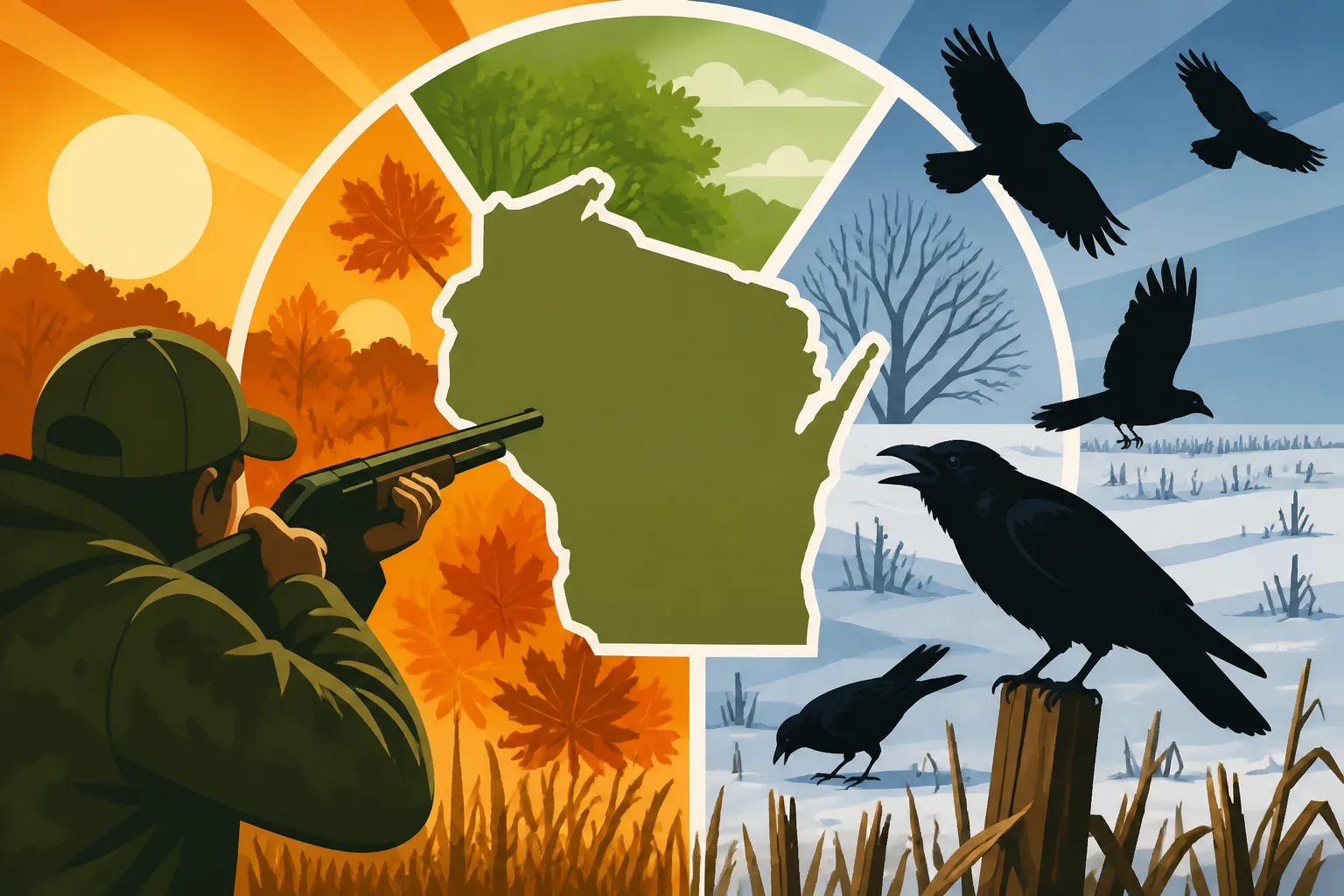
Wisconsin offers two distinct seasons for crow hunting, giving hunters ample opportunity to pursue these intelligent birds. This is great news for those who enjoy a challenge outside of the primary deer or turkey seasons. The first period typically runs from late January through mid-March, often kicking off right after the flurry of late-season deer hunts has died down. This can be a fantastic time to hunt crows, as winter conditions often concentrate them around reliable food sources and roosts, making them somewhat more predictable. The second, and much longer, period generally spans from mid-July all the way through late September. This summer and early fall window is ideal for hunters looking to sharpen their calling skills or introduce new hunters to the field before more popular seasons like archery deer or early waterfowl open up. It’s important to always double-check the current Wisconsin Department of Natural Resources (DNR) hunting regulations pamphlet or their website for the exact dates each year, as they can shift slightly. Remember, these birds are smart, and knowing when you can legally pursue them is your first step.
Daily Bag Limits and Shooting Hours
One of the great appeals of crow hunting for many is the absence of a daily bag limit in Wisconsin. That's right, there's no cap on how many crows you can harvest per day during the open season. This provides a unique opportunity for high-volume shooting and excellent practice, especially for those who enjoy challenging shotgunning. However, just because there's no bag limit doesn't mean you can hunt at any hour. Like most hunting in the state, crow hunting is restricted to specific shooting hours, which are typically from 30 minutes before sunrise to 15 minutes after sunset. These legal shooting hours are in place to ensure fair chase and safety for all hunters and other outdoor enthusiasts. You can usually find a detailed table of sunrise and sunset times, adjusted for different parts of the state, in the official regulations or by using handy tools on your phone. Just like for any other game animal, it's always smart to verify these times before each hunt to ensure you’re abiding by the law.
Important Exemptions and General Rules
Beyond the specific seasons and hours, there are a few other general rules and exemptions that are particularly relevant to crow hunting in Wisconsin. For example, landowners or occupants are allowed to shoot crows causing damage to crops or property at any time of year, without a hunting license, which highlights the perception of crows as nuisance birds in agricultural areas. However, for recreational hunting, a valid small game license is required. It's also worth noting that the general blaze orange and pink rules that apply to most gun deer seasons do not typically apply to crow hunting, but wearing some visible color is always a good safety practice, especially on public land. When considering where to hunt, tools like the Wisconsin Hunt Wild App can be incredibly useful for checking land ownership and public access points. Always ensure you have permission if hunting on private land, as trespassing laws are strictly enforced. Understanding What Wisconsin Trespass Law Requires is critical to avoid any legal issues, regardless of what you're hunting.
Essential Gear for Successful Crow Hunting
Crow hunting might seem simple, but having the right gear can dramatically increase your success and enjoyment. These birds are known for their sharp eyesight and intelligence, so cutting corners on your setup will often lead to frustration. Let’s dive into what you’ll need to stack the odds in your favor.
Firearm Choices and Ammunition
When it comes to firearms for crow hunting, shotguns are generally the weapon of choice due to the dynamic, often fast-paced nature of the shooting. A 12-gauge or 20-gauge shotgun is perfect for this pursuit. Many hunters will argue that the 12-gauge offers a bit more reach and payload, but a 20-gauge, especially if you're looking for lighter recoil and easier handling for newer hunters, is more than adequate. If you're pondering the right gauge, you might find some useful insights in a guide like Best Shotgun Gauge for Wisconsin Grouse, as similar principles apply to fast-flying birds. As for ammunition, standard field loads with smaller shot sizes, such as 7 ½ or 8, are usually ideal. These shot sizes provide a dense pattern that is effective on crows without being overkill. You're not looking for huge penetration; you're looking for consistent pattern density to bring down birds cleanly. I've seen too many new hunters grab heavy duck loads and just pepper the trees, when a lighter load would have been more effective and less expensive. It's all about pattern density for crows.
Mastering Your Crow Calls
Crows are highly vocal and incredibly responsive to calling, which is often the most exciting aspect of crow hunting. There's an art to Calling a Wisconsin Gobbler Off the Roost, and similar mastery is needed for crows. You'll want a variety of calls to mimic different crow sounds. A basic distress call is fundamental; this sound makes crows think one of their own is in trouble, drawing them in aggressively to investigate or mob a perceived predator. Beyond distress calls, you can also use common caw calls to mimic social chatter, which can help draw curious birds closer, especially if they are already in the area. Electronic calls are also legal for crow hunting in Wisconsin and can be incredibly effective, allowing you to reproduce a wider range of sounds and vary the volume and cadence with ease. However, many seasoned hunters, myself included, find immense satisfaction in mastering mouth calls. Brands like Faulk's and Johnny Stewart have been reliable names in crow calls for decades, offering excellent options whether you prefer hand-operated or electronic devices. Practice is key here; learning to create realistic, varied sequences will make a huge difference in your success.
Decoys, Blinds, and Camouflage
Crows are notoriously wary, with incredibly sharp eyesight. This means effective concealment and realistic decoys are paramount. Full camouflage from head to toe is a must, covering all exposed skin. This includes gloves and a face mask or paint. Don't skimp on this! I've seen crows spot a hunter's bare hand from hundreds of yards away and flare off. A good hunting blind, whether it's a pop-up blind or carefully constructed natural blind, provides essential cover and allows for movement without being detected. Position your blind strategically, considering wind direction and sun position, to give you the best shot angles and keep you hidden. When it comes to decoys, spread them out in an open area within shooting range of your blind. A mix of full-body crow decoys and possibly a decoy owl or hawk can be very effective. The idea is to simulate a scenario where crows are either feeding peacefully or mobbing a predator, which will pique their curiosity and draw them in. Some hunters even use a single crow decoy on a stake with wings spread, mimicking a crow that has just landed, often called a "flapper" decoy, to add extra realism. For those extended hunts where you're covering ground, remember to wear comfortable gear like a good Upland Vests With Water Capacity to carry your calls, ammo, and water.
Effective Tactics for Calling and Decoying Crows
Once you have your gear sorted, it's time to put it all together in the field. Crow hunting is far from a passive sport; it requires active engagement, strategic thinking, and patience. The better you understand crow behavior, the more successful you'll be.
Setting Up for a Crow Hunt
Choosing the right location for your crow hunt is just as important as your calling technique. Crows often roost in large groups in dense timber, especially in winter, and will fly out to feed in agricultural fields or open woodlands during the day. Look for areas where crows are frequently seen or heard, such as near crop fields, isolated woodlots, or even around landfills. Scouting beforehand, using tools like onX Layers for Wisconsin Land Status, can help you identify high-traffic areas and potential ambush points. When setting up, try to position yourself in a concealed location with a good view of the area where you expect crows to approach. This could be along a field edge, at the corner of a woodlot, or in a treeline overlooking a feeding area. Ensure your shooting lanes are clear but your blind remains hidden. Remember, crows have incredible vision, so any silhouette or unnatural movement will send them packing. I’ve found that setting up with the sun at your back, if possible, can help hide your presence and make it harder for crows to spot you.
Calling Strategies That Work
There's a real art to calling crows, and it often involves more than just blasting a distress call. A typical calling sequence might start with some soft, social caws to grab attention, especially if crows are distant. Once you hear a response or see birds heading your way, switch to a more aggressive series of distress calls, mimicking a crow being attacked by a predator. This often triggers an intense mobbing response, where crows will dive and circle, attempting to drive off the perceived threat. Vary your calls – short, sharp bursts, followed by longer, more pleading sounds. Don't overcall, but also don't be afraid to be persistent. When crows are close, you might even integrate some fight calls or alarm caws to really get them worked up. Pay attention to how the crows react; if they stop responding, try changing your call sequence or volume. This back-and-forth interaction is what makes crow hunting so engaging. Keep in mind, sometimes they'll come in silently to investigate, so always be ready for a shot.
Here's a quick comparison of common crow calling methods:
| Call Type | Purpose | Best Use Scenario | Hunter Skill Required | Effectiveness Rating |
|---|---|---|---|---|
| Distress Call | Simulates a crow in trouble (e.g., attacked) | Drawing distant crows aggressively, triggering mobbing | Medium | High |
| Caw Call | Mimics general crow chatter, social sounds | Attracting curious crows, bringing them closer | Low | Medium |
| Fight Call | Simulates crows fighting or aggressively mobbing | Bringing in hesitant crows, escalating aggression | Medium-High | High |
| Electronic Call | Reproduces various crow sounds via speaker | Volume control, realism, hands-free operation | Low | Very High |
Dealing with Pressure and Educated Crows
Crows are fast learners. Just like deer become wary of Hunting Pressure on Wisconsin Public Land, crows in areas with regular hunting pressure can become "educated" very quickly. If you hunt the same spot repeatedly or have a poor setup, they'll wise up to your tricks. When hunting pressured crows, it’s often best to scale back on aggressive calling. Start with softer, more curious calls, and only escalate if they respond. Minimize movement in your blind, and ensure your camouflage is flawless. Sometimes, a more subtle approach with fewer decoys and a quieter call can be more effective than a full-on assault. Changing up your calling routine and not relying on the same sequence every time can also help. Moving to different locations, especially Hunting Small Private Tracts in Wisconsin where crows might be less pressured, can also yield better results. Remember, the goal isn't just to make noise; it's to create a believable scenario that overcomes their natural caution.
Safety and Ethical Considerations for Crow Hunters
Like any form of hunting, pursuing crows comes with a responsibility to prioritize safety, respect the environment, and adhere to ethical practices. Crow hunting might be less regulated in some aspects, but the core tenets of responsible hunting remain the same.
Prioritizing Safety in the Field
Safety should always be your number one concern. This means following all universal firearm safety rules: treat every gun as if it’s loaded, always point the muzzle in a safe direction, keep your finger off the trigger until ready to shoot, and be sure of your target and what's beyond it. Since crows often fly at varying altitudes and can be difficult to discern against certain backgrounds, taking clear shots is paramount. Be especially careful if hunting near populated areas or roads. Even though blaze orange isn't typically required for crow hunting, wearing some visible color, especially if you're hunting with a partner or on public land where other users might be present, is a smart choice. Familiarize yourself with Wisconsin Blaze Orange and Pink Rules even if they don't apply directly, to understand the spirit of safety. Always communicate with your hunting partners about your positions and intended shooting zones.
Respecting Property and Wildlife
Beyond safety, ethical crow hunting involves showing respect for the land and other wildlife. Always ensure you have explicit permission if hunting on private land. This isn't just a legal requirement, but a courtesy that helps maintain positive landowner-hunter relationships. Pack out everything you pack in, leaving no trace of your presence. While crows don't have a bag limit, it's still important to aim for clean, ethical kills. Avoid taking excessively long shots that might wound birds without retrieving them. Crows play a role in the ecosystem, and while they can be pests, our responsibility as hunters is to manage populations thoughtfully and without cruelty. If you encounter any illegal activity, such as poaching or unsafe hunting practices, remember your role as a conservationist and know how to go about Reporting a Poacher in Wisconsin.
The Role of Crow Hunting in Wildlife Management
Crow hunting, while primarily a recreational pursuit for many, also contributes to wildlife management, particularly in agricultural settings. Crows are opportunistic feeders and can cause significant damage to crops, especially corn and other grains. They also prey on the nests and young of other bird species, including game birds like turkeys and pheasants, and even songbirds. By reducing local crow populations, hunters can help mitigate some of these issues for farmers and potentially support populations of other desired species. It's a natural form of pest control that provides outdoor recreation. Participating in crow hunting, therefore, isn't just about the thrill of the hunt or practicing your shooting skills; it's also about playing a small part in balancing local ecosystems and supporting agricultural interests, often at a time when other hunting seasons are closed.
Disclaimer
Please note that hunting regulations, seasons, and rules can change. Always consult the most current Wisconsin Department of Natural Resources (DNR) regulations pamphlet or their official website before heading into the field. This guide is for informational purposes only and should not be considered a substitute for official legal documents.