Deer Carts on Forest Roads
The moment you drop a beautiful Wisconsin whitetail, the excitement is palpable. But then, reality hits: how are you going to get this magnificent animal out of the woods? If you're hunting on public land, especially those sprawling state or county forests with their network of access roads, dragging a deer can quickly turn a triumphant moment into a grueling test of endurance. This guide is all about making that haul manageable by showing you how a deer cart can be your best friend on Wisconsin's forest roads.
The Indispensable Aid of Deer Carts on Wisconsin Forest Roads
Let's face it, hunting isn't just about the shot; it's about the entire experience, and that includes the sometimes-daunting task of getting your harvest back to the truck. Many hunters underestimate the physical toll this can take, especially when hunting deep in vast public land areas. This is where a deer cart truly shines, transforming a back-breaking chore into a much more manageable undertaking.
Why Traditional Dragging Fails on Long Hauls
Think about it: you've been up since before dawn, hiked miles, waited patiently, and finally made a successful shot. Your adrenaline is pumping, but your body is already tired. Now, imagine trying to drag a 150-pound (or heavier!) deer for a mile or two over uneven ground, through brush, over downed logs, and up subtle inclines. It’s an exhausting ordeal that can quickly deplete your energy reserves and turn a celebratory moment into pure misery. Your shoulders ache, your back protests, and your legs burn. Plus, dragging a deer directly on the ground can damage the hide, pick up excessive debris, and even impact meat quality if done roughly or over very long distances. It's a common frustration, especially when you're targeting those deeper, less-pressured spots that require a significant hike. For anyone exploring the depths of the Chequamegon-Nicolet National Forest Hunting, the sheer scale of the terrain makes traditional dragging a non-starter for anything but the shortest distances.
When you factor in obstacles like hidden stumps, slippery mud, or the occasional small ravine, traditional dragging becomes not just difficult, but potentially dangerous, risking slips and falls. And if you're a solo hunter, the task becomes exponentially harder. Many of us have been there, contemplating leaving a deer overnight because the thought of dragging it out just feels impossible.
The Advantages a Cart Provides
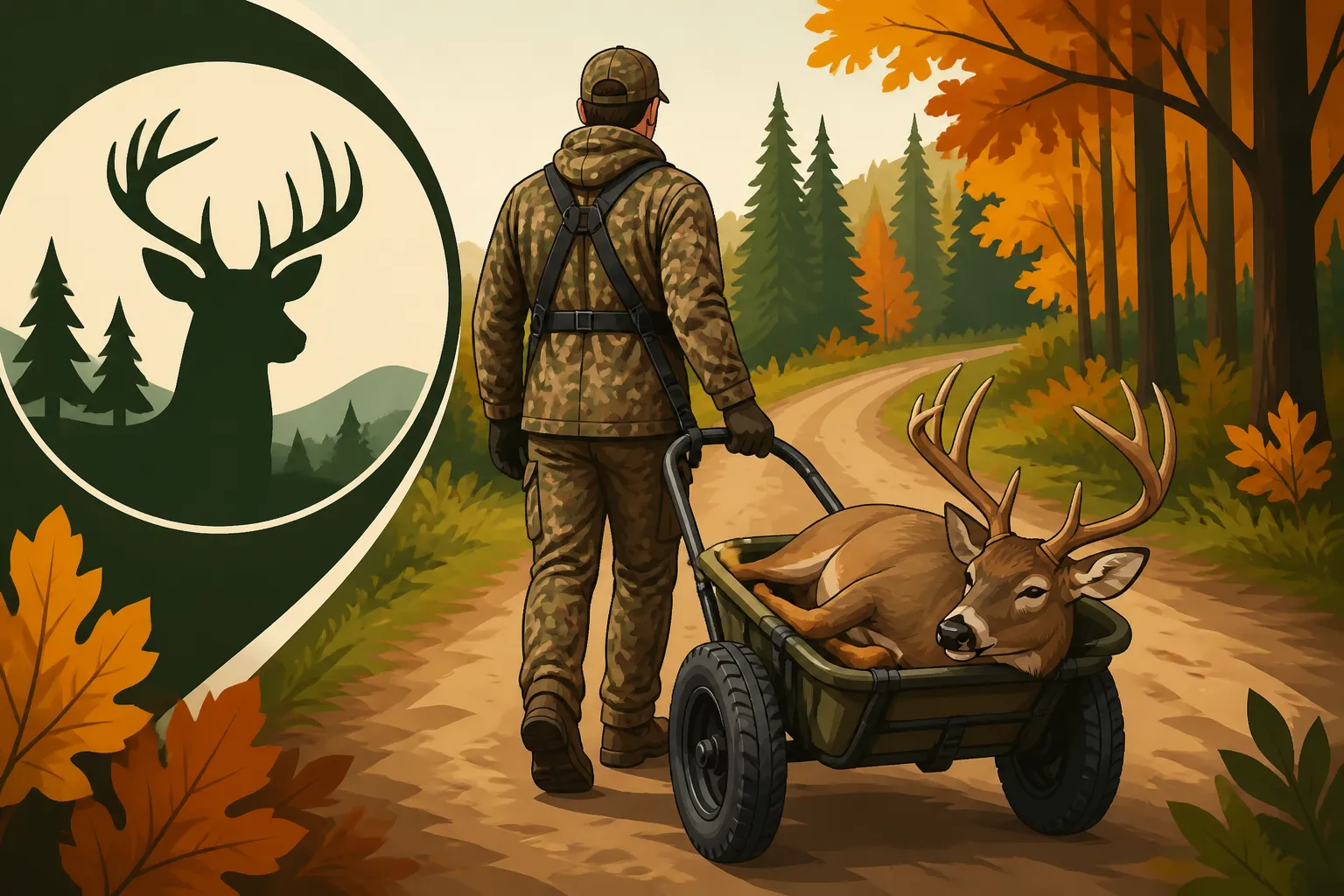
A good deer cart fundamentally changes the game. It’s designed to lift the bulk of the deer off the ground, placing its weight over a sturdy axle and wheels. This simple principle significantly reduces the friction and physical effort required to move the animal. Instead of pulling the full dead weight across every snag and rough patch, you're rolling it along. This not only saves your back and energy but also protects the carcass from unnecessary damage and contamination from dirt and debris. Imagine arriving back at your vehicle feeling accomplished, not completely worn out and sore.
The ability to move a large animal more easily also means you can hunt deeper into public lands, away from road hunters and high-pressure areas. If you're successful in a remote spot, you won't dread the extraction as much. This is particularly valuable in areas experiencing Hunting Pressure on Wisconsin Public Land, where moving away from easy access points often yields better results. A cart makes those longer excursions practical. For solo hunters, a cart can mean the difference between getting a deer out by yourself and needing to call for backup. It essentially multiplies your strength, allowing one person to handle what might otherwise require two or more. It speeds up the extraction process, too, getting your venison cooled and processed faster, which is crucial for meat quality, especially during milder fall days when temperatures might still be high.
Selecting the Perfect Deer Cart for Wisconsin's Diverse Landscape
Wisconsin offers a fantastic variety of hunting landscapes, from the rugged northern forests to the steep coulees of the Driftless Area and the flat, often muddy farmlands. The "perfect" deer cart isn't a one-size-fits-all solution; it depends heavily on where and how you hunt.
Key Features to Consider
When you start looking at deer carts, you’ll quickly see there’s a range of options. Understanding the key features will help you pick one that truly serves your needs, rather than becoming another piece of gear gathering dust in the garage.
First, let's talk about wheel type and size. This is arguably the most critical feature. You'll generally find carts with pneumatic (air-filled) tires or solid rubber tires. Pneumatic tires offer better shock absorption, making for a smoother ride over rough terrain, and their larger diameter can roll over obstacles like logs, rocks, and ruts with greater ease. Wider pneumatic tires also perform better on soft ground, like mud or loose gravel, preventing the wheels from sinking in. Solid rubber tires are puncture-proof, which sounds great, but they offer little to no shock absorption and can make the cart much harder to pull over anything but perfectly smooth ground. For most Wisconsin forest roads and trails, pneumatic tires are almost always the superior choice.
Next, consider the frame material and construction. Deer carts are typically made from steel or aluminum. Steel frames are incredibly durable and can handle heavy loads and rough treatment, but they are also significantly heavier. Aluminum frames are much lighter, making the cart easier to carry to your hunting spot, but they might not withstand the same abuse as steel. Many carts feature a folding design, which is fantastic for transport and storage. A cart that folds down compact can easily fit into the back of a truck, SUV, or even strapped to an ATV. Pay attention to the welding and bolt points – robust construction means longevity. The weight capacity is also important; if you’re hoping to haul out a large northern Wisconsin buck, make sure the cart is rated for that kind of load.
Handle design is another often-overlooked feature. Ergonomic handles make a huge difference, especially on long hauls. Some carts have a single T-bar handle, while others feature two separate handles like a wheelbarrow. Consider what feels most comfortable for you and whether you might ever have a partner helping you pull. The length of the handle can also affect leverage.
Finally, think about securing mechanisms. Most carts come with a few straps or bungee cords, but these are often inadequate for truly securing a large, unwieldy deer. Look for carts with built-in tie-down points or invest in some heavy-duty cam-buckle straps. You want to make sure your deer won't shift, especially when navigating inclines or obstacles. A brand like GoHunt might offer insights into gear reviews, highlighting features that really stand out in the field for durability and ease of use.
Matching the Cart to Your Hunting Style and Terrain
Now, let's get specific about Wisconsin's diverse landscapes:
Northern Forests: If you're hunting in the vast public lands of northern Wisconsin, like those found in the Northern Highland-American Legion Forest or the expansive county forests of Sawyer or Bayfield, you'll encounter rugged terrain. This means rocky paths, countless roots, steep (though usually short) inclines, and dense undergrowth. For this environment, you need a robust cart with large-diameter pneumatic tires that can clear obstacles and handle heavy loads. Durability is key here; a flimsy cart won't last long.
Driftless Area: The iconic Driftless Area in southwestern Wisconsin, with its dramatic coulees, steep ridge tops, and winding valleys, presents a different set of challenges. While you might not be pushing through dense brush as much, you'll be dealing with significant elevation changes. Here, a lighter aluminum cart might be preferable for easier maneuverability on those steep climbs and descents. Good braking control (usually achieved by strategic pulling/pushing) is vital, and the ability to balance the load precisely will save you a lot of grief. The advice for Driftless Area Deer Hunting in Wisconsin often emphasizes fitness, and a cart helps conserve that energy for the hunt itself.
Farmland Edges: Hunting the edges of agricultural fields, common in southern Wisconsin's prime deer country, often means dealing with muddy access roads, soggy field edges, and possibly ditches. Here, carts with wider pneumatic tires will excel, providing better flotation and preventing the wheels from sinking into soft ground. While the terrain might be flatter, mud can be incredibly energy-sapping, so a cart that can glide over it is a huge advantage. Hunting Wisconsin Farmland Deer often involves dealing with heavy agricultural equipment ruts, which wider tires can bridge more easily.
Here's a quick comparison of what to look for based on typical Wisconsin hunting terrains:
| Feature / Terrain | Northern Forests (Rugged) | Driftless Area (Hilly) | Farmland (Muddy/Flat) |
|---|---|---|---|
| Wheel Type | Large Diameter, Aggressive Tread | Medium-Large Diameter, Durable | Wide, Large Diameter, Smooth |
| Frame Material | Heavy-duty Steel or Robust Aluminum | Lightweight Aluminum preferred | Steel or Aluminum |
| Folding? | Useful for transport | Very useful for transport | Useful for transport |
| Capacity | High (150-300+ lbs) | Medium-High (150-250 lbs) | High (150-300+ lbs) |
| Key Advantage | Durability, obstacle clearance | Maneuverability, lighter weight | Flotation, stability on soft ground |
Mastering the Art of Deer Cart Extraction
Having the right deer cart is only half the battle; knowing how to use it effectively is the other. There's a bit of an art to loading, securing, and navigating with a deer cart that can make your extraction smooth or still leave you struggling.
Strategic Loading and Securing Your Harvest
Getting a dead deer onto a cart can be surprisingly tricky, especially if you're alone. The goal is to get the bulk of the animal's weight centered directly over the axle. This balance is what makes the cart easy to pull. A good technique is to stand the cart upright, perpendicular to the deer, and then lift one end of the deer onto the frame. Then, by rotating or using the cart as a lever, you can often get the rest of the deer onto the cart. Some hunters prefer to lay the cart flat, roll the deer onto it, and then tip the cart back up. Experiment with what works best for your strength and the size of the animal.
Once the deer is on, securing it properly is paramount. Don't rely solely on flimsy bungee cords. Invest in a couple of good, strong cam-buckle straps or ratchet straps. Wrap them around the deer and the cart frame, cinching them down tightly. You want the deer to be practically a part of the cart. This prevents it from shifting during transit, which can throw off the balance, make the cart much harder to pull, and even cause it to tip over on uneven terrain. A shifting load is not only frustrating but also potentially dangerous on rocky or sloped forest roads. Ensure legs are tucked in and antlers (if present) are not snagging on brush as you move. This is also a good time to ensure you've properly completed Field Dressing a Deer in Cold Weather (or warm weather!) before the haul, reducing weight and starting the cooling process.
Navigating Forest Roads and Trails with Your Cart
Pulling a deer cart isn't just about raw strength; it's about technique and awareness of your surroundings. If you've been doing your Scouting Wisconsin Public Land Before Season, you might already have a good idea of the best routes, avoiding the thickest brush or steepest grades.
Uphill and Downhill: When going uphill, lean into the pull, using your body weight. Taking a zigzag approach on steeper sections can reduce the effective incline. On downhill stretches, control is key. Don't let the cart get away from you. Walk slightly in front or to the side, using the handles to slow its descent. If you have a partner, one can pull from the front while the other pushes and guides from the back, offering excellent control. Gravity is both your friend and your enemy here.
Obstacles: Forest roads are rarely smooth. You'll encounter roots, rocks, mud puddles, and maybe even small downed trees. For roots and rocks, try to lift the front of the cart slightly to roll over them, rather than hitting them head-on. If you hit a deep mud patch, a wide-tired cart will float better, but you might still need to power through or even unload the deer temporarily if the mud is too deep. Avoid sharp rocks that could puncture tires. When faced with a log too high to roll over, carefully lift one end of the cart at a time, pivot, and then lift the other, much like moving a heavy piece of furniture. While dedicated Deer Sleds for Snow Country are great in winter, a good cart can still navigate light snow or frozen ground surprisingly well.
Teamwork: If you're fortunate enough to hunt with a partner or a group, using a cart becomes significantly easier. One person can pull while another pushes from behind, distributing the effort and allowing for better control over varied terrain. Communication is crucial here to avoid mishaps. On particularly challenging sections, such as those that make Dragging a Deer Up a Coulee Wall a nightmare, two people with a cart can accomplish what might be impossible for one. Even dealing with a tricky swamp crossing can be made less stressful with a cart and a partner, though some truly wet spots might require you to briefly carry the deer off the cart, then retrieve the cart itself to get it through. Understanding the specific Vehicle Rules on Wisconsin Public Land can also help in planning your extraction point, getting your truck as close as legally possible to minimize the carting distance. Many public roads in national and county forests are accessible, but knowing specific closures or restrictions is always smart.
Brands like GoHunt often provide articles or community forums where hunters share their best tips and tricks for using gear in real-world scenarios, so it's always worth checking for additional advice.
Care and Maintenance for Years of Reliable Service
Your deer cart is an investment in your comfort and success as a Wisconsin hunter. Like any piece of gear, it needs a little love and attention to ensure it performs reliably season after season. Skipping maintenance can lead to frustrating breakdowns when you need it most – usually miles deep in the woods with a deer on the ground during the peak Hunting the Wisconsin Rut in November!
Post-Hunt Cleaning and Inspection
As soon as you get your deer unloaded and packed away, take a few minutes to clean your cart. This might seem like a chore when you're tired, but it's essential. Wash off all the dirt, mud, blood, and any other debris that accumulated during the haul. A simple hose-down and a scrub brush are usually sufficient. Blood, especially, can be corrosive if left to dry on metal, and dried mud can stiffen moving parts.
Once clean, give the cart a thorough inspection. Check the tires for any punctures, cuts, or excessive wear. Are the spokes (if present) all intact? Check tire pressure and inflate if needed. Examine the frame for any signs of bending, cracks, or loose bolts. Pay close attention to the joints and hinges if it's a folding cart, as these are points of stress. Make sure all securing straps are still in good condition – look for fraying or damage that could compromise their strength. It's always a good idea to have a spare set of straps on hand, just in case.
Storage and Longevity Tips
Proper storage is crucial for the longevity of your deer cart. Store it in a dry place, like a garage, shed, or basement, away from direct sunlight and extreme temperatures. This prevents rust on steel frames and degradation of plastic or rubber components. If your cart has pneumatic tires, periodically check and maintain their pressure, even in storage. Under-inflated tires can develop flat spots, and severely over-inflated ones can burst in fluctuating temperatures.
Lubricate any moving parts, such as wheel bearings or folding mechanisms, with a light oil or silicone spray. This keeps everything operating smoothly and prevents rust from seizing up components. If you notice any minor damage during your post-hunt inspection, address it promptly. Patch small tire punctures, tighten loose bolts, or replace worn straps. Don't wait until next season to discover a problem; it's much better to have your gear ready to go. The community on GoHunt forums can be a great resource for specific maintenance tips for various cart brands and models, or even for finding solutions to common wear-and-tear issues. Being proactive with maintenance means your deer cart will be a reliable partner in the field for many hunting seasons to come, whether you're tackling Getting a Deer Out of a Wisconsin Swamp or just a long walk down a gravel logging road.
Disclaimer
This article is for general informational purposes only and does not constitute professional advice. Laws, prices and regulations vary by location and change over time. Consult a qualified professional for guidance on your specific situation.