Dragging a Deer Up a Coulee Wall
There's nothing quite like the rush of a successful deer hunt in Wisconsin, but that adrenaline can quickly turn into dread when your hard-earned buck drops at the bottom of a steep, rugged coulee in the Driftless Area. The sheer thought of dragging a heavy deer uphill through thick brush, loose rock, or even snow can sap your strength before you even lay hands on it. This guide is all about navigating that brutal reality, offering practical strategies and gear advice to help you get your deer out of those challenging coulee bottoms and back to the truck without breaking your back or your spirit.
The Harsh Reality of Coulee Deer Recovery
Let's face it, hunting the coulees and ridge tops of Wisconsin's Driftless Area offers some incredible opportunities for big bucks, but it comes with a physical price. When a deer drops down into one of those steep draws, that immediate triumph is often followed by a sinking feeling as you assess the recovery situation. It's not just about strength; it's about smarts, preparation, and sometimes, a whole lot of grit.
Why Coulees Are Such a Challenge
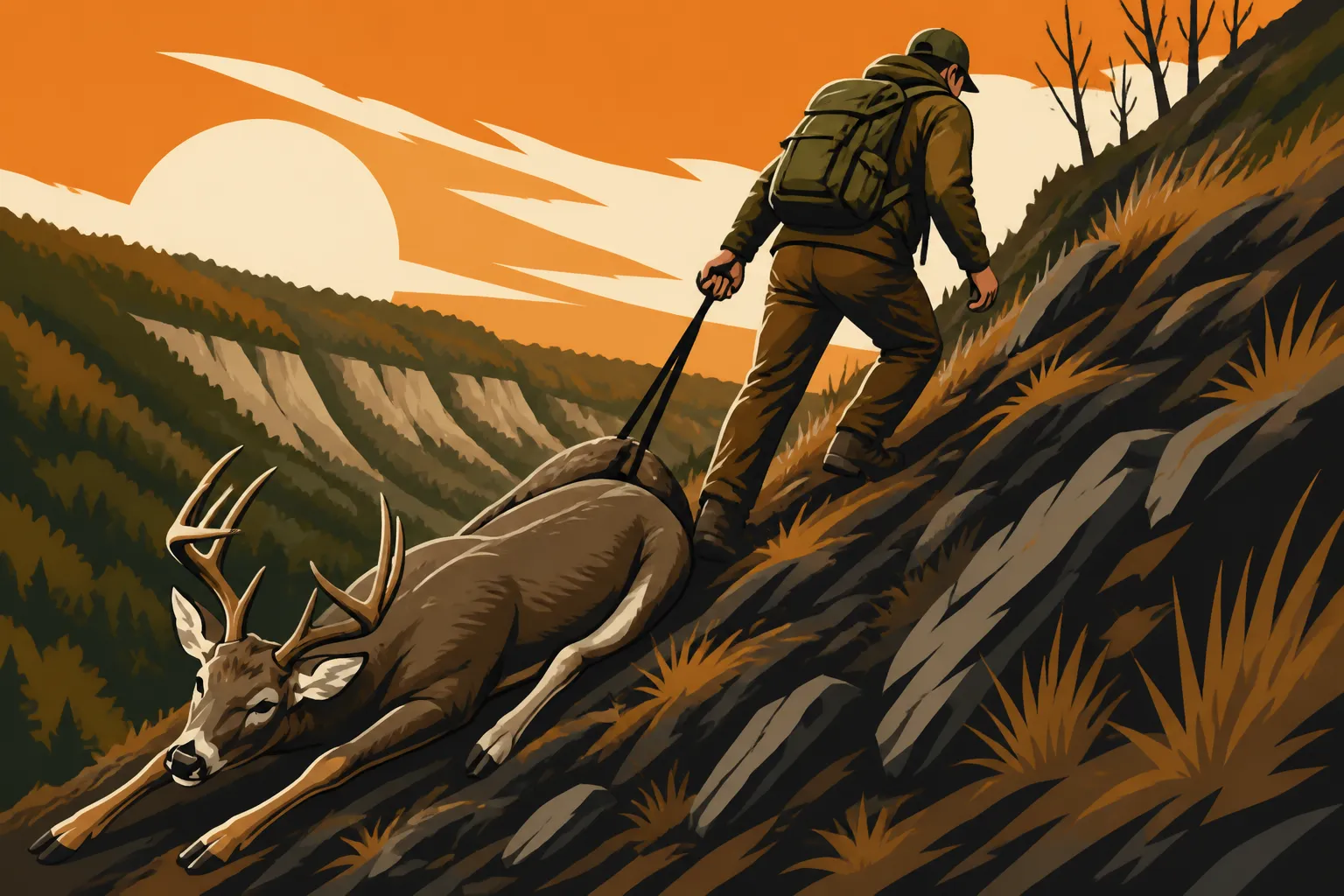
Coulees are carved by centuries of water, creating dramatic, steep-sided valleys that define the landscape in places like Buffalo, Trempealeau, and Crawford counties. When a deer tumbles down into one, you're not just dragging it across flat ground. You're contending with an incline that can be 45 degrees or more, often covered in thorny brush like multiflora rose, slippery fallen leaves, loose rocks that threaten to turn an ankle, or a layer of fresh, heavy snow.
Imagine a scenario: You've just made a perfect shot on a beautiful 10-pointer that was Reading a Ridge Point for Deer Movement. It ran a short distance and expired in a tangle of downed timber at the bottom of a deep draw. The satisfaction is immense, but as you approach, you realize the climb back out to the nearest logging road is going to be an absolute beast. The ground is soft and muddy from recent rains, and the incline looks even steeper from below. This isn't a simple drag; it's an expedition. Without proper planning and equipment, you're risking injury, exhaustion, and potentially spoiling your meat.
Assessing the Situation and Your Limits
Before you even think about putting your hands on that deer, take a moment. Catch your breath, hydrate, and realistically assess the recovery. How big is the deer? Is it a small doe or a mature, heavy-bodied buck? What's the terrain like directly around the deer and along your planned exit route? Are there cliffs, deep ravines, or impenetrable thickets?
Consider the weather. Is it a warm early archery season day where time is of the essence to prevent meat spoilage? Or is it a crisp late-season afternoon where you have a bit more leeway? Most importantly, are you alone, or do you have hunting partners with you? A single person trying to drag a mature buck straight up a steep coulee wall is a recipe for disaster. This is where you have to be honest with yourself about your physical limits. If it feels truly unsafe or impossible, don't be afraid to Recovering a Deer From a Coulee Bottom by coming back with help or better gear. A good mapping app, like those found on GoHunt, can be invaluable here for pinpointing your location and potential extraction points.
Essential Gear for Coulee Deer Recovery
Trying to recover a deer from a steep coulee with just your bare hands and a flimsy rope is like trying to chop down an oak with a butter knife – you'll likely just make a mess and wear yourself out. Having the right tools for the job can make a monumental difference in both your safety and your success.
Specialized Dragging Aids
When it comes to getting a deer out of a tough spot, a simple rope is often the starting point, but specialized tools can really ease the burden.
- Heavy-Duty Ropes and Harnesses: Forget that old clothesline you found in the garage. You need a strong, durable rope, at least 15-20 feet long, with a good grip. Polyester or polypropylene ropes with a half-inch or greater diameter work well. Even better are dedicated deer drag harnesses. These often feature a sturdy handle or a shoulder strap design that allows you to use your core strength and legs, rather than just your arms and back. Some models even have a padded harness that goes over your shoulders, distributing the weight more evenly and freeing up your hands for balance or to clear brush. Brands like Allen Company or Hunters Specialties offer affordable, effective options for basic deer drags.
- Deer Sleds: If the ground isn't too broken up by large rocks or logs, a deer sled can be a lifesaver, especially in snow or wet conditions. These are essentially durable plastic toboggans designed to glide over obstacles and reduce friction significantly. You secure the deer to the sled, and it acts as a smooth, low-friction surface. Models like the Jet Sled from Shappell are incredibly popular among Wisconsin hunters because they're relatively lightweight, durable, and make a two-person drag much more manageable, especially when pulling a heavy buck through dense woods or over a layer of fresh snow. While they add a bit of bulk to your pack, many hunters won't hit the woods for Still-Hunting After a Wisconsin Snow without one if they anticipate a difficult recovery.
- Game Carts: While not ideal for a truly steep coulee wall, if you can get the deer to a more gradual incline or an old logging road, a sturdy game cart becomes invaluable. These two-wheeled carts allow you to roll the deer out, saving immense effort. Look for models with large, rugged tires that can handle rough terrain. However, don't expect to pull one straight up a 45-degree slope. They are better suited for the last leg of a journey or slightly less intense hills.
Personal Safety and Comfort Items
Beyond the dragging gear, ensuring your own safety and comfort is paramount. A recovery can take hours, and being unprepared can lead to injuries or worse.
- Footwear with Serious Traction: This is non-negotiable. Those steep, leaf-covered slopes or muddy banks demand boots with aggressive tread. Muck Boots or Irish Setter boots are popular choices for their waterproof qualities and traction. Slipping and falling while dragging a heavy deer can lead to serious sprains, strains, or even more severe injuries. Ensure your boots are well broken in and provide good ankle support.
- Gloves and Hand Protection: Your hands will take a beating. Thick, durable work gloves are essential to protect against thorns, sharp sticks, rough ropes, and the cold. A good pair of leather or heavy-duty synthetic gloves will save your knuckles and palms.
- Hydration and Snacks: You'll be expending a tremendous amount of energy. Carry a water bottle or hydration pack and high-energy snacks like granola bars or trail mix. Dehydration and low blood sugar can quickly lead to fatigue and poor decision-making, increasing the risk of accidents.
- Headlamp and First-Aid Kit: Even if you plan to be out before dark, a recovery often takes longer than expected. A reliable headlamp (and spare batteries!) is crucial for navigating unfamiliar terrain in the dark. A compact first-aid kit with bandages, antiseptic wipes, pain relievers, and any personal medications is also a must-have for minor cuts, scrapes, or blisters.
- Small Saw or Pruners: Sometimes, a stubborn branch or thick tangle of brush is the only thing standing between you and a clear path. A small folding saw or heavy-duty pruners can quickly clear obstructions, saving you valuable time and effort.
Strategies for a Successful Uphill Drag
Getting a deer out of a deep coulee is rarely a straight shot. It requires planning, smart execution, and often, a little bit of improvisation. Think of it less as a brute-force exercise and more as a calculated maneuver.
The Buddy System and Teamwork
Honestly, if there's one piece of advice that trumps all others for coulee deer recovery, it's this: don't go alone if you can help it. A second (or third!) set of hands makes an exponential difference.
- Tandem Dragging: With two people, you can either both pull from the front, or one person can pull from the head while another pushes or lifts from the rear, especially over obstacles. When pulling in tandem, coordinate your steps and pace. A call like "1-2-3 pull!" can synchronize efforts and prevent sudden jerks that can injure backs or shoulders.
- Leapfrogging: On extremely steep sections, one person can secure the deer (or the sled it's on) to a tree or other anchor point, allowing the other person to move uphill and find the next anchor. This stops the deer from sliding back down and allows for short, powerful bursts of effort rather than sustained, exhausting pulls. This method is particularly useful when you're Dragging a Deer Up a Coulee Wall in slippery conditions.
- Leverage and Lift: When encountering fallen logs, rocks, or other natural obstacles, teamwork is key. One person might lift the deer's front end while the other pushes from the rear, or together you can roll it over. Use logs or rocks as natural ramps whenever possible.
Utilizing Mechanical Advantage (When Possible)
While most hunters won't carry a full pulley system into the woods, understanding basic mechanical advantage can save you a ton of sweat.
- The "Poor Man's Winch": This is a classic trick. Find a sturdy tree uphill from the deer. Run a strong rope from the deer, around the uphill side of the tree, and back towards you. Now, instead of pulling the deer directly, you're essentially pulling a rope that's gone around a pulley (the tree trunk). This simple setup significantly reduces the force required to move the deer uphill. You can even create multiple wraps around the tree for more friction, giving you even more leverage.
- Rope and Carabiner Tricks: If you happen to have a strong carabiner or two, you can create a simple 2:1 or even 3:1 pulley system with your dragging rope and a secure anchor point (another tree). While this takes a bit more know-how, it can turn an impossible drag into a manageable one. It's not something most hunters will carry, but for those who hunt particularly rugged country, it's worth considering.
- Securing Your Progress: Always be thinking about how to prevent the deer from sliding back down. Every few feet of progress on a steep slope, try to get the deer (or sled) wedged behind a log, rock, or small stump. This allows you to rest without losing ground.
Picking the Path of Least Resistance
Instinct might tell you to drag the deer in a straight line toward your vehicle, but that's often the hardest way. Smart route planning can save immense effort.
- Scout Your Exit Route: Ideally, you should have scouted potential exit routes when you were Scouting Wisconsin Public Land Before Season. If not, take a few minutes before starting to drag to look around. Use your phone's GPS with a hunting app like GoHunt to visualize the contours of the land. Are there any old logging trails, faint game trails, or less steep sections of the coulee wall you can utilize? Often, moving horizontally a short distance to a gentler slope is far easier than trying to go straight up the steepest section.
- Follow Game Trails: Deer, being creatures of efficiency, often create trails that follow the path of least resistance up and down hillsides. These trails are usually clear of the densest brush and offer more stable footing.
- Avoid Obstacles: Don't try to drag the deer over large fallen trees or through impenetrable thickets if you can help it. A short detour around an obstacle is usually less strenuous than trying to heave a heavy deer over it. Use your small saw or pruners to clear minor obstructions, making your path smoother.
- Consider Wind and Thermals: While primarily a hunting tactic, understanding Wind and Thermals in a Coulee can indirectly help. A thermal rising in the afternoon might make a certain ascent feel cooler or more exposed. However, the most direct benefit is having knowledge of the terrain's nuances.
| Dragging Method | Effort (1-5, 5 being highest) | Required Gear | Ideal Terrain/Conditions | Notes |
|---|---|---|---|---|
| Single Person Drag | 5 | Strong rope, harness | Mild slopes, short distances | Highly strenuous, high risk of injury on steep terrain |
| Two-Person Drag | 3 | Strong ropes, harnesses (optional) | Moderate slopes, longer distances | Significantly easier, allows for shared burden, better balance |
| Deer Sled | 2-3 | Sled, rope to attach | Snow, wet ground, minimal large obstacles, moderate slopes | Reduces friction, protects meat, can be bulky to carry |
| Mechanical Advantage | 1-2 (with setup) | Rope, carabiners, sturdy trees | Very steep slopes, heavy deer, where natural anchors exist | Requires know-how and setup time, but greatly reduces strain |
| Game Cart | 1-2 | Game cart | Gentle slopes, old roads, fields, once deer is out of deep coulee | Impractical for extremely steep, rough coulee bottoms |
Field Dressing and Meat Care Considerations
The moment a deer hits the ground, especially in difficult terrain, the clock starts ticking. Proper field dressing and meat care are crucial, not only for logistics but for ensuring the quality of your venison.
Gutting at the Bottom vs. Top
This is a common debate among hunters when a deer is down in a tough spot. There are pros and cons to each approach:
- Gutting at the Bottom (Before Dragging):
- Pros: This is by far the most common and often recommended approach. Removing the entrails immediately significantly lightens the deer, making the drag much easier. For a mature buck, you might shave off 30-50 pounds. This is critical for preventing exhaustion and injury, especially if you're alone or if the coulee wall is particularly challenging. It also allows the carcass to cool down much faster, which is vital for meat quality, particularly during warmer temperatures common in early archery season.
- Cons: You'll be doing the messy work at the bottom of the coulee, which might not be the most comfortable or clean environment. You also have to contend with the entrails at the bottom.
- Dragging Whole to the Top (Then Gutting):
- Pros: This might seem appealing if you want to avoid the mess at the bottom or if you have a very short, relatively easy drag.
- Cons: The added weight makes the drag incredibly strenuous, increasing the risk of injury and exhaustion exponentially. More importantly, leaving the entrails in for an extended period, especially on a warmer day, can lead to rapid meat spoilage. The internal organs hold a lot of heat, and if that heat isn't allowed to escape, bacteria can thrive.
For deer taken in a steep coulee, the best practice is almost always to Field Dressing a Deer in Cold Weather or warm conditions right where it falls. Get it gutted, get it cooling, and then focus on the extraction.
Handling the Meat in Difficult Terrain
Once the deer is field dressed, you still need to protect the meat during the drag.
- Protecting the Carcass: As you drag, the deer's body will inevitably rub against the ground, rocks, and brush. This can pick up dirt, leaves, and debris, potentially contaminating the meat. If you're using a deer sled, this provides excellent protection. If dragging without one, try to keep the deer as clean as possible. You can use game bags, especially if you plan on boning out the deer. A simple tarp or even a large contractor bag can also offer a layer of protection, though they can add drag.
- Boning Out (if necessary): For truly extreme situations, or if you're miles deep in public land, boning out the deer may be your best option. This means quartering the deer and removing the meat from the bone, then packing it out in game bags within a sturdy backpack. This drastically reduces weight and makes the carry much more manageable, allowing you to bypass the drag entirely. While it's more work on-site, it can be a lifesaver for tough recoveries or when Hunting Without Bait in a Banned County leads you deep into remote areas. For instance, the vast expanses of the Chequamegon-Nicolet National Forest might necessitate this approach.
- Cooling Post-Drag: Once you finally get the deer out of the coulee and to your vehicle, the job isn't over. Ensure the carcass continues to cool properly. If it's a warm day, get it to a cooler with ice, or directly to a processing facility. If it's cold, hang it to allow air circulation. You want to avoid that hard-earned venison going to waste.
Retrieving a deer from a steep Wisconsin coulee wall is never easy, but with the right mindset, gear, and techniques, it's absolutely doable. Don't let the challenge deter you from hunting those productive, rugged areas. Just be prepared for the work that comes after the shot, and you'll be enjoying that venison for months to come.
Disclaimer
Hunting is an inherently dangerous activity. Always prioritize safety and comply with all local, state, and federal hunting regulations. The information provided in this guide is for informational purposes only and should not be considered a substitute for professional training or guidance. Always assess your individual capabilities and the specific conditions of your hunt.