Late Antlerless Hunting in Wisconsin
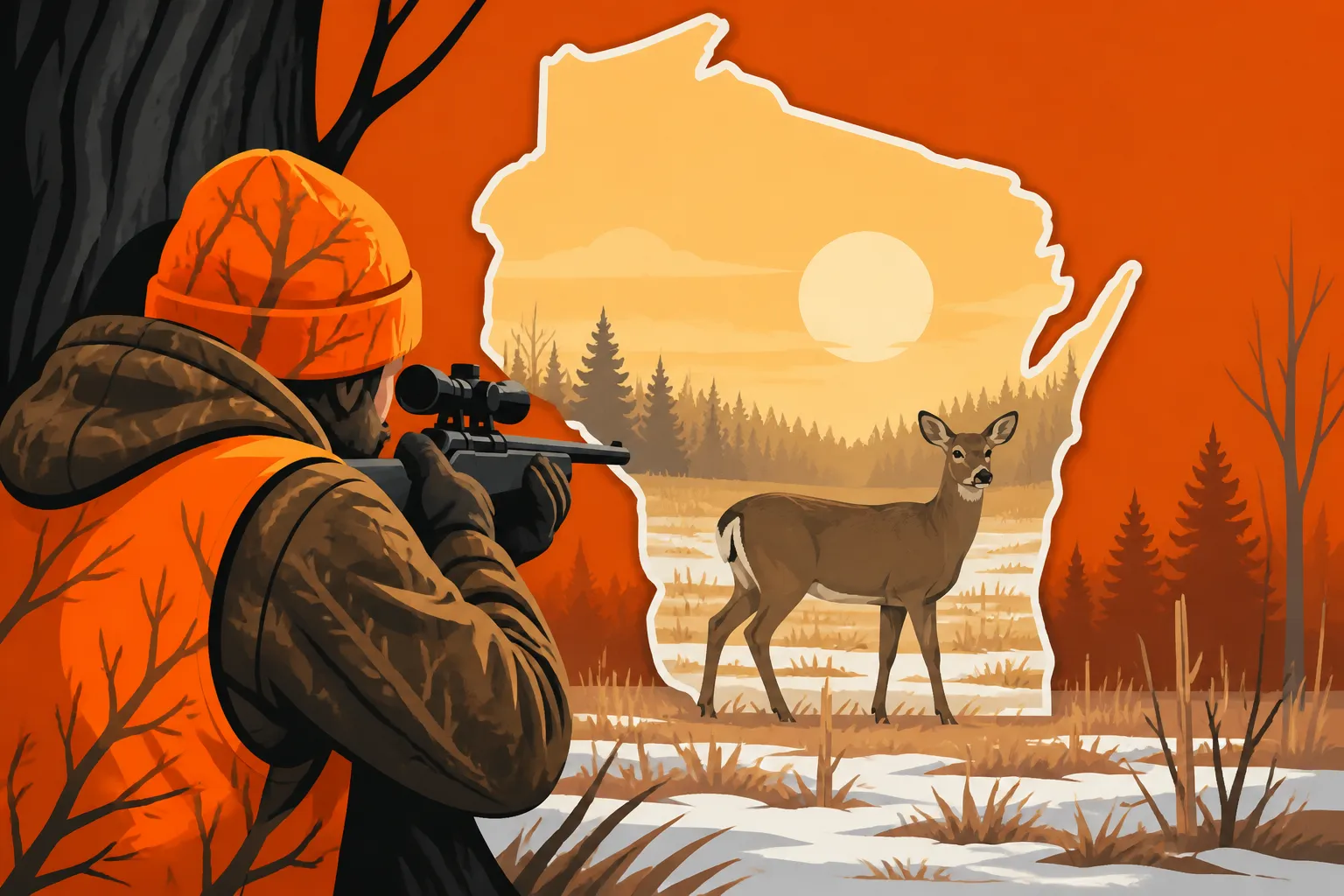
The calendar has flipped past the main gun season, the leaves are long gone, and the temperatures have plummeted. For many Wisconsin deer hunters, the challenge of filling an antlerless tag only intensifies as winter truly sets in. This period, often overlooked or deemed too difficult, can actually be incredibly rewarding for those willing to adapt. This comprehensive guide will equip you with the knowledge, strategies, and essential gear to confidently pursue and harvest antlerless deer during Wisconsin's demanding late seasons.
Understanding Wisconsin's Late Antlerless Seasons
The end of the regular gun season doesn't necessarily mean the end of deer hunting in Wisconsin. In fact, for those looking to fill the freezer or manage local deer populations, the late antlerless opportunities can be fantastic. However, navigating these seasons requires a keen understanding of dates, regulations, and local restrictions. It's not as simple as just heading out with your weapon of choice; specific rules apply to these extended hunts.
Deciphering the December and January Hunts
Wisconsin offers a few distinct opportunities to pursue antlerless deer after the traditional nine-day gun season wraps up. First, the archery and crossbow seasons continue well into January. This means if you still have an unfilled antlerless tag, you can keep at it with your bow or crossbow. Many hunters prefer this quieter, more solitary experience after the crowds of gun season have dissipated. Beyond that, the state often offers a late muzzleloader season, typically in early December, and a special Holiday Antlerless Hunt, which usually runs for about a week between Christmas and New Year's. These hunts are primarily designed to help meet herd management objectives, particularly in areas with higher deer densities. Always double-check the current year's official Wisconsin Deer Seasons and Zones dates and specific regulations, as they can sometimes shift slightly or have county-specific nuances.
What's really important to remember is that the rules can be different depending on where you are hunting. For example, some parts of the state might be designated as "Antlerless-only" units during certain periods, while others might not have any antlerless tags available at all due to lower deer numbers. It’s a dynamic system, and a little homework upfront will save you a lot of headache in the field. This also means understanding which weapons are legal during these different periods. While archery and crossbow are quite straightforward, the Holiday Antlerless Hunt usually allows all legal firearms, including rifles, shotguns, and muzzleloaders, provided you have the correct authorization.
Acquiring Antlerless Authorizations
To participate in these late hunts, you absolutely need the proper antlerless harvest authorizations. These aren't just a formality; they're your ticket to legally harvest a deer without antlers. Many hunters acquire these "bonus" antlerless tags during the initial sales periods, often in late summer or early fall. These tags are allocated based on deer management unit (DMU) quotas, which are determined by local County Deer Advisory Councils (CDACs) aiming to manage deer populations effectively. If you didn't snag one earlier, don't fret too much. Often, leftover Wisconsin Antlerless Harvest Authorizations go on sale closer to the late seasons, especially in areas with high quotas.
These leftover sales are usually first-come, first-served, and popular units can sell out quickly. So, if you're planning on hunting late, keep an eye on the Wisconsin DNR website for announcements. It's crucial to understand whether your authorization is valid for public or private land, as some tags are specific. Most general antlerless tags are valid statewide for either public or private land, but always verify before you head out. A quick check on the GoWild system or using mapping apps can confirm your tag's validity. Remember, possessing the correct authorization is paramount for a legal hunt and to avoid any unnecessary fines or penalties.
Navigating Baiting and Feeding Restrictions
One of the most persistent challenges for Wisconsin hunters, especially in the late season, is understanding and complying with the ever-changing baiting and feeding regulations. Chronic Wasting Disease (CWD) continues to be a major concern, and baiting and feeding bans are a primary tool the state uses to try and slow its spread. What frustrates many of us is that these rules can be county-specific and can change without much warning if new CWD positives are detected. A county might be open to baiting one year, and then a CWD positive triggers a multi-year ban.
It’s not just about what you put out, but also what you might consider a natural attractant. For example, planting a food plot is generally legal, but simply dumping a pile of corn in a banned county is not. This distinction is vital. Before any late-season hunt, you must check the current Wisconsin Baiting and Feeding Bans for the specific county you intend to hunt. This information is readily available on the DNR's website and should be your first point of reference. Ignorance of the law is never an excuse, and game wardens are particularly vigilant about baiting violations. The penalties can be steep, so take the time to know the rules for your chosen hunting grounds.
Key Deer Behavior in Late Season
As the calendar turns towards winter, deer behavior undergoes a significant shift. Gone are the frenzied days of the rut, and the mild temperatures of early archery are a distant memory. Deer become far more focused on survival, and understanding these shifts is absolutely critical for late-season success. It's a game of efficiency: finding food, conserving energy, and staying safe from the elements and predators, including us hunters.
The Primacy of Food Sources
In late season, food becomes the absolute driving force for deer. Their metabolism is working overtime to stay warm, and the available food sources are dwindling rapidly. This makes finding reliable calorie-rich forage paramount. Forget about scrapes and rubs; deer are now thinking about survival. Hard mast, like acorns, if they're still available under the snow, can be gold mines. However, often by December and January, many natural food sources are either depleted or buried deep under snow.
This is where agricultural fields become absolute magnets. Standing corn, soybean fields that haven't been completely harvested, or even winter wheat plots are irresistible. These high-energy foods are essential for building fat reserves that will get them through the leanest parts of winter. Look for fields adjacent to thick cover. Deer will often bed close to these food sources, minimizing their travel and conserving precious energy. Knowing your Late-Season Food Sources for Whitetails can dramatically increase your chances. Even if snow covers fields, deer will often paw through it to get to dropped grain. Scouting these areas for fresh tracks and feeding sign, especially during periods of thawing, can reveal hot spots.
Thermal and Security Cover Needs
Along with food, thermal and security cover are non-negotiable for late-season deer. When the wind howls and temperatures drop below freezing, deer need places to get out of the elements and conserve body heat. This means dense conifer stands, particularly cedar swamps in the Northwoods or thick pockets of pines and hemlocks in other regions, become critical. These evergreen thickets block the wind and often hold snow more lightly, providing a warmer microclimate.
Don't overlook topography either. South-facing slopes, especially in the Driftless Area, receive more direct sunlight and can be several degrees warmer than north-facing slopes. Deer will often bed on these sun-drenched hillsides, taking advantage of any warmth. Security cover also means thick, impenetrable brush that offers concealment from predators. Old clear-cuts, regenerating timber stands, and brushy draws provide both thermal protection and a sense of safety. Bucks, especially, will often seek out the nastiest, thickest cover they can find, sometimes even separating from doe groups to conserve energy alone. When you're scouting, look for these sanctuaries – places where deer can both hide and stay warm.
Understanding Deer Movement Patterns
Late-season deer movement often revolves around a simple equation: food + cover = survival. Their movements become much more predictable and often occur during specific times of the day, dictated by weather conditions. On bitterly cold, clear days, deer might hunker down in thick thermal cover for much of the day, only moving during the warmest parts of the afternoon to feed, often right before dark. This means prime hunting hours can be compressed, requiring patience and endurance from the hunter.
However, on overcast days or during periods of light snow, deer might move more frequently throughout the day, as the conditions are more forgiving. They also tend to travel shorter distances between bedding and feeding areas. Look for well-worn trails leading directly from thick thermal cover to food sources. These trails will be heavily used and can be excellent ambush points. Funnels created by changes in topography or vegetation, or even small strips of timber connecting two larger woodlots, can also concentrate deer movement. Using mapping tools like those offered by GoHunt can help you identify these travel corridors between known food and cover. Keep in mind that pressure from other hunters can quickly change these patterns, forcing deer to become even more nocturnal or to utilize even thicker, less accessible cover.
Essential Tactics for Late Antlerless Success
Hunting antlerless deer in the late season demands a shift in tactics. The early season methods of rattling and grunting are largely ineffective. Now, it's about being efficient, patient, and understanding the subtle cues of deer movement under harsh conditions. Success hinges on precise scouting and executing a well-thought-out plan.
Strategic Stand Hunting in Cold Weather
When the mercury plummets, stand hunting requires a different mindset. Deer movements are often reduced to short bursts between bedding and feeding, making precise stand placement absolutely critical. You want to be directly on a primary travel corridor between a known thermal bedding area and a preferred late-season food source. This might be a pinch point where a cedar swamp narrows into a cornfield, or a saddle that deer use to traverse a ridge to access a hidden pocket of browse.
Focus your efforts on the warmest parts of the day, typically the afternoon, as deer are more likely to move towards food as evening approaches. Setting up on a sun-drenched south-facing slope can also give you a slight thermal advantage, making your wait more bearable. Consider using an enclosed ground blind if allowed, as it offers significant protection from the wind and cold. If using a treestand, make sure it's situated to maximize your shooting opportunities on those brief, focused deer movements. This often means facing into the setting sun to minimize glare and having a clear shooting lane down the most likely travel path. A crucial part of this strategy is having a Cold Weather Sitting Strategy to endure the long hours.
The Art of Still-Hunting and Tracking
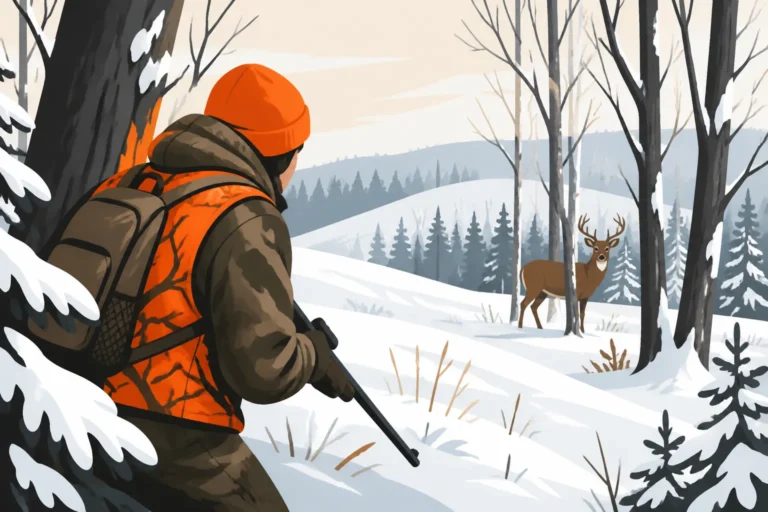
For many late-season hunters, still-hunting becomes a powerful and often preferred method. After a fresh snowfall, the landscape transforms into a giant tracking board. Fresh tracks reveal where deer are coming from, where they're going, and how recently they passed through. This method is particularly effective in northern Wisconsin's big woods or in areas with moderate snow depth that hasn't crusted over yet. When you find fresh tracks leading into thick cover, it's time to become the hunter.
Move slowly, deliberately, and with extreme stealth, paying attention to the wind direction. Stop frequently, scan ahead for movement, and listen for the subtle sounds of deer walking, feeding, or even bedding. Your eyes should be trained to pick out horizontal lines or patches of brown that don't quite fit the vertical patterns of the trees. Still-Hunting After a Wisconsin Snow can be incredibly productive, as deer are often bedded down to conserve energy, offering a good chance for a close approach. This isn't about covering a lot of ground quickly; it's about carefully dissecting small areas of high potential. Look for areas where the tracks indicate multiple deer, as antlerless groups often travel together.
Executing Effective Late-Season Deer Drives
In certain situations, especially on public land or larger private tracts, well-organized deer drives can be an incredibly effective way to fill late-season antlerless tags. When deer are holed up in thick cover, unwilling to move during daylight, a strategic push can get them on their feet. This requires careful planning and communication among a group of hunters. The key is to understand how deer will react to pressure in late season – they'll often try to slip out the back door quietly before busting through heavy cover.
Successful Deer Drives With Three or Four Hunters usually involve a combination of "pushers" who slowly walk through a defined block of cover, and "posters" who are strategically positioned along escape routes. Focus on pushing small, manageable blocks of heavy cover adjacent to known escape corridors, like thick conifer stands, brushy creek bottoms, or dense clear-cuts. Always prioritize safety, ensuring everyone knows the plan, their shooting lanes, and the location of other hunters. Late-season drives are also great for utilizing areas that might seem too thick or inaccessible earlier in the year. The bare trees allow better visibility for posters, and the deer are generally less willing to expose themselves in open areas.
Gear and Preparations for Cold Weather Hunting
Hunting late in Wisconsin means facing down some serious cold, wind, and often snow. Your gear choices aren't just about comfort; they're about safety and the ability to stay in the field long enough for an opportunity to arise. Skimping on cold-weather gear is a recipe for an early exit and a miserable experience.
Layering for Extreme Cold Comfort
Effective layering is the cornerstone of comfortable late-season hunting. It’s not about one super-thick jacket; it's about multiple thinner layers that trap warm air and allow you to adjust to changing activity levels and conditions. Start with a moisture-wicking base layer against your skin – merino wool or a good synthetic are excellent choices as they draw sweat away, keeping you dry and warm. Avoid cotton at all costs, as it retains moisture and will make you cold.
Your mid-layers should provide insulation, such as fleece, down, or synthetic puff jackets. Think about a couple of these, allowing you to add or subtract as needed. The outer layer needs to be windproof and waterproof, protecting you from biting winds, snow, or freezing rain. Look for quiet fabrics that won't spook deer. Don't forget extremities: a warm hat that covers your ears, insulated gloves or mittens (often a thin liner glove inside a thicker mitt for dexterity), and, crucially, high-quality, insulated boots are non-negotiable. Many experienced hunters also bring hand and foot warmers to extend their sits. Dressing correctly is half the battle won against the elements.
Optics and Firearm Considerations
Your chosen firearm needs to be reliable in cold, wet conditions. A well-maintained rifle, shotgun, or muzzleloader should function flawlessly. Consider a firearm that you are comfortable with and accurate enough to make a clean shot on a deer that may be moving or in thick cover. For optics, low-light performance in your rifle scope or crossbow scope is a significant advantage, as prime movement often occurs at dawn and dusk. Variable power scopes that can dial down for thick timber shots and zoom in for longer visibility across a field are versatile.
Binoculars are also crucial for glassing distant food plots, thickets, or even picking out deer bedded down. Look for good quality glass that won't fog up easily and offers clear resolution in low light. A rangefinder is always a smart addition, especially when judging distances in snow-covered fields where landmarks can be deceiving. Keep all optics clean and protected from snow and moisture, as a foggy or wet lens can ruin a shot opportunity. For those using a muzzleloader in December, Keeping a Muzzleloader Dry in Wet Snow is a particular challenge that requires specific gear and tactics.
Crucial Meat Care in Freezing Temperatures
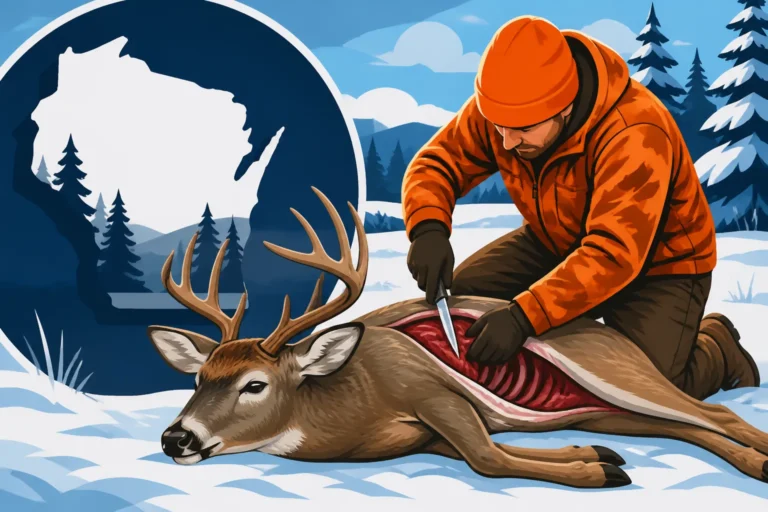
Harvesting an antlerless deer in late season often comes with the benefit of natural refrigeration. The cold temperatures are a hunter's friend when it comes to preserving meat, but proper care is still essential. Once a deer is down, gut it as quickly as possible to allow the carcass to cool down internally. While the outside air might be freezing, the internal organs generate a lot of heat, which can spoil meat if not dissipated.
If you're far from your vehicle or camp, consider quartering the animal in the field to make extraction easier. Specialized game bags, while not as crucial for insulation in freezing temps, can help keep dirt, snow, and debris off the meat during transport. A sturdy deer sled or a game cart can be invaluable for getting a deer out of challenging terrain, especially with snow on the ground. Knowing how to use Sleds and Drags for Snow Country can turn a brutal recovery into a manageable one. Once back at camp or home, hang the deer in a cool, sheltered place where it can continue to age safely, protected from scavengers. The natural cold environment makes aging venison easier and more controlled than in warmer seasons.
Finding Late Season Antlerless Opportunities
Successfully locating antlerless deer in late season often comes down to intelligent scouting, understanding land access, and leveraging modern tools. The deer are focused, and so should you be. Don't just wander aimlessly; have a plan based on where deer must be.
Scouting for Post-Rut Sign and Food
Forget about looking for fresh rubs or massive scrape lines – those are largely relics of the rut. Instead, your late-season scouting should focus on high-traffic travel corridors between thermal cover and reliable food sources. Look for heavy deer trails leading into standing corn, soybean stubble, or winter wheat fields. Pay close attention to areas where tracks show deer pawing through snow to reach forage.
Also, focus on finding dense thermal cover: cedar swamps, pine plantations, and thick regenerating clear-cuts. These areas will show signs of bedding, often with numerous deer beds close together. Fresh droppings and concentrated browse lines in these thickets indicate current use. Snowfall can be your best friend for scouting; it immediately reveals fresh sign that might otherwise be hidden. A fresh dusting of snow can show you exactly where deer are moving from their beds to their feeding areas, allowing you to set up accordingly.
Leveraging Public and Private Lands
Wisconsin offers a wealth of public land opportunities, from county forests to state wildlife areas and national forests. Many of these areas are excellent for late-season antlerless hunting, especially if they contain the critical food and cover deer need. However, public lands often see significant pressure during the gun season, which can push deer into the deepest, nastiest parts of the property. This means you might have to walk further and work harder to find success.
Utilize resources like the Wisconsin DNR's Hunt Wild App or mapping tools like GoHunt to identify public land parcels with promising habitat features. Look for areas with a mix of thick conifers, swamps, and proximity to agricultural fields on adjoining private land. Don't be afraid to Find Ground That Sees Fewer Hunters by venturing deeper or tackling tougher terrain. For private land, gaining permission can open up some incredible late-season opportunities, particularly on farms with standing corn or other unharvested crops. A polite knock on a landowner's door, explaining your interest in ethical antlerless harvest for management purposes, can sometimes yield positive results. Knowing how to respectfully Ask a Wisconsin Farmer for Permission is a skill that pays dividends.
Using Technology for Scouting and Access
Modern technology has revolutionized how we scout and access hunting land, and it's especially useful for late-season planning. The Wisconsin DNR’s Hunt Wild App is an invaluable resource, providing detailed maps of public land, private land boundaries, and even real-time CWD information. But to truly maximize your scouting efforts, investing in a robust mapping application like GoHunt can give you an edge.
GoHunt offers detailed aerial imagery, topographic maps, and layers that show public versus private land ownership, habitat types, and even historic burn areas. You can use these tools from the comfort of your home to identify potential bedding areas, travel corridors, and food sources, saving you countless hours of boots-on-the-ground scouting. For instance, you can pinpoint a hidden cattail marsh adjacent to a standing cornfield, or a dense cedar swamp near a logging road that acts as a natural funnel. Mark potential stand locations, entry and exit routes, and even plan deer drives using the app. This digital reconnaissance allows you to walk into new areas with a solid plan, making your late-season hunts more efficient and productive.
Late-Season Antlerless Hunting Considerations Table
| Consideration | Description | Impact on Success |
|---|---|---|
| Season Dates | Archery/Crossbow: Continues into early January. Holiday Hunt: Typically runs late December. Muzzleloader: Often early December. | Dictates legal weapon choice and exact hunting window. Critical to verify current year's dates. |
| Antlerless Tags | Acquired via drawing, bonus tag sales, or leftover sales. Specific to DMU and sometimes land type (public/private). | Absolutely essential for legal harvest. No tag, no harvest. Availability varies by region. |
| Baiting Bans | County-specific restrictions due to CWD. Bans can be triggered or extended, affecting legal methods. | Strict compliance required. Violations carry heavy penalties. Always check current status for your county. |
| Food Sources | Primary focus: standing corn, soybeans, winter wheat, remaining acorns. Deer prioritize high-calorie, easily accessible food. | Key to locating deer. Hunting near these sources, especially in afternoons, increases encounter rates. |
| Thermal Cover | Dense conifers (cedar, pine, spruce), thick swamps, south-facing slopes. Areas that block wind and retain warmth. | Deer seek these areas to conserve energy and escape cold. Good bedding areas. Hunting transitions to and from cover is effective. |
| Weather Impact | Extreme cold reduces movement. Light snow aids tracking. Wind impacts deer bedding and hunter comfort. | Adapting tactics to daily weather is crucial. Hunt during warmer periods of the day, use snow for tracking. |
| Hunter Pressure | Generally lower than gun season, but can still be concentrated in popular areas. Deer may be more nocturnal or utilize thicker cover. | Seek out less-pressured areas on public land. Private land access can offer quieter hunting. |
| Required Gear | Layered clothing (wool/synthetics), insulated boots, hand/foot warmers, wind/waterproof outer shell, reliable optics, game retrieval tools (sled/cart). | Essential for comfort, safety, and staying in the field longer. Proper gear extends hunting endurance. |
| Meat Preservation | Field dressing immediately. Utilize natural cold. Game bags for cleanliness. Sleds/carts for retrieval. | Ensures quality venison. Cold temperatures are an advantage, but internal heat must dissipate. |
| Scouting Tools | Aerial maps (GoHunt, Hunt Wild App), topographic maps, fresh snow for tracks. | Improves efficiency and success rate by identifying key deer habitat, travel routes, and current sign from afar. |
Disclaimer
Hunting is an inherently dangerous activity. Always prioritize safety, understand and follow all Wisconsin hunting regulations, and ensure you have proper training and equipment. The information provided in this guide is for informational purposes only and should not replace official DNR regulations, hunter education courses, or professional guidance. Always verify current rules and seasons before heading afield.