Finding Ground That Sees Fewer Hunters
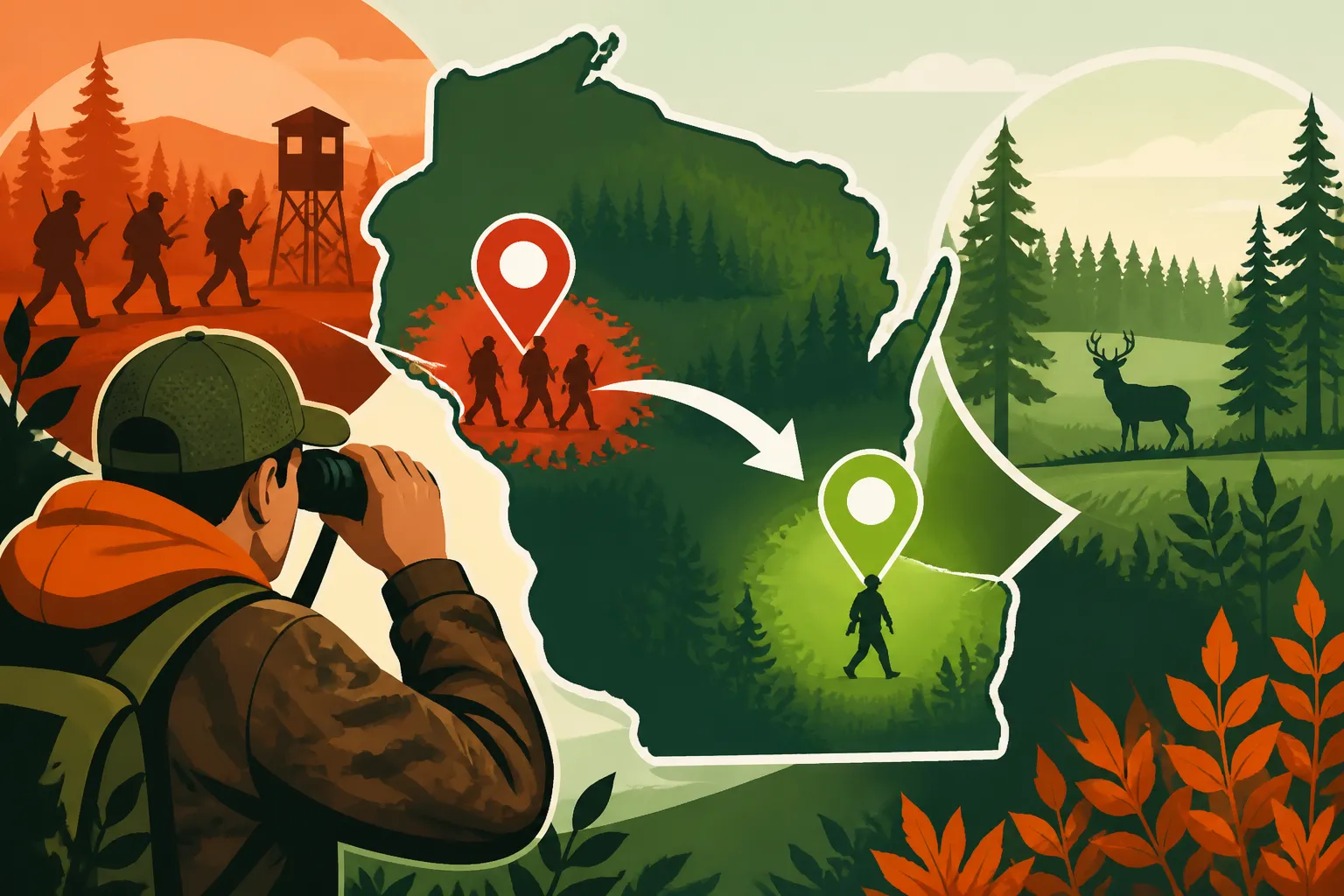
It's a familiar ache, isn't it? You wake up early, full of hope, drive to your favorite public hunting spot in Wisconsin, and pull into a parking lot already overflowing with trucks. The crunch of boots on frosted leaves starts before legal shooting light, and you feel the collective sigh of a hundred hunters pushing the deer deeper into hiding. The frustration of feeling like you're hunting other hunters, rather than actual game, is a common and disheartening experience. This guide is here to help you navigate Wisconsin's public lands with a fresh perspective, focusing on strategies and tools to find those elusive pockets of unpressured ground where deer and other game behave more naturally.
The Frustration of Hunting Pressure on Wisconsin Public Land
Wisconsin's public lands are a precious resource, offering incredible opportunities for hunters. However, with that accessibility comes the inevitable reality of hunting pressure, especially during peak seasons. It can feel like a constant battle to escape the crowds, leading many hunters to wonder if finding solitude and success is even possible anymore.
Why Public Land Gets So Crowded
There are several factors that contribute to the heavy hunting pressure seen on many of Wisconsin's public lands. Foremost among them is sheer accessibility. Areas with well-maintained parking lots, clear trail systems, and proximity to major roads are often the first to fill up. Think about the opening weekend of gun season in a popular state forest; it can resemble a small town rather than a wilderness experience. Hunters, naturally, tend to gravitate towards what's easy to get to, especially if they're limited on time or physical ability.
Another reason for crowding is tradition and familiarity. Many families have hunted the same stretch of public land for generations. While this fosters a wonderful sense of community, it also means that these traditional spots often see consistent, heavy pressure year after year. New hunters, looking for guidance, often choose these same well-known areas, further concentrating the effort. The lure of "easy access" often outweighs the desire for solitude for many, creating a cycle of concentrated hunting effort that can be tough to break free from.
The Impact of Pressure on Deer and Other Game
Deer are incredibly adaptable creatures, and they learn quickly. When faced with constant human intrusion, they change their patterns dramatically. What was once a prime feeding area might become a nocturnal hotspot, or a bedding area might shift to the thickest, nastiest cover imaginable. Pressured deer often become more nocturnal, moving primarily under the cover of darkness. They learn to associate human scent, vehicle noise, and even specific types of calls with danger.
It's not just deer, either. Turkeys will get tight-lipped and roost in impenetrable bottoms. Grouse will flush wilder, long before you even see them. Even waterfowl on smaller public marshes will become incredibly wary, flaring at the slightest hint of danger. The impact of sustained pressure means you're not just hunting an animal; you're hunting an animal that's spent weeks, if not months, being hunted, and they've become experts at avoiding detection. This is why knowing how to interpret Finding Sign in Big Timber or Reading a Ridge Point for Deer Movement takes on a whole new dimension when dealing with pressured game.
Identifying Signs of High-Pressure Areas
Learning to "read" the land for signs of pressure is an essential skill for any hunter seeking quieter ground. The most obvious indicators are physical: an abundance of boot tracks near parking areas, well-worn deer trails that clearly aren't just from deer, discarded snack wrappers, or old, decrepit ground blinds left behind from previous seasons. If you find a perfectly placed treestand that's been there for years and looks like it's seen a lot of action, chances are that specific area gets hit hard.
Beyond the obvious, look for more subtle clues. Scrape lines along a logging road that seem to go cold quickly might indicate deer are only hitting them at night, or avoiding them altogether during daylight. Well-defined funnels between two swamps might seem like a no-brainer, but if they're too obvious, everyone else has likely thought of them too. Conversely, if you're not seeing much fresh sign, but the cover looks perfect, it might be that deer have simply abandoned the area due to over-pressure. Keep an eye out for these subtle cues, and use them to inform your scouting.
Leveraging Mapping Tools to Uncover Hidden Gems
In the digital age, hunting maps are no longer just static paper sheets; they are dynamic tools that can revolutionize the way you scout and hunt. For finding those less-pressured spots, these tools are invaluable.
Going Beyond the Obvious: Analyzing Topography and Access
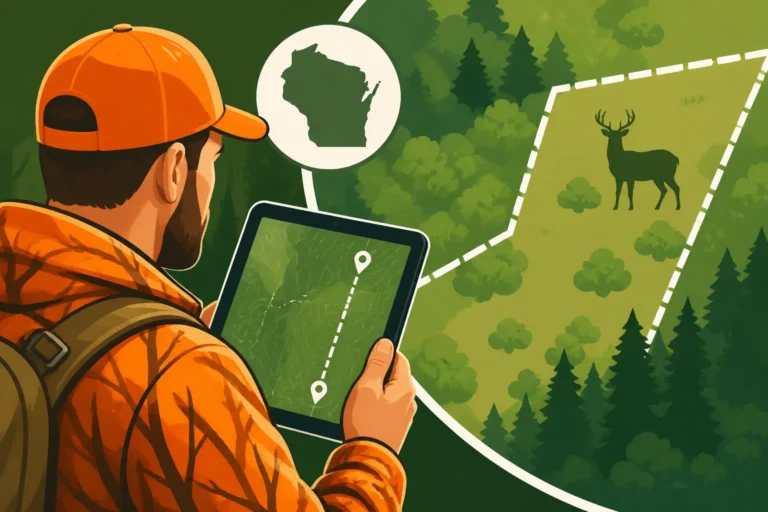
The key to finding unpressured ground often lies in identifying areas that look unappealing or difficult to access on a map. This is where advanced mapping applications truly shine. Tools like onX Hunt and GoHunt allow you to meticulously dissect a piece of land from your couch. Don't just look for obvious trails or clearings. Instead, focus on topo lines indicating steep, rough terrain that most hunters will avoid. Look for areas choked with thick swamp, dense cedar breaks, or tangles of blowdowns that are a pain to walk through. These are often the places where deer find sanctuary from human activity.
Consider the layout of roads and trails. Most hunters don't want to walk more than a mile or so from their vehicle. Anything beyond that distance, especially through difficult terrain, starts to weed out a significant portion of the hunting population. Use the measuring tools in your mapping app to calculate distances. Identify points that require a long, arduous hike, a difficult river crossing, or navigating particularly nasty cover. These "difficult access" points are your friends. For more specific guidance, you might check out Reading Aerial Photos for Coulee Deer to understand how topography dictates movement.
Identifying Remote Access Points and Walk-In Opportunities
Sometimes, it's not just about walking further, but walking smarter. Look for obscure easements, abandoned logging roads that aren't maintained, or small, unmarked pull-offs that could serve as a stealthy entry point. Perhaps there's a small dead-end road leading into a chunk of public land that only local residents know about. These can often be identified by carefully studying satellite imagery and overlaying property lines.
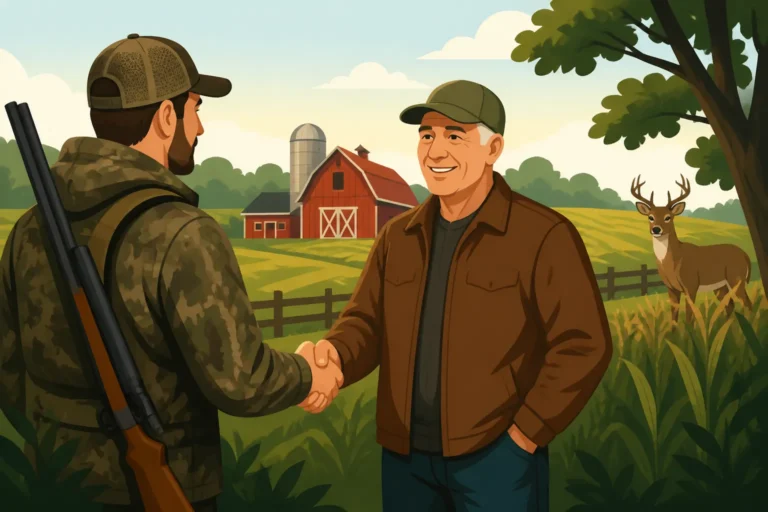
Another tactic is to use walk-in access points that might require crossing a small parcel of private land where permission could be obtained, even if just for access. Remember, Do You Need Written Permission in Wisconsin? is a question to consider carefully. Even if you don't hunt the private land, legal access across it can be a game-changer for reaching untouched public ground. Always double-check regulations on public access rules, especially regarding specific types of public land like those managed under the Managed Forest Law. Utilizing these less obvious access points can put you miles ahead of the competition, both figuratively and literally.
Finding Unconventional Cover and Sanctuary Areas
Deer don't just go where it's thick; they go where it's safest. In heavily hunted areas, this often means unconventional spots. These could be small, isolated patches of thick pines surrounded by open hardwoods, a dense cattail marsh bordering a cornfield, or a steep, uninviting bluff face in the Driftless Area. Most hunters will walk past these spots because they don't look like classic deer habitat or are too difficult to navigate.
Don't be afraid to think outside the box. A small island of high ground in a vast swamp might hold a handful of deer throughout the season, simply because it's too much work for most hunters to reach. A dense alder run next to a river might seem like just a bird hunting spot, but it can provide incredible thermal cover for deer escaping pressure. Understanding Where Northern Forest Bucks Bed or Hunting a Funnel Between Two Swamps will help you identify these pockets. These are the places where deer can truly relax, making them prime targets for a careful, calculated approach.
Strategies for Hunting Less Pressured Ground Effectively
Once you've identified potential low-pressure areas, the real work begins. Getting into these spots and hunting them successfully requires a different mindset and a commitment to certain strategies.
The Art of the Deep Dive: How Far is Far Enough?
The general rule of thumb for finding unpressured deer is "the further you walk, the better." While there's certainly truth to that, it's not just about putting in miles; it's about putting in miles where others won't. A mile walk through easy, open woods isn't the same as a half-mile slog through knee-deep swamp or up a treacherous coulee. The real question is: what's the minimum amount of effort that will deter most other hunters?
For many, anything beyond a 20-30 minute walk from the truck is too much. This means if you can commit to a 45-minute to hour-long hike into your spot, especially if that hike involves some elevation gain or navigating thick cover, you're likely going to find less pressure. Consider the physical toll on yourself and your gear. Lightweight climbing sticks, a compact treestand, or the discipline to Using a Ground Blind on Wisconsin Public Land can make that deep dive more feasible. Always scout these deep areas beforehand, so you know exactly what you're getting into and can plan your Entry Routes on Steep Driftless Ground or Hunting a Standing Cornfield in Farm Country. Remember, it's about perceived effort, not just raw distance.
Adapting Your Tactics to Unpressured Game
Hunting unpressured deer often means they behave more naturally. They might be less wary of calls, more apt to move during daylight hours, and generally follow more predictable patterns. This doesn't mean they're stupid, but they're not operating under the same level of stress as their heavily pressured counterparts.
You might find success with gentler rattling sequences or more subtle grunts. Deer in these areas might investigate curiosity calls rather than spooking instantly. Their bedding and feeding routines might align more closely with textbook deer behavior. This can be a huge advantage, as it allows you to employ a wider range of tactics with more confidence. For instance, in areas where deer are less pressured, a well-placed decoy might work wonders, whereas in high-pressure zones, it could just send them running. Always factor in Wind and Thermals in a Coulee and other natural elements, but remember that less pressure often means more forgiving deer.
Respecting the Resource and Other Hunters
Even when you're deep in the woods, far from the crowds, it's crucial to maintain a strong sense of ethical hunting and respect for the environment. "Leave no trace" should be your mantra. Pack out everything you pack in, and if you see trash left by others, consider taking it out. This not only preserves the beauty of the wilderness but also helps maintain good public land access for everyone.
While your goal is to avoid other hunters, you may still encounter them. A simple nod or polite greeting is always appropriate. If you discover someone is already in "your" spot, even if you put in the effort to get there, it's always best to back out quietly and find an alternative. The woods are big, and there's enough room for everyone, even if it doesn't always feel that way. Maintaining a positive hunting culture benefits us all.
Exploring Underutilized Public Land Types
Wisconsin is blessed with a diverse array of public hunting lands, some of which fly under the radar for many hunters, offering fantastic opportunities to escape the crowds.
County Forests and MFL Open Lands
Beyond the well-known state and national forests, Wisconsin's County Forests often present excellent, overlooked hunting opportunities. These lands, managed by individual counties, can be extensive and, crucially, often less pressured than their state and federal counterparts. They might not have the same level of developed infrastructure, which ironically makes them perfect for finding solitude. Look for counties with large tracts of forestland and explore their mapping resources. Some of these county forests are absolutely massive, like those in Marinette or Douglas County. How Many Acres of Wisconsin County Forest will give you an idea of the scale.
Similarly, Managed Forest Law (MFL) "Open" lands are privately owned parcels where landowners agree to allow public access in exchange for tax incentives. These can be goldmines for finding unpressured deer. While they can be smaller and more spread out, they often hold deer that rarely see hunters. Using mapping tools like onX Hunt or GoHunt to identify MFL parcels and their boundaries is essential here. You can literally overlay these layers and pinpoint individual tracts. These lands typically have specific rules for access, so always confirm what's allowed. Finding MFL Parcels on a Wisconsin Map can be a great starting point for your research.
Lesser-Known State Wildlife Areas and VPA Lands
While popular State Wildlife Areas (SWAs) near population centers can be overrun, many smaller or more remote SWAs receive significantly less attention. These areas might be tucked away in less-traveled corners of the state or require a bit more legwork to access. Spend time on the Wisconsin DNR website, looking at lesser-known units. Don't just focus on the largest ones; sometimes the smallest, most out-of-the-way areas hold the biggest surprises.
The Voluntary Public Access (VPA) program is another fantastic resource. Like MFL Open lands, VPA parcels are private lands opened for public hunting, fishing, and trapping. They are often smaller fields, woodlots, or wetlands that connect to other public lands or offer unique access. The key is that these are often new additions or change year-to-year, so many hunters don't keep up with them. Regularly checking the VPA maps and new additions can give you a significant advantage. How Wisconsin Voluntary Public Access Works can help you understand the specifics.
The Advantage of Water Access
One of the most effective ways to escape foot traffic is to use a boat, canoe, or kayak. Wisconsin has an abundance of rivers, lakes, and flowages that offer access to public lands that are simply too difficult to reach on foot. Think about islands in larger rivers, remote points on big lakes, or sections of river bottom land that are only reachable by water.
Waterfowl hunters have been doing this for generations, but it's equally effective for deer hunters. Imagine paddling a half-mile across a quiet flowage at dawn, then slipping into a cedar swamp that rarely sees a boot print. This isn't always practical, depending on your physical ability and equipment, but if you have the means, water access can open up an entirely new world of unpressured hunting opportunities. Consider Hunting Mississippi River Backwaters for an idea of how effective this can be for deer and waterfowl alike.
Here's a quick comparison of different public land types and their typical pressure levels:
| Public Land Type | Typical Pressure Level | Access Considerations | Best Uses for Less Pressure |
|---|---|---|---|
| State Forests | Moderate to High | Well-marked parking, established trail systems | Deep dives, targeting rough terrain, finding remote sections |
| National Forests | Moderate | Forest roads, dispersed camping, less defined trails | Large acreage for spreading out, finding obscure entry points |
| County Forests | Low to Moderate | Varies widely by county, less developed infrastructure | Scouting new areas, remote corners, less known blocks |
| State Wildlife Areas | Varies (High near cities) | Can be well-managed, some have limited access points | Smaller, remote SWAs, walk-in only sections |
| Managed Forest Law (Open) | Low | Private parcels with specific public access, often isolated | Targeting smaller, overlooked woodlots and edges |
| Voluntary Public Access | Low | Private land with agreements, can change annually | New parcels, connecting corridors, often agricultural fringes |
| River/Lake Access Land | Very Low | Requires watercraft, unique access points | Islands, remote shorelines, flooded timber |
Finding ground that sees fewer hunters in Wisconsin is absolutely possible, but it requires a bit more effort, some smart use of technology, and a willingness to explore beyond the obvious. The rewards, however, are immeasurable: the chance to experience wild Wisconsin as it truly is, and the satisfaction of outsmarting not only the game, but the crowds too.
Disclaimer
This article is for general informational purposes only and does not constitute professional advice. Laws, prices and regulations vary by location and change over time. Consult a qualified professional for guidance on your specific situation.