Rifle Cases for Travel to Wisconsin
Traveling with your hunting rifle can feel like navigating a minefield of regulations and anxieties. You've got your sights set on those rolling hills of the Driftless Area Deer Hunting in Wisconsin or the deep woods of the Hunting the Wisconsin Northern Forest for Deer, but the last thing you want is a legal headache or damaged gear before you even step foot in the woods. This guide is all about helping you understand the ins and outs of choosing and using the right rifle case for your Wisconsin hunting adventures, ensuring your firearm arrives safely, legally, and ready for action.
Understanding Wisconsin's Firearm Transport Rules (and Federal Basics)
Let's be honest, the thought of accidentally breaking a law, especially when traveling with firearms, is enough to make any hunter's stomach drop. The rules can be a maze, especially when crossing state lines. But don't fret; with a good case and a clear understanding, you'll be golden.
Federal Guidelines for Uncased Firearms in Vehicles
When you're driving, the federal "safe passage" provisions generally allow you to transport an unloaded firearm in a locked container, even if you pass through states with stricter gun laws, provided it's legal in your origin and destination states. However, this is a broad strokes rule, and states can—and do—have their own interpretations. The key takeaway here is that an unloaded, locked case is almost always your safest bet. It takes away ambiguity and gives you peace of mind. Imagine getting pulled over for a minor traffic infraction; having your rifle openly accessible, even if legal technically in that exact moment, can lead to a much longer and more uncomfortable conversation with law enforcement. It's about perception as much as strict letter-of-the-law compliance.
For most hunters, this means your rifle should be unloaded, and ideally, placed in a case in the trunk or a locked compartment where it's not readily accessible from the passenger area. This isn't just about legality; it's about responsible firearm ownership and ensuring your gear is secure from theft or accidental discharge. This consideration is paramount, whether you're heading to the Wisconsin's Nine-Day Gun Deer Season opener or a late-season Muzzleloader Deer Hunting in Wisconsin trip.
Wisconsin's Specific Transport Laws for Rifles
Now, let's talk about Wisconsin itself. Our state has a relatively common-sense approach to firearm transport for hunters, but it's crucial to understand the nuances. Generally speaking, a long gun (which includes your rifle) must be cased when transported in a vehicle on a public highway if it's loaded. If it's unloaded, it doesn't necessarily need to be cased, but it can't be readily accessible from the passenger compartment. However, "cased" is defined pretty broadly here—it can be in a soft case, a hard case, or even wrapped in a blanket in some interpretations, as long as it's not immediately ready for use.
My advice, and what many veteran Wisconsin hunters will tell you, is to always transport your rifle in a proper case, unloaded. Even if the law allows for uncased and unloaded, a good case protects your investment from bumps and jostles, dust, and moisture that can sneak into your vehicle. Plus, it visually signals responsible gun handling to anyone who might see it, which is always a good thing. For example, if you're driving down a forest road to access some prime Hunting Wisconsin Clearcuts and Aspen Cuts ground, having your rifle cased shows you're taking care of your equipment and respecting the rules of the road, even if the road itself is less public.
Air Travel and Your Rifle Case
If your Wisconsin adventure involves flying into the state, the rules get significantly stricter, and for good reason. The Transportation Security Administration (TSA) and individual airlines have very specific requirements that override state-level vehicle transport laws. Your rifle must be transported in a hard-sided, locked case as checked luggage. The case must be capable of being locked and should be secured with locks that are not easily opened. While TSA-approved locks are common for general luggage, many hunters opt for non-TSA locks for firearm cases to ensure only they have access.
You'll need to declare your firearm at the airline check-in counter, and it absolutely must be unloaded. Ammunition generally needs to be separated from the firearm and can be transported in its original packaging or a secure container within the same locked case or a separate one, again, as checked baggage. Always double-check your specific airline's policies, as they can sometimes have even stricter requirements than the TSA. This isn't the time to cut corners; a violation here can lead to serious delays and legal trouble, derailing your Wisconsin Deer Camp Traditions before they even begin.
Types of Rifle Cases for Different Travel Needs
Just like you wouldn't use a .22 for a bear hunt, you wouldn't use a flimsy range bag for international travel. Different cases serve different purposes, and understanding their strengths and weaknesses is key to making the right choice for your specific hunting trip.
Hard Cases: The Ultimate in Protection and Security
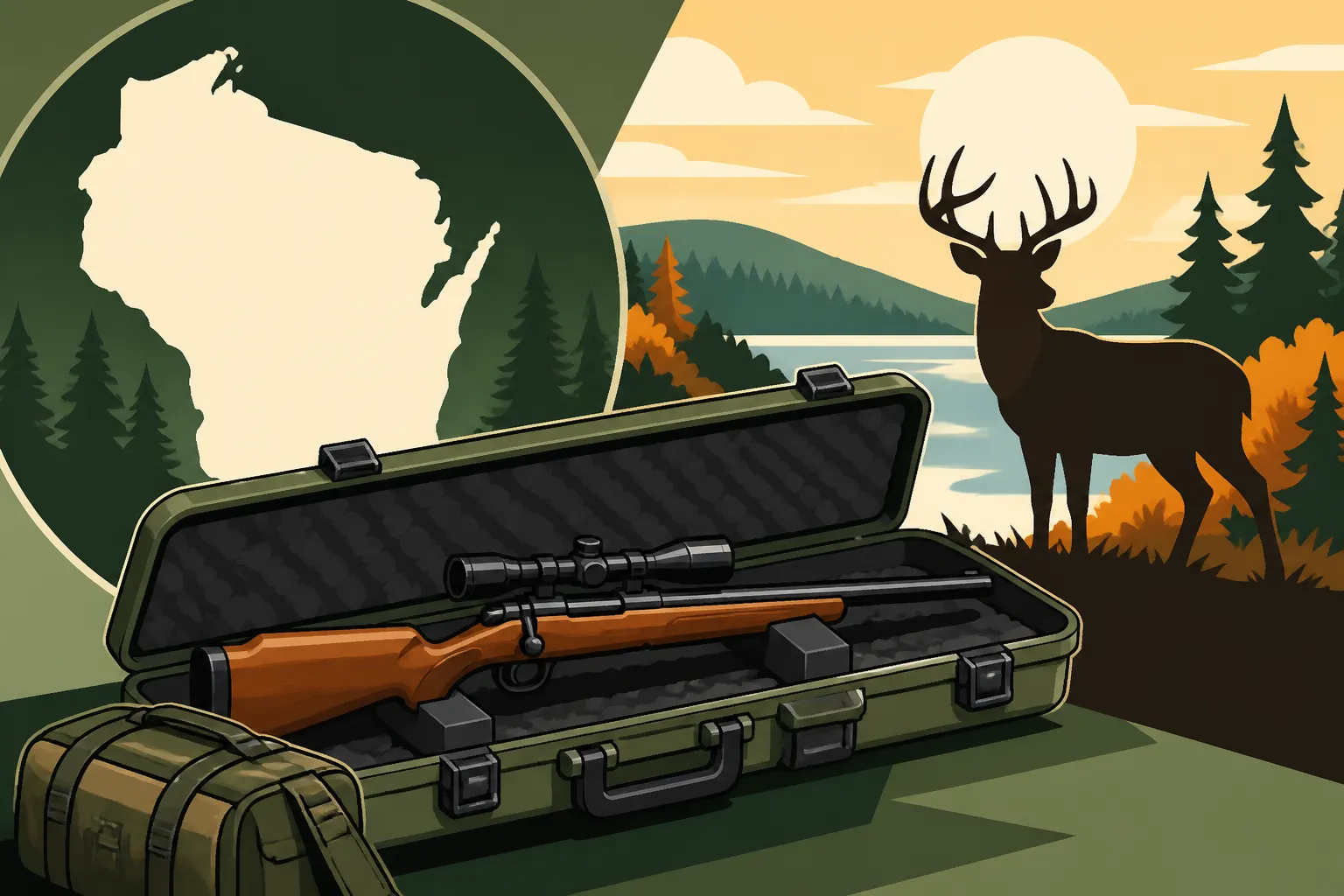
When you think "rifle case," often a sturdy, often military-grade hard case comes to mind. These are the tanks of the firearm world, designed to withstand serious abuse. Brands like Pelican, SKB, and Plano make excellent hard cases out of durable polymers or aluminum, built to take a beating. Their primary advantage is unparalleled protection against impacts, crushing, and the elements. They often feature robust latches, sometimes with integrated locking mechanisms, and offer padlock points for additional security.
For air travel, a hard case isn't just recommended; it's practically mandatory. It ensures your rifle is secure and protected from the rough handling baggage often endures. Many hunters also prefer them for long road trips, especially if the rifle will be in the bed of a truck or might be exposed to severe weather. The interior usually consists of dense, customizable foam (often "pluck foam" or custom-cut layers) that holds the rifle snugly, preventing any movement that could throw off your zero or scratch your finish. This level of protection is invaluable, especially if you're traveling with a meticulously zeroed Rifle Setups for Wisconsin Deer and expensive optics for those crucial shots across a Reading a Ridge Point for Deer Movement.
Soft Cases: Convenience for Vehicle Transport and Range Trips
Soft cases offer a completely different set of advantages: portability, lighter weight, and often more storage. Made from durable nylon, canvas, or other fabric, these cases are typically padded to protect against minor bumps and scratches. They often come equipped with external pockets for ammunition, cleaning supplies, calls, and other small gear, which can be incredibly convenient for a quick trip to the range or a day hunt.
While generally not suitable for air travel, soft cases are perfect for vehicle transport directly to your hunting spot or local range. They're easier to store, fit into tighter spaces, and are much lighter to carry than their hard-sided counterparts. For example, if you're driving an hour to hunt some Hunting Wisconsin Farmland Deer and your rifle will be in the back seat or trunk, a soft case offers ample protection against road vibrations and incidental contact. However, remember they offer less protection against crushing or serious impacts, and their security relies mostly on zippers, which can be easily compromised compared to a locked hard case. Always ensure the rifle is unloaded when using a soft case, and consider securing the case itself to prevent shifting in the vehicle.
Hybrid Cases: Blending Protection and Portability
As the name suggests, hybrid cases aim to bridge the gap between hard and soft cases. These might feature a soft exterior with a rigid internal frame, offering more structural integrity than a purely soft case without the bulk and weight of a full hard case. Some might have reinforced panels in critical areas or advanced padding systems that provide superior shock absorption.
These cases are a great option for hunters who want more protection than a standard soft case provides but don't need the extreme ruggedness (or weight) of an airline-grade hard case. They're often ideal for long drives, overland trips, or situations where your rifle might be jostled around a bit more than usual, such as transporting it via ATV on forest trails. Think about a situation where you're heading deep into public land, maybe scouting for deer using the GoHunt app, and you need a case that can handle the occasional bump while still being manageable to carry. Hybrid cases can often accommodate rifles with larger optics or bipods more easily than some rigid hard cases, offering a good balance of features for the discerning hunter.
Here's a quick comparison of the different types of cases:
| Feature | Hard Case | Soft Case | Hybrid Case |
|---|---|---|---|
| Protection | Excellent (Impact, Crush, Weather) | Moderate (Scratches, Minor Bumps) | Good (Enhanced impact protection, some rigidity) |
| Security | Very High (Heavy-duty latches, padlock points) | Low (Standard zippers, easily cut) | Moderate to High (Reinforced zippers, sometimes internal frames) |
| Travel Mode | Air (Required), Vehicle (Recommended) | Vehicle (Local), Range | Vehicle (Extended), ATV/UTV |
| Portability | Low (Heavy, bulky, often with wheels) | High (Lightweight, flexible, easy carry) | Moderate (Lighter than hard, more rigid than soft) |
| Storage | Internal (Foam cutout for rifle only) | External pockets for accessories | Internal and External (Balanced approach) |
| Cost | Higher | Lower | Medium to Higher |
Key Features to Look for in a Quality Rifle Case
Choosing a rifle case isn't just about hard or soft; it's about the details that make a case truly effective for your needs. Skimping on features here can lead to damaged gear, frustrated trips, or even potential safety issues.
Durability and Materials
The backbone of any good rifle case is its construction. For hard cases, look for high-impact, crush-resistant polymers or durable aluminum. These materials should be able to withstand drops, impacts, and extreme temperatures without cracking or deforming. Pay attention to the hinges and latches – are they sturdy metal or flimsy plastic? A broken latch halfway to your hunting grounds is a major inconvenience. For soft cases, look for heavy-duty, water-resistant fabrics like 600D or 1000D nylon. Reinforced stitching at stress points and robust, self-healing zippers are crucial.
Think about the conditions your case will face. Wisconsin hunting means everything from crisp, sunny fall days to cold, wet, snowy November mornings. Will your case protect your Rifle Setups for Wisconsin Deer from freezing rain or mud? Will it stand up to being tossed in the back of a pickup or dragged over rough terrain as you access an Entry Routes on Steep Driftless Ground? Quality materials ensure longevity and reliable protection, even when the weather turns on a dime.
Security and Locking Mechanisms
Security is paramount, not just for preventing theft, but also for complying with legal requirements, especially during air travel. For hard cases, look for multiple padlock points. While TSA-approved locks are convenient for airport security, many hunters opt for non-TSA locks for maximum personal security, understanding that they'll need to be present when the TSA inspects their case. Integrated key or combination locks can also be excellent, but always ensure they are robust and not easily bypassed.
Even for soft cases, some level of security is advisable. Many quality soft cases have lockable zipper pulls, which, while not as impenetrable as a hard case lock, can deter opportunistic theft and provide a layer of safety, especially if you have children around. When you're planning your trip, consider places where your rifle might be out of your immediate sight, even for a short time. Having GoHunt or similar mapping tools to identify secure staging points for your gear can be a game-changer. Remember, the goal is to make it as difficult as possible for unauthorized individuals to access your firearm.
Internal Padding and Customization
What's inside your case is just as important as what's outside. The internal padding needs to cradle your rifle securely, preventing any movement during transport that could damage your optics or throw off your zero. High-density foam, often in an egg-crate or pre-cut "pluck" configuration, is common in hard cases. This allows you to create a custom fit for your specific rifle and accessories like scopes or bipods. Some higher-end cases come with customizable layered foam that you can cut precisely to the shape of your firearm.
For soft cases, look for ample, thick padding that extends around the entire firearm. Adjustable straps or internal tie-downs are a huge bonus, as they keep the rifle from sliding around inside the case. This is particularly important for delicate components like scopes. After all, a perfectly zeroed rifle is useless if it's been knocked out of alignment on the way to your hunting spot, especially when you're preparing for those critical shots in Wisconsin's diverse terrain.
Size, Weight, and Portability
Practicality plays a big role in case selection. A case that's too large or too heavy will quickly become a burden. Consider the dimensions of your vehicle – will your chosen case fit easily in the trunk, back seat, or cargo area without obstructing your view or taking up too much crucial space? If you're traveling with multiple rifles, or a very long rifle, you might need a larger case, possibly with wheels, which can be a lifesaver for navigating airports or long walks from the parking lot to your cabin.
For those planning to carry their rifle case for any distance, perhaps from a parking spot to an Using a Ground Blind on Wisconsin Public Land setup, the overall weight and ergonomic design become important. Are there comfortable carrying handles? Does it have a shoulder strap? A heavy, unwieldy case can quickly sap your energy before you even start the hunt. Think about the entire journey from your home to the precise location you plan to Scouting Wisconsin Public Land Before Season or hunt.
Best Practices for Traveling with Your Cased Rifle in Wisconsin
Once you've got the right case, it's about how you use it. Responsible and prepared travel with your rifle ensures a smooth, stress-free hunting trip.
Documentation and Identification
Before you even hit the road (or the sky), make sure all your paperwork is in order. This includes your valid Wisconsin Hunting Licences and What They Cost, any necessary permits or tags for your specific hunt (like your Wisconsin Turkey Authorization Cost or Wisconsin Bear Licence Cost), and your personal identification. While not typically required to be with the firearm itself, having these readily accessible can prevent delays if you're ever questioned.
It's also a smart practice to include a clear, legible tag with your contact information (name, phone number, address) both inside and outside your rifle case. In the unlikely event that your luggage is lost or separated from you, this can greatly expedite its return. Imagine the panic if your gear goes missing right before Opening Weekend Tactics in Wisconsin! Tools like the Wisconsin Go Wild system allow you to carry proof of your licenses on your phone, making things even easier. Always keep a backup physical copy if you can, just in case your phone battery dies or service is spotty, especially in more remote areas.
Pre-Trip Inspection and Maintenance
Just like you'd check your vehicle's tires before a long drive, give your rifle and its case a thorough once-over before traveling. Inspect the case for any signs of damage – cracks, loose latches, worn padding. Ensure all locks are functioning smoothly. For your rifle, a quick but thorough Cleaning a Rifle After a Wet Sit (even if it wasn't wet) and a light oiling will protect it from condensation or minor moisture exposure during transit. Check that your scope caps are on and securely fastened.
This pre-trip ritual isn't just about preventing damage; it's about readiness. Knowing your rifle is clean, functioning, and securely nestled in its case means one less thing to worry about when you arrive, leaving you more time to focus on scouting for Late-Season Food Sources for Whitetails or setting up your stand. A little preventative maintenance goes a long way in preserving your investment and ensuring peak performance when it counts.
Safe Storage at Your Destination
Your responsibility for secure firearm storage doesn't end when you arrive at your hunting cabin, hotel, or camp. In fact, it's just as important there as it is during transport. Always secure your rifle in a manner that prevents unauthorized access, especially if you're staying in a place where children might be present or if you're sharing accommodations with non-hunters. This could mean locking it back in its hard case, placing it in a secure closet, or using a cable lock through the action.
Leaving a rifle unattended and unsecured, even briefly, can have severe consequences, not only legally but tragically. Be mindful of your surroundings. If you're staying at a public campground while hunting Chequamegon-Nicolet National Forest Hunting, ensure your firearms are never left visible or unsecured in your vehicle or tent. The goal is to always practice responsible firearm ownership, from the moment you pack it to the moment you unpack it for the hunt. The GoHunt app or other mapping tools can even help you identify local regulations for overnight storage in certain areas, ensuring you're always compliant and safe.
Disclaimer
This article is for general informational purposes only and does not constitute professional advice. Laws, prices and regulations vary by location and change over time. Consult a qualified professional for guidance on your specific situation.