Rifle Ranges Realistic in Wisconsin Timber
One of the biggest eye-openers for hunters new to Wisconsin, or even those just starting their journey, is realizing that the wide-open, long-range shots you see on TV often don't exist here. Our timber, whether it's the dense northern woods or the steep, brushy coulees of the Driftless, presents unique challenges that drastically shrink your effective rifle range. This guide will dive deep into what truly constitutes a "realistic" shot in Wisconsin's diverse forested environments, helping you set expectations, choose the right gear, and practice smart for success.
The Unique Challenges of Wisconsin Timber
Hunting in Wisconsin's timber is a different beast entirely than hunting open prairies or vast agricultural fields. The woods here have a character all their own, and they demand a particular kind of readiness from a rifle hunter. It's not just about knowing your rifle; it's about knowing the woods and how they conspire to limit your shooting lanes.
Dense Cover and Visibility Limitations
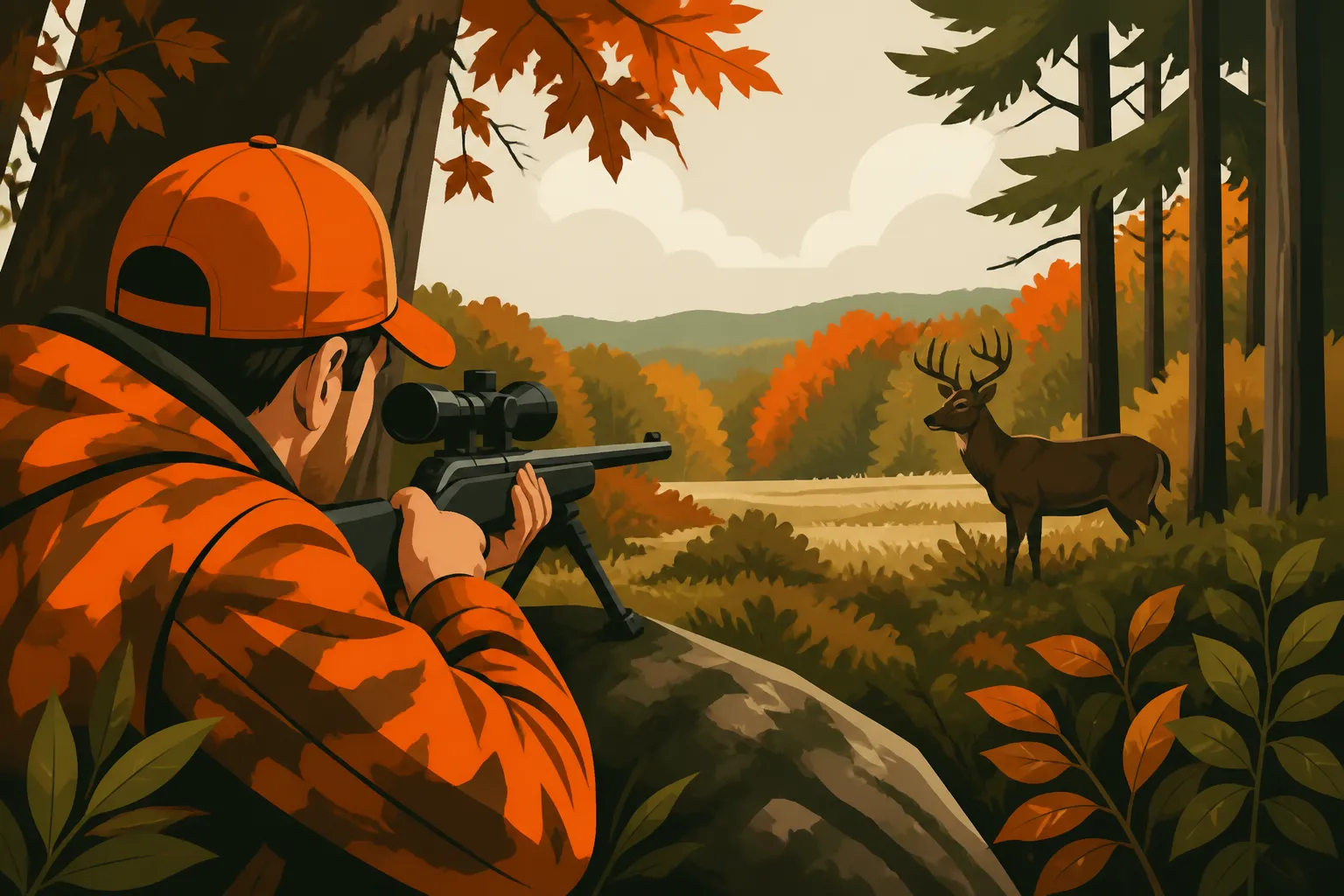
Imagine walking through a dense pine plantation in central Wisconsin, or trying to navigate a thick stand of tag alders along a creek bottom in the north. Your line of sight often shrinks to a mere fraction of what you might experience elsewhere. What looks like a clear lane from your stand in the morning light can quickly become a maze of branches, saplings, and undergrowth when a deer actually steps into it. This isn't just a slight inconvenience; it's a fundamental shift in how you must approach shot opportunities. You might spot a flicker of movement at 100 yards, but only get a clear, ethical shot window for a few precious seconds at 30 or 40 yards.
Even mature hardwoods, while offering more open understories in some spots, can still present a challenge. The sheer number of tree trunks, the density of low-hanging branches in certain areas, and the way light plays tricks in the shadows can all obscure your target. Hunters often find themselves staring at a deer, seeing parts of it, but never getting that perfect, unobstructed view of the vitals. This isn't poor hunting; it's just the reality of hunting in thick cover. It forces you to be patient, to wait for the deer to step into a small opening, and to be ready to take a quick, close-range shot. It's a game of inches and fleeting moments, not long-distance marksmanship.
Broken Terrain and Obstructions
Wisconsin's diverse landscape adds another layer of complexity. The rolling hills and steep valleys of the Driftless Area Deer Hunting in Wisconsin create elevation changes that can make a seemingly simple shot anything but. A deer might appear on a ridge above you, or in a draw below, changing the angle of your shot dramatically. What's more, this terrain often comes with a generous helping of fallen logs, rock outcroppings, and thick brush that naturally channels deer movement but also creates a minefield of potential bullet deflections.
Up north, in places like the Hunting the Wisconsin Northern Forest for Deer, you're dealing with a different kind of broken ground: bogs, beaver ponds, and dense swamps filled with cedar or spruce. A deer stepping into a Still-Hunting Wisconsin Cedar Swamps might be only 50 yards away, but between you and it could be a dozen small trees, a thick curtain of evergreen boughs, and uneven, mucky ground. Each of these obstacles, no matter how small, has the potential to alter a bullet's path, turning a sure shot into a heartbreaking miss. You have to consider not just the distance, but the entire flight path of your bullet, accounting for every twig and branch. It's a skill that's honed over seasons spent observing and understanding the subtle nuances of our specific hunting grounds.
Understanding Your Effective Range
When we talk about "effective range" in the context of hunting, it's not just about how far your bullet can physically travel and still retain enough energy to kill. That's a ballistic calculation. For a hunter, effective range is a much more personal and practical metric.
What "Effective Range" Truly Means
Your effective range is the maximum distance at which you can consistently place a shot into a vital zone under typical hunting conditions. This isn't some arbitrary number; it's a dynamic assessment that considers several critical factors beyond just ballistics. It's about your personal shooting proficiency with your specific rifle and ammunition, your ability to perform under pressure, and the environmental variables of the hunt itself. For many hunters in Wisconsin's timber, that "effective range" is often much closer than they realize, especially when factoring in the density of the woods.
Think about it: can you consistently hit a 6-inch target (roughly the size of a deer's vitals) every single time at 200 yards from a solid bench rest at the range? Probably. Can you do it in freezing rain, after still-hunting for two hours, heart pounding, while a buck stands quartering away through a small window in the brush, with a wobbly tree branch for a rest? That's a different story. Your effective range is where these two realities meet – where your practice meets the harsh realities of the field. It’s a distance you can confidently make a clean kill, minimizing the risk of a wounded animal.
Factors Influencing Your Personal Limit
Several things conspire to define your actual effective range in the field. First and foremost is your shooting skill and practice routine. If you only shoot from a bench, you're missing a huge part of the equation. Do you practice from kneeling, standing, or using a shooting stick? How about simulating a quick shot after walking for a while? Secondly, your rifle and optics setup plays a huge role. Is your rifle zeroed correctly? Is your scope clear in low light, and do you know your holdovers (or hold-unders) at various distances? Rifle Scope Magnification for Wisconsin Deer and Low-Light Performance in a Scope are crucial in our often dim timber. A quality scope that gathers light well can extend your usable hunting time significantly.
Then there's the ammunition. What kind of bullet are you shooting, and how does it perform at different ranges, especially if it encounters brush? Heavy, slower bullets tend to deflect less than lighter, faster ones, though nothing is truly "brush-proof." Finally, environmental conditions are huge. Wind, precipitation, cold, and even the natural light level (early morning, late evening, or overcast days) can all reduce your effective range. A shot you might comfortably take at 100 yards on a sunny, calm day might be too risky at 70 yards in a driving snowstorm. Being honest with yourself about these factors is the mark of a responsible hunter. Using tools like the GoHunt app can help you scout terrain and anticipate potential shot distances before you even step foot in the woods.
Common Scenarios and Practical Ranges
Let's get down to brass tacks and talk about what realistic shot distances look like in various Wisconsin hunting environments. It's rarely the 300-yard hero shot we dream of; more often, it's a tight window and a quick decision.
Deep Northern Woods & Cedar Swamps
In the dense forests of northern Wisconsin, especially when you're deep in the big timber or skirting the edge of a Still-Hunting Wisconsin Cedar Swamps, your world shrinks considerably. Here, visibility is often measured in tens of yards, not hundreds. Think about still-hunting through a thick stand of pines or navigating dense tag alders. You might catch a glimpse of a deer at 70 yards, but a clear shot through the maze of trees and brush may only open up at 30 or 40 yards.
For many hunters, the practical maximum for an ethical shot in these conditions is often between 75 and 100 yards. This isn't because your rifle can't shoot further; it's because the density of the cover rarely allows for it. Obstructions, low light, and the unexpected appearance of an animal mean you need to be ready for quick, close-range engagements. Many experienced northern woods hunters will tell you that a shot beyond 75 yards in truly thick cover is a rare luxury, and often, their deer are taken much closer. This is where Practical Range in Wisconsin Timber truly comes into play. You're thinking about bullet trajectory through potential deflections, and the ability to find a clear lane, more than sheer distance.
Driftless Area Coulees and Hardwoods
The beautiful, rugged Driftless Area Deer Hunting in Wisconsin presents a different kind of challenge. While the hardwoods on the ridge tops might offer slightly better visibility than dense northern conifers, the steep coulees themselves are often choked with brush, cedars, and thick undergrowth along their bottoms and sides. Reading Aerial Photos for Coulee Deer can give you an idea of the terrain, but being on the ground is key.
Hunting these areas might mean a shot across a small ravine at 150 yards, or a quick downhill shot at a deer moving through the brush at 60 yards. The key variable here is the broken terrain and the often-obstructed lines of sight. You might be looking down into a coulee, spotting a deer, but judging the distance and finding a clear shot without hitting a branch or a rise in the terrain can be tricky. Even at what seems like an "open" 100 yards, a slight dip or rise can put brush directly in your bullet's path. Hunters often find themselves using Shooting Sticks From a Coulee Rim to steady their shots over variable terrain, and even then, shot angles can be extreme. A practical range here is probably between 100 and 175 yards on average, though there are always exceptions where a longer shot might present itself, or a much closer one.
Openings and Edges in Farm Country
Even in Wisconsin's agricultural areas, where vast cornfields or soybean fields might lead you to believe long shots are common, the edges and woodlots still dictate reality. Deer use these transition zones religiously, moving from thick cover to food sources. While you might occasionally get a shot across a standing cornfield or a cut bean field, the vast majority of deer taken in farm country are often along the wood lines, fence rows, or small brushy pockets.
Imagine a deer stepping out of a small woodlot bordering a cornfield. You might have a 200-yard shot across the field, but if that deer is still in the shadows of the timber edge, or moving through a brushy ditch, your shot distance shrinks. It's often the first 50-100 yards from cover where the action happens. Hunters sitting on field edges often find their most reliable shots are at deer just entering or exiting the timber, or browsing along a brushy fenceline, distances typically between 50 and 150 yards. While a 250-yard shot might be possible across a wide-open field, the opportunity is less frequent than those closer shots at the cover edges. This is where knowing your rifle's capabilities at Zeroing at 100 Yards for Woods Hunting becomes paramount, as many shots will be within that initial zero range.
Here's a table summarizing realistic rifle ranges in typical Wisconsin timber scenarios:
| Scenario | Typical Visibility/Cover Density | Realistic Ethical Shot Range (yards) | Key Challenges |
|---|---|---|---|
| Deep Northern Conifer/Cedar Swamp | Very dense | 20 – 75 | Heavy brush, low light, deflection risk |
| Mature Northern Hardwoods | Moderate to dense | 50 – 100 | Numerous tree trunks, sporadic thickets |
| Driftless Coulee Bottom/Sides | Moderate to dense | 40 – 120 | Steep angles, hidden brush, uneven footing |
| Driftless Ridge Tops | Moderate to open | 75 – 175 | Elevation changes, long views with small lanes |
| Farm Country Woodlot Edges | Moderate | 50 – 150 | Transitional cover, quick shots, variable light |
| Small Clearings/Logging Roads | Open to moderate | 75 – 150 | Unexpected appearance, brief shot windows |
Gear Considerations for Timber Hunting
Having the right equipment tailored to Wisconsin's timber environments can make a significant difference in your success and confidence. It's not always about the most expensive gear, but the most appropriate gear for the conditions you'll face.
Optics for Low Light and Quick Acquisition
In the dim light of dawn and dusk, or under the perpetually shadowed canopy of dense woods, your choice of scope is paramount. You need an optic that gathers light efficiently and allows for quick target acquisition. Forget the high-magnification scopes often favored for long-range western hunting. In Wisconsin timber, a lower magnification range, something like a 1.5-5x, 2-7x, or 3-9x, is often ideal. This allows for a wider field of view, which is critical for finding a moving deer in thick cover, and for maintaining situational awareness.
The objective lens size also matters; a 40mm or 42mm objective is usually a great balance, gathering plenty of light without making the scope unwieldy. Look for quality glass with good coatings that prevent glare and enhance clarity. An illuminated reticle can also be a game-changer in those truly low-light conditions, providing a clear aiming point against a dark background. Brands like Vortex, Leupold, and Nikon offer excellent options that fit this bill without breaking the bank. Remember, the goal isn't to see a deer's eyelashes at 300 yards; it's to clearly see its vitals at 70 yards in deep shadows. You can learn more about Optics for Wisconsin Timber and Coulees to refine your choice.
Caliber and Bullet Choice for Brush
When it comes to rifle calibers for Wisconsin deer, many traditional choices excel in our timber. While some hunters swear by magnum calibers, the reality is that most deer are taken at relatively close range, well within the effective range of common cartridges. The classic .30-30 Winchester, for example, has put countless deer in the freezer over the decades, often at ranges well under 100 yards. Other popular choices like the .308 Winchester, .270 Winchester, and .30-06 Springfield are more than capable, offering a good balance of power and manageable recoil. Even the newer 6.5 Creedmoor performs admirably in the woods, though its long-range reputation might overshadow its close-range effectiveness. For Rifle Setups for Wisconsin Deer, bullet construction can be even more important than caliber.
When hunting in thick timber, there's always the concern about "brush busting" capabilities. While no bullet is truly impervious to deflection when hitting a branch, some designs perform better than others. Generally, heavier, slower bullets with a flatter nose tend to be less prone to severe deflection than lightweight, high-velocity, pointed bullets. Bonded bullets or those with heavy jackets are also preferred, as they hold together better upon impact, whether it's brush or a deer. Focus on accuracy and reliable expansion within the realistic ranges you'll be shooting. A well-placed shot with a moderately powered, well-constructed bullet at 70 yards is infinitely better than a poorly placed shot with a magnum at the same distance.
Training and Practice for Timber Shots
Having the right gear is only half the battle. To be truly prepared for Wisconsin's timber hunting, you need to practice in a way that reflects the real-world conditions you'll encounter. The shooting range is a great start, but it's just that—a start.
Simulating Real-World Conditions
Most shooting ranges are set up for comfortable, predictable shooting from a bench rest. That's fantastic for confirming your rifle's zero and understanding its capabilities, but it doesn't prepare you for the adrenaline-fueled, awkward shots that often characterize timber hunting. To truly hone your skills, you need to go beyond the bench. Practice shooting from kneeling, from a standing off-hand position, and using improvised rests like a tree branch or a pack, mimicking the situations you might find yourself in the woods.
Consider setting up targets at varying, unknown distances, forcing yourself to quickly estimate range and react. Place obstructions in front of your target (safely, of course, with a solid backstop) to simulate shooting through narrow lanes in the brush. You could even use an app like GoHunt to scout potential stand locations and then practice shooting from those simulated positions. The key is to introduce variability and discomfort into your practice sessions, so that when the moment of truth arrives in the woods, the situation feels less foreign and more manageable. The more you can replicate the stress and angles of a real hunting scenario, the more prepared you'll be to make that ethical shot.
Developing Quick Shot Proficiency
In thick timber, shot opportunities often materialize and disappear in a matter of seconds. A deer might step out from behind a thicket, offer a brief window, and then vanish just as quickly. This demands not only accuracy but speed. Developing quick shot proficiency means being able to shoulder your rifle smoothly, acquire the target, find your crosshairs, and make the shot efficiently. This isn't about being reckless; it's about being fluid and decisive.
Start by practicing mounting your rifle quickly and smoothly, bringing the scope to your eye naturally so you're already looking through it when it's shouldered. Dry firing at home is an excellent way to build this muscle memory, ensuring your cheek weld is consistent and your sight picture is true. At the range, practice engaging targets rapidly at closer distances (25-75 yards), focusing on speed while maintaining acceptable accuracy for the vital zone. Don't just focus on the bullseye; aim for a 6-inch circle. The goal is to make a lethal shot, not a perfect score. Learning to control your breathing and calm your nerves in a simulated fast-paced scenario will pay dividends when that trophy buck steps into a tight opening during Hunting the Wisconsin Rut in November.
Disclaimer
This article is for general informational purposes only and does not constitute professional advice. Laws, prices and regulations vary by location and change over time. Consult a qualified professional for guidance on your specific situation.