Reporting a Poacher in Wisconsin
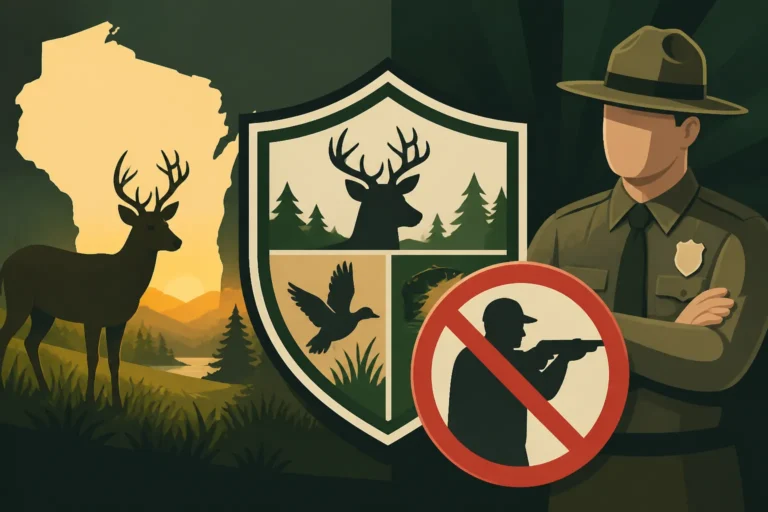
It’s a gut-wrenching feeling, isn’t it? You’re out enjoying the woods or the marsh, doing things by the book, and then you see it: someone clearly breaking the rules, disrespecting the game, and undermining everything ethical hunting stands for. That knot of anger and frustration can quickly turn into helplessness if you don't know what to do next. This guide is here to empower you with the knowledge and steps needed to effectively report a poacher in Wisconsin, ensuring our wild resources are protected for everyone.
Why Reporting Poaching Matters (And Why It's Hard)
We've all been there. You're deep in the hardwoods, perhaps hoping for a chance at a nice buck or enjoying a quiet morning turkey hunt, and you witness something that just doesn't sit right. Maybe it's a vehicle spotlighting a field, shots fired well after legal hours, or a group of hunters clearly exceeding the bag limit. Your heart sinks, a mix of anger and disappointment boiling up because you know what you're seeing isn't just a mistake—it's poaching, and it undermines everything ethical hunters strive for.
The Frustration of Witnessing a Violation
Seeing a wildlife violation unfold can be incredibly frustrating, even infuriating. There's this immediate internal conflict: do you confront them? Do you just let it go? The natural instinct to uphold fair play and protect the resource clashes with the very real dangers of confronting someone who is already breaking the law. It’s not your job to be a law enforcement officer, and doing so can put you in a dangerous situation, which is something we absolutely want you to avoid.
The impact of poaching goes far beyond a single illegal animal. When someone shoots a deer out of season, or takes more than their authorized limit, it directly impacts the overall deer population, throwing off carefully crafted management plans. For example, if folks are illegally harvesting antlerless deer, it can directly affect herd reduction goals in specific Deer Management Units. Poaching of game animals, especially deer, can seriously skew the data that the Wisconsin Department of Natural Resources (DNR) uses to set quotas and manage seasons, like those outlined in the various Wisconsin Deer Seasons and Zones. This kind of illegal activity also depletes opportunities for law-abiding hunters, diminishing the very resource we all work so hard to conserve through our license fees and ethical practices. It makes a mockery of fair chase and spoils the experience for everyone who follows the rules.
Overcoming Hesitation: Why Your Report is Crucial
It's completely normal to feel a bit hesitant about reporting a violation. Maybe you think it's not a big enough deal, or you're worried about getting involved, or even fear some kind of retaliation. These are valid concerns, and many hunters share them. Perhaps you didn't get a perfect license plate number, or you only saw a glimpse of the perpetrator. It's easy to convince yourself that your incomplete information won't be helpful.
However, it’s vital to understand that every single report, no matter how minor it seems to you or how incomplete the details feel, contributes to a larger picture. Conservation wardens can’t be everywhere all the time, watching every square mile of Wisconsin's vast hunting lands. They heavily rely on the eyes and ears of responsible citizens, especially hunters, who are often the ones out in the field and in a position to observe these activities. Even a small piece of information can be the missing puzzle piece that helps them build a case, connect dots between multiple incidents, or direct their patrols more effectively. Your report could be the difference between a repeat offender continuing their illegal activities and getting caught, protecting countless animals and upholding the integrity of our hunting traditions.
How to Report a Poacher in Wisconsin: Step-by-Step
When you witness a wildlife violation, knowing exactly how to report it quickly and effectively can make all the difference. The Wisconsin DNR has clear channels set up for this very purpose, designed to make it as easy as possible for you to get crucial information into the right hands.
The Wisconsin DNR's Violation Hotline: 1-800-TIP-WDNR
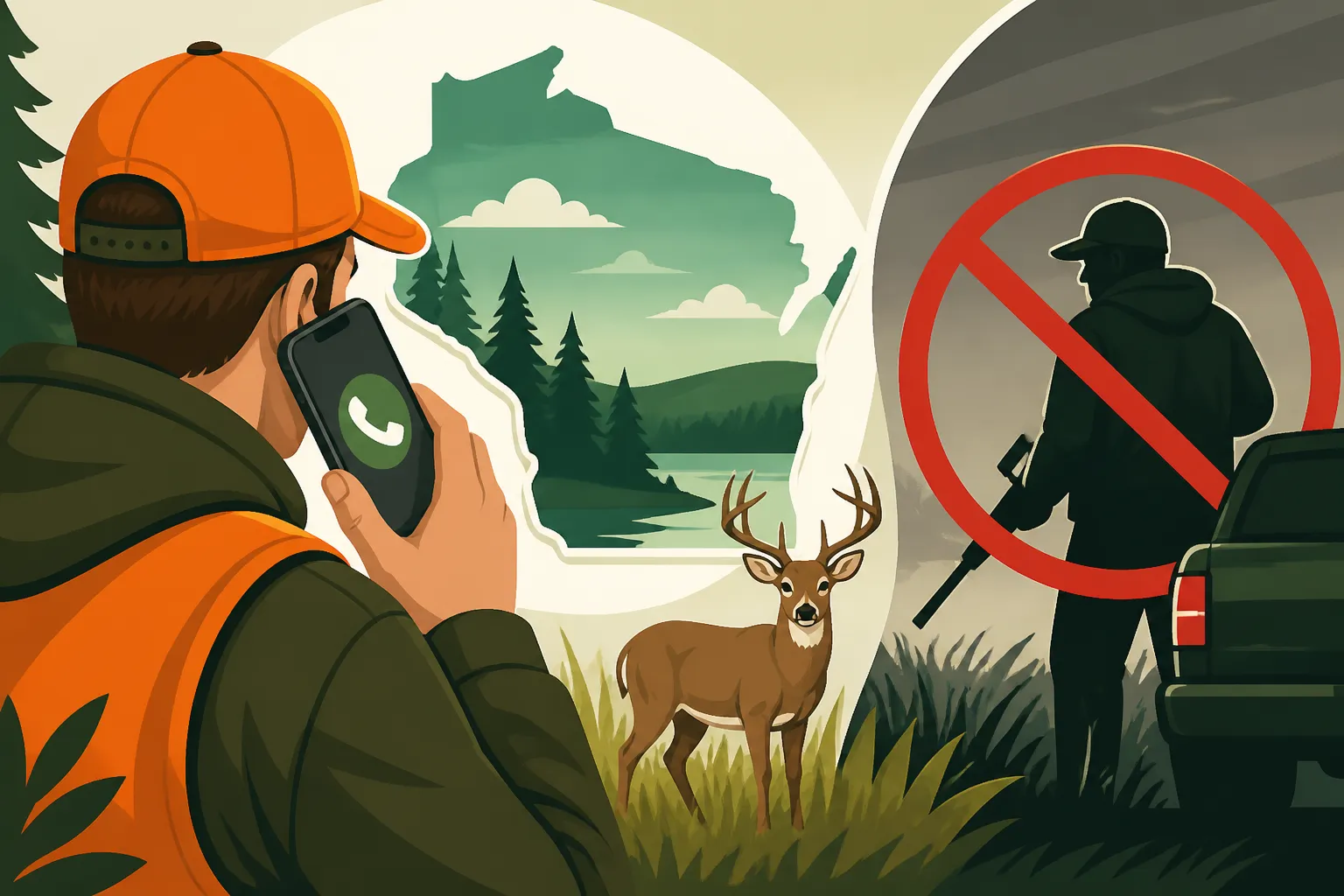
The absolute best and most immediate way to report a poacher in Wisconsin, especially for active or urgent situations, is to call the DNR’s confidential hotline: 1-800-TIP-WDNR (1-800-847-9367). This hotline is staffed 24 hours a day, 7 days a week, meaning you can get through to someone whenever a violation occurs, day or night.
When you call, you'll be connected with a dispatch operator who will ask you a series of questions. It’s important to stay calm and provide as much detail as you can. You can absolutely remain anonymous, and your identity will be protected if you choose to share it. The key pieces of information they'll be looking for include:
- Location: Be as specific as possible. This could be a street address, a cross-section of two roads, specific GPS coordinates (many phone apps can provide this, and tools like the Wisconsin Hunt Wild App are incredibly helpful), or identifiable landmarks like a specific cornfield, a bridge, or a unique tree line. The more precise you are, the faster a warden can respond.
- Time and Date: When exactly did you observe the violation? This helps establish a timeline for the investigation.
- Description of Individuals Involved: How many people were there? What did they look like? Age, hair color, height, build, and especially clothing descriptions (e.g., "man in a red hoodie and camouflage pants").
- Vehicle Description: This is often the most critical piece of evidence. Get the make, model, color, and most importantly, the license plate number (even a partial plate is better than none!). Note any distinguishing features like bumper stickers, rust spots, or equipment racks.
- Specific Violation Observed: What exactly did you see? Was it spotlighting? Shooting outside of legal hours? Taking an illegal deer? Dumping carcasses? Hunting in a prohibited area? The more specific you are, the better.
- Direction of Travel: If the individuals or vehicle left the scene, which direction did they go?
Remember, while your instinct might be to intervene, it's safer and more effective to observe from a distance and make that call. Do not approach or confront individuals you suspect are poaching. Your safety is paramount.
Online Reporting and Other Methods
For less urgent violations, or if you prefer to type out a detailed report with specific timestamps and locations, the Wisconsin DNR also offers an online reporting form. You can find this form on the DNR’s official website. This method is excellent for situations where you've witnessed something in the past and have comprehensive notes, or if the situation isn't unfolding right now. For example, if you discovered a deer carcass dumped illegally and want to provide photos along with your report, the online form might be a good option.
While the hotline is always the primary recommendation for immediate action, you might also have the option to contact a local conservation warden directly if you know their contact information. You can often find warden contact details for specific counties on the DNR website. However, for most situations, especially those requiring a rapid response, the 1-800-TIP-WDNR hotline is designed to get the information to the nearest available warden as quickly as possible.
When it comes to gathering information, some digital tools can be surprisingly helpful. While GoHunt primarily focuses on Western state hunting information and mapping, the general principles of utilizing technology to enhance your field awareness are relevant. For instance, using a robust mapping app on your phone, like those often employed for detailed scouting, helps you pinpoint your exact location or the location of a violation. Knowing how to use these apps to drop pins and record coordinates, or to identify specific property boundaries by referencing tools for Finding Wisconsin Property Lines, can significantly improve the accuracy of your report.
Here’s a quick comparison of reporting methods:
| Feature | 1-800-TIP-WDNR Hotline | Online Reporting Form | Direct Warden Contact (if known) |
|---|---|---|---|
| Urgency | Best for immediate, active violations | Best for non-urgent or past violations | Depends on warden availability, generally non-urgent |
| Availability | 24/7 | Always accessible, but response time varies | Varies (business hours) |
| Anonymity | Yes, can report anonymously | Yes, can report anonymously | Possible, but more likely to require identification |
| Information | Verbal, concise, critical details | Detailed text, can attach photos/documents | Direct conversation, potentially detailed |
| Response Time | Fastest, directs to nearest warden | Slower, allows for investigation planning | Varies, dependent on individual warden schedule |
| Best Use Case | Active spotlighting, shots out of season | Discovering illegal dumps, past observed violations | Non-emergency questions or follow-ups |
What Information to Collect (And How to Do It Safely)
Making an effective report means providing as many verifiable details as possible, but always, always prioritizing your safety. You're an observer, not an enforcer.
Key Details for a Successful Report
Think of yourself as a detective, piecing together a puzzle. The more specific and factual your observations, the more valuable your report becomes. When recounting what you saw, try to stick to the "who, what, when, where, and how" framework, with a special emphasis on vehicle information.
Let's imagine a scenario: You're still-hunting a timber block near a county road, an activity many enjoy while Hunting the Wisconsin Rut in November. You hear a shot, then see a truck pull up to the field edge, two individuals quickly load a deer into the bed, and speed off.
Here's how you might break down the critical details:
- Who: Two male subjects. One was heavy-set, wearing a bright orange hat (even though it's not gun season, for instance, or they might be violating Wisconsin's Blaze Orange and Pink Rules), a dark jacket, and jeans. The other was thinner, wearing full camo.
- What: They loaded a deer, specifically an antlerless deer, into the back of a blue pickup truck. The shot sounded like a high-powered rifle, which might be illegal if you're in a shotgun-only zone, as per Legal Firearms for Wisconsin Deer regulations.
- When: Approximately 8:30 AM on October 27th.
- Where: On County Road D, about half a mile north of Highway 13, near the large red barn with the collapsing roof. You could even use your mapping app to give exact GPS coordinates if possible.
- How: They quickly drove off northbound on County Road D.
- Vehicle: This is often the gold standard. "It was a dark blue Ford F-150, older model, with a significant dent in the passenger side door. The license plate was partially obscured by mud, but I saw 'W-I-S' and then '4-5-T' – maybe WIS 45T?" Even that partial information is incredibly helpful! Note if it's a truck, SUV, sedan, and any unique features like a toolbox, specific tires, or an antenna.
Always, always observe from a safe distance. Do not let your presence be known, and never, under any circumstances, approach individuals you suspect of poaching. They are already engaging in illegal activity, and there’s no telling how they might react to being confronted. Your primary role is to be a good witness.
Documenting Evidence (Within Legal & Safety Limits)
In today's world, almost everyone carries a smartphone, which can be a powerful tool for documenting evidence. If you can safely and discreetly take photos or videos of the violation without drawing attention to yourself, do so. A clear photo of a license plate, a vehicle, or the individuals from a distance can significantly strengthen a warden's case.
However, discretion is key. If taking out your phone and snapping pictures puts you at risk, don't do it. Your safety is far more important than any photo. Generally, in public spaces, you have the right to record what you see. If you're on public hunting land, like those accessible through the Public Hunting Land in Wisconsin program, and you observe a violation, you are within your rights to document it. However, if you are on private land without permission, or if the act of recording draws attention to you, it's best to refrain.
Even without photos or videos, your detailed written or verbal account is still incredibly valuable. Wardens are trained to investigate and corroborate information. Your report might be the initial tip that leads them to increase patrols in an area, conduct surveillance, or interview suspects based on the description you provided. Remember, even if you can't get every detail, the information you do provide can set a crucial investigation in motion. For instance, if you saw a bait pile in a county with Wisconsin Baiting and Feeding Bans, even without seeing who put it there, your report allows a warden to investigate the site and look for other evidence.
The Follow-Up and Impact of Your Report
After you’ve done your part and reported a suspected poaching incident, it’s natural to wonder what happens next. You might not always see immediate visible action, and that can be a bit disheartening, but rest assured, your report does make a difference.
What Happens After You Make a Report?
When you call 1-800-TIP-WDNR or submit an online report, that information doesn’t just disappear into the ether. It goes directly to the Wisconsin DNR’s conservation wardens, who take every report seriously. Once a report is received, wardens in the relevant area are notified and begin their investigation.
However, an investigation isn't always a quick process you can observe from the sidelines. Sometimes, it might involve:
- Increased Patrols: Your tip might lead to wardens spending more time patrolling the area you reported, looking for the vehicle or individuals described.
- Surveillance: If the violation is chronic or particularly egregious, wardens might set up surveillance to catch the perpetrators in the act.
- Information Gathering: They might cross-reference your information with other reports, previous known offenders, or local intelligence. For instance, if you reported an individual without a proper Wisconsin Hunting Licences and What They Cost, they could check license records.
- Evidence Collection: If you reported something like an illegal deer carcass, wardens might visit the site to collect physical evidence, which can sometimes include tracking a deer with specific tactics even after dark, as described in "Blood Trailing After Dark in Wisconsin".
- Interviews: Based on vehicle descriptions or other identifying information, they might conduct interviews with potential suspects.
It’s important to understand that wardens need to gather sufficient evidence to prosecute a case. This takes time, and sometimes, despite everyone’s best efforts, there isn’t enough evidence for a conviction. Don’t interpret a lack of immediate visible action as your report being ignored. Often, your report contributes to a larger pattern that eventually leads to an arrest down the line. The wardens appreciate every single tip, as it helps them protect the valuable resources we all care about.
Protecting Your Identity and Encouraging Action
One of the most common reasons people hesitate to report a violation is the fear of their identity being revealed. The Wisconsin DNR understands this completely. When you call 1-800-TIP-WDNR, you have the option to remain completely anonymous. If you choose to provide your name and contact information, it is kept confidential and generally not shared. Your safety and privacy are a priority. In cases where a reward might be offered for information leading to a conviction, you can still receive that reward while protecting your identity.
Your decision to report a poacher has a profound impact that extends far beyond a single incident. You are directly contributing to the protection of Wisconsin’s wildlife, ensuring the health and sustainability of species like the White-Tailed Deer Across Wisconsin. You are helping to uphold the principles of fair chase and ethical hunting that are fundamental to our heritage. When violations like illegal harvesting or improper baiting (especially in banned areas, as detailed in "Hunting Without Bait in a Banned County") go unreported, they send a message that such actions are acceptable, which couldn't be further from the truth.
By stepping up and reporting, you're not just being a "snitch"—you're being a responsible conservationist. You're safeguarding the future of hunting and fishing in our beautiful state for generations to come. Every report, every piece of information, helps to deter illegal activities and ensures that those who break the law face appropriate consequences, which can range from fines to loss of hunting privileges, as outlined in Wisconsin Wildlife Violation Penalties. It’s about protecting the resource for everyone who cherishes it, from the dedicated hunter to the casual wildlife observer.
Disclaimer
The information provided in this article is for general guidance and informational purposes only, and does not constitute legal advice. Hunting regulations and laws can change, and it is always the hunter's responsibility to consult the most current Wisconsin Department of Natural Resources (DNR) regulations and state statutes before engaging in any hunting activities.