Coyote Calling in Wisconsin Farm Country
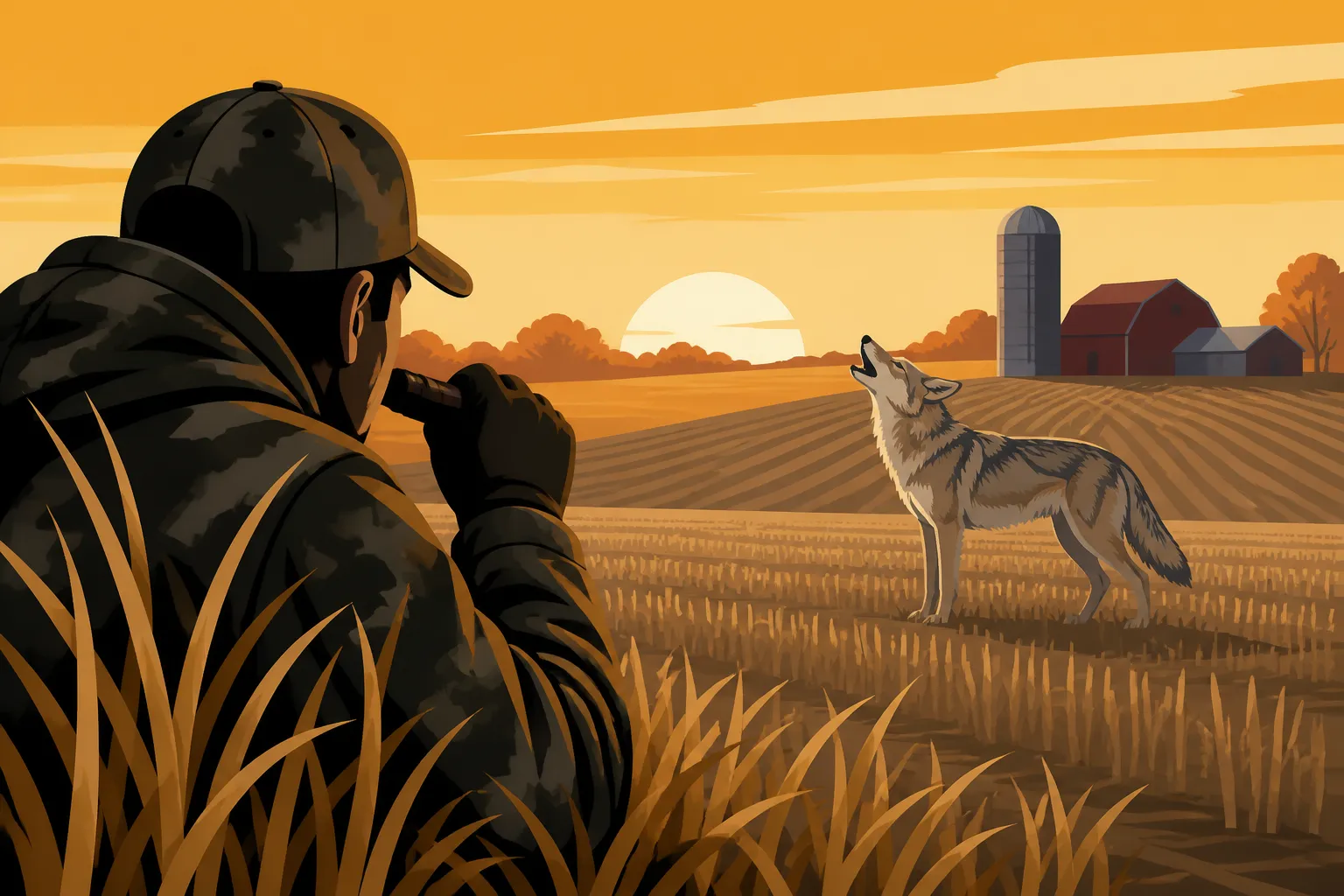
There's nothing quite like the challenge of calling coyotes in Wisconsin's sprawling farm country. You might have found yourself setting up on a promising field edge, calling diligently, only to have a seasoned coyote skirt the timber line or vanish into a standing cornfield without ever offering a shot. It's frustrating, to say the least, especially when these intelligent predators seem to read your mind. This guide is all about equipping you with the knowledge and tactics to outsmart those wary Wisconsin farmland coyotes, turning those elusive encounters into successful hunts.
Understanding Coyote Behavior in Farmland Environments
Coyotes in agricultural landscapes are a different breed, figuratively speaking, from their counterparts in the deep northwoods. They've adapted to a world filled with human activity, constant pressure, and a unique blend of open fields and secluded cover. To call them effectively, you first need to truly understand their day-to-day lives in this environment.
Adapting to Pressure and Habitat
One of the biggest hurdles you'll face when targeting coyotes in Wisconsin farm country is the sheer amount of pressure they experience. Between farmers trying to protect livestock, landowners keen on reducing deer predation, and other hunters and trappers, these coyotes are often on high alert. This means they've learned to be incredibly wary of anything out of the ordinary—a strange sound, an exposed silhouette, or a vehicle left carelessly in view. Unlike some of the less-pressured areas, a farm country coyote won't typically come charging in blindly. They'll circle, use available cover, and often try to get downwind to confirm what they're hearing.
Their habitat is a patchwork quilt of resources. Expansive cornfields and soybean fields offer temporary, dense cover during the growing season, acting as perfect bedding areas and travel corridors. Once these fields are harvested, the cover shrinks dramatically, pushing coyotes into the remaining woodlots, brushy fencelines, and drainage ditches. These linear features become critical travel routes and ambush points, connecting larger pockets of cover or offering passage between food sources. Understanding these shifts with the seasons is key to predicting where they might be resting or moving.
Food sources in farmland are abundant and varied. Rodents like voles and mice thrive in field edges and grassy areas, providing a consistent, if small, food supply. Rabbits are another primary food source, often found in thickets and brush piles, making rabbit distress calls highly effective. During the fawning season, deer fawns become a significant prey item, and in some areas, coyotes might even target waterfowl or turkey poults. For the farmer, this also means the occasional nuisance of livestock predation, further increasing the pressure on these animals. Your calling strategy needs to reflect this dynamic food availability, mimicking what a coyote would naturally be hunting.
Reading the Landscape for Coyote Hotspots
Successfully calling coyotes in farm country hinges on your ability to read the landscape like an open book. Forget the vast, unbroken forests; here, it's all about the subtle transitions and forgotten corners. You need to identify those key features that offer a coyote the best combination of security, travel, and hunting opportunities. Think about those areas where the open world meets dense cover.
Field edges are quintessential coyote hotspots. A coyote can use the cover of a woodlot or a tall fencerow, peering out into an open field to spot potential prey, or to assess a call before exposing itself. Similarly, brushy draws and drainage ditches, especially those with cattails or dense shrubs, provide excellent travel lanes that allow coyotes to move undetected across otherwise open ground. These linear features are often overlooked by casual observers but are goldmines for the savvy predator hunter.
Standing cornfields, while active, are incredibly tricky during the growing season. They offer unparalleled concealment for coyotes, making them difficult to locate or call out. However, once harvested, the remaining stubble provides a different kind of opportunity. Coyotes will often patrol these fields for dropped grain or rodents attracted to it. Look for abandoned farmsteads with overgrown buildings or old machinery, small thickets, or even just a particularly brushy fenceline that offers a bit more security than the surrounding fields. These seemingly insignificant pockets of cover can be prime bedding or staging areas. Tools like the Wisconsin DNR's "Hunt Wild" app or commercial mapping software like GoHunt can be invaluable for identifying these features from an aerial perspective. Taking the time to use resources like Scouting With the Wisconsin Hunt Wild App or applying principles similar to Reading Aerial Photos for Coulee Deer (adapting for flatland features like field edges and isolated woodlots) will dramatically increase your success.
Essential Calling Strategies for Farm Country Coyotes
Calling coyotes in Wisconsin's agricultural heartland requires a nuanced approach. These aren't the coyotes that will sprint across a quarter-mile of open ground to investigate a single squawk. They're smart, they're cautious, and they've heard it all before. Your strategy needs to reflect that experience.
Mastering Sound Selection and Sequences
Choosing the right sound and delivering it in a convincing sequence is paramount. In farm country, where coyotes are often heavily pressured, realism and variety can make all the difference. Distress calls are your bread and butter, especially those mimicking common prey animals in the area. A rabbit distress, such as a cottontail or jackrabbit squeal, is almost universally effective because rabbits are a staple food source year-round. Other distress sounds like a fawn bleat (particularly during late spring and summer) or a bird distress can also trigger a coyote's hunting instinct.
Beyond distress calls, don't underestimate the power of coyote vocalizations. Howls can be used for locating coyotes, especially early morning or late evening, as a challenge to another coyote, or to provoke a territorial response. A simple "lone howl" followed by silence can often get a response, letting you pinpoint their general location. Pup distress calls, which mimic young coyotes in danger, can be incredibly effective, especially when adult coyotes are actively raising pups. Many seasoned hunters swear by them, as they tap into a protective instinct that can override caution. The key with all these calls is to use short, realistic sequences. Don't overdo it. A few short bursts of distress, followed by long periods of silence, is often more effective than continuous calling. Coyotes in pressured areas often get wary quickly, and less volume, especially on clear, calm days, can actually be more inviting. They're more likely to investigate a distant, subtle sound than a blaring alarm.
Setup and Concealment for Success
Your setup is arguably more critical in farm country than in almost any other environment. With open fields and limited cover, a coyote can spot you from a long distance. First and foremost, always consider the wind. Coyotes will almost always circle downwind to scent-check what they're approaching. You need to set up so the wind carries your scent away from where you expect the coyote to approach, but ideally, you also want a clear shooting lane downwind. This often means positioning yourself on the edge of cover with good visibility into the open area.
Natural concealment is your best friend. Utilize anything available: a large hay bale, the edge of a standing cornfield, a brush pile, a slight rise in elevation, or even a thick fenceline. Breaking up your silhouette against the skyline is vital. Wearing camouflage that blends with the dormant fields and tree lines of late fall or winter is essential. Pay attention to the sun's position, too; having it at your back puts the coyote looking directly into it, often masking your presence and hindering their ability to spot you.
If hunting with a partner, coordinate your positions. One person can be the primary caller, while the other positions themselves 50-100 yards away, covering a different approach angle, particularly the downwind side. This "caller-shooter" setup significantly increases your chances, as one person can focus on calling while the other remains absolutely still and alert for approaching coyotes. Deploying a ground blind can also be highly effective. Whether you're using a commercially available pop-up blind or simply Brushing In a Blind on a Field Edge using local vegetation, the added concealment can give you a critical edge when a wary coyote is scrutinizing your position. For public lands, keep in mind rules about leaving blinds overnight, but for a single-day setup, they're fantastic.
Patience and Persistence in the Field
Coyote hunting, especially in high-pressure farm country, demands a heavy dose of patience. These aren't always quick hunts. A coyote might not come charging in like a starved puppy; instead, it might approach slowly, pausing frequently, using every bit of cover to its advantage. Sometimes, they'll hang up at 200-300 yards, trying to pinpoint the source of the sound without fully committing. This is where your ability to remain absolutely motionless and scan thoroughly becomes paramount.
Don't give up on a stand too quickly. Many experienced callers recommend waiting at least 15-20 minutes, sometimes even 30 minutes, after your last call sequence before packing up. A coyote might have been bedded down a half-mile away, and it simply needs more time to cover the distance. Continuously scan the entire visible area, paying close attention to every movement, no matter how subtle. A flick of an ear, a shadow that seems out of place, or a sudden stop by a deer in the distance could signal a coyote's approach.
If a coyote hangs up, try subtle, short call sequences to entice it closer, or switch to a different distress call altogether. Sometimes, a series of soft whimpers or whines can be enough to push them over the edge. Persistence also means being willing to move if a setup isn't producing. If you've called for a good duration with no activity, don't be afraid to relocate to a new hotspot. The more ground you cover, and the more different setups you try, the higher your odds of encountering an active coyote. It’s a game of chess, not checkers, and the patient hunter often wins.
Gear and Techniques for Wisconsin Farmland Calling
Having the right tools for the job can make a world of difference when you're pitting your wits against clever coyotes. From the calls themselves to the optics you peer through, every piece of gear plays a role in your success.
Recommended Calls and Electronics
When it comes to calls, you have two main categories: mouth calls and electronic callers. Both have their place in a Wisconsin farm country coyote hunter's arsenal. Mouth calls, including hand calls and diaphragm calls, offer incredible versatility and realism. They allow you to vary the volume, pitch, and inflection of sounds instantly, which can be crucial when trying to coax in a wary coyote. A good open-reed hand call can produce everything from rabbit distress to various howls and pup yelps, giving you flexibility without relying on batteries. Diaphragm calls, often used by turkey hunters, are great for hands-free operation, allowing you to maintain your rifle position while calling.
Electronic callers (e-callers) bring a whole new level of realism and convenience. These devices can play a vast library of high-quality sounds at precise volumes, often controllable via a remote. This remote control is a game-changer, allowing you to place the speaker away from your position, drawing the coyote's attention away from you. This is especially useful in open farmland where concealment is at a premium. Modern e-callers from brands like FoxPro or ICOtec offer sounds specifically designed for pressured predators, mimicking everything from an injured fawn to a coyote pup in distress. When researching different models or sounds, a resource like GoHunt can provide reviews and comparisons to help you make an informed decision based on what other hunters find effective. Consider specific sounds like "dying rabbit," "woodpecker distress," or various "pup yelps" as they often prove highly effective in Wisconsin's agricultural areas.
Optics and Firearm Considerations
Optics are non-negotiable for farm country coyote hunting. You're often dealing with vast expanses, and coyotes have an uncanny ability to materialize at long distances or remain on the fringes of visibility. High-quality binoculars (8x or 10x magnification) are essential for scanning field edges, tree lines, and distant cover. Think about Binocular Choice for Wisconsin Whitetails – the same principles apply here for picking out subtle movements. A spotting scope can also be incredibly useful for confirming distant shapes or observing a coyote's behavior without moving your head. Rangefinders are also critical to accurately gauge distances, especially for those longer shots across fields.
For firearms, you have a few choices depending on your preferred style of hunting and the specific terrain. For longer shots across open fields, a varmint rifle chambered in a flat-shooting caliber like .223 Remington, .204 Ruger, or 22-250 Remington is ideal. These cartridges offer excellent accuracy and minimal bullet drop at typical coyote ranges. Pair these with a good quality scope that performs well in varied light conditions, similar to considerations for Rifle Scopes for Low-Light Timber, as coyotes are often most active during dawn and dusk. For close-quarters encounters in brushy creek bottoms, woodlots, or around farm buildings, a shotgun loaded with buckshot can be incredibly effective. A 12-gauge with 3-inch shells of #4 buck or even BB shot can deliver a devastating pattern at close range, giving you an advantage in thicker cover where quick shots are necessary.
Legalities and Best Practices
Before you head out, make sure you're well-versed in Wisconsin's specific hunting regulations for coyotes. Generally, coyotes are considered an unprotected species in Wisconsin, meaning there's usually a continuous open season, but it's always best to check the current DNR regulations for any changes or specific county rules. Pay close attention to legal shooting hours, especially if you plan on hunting during low-light periods. For instance, if you're thinking about night hunting, you'll need to understand the specifics of Night Hunting Rules for Wisconsin Coyotes, which often come with additional restrictions on firearms, lighting, and permits.
Table: Common Coyote Calling Scenarios & Recommended Approaches
| Scenario | Call Type | Recommended Call Volume | Calling Sequence | Concealment Priority |
|---|---|---|---|---|
| Open Field Edge | Rabbit Distress, Fawn Bleat | Low to Medium | 20-30 sec distress, 2-3 min silence | Utilize natural breaks, low profile, downwind setup |
| Woodlot/Brushy Draw | Pup Distress, Coyote Howls | Medium | Short howls, 1-2 min silence, pup distress | Dense cover, avoid silhouetting |
| Pressured Area | Subtle Distress, Whimpers | Low | 10-15 sec distress, 3-5 min silence | Extreme caution, ground blind, remote e-caller |
| Cold Call (No Known Coyotes) | Lone Howl, Howl & Reply | Medium to High | 30 sec howl, 5 min silence, listen | Good vantage point to scan |
| Coyote Hung Up | Soft Distress, Whines | Very Low | 5-10 sec soft whimpers, long silence | Absolute stillness, minimal movement |
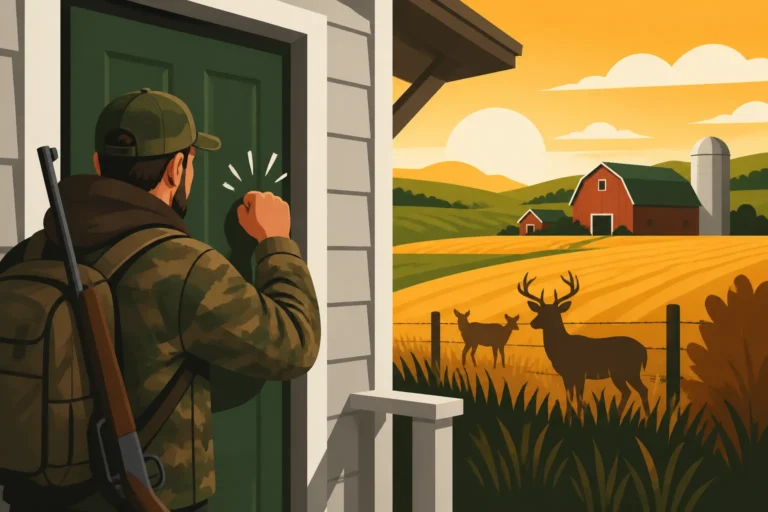
Always obtain proper landowner permission before hunting on private property. This is not just common courtesy but a legal requirement. Read up on Getting Private Land Permission in Wisconsin for tips on how to approach landowners respectfully. Even if coyotes aren't a game species in the traditional sense, treating the land and its owner with respect is paramount. Remember that hunting is a privilege. Be ethical in your harvest, take clean shots, and make every effort to recover any animal you shoot. Understanding the ecology of Coyotes and Bobcats in Wisconsin can also help you appreciate the role these predators play in the ecosystem, even as you seek to manage their numbers.
Disclaimer
Please note: Hunting regulations and seasons in Wisconsin can change. Always consult the most current Wisconsin Department of Natural Resources (DNR) regulations and obtain all necessary licenses and permits before engaging in any hunting activity. This guide is for informational purposes only and does not supersede official DNR guidelines.