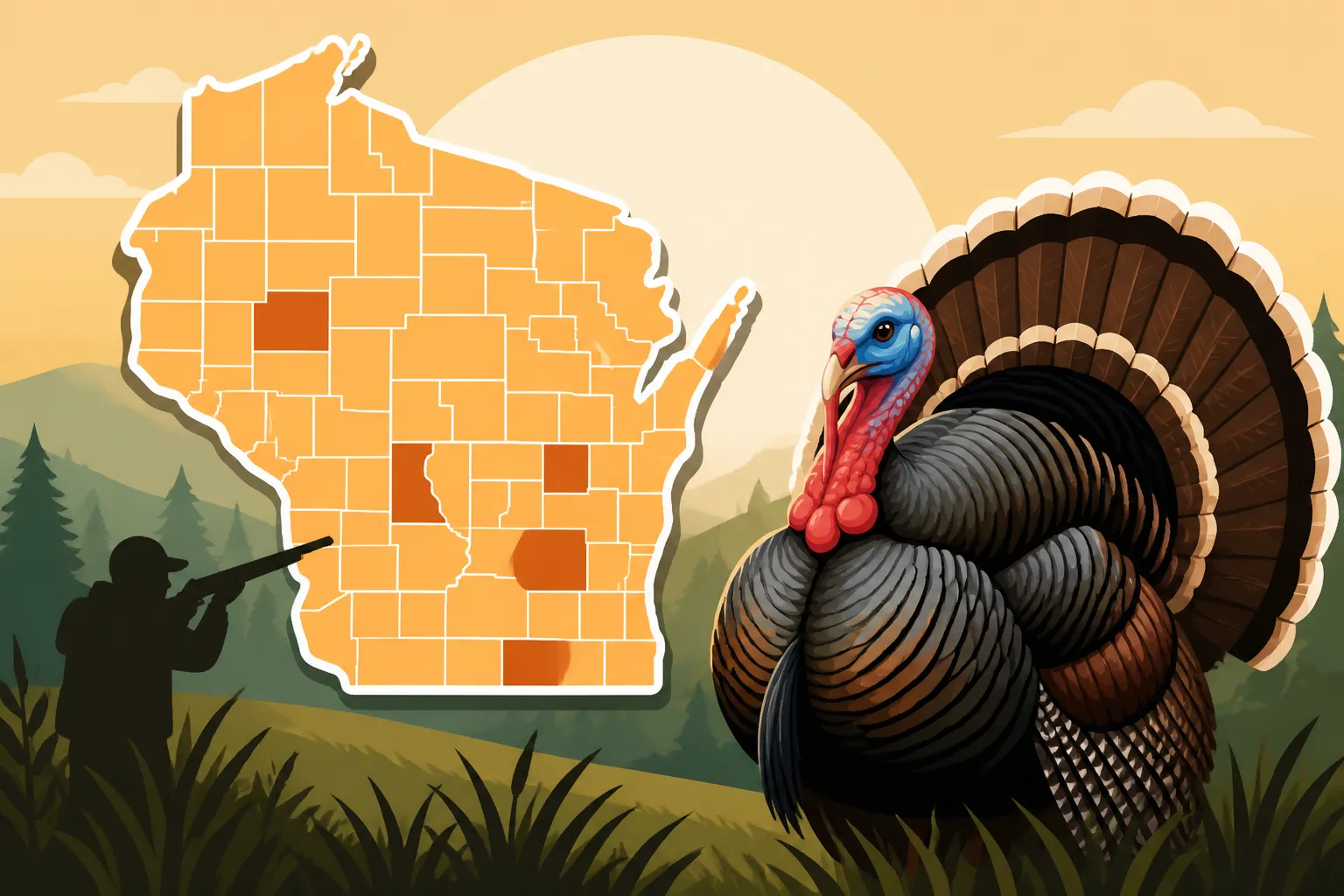
Best Wisconsin Counties for Turkeys
Trying to pinpoint the absolute best counties for turkey hunting in Wisconsin can feel like searching for a needle in a haystack, especially when you're short on time and want to make the most of your spring or fall season. It's not just about finding any turkeys; it's about finding consistent action and healthy populations. This comprehensive guide will walk you through the factors that make certain Wisconsin counties turkey magnets, revealing some of the top contenders and giving you the tools to scout out your own prime locations.
Understanding Wisconsin's Turkey Landscape
Before we dive into specific counties, it’s really helpful to understand what makes Wisconsin a fantastic turkey hunting state and why some areas hold more birds than others. The landscape here is incredibly diverse, from the rugged coulees of the Driftless Area to the vast forests of the North, and each offers different advantages and challenges for wild turkeys.
The Triumph of Turkey Restoration in Wisconsin
It's truly remarkable how wild turkeys have bounced back in Wisconsin. Not that long ago, they were practically non-existent. Over decades, through dedicated efforts by conservationists and the DNR, populations were successfully reintroduced, primarily starting in the southwestern Driftless Area. From those initial flocks, turkeys have expanded their range across nearly the entire state. This history is why you’ll often find the most robust, well-established populations in those areas that were part of the earliest restoration efforts, though their spread has been impressive. It's a testament to good wildlife management and the adaptability of these incredible birds. For a deeper dive into this conservation success story, you might enjoy reading about How Turkeys Were Restored to Wisconsin.
Habitat: The Key to Turkey Densities
At the heart of any strong turkey population is suitable habitat. Turkeys thrive in areas that offer a mix of mature hardwood forests for roosting and foraging, open fields or agricultural lands for feeding, and dense cover for nesting and escape.
- Roosting Trees: Large, mature trees, especially oaks, hickories, and pines, are crucial for roosting. Turkeys need sturdy branches to spend the night safely away from predators.
- Food Sources: Acorns, beechnuts, and other mast crops from forests are vital, especially in fall and winter. In agricultural areas, waste grain from corn, soybeans, and other crops provides a consistent and high-energy food source. Insects, berries, and green vegetation fill out their diet during warmer months.
- Nesting and Brood Rearing: Hens need good nesting cover, often found in dense grasses, brushy field edges, or thicker timber. Once poults hatch, they require areas with abundant insects and protective cover to grow.
Counties with this ideal mix tend to have higher turkey densities and more consistent hunting opportunities.
Factors Influencing Local Turkey Abundance
Beyond just general habitat, several other factors play into how many turkeys you'll find in a particular area, and how callable they might be.
- Winter Severity: While turkeys are hardy, extremely harsh winters with prolonged deep snow can impact survival, particularly in northern regions where food might be buried for extended periods. The Driftless Area, with its milder winters and diverse topography, often offers better winter survival rates.
- Predation: Coyotes, bobcats, foxes, and raccoons are all predators of turkeys and their nests. While natural predation is part of the ecosystem, exceptionally high predator numbers in specific locales can impact turkey recruitment.
- Hunting Pressure: High hunting pressure can make birds warier and harder to call. Areas with vast public lands might spread out pressure, but easily accessible spots can become "call-shy." This is why it's always important to think about finding ground others walk past, even in well-known turkey areas.
- Land Use: Counties with a mosaic of private and public land, especially those with agricultural fields bordering large timber blocks, often provide the perfect blend of food and cover that turkeys crave. This kind of diversity reduces stress and promotes healthy breeding.
Top Counties for Wisconsin Turkey Hunting
Alright, let's get down to brass tacks. While turkeys can be found in almost every county in Wisconsin, some consistently stand out for their robust populations and excellent hunting prospects. These are often in regions that naturally offer that ideal mix of habitat we just talked about.
Driftless Area Powerhouses
The Driftless Area, primarily in southwestern Wisconsin, is often considered the undisputed king for wild turkeys. Its unglaciated landscape of steep ridges, deep coulees, and river valleys creates a perfect mosaic of hardwoods, open fields, and brushy draws. The milder winters here also contribute to better overwinter survival rates.
- Grant County: Situated in the heart of the Driftless, Grant County consistently ranks high in turkey harvest numbers. Its rolling hills, mature oak forests, and interspersed farm fields provide everything a turkey needs. The sheer amount of diverse habitat means birds can spread out, but there are also plenty of prime roosting and feeding areas. If you're looking for classic Wisconsin turkey hunting, Grant County offers fantastic opportunities, especially on its numerous private lands where permission can be sought, or on smaller public parcels.
- Richland County: Just north of Grant, Richland County shares much of the same excellent Driftless topography. It boasts an abundance of hardwoods for roosting and foraging, coupled with fertile agricultural valleys. The Kickapoo River Valley, which winds through parts of Richland, offers unique bottomland timber and excellent habitat diversity. Hunters often find success targeting ridge tops and the transitions between timber and crop fields. Knowing how to adapt your tactics for this kind of ground is key. Consider strategies like Turkey Tactics for Driftless Farm Edges.
- Crawford County: Bordering the Mississippi River, Crawford County brings another layer of habitat to the Driftless mix. The river bluffs are steep and timbered, offering fantastic roosting sites overlooking bottomland fields and marshes. The mix of riverine ecosystems with classic coulee country ensures a diverse food base and plenty of cover. It's a challenging but rewarding landscape, often requiring good physical conditioning to navigate the steep terrain, but the rewards can be significant.
Central Farmland Gems
Moving eastward and northward from the Driftless, the central and southern farmland regions also offer incredible turkey hunting, often with different challenges and advantages. These areas tend to have a higher percentage of agricultural land, meaning turkeys are often patterned around crop fields, woodlots, and river bottoms.
- Sauk County: Home to parts of the Baraboo Hills, Sauk County offers a unique blend of rugged, forested hills and surrounding farmland. The Baraboo Hills provide extensive hardwood forests for roosting and foraging, while the lower lands offer abundant food in agricultural fields. Turkeys here can be found in surprising numbers, often utilizing small woodlots and creek bottoms as travel corridors between larger timber blocks and feeding grounds. Public access can be found in state natural areas and smaller county forests, but permission on private land is often the best bet.
- Columbia County: Situated near the Wisconsin River, Columbia County is a mix of agricultural fields, scattered woodlots, and river bottom timber. The Wisconsin River corridor itself creates excellent linear habitat, with mature trees for roosting and fertile soils for foraging. Turkeys here often frequent field edges, transitioning into timber. Access to private land around these river systems is often key, but public lands along the river or in smaller state wildlife areas can also hold birds. Being stealthy and knowing how to approach birds in more open country is crucial here.
- Marquette County: Further north in the sand plains region, Marquette County provides a different but productive turkey hunting experience. It's characterized by sandy soils, oak and pine barrens, and mixed agricultural fields. While not as rugged as the Driftless, the mix of cover and food is excellent. Turkeys often congregate in oak savannas and around swamp edges, moving out to feed in fields. This area sometimes offers a more open feel than the heavily timbered regions, which can make long-distance calling effective, but also means gobblers can spot you from a distance.
Northern Forest Surprises
While often more challenging due to vast expanses of timber and sometimes harsher winters, certain northern Wisconsin counties still offer fantastic turkey hunting for those willing to put in the work. These birds tend to be a bit less pressured and can offer a truly wild experience.
- Jackson County: This county acts as a transition zone between the central farmlands and the northern forests, boasting a significant portion of the Black River State Forest. This means huge blocks of public land with diverse timber types – oaks, pines, and aspen – interspersed with swamps and some agricultural edges. Turkeys here are often found along the edges of clearcuts, near water sources, and in mature oak stands. Hunting here often involves more walking and covering ground, but the reward is a less pressured bird in a beautiful setting. The vastness of the public land offers true solitude.
- Eau Claire County: Another transitional county, Eau Claire combines rolling agricultural land with significant tracts of timber, particularly along river corridors like the Eau Claire and Chippewa Rivers. These river bottoms provide excellent habitat, and the surrounding farm fields offer ample food. Turkeys can be found in good numbers, often relating to these river systems and the smaller woodlots that dot the farmland. Like other farmland counties, getting permission on private land is a significant advantage, but scouting public river access points can also pay off.
How to Identify Your Own Best Spots (Beyond County Lines)
Knowing the top counties is a great start, but true success comes from understanding why these areas are good and applying that knowledge to find your own specific hunting spots. This is where modern tools and good old-fashioned scouting come into play.
Utilizing Mapping Tools and Scouting
Gone are the days when a paper map and a compass were your only scouting tools. Today, powerful mapping applications can give you an incredible advantage. Brands like GoHunt, for example, offer detailed satellite imagery, public/private land boundaries, and topographic maps that are invaluable for pre-season scouting.
Imagine sitting at your computer, zooming in on Grant County. You can identify potential roosting sites—large timber blocks on ridge tops or along river bends. You can spot feeding areas like cut corn fields or open clearings. You can trace probable travel corridors, such as brushy fence lines, creek bottoms, or subtle benches along a coulee. By layering public land maps, you can pinpoint areas with good access that might also be overlooked. Even within a known good county, finding that specific ridge point or secluded valley where turkeys feel safe is the real secret. Don't be afraid to put boots on the ground after you've identified some promising spots on your GoHunt app – nothing beats seeing the sign with your own eyes.
Reading the Landscape for Roosts and Feeding
Once you're in a general area, you need to hone in on the details. Look for the "trifecta" of turkey habitat: roosting trees, feeding areas, and water.
- Roosts: Turkeys prefer large, sturdy trees with open canopy in protected areas for roosting, often on ridge tops, along river corridors, or over water. Droppings, primary feathers, and dusting bowls beneath these trees are telltale signs. Listen for gobblers on the roost before dawn, and try to pinpoint where they're flying down. This is an excellent tactic for Roost Hunting Wisconsin Gobblers.
- Feeding: In spring, turkeys will be in fields and clearings, looking for insects and green-up. In fall, they'll focus on mast crops in oak and hickory timber, or waste grain in cornfields. Look for tracks, scratchings in leaf litter, and droppings. These areas are where they spend the majority of their daylight hours.
- Water: Turkeys need water daily, so springs, small creeks, or ponds can act as natural focal points, especially in drier periods.
Combining these elements helps you create a mental map of turkey movement, increasing your chances of intercepting a gobbler. Using tools from GoHunt to mark these locations can help immensely when you are planning your hunt.
Understanding Hunting Pressure
Even in the "best" counties, hunting pressure can significantly impact turkey behavior. Public land, especially easily accessible parcels, can see a lot of hunters. Turkeys quickly learn to avoid roads and popular spots, becoming "call-shy" or moving to thicker cover.
- Seek Out Seclusion: Use mapping tools to find public land pockets that are a bit harder to get to. Maybe it requires a longer walk, crossing a creek, or navigating some thick brush. These are often the places where birds feel more secure.
- Timing is Everything: Weekday hunts often see less pressure than weekends. Hunting later in the spring periods can also find birds that have been pressured but are still responsive to calling, though their behavior might have changed significantly.
- Private Land Advantage: If you have access to private land, even small woodlots that connect larger timber blocks or fields, it can offer a huge advantage for finding unpressured birds. Always make sure to ask for permission well in advance and respect the landowner's property.
Tactics for Success in High-Density Areas
Even with a prime location in one of Wisconsin's top turkey counties, you need solid tactics to seal the deal. Turkeys are intelligent and wary birds, and adapting your approach to their behavior is crucial.
Dealing with Gobblers Off the Roost
While hearing a gobbler sound off from the roost is exhilarating, getting him to commit once he's on the ground can be tricky. Often, he'll fly down with hens and be reluctant to leave their company.
- Early Setup: The best strategy is to be set up well before fly-down, ideally within 100-150 yards of a known roost. Position yourself where he can see your decoys (if using them) or hear your calls, but can't see you. Setting Up Against a Big Oak can give you good cover.
- Subtle Calling: Don't overcall at first light. Start with soft tree yelps or purrs to mimic a hen on the roost. Once he flies down, a few soft yelps or clucks might be enough. If he has hens, he might pull them away. Aggressive calling too early can sometimes push him away if he's already committed to his real hens.
- Patience is Key: If he flies down and moves off with hens, resist the urge to chase immediately. Sometimes, those hens will eventually lead him away, or they might split up later in the morning, making him more responsive.
Run-and-Gun vs. Sit-and-Wait
The choice between actively pursuing gobblers (run-and-gun) and setting up in a prime location and waiting depends heavily on the terrain, the bird's mood, and hunting pressure.
- Run-and-Gun: This aggressive tactic is great for covering lots of ground, especially in large public land tracts where you're trying to locate birds. You move, call, listen, and if you get a response, you try to close the distance quickly and set up. This is particularly effective on "silent" days when birds aren't gobbling much, or when you know there are scattered birds over a large area. Run-and-Gun Turkey Tactics on Public Land can be incredibly effective when executed properly.
- Sit-and-Wait: If you've located a hot gobbler, especially one that's consistently roosting in the same area or has a regular travel pattern, setting up an ambush point and waiting can be very effective. This also works well in areas with more limited access where you want to minimize disturbance. Find a good blind or natural cover, deploy your decoys, and be patient. This often works well in more open farmland settings where you can watch a field edge.
Decoy Strategies
Decoys can be a game-changer, but they need to be used wisely, especially with pressured birds.
- Keep it Realistic: Use realistic decoys that match the current breeding stage. A lone hen early in the season might work, but later, a jake decoy with a hen can challenge a dominant gobbler.
- Proper Placement: Place decoys where a gobbler can see them from a distance, but not so close that he has to walk right on top of you to get to them. Give him some space to strut and consider his approach. Also, always place decoys so that an approaching gobbler presents a safe, ethical shot angle for you.
- Less is More: With pressured birds, sometimes no decoy, or just a single hen decoy, is better than a full spread. Decoy Placement for Pressured Birds is a crucial skill to master. If gobblers have been called in and shot over elaborate spreads repeatedly, they can become wary of them.
Summary Table: Wisconsin Turkey Hunting Hotbeds
Here's a quick look at some of the top counties, their primary attributes, and what makes them shine for turkey hunting:
| County Name | Primary Region | Key Habitat Features | Why It's Great for Turkeys |
|---|---|---|---|
| Grant County | Driftless Area | Rolling hills, mature oak forests, interspersed farm fields, deep coulees | High turkey density, excellent food sources, varied terrain, successful restoration area |
| Richland County | Driftless Area | Steep ridges, oak/hickory forests, fertile river valleys (Kickapoo), brushy draws | Strong populations, ideal mix of cover/food, milder winters, challenging but rewarding terrain |
| Crawford County | Driftless Area | Mississippi River bluffs, bottomland timber, coulees, mixed agricultural land | Diverse ecosystems, prime roosting on bluffs, varied food sources, less pressured in rugged areas |
| Sauk County | Central Farmland | Baraboo Hills (forested), surrounding farmlands, small woodlots, creek bottoms | Unique blend of rugged hills and food-rich agricultural land, good travel corridors, potential for less pressured birds |
| Jackson County | Northern Forest | Black River State Forest, oak/pine/aspen timber, swamps, agricultural edges | Vast public land, diverse timber, less hunting pressure, provides a true wilderness turkey hunt |
| Eau Claire County | Central Farmland | Rolling agriculture, river corridors (Eau Claire, Chippewa), scattered woodlots | Excellent river bottom habitat, reliable food sources, good access in specific areas, transition zone birds |
Remember, while these counties are fantastic starting points, Wisconsin offers exceptional turkey hunting across much of the state. With a little research, scouting, and the right tactics, you can find success in many other areas too. Understanding Wisconsin Spring Turkey Zones and Periods will help you plan your application and hunt effectively, and checking Wisconsin Turkey Population Trends can give you a general idea of how successful harvests have been in recent years. Good luck out there!
Disclaimer
This article is for general informational purposes only and does not constitute professional advice. Laws, prices and regulations vary by location and change over time. Consult a qualified professional for guidance on your specific situation.