Where Wisconsin Turkeys Are Densest
One of the biggest head-scratchers for any turkey hunter, whether you're a seasoned veteran or just starting out, is figuring out where the heck to even begin looking for birds in Wisconsin. Our state is vast, with incredibly diverse landscapes, and it can feel like trying to find a needle in a haystack if you don't know where to focus your efforts. This guide is here to cut through that confusion, helping you understand where Wisconsin's wild turkeys are densest and, more importantly, why they choose those spots, so you can plan your next hunt with confidence.
Understanding Wisconsin's Turkey Comeback and Distribution
It's truly a marvel how wild turkeys have bounced back in Wisconsin. Just a few decades ago, they were practically non-existent, a ghost of a bygone era. Now, they gobble from almost every corner of the state, but their distribution isn't uniform. Understanding this incredible comeback and the factors that influence where they thrive is key to finding those high-density areas.
The Incredible Restoration Story
The story of the wild turkey in Wisconsin is a testament to dedicated conservation efforts and thoughtful wildlife management. Originally native to the state, turkeys were extirpated by the early 1900s due to unregulated hunting and drastic habitat changes. Fast forward to the mid-1970s, and Wisconsin embarked on an ambitious restoration program. Rather than relying on pen-raised birds, which often struggled to adapt to the wild, the state wisely used a trap-and-transfer method. Wild turkeys from other states, primarily Missouri, were live-trapped and released into suitable habitats in Wisconsin.
These initial releases, primarily in the southwestern Driftless Area, were incredibly successful. The birds quickly adapted to the diverse terrain and abundant food sources. From those initial populations, turkeys were then trapped and transferred to other parts of Wisconsin, slowly but surely re-establishing their presence. This strategic approach, combined with changing land use and habitat improvements, allowed the turkey population to explode. You can read more about this journey in How Turkeys Were Restored to Wisconsin.
General Trends Across the State
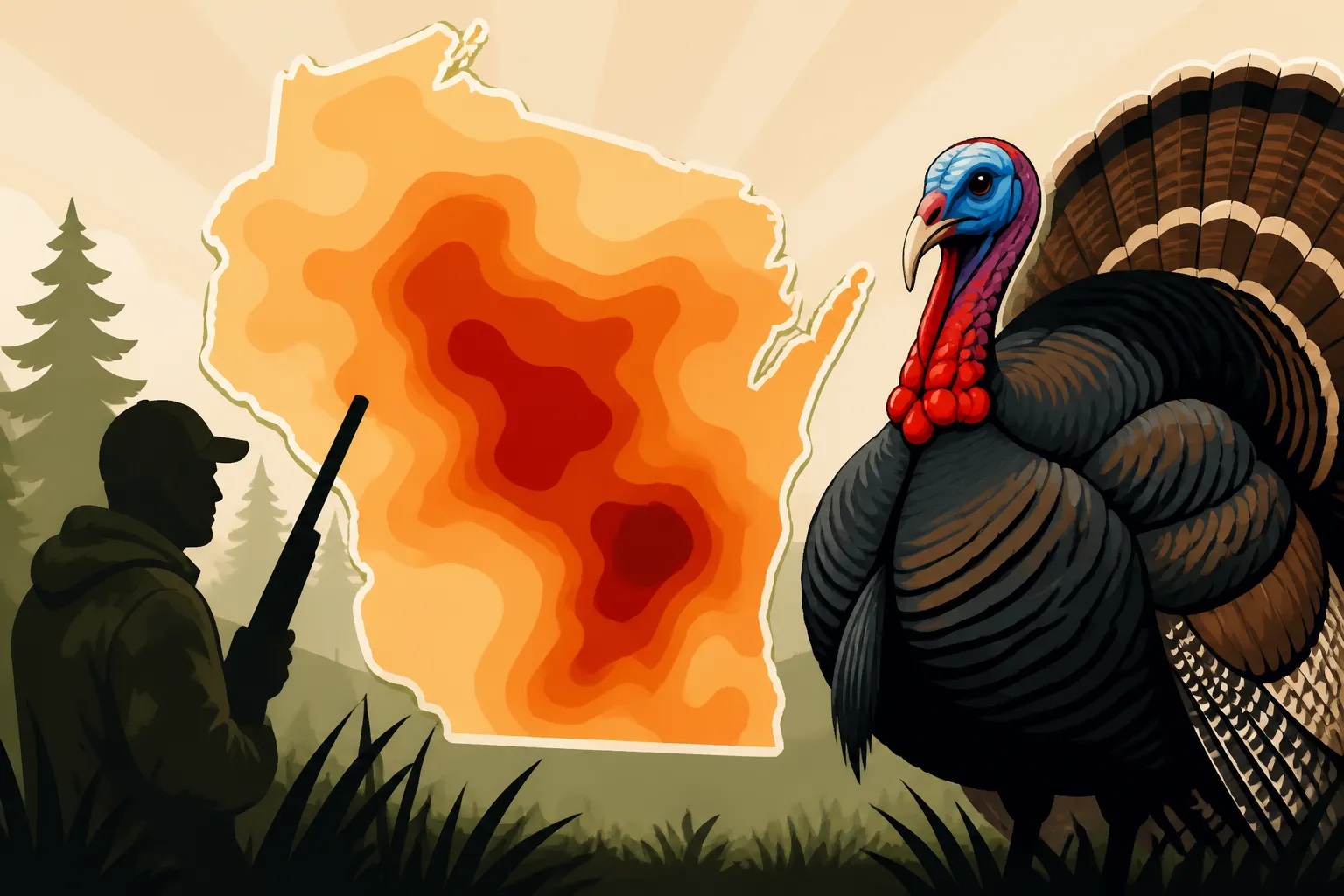
While turkeys are now widespread, their numbers, or density, vary significantly from region to region. Generally speaking, the highest densities of wild turkeys in Wisconsin are found in the southwestern and southern portions of the state. This isn't just a happy accident; it's a direct result of prime habitat, milder winters compared to the far north, and a strong agricultural presence providing consistent food sources.
As you move north into the central and especially the northern forest regions, turkey densities tend to decrease. This doesn't mean there are no turkeys up north—quite the contrary! But finding them often requires covering more ground, as they are more spread out and concentrated in specific pockets of favorable habitat. The larger, unbroken blocks of conifer forest and harsher winter conditions in the far north naturally limit how many turkeys an area can sustain. Wildlife biologists monitor these populations through various surveys, including poult-to-hen ratios and harvest data, to get an estimate of overall turkey numbers. Understanding these general trends is your first step in narrowing down your search. Wisconsin Turkey Population Estimate offers a broader look at these numbers.
Prime Habitat: What Turkeys Really Look For
If you want to find where turkeys are densest, you need to think like a turkey. What do they need to survive and thrive throughout the year? It boils down to a few critical components: food, water, cover for roosting and nesting, and suitable areas for strutting and raising poults. The best turkey habitat offers a perfect blend of these elements, often found in specific geographical areas across Wisconsin.
The Farmland Advantage
Without a doubt, agricultural regions, particularly those mixed with woodlots and creek bottoms, are absolute magnets for wild turkeys. Imagine a landscape where vast fields of corn, soybeans, and alfalfa provide an endless buffet of grains, insects, and waste crops, especially after harvest. These areas offer consistent, high-energy food sources that allow turkeys to build up fat reserves, crucial for surviving Wisconsin's colder months. This is particularly true in areas where there's less deep snow cover for extended periods.
Beyond the food, these farmlands often feature scattered woodlots and riparian timber along streams and rivers. These wooded areas are vital for turkeys, providing secure roosting sites in tall trees, crucial nesting cover for hens in the spring, and escape routes from predators. The edges where fields meet forests are classic turkey country, offering easy access to food in the open and quick retreats into dense cover. While finding access on private farmland can be challenging, the sheer abundance of birds here makes it incredibly attractive. You'll often find that the strategies for Hunting Wisconsin Farmland Deer also apply to understanding turkey movement in these areas.
Hardwood Ridges and River Bottoms
Venture into Wisconsin's iconic Driftless Area—that unglaciated region of steep coulees, bluff-tops, and winding river valleys in the southwest—and you'll find another mecca for wild turkeys. This unique topography creates an ideal mosaic of habitat. The numerous oak-hickory ridges are mast crop powerhouses, dropping acorns and nuts that are a primary food source for turkeys, especially in the fall and winter. These dense hardwoods also provide excellent roosting trees and crucial thermal cover in the deep ravines during harsh weather.
Below these towering ridges, the river and creek bottoms offer a different, but equally important, set of resources. These lowlands often have rich soil supporting diverse vegetation, providing insects, greens, and water. Turkeys will often travel between the ridge tops, where they feed and sometimes roost, and the protected valleys for water and other foraging opportunities. The complex terrain also helps to disperse hunting pressure, giving birds more places to escape and regroup. If you're looking for high turkey density, these areas are consistently top performers. Understanding Hunting Wisconsin Coulees and Ridge Tops is vital here.
Forest Edges and Openings
Even in more heavily forested regions, wild turkeys are not deep woods creatures in the same way a deer might be. They crave diversity, specifically the "edge effect" where different habitat types meet. This is why forest edges and natural or man-made openings within larger timber blocks are so critical. Think of clearcuts, old logging roads, power line corridors, old farmsteads, or natural pine barrens and oak savannas.
These openings and edges provide several key benefits. They allow sunlight to reach the forest floor, promoting the growth of grasses, forbs, and berries, which in turn attract a plethora of insects—a vital food source for growing poults and adult birds. These open areas also serve as prime strutting zones for gobblers in the spring, offering clear sightlines and space for their elaborate displays. Hens often prefer nesting near these edges, where they can easily access both dense cover and open feeding areas. Actively managed timberlands, with their rotating clearcuts, often create fantastic turkey habitat that changes over time. Hunters targeting these zones for other game will find a great resource in Hunting Wisconsin Clearcuts and Aspen Cuts.
Pinpointing High-Density Counties and Zones
Now that we understand what makes great turkey habitat, let's talk about where in Wisconsin you're most likely to find these conditions converging, leading to consistently higher turkey densities. While birds can be found almost everywhere, some areas truly stand out.
The Southern and Western Powerhouses
If you're looking for sheer numbers, the southwestern and southern counties of Wisconsin are your best bet. Counties like Richland, Grant, Crawford, Vernon, Lafayette, Iowa, and Sauk consistently report some of the highest turkey harvests and population densities in the state. These areas perfectly blend the agricultural resources of the farmland regions with the rugged, mast-producing hardwood ridges and river bottoms of the Driftless Area. This combination creates an almost perfect year-round environment for turkeys.
In these "powerhouse" counties, you'll find birds relatively concentrated, though still smart and challenging to hunt. Access can be a key consideration, as much of this land is privately owned. However, many of these counties also feature excellent public land opportunities, from state forests to county forests and Voluntary Public Access (VPA) properties. Utilizing advanced mapping tools like GoHunt can be incredibly helpful in scouting these areas, allowing you to identify oak ridges, field edges, and potential roosting spots from your computer or phone before you even step foot in the woods. This allows you to pinpoint likely hotspots and navigate the often-complex public land boundaries. For a more detailed breakdown, check out Best Wisconsin Counties for Turkeys.
Central Wisconsin's Mixed Bag
Moving eastward and slightly north from the Driftless, central Wisconsin offers a bit of a "mixed bag" when it comes to turkey density. Counties like Juneau, Adams, Marquette, Waushara, and Columbia still hold very respectable turkey populations, but the habitat often transitions. Here, you'll find a blend of agriculture, extensive pine plantations, pockets of oak/hardwood forests, and significant wetland areas. The turkeys adapt to this diverse landscape, often favoring the edges of pine forests adjacent to agricultural fields or the hardwood stands bordering marshy areas.
Hunting here can be rewarding, but it might require a slightly different approach than the steep coulees of the Driftless or the expansive farm country. Birds might be found more consistently along river corridors or in smaller, isolated woodlots. The public land in central Wisconsin, such as the Black River State Forest or various wildlife areas, can offer good opportunities, but scouting becomes even more critical to identify those specific habitat mosaics that turkeys prefer. Don't overlook the smaller pieces of public land or private land with permission in these counties; they can hold overlooked pockets of birds.
Northern Wisconsin's Growing Flocks
While the northern forest traditionally held lower turkey numbers due to harsher winters and extensive conifer forests, the population has been steadily growing and expanding its range. Counties such as Marinette, Oconto, Langlade, Shawano, and parts of Polk and Burnett now offer viable, albeit often more challenging, turkey hunting. The key to finding turkeys up north is to focus on specific habitat features that provide relief from the deep snow and cold, as well as consistent food sources.
Look for areas with a higher concentration of mature hardwoods, particularly oak, aspen, and maple, which provide mast crops. River bottoms, especially those with good stands of mature timber, are often hotbeds for roosting and travel. Old logging cuts and agricultural openings mixed within the forest also attract birds. While densities won't compare to the south, the experience of calling in a gobbler in the vast, quiet Northwoods is incredibly rewarding. Success often comes from diligent scouting and being willing to cover more ground. These birds tend to be less pressured but also more spread out. You can learn more about this expansion in How Turkeys Reached Northern Wisconsin.
| Region/Habitat Type | Key Features | Typical Food Sources | Roosting/Nesting Cover | Turkey Density (General) |
|---|---|---|---|---|
| Southwestern Driftless | Steep coulees, oak ridges, river bottoms, mixed agriculture | Acorns, wild berries, insects, waste grains | Mature oaks on ridge tops, dense brush in coulees | High |
| Southern Farmland | Large agricultural fields, scattered woodlots, creek lines | Corn, soybeans, alfalfa, insects, waste grains | Tall trees in woodlots, riparian timber | High |
| Central Mixed Forests | Pine plantations, oak stands, agricultural pockets, wetlands | Pine seeds, acorns, waste grains, various plants | Mature pines/oaks, swamp edges | Moderate |
| Northern Forests | Vast timber, river corridors, logging cuts, limited agriculture | Acorns (if present), aspen buds, insects, berries | Tall trees along rivers/openings, conifer clumps | Lower (but growing) |
Practical Strategies for Locating Dense Turkey Populations
Knowing where the general density is highest is one thing, but actually finding those birds in a specific area on hunt day is another. It requires a combination of research, modern tools, and good old-fashioned woodsman skills.
Leveraging Data and Resources
Before you even tie your boots, you can significantly narrow down your search by utilizing available data and mapping resources. The Wisconsin DNR publishes harvest reports that, while not giving exact turkey numbers, can certainly point you towards counties with consistently high harvest rates. While the numbers aren't real-time, historical trends are often a good indicator of consistent turkey populations. Beyond broad county data, think about the specific habitat mentioned earlier.
This is where digital mapping applications become indispensable. Tools like GoHunt offer detailed satellite imagery, topographical maps, and public land overlays that can help you identify prime turkey habitat features from your armchair. You can scout for oak ridges, south-facing slopes that melt snow earlier (critical in spring), agricultural fields adjacent to timber, and potential roosting corridors along creeks or rivers. You can even mark potential strutting zones or travel routes. This virtual scouting allows you to cover vast amounts of ground quickly and arrive at your hunting location with a solid plan. It's like having an eagle-eye view of the landscape, helping you find those hidden pockets of high turkey density that others might overlook. This complements resources like Scouting With the Wisconsin Hunt Wild App that provide a solid foundation for land navigation.
Boots-on-the-Ground Scouting
No amount of digital scouting, however sophisticated, can completely replace spending time in the actual woods. "Boots-on-the-ground" scouting is crucial for confirming what you see on a map and for finding fresh turkey sign. Before the season, or even during an earlier period if you have one, spend time walking the areas you've identified as promising. Look for physical evidence: turkey droppings (distinctive and usually indicating recent use), tracks in soft earth or snow, shed feathers, and strut marks where gobblers have dragged their wingtips on the ground.
Listen for turkeys at dawn and dusk. Roosting birds will often gobble from their trees just before flying down at first light, giving you a precise location. Fly-up and fly-down cackles can also tell you where they're spending the night. This kind of intimate knowledge of a specific area will drastically increase your odds of success. Understanding Roost Hunting Wisconsin Gobblers will give you a leg up in this regard. Remember, turkeys are creatures of habit, and finding their patterns before the season gives you a significant advantage.
Understanding Hunting Pressure
In those high-density areas, especially on public land, you're likely to encounter other hunters. This is just a reality of hunting popular species in desirable locations. However, don't let hunting pressure deter you; instead, adapt to it. Turkeys, being intelligent birds, quickly learn to avoid areas with high human activity. This often means they'll move deeper into cover, shift their routines, or become more vocal away from obvious access points.
To find less-pressured birds in high-density areas, be willing to walk further than most hunters. Look for overlooked pockets of habitat—a small finger of woods, a secluded field edge, or a difficult-to-access swamp island—that might require a bit more effort to reach. Hunting mid-week instead of on busy weekends can also make a huge difference. Using your mapping app, like GoHunt, to identify remote corners or difficult terrain can reveal hidden sanctuaries where turkeys feel safe. These areas, though perhaps not immediately apparent, can hold significant numbers of birds because they aren't constantly harassed. Being smart about how and when you access these areas can turn an otherwise pressured zone into a successful hunt.
Disclaimer
This article is for general informational purposes only and does not constitute professional advice. Laws, prices and regulations vary by location and change over time. Consult a qualified professional for guidance on your specific situation.