Wisconsin Turkey Population Estimate
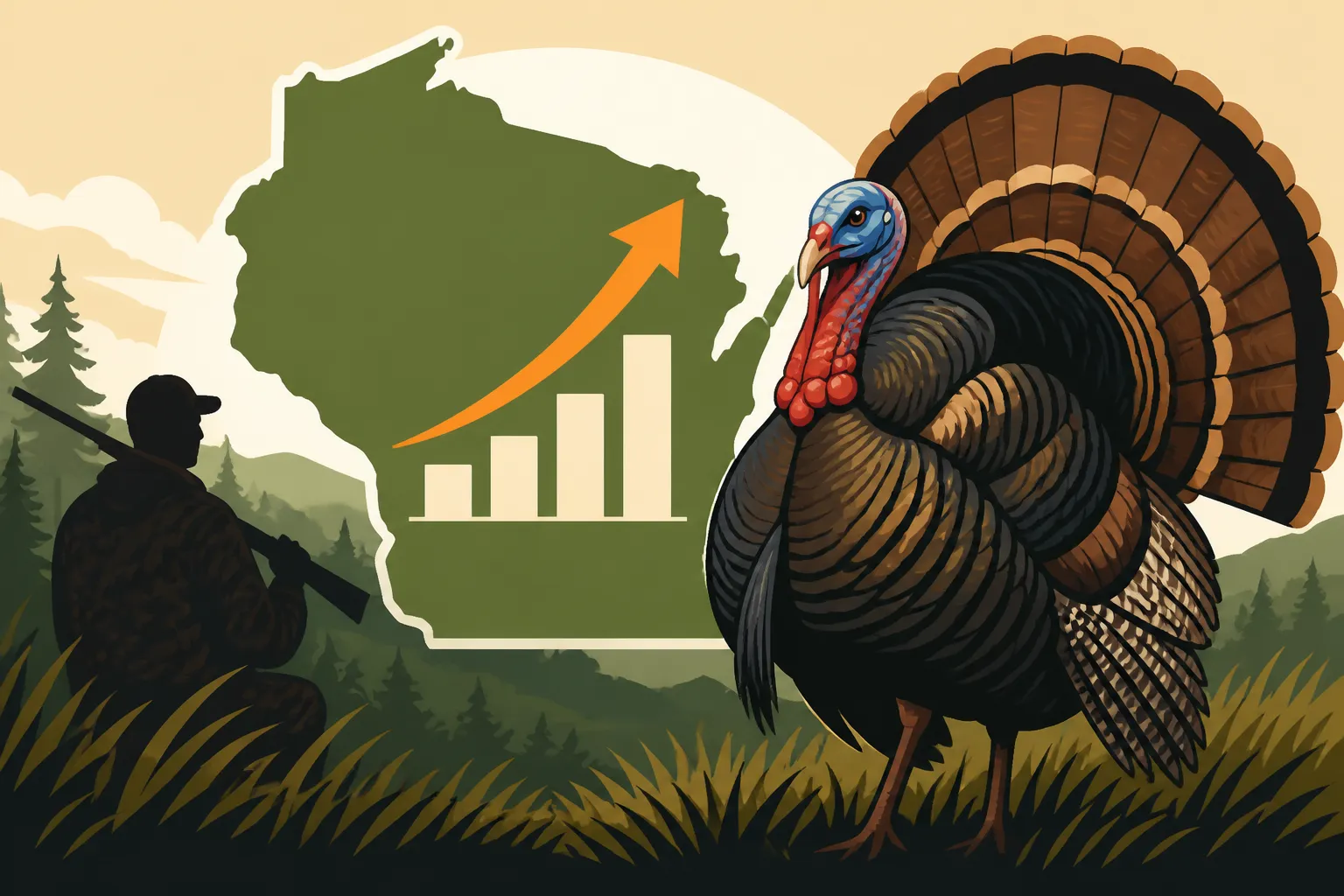
We’ve all been there: one year, it feels like turkeys are everywhere you look in Wisconsin, gobbling from every ridge and scratching in every field edge. The next year, you might wonder if they’ve all packed up and moved south, leaving you with nothing but silent woods and an empty call. It’s enough to make you question everything you thought you knew about turkey hunting! This guide is here to shed some light on that mystery, diving deep into how Wisconsin’s wild turkey population is actually estimated by wildlife biologists and what those numbers truly mean for us, the hunters who spend countless hours chasing those elusive birds. We'll explore the science, the challenges, and what you can learn from the data to make your next hunt more successful.
Understanding Wisconsin's Turkey Population Dynamics
It’s easy to think of turkey populations as a simple count, but it's far more complex than that. Wild turkeys, like all wildlife, are influenced by a myriad of factors that constantly cause their numbers to fluctuate, sometimes dramatically within specific areas. What seems like a huge population boom in one county might be a static or even declining trend just a few miles away. This dynamic nature is why wildlife agencies don't just "count" every bird; instead, they use scientific methods to estimate the population and track trends over time.
A Look Back at Restoration Efforts
Before we talk about current numbers, it’s worth remembering that Wisconsin’s thriving turkey population wasn't always a given. Turkeys were actually extirpated from the state by the early 1900s due to unregulated hunting and habitat loss. It wasn't until the mid-1970s that restoration efforts began in earnest, primarily with trap-and-transfer programs that brought wild turkeys from other states into suitable habitat, particularly in Wisconsin’s southwestern coulees.
This ambitious program was incredibly successful, far exceeding initial expectations. Those pioneering birds established footholds, reproduced, and gradually expanded their range, eventually colonizing almost every county in Wisconsin. This incredible comeback story is a testament to dedicated conservation efforts and the adaptability of wild turkeys. Today, when we talk about population estimates, we’re discussing the continued management of a species that has truly returned from the brink, as highlighted in How Turkeys Were Restored to Wisconsin.
The Role of Habitat in Turkey Abundance
Even with a successful reintroduction, the long-term health and distribution of Wisconsin's turkeys are inextricably linked to the quality and quantity of available habitat. Turkeys are not particular about every single tree, but they do have specific needs throughout the year. They thrive in a mosaic of mature hardwoods for roosting, open understories for feeding on acorns and other mast, and areas with dense ground cover for nesting and brood-rearing. Agricultural fields, particularly those with standing corn or cut stubble, also provide critical food sources, especially during harsh winters.
Changes in land use, such as urban development, shifting agricultural practices, or extensive timber harvest that removes critical older trees, can significantly impact local turkey populations. Even seemingly small changes, like a landowner clearing out brushy fencerows, can eliminate vital travel corridors or nesting cover. Wildlife biologists consider these habitat factors when making their population estimates, understanding that the land’s capacity to support turkeys, known as its carrying capacity, ultimately dictates how many birds can truly thrive in a given area.
How the DNR Estimates Turkey Numbers
It's a common misconception that the Wisconsin DNR literally counts every single wild turkey in the state. That would be an impossible task! Instead, wildlife biologists employ a combination of sophisticated statistical models and ground-level observations to generate a reliable "estimate." This isn't just pulling numbers out of a hat; it’s a careful, data-driven process designed to understand trends, not just a snapshot. This approach helps the DNR manage the resource sustainably, ensuring there are turkeys for future generations of hunters.
Brood Surveys and Their Importance
One of the most critical pieces of the population puzzle comes from summer brood surveys. These surveys are conducted primarily by volunteers and DNR staff during June, July, and August, when turkey poults (young turkeys) are visible alongside their mothers. Participants record the number of adult hens they see and, more importantly, the number of poults accompanying each hen.
The resulting "poult-to-hen ratio" is a vital indicator of nesting success and poult survival. A high ratio suggests a strong hatch and good conditions for young turkeys, boding well for the future population. Conversely, a low ratio might point to a poor hatch, perhaps due to a cold, wet spring, or high predation on nests and poults. These numbers directly inform the DNR's assessment of how many new birds are joining the population each year, which is crucial for predicting future turkey numbers, a topic explored further in Poult-to-Hen Ratios and What They Mean. Hunters, myself included, anxiously await these reports to get a feel for what the next year's season might hold.
Harvest Data as a Population Indicator
Another significant component of the DNR's population estimation comes directly from us, the hunters. Wisconsin has mandatory turkey registration rules, meaning every turkey harvested, whether during the spring or fall season, must be reported to the DNR. This harvest data provides a wealth of information: the total number of birds taken, the location of the harvest (down to the county or even specific turkey management zone), and the sex of the bird.
While harvest numbers don't tell the whole story of the population, they offer a valuable proxy. A consistent increase in harvest numbers over several years in a particular zone often suggests a healthy or growing population in that area. Conversely, a significant drop might indicate a localized decline. The DNR uses these figures, combined with hunter effort data (like how many permits were issued), to assess overall population health and hunter success rates. Many hunters utilize tools like GoHunt to pore over historical harvest data, looking for trends in specific zones that might help them decide where to focus their efforts. You can find more details on how these numbers are gathered and used in Wisconsin Turkey Harvest Numbers.
Other Data Points and Challenges
Beyond brood surveys and harvest data, the DNR also considers other observations. Winter observations, though less systematic, can provide anecdotal evidence of turkey concentrations or dispersal patterns, especially during periods of deep snow when birds might gather in specific areas. Landowner reports, while not scientific, can sometimes highlight unusual local trends.
However, estimating turkey populations is inherently challenging. Turkeys are highly mobile, can cover vast areas, and are masters of camouflage. Their populations are also prone to localized fluctuations. A specific woodlot might be overflowing with turkeys one season, only for them to move to an adjacent property the next, making it difficult to get a precise, fixed count. The goal, therefore, is to identify broader trends and use that information to manage the resource effectively, rather than trying to achieve an impossible exact number.
Factors Influencing Wisconsin's Turkey Population
Understanding how the DNR estimates turkey populations is one thing, but knowing why those numbers fluctuate is key to appreciating the resilience, and sometimes the fragility, of this amazing game bird. Mother Nature plays a massive role, as do predators and food availability, creating a complex web of influences on Wisconsin's wild turkey numbers.
The Impact of Weather Extremes
Weather is arguably one of the biggest, most unpredictable drivers of turkey population changes. Turkeys are hardy birds, but they are particularly vulnerable during two critical periods: the nesting and hatching season in spring, and severe winter conditions. A prolonged, cold, and wet spring can be devastating for poult survival. Young poults are susceptible to hypothermia, and a lack of insects (their primary food source in early life) during wet conditions can lead to starvation. A spring with constant rain or late snow can drastically reduce the poult-to-hen ratio, impacting the overall population for years to come.
Conversely, a mild winter can mean higher overwinter survival rates for adult birds, leading to more hens available for nesting in the spring. But harsh winters, especially those with deep, persistent snow in northern Wisconsin, can make foraging difficult, deplete a turkey's energy reserves, and increase susceptibility to disease and predation. When planning a hunt, checking historical weather patterns for a given area can sometimes offer clues to current bird numbers.
Predation and Nest Success
While they are powerful and wary birds, turkeys, especially their nests and young, face a gauntlet of predators. Raccoons, opossums, skunks, and coyotes are all notorious nest predators, often making short work of a clutch of eggs if given the chance. After hatching, young poults are vulnerable to a wider array of predators, including foxes, bobcats, owls, and hawks. Even crows and squirrels can occasionally snatch an egg or a vulnerable poult.
It's important to remember that predation is a natural part of the ecosystem, and turkeys have evolved strategies to cope, such as nesting in dense cover and relying on the hen's camouflage. However, localized spikes in predator populations can certainly put additional pressure on turkey numbers, particularly if other environmental factors (like poor weather) are also at play. The topic of Nest Predation and Turkey Hatches delves deeper into these challenges and how they affect the overall population.
Food Availability and Disease
Just like us, turkeys need good food to thrive. Their diet is varied, ranging from acorns, beechnuts, and other mast crops in the fall and winter, to insects, seeds, and waste grains throughout the year. A poor mast crop year, perhaps due to a late spring frost, can lead to turkeys being less robust going into winter, potentially impacting their survival and reproductive success. Conversely, abundant food sources can help birds maintain condition and produce healthier clutches. This is a factor many hunters consider when scouting for Late-Season Food Sources for Whitetails which often double as turkey food.
While less prominent than Chronic Wasting Disease (CWD) in deer, turkeys can also be affected by various avian diseases. These outbreaks are usually localized, but they can occasionally cause noticeable dips in local populations. The DNR continuously monitors wildlife health to understand if disease is playing a role in population trends, adding another layer to the complex puzzle of managing Wisconsin's wild turkeys.
What Current Population Trends Mean for Hunters
So, what does all this biological jargon and statistical estimation mean for you when you're out there in the woods, trying to call in a gobbler? Ultimately, these population trends and estimates are the foundation for how hunting seasons are structured, how tags are allocated, and how the overall turkey resource is managed. They help ensure that we, as hunters, have sustainable opportunities year after year.
Interpreting DNR Reports and Season Structure
The DNR uses all the data it gathers—from brood surveys to harvest numbers—to make critical decisions about Wisconsin’s turkey hunting seasons. This includes setting harvest quotas, defining the various turkey management zones, and determining the length and timing of hunting periods. If population estimates show a strong and growing turkey population, you might see more permits available, longer seasons, or even increased bag limits in certain zones. Conversely, if numbers appear to be declining in an area, the DNR might reduce permit allocations or shorten seasons to allow the population to rebound.
For instance, understanding the nuances of Wisconsin Spring Turkey Zones and Periods becomes much clearer when you realize they are directly tied to these population assessments. Hunters often apply for specific zones based on past success or anecdotal sightings, but the underlying population data is what truly shapes the opportunities available. Consulting the most recent DNR reports on Wisconsin Turkey Population Trends can provide invaluable context before you even consider applying for a tag or scouting new ground.
Using Data to Inform Your Hunt Strategy
While boots-on-the-ground scouting is irreplaceable, using the DNR's population data can give you a significant strategic edge. If brood survey results indicate a poor hatch in a particular zone, it might suggest that finding young birds will be tough, and you should focus your efforts on locating older, established gobblers. If harvest numbers in a specific county have been consistently high, that's a good sign of a robust population, potentially making it a promising area to explore, always mindful of hunting pressure.
Tools like GoHunt often compile and visualize this public data, allowing hunters to see trends and overlays on maps, helping to identify areas with historically strong turkey populations or better success rates. This can be especially helpful for public land hunters looking for less pressured birds. By combining statewide and zone-specific data with your own scouting, you can make more informed decisions about where to hunt, which periods might be most productive, and even what tactics to employ. For example, if poult numbers are down, you might want to focus on early season calling for dominant gobblers, rather than trying to find a flock of two-year-olds. It's about blending the science with the art of the hunt to truly maximize your experience in the Wisconsin woods.
| Indicator | What it Measures | Implications for Hunters (Generally) |
|---|---|---|
| Poult-to-Hen Ratio | Nesting success and survival of young turkeys | A high ratio indicates strong recruitment and potential for more birds in upcoming seasons. A low ratio suggests tougher hunting may be ahead. |
| Overwinter Survival | Adult turkey resilience to winter conditions | Good survival means more adult gobblers and hens are available for breeding in spring. Harsh winters can reduce overall bird numbers. |
| Harvest Numbers | Total turkeys taken by hunters (by zone/period) | Higher consistent harvest suggests a healthy, huntable population, but can also indicate increased hunter pressure in popular areas. |
| Hunter Success Rate | Percentage of hunters who successfully harvest a turkey | Lower success rates might point to fewer birds, more challenging hunting conditions, or highly pressured birds. Higher rates suggest more opportunities. |
| Reported Gobbling Activity | Frequency of gobbling during surveys (less common) | Can provide insights into breeding activity and gobbler presence, helping identify peak periods or areas with active birds. |
Disclaimer
This article is for general informational purposes only and does not constitute professional advice. Laws, prices and regulations vary by location and change over time. Consult a qualified professional for guidance on your specific situation.