Diver Ducks on Wisconsin Big Water
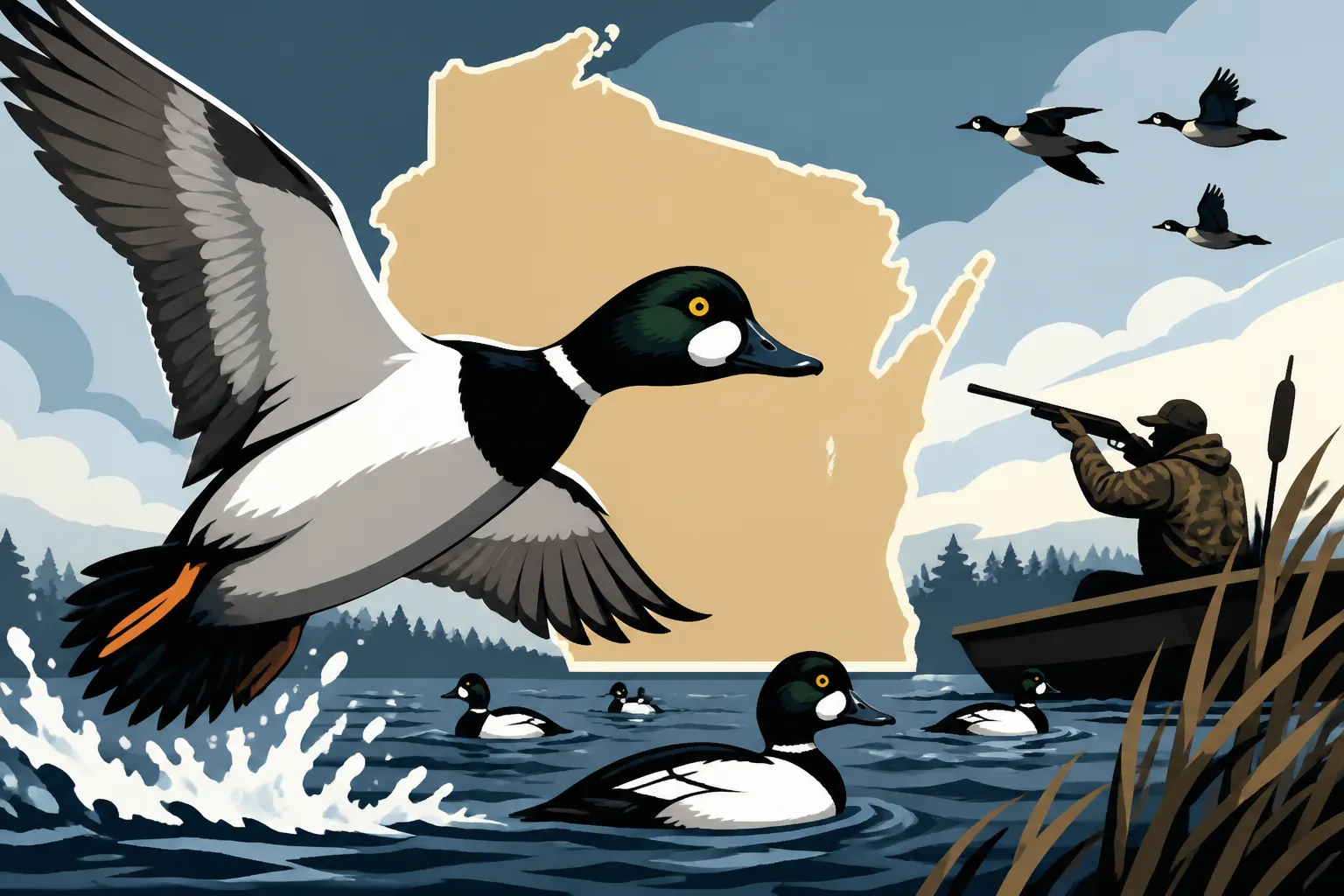
Hunting diver ducks on Wisconsin's vast expanses of big water presents a unique and thrilling challenge, far removed from the quiet confines of a cattail marsh. The open water, unpredictable weather, and powerful birds demand a different approach, often leaving hunters who are used to puddle ducks feeling a bit lost. This guide aims to demystify diver duck hunting, equipping you with the knowledge and tactics to successfully pursue scaup, canvasbacks, redheads, and goldeneyes across Wisconsin's largest lakes and rivers.
Understanding Diver Ducks in Wisconsin
These aren't your typical dabblers. Diver ducks, as their name suggests, feed by diving deep beneath the surface, often in open, expansive waters. They're built for speed and power, with large webbed feet set far back on their bodies, making them somewhat clumsy on land but absolute rockets in the air and powerful swimmers underwater. Their diet primarily consists of aquatic vegetation, seeds, and invertebrates found on lake and river bottoms, and they prefer the wide-open spaces that offer less cover but more abundant deep-water forage.
Identifying Key Diver Species
Wisconsin is a crucial migratory path within the Mississippi Flyway, attracting a variety of diver species. Understanding who you're looking at, both in the air and on the water, is critical for adhering to bag limits and developing effective hunting strategies. Each species has subtle differences in flight patterns, flocking behavior, and preferred feeding grounds. Knowing these nuances can make or break a hunt, helping you decide where to set up and what kind of decoys to deploy.
For instance, the majestic Canvasback, often called the "King of Ducks," is a prize for many hunters. They're large, fast, and often fly in distinct V-formations or long lines, recognized by their long, sloping forehead and bill. Lesser and Greater Scaup, frequently grouped as "bluebills," are abundant and zip across the water in tight, erratic flocks, distinguishable by their white wing stripe. Redheads are chunky, fast-flying ducks that often mix with other divers, while the striking Common Goldeneye, a hardy bird, sticks around later in the season, often found in smaller groups near shorelines or river currents. Knowing their field marks, even at a distance, will help you make quick, ethical decisions and stay within Wisconsin Duck Daily Bag Limit regulations.
Diver Behavior and Feeding Habits
Unlike mallards that tip up in shallow marshes, divers are constantly in motion, using their powerful legs to propel themselves to depths of 10-20 feet or more to find food. This means they'll frequent areas with abundant submerged aquatic vegetation, zebra mussel beds, or schools of baitfish. Their strong preference for open water also dictates their travel patterns, often flying long distances across large bodies of water rather than hugging shorelines. This is why you often see them "rafting" far out on lakes during the day.
Understanding their daily routine is key. Divers typically raft up in large groups in safe, open water during the mid-day, then break off into smaller feeding groups during prime low-light hours of dawn and dusk. Weather patterns, especially strong winds, play a huge role in their movements. A stiff breeze can push baitfish or vegetation closer to the surface, concentrating divers in certain areas, or it can create chop that makes them feel safer on the water, encouraging them to raft up in different spots. Learning to read these environmental cues can tell you where to focus your efforts for a better chance at intercepting them as they move from resting to feeding grounds.
Key Wisconsin Big Water Locations
Wisconsin is blessed with an incredible amount of "big water," offering diverse habitats for migrating diver ducks. From the expansive Great Lakes to vast inland flowages and the mighty Mississippi River, each area presents its own opportunities and challenges for the intrepid diver hunter. Knowing where to focus your efforts, and understanding the nuances of each locale, is paramount to success. These large bodies of water act as magnets for migrating waterfowl during the fall.
Lake Michigan and Green Bay
The sheer scale of Lake Michigan and its massive arm, Green Bay, makes them prime destinations for diver hunters. These waters serve as a superhighway for migrating ducks, particularly scaup, redheads, and the iconic Canvasbacks, as they make their way down the flyway. The abundance of deep-water forage, especially in the form of zebra and quagga mussels, attracts huge rafts of divers during the peak migration period. These birds find a seemingly endless buffet on the lake bottom.
Hunting these waters requires serious commitment and safety precautions. You'll often be miles from shore, dealing with large waves and unpredictable weather. Popular areas might include points and islands that funnel birds, or expansive flats where divers congregate to feed. Early season hunts might find birds closer to shore, but as the season progresses and pressure mounts, they'll push further out into the more remote, safer areas of the lake. Consider how wind direction influences bird movement and access to boat launches. Understanding the prevailing currents and wind-driven wave patterns is critical for setting up a safe and effective spread that won't get tangled or washed away. Remember to familiarize yourself with The Wisconsin Open Water Duck Zone regulations, which apply specifically to Lake Michigan and Green Bay.
Inland Flowages and Large Lakes
Beyond the Great Lakes, Wisconsin boasts a number of large inland lakes and flowages that offer excellent diver hunting. Think about places like Lake Winnebago, Lake Poygan, and Lake Butte des Morts, all part of the vast Winnebago System, which are renowned for their duck populations. Smaller but still significant bodies of water, like Lake Puckaway or parts of the Petenwell Flowage, can also hold good numbers of divers, especially during colder periods when shallower waters begin to freeze over, forcing ducks to deeper, open areas.
These inland waters often present a slightly more manageable hunting experience than the Great Lakes, though they are still "big water" by any standard. Hunters often use layout boats or larger shallow-draft boats to access feeding flats. The key here is typically finding submerged weed beds or other forage areas that divers prefer, often in areas of consistent depth. Pressure can be a significant factor, so scouting these areas extensively, perhaps using mapping tools like those from GoHunt to identify structure and potential feeding zones, before the season opens is a huge advantage. These lakes can also freeze over faster than the Great Lakes, affecting access and pushing birds to remaining open water or further south. For more on strategies here, you might want to read about Diver Ducks on Lake Winnebago, which delves deeper into hunting this particular system.
Mississippi River Backwaters and Channels
While often associated with puddle ducks, the Mississippi River, particularly its expansive pools and channels along Wisconsin's western border, can also offer fantastic diver hunting, especially for species like canvasbacks and scaup. These birds utilize the main channel and larger backwater lakes, especially where current keeps water open or where abundant wild celery and other submerged vegetation thrive. The confluence of varied habitats makes this river system a unique challenge.
Hunting the Mississippi demands a unique skill set, blending elements of big water and river hunting. Strong currents, commercial barge traffic, and ever-changing sandbars and depths are constant considerations. Divers will often fly the main channel or follow lines of timber or islands in the larger backwater sections. Layout boats are again a popular choice, allowing hunters to blend seamlessly into the open water. Access points and boat ramps can be critical, as covering vast distances against current can be time-consuming and burn through a lot of fuel. Learning about Hunting Mississippi River Backwaters can give you a broader perspective, as many areas can attract both divers and puddle ducks depending on the water levels and specific habitat available. Hunters targeting Canvasbacks on the Mississippi River often find success by focusing on areas with dense beds of wild celery.
Essential Gear for Diver Hunting
Diver hunting on Wisconsin's big water isn't a casual affair; it demands specialized gear designed to withstand harsh conditions and operate effectively in expansive, often treacherous environments. Skimping on quality here isn't just a matter of comfort, it can be a matter of safety. From the vessel that gets you out there to the decoys that bring the birds in, every piece of equipment plays a critical role and should be chosen with the environment in mind.
Boats, Motors, and Layout Rigs
The foundation of any successful big water diver hunt is your boat. It needs to be seaworthy, stable, and appropriately sized for the waters you intend to hunt. For Lake Michigan or large inland lakes, a larger, deep-V hull boat, ideally 16-20 feet, with a powerful, reliable outboard motor is often essential. You'll be covering significant distances and dealing with considerable chop and swell. Navigation electronics, including a reliable GPS, marine radio, and depth finder, are non-negotiable for safety and finding those crucial submerged feeding flats.
Many serious diver hunters also employ layout boats. These low-profile, coffin-like boats allow hunters to lie nearly flat on the water's surface, becoming virtually invisible amidst a large decoy spread. They are typically towed out to the hunting location by a larger "tender" boat, which then serves as a remote command center for watching birds, retrieving downed ducks, and providing a safe haven if the weather turns. A good tender boat also needs ample storage for decoys, anchors, and other gear. If you're considering a layout rig, you'll also need specialized anchors and lines to secure it properly in open water, where currents and winds can be surprisingly strong and change direction without warning. Remember, safety first – always check the weather forecast and consider emergency equipment like flares, a marine radio, and extra flotation devices before you leave the dock.
Decoys and Spreads
Decoys are your primary tool for attracting divers, and on big water, more is often better. Large spreads, often 50 to 100+ decoys, are common. The sheer vastness of the water means you need a visible beacon to draw birds in from afar, cutting through the chop and glare. Focus on high-quality, realistic decoys, paying attention to accurate colors and lifelike postures, as wary birds will shy away from anything unnatural. Many hunters prefer magnum-sized decoys for increased visibility, especially on choppy water where smaller decoys can disappear.
When it comes to species, a mix is usually best, with a heavy emphasis on the divers you expect to encounter most. Canvasbacks, scaup, and redheads are standard. Consider adding a few confidence decoys, like coots or even a goose or two, to make the spread appear more natural and inviting. Rigging is also critical: diver decoys are typically rigged with heavier weights (often 1-2 pounds per decoy) and longer lines (10-20 feet) to ensure they stay put in strong currents and rough water. Texas rigs are a popular choice for quick deployment and retrieval, but traditional clip-on lines can also work if properly organized. For more insights on this, be sure to check out Decoy Spreads for Wisconsin Divers, which covers specific patterns and rigging techniques.
Clothing, Waders, and Safety Gear
Hunting big water in Wisconsin means contending with cold, often wet, and windy conditions for extended periods. Layering is paramount to staying warm and comfortable. Start with moisture-wicking base layers, add insulating mid-layers like fleece or wool, and top it off with waterproof and windproof outer shell gear that can withstand spray and rain. A high-quality insulated parka and bibs or waders are essential. When it comes to waders, neoprene or breathable waders with good insulation are common, but ensure they are robust enough for boat work and wading if necessary. Keep in mind that for many big water setups, you might be primarily in a boat rather than standing in waders, so good quality rain gear is also crucial.
Beyond warmth and dryness, safety gear is non-negotiable. Every person on board must have a USCG-approved personal flotation device (PFD), and it's a good idea for everyone to wear them, especially in cold water or rough conditions where falling overboard can be immediately life-threatening. Other critical safety items include: a well-stocked first-aid kit, emergency signaling devices (whistle, air horn, flares), a reliable compass and waterproof maps (even with GPS, backups are wise), a spare prop, tools, and extra fuel. Cold water immersion is a serious threat, so understand the risks and always hunt with a partner. Information on Waders for Wisconsin Marsh Hunting can offer some transferable insights on choosing appropriate legwear, though big water conditions will likely demand even more robust options and additional insulation.
Effective Diver Duck Hunting Strategies
Successfully hunting diver ducks on Wisconsin's big water requires more than just good gear; it demands a strategic mindset, an understanding of the birds' patterns, and the ability to adapt to dynamic environmental conditions. It's about combining intelligent scouting with careful setup and precise execution, often in challenging conditions. The effort put in before the hunt often directly correlates to the success experienced during it.
Scouting and Location Selection
Scouting is perhaps the most critical component of big water diver hunting. Unlike a small marsh where you can observe from a distance, covering vast stretches of open water demands more deliberate reconnaissance. Before the season, spend time observing large rafts of birds with a good spotting scope. Identify where they are feeding, where they are resting, and their typical flight paths between these areas. Pay close attention to wind direction and how it influences their behavior, as strong winds can funnel birds into predictable corridors.
Modern mapping tools, like those available on GoHunt, can be invaluable for identifying submerged structure, weed beds, or depth changes that might concentrate forage and, consequently, divers. Look for points, reefs, and islands that act as natural funnels or resting areas. Keep a log of your observations, noting wind speed and direction, time of day, and bird activity. This historical data can help you predict future movements, especially when considering Wisconsin Waterfowl Migration Timing. Remember, divers are creatures of habit, but they are also highly responsive to pressure and changing weather, so staying mobile and adaptable, and being prepared to move your setup, is key.
Decoy Rigging and Placement
The way you rig and place your decoys is paramount to success on big water. As mentioned, heavy weights and long lines are a must to keep decoys from drifting. Many hunters prefer main lines with multiple droppers, creating a "longline" system that allows for quick deployment and retrieval of dozens of decoys at once. These are particularly effective in open water where you want to create a large, visible V or J shape, mimicking a raft of feeding ducks and creating an inviting landing zone.
Your spread design should mimic a natural raft of divers, often with a large body of decoys in the center and a distinct "landing zone" or opening for birds to commit to. For Canvasbacks, a tight pod of their own species works well, often placed upwind of your layout boat, making it appear like a safe gathering. Scaup and redheads are often more forgiving and will come into a mixed spread. Consider adding movement with jerk strings or motorized decoys to draw attention from afar, but remember that too much unnatural movement can also flare wary birds. Always set your spread so that the prevailing wind brings approaching birds into optimal shooting range, ideally at around 25-35 yards, presenting clean crossing or incoming shots.
Calling Techniques for Divers
Diver duck calling is a different art form than puddle duck calling. While puddle duck calls are often focused on intricate pleading and greeting calls, diver calls are generally simpler and more focused on creating a sense of urgency and attraction. The main calls you'll use are a "purr" or "growl" from a diver whistle or a low, guttural cluck from a standard duck call. The sounds are typically rougher and less melodious than those for mallards or wood ducks.
The goal isn't to perfectly imitate every sound, but to create a natural, enticing cacophony that suggests a happy, feeding raft of ducks. Use short, sharp whistles or growls to get their attention, then transition to more subtle, contented sounds as they approach. Don't overcall; let the decoys do most of the work, especially with large, visible spreads. Only call when birds are at a distance or seem hesitant to commit. Once they turn and commit to the spread, go quiet and prepare to shoot. Knowing when to call and, more importantly, when to stop calling, is a skill honed over many hours on the water.
Navigating Regulations, Ethics, and Safety
Diver hunting on Wisconsin's big water isn't just about finding the birds and setting a spread; it's also about understanding and adhering to a complex web of regulations, upholding ethical hunting practices, and prioritizing safety in a challenging environment. Overlooking any of these aspects can lead to dangerous situations or legal trouble, undermining the integrity of the hunt and putting lives at risk.
Wisconsin Waterfowl Regulations and Bag Limits
Wisconsin has specific regulations governing waterfowl hunting, and these can vary by zone, season period, and even species. It's imperative to consult the current Wisconsin Department of Natural Resources (DNR) waterfowl regulations pamphlet every year, as rules can change. You'll need a state waterfowl stamp and a federal duck stamp, in addition to your regular hunting license and HIP certification. You can easily purchase these through the GoWild system, and it's always a good idea to carry proof of purchase, even if you keep it on your phone.
Pay close attention to daily bag and possession limits for diver ducks. Limits for species like Canvasbacks or Redheads are often more restrictive than for scaup or goldeneyes, sometimes only allowing one or two birds of a specific species per day. Species identification in flight is a critical skill to avoid exceeding these limits. Understanding Wisconsin Waterfowl Seasons and Zones is essential before you even leave the shore. Additionally, familiarize yourself with shooting hours, legal methods of take, and any specific restrictions on boat use or hunting near certain refuges. Hunters using certain areas, such as those covered under Wisconsin Waterfowl Hunting on Marsh and River, might face additional local restrictions or rules on public access points.
Cold Weather and Water Safety
Hunting big water, especially in the cold shoulder seasons of fall, introduces significant safety concerns. Hypothermia and cold water immersion are ever-present dangers that can incapacitate a person in minutes. Always inform someone of your hunting plans, including your exact location and expected return time, and stick to that plan as closely as possible. Dress in layers to prevent heat loss, wear a USCG-approved PFD at all times when on the water, and ensure your boat is equipped with all necessary safety gear, as discussed earlier.
Weather can change rapidly on large bodies of water. A calm morning can turn into a gale-force wind with treacherous waves in a matter of hours, making travel extremely hazardous. Always check the marine forecast before heading out and be prepared to cut your hunt short if conditions deteriorate. Overloading your boat, operating it recklessly, or hunting alone in extreme conditions are all recipes for disaster. Having a communication device, such as a marine radio or a fully charged cell phone in a waterproof case, is crucial. If you're using a layout boat, ensure your tender boat operator is experienced and attentive, always keeping an eye on the layout boat and the weather. Don't push your limits, or your equipment's limits, for a few ducks. Your life is worth more than any bag limit.
Diver Duck Identification and Key Characteristics
| Species | Size | Flight Characteristics | Plumage (Males) | Habitat Preference | Notes |
|---|---|---|---|---|---|
| Canvasback | Large | Fast, strong, V-formation, long lines | Red-brown head, black chest, white body, long sloped bill | Large lakes, rivers, bays, abundant submerged veg. | Often considered the "King of Ducks"; highly sought after. |
| Redhead | Medium | Fast, often in tight flocks | Red head, grey body, black chest, blue-grey bill | Large shallow lakes, marshes, bays | Gregarious, often with other divers; common on inland lakes. |
| Greater Scaup | Medium | Fast, erratic, tight flocks | Black head (glossy green), black chest, white sides | Large open waters, coastal bays, deep lakes | Often called "bluebills"; slightly larger than Lesser Scaup. |
| Lesser Scaup | Medium | Fast, erratic, tight flocks | Black head (glossy purple), black chest, white sides | Inland lakes, marshes, rivers | Most common diver; also called "bluebills." |
| Ring-necked Duck | Small-Med | Fast, often with divers, distinct silhouette | Black head, black chest, grey flanks, white ring on bill | Shallow marshes, wooded lakes, often near reeds | Though a diver, often found in more sheltered waters than others. |
| Common Goldeneye | Medium | Very fast, strong, distinctive "whistle" | Dark green head, white eye patch, white sides | Rivers, lakes, coastal areas, open water | Hardy, often stay late into season, distinctive flight whistle. |
| Bufflehead | Small | Fast, erratic, direct, low over water | Large white head patch, dark back, white sides | Small ponds, sheltered bays, rivers | Smallest diver, often seen alone or in pairs. |
Disclaimer
This article is for general informational purposes only and does not constitute professional advice. Laws, prices and regulations vary by location and change over time. Consult a qualified professional for guidance on your specific situation.