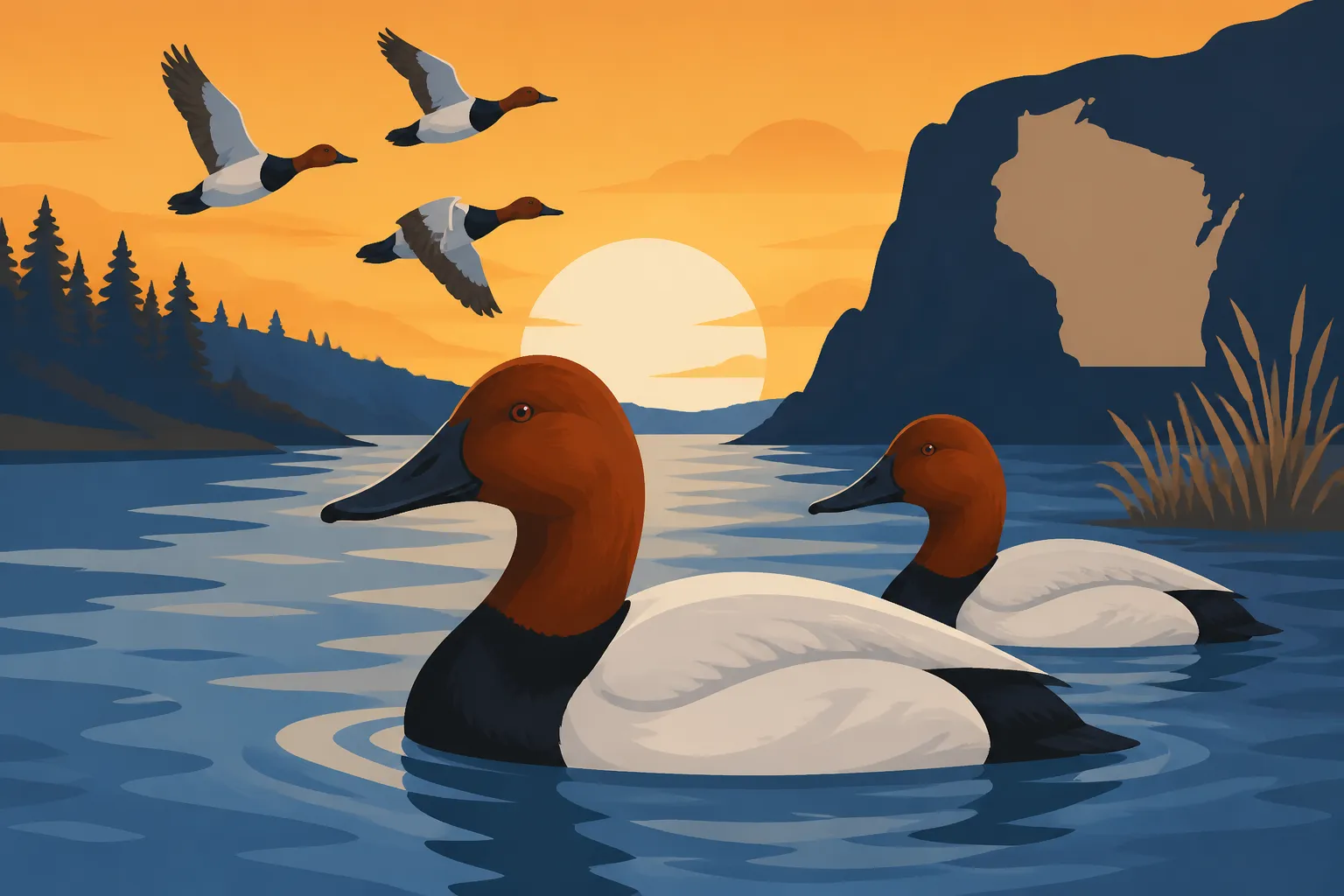
Canvasbacks on the Mississippi River
Hunting canvasbacks on the vast expanse of the Mississippi River can feel like trying to find a needle in a haystack, especially with their elusive nature and the river's dynamic environment. This guide will walk you through understanding these magnificent birds, the specific tactics that lead to success on the big river, and how to navigate the unique challenges of hunting this iconic Wisconsin waterway.
Understanding the Canvasback on the Mississippi River
Ah, the canvasback. To many waterfowl hunters, this bird is truly the "king of ducks." There's something about their speed, their sleek profile, and their sheer power that captivates us. But if you're going to pursue them on the mighty Mississippi, you need to understand them first. They're not your typical puddle duck, dabbling in shallow marsh edges. These are big water birds, and the Mississippi offers exactly what they're looking for, often in places that challenge even the most seasoned hunter.
Identifying the "King of Ducks"
Before you even think about setting out decoys, you need to be absolutely sure you can identify a canvasback in flight and on the water. This isn't just about bagging the right bird; it's about adhering to regulations and respecting the species. Canvasbacks are distinct, but in poor light or at a distance, they can be mistaken for other divers. They're large ducks, often described as having a wedge-shaped head and a long, sloping bill that gives them a unique profile. Males, or drakes, are particularly striking with their reddish-chestnut heads, black chest, and a brilliant white body. Females, or hens, are a bit more muted, with a light brown head and neck, and a grayer body.
When they fly, they're incredibly fast, often in V-formations or long lines, with strong, rapid wingbeats. Their flight is direct and purposeful, unlike the more erratic flight of many puddle ducks. On the water, their size and white flanks (on the drakes) make them stand out. Always take the time to positively identify your bird before you shoot. Misidentification can lead to costly mistakes, both for your wallet and for conservation efforts. It's a key part of ethical hunting, especially for a prized bird like the canvasback.
Canvasback Migration Patterns on the Mississippi Flyway
The Mississippi River isn't just any river for canvasbacks; it's a superhighway. The Mississippi Flyway is one of the continent's major migration routes, and canvasbacks utilize it heavily, particularly the extensive system of pools, backwaters, and main channel areas of the Upper Mississippi River. These birds breed primarily in the prairie potholes of the northern Great Plains and Canada, then funnel south through Wisconsin, down the Mississippi, to their wintering grounds along the Gulf Coast, Chesapeake Bay, and other southerly waters.
Timing your hunt correctly means understanding these migration patterns. Early October typically sees the first significant pushes of divers, but the real numbers of canvasbacks often arrive in late October and November, when colder weather to the north really starts to push them down. They'll linger as long as open water and food sources are plentiful. A hard freeze-up can signal the end of the season quickly, as they'll move on to find open water further south. Paying attention to weather forecasts both north of Wisconsin and locally, as well as migration reports, can give you a crucial edge. Organizations like GoHunt often compile data and provide insights into bird movements, which can be invaluable for planning your trips.
Preferred Habitats and Food Sources in the River System
Canvasbacks are primarily vegetarians, and their diet heavily influences where you'll find them. On the Mississippi, they have a particular fondness for tubers and rhizomes of submergent aquatic vegetation, especially wild celery (Vallisneria americana) and pondweeds. These plants thrive in specific conditions: clear water, firm bottoms, and depths that are accessible for diving, usually between 4 and 20 feet. The Mississippi River, with its vast network of backwaters, sloughs, and main channel fringes, provides ideal habitat for these plants.
You'll often find them congregating in large, relatively open water areas where these food sources are abundant. This might be a sprawling backwater lake, a quiet bay off the main channel, or even stretches of the main channel itself if conditions are right and the current isn't too strong. They tend to avoid heavily timbered or extremely shallow, muddy areas. Knowing what they eat and where that food grows is paramount. Spend time scouting with a good map and perhaps a depth finder, looking for those healthy beds of vegetation. If you find the food, you're likely to find the canvasbacks.
Essential Tactics for Hunting Mississippi River Canvasbacks
Hunting canvasbacks on the Mississippi is a different beast than sneaking into a cattail marsh for mallards. It demands specific strategies, a keen understanding of the river, and often, more specialized gear. The scale of the river means you're often dealing with big water, strong currents, and unpredictable weather, all of which require careful planning and execution.
Scouting and Locating Canvasback Hotspots
Successful canvasback hunting starts long before opening day. Scouting is king, and on the Mississippi, it's an ongoing process. You're looking for concentrations of birds, and more importantly, the conditions that hold them. This means getting out on the water, driving the roads that parallel the river, and using mapping tools like those available through GoHunt to identify potential areas of submergent vegetation and large open water. Pay close attention to areas where the main channel meets large backwater lakes or expansive bays.
Observing bird behavior is key. Watch for large rafts of divers, how they feed, and their flight paths. Canvasbacks are often seen "trading" between feeding areas and resting areas. Note entry and exit points, as these can be ideal locations for setting up a decoy spread. Don't be afraid to use a good spotting scope from a vantage point overlooking the river. Remember, the river is dynamic; a hotspot one week might be barren the next due to changing water levels, current, or hunting pressure. Scouting Wisconsin Public Land Before Season is a great resource to help you plan.
Decoy Spreads for Diver Ducks on Big Water
When it comes to canvasbacks, you need to think big with your decoy spread. These birds are accustomed to seeing large rafts of their own kind, and a small spread often won't cut it on the vastness of the Mississippi. A typical canvasback spread will involve dozens, sometimes even hundreds, of decoys. Diver decoys, especially canvasback and redhead blocks, are often rigged on long lines or gang rigs, allowing you to deploy and retrieve many decoys quickly in deeper water.
A common setup involves a main raft of canvasback decoys, often arranged in a J or U shape, with an open "landing zone" directly in front of your blind. You might mix in some redhead or bluebill decoys on the flanks or slightly downwind to add realism and attract other diver species. Placement is critical: consider wind direction, current, and sun angle. Canvasbacks prefer to land into the wind, so position your decoys to give them a clear approach. Current can also play a major role, so be sure your decoys are weighted and spaced appropriately to look natural. Remember, you're trying to replicate what hundreds of real birds look like from above.
Blind and Boat Considerations for River Hunting
Hunting canvasbacks on the Mississippi often means hunting from a boat or a highly mobile blind setup. Layout blinds can be extremely effective in open water or on large sandbars, but they require a tender boat for deployment and retrieval. Larger, stable boats are crucial for safety and efficiency on the big river, especially if you're deploying a large decoy spread or if the weather turns rough. Flat-bottomed or V-hull boats with a good motor are common choices.
Camouflage is always important. If using a boat blind, make sure it's well-brushed in and blends with the shoreline or sandbar. Natural cover can be sparse on some parts of the river, so adaptability is key. Sometimes, simply setting up on the leeward side of a point or island, allowing birds to cup into your decoys with the wind, is all you need. Always prioritize safety: wear life jackets, carry all required safety gear, and be aware of commercial barge traffic, which has the right-of-way. Check out Hunting Mississippi River Backwater Sloughs for more specific advice on river access.
Navigating Regulations and Challenges on the Big River
The Mississippi River isn't just a physical challenge; it also presents a unique regulatory environment and specific safety concerns that hunters must be aware of. Being prepared for these aspects is just as important as having the right decoys.
Special Rules for Waterfowl Hunting on the Mississippi River
The Mississippi River, particularly the Upper Mississippi River National Wildlife and Fish Refuge, operates under specific regulations that can differ from statewide Wisconsin rules. It's not just about Wisconsin Duck Season Dates by Zone or Wisconsin Duck Daily Bag Limit; there can be additional restrictions on boat speeds, motor types, shooting hours, or even how you can retrieve downed birds. For example, some areas within the refuge might have "no-wake" zones or specific rules about permanent blinds.
Always consult the Wisconsin DNR's waterfowl regulations pamphlet specifically for the Mississippi River zone, and if you're within the National Wildlife Refuge boundaries, cross-reference with the US Fish and Wildlife Service regulations. Ignorance of the law is no excuse, and wardens patrol these waters diligently. Pay particular attention to zoning, as certain areas may be closed to hunting or have different opening and closing times. Knowing Where Nontoxic Shot Is Required in Wisconsin is also critical, as it's mandatory for all waterfowl hunting.
Safety Considerations in Large River Systems
Hunting on the Mississippi River comes with inherent risks due to its size and power. Waterfowl hunters are often out in less-than-ideal weather conditions, which can quickly turn dangerous. Strong winds can whip up significant waves, making travel perilous, especially in smaller boats. Cold water exposure is a constant threat, and even on warm days, falling into the river can quickly lead to hypothermia. Always dress in layers, and consider a quality set of Waders for Wisconsin Marsh Hunting or dry suit, even if you don't plan on getting wet.
Currents are another major factor. The main channel has a powerful current, and even backwater areas can have surprising flows. Understand how to anchor your boat safely and effectively. Always inform someone of your hunting plans, including your exact location and expected return time. Carry a reliable means of communication, such as a fully charged cell phone (in a waterproof case) and perhaps a two-way radio. Navigation can also be tricky, especially in fog or low light; a reliable GPS unit or a mapping app like the one GoHunt provides can be invaluable for finding your way back through complex channels and sloughs.
Dealing with Hunting Pressure and Changing Conditions
The Mississippi River is a popular hunting destination, and pressure can be a real factor, especially on weekends and during peak migration. While canvasbacks are often found in large, open water areas, consistent pressure can make them wary and push them into less accessible spots. Be prepared to adapt. If your chosen spot is crowded, have a backup plan. Sometimes, simply moving a few hundred yards can make a huge difference.
Changing river conditions are also a constant. Water levels can fluctuate rapidly due to rainfall or dam operations, completely altering prime hunting spots overnight. A decrease in water levels might expose mud flats, making areas previously too deep for dabblers now accessible, changing the dynamic. Conversely, high water might flood new areas or increase current, making old spots unproductive. Stay informed about river forecasts and recent conditions. Flexibility, resilience, and a willingness to explore new areas are the hallmarks of a successful Mississippi River canvasback hunter. Consider how your Decoy Spreads for Wisconsin Divers might need to be adjusted based on the specific conditions you encounter.
| Duck Species | Key Identification Features (Drake) | Typical Habitat | Diet Focus (Primary) | Average Size (Weight) | Bag Limit Considerations |
|---|---|---|---|---|---|
| Canvasback | Reddish head, black chest, white body, long sloping bill. | Large open water, deep backwaters. | Wild celery, pondweed tubers. | Large (2.5-3.5 lbs) | Often restricted (e.g., 1-2 per day) |
| Redhead | Red head, grey body, blue bill with white band. | Open water, shallower than Canvasback. | Pondweeds, widgeon grass, snails. | Medium (2-3 lbs) | Standard diver limits (e.g., 2 per day) |
| Greater Scaup | Dark iridescent head, grey back, white flanks, blue bill. | Large open water, marine bays. | Mollusks, crustaceans, aquatic plants. | Medium (2-2.5 lbs) | Standard diver limits (e.g., 6 per day) |
| Lesser Scaup | Dark iridescent head, darker back, grey flanks, blue bill. | Inland lakes, calmer open water. | Aquatic plants, insects. | Medium (1.5-2 lbs) | Standard diver limits (e.g., 6 per day) |
This table provides a quick guide to help distinguish canvasbacks from commonly confused diver ducks on the Mississippi. Always consult current regulations for specific bag limits and identification tips.
Disclaimer
This article is for general informational purposes only and does not constitute professional advice. Laws, prices and regulations vary by location and change over time. Consult a qualified professional for guidance on your specific situation.