Wild Turkeys in Wisconsin
It can feel like a real mystery sometimes, trying to figure out where the turkeys are roosting, what calls they'll respond to, or even just understanding the complex season dates and zone system in Wisconsin. Many of us have spent countless hours in the woods, hoping to hear that thunderous gobble, only to be met with silence or confused by regulations. This comprehensive guide is here to unravel those complexities, providing you with a deep dive into wild turkeys in Wisconsin, from their remarkable comeback story to proven hunting tactics and everything in between, so you can head into the field with confidence.
The Grand Comeback: How Turkeys Thrived in Wisconsin
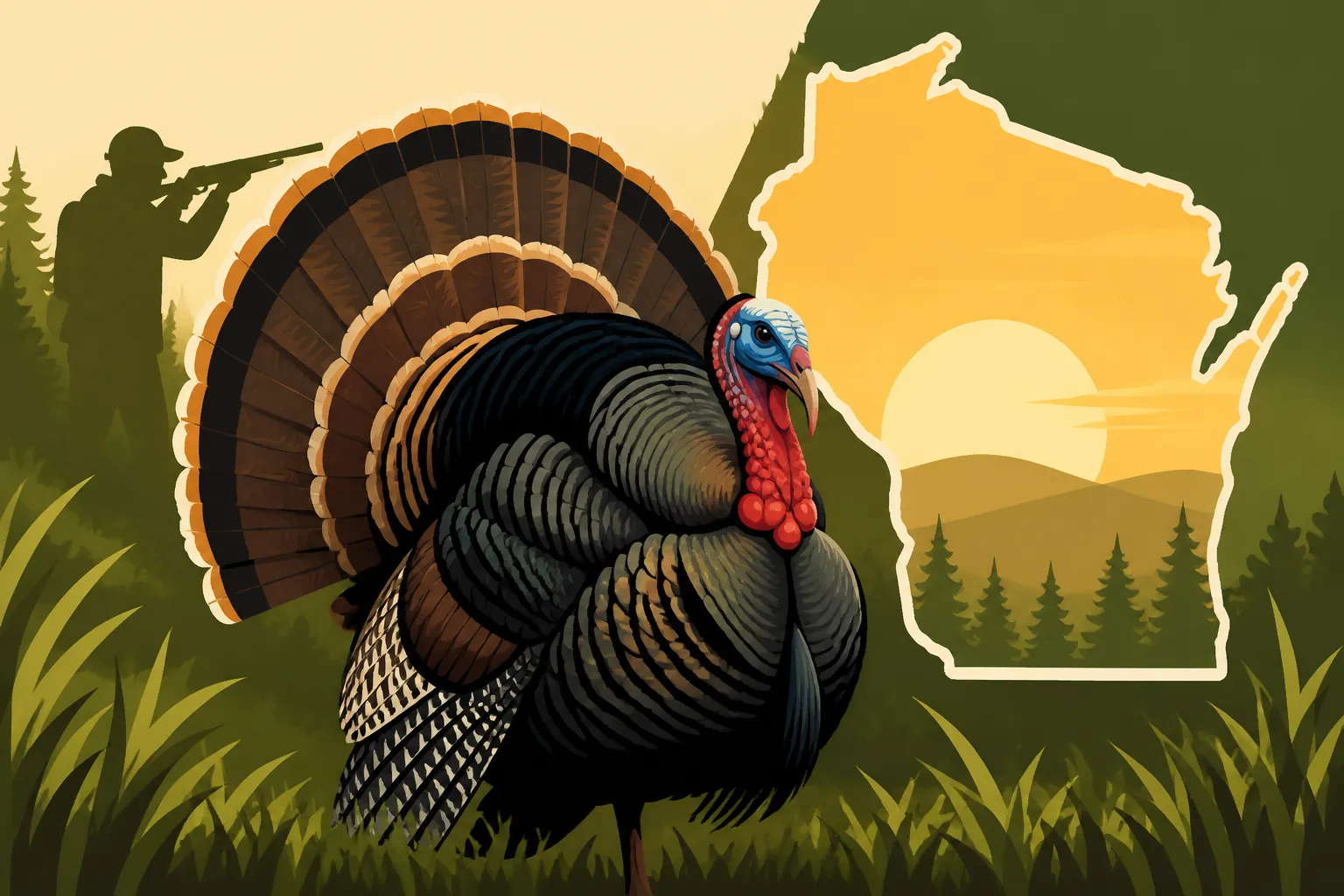
For many of us who grew up hunting in Wisconsin, the idea of a widespread wild turkey population might seem like a given. But it wasn't always this way. In fact, wild turkeys were completely extirpated from the state by the late 1800s due to unregulated hunting and extensive habitat loss. It's a humbling reminder of how fragile wildlife populations can be if not managed carefully. The story of their return is a testament to dedicated conservation efforts and the resilience of these magnificent birds.
Historical Decline and the Power of Reintroduction
Imagine Wisconsin's woods without the sound of a gobbler. That was the reality for generations. The original native subspecies, the Eastern wild turkey (Meleagris gallopavo silvestris), vanished from our state. This decline wasn't unique to Wisconsin; it was a widespread issue across much of their historic range. However, by the mid-20th century, wildlife biologists understood the critical role of reintroduction programs. Starting in 1976, the Wisconsin Department of Natural Resources (DNR) began a groundbreaking effort. They acquired 334 wild-trapped turkeys from Missouri and released them into southwestern Wisconsin's Driftless Area, a region that offered excellent habitat with a mix of hardwoods and agricultural fields. This was a pivotal moment, marking the beginning of a truly remarkable success story.
These initial releases weren't just about dropping birds into the woods; they involved careful planning and monitoring. The birds were trapped using rocket nets and transferred quickly to new locations, minimizing stress. What followed was an incredible expansion. The initial birds reproduced, and their offspring began to spread. Over subsequent years, the DNR continued to trap birds from these thriving populations and relocate them to other suitable habitats across the state. This "trap-and-transfer" method proved incredibly effective, allowing turkeys to colonize new areas naturally rather than relying solely on external sources. The result? A booming population that far exceeded even the most optimistic projections.
Current Population Status and Distribution
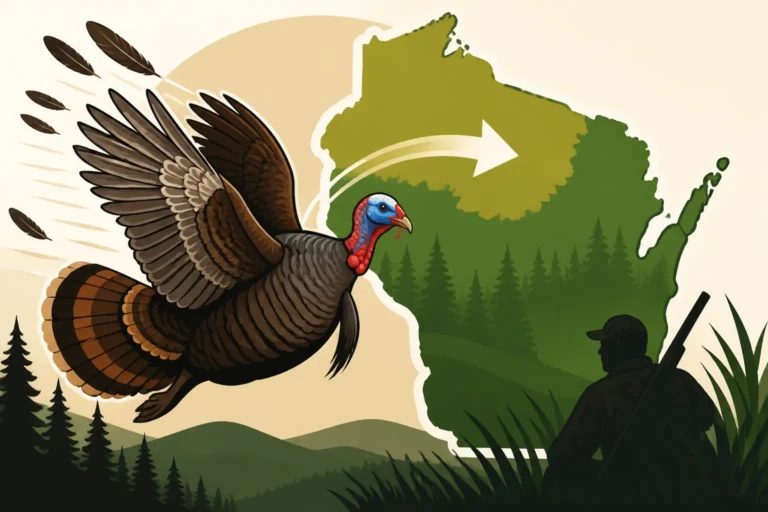
Today, wild turkeys are found in all 72 counties of Wisconsin. That's right, every single one. This widespread distribution is a phenomenal achievement for a species that was once completely gone. While you can find turkeys almost anywhere, their density varies significantly across different regions of the state. The highest concentrations generally remain in the southwestern and west-central parts of Wisconsin, particularly in the fertile agricultural lands and wooded coulees of the Driftless Area. These areas continue to boast robust populations and often offer excellent hunting opportunities.
Even in the more heavily timbered and colder northern reaches of the state, where winter survival can be tougher, turkeys have established strong footholds. Areas like the Chequamegon-Nicolet National Forest and numerous county forests now echo with gobbles each spring. The DNR regularly conducts surveys, including listening routes and hunter harvest reports, to monitor the population and assess their health. You can often find detailed information on these trends, like the current Wisconsin Turkey Population Trends, on the DNR's website, which helps hunters understand where populations are thriving and where they might be facing challenges. Overall, the state's turkey population is robust and healthy, supporting a thriving hunting tradition.
Factors Contributing to Their Success
Several factors contributed to the astounding success of wild turkeys in Wisconsin. Primarily, the diligent reintroduction program laid the groundwork. However, the subsequent management strategies were equally crucial. Regulated hunting seasons, carefully designed to allow populations to grow while providing recreational opportunities, played a key role. Early seasons were often very limited, allowing only a small number of hunters to pursue birds. As the population expanded, so did the opportunities for hunters.
Habitat improvement and conservation efforts have also been critical. Turkeys thrive in a mosaic of habitat types: mature woodlands for roosting and foraging (especially for acorns), open fields and clearings for bugging and strutting, and dense undergrowth for nesting and brood rearing. Changes in land use, including conservation programs that incentivize maintaining woodlots and diverse landscapes, have indirectly benefited turkeys. Furthermore, the birds themselves are incredibly adaptable. They can utilize various food sources, from insects and seeds to acorns and waste grain, allowing them to survive and thrive in diverse environments across the state, from sprawling cornfields to rugged timber country.
Where Wisconsin Turkeys Roam: Understanding Their Range
Understanding the general turkey habitat across Wisconsin is crucial for any hunter. While turkeys are adaptable, their behavior and densities will differ depending on whether you're hunting rolling farmland, dense northern timber, or the unique topography of the Driftless Area. Knowing these regional differences can significantly inform your scouting and hunting strategies.
Farmland Zone: Open Fields and Woodlots
The vast agricultural lands of southern and central Wisconsin, often interspersed with woodlots, river bottoms, and small timbered ridges, represent a prime habitat for wild turkeys. In these areas, turkeys often rely heavily on waste grain from corn and soybean fields as a major food source, especially outside of the peak insect season. These fields also provide excellent strutting grounds and open areas for turkeys to feed in large flocks. The adjacent woodlots, often consisting of mature oaks, hickories, and other hardwoods, offer vital cover for roosting, nesting, and protection from predators.
Hunting in the farmland zone often means focusing on the edges of these fields and woodlots. Turkeys will frequently roost in tall trees along river corridors or in prominent woodlots and then pitch down into fields at first light to feed and strut. Scouting for tracks, droppings, and strut marks along field edges can be highly productive. Hunters might find success by setting up on these field edges, utilizing blinds or natural cover, and calling birds in as they move from roost to feeding areas. The sheer abundance of food in these areas often leads to high turkey densities, but also means birds can be widely scattered.
Northern Forests: Timbered Hills and Clearings
The expansive Northern Forest region of Wisconsin, encompassing vast tracts of pine, spruce, and hardwood forests, presents a different challenge and opportunity for turkey hunters. While the northern climate can be harsher, turkeys have successfully colonized these areas, often adapting to a more wilderness-oriented lifestyle. Here, turkeys rely less on agricultural crops and more on natural mast crops like acorns and beechnuts, as well as a rich insect diet found in forest clearings, logging cuts, and along old logging roads.
Hunting in the north often requires more footwork and a deeper understanding of forest topography. Turkeys will frequently use mature pines or hardwoods for roosting, often near water sources or along ridge lines. They'll then travel through the timber, often following game trails, logging roads, or the contours of the land, seeking out pockets of food or open areas to strut. Clearings, often created by logging operations or natural disturbances, become crucial strutting zones. Hunters in these areas might find success with a more "run-and-gun" approach, covering ground and listening for gobbles, or by focusing on strategic bottlenecks and travel corridors. Understanding where northern forest bucks bed can sometimes give clues to where turkeys might be feeding or traveling as well, as they share some habitat preferences.
Driftless Area: Coulees and Ridges
Perhaps the most iconic turkey habitat in Wisconsin is the Driftless Area, a region of southwestern Wisconsin characterized by its unglaciated, rugged topography of steep coulees, narrow ridges, and deeply incised river valleys. This unique landscape, a mix of dense hardwoods, cedar thickets, and scattered crop fields, provides an ideal environment for wild turkeys, leading to some of the highest densities in the state. The complex terrain offers abundant roosting sites on high ridges, sheltered pockets for nesting, and a diverse food supply.
Hunting in the Driftless Area is often physically demanding but incredibly rewarding. Turkeys here are masters of using the terrain to their advantage. They'll often roost high on the ridge tops and then pitch down into the coulees or agricultural fields at first light. The challenging aspect is that a gobbler might sound incredibly close but be hundreds of yards away, on a different elevation or across a deep ravine. Hunters need to be proficient at navigating steep terrain and understanding how wind and thermals affect sound and turkey movement. Setting up on prominent points or along the rims of coulees can be effective, allowing you to intercept birds as they move between roosting, feeding, and strutting areas. Knowing how to read a ridge point for deer movement can also cross over to turkey hunting, as these animals often use similar travel corridors along the contours of the land.
Key Turkey Seasons and Regulations in Wisconsin
Navigating Wisconsin's turkey hunting regulations, especially for the spring season, can feel like a puzzle with all its zones and periods. But don't let that deter you! The system is designed to distribute hunter pressure and maximize opportunities while ensuring the long-term health of the turkey population. Understanding the basics is your first step to a successful hunt.
Spring Season Periods and Application Process
Wisconsin's spring turkey season is a big deal, and for good reason—it's when gobblers are most vocal and active. The season is divided into several distinct periods, usually A through F, spanning from mid-April through late May. The state is also split into seven turkey management zones. This intricate system, detailed in the annual "Wisconsin Spring Turkey Zones and Periods" guide, aims to manage hunter density in popular areas.
To hunt in the spring, you typically need to apply for a permit (authorization) for a specific zone and period through the Go Wild licensing system. This application process usually happens in December, well in advance of the season. Hunters accumulate preference points if they don't draw their first choice, which increases their chances in future drawings. It's a system that rewards persistence, so even if you don't draw a prime early period in a popular zone initially, keep applying! If you miss the draw, leftover turkey authorizations in Wisconsin often go on sale in late March, providing a second chance to secure a tag, often for later periods or less-pressured zones. Remember, the earlier periods generally offer more aggressive gobbling, but later periods can present unique challenges and rewards, as detailed in an article about Hunting a Late Wisconsin Turkey Period.
Fall Turkey Hunting Opportunities
While the spring hunt gets most of the fanfare, Wisconsin also offers a fantastic fall turkey season. This season typically runs from mid-September through early January, covering a wide range of conditions, from crisp autumn days to snowy winter landscapes. The key difference in the fall is that hunters can pursue any turkey, regardless of sex or age, which includes hens and jakes, not just adult gobblers. This opens up different hunting strategies, often focusing on flock dynamics rather than just strutting toms.
Fall turkey permits are generally sold over-the-counter and are not limited by zones in the same way spring permits are, though you still select a specific zone. This makes it much easier to acquire a tag if you decide to hunt later in the year. Tactics for the fall often revolve around locating flocks, breaking them up, and then calling the scattered birds back together. This can be an incredibly rewarding experience, as adult hens, jakes, and even older gobblers will often respond to distress calls or assembly yelps. For a deeper dive into these strategies, you might check out resources on Wisconsin's Fall Turkey Season.
Licensing, Stamps, and Bag Limits
Beyond your turkey authorization, you'll need a few other things to be legal in the Wisconsin turkey woods. All turkey hunters, regardless of age, must possess a valid Wisconsin hunting license. Additionally, anyone hunting migratory game birds (which includes turkeys) needs to register with the Harvest Information Program (HIP). This is a quick and free registration that helps the U.S. Fish and Wildlife Service gather critical harvest data.
The bag limit for the spring season is one bearded turkey per authorization. "Bearded" means you're targeting gobblers and some older hens that may also sport a beard. You can purchase more than one authorization if they become available through the leftover sales, but you can only harvest one bird per authorization. For the fall season, the bag limit is also one turkey per authorization, but as mentioned, it can be any turkey. There are no statewide restrictions on firearms or archery equipment for turkeys, allowing hunters to choose between shotguns, bows, or crossbows. It's always crucial to review the most current regulations on the Wisconsin DNR website or in the printed regulations pamphlet before heading afield, as rules can change annually.
| Spring Turkey Zone | Season Periods | Typical Start Date (Approx.) | Typical End Date (Approx.) |
|---|---|---|---|
| Zone 1 | A, B, C, D, E, F | Mid-April | Late May |
| Zone 2 | A, B, C, D, E, F | Mid-April | Late May |
| Zone 3 | A, B, C, D, E, F | Mid-April | Late May |
| Zone 4 | A, B, C, D, E, F | Mid-April | Late May |
| Zone 5 | A, B, C, D, E, F | Mid-April | Late May |
| Zone 6 | A, B, C, D, E, F | Mid-April | Late May |
| Zone 7 | A, B, C, D, E, F | Mid-April | Late May |
Note: Specific dates and period start/end times can vary slightly year to year. Always consult the official Wisconsin DNR regulations for the current season.
Essential Scouting and Locating Strategies for Wisconsin Turkeys
Success in turkey hunting, especially for those challenging spring gobblers, often boils down to how well you've scouted and how effectively you can locate birds. It's not just about stumbling upon a gobbler; it's about understanding their patterns, their preferred habitats, and knowing where to be when the action starts.
Pre-Season Reconnaissance: Reading the Landscape
Long before opening day, successful turkey hunters are out in the woods, not with a shotgun, but with boots, binoculars, and a map. Pre-season scouting is paramount. Look for signs of turkey activity: tracks in soft dirt, scratch marks in leaf litter where they've been feeding, and droppings. Pay close attention to food sources. In early spring, turkeys will be seeking out green-ups in fields, waste grain, and any leftover mast from the previous fall. Later in the season, insects become a major draw, especially for hens with poults, but gobblers will still be hitting fields for strutting and displaying.
Identifying key habitat features is also critical. Look for potential roosting trees – often the tallest trees in a woodlot, especially those near a water source or on a prominent ridge line. Note any natural funnels or travel corridors that turkeys might use to move between roosting, feeding, and strutting areas. Creek bottoms, logging roads, and saddles between ridges are all prime candidates. Use aerial maps and topographic maps, either paper versions or through apps like GoHunt, to identify these features and plan your approach. This groundwork is invaluable for understanding the specific nuances of your hunting area, whether you're Scouting Wisconsin Public Land Before Season or accessing private acreage.
Roosting Birds and Listening for Calls
One of the most exciting and effective ways to locate turkeys is by "roosting" them the evening before a hunt. This involves heading out to your scouted areas about an hour before dark and listening intently. As turkeys prepare for the night, they often make various vocalizations, including tree yelps, clucks, and even a final gobble or two before flying up to their roost. The goal is to pinpoint exactly where a gobbler settles in for the night.
Once you hear a bird gobble on the roost, resist the urge to get too close. Your presence could spook them. Instead, note the location on your map or GPS. The next morning, you can then plan a silent, strategic approach to get within calling distance before the bird flies down. Early morning listening is also key. Before legal shooting hours, gobblers will often sound off from the roost, giving away their position. Use locator calls like an owl hooter or a crow call to elicit shock gobbles without giving away your exact position as a potential threat. Understanding where Wisconsin gobblers roost can give you a significant advantage, especially on pressure public lands.
Utilizing Technology and Apps like GoHunt
In today's hunting world, technology can be a game-changer. Satellite imagery and GPS mapping apps have become indispensable tools for scouting and navigation. Apps like GoHunt offer detailed topographic maps, aerial imagery, and property ownership overlays that can help you identify prime turkey habitat, locate potential roosting sites, and plan silent entry and exit routes. You can mark waypoints for gobblers you've roosted, potential setup locations, or areas of high turkey sign.
Beyond mapping, some apps also offer features like weather overlays, wind direction tools, and even sun/moon calendars, all of which can influence turkey behavior. While these tools are fantastic, they are supplements, not replacements, for boots-on-the-ground scouting. The real value comes from combining digital information with firsthand observations. For instance, using GoHunt to identify a promising timber block, then physically walking it to confirm fresh sign, roosting trees, and the lay of the land, is the ideal approach. It truly helps you visualize the terrain and pinpoint those crucial details you might miss otherwise.
Effective Hunting Tactics for Wisconsin Gobblers
Once you've done your scouting homework and located birds, it's time to put your hunting skills to the test. Turkey hunting is a dynamic pursuit, and successful hunters often employ a variety of tactics depending on the situation, the terrain, and the specific behavior of the gobblers they're pursuing.
Calling Strategies for Different Scenarios
Calling is arguably the most recognized aspect of turkey hunting, but it's not just about making noise; it's about speaking the turkey's language. Different calls are effective in different scenarios. For starting the day, a soft tree yelp or cluck can entice a gobbler off the roost, as detailed in Calling a Wisconsin Gobbler Off the Roost. As the morning progresses, more aggressive hen yelps, cuts, and cackles can simulate a receptive hen, drawing a tom closer. Box calls, slate calls, and mouth calls each have their unique sound and place in a turkey hunter's vest.
However, discretion is often the better part of valor. If a gobbler is "hung up" (meaning he's gobbling but won't come closer), sometimes silence is the best call. Let his curiosity get the better of him. In heavy timber, soft clucks and purrs might be all it takes to convince a close-by bird to take those last few steps. In open country, more aggressive calling might be needed to grab his attention from a distance. The key is to listen to the turkey's response and adjust your calling accordingly. Don't be afraid to experiment with different calls and volumes, always trying to replicate the sounds of a real hen.
Decoy Setups for Success
Decoys can be incredibly effective, especially for drawing a gobbler into comfortable shotgun range. They provide a visual focal point, giving the tom something specific to approach. The most common setup involves a jake decoy (or a full-strut gobbler decoy) combined with one or two hen decoys. This setup simulates a breeding scenario, often irresistible to a dominant gobbler looking to assert his authority or a sub-dominant gobbler hoping to sneak in. For strategies related to Decoy Placement for Pressured Birds, remember that less can sometimes be more.
When setting up decoys, consider visibility and approach. Position them in an open area where an approaching gobbler can see them from a distance, but also where you have clear shooting lanes. Place your jake or gobbler decoy facing away from you, so an approaching tom will naturally turn to confront it, offering you a broadside shot. Ensure your hen decoys are positioned realistically, perhaps one feeding and one standing. Always set up your decoys about 15-20 yards from your position, aligning them with where you expect the turkey to come from, allowing for optimal shot placement. Be aware that on public land, decoys can attract other hunters, so safety is paramount.
Run-and-Gun Versus Sitting and Waiting
Turkey hunting isn't a one-size-fits-all endeavor; hunters often switch between two primary tactical approaches: "run-and-gun" or "sitting and waiting." The run-and-gun strategy, often employed when birds are scarce or widely dispersed, involves covering a lot of ground, periodically stopping to call and listen for a response. If a gobbler answers, you then try to quickly and quietly move into position to work him. This method is effective for actively searching for birds and capitalizing on spontaneous responses. It's a physically demanding but often rewarding approach, especially when Run-and-Gun on Wisconsin Public Land where you need to locate birds over large areas.
Conversely, the "sitting and waiting" strategy involves setting up in a known turkey hot spot—a strutting zone, a travel corridor, or a field edge—and patiently calling from a static position. This is often done from a ground blind or camouflaged against a tree, like Setting Up Against a Big Oak. This tactic is particularly effective when you've roosted a bird, identified a consistent movement pattern, or when hunting pressured areas where turkeys might be more wary of an aggressive approach. Patience is key here; a gobbler might take a long time to commit, circling or approaching silently. Both methods have their merits, and successful hunters often use a hybrid approach, moving strategically until they locate an active bird, then transitioning to a patient sit.
Post-Harvest Essentials: Processing and Registration
Congratulations! You've successfully outsmarted a Wisconsin gobbler. But the hunt isn't truly over until you've properly cared for your bird and fulfilled your legal obligations. Proper field care ensures delicious meat, and timely registration helps the DNR manage the population.
Field Dressing and Meat Care
Immediately after the shot, it's crucial to begin field dressing your turkey to cool the meat down quickly, especially on warm spring days. Start by removing the entrails. A sharp knife is essential for this. Make a small incision around the vent and carefully cut open the body cavity. Reach in and remove all internal organs. Some hunters also choose to remove the crop (a pouch in the neck where food is stored) to prevent any potential spoilage from undigested food.
Once the entrails are removed, you can either pluck the bird whole or breast out the meat. Many hunters opt to breast out their turkeys, especially if they're not interested in saving the entire bird for taxidermy or roasting whole. To breast out, carefully skin the breast, then run your knife along the keel bone (the prominent bone running down the center of the breast) and separate the breast meat from the bone. You can also remove the leg and thigh meat. Place the meat in a cooler with ice as soon as possible. Cooling the meat rapidly is the most important step for preserving its quality and ensuring it tastes its best later on.
Wisconsin Turkey Registration Rules
Like deer, all harvested wild turkeys in Wisconsin must be registered. This is a vital step for the DNR to collect accurate harvest data, which informs future season structures and management decisions. The process is straightforward and typically must be completed by 5:00 p.m. on the day after the harvest. You can register your turkey online through the Go Wild system or via a toll-free phone number.
When registering, you'll need your hunting license number, the turkey authorization number, the date of harvest, and the county where the turkey was taken. You'll also be asked to provide information about the bird, such as whether it was bearded or non-bearded (important for fall hunts) and the length of its beard and spurs. Make sure you have all this information handy before you start the registration process. Failure to register a turkey is a violation of state law, so don't overlook this crucial final step. You can always refer to the official Wisconsin Turkey Registration Rules for the most up-to-date details.
Delicious Ways to Prepare Your Wild Turkey
Wild turkey meat is a lean, flavorful protein that can be incredibly versatile in the kitchen. Unlike store-bought turkey, wild turkey has a richer, more gamey flavor that many hunters cherish. The breast meat is often very lean and can dry out if not cooked properly, while the leg and thigh meat tends to be tougher and benefits from slower, moist cooking methods.
For breast meat, popular preparations include slicing it into cutlets for pan-frying or breading, marinating and grilling, or cubing it for stir-fries. Many recipes call for brining the breast meat first to help retain moisture. The leg and thigh meat, often referred to as "dark meat," is excellent for slow-cooking methods like braising, stewing, or grinding for sausages or chili. Some hunters even smoke the entire breast for a unique flavor. Don't forget the heart and liver, which are considered delicacies by some and can be sautéed with onions or added to gravies. Experiment with different recipes; you'll quickly find your favorite way to enjoy the fruits of your labor from the Wisconsin woods.
Dealing with Challenges and Looking Ahead: Conservation Efforts
While the wild turkey story in Wisconsin is overwhelmingly positive, it's not without its challenges. Like all wildlife populations, turkeys face ongoing pressures from various sources. Understanding these challenges and the conservation efforts underway helps ensure that future generations can continue to enjoy the thrill of a spring gobble.
Predation, Habitat Loss, and Disease Concerns
Wild turkeys face a range of natural threats throughout their lives. Nest predation is a significant concern, with opportunistic predators like raccoons, opossums, skunks, and even coyotes frequently raiding nests, especially during the critical incubation period. Once poults hatch, they are vulnerable to avian predators like hawks and owls, as well as ground predators. While natural predation is a normal part of the ecosystem, abnormally high rates can impact population growth, particularly in areas with fragmented habitat.
Habitat loss and degradation, though perhaps less severe than in the past, remain ongoing concerns. Urban sprawl, intensive agricultural practices that eliminate woodlots and hedgerows, and a lack of proper forest management (such as prescribed burns or timber stand improvements that create diverse age classes of trees) can all reduce the quality and quantity of available turkey habitat. Finally, diseases can pose a threat. While widespread epidemics are rare, avian diseases can sometimes impact local populations, and it's always important for hunters to report any sightings of sick or unusually acting birds to the DNR.
DNR Management and Hunter Contributions
The Wisconsin DNR plays a crucial role in the ongoing management and conservation of wild turkeys. Their work involves continuous monitoring of populations through various surveys, setting harvest quotas, and adjusting season dates and zone boundaries as needed to maintain healthy populations. The "Wisconsin Turkey Population Trends" data, for example, is directly used to inform these decisions. The trap-and-transfer program, while successful in its initial reintroduction phase, continues to evolve into localized restoration efforts if needed.
Hunters are also vital partners in conservation. Through the purchase of licenses and turkey authorizations, hunters directly contribute funds that support wildlife research, habitat improvement projects, and law enforcement. Hunter harvest data, submitted during registration, provides invaluable information that biologists use to assess population health, reproduction rates, and overall trends. Furthermore, many hunters participate in volunteer efforts, such as habitat restoration projects or reporting observations of turkey flocks and brood sightings, all of which contribute to a deeper understanding of the species.
The Future of Turkey Hunting in Wisconsin
The future of wild turkey hunting in Wisconsin appears bright, largely due to the species' adaptability, robust populations, and the strong conservation ethic shared by hunters and wildlife managers. The DNR continues to refine its management strategies to address localized issues and ensure sustainable hunting opportunities across the state. This includes adapting to climate change, which could impact habitat and food sources, and managing the balance between increasing hunter interest and maintaining quality hunting experiences.
Ongoing research into turkey ecology, disease prevalence, and habitat use will continue to inform these efforts. As hunters, our role remains crucial: staying informed about regulations, practicing ethical hunting, contributing through license purchases, and advocating for sound conservation policies. With continued dedication, the thunderous gobble of a wild turkey will remain a cherished sound in Wisconsin's spring woods for many generations to come.
Disclaimer
Please be aware that hunting regulations, season dates, and zone boundaries in Wisconsin are subject to change. Always consult the official Wisconsin Department of Natural Resources (DNR) regulations and publications for the most current and accurate information before planning any hunting activity. This guide is intended for informational purposes only and should not be considered a substitute for official DNR resources.