Run-and-Gun on Wisconsin Public Land
Hunting Wisconsin's public lands can feel like a constant battle against pressure. You put in the time, scout hard, hang a stand in what looks like the perfect spot, only to have another hunter walk through your area, or the deer simply change their patterns overnight. It's frustrating to invest so much effort into a static setup, only to be left watching empty woods. This guide is all about embracing a different approach: the run-and-gun tactic, designed to give you the edge on pressured public land by keeping you mobile, adaptable, and constantly in the game.
Why Run-and-Gun Tactics Shine on Public Land
Let's be real, public land deer hunting in Wisconsin isn't always like the hunting shows. You're not often walking into pristine, untouched wilderness teeming with naive bucks. More often, you're contending with other hunters, their scent, their movements, and deer that are incredibly switched on to human presence. This is precisely where a mobile, run-and-gun strategy can turn the tide in your favor, offering a dynamic alternative to the traditional sit-and-wait approach.
The Frustration of Static Hunting in High-Pressure Areas
Many of us grew up with the idea that you find a good spot, hang a stand, and wait. And for a long time, in many places, that worked. But public lands, especially those within an hour or two of major population centers, see a lot of boots on the ground. When deer are consistently bumped, pressured, and alerted to static setups, they become incredibly adept at avoiding them. They go nocturnal, they skirt known travel routes, and they develop escape routes that often lead them away from where most hunters are focused.
Think about it: how many times have you sat in a prime treestand location, only to have a group of hunters walk through the bedding area you're watching, or a dog walker come through the timber? It instantly blows your spot, and the deer you were hoping to see are now long gone. A static setup, while comfortable, can become a liability, locking you into a position that might be compromised by factors completely out of your control. This constant disruption is what makes traditional methods so disheartening for many public land hunters.
Capitalizing on Real-Time Deer Activity and Other Hunters
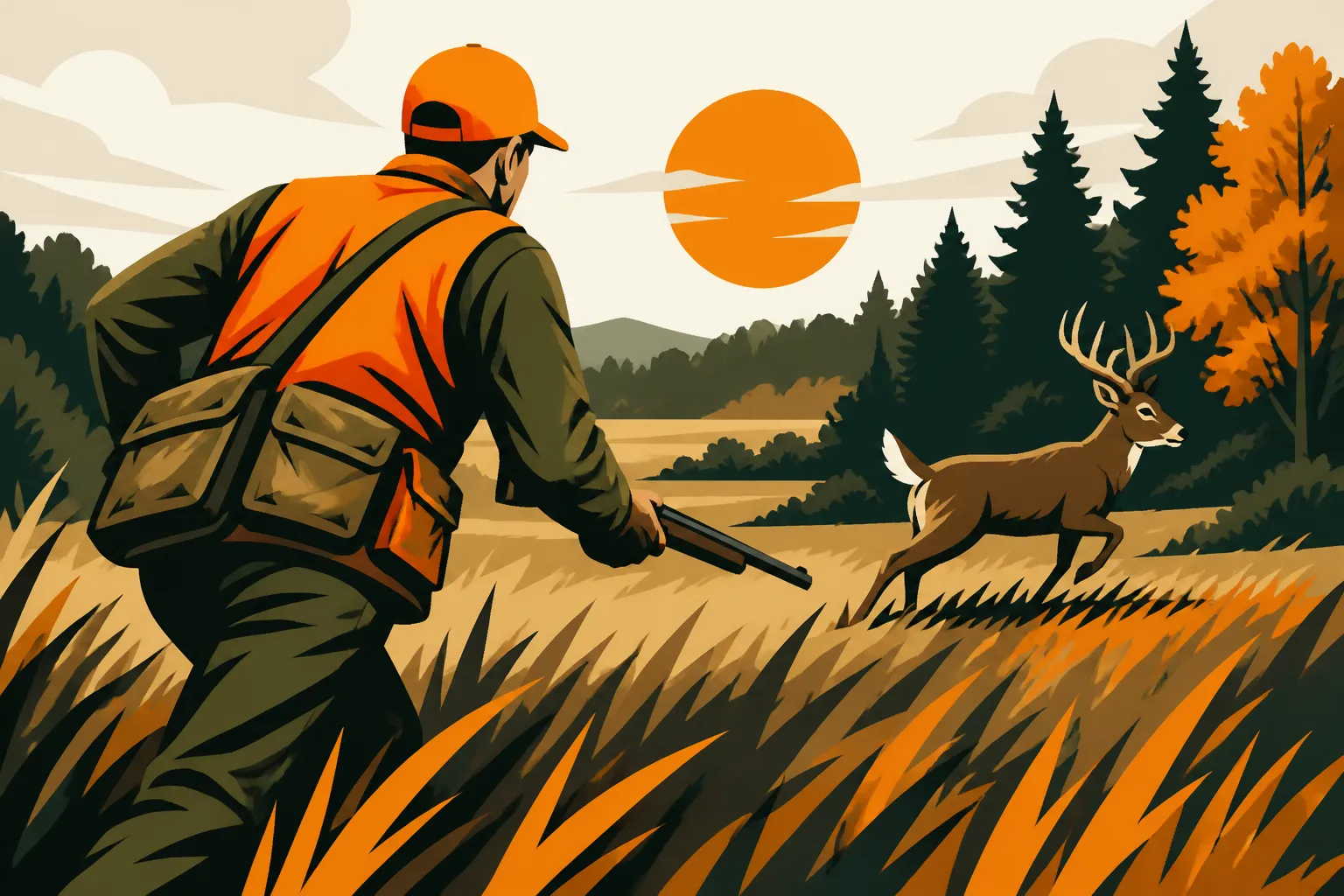
The beauty of the run-and-gun method is its ability to react. Instead of waiting for deer to come to you, you're actively seeking them out based on fresh sign and immediate conditions. You're not committed to a stand that might have been hot last week but is dead today. This means you can follow fresh tracks, investigate new rubs and scrapes, or even move to intercept deer that other hunters have pushed.
Imagine you're quietly moving through a section of a Wisconsin State Wildlife Area, and you hear distant shots or voices. While a hunter in a fixed stand might just curse their luck, a run-and-gun hunter can pivot. That noise might push deer towards a natural funnel or a thicket where you can position yourself for an encounter. It’s about being a predator, not just a passive observer. Tools like the Scouting With the Wisconsin Hunt Wild App can be invaluable here, letting you quickly assess terrain features and plan your next move on the fly.
Finding Those Overlooked Pockets
Public lands are vast, but many hunters tend to stick to the easier-to-access areas or well-worn trails. This leaves countless overlooked pockets of cover, steep hillsides, and dense thickets that deer call home precisely because they offer refuge from human disturbance. A run-and-gun approach allows you to systematically cover more ground and delve into these harder-to-reach places.
Instead of hunting the "spots," you're hunting sign. You're constantly evaluating the landscape for fresh tracks, recent browses, and new rub lines. These are the clues that tell you where deer are now, not where they were yesterday or last week. By being mobile, you increase your chances of stumbling upon these hidden sanctuaries where deer feel safe, allowing you to access game that might otherwise be considered untouchable. It’s about breaking free from the predictable patterns of other hunters and carving your own path.
Essential Gear for the Mobile Hunter
When you're committed to covering ground and being ready to move at a moment's notice, your gear choices become paramount. Every ounce counts, and every piece of equipment needs to serve a purpose without bogging you down. It's about efficiency and preparedness, not carrying the kitchen sink.
The Lightweight, Minimalist Pack
The absolute foundation of run-and-gun hunting is a lightweight, efficient pack. Forget the big, bulky models designed for all-day sits in a permanent stand. You need something streamlined that allows for unrestricted movement and holds only the essentials. Think small day packs, or even a good fanny pack with a shoulder strap for extra support.
What goes in it?
- Water: Stay hydrated, especially when actively moving.
- Snacks: High-energy, low-bulk options like trail mix or protein bars.
- First-aid kit: Accidents happen, especially when moving off-trail.
- Navigational tools: Your phone with a reliable mapping app (more on this below) and a backup compass.
- Field dressing kit: Knife, gloves, game bags.
- Headlamp: Crucial for walking in before dawn or out after dark.
- Emergency fire starter/whistle: For unexpected situations.
Every item should be scrutinized. Do you really need it? If it can be left behind, it should be. The goal is to move silently and swiftly, and excess weight or bulk will hinder that. For instance, a quality, lightweight backpack like those offered by Mystery Ranch or Kuiu can make a huge difference, distributing weight efficiently and quietly. Check out "Packs for a Day on Public Land" for more ideas on what to carry.
Optics and Navigational Lifelines
While you're not glassing across huge expanses, good optics are still vital for run-and-gun. A compact, lightweight pair of 8x or 10x binoculars can help you pick apart distant cover, confirm a rub line, or spot movement without having to move in closer and risk blowing your cover. A small rangefinder is also helpful for quickly verifying shot distances, especially in varied terrain like the Driftless Area coulees.
However, your most critical navigational tools will be digital. A smartphone loaded with a robust hunting app is non-negotiable. Apps like HuntStand, OnX Hunt, or even the Wisconsin DNR's own Wisconsin Hunt Wild App offer satellite imagery, property lines, and GPS tracking that are essential for staying found and understanding the land around you. These apps allow you to:
- See property boundaries: Crucial for avoiding trespass on public/private interfaces.
- Mark sign: Drop pins for fresh tracks, rubs, or potential bedding areas.
- Track your movement: Review your path, understand wind direction relative to your approach.
- Identify terrain features: Find those hidden funnels or ridge points that deer use.
Many advanced hunters even use features from services like GoHunt to scout new areas virtually, identifying potential pinch points or overlooked bedding cover before they ever set foot in the woods. These digital tools significantly enhance your ability to "read" the land quickly and make informed decisions on the move.
Clothing for Active Pursuit
Layering is always important in Wisconsin, but for run-and-gun, it takes on even greater significance. You'll be expending more energy, which means you'll generate more heat, but then you might sit for a short period, and you'll cool down fast. The key is to manage your core temperature efficiently to prevent sweating out and then getting chilled.
Choose quiet fabrics that won't snag on brush or rustle loudly with every step. Merino wool or high-quality synthetics are excellent choices for base and mid-layers, as they wick moisture and retain warmth even when damp. An outer layer should be windproof and water-resistant, but also breathable. For the late season, "Cold Weather Sitting Strategy" offers great advice on staying warm, but remember to adapt it for active movement by shedding layers before you get too warm.
Don't forget the practicalities:
- Durable pants: Something that can withstand briars and thick cover.
- Comfortable, supportive boots: You'll be walking miles, so good ankle support and waterproofing are key for traversing anything from swampy areas to rocky ridges.
- Blaze orange/pink: Always adhere to Wisconsin's regulations, wearing the required amount. Consider vests or caps that are easily added or removed for optimal visibility.
Strategies for Effective Run-and-Gun Hunting
The beauty of run-and-gun isn't just in the gear; it's in the mindset and the practical application of smart hunting strategies. It's about being observant, patient, and knowing how to interpret the deer's language as you move through their world.
Reading the Deer's Daily Newspaper
When you're constantly moving, your eyes become your most valuable scouting tool. You're not looking for historical sign; you're looking for fresh sign that tells you deer are using this area right now. This means:
- Tracks: Are they fresh? Are they traveling a specific direction? What's the size?
- Rubs: Are they new, with fresh wood exposed? Do they follow a line, indicating a travel corridor?
- Scrapes: Are they recently pawed, with fresh dirt and a strong scent? Is the licking branch broken or chewed? Following a series of Scrape Lines Along a Logging Road can sometimes lead you directly to a buck's core area.
- Browsing: Are there fresh nips on vegetation, particularly on preferred browse species like dogwood, cedar, or aspen?
Learn to distinguish between old and new sign. A shiny, wet rub is a gold mine; a gray, faded one tells you where a buck was, not necessarily where he is. Your job is to connect these fresh dots to predict immediate deer movement. Don't be afraid to change your plan entirely if you find a cluster of hot sign in an unexpected place.
The Invisible Hunter: Wind and Thermals
No matter your hunting method, understanding wind and thermals is paramount, but for run-and-gun, it's even more critical. You're constantly moving, which means your scent cone is constantly shifting. Always try to move with the wind in your face or quartering to you. This keeps your scent behind you, hopefully away from the deer you're approaching.
In hilly terrain, like Wisconsin's Driftless Area, thermals play a massive role. In the morning, as the sun warms the earth, air currents (and your scent) tend to rise. In the evening, as the air cools, they fall. So, if you're still-hunting uphill in the morning, your scent is rising with you. If you're moving downhill in the evening, your scent is falling ahead of you. Ignoring these natural air currents is a surefire way to get busted. For a deeper understanding, check out "Wind and Thermals in a Coulee." A small wind checker bottle is a must-have item in your minimalist pack.
The Art of Still-Hunting
Still-hunting is the cornerstone of the run-and-gun approach. It's not about walking quickly through the woods; it's about moving at a snail's pace, pausing frequently, and using your eyes and ears to detect deer before they detect you. Think "three steps and stop," or even "one step and stop."
As you move through varied Wisconsin habitats like Still-Hunting Wisconsin Cedar Swamps or the dense hardwoods of the Northern Forest, your eyes should be constantly scanning for:
- Movement: Even a flick of an ear or tail can give a deer away.
- Shapes and colors: Look for horizontal lines (a deer's back) in a vertical world, or subtle changes in color that indicate a deer's coat.
- Parts of a deer: Don't look for the whole deer; look for an antler tine, an eye, a leg.
- Sounds: Listen for rustling leaves, antler rubs, or deer blowing.
It takes immense patience and discipline. Use every bit of cover available to break up your outline. Move from tree to tree, ridge to ridge, constantly evaluating the landscape. When you pause, let your eyes slowly dissect the terrain in front of you, from close to far, side to side. You'll be amazed at what you can spot when you slow down and truly observe.
Targeting Specific Deer Movement Patterns
Even on public land, deer have preferred travel routes and bedding areas. Your job as a run-and-gun hunter is to identify these on the fly and position yourself accordingly.
- Funnels: These are natural constrictions in the landscape that force deer into a narrower travel corridor. This could be a strip of timber between two open fields, a saddle in a ridge, or a narrow point between a swamp and a steep bluff. Actively Hunting a Funnel Between Two Swamps can be incredibly productive.
- Edges: Deer love edges – where two different habitat types meet, like a field edge meeting the woods, or a dense thicket meeting more open timber.
- Bedding Areas: While you generally don't want to bust deer out of their beds, knowing where they prefer to bed (e.g., south-facing slopes in winter, dense cover near food) allows you to set up downwind of approach routes. Knowing Where Northern Forest Bucks Bed can help you anticipate their movements.
- Topographical Features: Reading the contours of the land is key. Deer will often walk just below a ridge top on a "bench" or use the lee side of a hill to escape wind. Understanding how to interpret a Reading a Ridge Point for Deer Movement can tell you exactly where a buck might travel.
Using your mapping app, scout these features virtually and then confirm them on the ground with fresh sign.
Adaptability and Situational Awareness
The true essence of successful run-and-gun hunting on public land lies in your ability to adapt. Conditions change, deer react, and other hunters will inevitably influence your day. Being able to roll with these punches and leverage them to your advantage is what separates a frustrating outing from a successful one.
Turning Other Hunters' Pressure into Your Opportunity
Public land hunting often means dealing with other people. Instead of seeing them as a nuisance, a smart run-and-gun hunter can view them as a tool. When other hunters walk through an area, they often push deer out. Your goal is to anticipate where those deer might go and position yourself to intercept them. This is particularly effective during the gun season or on busy opening weekends.
If you hear footsteps or distant voices, immediately consider escape routes deer might take. Are there thick swamps, deep ravines, or dense conifer stands they might head for? Move quickly and quietly to a position that overlooks these escape routes, staying downwind. You might be surprised how often deer, once bumped, will cautiously move through these areas looking for new security, presenting you with a shot. It's about understanding Hunting Pressure on Wisconsin Public Land and turning it on its head. Also, by focusing on areas others often overlook, you can find Finding Ground Others Walk Past.
The Critical Moments: Post-Shot Recovery
When you're actively moving, your shot opportunities might come quickly and unexpectedly. When you do get a shot, the run-and-gun mindset continues into the recovery phase. Because you're likely in unfamiliar territory and potentially far from a main trail, knowing your recovery plan is crucial.
- Mark the shot location: As soon as you shoot, mentally or physically mark the exact spot where the deer was standing, and where it ran. Pick out a specific tree, rock, or landmark.
- Listen carefully: After the shot, listen for sounds of the deer crashing, or the direction it ran.
- Give it time: Unless you saw the deer drop, resist the urge to immediately pursue. Sit down, collect your thoughts, and give the deer time to expire. For heart/lung shots, 30 minutes to an hour is usually sufficient. For gut shots, several hours or even overnight is often necessary.
- Start the trail: Once you begin tracking, move slowly and methodically. Look for blood, broken twigs, hair, or disturbed leaves. If the trail is sparse or disappears, expand your search in circles or grids. Having a good headlamp is essential, as tracking can often lead to Blood Trailing After Dark in Wisconsin.
If you find yourself on a tough trail in a remote spot, don't hesitate to call for help if needed. Modern GPS apps allow you to easily share your location with hunting partners or even game wardens if you hit an impossible scenario.
Weathering the Wisconsin Elements
Wisconsin weather is notoriously unpredictable. A beautiful crisp morning can quickly turn into a snowy squall or a cold rain. A successful run-and-gun hunter must be prepared for these rapid changes, especially if you're deep on public land.
- Layering: As discussed, quality layering allows you to add or subtract clothing as temperatures and activity levels change.
- Waterproofs: A lightweight, packable rain jacket and pants are non-negotiable. Getting wet in cold weather is a fast track to hypothermia.
- Headwear and gloves: You lose a lot of heat through your head and extremities. A warm hat and gloves are essential, and a lighter pair of shooting gloves for dexterity.
- Footwear: Waterproof boots are critical. Your feet will thank you after miles of walking through wet leaves, snow, or marshy areas.
Sometimes, a fresh snow can be your best friend, making deer sign incredibly easy to read. Still-Hunting After a Wisconsin Snow can be incredibly effective, as deer often become more active after a snowfall, and their tracks tell a clear story. Always check the forecast, but pack for the unexpected.
Here's a quick comparison of traditional vs. run-and-gun for Wisconsin public land:
| Feature | Traditional Stand Hunting | Run-and-Gun Hunting |
|---|---|---|
| Commitment | Fixed location, waiting for deer to come to you. | Dynamic movement, actively seeking deer. |
| Adaptability | Low; tied to one spot, vulnerable to changing conditions. | High; able to react to fresh sign, pressure, and weather. |
| Pressure | Highly susceptible to pressure, deer learn stand locations. | Can leverage other hunters' pressure to move deer. |
| Scouting | Pre-season focus, finding "hot spots" for stands. | Continuous, real-time scouting, reading fresh sign on the move. |
| Gear Weight | Can be heavier (larger stands, more comforts). | Minimalist, lightweight, focused on mobility. |
| Coverage | Limited to the visibility from your stand. | Covers extensive ground, finds overlooked pockets. |
| Physical Demand | Lower, often involves long periods of sitting. | Higher, requires consistent walking and vigilance. |
| Success Rate | Can be feast or famine depending on deer patterns/pressure. | Offers more opportunities through active pursuit. |
Embracing the run-and-gun style on Wisconsin public land is more than just a tactic; it's a philosophy. It acknowledges the realities of pressured land and empowers you to be a proactive hunter, constantly engaged, constantly learning, and always ready to make a move. It's challenging, rewarding, and often, the most effective way to fill a tag when the woods are full of other hunters.
Disclaimer
Hunting is an inherently dangerous activity. Always prioritize safety, understand and follow all Wisconsin hunting regulations, and be aware of your surroundings and other hunters. This guide is for informational purposes only and does not replace proper hunter education or professional guidance.