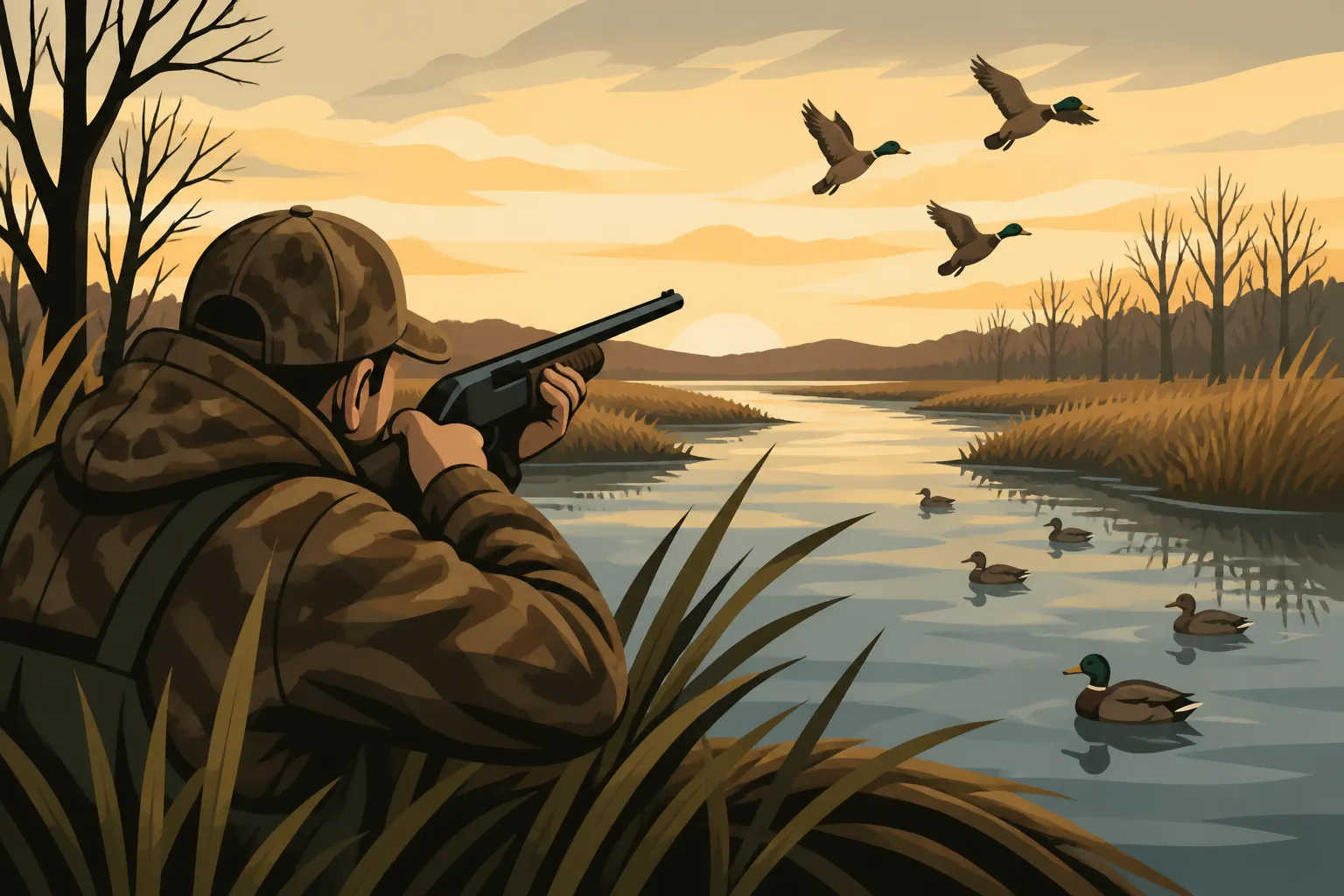
Hunting Mississippi River Backwater Sloughs
Hunting the vast and dynamic backwater sloughs of the Mississippi River in Wisconsin can feel like stepping into a different world, a watery labyrinth that challenges even seasoned outdoorsmen. Many hunters find themselves overwhelmed by the sheer scale of the river, the ever-changing water levels, and the difficulty of finding prime hunting spots amidst the endless islands and channels. This guide is dedicated to unraveling the complexities of these unique hunting grounds, providing you with the practical knowledge and confidence to successfully navigate, access, and hunt the Mississippi River backwaters for waterfowl, deer, and small game.
Understanding the Mississippi River Backwater Environment
The Mississippi River, particularly its expansive floodplain along Wisconsin's western border, offers a truly unique hunting experience. These aren't your typical marsh or timber hunting spots; they are a constantly evolving landscape governed by the ebb and flow of one of the world's great rivers.
The Unique Ecosystem of Backwater Sloughs
Backwater sloughs are essentially side channels, oxbows, and stagnant ponds connected to the main river channel. They are often shallower, less impacted by the main current, and rich in aquatic vegetation that provides critical food and cover for wildlife. What makes them so fascinating, and at times frustrating, is their dynamic nature. Water levels can fluctuate dramatically with rainfall upstream or the operation of dams, changing access points, creating new cover, or revealing previously submerged hazards. One day, a slough might be perfectly navigable by a small boat, and the next, it could be a muddy bog or a raging torrent.
The vegetation within these sloughs is incredibly diverse. You'll find everything from submerged aquatic plants like wild celery and sago pondweed, which are prime waterfowl food, to emergent plants like cattails, bulrushes, and smartweed that offer excellent concealment. Stands of silver maple, willow, and cottonwood often line the banks of larger islands and the river's edge, creating additional habitat. Understanding this ever-changing mosaic is paramount. A slough that's barren one season might be choked with duck potato the next, radically altering its appeal to birds. It’s a constant puzzle to solve, requiring keen observation and adaptability.
Key Game Species in the Backwaters
While the Mississippi River backwaters are primarily renowned as a waterfowl hunter's paradise, they also offer opportunities for other game, particularly whitetail deer and various small game.
Waterfowl: Without a doubt, ducks and geese are the stars of the backwater show. During migration, these sloughs become critical staging and feeding areas. You'll encounter a vast array of duck species, including mallards, wood ducks, pintails, gadwalls, wigeon, and various teal. Diver ducks, such as canvasbacks and redheads, might frequent larger, deeper sloughs or the main channel, though often Canvasbacks on the Mississippi River prefer more open water. The smaller, shallower sloughs, especially those with abundant emergent vegetation and submerged food, are mallard and wood duck magnets. Canada geese also utilize these areas, especially where there are exposed mudflats or adjacent agricultural fields. The sheer volume and variety of birds can be astounding, but also means scouting is vital to pinpoint where the different species are feeding and loafing.
Deer: Many hunters overlook the deer potential in the backwaters. The numerous islands and the dense riparian corridors along the river's edge provide excellent cover, bedding areas, and often overlooked food sources. Deer will swim between islands, cross sloughs, and utilize the thickets as sanctuaries, especially during periods of high hunting pressure elsewhere. While tracking deer in the backwater might be challenging due to the wet, broken terrain, the opportunities for still-hunting or setting up ambush points along travel corridors can be surprisingly good. Identifying bottlenecks between islands or narrow strips of high ground becomes key to intercepting their movements.
Small Game: Don't forget about the small game that thrives in this environment. Squirrels are abundant in the mature timber found on higher ground and islands, particularly around oaks and hickories if they are present. Rabbits can be found in the dense brushy tangles along the banks and on wooded islands. These can provide a fun addition to a waterfowl hunt, especially if the ducks aren't flying. For hunters willing to explore beyond just waterfowl, the backwaters hold diverse opportunities.
Accessing and Navigating Mississippi River Backwaters
Getting into the backwaters is half the battle, and it requires specific knowledge, equipment, and a healthy respect for the river itself.
Launch Points and Public Access
The good news is that much of the Wisconsin side of the Mississippi River backwaters is public land, managed by the Wisconsin DNR, the U.S. Fish and Wildlife Service (as part of the Upper Mississippi River National Wildlife and Fish Refuge), or by various county and state entities. Finding official launch points is relatively straightforward in many towns and villages along the river, such as La Crosse, Prairie du Chien, or Alma. These ramps often cater to larger boats but can serve as a starting point for smaller craft heading into the backwaters.
However, to truly get into the most productive sloughs, you might need to find more subtle access points. This is where tools like the Wisconsin DNR's public access maps and apps like GoHunt become invaluable. These resources allow you to overlay public land boundaries with satellite imagery, helping you identify potential informal launch spots, shallow access points, or even stretches where you might be able to put in a kayak or canoe without a formal ramp. Always double-check land ownership, especially along private land adjacent to the river, to ensure you're not trespassing. Referencing resources like Mississippi River Backwater Access Points can give you specific guidance on popular and lesser-known entry points. Remember, gaining a deep understanding of the area before you even launch is critical.
Essential Gear for Backwater Navigation
Navigating the backwaters requires specialized equipment beyond what you'd typically use for a lake or large river. Safety and capability in shallow, obstacle-ridden water are key.
Boats and Motors: A traditional V-hull boat with a standard outboard might work for getting to the mouth of some backwater areas, but it's often too deep and easily fouled for true slough exploration. The preferred craft here are shallow-draft boats like jon boats, flat-bottom boats, or even canoes and kayaks. Many experienced backwater hunters opt for boats equipped with a mud motor or a jet drive outboard. These specialized propulsion systems excel in very shallow water, over submerged vegetation, and even through muddy stretches where a prop-driven motor would bog down or get damaged. If you're running a standard prop, always carry a spare shear pin (or several) and the tools to change it, as striking submerged logs or stumps is a common occurrence.
Push Poles and Paddles: No matter your motor setup, a sturdy push pole is absolutely essential. There will be times when the water is too shallow, too thick with weeds, or too obstructed for any motor. A good push pole, ideally one that floats, allows you to silently maneuver your boat into position or free yourself from a sticky situation. Paddles are also crucial for quiet approaches and as a backup in case of motor trouble. Think of them as extensions of your arms, allowing precise movement in tight quarters.
Waders and Safety Equipment: Given the wet environment, high-quality chest waders are non-negotiable, even if you plan to hunt from a boat. You'll be setting decoys, retrieving birds, and potentially navigating on foot. Choose durable waders suitable for cold water. As for safety, always wear a life vest, especially when the water is cold or if you're alone. Carry a whistle, a fully charged cell phone (in a waterproof case), and a GPS device or a robust mapping app like GoHunt on your phone. The backwaters can be disorienting, with numerous identical-looking islands and channels. Getting lost is a real possibility, especially in fog or low light. A small anchor and sufficient rope for mooring your boat are also critical, as currents can still be present, and you don't want your boat drifting away.
Effective Hunting Strategies for Backwater Sloughs
Once you've mastered access and navigation, it's time to focus on the hunt itself. The backwaters demand specific tactics tailored to their unique conditions.
Waterfowl Hunting Tactics
Waterfowl hunting in the Mississippi River backwaters is often a game of finesse and understanding bird behavior.
Decoy Placement and Blind Setup: The key to successful backwater decoy spreads is realism and adaptability. Large spreads aren't always necessary; sometimes a dozen well-placed decoys are more effective than a hundred scattered haphazardly. Focus on creating a natural-looking landing zone for incoming birds, often positioning decoys in a loose "J" or "U" shape with an open pocket downwind. If hunting wood ducks, consider placing a few decoys near flooded timber edges. For mallards, target shallow flats with emergent vegetation. Motion decoys, like spinning wing or jerk rigs, can be very effective in grabbing attention.
Blind setup is equally crucial. Instead of bulky commercial blinds, many backwater hunters prefer natural blinds. Utilize existing cattail stands, fallen trees, or brush piles, enhancing them with natural vegetation from the immediate area. A simple layout blind or a boat blind brushed in thoroughly can also work wonders. The goal is to blend seamlessly into the environment. Remember the advice from Hunting Cattail Marsh for Ducks – the denser the cover, the better your concealment. The birds here see a lot of pressure, so anything that looks out of place will often send them flaring.
Calling Strategies and Migration Timing: Your calling needs to match the pressure and the species. Early in the season, less aggressive calling might be sufficient. As the season progresses and birds become call-shy, subtle quacks and feed chuckles might be more effective than loud, aggressive hailing calls. Learn to identify the different calls of the ducks you're targeting and respond appropriately. Locator calls, like a mallard drake's "rab-rab" or a pintail whistle, can help identify distant birds.
Timing the migration is also a huge factor. Pay attention to weather patterns, especially cold fronts pushing down from the north. These often bring fresh waves of migrating birds. Keep an eye on local bird reports and flyway conditions. The early season often sees local wood ducks and teal, while the mid-season (often late October into November) can bring the peak of the mallard and diver migrations. The Mississippi River is a major flyway, and understanding when different species typically arrive will dramatically increase your odds. Consider looking into Wisconsin Waterfowl Seasons and Zones to align your efforts with peak migration.
Still-Hunting for Deer and Small Game
While many focus on waterfowl, the backwaters offer intriguing possibilities for still-hunting.
Deer Hunting on Islands and Fringes: Deer use the islands and river fringes as refuge, especially during the gun deer season when mainland areas are bustling with hunters. These areas provide dense thermal cover, escape routes, and often overlooked browse. To effectively hunt deer here, you need to think differently. Instead of sitting a stand over a field, you'll be slowly and deliberately moving through thick cover, watching for subtle signs. Look for trails that follow high ground, connect islands, or lead to specific patches of browse. Focus on areas with varied topography, even slight elevations can become preferred bedding sites when other areas are flooded. A key strategy is to use the prevailing wind and the natural contours of the land to your advantage. Try to locate pinch points created by water bodies or dense thickets where deer movement is concentrated. Using aerial photos, perhaps through GoHunt, to identify these natural funnels before you step foot in the woods can save you hours of aimless wandering.
Rabbit and Squirrel Opportunities: For small game, the strategy is similar but less demanding. Rabbits thrive in briar patches, dense willow thickets, and brush piles along the water's edge. Squirrels will be found in mature hardwoods, particularly oak and hickory stands on higher islands. Still-hunting for squirrels means moving slowly, scanning tree trunks and limbs, and listening for the tell-tale rustle of leaves or the sound of nuts being cut. For rabbits, focus on pushing through dense cover, often flushing them from their hiding spots. These hunts are a great way to fill some time if the waterfowl aren't cooperating or to introduce new hunters to the joys of the field.
Overcoming Challenges and Ensuring Safety
The wild nature of the Mississippi River backwaters presents unique challenges that require careful consideration and preparation.
Dealing with Changing Water Levels and Currents
The river's hydrology is perhaps the biggest variable you'll face. Water levels can rise or fall by several feet in a matter of days or even hours, dramatically altering the landscape. What was an accessible channel yesterday could be a dry mudflat today, or a swift, deep current. This means constant vigilance and flexibility are necessary. Always check river levels before you head out, and be prepared for conditions to change while you're afield.
Currents, even in seemingly placid backwater sloughs, can be strong, especially after heavy rains. If you have to anchor, use sufficient rope and a strong anchor. When running your boat, be mindful of how currents can push you into obstacles or make maneuvering difficult. Knowing how to use Marsh Boats and Push Poles effectively can mitigate risks in these situations. Always consider the potential impact of changing water on your exit route – don't get stuck in a slough that dries up, or trapped by a current that becomes too strong to navigate safely.
Navigating Legalities and Regulations
Hunting on the Mississippi River means dealing with a complex patchwork of regulations, as it often forms the state boundary between Wisconsin and Minnesota or Iowa.
State Lines and Special Zones: It is absolutely crucial to know your exact location and the specific regulations that apply. The state boundary often runs down the middle of the main channel, but backwater areas can be entirely within one state or straddle the line. Your GoHunt app or other GPS device with land boundaries will be your best friend here. Always ensure you have the correct licenses and stamps for the state you are hunting in, including federal and state waterfowl stamps, and HIP certification if required.
Many parts of the Mississippi River are also designated as part of the Upper Mississippi River National Wildlife and Fish Refuge. While hunting is generally permitted, there can be specific refuge rules, such as restrictions on motor size, blind construction, or even temporary closures. Always consult the specific refuge regulations and Wisconsin DNR publications before heading out. Additionally, some areas, like The Mississippi River Goose Zone, might have specific season dates or bag limits that differ from statewide regulations. Ignorance of the law is no excuse, and wardens patrol these areas regularly.
Hunting Hours and Permit Requirements: Standard hunting hours typically apply, but always verify for specific zones. While many backwater areas are open to general hunting, some managed waterfowl areas along the river might require special permits or have draw systems for access, similar to Hunting Horicon Marsh Waterfowl. These are generally well-publicized by the DNR, but it's your responsibility to check. Understand the rules for temporary blinds and leaving equipment overnight on public land, as these can vary. Always register your harvested game according to Wisconsin regulations. The bottom line is to do your homework; a little research beforehand can save you a lot of grief and potential fines.
Disclaimer
Please remember that hunting is an inherently risky activity. Always prioritize safety, understand and follow all relevant hunting regulations, and respect private property. The information provided in this guide is for informational purposes only and should not replace official safety courses or legal advice from the Wisconsin Department of Natural Resources or other authoritative bodies. Conditions in the field can change rapidly, and hunters must always exercise their own judgment and take appropriate precautions.