Reading a Ridge Point for Deer Movement
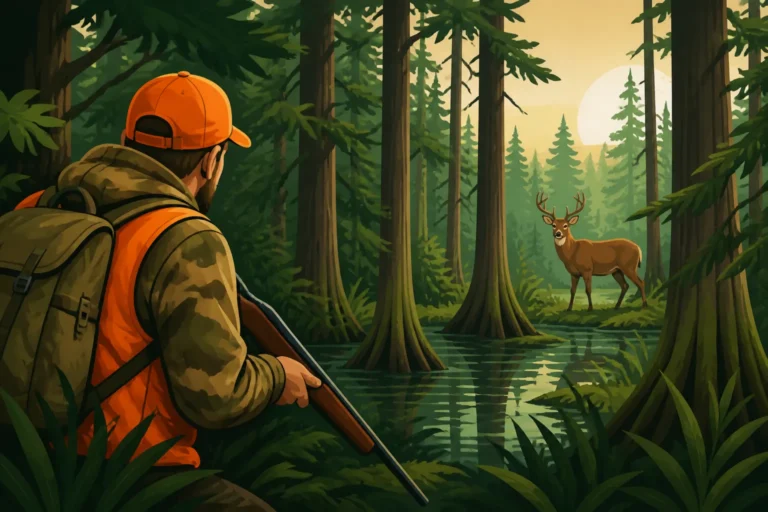
Oh, the elusive whitetail! There's nothing quite like the frustration of trying to predict where a savvy Wisconsin deer will show up, especially when you're hunting those tricky ridge points. You know the ones – those fingers of high ground that jut out from main ridges, looking like prime deer country but often leaving you scratching your head. This guide is all about helping you unlock the secrets of these critical terrain features, giving you the insights you need to anticipate deer movement and finally connect with that big buck or a much-needed doe.
The Anatomy of a Wisconsin Ridge Point and Why Deer Use Them
Ridge points might seem simple on a map, but on the ground, they're complex features that deer use for a myriad of reasons, from efficient travel to vital security. Understanding their physical makeup in different Wisconsin landscapes is the first step to hunting them effectively.
Defining the "Point" and its Variations in Wisconsin Terrain
At its core, a ridge point is essentially a protrusion or a finger extending from a larger ridge or highland. Think of it like a natural arm reaching out into lower terrain. But just like every hunter has their own style, every ridge point in Wisconsin has its own character, shaped by the diverse geology of our state.
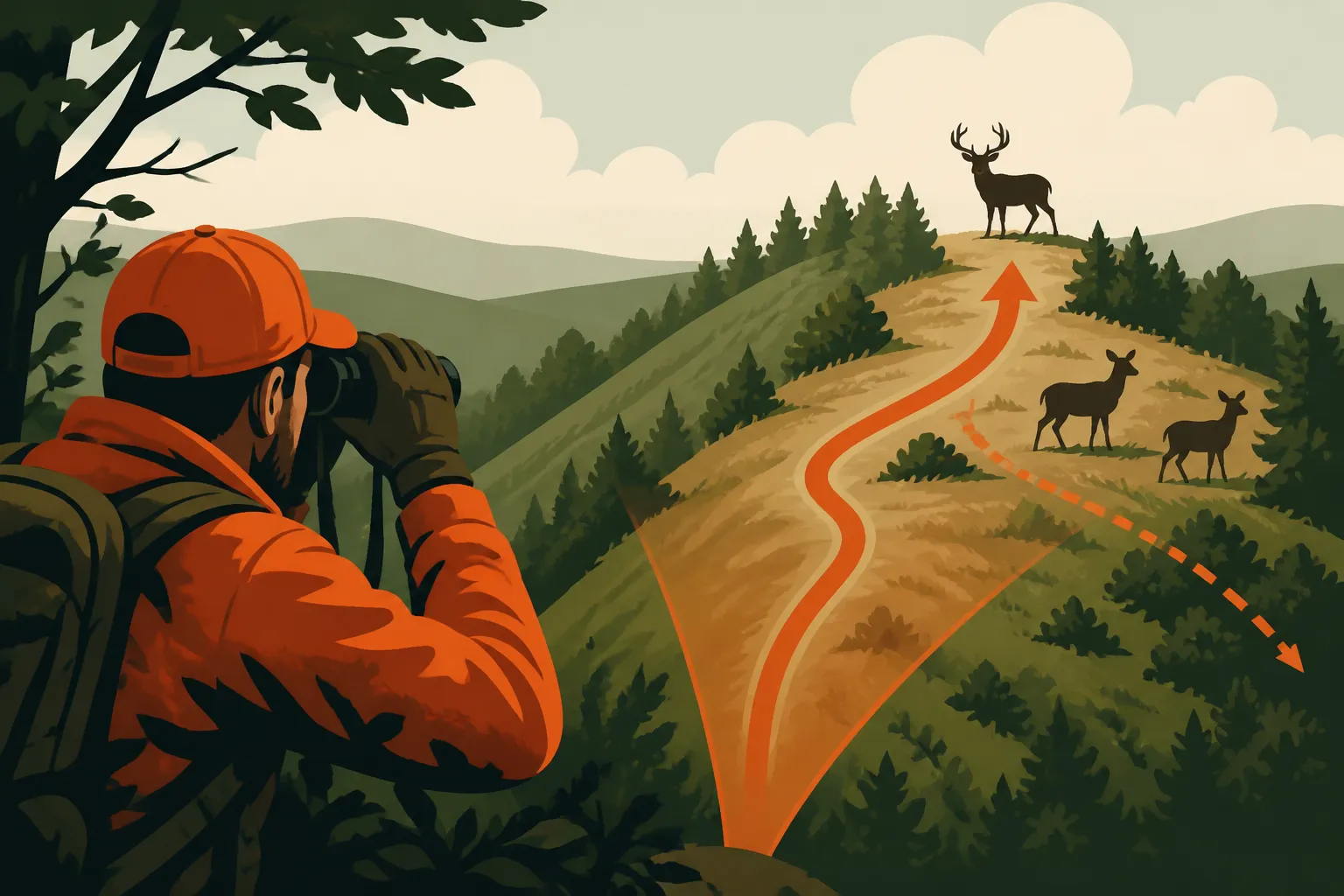
In the famous Driftless Area Deer Hunting in Wisconsin of southwestern Wisconsin, these points are often dramatic and sharply defined, carved by ancient rivers and glaciers that never quite reached this corner of the state. Here, you'll find steep, heavily timbered slopes falling away on multiple sides, creating clear travel corridors and natural barriers. A deer moving along one of these points has a commanding view, a distinct advantage in avoiding predators (including us hunters!). You'll often see distinct benches or terraces on these points where deer will pause, feed, or even bed, offering perfect staging areas. These points are typically composed of hardwoods, with oak and hickory often dominant, providing crucial mast crops in the fall.
Head north, into the vast expanses of the Hunting the Wisconsin Northern Forest for Deer, and the ridge points become subtler, often less pronounced. Here, they might be more gradual, rolling undulations of high ground, often covered in dense coniferous cover like pine or cedar, or thick deciduous regeneration from past logging operations. The topography is less dramatic, but the principles remain the same – deer still seek out these elevated pathways for easier travel through dense woods and to gain a slight advantage in visibility. Finding these points might require a closer look at a topographic map or utilizing mapping tools like GoHunt that highlight elevation changes more clearly. The vegetation shifts too; you'll encounter more aspen, birch, and a mix of conifers that provide excellent thermal cover and bedding opportunities, even if the elevation change isn't as striking.
Even in the Central Sands region, where the terrain is generally flatter, you'll find subtle ridge points. These might be slightly elevated sandy knolls, often covered in red pine plantations or oak savannas. While not as dramatic as the Driftless, these slight rises still offer deer an advantage, allowing them to survey their surroundings and navigate through otherwise uniform landscapes with greater ease. Recognizing these subtle variations is key to adjusting your tactics.
Thermal Hubs and Wind Corridors
Deer are masters of using natural elements like wind and thermals to their advantage, and ridge points are often prime examples of these natural phenomena working in their favor. Understanding these forces is absolutely critical for effective hunting, as it dictates when and how deer will utilize these points.
Thermals are essentially columns of rising or falling air, driven by temperature changes throughout the day. In the morning, as the sun begins to warm the earth, air rises up from the valley bottoms, pulling scent upwards. This means that a deer bedded on a ridge point might have its nose to the wind, catching any scent coming up from below, giving it an early warning system. Conversely, in the evening, as the air cools, thermals begin to fall, pushing scent down into the valleys. A deer traveling down a ridge point towards a food source in the lowlands can rely on these falling thermals to carry its scent ahead, alerting it to any danger below. Ridge points become thermal hubs because they represent the transition zones where these air currents are most active and predictable. Ignoring thermals is one of the quickest ways to bust deer on these features. For a more detailed look at these dynamics, check out Wind and Thermals in a Coulee.
Beyond thermals, prevailing winds are a constant factor. A ridge point, by its very nature, is exposed. Deer will often choose to travel or bed on the leeward side of a ridge point – the side sheltered from the direct wind. This not only offers them some relief from biting cold winds, especially during the late season, but it also creates a predictable travel lane. They can use the wind blowing over the ridge to carry scent from one direction, while simultaneously watching or listening for danger approaching from the downwind, sheltered side. For example, if the wind is out of the west, a deer might travel along the eastern side of a ridge point, using the wind to detect anything approaching from the west, while keeping an eye on the more open, downwind slope to the east. This strategic use of wind allows them to stay safe and conserve energy, making these specific lanes on a ridge point highly reliable for consistent deer movement.
Deciphering Deer Sign on a Ridge Point
Once you understand the physical layout and the invisible forces at play, the next step is to get on the ground and read the "deer language" etched into the landscape. Ridge points are often highways for deer, and they leave behind plenty of clues.
Locating Rubs, Scrapes, and Trails on the Edges
Finding fresh sign on a ridge point is like finding breadcrumbs leading to the deer's secret pantry. You're looking for evidence of their daily routines and, especially during the rut, their social interactions.
Rubs are probably the most obvious sign, especially in the fall. Bucks, eager to shed velvet and demonstrate dominance, will rub their antlers against small trees and saplings. On a ridge point, you'll often find rubs concentrated along the main travel corridors or just off the edge, where bucks are announcing their presence. Look for fresh rubs with splintered wood and sap still visible, indicating recent activity. Pay attention to the size and height of the rubs; larger, higher rubs usually mean a more mature buck. In Wisconsin, you'll see rubs on everything from small maples and oaks to aspens and even young pines. A line of rubs leading down a point can show you exactly how a buck is entering or exiting an area, providing invaluable intel. It's not just about finding one rub; it's about connecting the dots to see the entire "rub line."
Scrapes, those bare patches of earth pawed clean by bucks, often accompanied by an overhead licking branch, are another goldmine of information. On ridge points, you'll typically find scrapes along the benches, at the intersection of trails, or where a point starts to drop off into a feeding area. These are communication hubs, where deer leave scent. Primary scrapes are often larger, revisited frequently, and are usually found on prominent travel routes. Secondary scrapes might be smaller and more scattered. Always look for that licking branch – it's crucial. Bucks will rub their pre-orbital glands on it and urinate into the scrape, creating a potent scent post. The presence of fresh tracks in the scrape mud, or a recently chewed licking branch, tells you it’s hot. Using a mapping app like GoHunt can help you mark these signs precisely, so you can track patterns year after year.
Deer trails are the literal pathways. On ridge points, trails tend to be well-defined, especially where deer are moving consistently between bedding and feeding areas, or simply cruising during the rut. Look for deep, worn paths, especially where multiple trails converge or diverge. You'll want to distinguish between primary travel routes – used day in and day out – and less-used escape routes. Pay attention to how trails cross over or parallel the contours of the point. A trail that skirts just below the crest of a ridge, for instance, offers a deer a vantage point while staying slightly hidden. When scouting, think about where these trails lead – do they funnel into a swamp, a food plot, or another ridge system? Understanding these connections is key to predicting larger-scale deer movement.
Identifying Bedding Areas and Escape Routes
Finding where deer rest and escape on a ridge point is just as important as knowing where they travel. These are often the spots where deer feel most secure, and targeting them requires a different approach.
Deer will often bed on ridge points because the elevation gives them a thermal advantage, especially on cold days, and a visual advantage. They can often see down into multiple drainages or across a valley, while being somewhat concealed by topography or cover. Look for thick cover on the downwind side of the point – dense pines, cedar swamps, or thick brush piles. Deer prefer to bed with the wind at their back or crossing their flank, so they can detect danger from one direction with their nose and watch for it from another with their eyes. A specific tactic is to look for small benches or slight depressions just off the top of the point. These micro-terrain features offer both concealment and a quick exit strategy. You'll often find old beds in these spots, identifiable by flattened grass or leaves. A deer might bed with a clear view of its approach and a quick, steep drop-off behind it for a swift escape. In the northern forests, finding Where Northern Forest Bucks Bed on these more subtle points is about finding the densest cover that still offers a slight elevation advantage.
Beyond bedding, every smart deer has an escape route planned. On a ridge point, these are typically less-used, subtle trails that provide a quick way to drop off the point and disappear into thicker cover, often utilizing a steep incline or a hidden ravine. When you find a bedding area, always look for these escape routes nearby. They might be small, faint trails leading directly into a thick tangle of brush or down a steep bank that's difficult for a hunter to navigate quickly and quietly. Deer use these routes to evade pressure, and knowing them can help you anticipate their movements when you apply pressure. For instance, if you bump a deer off a point, observing its escape direction can tell you where it feels safest and where it might be headed for denser cover. Understanding these escape routes is critical for both stand placement and for planning strategic deer drives, especially during Deer Drives With Three or Four Hunters.
Strategic Hunting Setups and Tactics on Ridge Points
Knowing where deer are and why they're there is only half the battle. The other half is knowing how to effectively hunt them without giving yourself away.
Choosing the Right Stand Location Based on Wind and Access
This is where the rubber meets the road. All your scouting culminates in choosing that perfect setup. The biggest mistake hunters make on ridge points is neglecting wind and their own entry/exit.
First and foremost, wind direction is absolutely paramount. You simply cannot effectively hunt a ridge point with your scent blowing into the area you expect deer to approach from or pass through. Always position your stand downwind or crosswind of the anticipated deer travel route. This means you need to have multiple stand locations or a mobile setup that allows you to adapt to changing wind conditions. For example, if you have a prominent ridge point that deer use heavily, you might identify two or three distinct stand sites around it: one for a north wind, one for a south wind, and perhaps one for an east/west crosswind. Never compromise on wind. The best location on a map is useless if your scent alerts every deer in the county.
Second, consider your entry and exit routes. Getting to and from your stand without spooking deer is just as important as the hunt itself. Can you approach quietly, perhaps using a drainage, an existing ditch, or a dense fenceline to mask your movement and scent? Avoid walking through known bedding or feeding areas on your way in or out. On steep Driftless ground, your entry might involve using a deep ravine or creek bed to conceal your approach. Knowing Entry Routes on Steep Driftless Ground is vital here. Plan your routes to minimize disturbance and to keep you out of the deer's line of sight and scent cone.
When it comes to stand types, treestands offer the best vantage point for seeing deer moving along the contours of a ridge point, especially in hardwoods. Being elevated not only helps with visibility but also gets your scent higher off the ground. For more on this, check out Treestand Setups in Wisconsin Hardwoods. However, in areas with sparse trees or heavy brush, a well-placed ground blind can be incredibly effective, especially if brushed in properly. If you're considering a ground blind, learn more about Using a Ground Blind on Wisconsin Public Land to maximize your concealment. The choice depends on the specific cover and topography of your ridge point.
Timing Your Hunt and Reading Deer Behavior
Deer movement on ridge points isn't constant; it ebbs and flows with the time of day, season, and even the deer's mood. Your timing is everything.
The best times to hunt ridge points often align with the transition periods of the day: early morning and late afternoon. In the morning, deer are often returning from feeding areas in the valleys or fields and heading back up to bed on the points or higher ground. Sitting on a point that intercepts these trails can be deadly. In the evening, the reverse happens: deer move from their bedding areas on the point down towards feeding locations.
During the rut, ridge points become even more active. Bucks are constantly cruising, checking for estrous does. They use these elevated corridors to cover ground efficiently while scent-checking draws and low spots. This is prime time for encountering a buck just passing through. Knowing Hunting the Pre-Rut in Late October and Hunting the Peak Rut Week in Wisconsin will highlight how intense this movement can be. Don't be afraid to incorporate calling tactics. Light rattling or a few well-placed grunts can sometimes pique the curiosity of a cruising buck on a ridge point, bringing him within range. For tips on effective calling, read Rattling and Grunting in Wisconsin.
Beyond these peak times, patience and observation are your greatest allies. Deer movement can be subtle. Sometimes, a buck might just poke its head over the crest of a ridge, test the wind, and disappear. Others might slowly work their way along a bench for an hour before offering a shot. Learning to sit still, observe patterns, and resist the urge to move too soon is crucial. Use your binoculars or a spotting scope (like those offered by GoHunt) to glass distant areas and predict when a deer might enter your shooting lanes. Pay attention to smaller details like squirrels chattering or birds alarming, as these can often signal approaching deer before you see them.
Adapting to Different Seasons and Hunting Pressure
Deer behavior isn't static, and neither should your approach be. Ridge points hold deer throughout the hunting year, but how they use them changes dramatically.
In the early season (think September archery), deer are highly patterned around food sources. Ridge points often serve as direct highways between bedding areas and agricultural fields or prime acorn flats. Your focus here should be on intercepting deer as they transition, often in the last hour of daylight. They might move slower, in family groups, and be less wary if hunting pressure is low.
As the season progresses into the rut in late October and November, deer become less predictable in their patterns, but their use of ridge points intensifies. Bucks are no longer just focused on food; they're constantly on the move, scent-checking, and looking for does. A ridge point becomes an ideal place for them to survey an area without expending too much energy. This is when those cruising bucks are most likely to be encountered, often moving quickly and covering a lot of ground.
In the late season (December and January), after gun season, deer become much more nocturnal and wary. They seek out thermal cover and rely heavily on remaining food sources. Ridge points that offer dense evergreen cover (pines, cedars) will become prime bedding areas, especially on cold, sunny days where they can soak up warmth. Your tactics might shift to hunting midday, when deer are more likely to be up and moving between thermal cover and food, or focusing on secluded, hard-to-reach points that have seen less pressure.
Finally, hunting pressure plays a massive role. On public land, especially in areas like the Chequamegon-Nicolet National Forest or popular state wildlife areas, deer will quickly adapt to human presence. Heavily pressured deer will use ridge points at night, or stick to the densest cover along the edges during daylight. They might use less obvious "ghost trails" or move through areas hunters typically avoid. This is when knowing how to identify secluded pockets on a ridge point, or finding ground others walk past, becomes crucial. You might need to hike further, delve deeper into thickets, or use different tactics like still-hunting very slowly along a ridge point to jump deer out of their beds. Don't assume a visible trail means daytime movement if the pressure is high. Always factor in how many other hunters might be pushing deer in your area.
| Ridge Point Type (Wisconsin) | Typical Features | Deer Movement & Hunting Considerations |
|---|---|---|
| Driftless Area | Steep, defined fingers; hardwood timber; benches | Strong thermal currents; clear travel corridors; good for ambush, especially during rut; prioritize wind & quiet access |
| Northern Forest | Subtler, rolling; mixed conifer/deciduous; dense cover | Reliable for connecting thick bedding to feeding; excellent thermal cover in evergreens; harder to see deer, good for still-hunting |
| Central Sands | Slight elevation; pine plantations/oak savannas | Deer use for travel through uniform landscape; focus on edges of thickets; thermals less pronounced but still a factor |
| Farmland Fringe | Wooded fingers extending into fields; often near swamps | Key transitions between bedding in timber/swamp and feeding in fields; evening sits are crucial; watch for field edges |
Disclaimer
Hunting is an inherently dangerous activity. Always prioritize safety, follow all Wisconsin Department of Natural Resources regulations, and obtain proper licenses and permits. The information provided in this guide is for educational purposes only and should not be taken as professional advice. Always scout thoroughly and understand the specific conditions of your hunting area.