Bone Saws Versus the Gutless Method
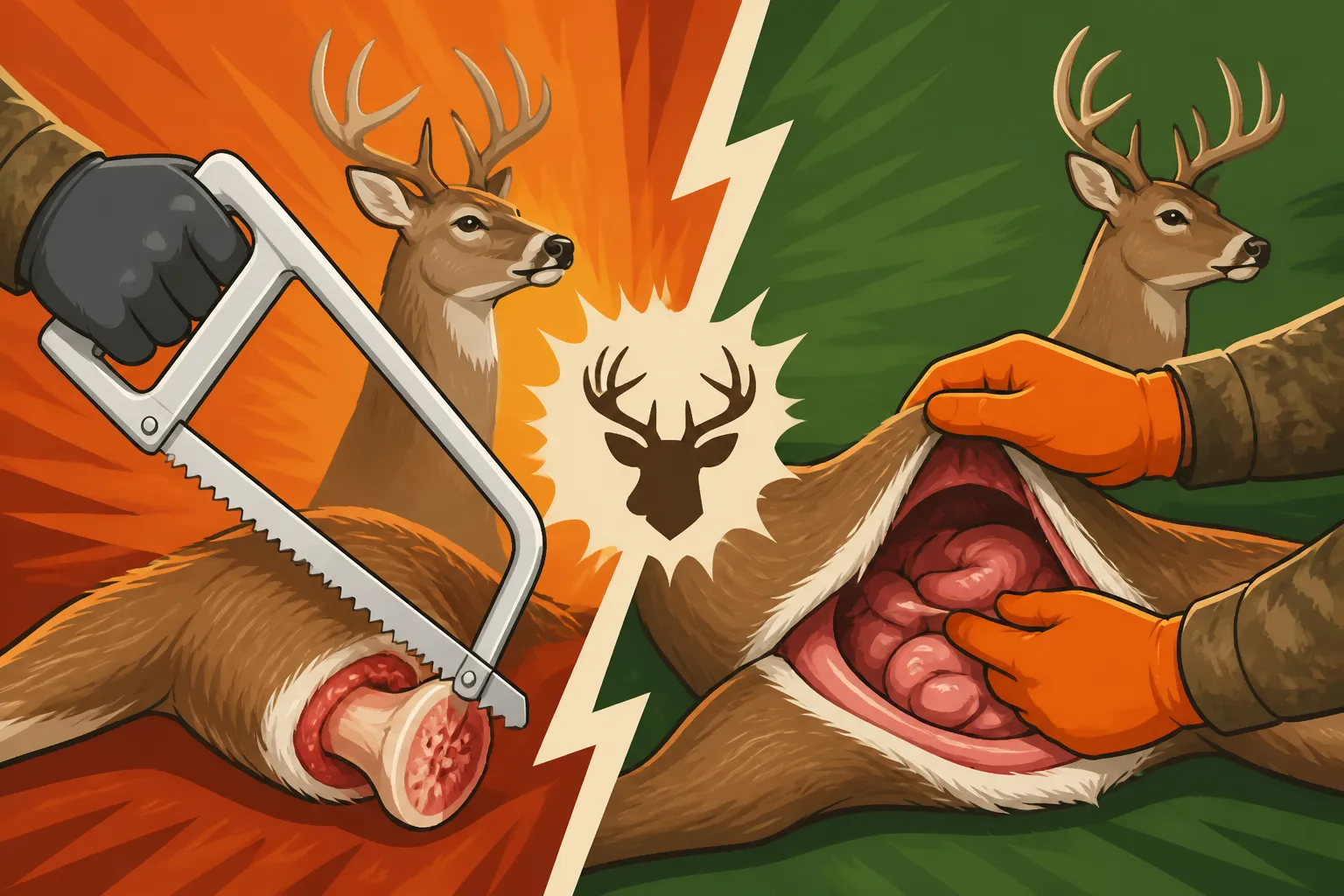
Finding yourself with a downed deer miles from the truck, especially in thick Wisconsin timber or a steep Driftless Area coulee, often brings a wave of mixed emotions. The excitement of a successful hunt quickly collides with the daunting reality of game retrieval. When faced with the critical task of breaking down your animal for the pack out, many hunters grapple with the age-old question: do you opt for the brute force of a bone saw or the finesse of the gutless method? This guide will dive deep into both approaches, helping you decide which strategy best suits your hunting style and the rugged challenges of a Wisconsin hunt.
The Traditional Approach: Bone Saws and Their Place
For generations, hunters have relied on bone saws as a staple for processing game in the field. There's something undeniably classic about the "zip" of a saw blade through a sternum or pelvis, signaling the start of the field dressing process. This method feels familiar and robust, but like any tool, it has its ideal applications and its drawbacks, especially when you're battling the elements or difficult terrain.
When a Bone Saw Shines (and When it Doesn't)
A good bone saw truly excels when you're performing a full, traditional field dress, especially if your truck or ATV is relatively close by, or if you're planning to take the whole carcass to a processor. The saw makes quick work of splitting the sternum to open the chest cavity wide, allowing for easy evisceration and rapid cooling of the animal. It's also invaluable for splitting the pelvis, which provides access for a thorough clean-out and can help air circulate even better. Imagine you've dropped a big buck just a quarter-mile from a logging road in the Northern Highland-American Legion Forest; a bone saw is going to get that job done efficiently. You'll be back at camp in no time, recounting the tale of the hunt and maybe even starting to think about Butchering a Deer at Camp.
However, the advantages start to diminish the further you get from easy access. Carrying a saw, even a folding one, adds weight and bulk to your pack. The act of sawing itself can be physically demanding, requiring leverage and often getting you into some pretty awkward positions, especially on uneven ground. Plus, the more you open the animal, the more opportunities there are for debris, dirt, or even hair to get into the meat, increasing the risk of contamination. If you're slogging through a cedar swamp or trying to drag a deer up a steep incline, the thought of adding more weight and a messier process might have you wishing for an alternative.
Types of Bone Saws and What to Look For
Not all bone saws are created equal, and choosing the right one can make a significant difference in your field experience. Generally, you'll find a few main types. There are compact, folding saws, which are popular for their portability. These are usually small enough to fit in a pack pocket and are perfect for light work like opening a sternum or small bones. Look for models with a sturdy locking mechanism, as a blade that folds unexpectedly mid-cut is not only frustrating but dangerous. Fixed-blade saws, while less compact, often offer greater rigidity and are excellent for more aggressive cutting. Some even come with sheaths that can attach to your belt or pack. Then there are larger, more robust camp saws, designed for breaking down larger animals or processing firewood. These are probably overkill for just field dressing a deer but could be useful if you're planning a full quartering operation at a base camp.
When shopping, pay attention to the blade material. Stainless steel is common and resists rust, which is crucial for a tool that will encounter blood and moisture. The tooth pattern matters too; finer teeth are good for clean cuts, while more aggressive teeth will remove material faster. Finally, consider the handle. An ergonomic, non-slip grip is essential, especially when your hands are cold, wet, or bloody. You want something you can really lean into without fear of losing your grip. Brands like Gerber, Outdoor Edge, and Wyoming Saw are often favored by hunters for their reliability.
Practical Use and Care in the Field
Using a bone saw effectively means understanding a few basics. When splitting the sternum, gently pull the rib cage apart as you saw to keep the blade from binding. For the pelvis, locate the joint (it's often easier to feel than see) or the soft cartilage if cutting straight through bone. Always saw away from your body and be mindful of your surroundings – a slipping saw can cause serious injury. One tip I always share: if you're using it to split the pelvis, try to elevate the rear of the deer slightly. This opens up the cavity, making access easier and minimizing the chance of gut contents spilling onto your meat.
After the work is done, cleaning your saw immediately is paramount. Blood and tissue can dry and stick, making future cleaning difficult and harboring bacteria. A quick rinse with water (if available) and a wipe down with an antiseptic wipe or even just paper towels will go a long way. Once you're home, a thorough scrubbing with hot, soapy water and a good drying will ensure your saw is ready for the next hunt. A light coat of food-grade oil can also prevent rust on non-stainless parts, especially if you store it in a damp environment. Being prepared with the right tools, including your chosen saw, is part of a successful hunt, and GoHunt maps can often help you anticipate the terrain you'll be navigating, influencing your gear choice.
Embracing the Gutless Method for Backcountry Success
The "gutless method" might sound intimidating, or even a bit unconventional, to those used to traditional field dressing. But trust me, once you master it, it can be a game-changer, especially for hunters pushing deep into public land or navigating particularly challenging terrain in Wisconsin. It's a method born out of necessity for mountain hunters, but it's found a loyal following among whitetail hunters who value efficiency, cleanliness, and reduced effort for retrieval.
What is the Gutless Method, Really?
At its core, the gutless method involves removing all the usable meat from an animal without ever opening the body cavity. That's right – no guts, no mess, no smell, and significantly less weight to contend with. Instead of eviscerating the animal, you skin one side, quarter out the meat (backstraps, hindquarters, front shoulders, neck meat), then flip the animal and repeat on the other side. The organs remain largely undisturbed within the carcass, which is left behind. This technique is particularly beneficial for hunters who are often a long way from their vehicle, whether they're hiking miles into the Chequamegon-Nicolet National Forest or tackling the rugged elevation changes of the Driftless Area Deer Hunting in Wisconsin. It transforms a 150-pound deer into manageable, packable portions, often reducing the retrieval weight by half or more. Imagine the difference when you're trying to perform Dragging a Deer Up a Coulee Wall – every pound saved is a victory!
This method isn't just about weight; it's also about hygiene. By keeping the gut cavity intact, you drastically reduce the chance of gut contents, hair, or external contaminants coming into contact with your valuable meat. This is particularly crucial during warmer early season hunts, like Bowhunting Wisconsin's Long Archery Season, where rapid cooling and clean meat handling are paramount to preventing spoilage. You'll be amazed at how clean your game bags remain when using this approach.
Step-by-Step: Breaking Down a Wisconsin Deer Gutless-Style
Let's walk through a simplified breakdown of the gutless method on a Wisconsin whitetail. You’ll need a sharp Field Dressing Knives Worth Carrying and some Game Bags for Warm September Days or appropriate for the season.
- Positioning and Initial Cuts: Lay the deer on its side, ideally on a tarp or clean ground, though a clean, grassy spot is fine. Make an incision from the sternum down the belly to the pelvis, just through the skin. Then, cut around the anus and genitals, separating the hide.
- Skinning the First Side: Begin skinning the deer from this belly cut upwards over the back, using your knife to separate the hide from the muscle. You want to peel the hide back until you've exposed the backstrap, front shoulder, and hindquarter on one side. Work slowly and carefully to keep the meat clean and free of hair.
- Removing the Hindquarter: Locate the ball joint where the femur meets the pelvis. Carefully cut around this joint, severing the ligaments and muscles until the entire hindquarter can be removed. Be mindful of the tenderloins, which are inside the cavity, but you can usually access them later.
- Removing the Front Shoulder: This is generally easier as the front shoulder is not attached by a ball-and-socket joint, but rather by muscle and connective tissue. Simply cut around the scapula (shoulder blade), separating the entire front shoulder from the rib cage.
- Accessing the Backstrap and Tenderloin: Now, cut along the spine, freeing the backstrap from the top of the ribs. Peel it away carefully. If you want the tenderloins (and you absolutely should!), you can often reach inside the cavity through the opened hindquarter area or by carefully making an incision along the spine, without fully opening the abdomen. Reach in and strip them away.
- Neck and Other Trim: Don't forget the neck meat! It's excellent for grinding. Carefully trim any other usable meat from the ribs or flanks.
- Flip and Repeat: Once one side is completely deboned and all desired meat is removed and placed in game bags, carefully roll the deer over and repeat the entire process on the other side.
This method takes practice, but once you get the hang of it, you'll be amazed at how quickly you can process an animal into clean, packable portions. Many hunters find helpful videos online, and a practice run on a less-critical animal (like a doe you tag early in the season) can boost your confidence. If you're using GoHunt maps to scout remote areas, having this skill in your arsenal is invaluable.
Advantages and Disadvantages in Wisconsin's Diverse Terrain
The advantages of the gutless method in Wisconsin are numerous, especially for public land hunters. First and foremost is the drastically reduced weight. Instead of dragging or packing out a whole deer, you're only dealing with boneless meat, which is significantly lighter. This makes long hauls, particularly over the steep, broken terrain of the Hunting Wisconsin Coulees and Ridge Tops or through the dense, swampy cover of Still-Hunting Wisconsin Cedar Swamps, much more manageable. You can use a dedicated frame pack or heavy-duty Packs for a Day on Public Land to haul multiple trips if needed.
The cleanliness factor is another huge plus. By not opening the abdominal cavity, you avoid the mess, smell, and potential for contamination that comes with gut piles. This is especially beneficial in warmer weather, common during Wisconsin's early archery season, where meat spoilage is a real concern. Coolers for an Early Archery Kill are essential, but clean meat in game bags makes that task much easier. Furthermore, leaving the gut pile intact and undisturbed can sometimes deter predators from focusing solely on your kill site, potentially making it safer for retrieval later.
However, the gutless method isn't without its challenges. It requires more precise knife work and a good understanding of deer anatomy. If you're not careful, you can leave some meat on the bone or contaminate it with hair. It also generally takes a bit more time than a quick traditional gutting, though this can be offset by the faster, lighter pack out. And, for hunters who prefer to take the whole carcass to a processor or who want the skull with an attached spine for a taxidermy mount, the gutless method isn't ideal without making extra cuts. Additionally, if Chronic Wasting Disease (CWD) is a concern in your hunting area, traditional field dressing can make it easier to ensure all lymphatic tissue and brain matter are removed for testing before you start deboning. Always check current Wisconsin DNR regulations regarding CWD testing and carcass transport, especially in areas like Which Wisconsin Counties Have CWD.
Making the Choice: Which Method Suits Your Hunt?
Deciding between a bone saw and the gutless method isn't about one being inherently "better" than the other. It's about being prepared and choosing the right tool and technique for the specific situation you find yourself in. Every hunt is different, and Wisconsin's diverse landscapes certainly present a variety of scenarios.
Factors to Consider for Your Next Wisconsin Hunt
Several key factors should influence your decision:
- Distance from Vehicle/Road: This is probably the biggest determinant. If you're less than a quarter-mile from your truck on flat ground, a traditional gutting with a bone saw might be faster, and you can simply drag the deer out. However, if you're a mile deep into a county forest or across several ridges, the gutless method is almost always the smarter, lighter, and cleaner option. Think about using your GoHunt app to mark your kill site and then measuring the distance and elevation profile to your truck – that data will tell you a lot.
- Terrain: Wisconsin throws everything at you: steep coulees, dense swamps, open hardwoods, and thick brush. Trying to drag a whole deer through a tag alder thicket or up a slippery, leaf-covered ridge is exhausting and often nearly impossible alone. In such terrain, breaking the animal down with the gutless method and packing it out in manageable loads is often the only realistic choice. Conversely, a gentle slope or a wide logging road might lend itself better to a drag.
- Weather Conditions: Temperature plays a huge role in meat care. On a warm early archery day, getting the hide off and the meat cooling quickly is critical. The gutless method excels here because it exposes more meat to the air rapidly, and minimizes contamination that can accelerate spoilage. On a frigid Muzzleloader Tactics in December Cold hunt, you might have more time, but the bone saw could be challenging with frozen hide or stiff muscles.
- Number of Hunters: If you're hunting with a group and have multiple people to help with a drag or share packing duties, a full field dress and teamwork for extraction become much more viable. For solo hunters, the gutless method often feels like the only practical solution for a successful remote harvest.
- Personal Preference and Experience: Ultimately, choose the method you're most comfortable and proficient with. If you've field dressed dozens of deer traditionally and are quick and clean with a saw, stick with it where appropriate. If you're eager to learn new skills or push into tougher areas, invest time in practicing the gutless method.
Combining Techniques for Optimal Efficiency
Sometimes, the best solution is a hybrid approach. For instance, you might do a quick, traditional field dress with a small bone saw to remove the organs and cool the cavity, especially if you anticipate a short drag. But then, if you realize the drag is tougher than expected, or you want to break it down further at a halfway point, you can still quarter the animal off the bone. Or, some hunters will partially gut the deer to get the tenderloins, then proceed with the gutless method for the rest of the usable meat.
Conversely, you might perform the gutless method in its entirety but still use a small bone saw for any stubborn cartilage or small bone connections that are proving difficult with a knife. This adaptability is key to being a prepared and successful Wisconsin hunter, ready for whatever the woods throw at you.
Essential Tools for Both Approaches
Regardless of which method you lean towards, having the right gear on hand is non-negotiable for safe and efficient game processing. Here's a quick overview of must-have items:
| Item | Bone Saw Method | Gutless Method | Notes |
|---|---|---|---|
| Knives | Field dressing knife, small boning/caping knife | Field dressing knife, longer boning/fillet knife | Sharpness is paramount for both. Consider a replaceable blade knife for gutless. Field Dressing Knives Worth Carrying are key. |
| Bone Saw | Essential for sternum/pelvis | Optional, for difficult joints or large animals | Folding or fixed blade, depending on portability needs. |
| Gloves | Essential, latex/nitrile | Essential, latex/nitrile | Protects hands from bloodborne pathogens and keeps meat clean. Carry multiple pairs. |
| Game Bags | Essential, even for whole carcass to keep dirt off | Absolutely essential for boned-out meat | Breathable, synthetic bags are best. Game Bags for Warm September Days for early season. |
| Paracord/Rope | For securing deer for drag, hanging limbs | For hanging quarters, securing meat bags | Multi-purpose, always useful. |
| Whetstone/Sharpener | Important for maintaining blade | Crucial for constant knife sharpness during deboning | A dull knife is a dangerous knife, and slows you down immensely. |
| Headlamp | Essential for low-light conditions | Essential for low-light conditions | You never know when you'll be working after dark. |
| Small Tarp | Optional, for clean working surface | Highly recommended for clean meat processing | Keeps meat off the ground and free from debris. |
| First Aid Kit | Always carry one | Always carry one | Especially critical when working with sharp tools. |
| Water/Wipes | For hand washing and blade cleaning | For hand washing and blade cleaning | Helps maintain hygiene. |
| Pack/Sled/Cart | For dragging whole deer (sleds especially for Snow and Forest Road Access Up North) | For packing out boned-out meat (Packs for a Day on Public Land) | Choose based on terrain and distance. |
Ultimately, both bone saws and the gutless method are valuable skills in a Wisconsin hunter's toolkit. Your choice will often come down to the specifics of your hunt: how far you are, the terrain, the weather, and your comfort level. Take the time to understand both, practice when you can, and always prioritize clean meat and safe handling. Being prepared for any scenario is what makes a truly successful hunter in the varied and beautiful landscapes of our state.
Disclaimer
This article is for general informational purposes only and does not constitute professional advice. Laws, prices and regulations vary by location and change over time. Consult a qualified professional for guidance on your specific situation.