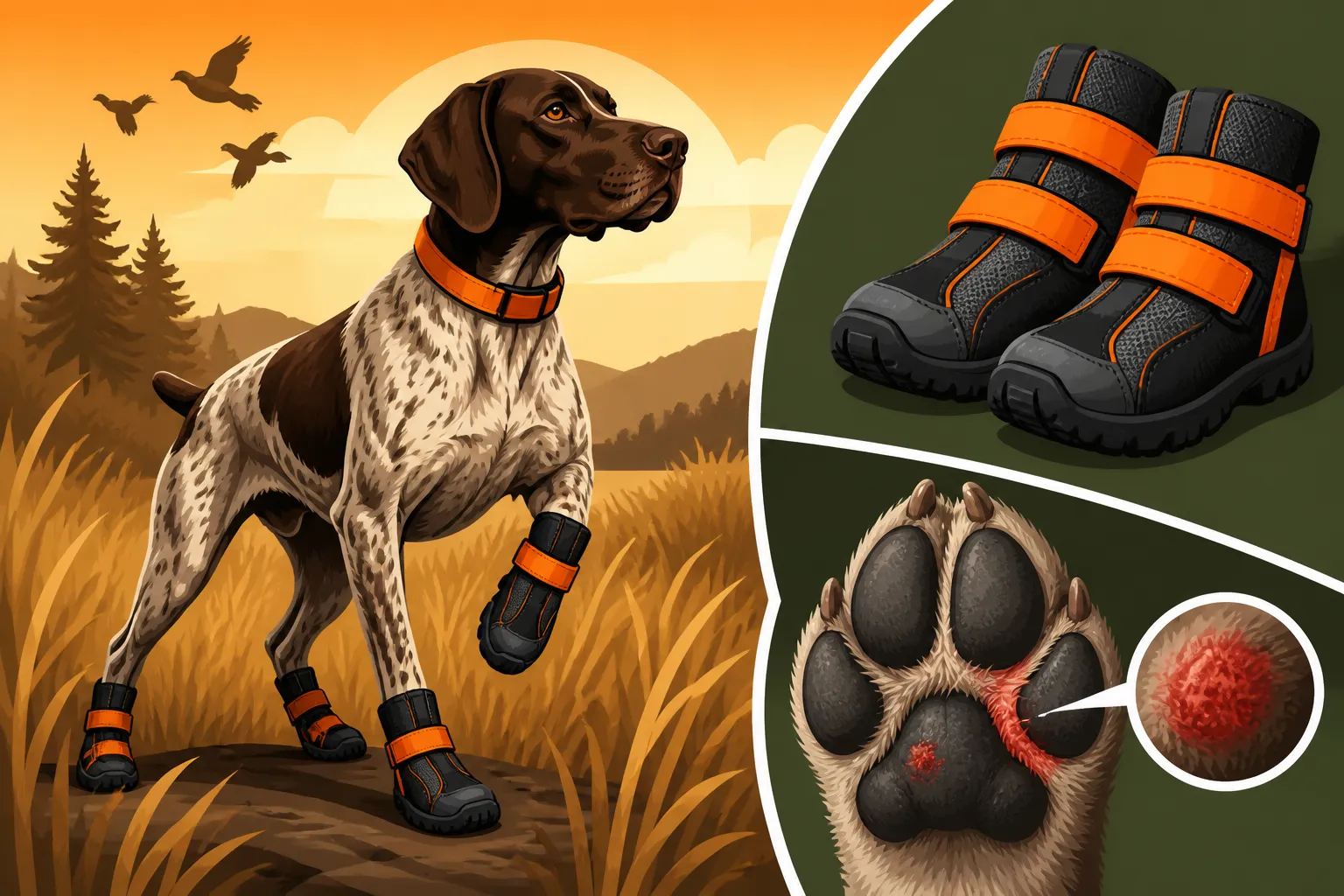
Bird Dog Boots and Cut Pads
There’s nothing quite like watching your bird dog work a cover, nose to the ground, tail wagging with anticipation. It's a beautiful thing, the culmination of training, instinct, and a shared passion for the hunt. But that sheer joy can turn to gut-wrenching worry in an instant when you see them favor a paw, or worse, come limping back with a nasty cut. Wisconsin's diverse hunting grounds, from gnarly aspen cuts to icy cattail marshes, are unforgiving on a dog’s delicate pads, and this guide is all about protecting those precious paws so your hunting partner can stay in the field longer and healthier.
The Harsh Realities of Wisconsin Upland Cover for Your Dog's Paws
Wisconsin is a hunter's paradise, offering everything from rolling agricultural fields to dense northern forests. While this variety is fantastic for chasing different game, it also means your bird dog's paws are constantly contending with an ever-changing gauntlet of abrasive and potentially dangerous surfaces. We often focus on our own gear, but our dogs' primary tools—their feet—need just as much, if not more, consideration.
What Your Dog's Paws Face Out There
Think about the terrain your dog covers in a typical hunt. It's rarely a manicured lawn. In late season pheasant fields, that corn stubble isn't just a minor annoyance; it's a field of tiny, rigid spears waiting to jab between toes or slice pads. When you're Grouse Hunting Wisconsin Aspen Cover or pushing through dense alder runs for woodcock, your dog is plowing through a tangle of thorns, briars, and sharp broken branches that can easily puncture or abrade their sensitive paw pads.
And let's not forget the cold. Hunting late into the fall or during a crisp Wisconsin's Fall Turkey Season can mean frozen ground, which might seem benign, but those tiny ice crystals can be incredibly abrasive, leading to dry, cracked pads that are prone to injury. Running gravel roads between fields, scrambling over rocky outcroppings in the Driftless Area Deer Hunting in Wisconsin, or even just pushing through dried-up marsh grass can take a serious toll. Even seemingly harmless burrs and sticky seeds are a menace, working their way deep into the fur between toes, causing irritation, matting, and sometimes even creating open sores if not promptly removed. It’s a constant battle out there, and their paws are always on the front line.
Common Paw Injuries and Their Impact
The types of injuries a dog can sustain on their paws are varied, but almost all of them can put a swift end to your hunt and sideline your dog for weeks. Cuts and abrasions are probably the most common. A sharp stick, a piece of glass, or even a jagged rock can cause a deep gash that bleeds profusely and requires stitches. Imagine your dog, full of energy, suddenly yelping and holding up a paw, blood staining the snow or leaves – it's a truly heartbreaking moment for any dog owner.
Torn pads are perhaps the most debilitating. These aren't just surface cuts; they often involve a flap of pad tearing away from the paw. They're incredibly painful, slow to heal, and highly susceptible to infection, especially when exposed to the dirt and grime of the field. A dog with a torn pad is out of commission, sometimes for over a month, requiring careful bandaging and restricted activity. Similarly, cracked pads, often a result of dryness and cold, can be excruciating. These small fissures can deepen and bleed, making every step painful.
Beyond visible injuries, simply having sore or tender pads can significantly reduce your dog’s performance and enjoyment. They might slow down, hesitate in certain cover, or stop hunting altogether because of discomfort. And the emotional impact on us, as their partners, is profound. Seeing our dogs in pain, knowing they want to be out there but can't, is a tough pill to swallow. This isn't just about protecting their physical health; it's about preserving their spirit and your shared adventures.
Understanding Bird Dog Boots: Types, Materials, and Fit
Given the gauntlet of hazards in Wisconsin’s cover, bird dog boots have become an essential piece of gear for many upland hunters. They act as a vital shield, protecting those vulnerable paws from cuts, abrasions, extreme temperatures, and irritating debris. But not all boots are created equal, and understanding the differences is key to choosing the right pair for your hunting companion.
Different Styles and Materials for Various Conditions
When you start looking at bird dog boots, you'll quickly notice a range of styles designed for specific conditions. Many popular hunting boots are made from durable materials like Cordura or ballistic nylon. These materials offer excellent resistance to punctures and tears, making them ideal for general use in thorny thickets, brushy cover, and fields with sharp stubble. They’re usually secured with strong Velcro straps that wrap around the ankle, ensuring a snug fit.
For those who find themselves Hunting Wisconsin Waterfowl on Marsh and River, or frequently hunting in wet, muddy, or icy conditions, boots made with rubber or silicone might be a better choice. These often offer a higher degree of waterproofing and can provide better grip on slippery surfaces. They might not be as breathable as fabric boots, but the protection from moisture and extreme cold can be invaluable. Some come as slip-on designs, while others combine rubber soles with fabric uppers. On the flip side, if you're hunting in warmer early-season conditions, lighter, more breathable mesh boots might prevent overheating, though they often provide less robust protection against severe punctures. When considering options, a quick search on sites like GoHunt can help you compare materials and designs, giving you a good starting point for what might suit your hunting grounds. It's not a one-size-fits-all world; consider the specific type of cover and weather you'll encounter most often.
The Crucial Importance of Proper Fit
Choosing the right material is only half the battle; proper fit is paramount. A boot that's too loose is practically useless. It will twist around, rub against your dog's paw causing blisters, or simply fall off, leaving the paw exposed and lost somewhere in the cover. Imagine trying to walk miles in oversized shoes – it's uncomfortable and inefficient. On the other hand, a boot that’s too tight can restrict blood flow, cause painful pressure sores, and be incredibly uncomfortable for your dog, making them reluctant to wear any paw protection.
To get the right fit, it's essential to measure your dog's paw accurately. The best way to do this is to have your dog stand on a piece of paper, bearing weight on the paw you're measuring. Then, trace the outline of the paw and measure the widest point. Compare this measurement to the manufacturer's sizing chart. It's often recommended to measure all four paws, as there can be slight variations, and use the largest measurement for consistency.
Once you have the boots, test the fit at home. Put them on and let your dog walk around, run, and even shake their paw. Observe how the boots sit: do they stay in place? Is there any gapping? A good fit should be snug without being constricting, allowing for full range of motion. Don't expect perfection right away; there will likely be a break-in period for both the boots and your dog's acceptance of them. Consistency and patience will be your best friends here.
Here's a quick comparison of common paw protection methods:
| Feature | Durable Fabric Boots | Rubber/Silicone Boots | Mesh/Lightweight Boots | Paw Wax/Balm |
|---|---|---|---|---|
| Primary Use | General trail/brush | Wet/icy conditions | Warm weather, light use | Conditioning, minor abrasion |
| Material | Cordura, ballistic nylon | Rubber, silicone | Breathable mesh | Waxes, oils, balms |
| Protection Level | High (cuts, thorns) | Moderate (water, ice) | Low (light abrasion) | Very Low |
| Water Resistance | Low to Moderate | High | Low | Moderate |
| Durability | High | Moderate | Low | N/A |
| Breathability | Moderate | Low | High | High |
| Ease of Use | Moderate (straps) | Easy (slip-on) | Easy (slip-on/velcro) | Very Easy |
Cut Pads and Other Paw Protection Strategies
While bird dog boots offer the most comprehensive protection, sometimes they just aren't an option. Maybe your dog absolutely refuses to wear them, or perhaps you're in a situation where a quick, temporary fix is needed. It’s important to have other strategies in your toolkit to protect and care for your dog's paws, both for prevention and immediate response to injury.
When Boots Aren't an Option: Alternative Protection
Some dogs simply won't tolerate boots, no matter how much positive reinforcement you try. For these stubborn (or perhaps highly sensitive) pups, alternative methods can offer some level of protection. For instance, liquid bandages or even a dab of super glue (animal-safe versions, please!) can be used to seal small cuts or nicks before they become larger, more problematic wounds. This isn't for deep gashes, but for minor abrasions or small tears, it can provide a temporary barrier against dirt and further irritation, allowing you to finish a short hunt.
Another popular option is paw wax, such as Musher's Secret or similar balms. These products are designed to create a breathable barrier on the paw pads. While they won't stop a sharp thorn from puncturing a pad, they can help prevent cracking from extreme cold, reduce irritation from abrasive surfaces like sand or ice, and keep the pads moisturized and pliable. Think of it as a conditioning treatment that adds a minor layer of resistance. It's a fantastic daily preventative measure, but it's crucial to understand that paw wax is not a substitute for the robust protection that boots offer in truly harsh cover like the thick brush found when Rabbit Hunting Thick Wisconsin Brush. It's about damage mitigation, not bulletproofing.
First Aid and Post-Hunt Paw Care
Even with the best preventative measures, injuries can still happen. That's why being prepared with a solid first aid plan and diligent post-hunt care is non-negotiable. After every single hunt, especially if you've been in tough cover or the dog has been working hard, make it a ritual to inspect your dog's paws thoroughly. Look for cuts, abrasions, punctures, embedded thorns, burrs, or even just general redness and swelling between the toes. Don't rush this step. Run your fingers over each pad, spread the toes, and feel for anything out of the ordinary.
If you find something, act quickly. For minor cuts, cleaning the paw with warm water and a mild antiseptic soap (or pre-moistened antiseptic wipes that you should carry in your Upland Vests With Water Capacity or hunting pack) is key. Follow up with an antiseptic spray to prevent infection. If you find a thorn or a burr, remove it carefully with tweezers. A small, well-stocked first aid kit, as detailed in our guide First Aid Kits for Remote Northwoods Ground, should always be with you in the field. This kit should include items like self-adhesive wrap, gauze pads, antiseptic wipes, and tweezers.
For deeper cuts, profuse bleeding, or suspected punctures that might be embedded, immediate attention is crucial. Apply direct pressure to control bleeding, clean the wound as best you can, and get to a veterinarian as soon as possible. Punctures can be tricky because the exterior wound might look small, but the internal damage or potential for infection can be severe. Never underestimate a paw injury; these are the tools of your dog’s trade, and their comfort and long-term health depend on your vigilance.
Training Your Dog for Boots and Making the Most of Protection
Getting your bird dog to accept and wear boots can sometimes feel like trying to teach a cat to swim laps. They might protest, walk funny, or try to chew them off. But with patience, consistency, and a positive approach, most dogs can be trained to tolerate, and even ignore, paw protection. It's an investment in their comfort and your hunting season.
Introducing Boots Gradually
The key to successful boot training is a gradual introduction coupled with positive reinforcement. Don’t just strap them on moments before heading into the grouse woods and expect your dog to be thrilled. Start indoors, in a low-stress environment. Put just one boot on and immediately offer a high-value treat and enthusiastic praise. Let them wear it for a minute or two, then take it off, followed by more praise. Repeat this a few times a day, slowly increasing the duration.
Once they're comfortable with one boot, add a second, and then all four. The goal is to create a positive association, so they link the boots with good things like treats and affection. After they're accustomed to wearing them indoors, take them outside for short walks on familiar ground. Let them get used to the feel of walking and running with the boots on. They might do the "boot dance" at first – high-stepping or trying to shake them off – but usually, they’ll adapt. This preparatory period, long before hunting season, is crucial. Think of it like getting them ready for a tough physical challenge; you wouldn't send yourself into the field without proper Boots for Walking Wisconsin Aspen Cuts, and your dog deserves the same consideration. Sites like GoHunt often have helpful videos or articles on positive reinforcement techniques for dog gear if you're looking for more detailed methods.
Maintenance and Longevity of Your Dog's Gear
Just like your shotgun or your hunting vest, your dog's boots need care to last. After each hunt, especially if they’ve been in mud, water, or dense cover, take the time to clean them. Remove any mud, burrs, or debris from the fabric, seams, and Velcro closures. A stiff brush and warm water usually do the trick. Pay particular attention to the Velcro, as mud and plant matter can diminish its ability to secure the boot, leading to lost boots in the field.
After cleaning, it's vital to dry the boots thoroughly. Hanging them in a well-ventilated area or using a boot dryer will prevent mildew growth, foul odors, and material degradation. Storing them wet will not only make them smell terrible but can also compromise the integrity of the fabric and stitching over time. Regularly inspect the boots for wear and tear: check for holes, loose stitching, or excessively worn soles. Even the toughest materials eventually give way, and catching damage early can prevent a paw injury. Consider carrying a spare pair, especially on multi-day trips or in very remote areas. Losing a single boot can render the entire set useless and leave a paw vulnerable, turning an otherwise great hunt into a stressful situation. Proper care ensures that these crucial pieces of gear continue to protect your loyal hunting partner for many seasons to come.
Disclaimer
This article is for general informational purposes only and does not constitute professional advice. Laws, prices and regulations vary by location and change over time. Consult a qualified professional for guidance on your specific situation.