Safety Harnesses and Lifelines
The quiet solitude of a Wisconsin treestand, perched high above the forest floor, offers some of the most thrilling deer hunting experiences. Yet, that elevated position comes with a serious, often underestimated risk: falling. Far too many hunters suffer severe injuries, or worse, because they neglect proper safety. This guide isn't about scare tactics; it's about equipping you with the knowledge and tools to stay safe in the trees, focusing on the essential role of safety harnesses and lifelines.
The Unseen Danger: Why Treestand Safety is Non-Negotiable
It’s easy to get caught up in the excitement of hunting season – the scouting, the gear preparation, the anticipation of a big buck. But amidst all that planning, treestand safety can sometimes take a backseat, often with devastating consequences. We hear the stories every year, and it’s always heartbreaking because so many of these incidents are entirely preventable.
The Startling Statistics of Falls
Think about it: you're climbing in the dark, maybe it's raining, or your boots are muddy. You're tired, perhaps a little stiff. All it takes is one misplaced foot, one icy rung, or a moment of distraction, and you can find yourself in freefall. The statistics on treestand falls are truly sobering. They consistently show that falls from treestands are the leading cause of serious injury and fatalities for hunters. It's not just beginners either; many experienced hunters, lulled into a false sense of security by years of incident-free climbs, are among those who experience falls. They might take a shortcut, skip a step, or simply become complacent, believing "it won't happen to me." But gravity doesn't discriminate.
The reality is that even a fall from a relatively low height can result in broken bones, spinal injuries, or worse. Imagine the terror of hitting the ground after falling 15-20 feet. It's a risk no hunter should take, especially when simple, effective safety gear exists to mitigate it. Your family and friends want you to come home safe, and prioritizing treestand safety is the most direct way to ensure that happens.
Understanding Treestand Fall Dynamics
When you fall from a treestand, it's often sudden and violent. Your body accelerates rapidly, and the impact with the ground can be tremendous. But the danger doesn't always end with hitting the ground. If you're wearing a safety harness but aren't connected properly, or if your tether is too long, you might still experience a significant freefall before being caught. This sudden jolt, even if it prevents you from hitting the ground, can cause its own set of injuries, from rope burns to internal trauma.
Furthermore, if you are properly caught by your harness, you then face another serious, often overlooked, threat: suspension trauma. This occurs when you hang motionless in a harness for an extended period. The leg straps can compress major arteries and veins in your thighs, restricting blood flow. Over time, blood pools in your legs, and you can go into shock, potentially leading to organ damage, unconsciousness, and even death. It’s a silent killer that can strike even when your harness has done its job of preventing a ground impact. Understanding these dynamics is crucial, not to instill fear, but to empower you with the knowledge to prepare for and prevent such dire outcomes.
Your Lifeline in the Trees: Understanding Safety Harnesses
A good safety harness is the absolute cornerstone of treestand safety. It's not just a piece of gear; it's a commitment to your own well-being. Think of it as your seatbelt in the air – you wouldn't drive without one, so why would you climb into a treestand without this vital protection?
Components of a Modern Full-Body Harness
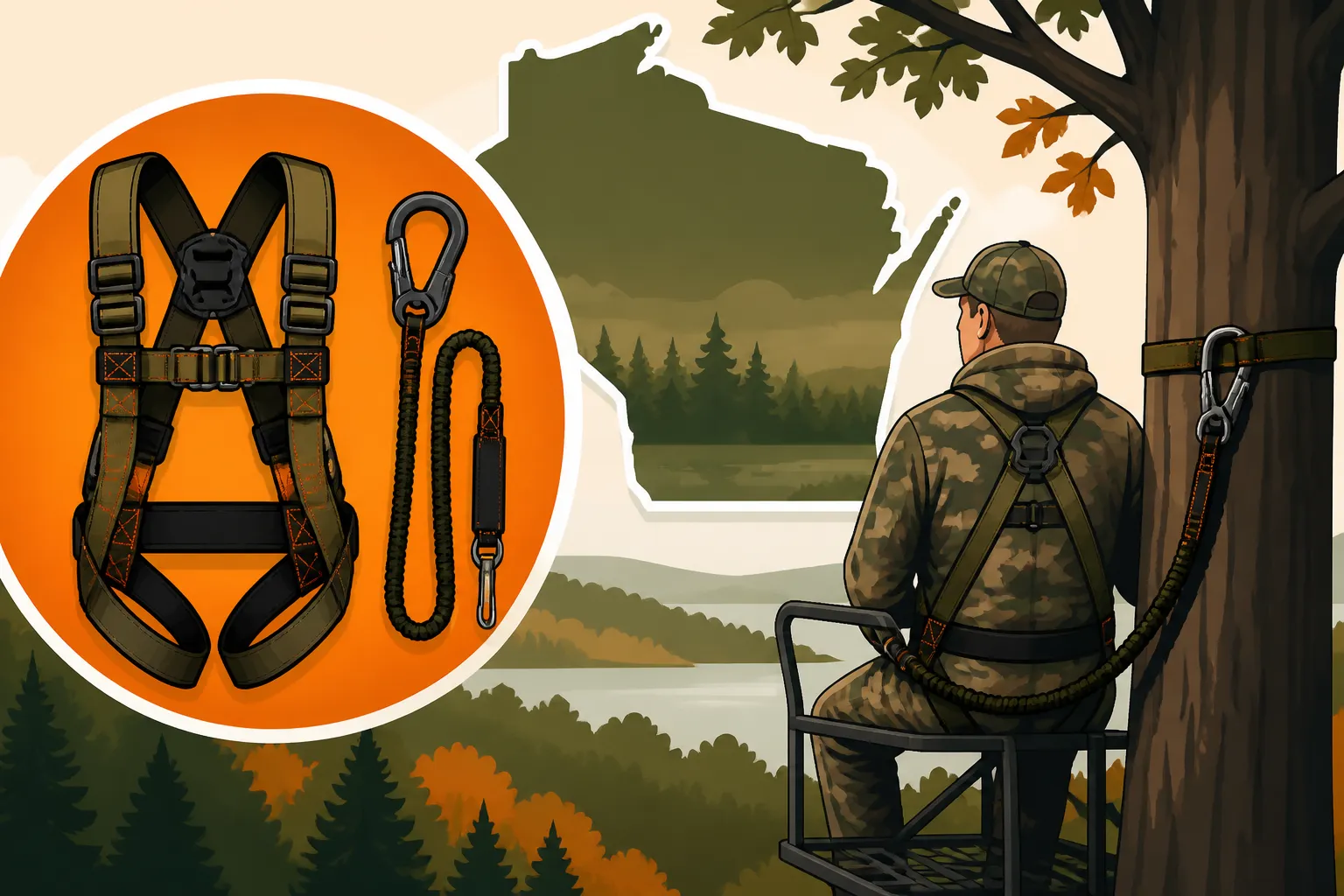
Modern hunting safety harnesses are typically full-body harnesses, designed to distribute impact forces across your entire torso and legs, rather than concentrating them on a single point. A typical harness consists of several key components:
- Shoulder Straps: These go over your shoulders, much like backpack straps, and connect to the back D-ring.
- Leg Loops/Straps: These pass around your upper thighs, keeping the harness securely in place and helping to distribute weight during a fall.
- Chest Strap: This horizontal strap connects the shoulder straps across your chest, ensuring a snug fit.
- Back D-Ring: This is the primary attachment point, usually located between your shoulder blades. Your tether connects here.
- Buckles and Adjusters: Various buckles (often quick-release or friction buckles) allow for easy donning and doffing, while adjusters ensure a snug, customized fit.
- Tether: A short rope or strap that connects your harness's D-ring to the tree strap.
Proper fit is paramount. A harness that's too loose can shift during a fall, potentially causing injury or even allowing you to slip out. It should feel snug but not restrictive, allowing for full range of motion. Take the time to adjust all straps before you ever leave the ground.
The Critical Role of the Tree Strap and Tether
While the harness itself is crucial, it’s only effective if it's properly connected to the tree. This is where the tree strap and tether come into play. The tree strap is a heavy-duty strap that wraps around the tree trunk at your stand height. It usually has a loop or D-ring to which your tether attaches. The tether is the short strap or rope that connects the back D-ring of your harness to the tree strap.
The key here is tether length. Most manufacturers recommend keeping your tether as short as possible, allowing enough slack for comfortable shooting but minimizing freefall distance. If your tether is too long, you could still hit the stand or even the ground after a fall, negating much of the harness's benefit. Imagine you're climbing up, and your hand slips. With a properly attached, short tether, you might just slide a few inches and then hang, able to regain your footing or call for help. Without it, you're looking at a full-force impact. Always ensure your tree strap is positioned correctly – at or above stand height – and your tether is snug before you even put weight on your stand.
Suspension Trauma: The Silent Killer After a Fall
As I mentioned earlier, merely preventing impact with the ground isn't the end of the story. Suspension trauma, also known as harness hang syndrome, is a serious risk if you're left suspended in your harness for too long. When you hang motionless, the leg straps can put pressure on the femoral arteries and veins, restricting blood flow to and from your legs. Blood begins to pool in your lower extremities, leading to a decrease in blood return to your heart and brain. This can rapidly lead to lightheadedness, dizziness, shock, loss of consciousness, and potentially irreversible organ damage or even death.
The good news is that suspension trauma is preventable and treatable. The most important step is to actively relieve pressure on your legs as soon as you are suspended. Many harnesses come with a suspension relief strap or "foot stirrup" that you can deploy to stand up in, taking the pressure off your legs. If your harness doesn't have one, try to use your feet or knees against the tree, or even a branch, to push yourself up and move around. Carry a knife to cut cordage that could fashion a makeshift stirrup if needed. The goal is to keep your blood circulating and get to safety as quickly as possible. Having a plan for self-rescue or signaling for help is just as important as wearing the harness itself.
Beyond the Harness: The Power of Lifelines
While a safety harness is non-negotiable, many hunters are discovering that a treestand lifeline takes their safety a crucial step further. If you've ever felt that moment of vulnerability while climbing up or down to your stand, when you're not yet connected to your tree strap, then you understand exactly why lifelines are becoming so popular. This is where continuous connection truly shines.
What is a Treestand Lifeline and How Does It Work?
A treestand lifeline is essentially a continuous rope that extends from the base of your tree all the way up to your treestand platform, and then sometimes above it. You attach your harness tether to this rope system before you leave the ground, and you remain connected to it continuously until your feet are back on solid earth. This eliminates those dangerous moments of being unclipped during ascent or descent.
The primary components of a lifeline system are:
- Static Rope: A strong, low-stretch rope that runs from the base of the tree to above your stand.
- Prusik Knot (or similar sliding knot device): This specialized knot (or a mechanical rope grab) attaches to the static rope. Your harness tether then connects to this prusik. The beauty of a prusik is that it slides freely up and down the main rope when unweighted, but "bites" down and locks firmly when sudden weight is applied, like in a fall.
- Carabiner: A heavy-duty metal clip that connects your tether to the prusik knot.
With a lifeline, you're connected from the first step off the ground until the last step back on it. This provides an unparalleled level of safety. For hunters who spend a lot of time elevated, like those setting up new stands in the Treestand Setups in Wisconsin Hardwoods or navigating tricky climbs in the Driftless Area Deer Hunting in Wisconsin, a lifeline is a game-changer. It helps take some of the anxiety out of the climb, allowing you to focus on the hunt. Many manufacturers, including some you might find on platforms like GoHunt, offer complete lifeline systems designed specifically for hunters.
Step-by-Step Installation and Use of a Lifeline
Installing and using a lifeline correctly is straightforward but requires attention to detail. Here’s a general step-by-step guide:
- Preparation (Ground Level): Uncoil your lifeline rope. Ensure the prusik knot (or rope grab) is attached to the main rope and can slide freely. Attach one end of the main rope to the tree at ground level, using a strong loop or knot, just above where you'll start climbing. You want it secure but easily accessible.
- Ascending to Stand Height: With the ground end secured, toss the other end of the rope over the branch or a sturdy point above your intended stand height. Pull the rope down so it hangs vertically past your stand. This is often done by carefully climbing up with a lighter rope, pulling the lifeline up, or using a specialized pole. Secure the top end of the lifeline firmly to the tree, above your stand platform, leaving minimal slack. The rope should be taut.
- Connecting Your Harness: Before you begin climbing your sticks or ladder, clip your harness tether's carabiner to the prusik knot on the lifeline. Make sure the prusik knot is positioned so it slides up as you climb and locks down in a fall.
- Climbing with Continuous Connection: As you ascend your Climbing Sticks for Wisconsin Hardwoods, the prusik knot will slide freely up the main rope with you. If you slip, it instantly locks, catching your fall.
- At the Stand: Once you reach your stand platform, you can detach your tether from the lifeline's prusik and re-attach it directly to the tree strap around the main trunk at stand height. Some hunters choose to remain connected to the lifeline throughout their sit, keeping the prusik near their back D-ring. This often depends on shot angles and movement preferences.
- Descending: When it’s time to come down, re-attach your harness tether to the lifeline's prusik knot before you step off your stand. As you descend, you can slide the prusik down the rope with one hand, maintaining that continuous connection until your feet are safely on the ground. This eliminates the precarious moment of disconnecting from a tree strap and starting your descent unclipped. This is especially vital when you're tired after a long Cold Weather Sitting Strategy.
Lifelines vs. Stand-Alone Tree Straps: A Comparative Look
Let's break down the key differences between simply using a tree strap with your harness and incorporating a full lifeline system:
| Feature | Harness with Stand-Alone Tree Strap | Harness with Lifeline System |
|---|---|---|
| Connection Method | Connects to a strap around the tree at stand height. | Connects to a continuous rope from ground to above stand. |
| Continuous Safety | Only connected while on the stand. Vulnerable during ascent/descent. | Continuously connected from ground to stand and back. |
| Vulnerable Moments | The entire climb up and down, and the transition onto/off the stand. | Minimizes vulnerable moments to virtually zero. |
| Fall Prevention | Prevents falls from the stand. | Prevents falls at any point during ascent, sit, or descent. |
| Installation Complexity | Simple: Wrap strap around tree at stand height. | Requires initial setup of rope system from ground to above stand. |
| Portability | Very portable, just the strap. | Slightly bulkier due to the longer rope. |
| Ideal Use | Stationary stands, less frequent moves, or lower heights. | Frequent stand moves, high stands, tricky climbs, public land hunting where you might have diverse Hunting Pressure on Wisconsin Public Land. |
While a tree strap is vastly better than nothing, the lifeline offers a complete solution by covering those often-overlooked periods of ascent and descent when most falls actually occur. For serious stand hunters, especially those who Hanging a Stand in a Wisconsin Coulee or frequently climb in the dark, the added peace of mind and safety provided by a lifeline is invaluable.
Choosing and Maintaining Your Safety Gear
Investing in your safety means choosing quality gear and taking excellent care of it. This isn't the place to cut corners. Think of your harness and lifeline as essential life-saving equipment, because that's exactly what they are.
What to Look For in a Quality Harness and Lifeline
When you're ready to purchase a safety harness or lifeline, don't just grab the cheapest option. Look for reputable brands and prioritize these features:
- TMA Certification: The Treestand Manufacturers Association (TMA) is the industry standard for treestand safety. Look for a harness and lifeline that are TMA-certified. This ensures they've passed rigorous testing for strength, durability, and safety features.
- Comfort: You'll be wearing this gear for hours, so comfort is key. Look for padded straps, adjustable components, and a design that allows for unrestricted movement when drawing a bow or shouldering a rifle. Try it on in the store, if possible, and simulate movements you'd make in the stand.
- Ease of Use: Buckles should be easy to operate, even with cold hands or gloves. The harness should be relatively quick to put on and take off.
- Suspension Relief Device: As discussed, a strap or loop to stand in after a fall is critical to prevent suspension trauma. Ensure your chosen harness has one, or plan to carry a separate piece of equipment for this purpose.
- Durable Materials: Look for heavy-duty nylon webbing, strong stitching, and robust metal components. UV resistance is a plus, as sun exposure can degrade materials over time.
- Lifeline Specifics: For lifelines, consider the rope length suitable for your typical stand height. Ensure the prusik knot or rope grab is high-quality and functions smoothly. Again, platforms like GoHunt can be great resources for comparing different models and reading reviews from other hunters.
Remember, this gear is designed to save your life. It’s worth every penny to get a reliable, comfortable, and well-made system.
Inspection and Storage: Keeping Your Gear Ready
Even the best safety gear is useless if it's damaged or degraded. Regular inspection and proper storage are non-negotiable for extending the life of your harness and lifeline and ensuring they perform when needed.
- Pre-Season Inspection: Before the hunting season kicks off, give all your safety gear a thorough once-over. Check every strap, buckle, and stitch. Look for:
- Fraying or Cuts: Any cuts or significant fraying on the webbing or ropes are a red flag.
- UV Damage: Sun exposure can weaken synthetic fibers. Look for discoloration or a stiff, brittle feel.
- Rust or Corrosion: Check all metal components (buckles, carabiners, D-rings) for rust or corrosion.
- Stretched or Deformed Components: Ensure buckles close properly and haven't been bent or warped.
- Loose Stitching: Any signs of stitching coming undone require immediate replacement.
- Post-Season Care: After the season, clean your harness and lifeline according to the manufacturer's instructions. Usually, this involves a mild soap and water solution, followed by air drying away from direct sunlight. Never use harsh chemicals or machine wash, as this can damage the fibers.
- Proper Storage: Store your harness and lifeline in a cool, dry place, away from direct sunlight, extreme temperatures, and chemicals. Keeping them in a gear bag in your hunting pack, ready for the next adventure, is a good habit. Packs for a Day on Public Land should always have space for this crucial equipment. If your gear has been involved in a fall, even a short one, or shows any signs of wear, replace it immediately. The integrity of the materials can be compromised even if the damage isn't visible.
Practice Makes Perfect: Drills for Safe Climbing and Recovery
Knowing you have the gear is one thing; knowing how to use it in a high-stress situation is another. That's why practicing with your harness and lifeline is so important.
- Ground-Level Practice: Start by simply putting on and adjusting your harness. Get comfortable with the buckles and how it feels. Then, simulate connecting to a tree strap or lifeline at ground level. Practice deploying your suspension relief strap and standing in it. This builds muscle memory without the added danger of height.
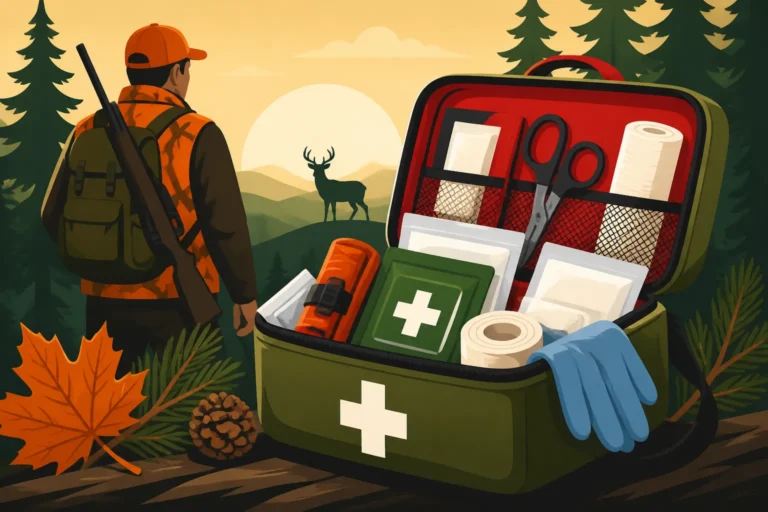
- Simulated Fall Recovery: If possible, with a spotter and at a low height (e.g., from a climbing stick rung just a few feet off the ground), practice what you would do in a fall. Let your harness catch you. Then, immediately deploy your suspension relief device and work through your self-rescue plan. How would you get back into your stand? How would you call for help? This is where carrying items like a whistle or a fully charged phone in an easily accessible pocket, possibly with a First Aid Kits for Remote Northwoods Ground in your pack, becomes vital.
- Emergency Contact Plan: Ensure someone knows where you're hunting and when you expect to be back. Carry a fully charged cell phone and consider a satellite communication device if you hunt in areas with no cell service.
By taking the time to understand, choose, use, and maintain your safety harness and lifeline, you're not just buying a piece of gear – you're investing in your own life and the peace of mind of those who care about you. Safe hunting starts with smart preparation.
Disclaimer
This article is for general informational purposes only and does not constitute professional advice. Laws, prices and regulations vary by location and change over time. Consult a qualified professional for guidance on your specific situation.