Sabot Versus Conical for Deer
When you're gearing up for Wisconsin's muzzleloader season, one of the biggest head-scratchers for many hunters is deciding between sabot and conical projectiles. It's not just a matter of what fits; it's about understanding how these different designs perform in the field, especially when you're facing crisp December air or pushing through a thick cedar swamp. This guide will help you sort out the nuances, so you can confidently choose the best projectile for your specific hunting style and the wild Wisconsin landscape.
Understanding Muzzleloader Projectiles: Sabots and Conicals
Before we dive into the nitty-gritty of each type, let's establish a foundational understanding of what sabots and conicals actually are. Knowing their basic design and purpose is key to appreciating their performance differences out in the woods.
The Basic Difference: What Are They?
At their core, both sabots and conicals are designed to be loaded down the muzzle of your rifle and propelled by black powder or a black powder substitute. However, their construction and how they interact with the bore are vastly different.
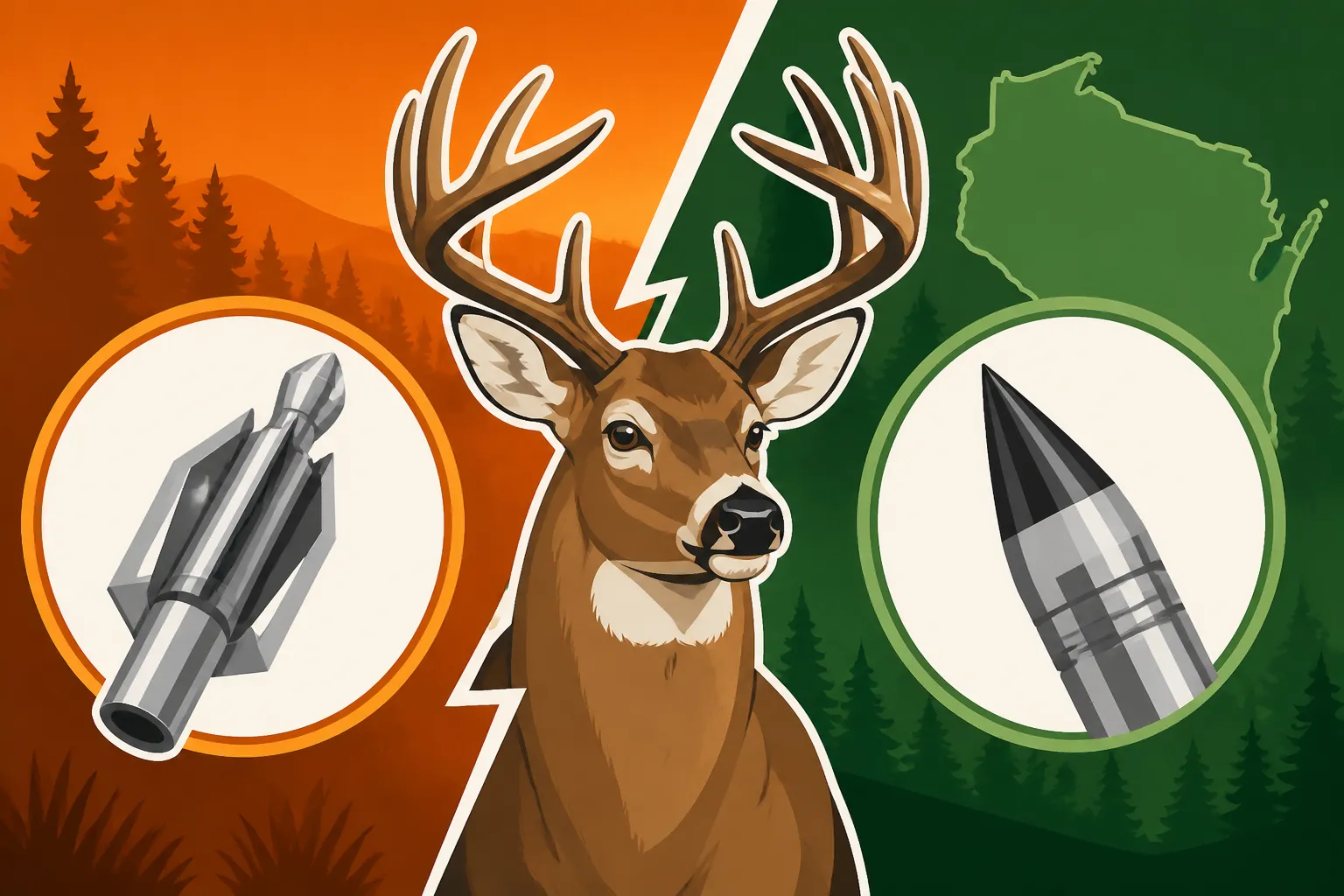
A conical projectile is essentially a solid lead bullet, often shaped like a mini-rocket or a truncated cone, designed to fit snugly against the rifling of your muzzleloader's bore. They are typically cast from pure lead or a lead alloy and are designed to engage the rifling directly. Think of them as miniature artillery shells for your muzzleloader. When you ram a conical down, the soft lead squeezes into the rifling grooves, creating a tight seal and imparting spin for accuracy. They're straightforward, traditional, and have been used by muzzleloader hunters for centuries.
A sabot projectile, on the other hand, is a two-part system. The actual bullet is usually a modern, smaller-diameter projectile (like those found in centerfire cartridges, often jacketed for better performance) encased in a plastic sleeve, or "sabot." This plastic sleeve is what engages the rifling of your muzzleloader's bore. Upon exiting the muzzle, the plastic sabot falls away, allowing the bullet to continue on its trajectory, spinning true from the rifling imparted by the sabot. The term "sabot" itself comes from the French word for "shoe," which perfectly describes how it cradles and propels the smaller bullet. This design allows muzzleloaders to shoot lighter, faster, and often more aerodynamic bullets than traditional conicals.
Historical Context and Modern Applications
Historically, muzzleloaders exclusively used conical bullets, or even round balls, simply because sabots didn't exist. Hunters relied on the sheer mass of lead, often propelled at moderate velocities, to achieve knockdown power. These projectiles were effective in their day, especially at the shorter ranges typical of early muzzleloader hunting.
The advent of the sabot revolutionized modern muzzleloading. It allowed hunters to leverage ballistic advancements from centerfire rifle technology. Suddenly, a muzzleloader could shoot bullets designed for flatter trajectories, better expansion, and greater energy retention at longer ranges. This opened up new possibilities for muzzleloader hunters, making them a viable option for shots across larger fields or longer distances in more open timber. This innovation has truly bridged some of the performance gaps between traditional muzzleloaders and modern cartridge rifles, pushing the boundaries of what's possible with a smoke pole.
The Importance of Bore Diameter and Twist Rate
Understanding your muzzleloader's bore diameter and rifling twist rate is absolutely critical when choosing between sabots and conicals. It's not just a suggestion; it's a make-or-break factor for accuracy and safety.
Most modern inline muzzleloaders, especially those designed to shoot sabots, will have a fast twist rate, typically 1:28 inches or 1:24 inches. This fast twist is necessary to stabilize the shorter, lighter, and often more aerodynamic bullets used in sabots. Without adequate spin, these bullets would tumble end-over-end, resulting in terrible accuracy. If your muzzleloader has a faster twist rate, you'll likely find sabots perform very well.
Conversely, traditional muzzleloaders, or those designed primarily for conical bullets, often have slower twist rates, such as 1:48 inches or even 1:60 inches. These slower twists are ideal for stabilizing the longer, heavier lead conicals. A heavy conical needs less rotational speed to fly true. Trying to shoot sabots with a short, light bullet out of a slow-twist barrel often results in poor accuracy because the bullet is over-stabilized or simply doesn't get enough spin from the sabot to fly true at higher velocities. This is also why Muzzleloader Tactics in December Cold often involve careful projectile selection, as cold weather can affect powder burn rates and thus projectile velocity. Always check your rifle's manufacturer specifications or manual to determine its twist rate. It's the first step in making an informed decision about your ammunition.
Sabots: Pros, Cons, and When to Use Them in Wisconsin
Sabots have undeniably changed the game for many muzzleloader hunters, offering performance characteristics that mirror modern centerfire rifles more closely. Let's dig into what makes them appealing and where they might fall short in Wisconsin's diverse hunting environments.
The Sabot Advantage: Speed, Accuracy, and Energy Transfer
The primary advantage of sabots lies in their ability to use smaller, high-performance bullets. Because the plastic sabot creates the seal with the bore, the actual bullet can be smaller, meaning less weight and a higher ballistic coefficient. This translates directly to several key benefits:
- Increased Velocity and Flatter Trajectory: Lighter bullets, when pushed by the same powder charge, achieve higher muzzle velocities. This results in a flatter trajectory over distance, making range estimation less critical and offering a more forgiving shot placement. For hunters trying to make a 100 or 150-yard shot across a cut cornfield in southern Wisconsin, this is a huge plus.
- Superior Accuracy: When matched to the right twist rate, sabots can be incredibly accurate, often rivaling centerfire rifle precision. The modern bullet designs, often jacketed, maintain their shape better and have a more consistent flight path. Many hunters find that a properly matched sabot and powder combination can produce tight groups at the range, instilling confidence for ethical shots in the field.
- Enhanced Energy Transfer and Expansion: Most sabot bullets are designed with modern terminal ballistics in mind. They are engineered to expand reliably upon impact with game, creating a larger wound channel and transferring more energy to the animal, leading to quicker, more humane kills. Brands like Barnes, Hornady, and Thompson/Center (T/C) offer excellent sabot options with bullets specifically designed for rapid, controlled expansion on deer. This can be especially important during Muzzleloader Deer Hunting in Wisconsin where a quick recovery is key.
Wisconsin Scenarios for Sabot Success
Given their advantages, sabots truly shine in certain Wisconsin hunting situations:
- Open Country and Longer Shots: If you're hunting the rolling hills and agricultural fields of the Driftless Area Deer Hunting in Wisconsin or vast, open areas of central Wisconsin, sabots give you the reach and accuracy to confidently take shots out to 150 yards or even a bit more, depending on your rifle and skill. Imagine that big buck stepping out into a CRP field; a sabot gives you a much better chance than a rainbow-trajectory conical.
- Modern Inline Muzzleloaders: If you own a modern inline muzzleloader, chances are it was designed with sabots in mind. These rifles typically have faster twist rates (e.g., 1:28") that stabilize sabot bullets perfectly. Trying to force a conical through a fast-twist barrel might work, but it will rarely be as accurate as the sabots your rifle was engineered to shoot.
- Confidence in Ballistics: For hunters who value the latest ballistic performance and want their muzzleloader to perform as close to a centerfire rifle as possible, sabots are the clear choice. Knowing your bullet will expand reliably and deliver maximum energy provides peace of mind when that trophy buck steps into view. This is where researching different bullet manufacturers, perhaps using a resource like GoHunt to compare ballistic data, can be incredibly helpful.
Potential Drawbacks and Considerations
While sabots offer compelling advantages, they're not without their quirks and potential downsides:
- Bore Fouling and Cleaning: The plastic sabot can leave plastic residue in the bore, which, combined with powder fouling, can lead to decreased accuracy over multiple shots without cleaning. This is particularly noticeable during range sessions. In the field, one or two shots usually aren't an issue, but if you're practicing, you'll need to clean more frequently than with conicals.
- Loading in Cold Weather: In very cold temperatures, the plastic sabots can become stiffer, making them harder to load. This might not sound like a big deal, but when your hands are numb and you're trying to reload quickly after a missed shot or for a follow-up, a stubborn sabot can be a real frustration. Hunters often find themselves wrestling with their ramrod during Muzzleloader Tactics in December Cold.
- Cost: Generally speaking, sabot projectiles tend to be more expensive than traditional lead conicals due to the more complex, two-part design and modern bullet construction. This can add up, especially if you do a lot of practice shooting.
- Specific Bore Requirements: While most modern inlines love sabots, older or more traditional muzzleloaders with slower twist rates simply won't shoot them accurately. Using the wrong projectile for your rifle's twist rate is a recipe for frustration and missed opportunities.
- Baiting Bans: In counties with CWD-related baiting bans, hunters might be shifting away from traditional bait-site hunting to more mobile strategies. This often means longer shots, where the flatter trajectory of a sabot would be a benefit. However, always remember the specific rules regarding baiting, especially if you're Hunting Without Bait in a Banned County.
Conicals: Pros, Cons, and When They Shine in Wisconsin
Traditional, heavy, and often devastatingly effective at close range, conical bullets hold a special place in the hearts of many muzzleloader purists. Let's explore their unique benefits and where they truly excel in the Wisconsin deer woods.
The Conical Advantage: Bore Fit, Simplicity, and Knockdown Power
Conical bullets, with their solid lead construction, offer a different set of advantages, often leaning towards simplicity and raw power:
- Excellent Bore Seal and Consistency: Because conicals are designed to fit the bore directly and deform slightly into the rifling as they're rammed home, they create an excellent gas seal. This consistency in bore engagement can lead to superb accuracy, especially in rifles designed for them. The soft lead tends to grip the rifling reliably.
- Simpler Loading and Less Fouling: Loading a conical is often more straightforward than a sabot. There's no plastic sleeve to worry about, and the solid lead generally produces less fouling in the bore. This means you can often shoot more rounds between cleanings, which is a definite plus at the range or if you happen to get multiple shots in a hunting scenario. This simplicity can also be beneficial when you're dealing with Keeping a Muzzleloader Dry in Wet Snow, as there's less concern about moisture affecting a plastic component.
- Superior Knockdown Power (at range): Conicals are heavy. Many popular conicals for deer weigh between 300 and 500 grains. While they don't typically achieve the blistering velocities of sabots, their sheer mass carries tremendous momentum and energy. Upon impact, this heavy lead projectile can create a massive wound channel, transferring a huge amount of kinetic energy to the animal. For close-range shots in thick cover, where velocity isn't as critical, that heavy slug often delivers a bone-crushing blow.
- Cost-Effective: Generally, lead conicals are less expensive per shot than sabots, making them a more budget-friendly option for practice or hunters who shoot a lot.
Wisconsin Scenarios for Conical Effectiveness
Conicals truly come into their own in specific Wisconsin hunting scenarios, playing to their strengths:
- Thick Cover and Close Shots: If you're Hunting the Wisconsin Northern Forest for Deer, still-hunting a dense tag alder swamp, or sitting in a cedar thicket, your shots are likely to be up close and personal. In these situations, the flatter trajectory of a sabot is less critical, and the heavy-hitting power of a conical can be a significant advantage. A big conical punching through brush and bone at 50 yards is a formidable force. This is particularly true if you are Still-Hunting Wisconsin Cedar Swamps.
- Traditional Muzzleloaders: If you prefer a more traditional hunting experience or own an older muzzleloader with a slower twist rate (e.g., 1:48" or slower), conicals are almost certainly your best bet for accuracy. These rifles were built to stabilize heavy lead slugs, and you'll often find they shoot conicals with remarkable precision.
- Brush Busting (with caution): While no bullet is truly a "brush buster," the sheer mass of a conical bullet sometimes allows it to deflect less dramatically than a lighter, faster sabot when encountering light cover like twigs or tall grass. This is not an invitation to shoot through heavy brush, but in marginal scenarios, the heavier projectile can maintain its course slightly better.
- Ease of Loading in Cold: As mentioned earlier, the absence of a plastic sabot means there's one less component that can become stiff and difficult to load in frigid temperatures, which is a common challenge when Hunting Deer in Deep Northern Wisconsin Snow.
Potential Limitations and Trade-offs
Despite their strengths, conicals do have some limitations that hunters need to be aware of:
- Rainbow Trajectory: This is the most significant drawback. Because of their weight and less aerodynamic shape, conicals shed velocity rapidly and have a much more pronounced bullet drop at longer ranges. This means precise range estimation is absolutely vital, and shots beyond 100-125 yards can become challenging without extensive practice and custom aiming points.
- Less Expansion: While heavy, many traditional conicals are pure lead and may deform or mushroom rather than expand dramatically like modern jacketed bullets. Some specialized conicals do feature hollow points or soft noses for better expansion, but it's generally not as consistent or explosive as what you might see from a sabot bullet.
- Recoil: Pushing a heavy lead conical with a stout powder charge can generate noticeable recoil. While most hunters can manage it, it's something to consider, especially for smaller-framed shooters or those who are recoil-sensitive.
- Not for Fast-Twist Barrels: As discussed, trying to shoot conicals out of a modern, fast-twist inline muzzleloader will likely lead to poor accuracy. The barrel's twist rate is simply too fast to stabilize the longer, heavier projectile efficiently.
Making the Right Choice for Your Wisconsin Hunt
Ultimately, the "best" projectile isn't about one being inherently superior to the other; it's about what performs best in your muzzleloader for your specific hunting style and the conditions you expect to encounter in Wisconsin.
Matching Projectile to Firearm and Purpose
The first step in making your decision is to really get to know your muzzleloader. What's its twist rate? What does the manufacturer recommend? If you have a modern inline, it's likely optimized for sabots. If you have a more traditional rifle, or one with a slower twist, conicals are probably going to be your accuracy king.
Next, consider your hunting purpose. Are you hunting wide-open farmland where a 150-yard shot is a real possibility? Sabots will give you a flatter trajectory and more confidence. Are you primarily still-hunting dense public land, expecting shots within 75 yards? The heavy punch of a conical might be just what you need. Think about the terrain you frequent, whether it's the Hunting Wisconsin Coulees and Ridge Tops of the Driftless or the thick swamps of the north.
Also, consider powder choice. Whether you're using black powder or a substitute like Hodgdon Triple Seven or IMR White Hots, certain powders might perform better with one projectile type over another in your specific rifle. Experimentation at the range is crucial to finding the sweet spot. When selecting a powder for Choosing a Muzzleloader for December Cold, remember that temperature can affect ignition and velocity, making consistent performance even more critical.
Testing and Practice: Your Best Advisor
There's no substitute for range time. Period. You can read all the articles in the world, but until you send lead downrange from your rifle with different projectiles and powder charges, you won't truly know what works.
Start by acquiring a few different brands and types of both sabots and conicals that match your muzzleloader's bore diameter. If you have a .50 caliber rifle, look for .50 caliber conicals and .45 caliber bullets in .50 caliber sabots (or .44 caliber bullets in .50 caliber sabots). Head to the range with a variety of loads and meticulously test them for accuracy at different distances you anticipate hunting. Pay close attention to group sizes, point of impact, and ease of loading.
It's also a good idea to practice loading your muzzleloader in conditions similar to what you'll face in the field. Try loading with cold hands, or quickly, to get a feel for how the projectiles seat. Some sabots, for instance, might be a tighter fit than others. This hands-on experience is invaluable for building confidence. Resources like GoHunt can offer great insights into how various hunters are setting up their muzzleloaders, including specific projectile and powder combinations that have proven successful.
A Comparative Look: Sabot vs. Conical
Here's a quick comparison to help you visualize the key differences:
| Feature | Sabot Projectile | Conical Projectile |
|---|---|---|
| Design | Smaller bullet in plastic sleeve (sabot) | Solid lead bullet, engages rifling directly |
| Typical Caliber | .45 or .44 cal bullet in .50 cal sabot | .50 cal or .54 cal (matches bore) |
| Twist Rate | Best with faster twists (1:28", 1:24") | Best with slower twists (1:48", 1:60") |
| Velocity | Generally higher | Generally lower |
| Trajectory | Flatter, less drop | More pronounced drop, "rainbow" |
| Accuracy | Often excellent at longer ranges | Excellent at shorter ranges, if matched to bore |
| Terminal Ballistics | Modern expansion, high energy transfer | Massive wound channel from mass, good penetration |
| Fouling | Can leave plastic residue | Less fouling, easier to clean between shots |
| Loading | Can be tighter fit, stiffer in cold | Generally easier, less affected by cold |
| Cost | Typically more expensive | Generally less expensive |
| Ideal Scenarios | Open fields, longer shots, modern rifles | Dense timber, close shots, traditional rifles |
In the end, making the right choice between a sabot and a conical for your Wisconsin deer hunt comes down to understanding your equipment, knowing the terrain you'll be hunting, and putting in the practice time. Both can be incredibly effective when used appropriately.
Disclaimer
This article is for general informational purposes only and does not constitute professional advice. Laws, prices and regulations vary by location and change over time. Consult a qualified professional for guidance on your specific situation.