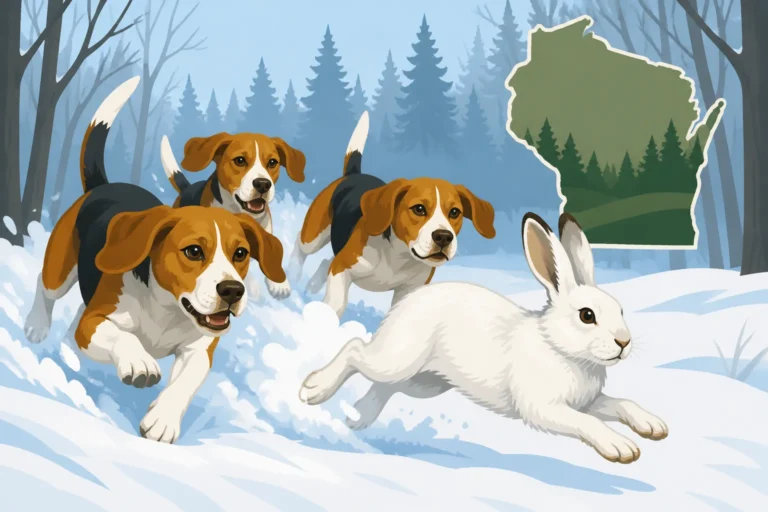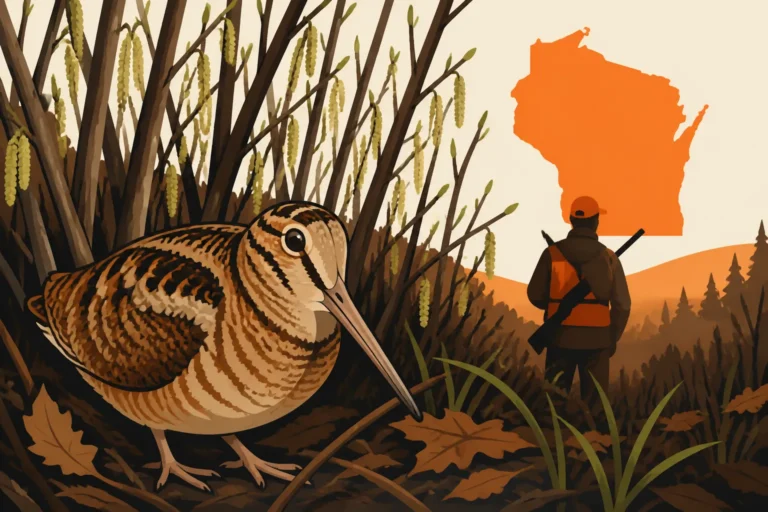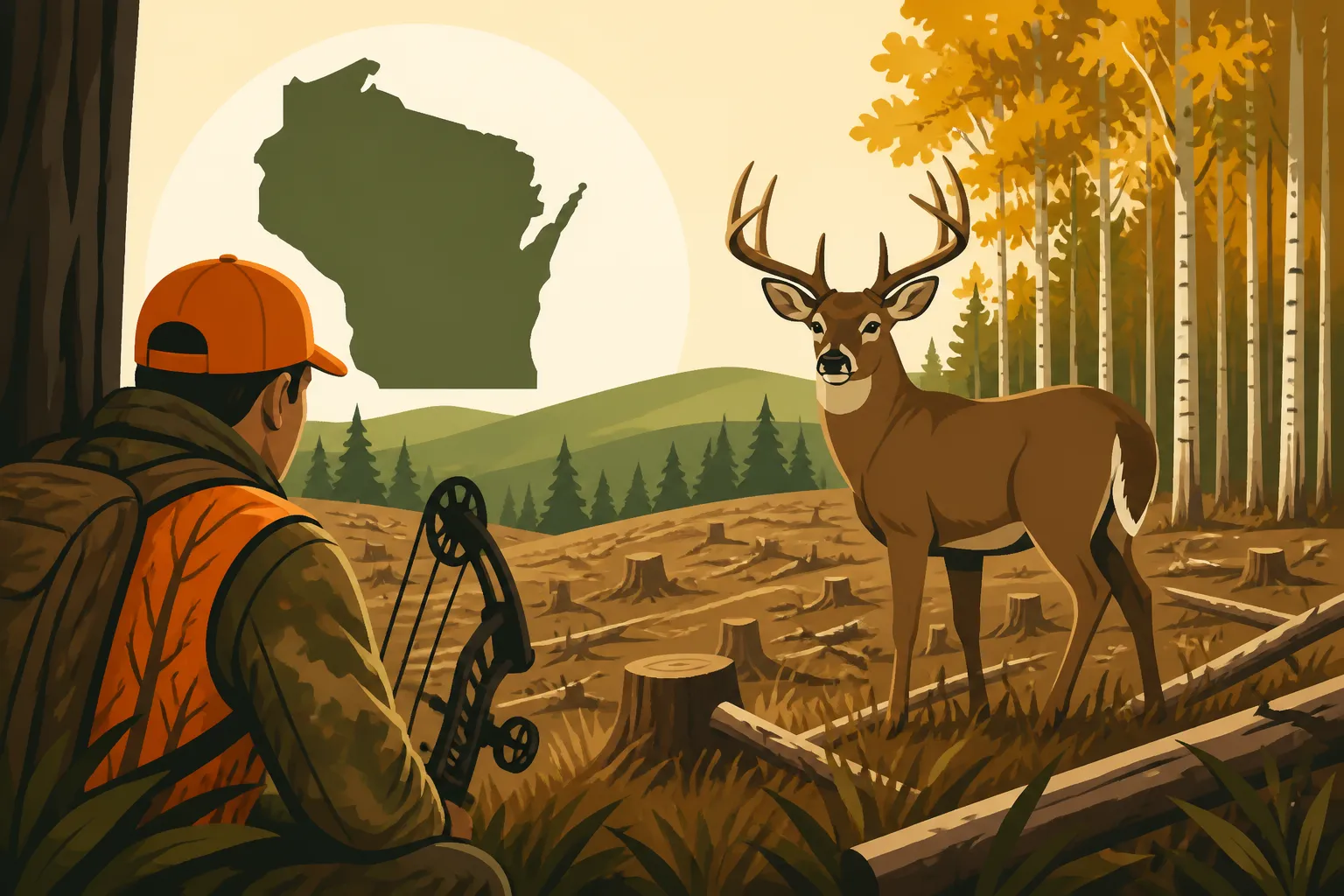
Hunting Wisconsin Clearcuts and Aspen Cuts
Finding deer or grouse in Wisconsin's vast stretches of mature timber can often feel like searching for a needle in a haystack, leaving many hunters frustrated and questioning their approach. The dense canopy and lack of undergrowth in older forests simply don't offer the food and cover that wildlife craves. This guide is dedicated to helping you unlock the secrets of hunting Wisconsin's clearcuts and aspen cuts, transforming these often-overlooked or misunderstood areas into your most productive hunting grounds by understanding their ecological importance and employing tailored tactics.
Understanding Clearcuts and Aspen Cuts as Wildlife Magnets
When you drive past a recently logged area, it's easy to dismiss it as "ruined" or devoid of wildlife. However, for a savvy hunter, these seemingly barren landscapes, especially clearcuts and young aspen cuts, are actually bustling hubs of activity, providing critical food and cover that mature forests simply cannot offer. These areas represent a vital stage in forest regeneration and are absolute magnets for a variety of game species.
The Life Cycle of an Aspen Stand
Aspen is a pioneer species in Wisconsin's forests, meaning it's one of the first trees to colonize disturbed areas. What makes aspen so unique, and so important for wildlife, is its method of reproduction. When an aspen stand is harvested, either by clearcutting or a similar logging operation, the parent trees are removed. This removal, crucially, stimulates a massive sprouting response from the root system. Instead of growing from seeds, thousands of new aspen suckers rapidly emerge from the ground, creating an incredibly dense thicket.
In just a few short years, what was once a clearcut becomes an impenetrable jungle of young aspen, often growing shoulder-to-shoulder, sometimes even denser. This rapid, vigorous growth provides an explosion of nutritious forage for deer, rabbits, and even ruffed grouse, which feed on the buds in winter. Critically, this dense, young growth also offers unparalleled thermal and visual cover, making it a perfect bedding area for deer looking to escape predators and harsh weather, and ideal escape cover for upland birds. As the stand matures, some trees die off, creating more open pockets, but the initial stages are where the action truly is for hunters.
Why Clearcuts Are Not Just "Logged Out" Areas
A clearcut, at its core, is a forestry practice where almost all trees in an area are removed. While it might look stark immediately after the cut, this seemingly drastic measure is often a vital tool for forest health and wildlife management, especially for species that thrive on early successional habitat. The sunlight reaching the forest floor after a clearcut allows a massive flush of new vegetation to grow: blackberries, raspberries, hazelnut, clover, and a myriad of forbs and grasses. These are prime food sources for deer, bear, and various small game.
Beyond food, the dense young trees and brush that quickly reclaim a clearcut provide essential bedding and escape cover. Deer will use these areas extensively for security, especially during hunting season when pressure is high. It's a place where they can literally disappear into a wall of green. For upland birds like ruffed grouse and woodcock, these areas are vital. Grouse thrive in young aspen stands, and woodcock seek out the moist soil and dense cover often found in the regenerating areas, especially those with alder or willow mixed in. Thinking of a clearcut as a temporary disruption rather than a permanent loss is key to understanding its value to the ecosystem and your hunting strategy.
Scouting and Interpreting Sign in Young Timber
Hunting clearcuts and aspen cuts successfully begins long before you ever carry a firearm or bow. These areas demand dedicated scouting, often requiring a different approach than what you might use in mature hardwoods. The sheer density of vegetation can make traditional sign difficult to spot, but once you learn what to look for, these areas practically scream where the wildlife is hiding.
Reading Deer Movement Through the Thicket
Deer, like any creature, follow the path of least resistance, even in the thickest cover. While you won't find wide, beaten-down trails like you might along a field edge, deer in clearcuts create distinct tunnel-like paths through the dense undergrowth. Look for these "deer tunnels" or "crawling lanes" where the vegetation is noticeably bent or broken, often at waist height or lower. These aren't always straight; they'll often zig and zag around fallen logs, brush piles, or particularly thorny patches.
When scouting these areas, pay close attention to where these tunnels lead. They often connect bedding areas deep within the thicket to feeding areas on the edges, or to nearby mature timber that offers acorns or other seasonal food. Don't be afraid to crawl on your hands and knees to follow them, as this is often how deer themselves navigate these spots. Using a mapping app like GoHunt can be invaluable here. You can mark these tunnels as waypoints, trace their paths, and get a better understanding of the overall deer movement patterns within the cut, which helps immensely when trying to formulate a hunting plan. Look for fresh droppings, rubs on small saplings, and even beds scraped out in drier, higher spots within the cover.
Locating Grouse and Woodcock Hotspots
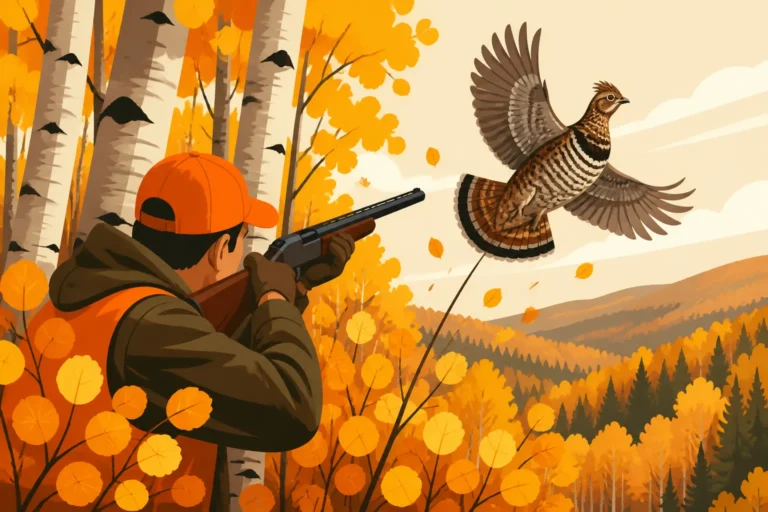
Ruffed grouse and woodcock absolutely thrive in young timber, but they have specific preferences. For grouse, focus on aspen cuts that are roughly 10-20 years old, where the trees are about 2-4 inches in diameter. This age class provides the perfect balance of cover and budding forage. Listen for drumming in the spring, which can help pinpoint territories. In the fall, look for evidence of budding, especially on aspen and birch. The key is finding pockets of thick, dense cover that offer escape routes and security.
Woodcock, on the other hand, prefer moist, rich soil where they can probe for worms, often found in alder thickets, creek bottoms, or the lower, wetter sections of a clearcut. They also need dense overhead cover to feel secure from aerial predators. Look for their distinct splashy droppings (white and resembling a starburst) on the ground, and their characteristic borings (small holes) where they've probed for food. Often, grouse and woodcock can be found in close proximity, utilizing different aspects of the same regenerating area. If you find one, the other might not be far off, making these cuts fantastic for a combined upland bird hunt, especially when you consider Hunting Grouse and Woodcock Together.
Effective Hunting Tactics for Clearcuts
Once you've done your scouting and have a good idea of where the game is spending its time, it's time to devise a hunting strategy. Hunting clearcuts requires patience, precision, and often a willingness to get a little bit uncomfortable. The tactics you'd use in an open hardwood ridge simply won't cut it here.
Still-Hunting the Edges and Openings
Still-hunting is perhaps one of the most effective ways to hunt clearcuts for deer, especially if you're alone or with a single partner. The key is to move incredibly slowly, taking only a few steps every minute or two, and pausing for long periods to scan. Deer in these areas rely heavily on their sense of hearing and smell, so still-hunting with the wind in your favor is absolutely critical. Focus your attention on the edges where the clearcut meets mature timber, as deer often stage in the thick cover before moving out to feed.
Inside the clearcut, look for small pockets of slightly more open ground, old skidder trails that are starting to grow in, or even the remnants of logging decks. These slight breaks in the density can be natural travel corridors or feeding areas within the cut itself. Don't be afraid to get down on your hands and knees if you need to see under the thick canopy. Patience is truly a virtue here; many hunters rush through these areas, only to push deer out before they even realize what's happening. Remember, the deer are likely bedded deep inside, so being quiet and deliberate is paramount to success.
Setting Up on an Aspen Cut Edge for Deer
While still-hunting is productive, setting up an ambush can also be incredibly effective, especially during the rut or when deer are moving predictably between bedding and feeding areas. The edge of an aspen cut, where the dense young growth transitions into older timber, a food plot, or an agricultural field, is a classic pinch point. Deer will often skirt these edges, using the security of the thicket while still having access to food.
When considering a stand site, look for signs of heavy use along the edge – fresh tracks, droppings, and especially rub lines or scrape lines. An elevated position in a sturdy tree offers a great vantage point over the thick cover. If you can't find a suitable tree, a well-camouflaged ground blind brushed into the edge of the cut can be just as effective. Pay close attention to wind direction, as your scent will carry easily along these edges. The goal is to intercept deer as they enter or exit the dense cover. This strategy is a fantastic way to capitalize on deer movement, especially when combined with knowledge from resources like Treestand Setups in Wisconsin Hardwoods, adapting those principles to the unique clearcut environment.
Flushing Tactics for Upland Birds
For ruffed grouse and woodcock, flushing them out of dense cover is often the name of the game. This usually involves walking through the thickest parts of the clearcut, ideally with a hunting dog that can point or flush birds. If you're without a dog, walk slowly and deliberately, pausing often. Grouse especially are known to hold tight, often flushing at your feet with a startling explosion of wings.
When flushing, move in a systematic grid pattern to ensure you cover the area thoroughly. For woodcock, focus on the wetter, softer ground. For grouse, concentrate on the densest young aspen and mixed conifer patches. Having a hunting partner can significantly increase your success. One hunter can push through the cover, while the other walks the edge or slightly ahead, ready for birds that flush wide. Communication is key, especially in such thick cover. Ensure you're wearing plenty of blaze orange for safety, as visibility can be extremely limited.
Gear and Considerations for Dense Cover
Hunting Wisconsin's clearcuts and aspen cuts presents unique challenges, and having the right gear can make all the difference between a successful hunt and a frustrating day. The dense cover and often challenging terrain demand specific choices in firearms, optics, and navigation tools.
Shotgun and Rifle Choices for Close-Quarters Hunting
In the thick confines of a clearcut, shot distances for deer are almost always short, often under 75 yards, and frequently much closer. This isn't the place for long-range magnum rifles. A fast-handling lever-action rifle in a caliber like .30-30 or .45-70, or a compact bolt-action in .308 Winchester or .350 Legend, is often ideal. These calibers offer plenty of knockdown power at close range without excessive recoil, and their shorter barrels make them much easier to maneuver through tangled brush. For those who prefer a shotgun, a slug gun, especially one with a rifled barrel and sabot slugs, is extremely effective in areas where rifles might be restricted or simply overkill. When considering your Rifle Setups for Wisconsin Deer, remember that agility and quick target acquisition trump long-range precision in these dense environments.
For upland bird hunting, a fast-swinging shotgun is non-negotiable. A 20-gauge or 12-gauge pump-action or over/under with improved cylinder or modified choke is perfect for the close, fast-flushing shots typical of grouse and woodcock. Carrying loads of 7.5 or 8 shot will give you dense patterns needed to connect with these quick birds. Many seasoned upland hunters swear by a classic double-barrel for its quick second shot, which can be a lifesaver when a bird flushes unexpectedly. Selecting appropriate Shotguns for Wisconsin Grouse Cover is paramount to success.
Navigation and Communication in Thick Brush
Getting disoriented in a dense clearcut is incredibly easy. One moment you're following a faint deer trail, the next, every tree looks the same, and your sense of direction is gone. A reliable GPS unit or a smartphone with a robust mapping app is absolutely essential. Apps like GoHunt, for example, allow you to download offline maps, mark waypoints for your vehicle, trails, and any sign you find, and keep a breadcrumb trail of your movements. Don't rely solely on cell service, as it's often nonexistent in remote logging areas. Always carry a compass and a physical map as a backup, and know how to use them.
Communication is also key, especially if you're hunting with a partner or running a small deer drive. Two-way radios are far more reliable than cell phones in these areas. Establish clear protocols for movement, safety, and hand signals before you enter the thick stuff. Wearing plenty of blaze orange or blaze pink is not just a legal requirement during gun seasons but a vital safety measure that helps you maintain visual contact with partners and makes you visible to other hunters who might also be navigating the dense cover. This also helps with Hunting Pressure on Wisconsin Public Land by making you clearly visible.
Seasonal Nuances of Hunting Clearcuts
Clearcuts and aspen cuts are dynamic habitats, and their appeal to wildlife changes throughout the hunting seasons in Wisconsin. Understanding these seasonal shifts can help you adapt your tactics and maximize your success, whether you're chasing deer or flushing birds.
Early Season Opportunities
When Wisconsin's archery season opens in September, clearcuts and young aspen stands are incredibly dense and green. This provides unmatched security cover for deer still largely in their summer patterns. Deer will bed deep within these thickets to escape heat, insects, and early season hunting pressure. The abundant new growth – forbs, grasses, and tender browse – also provides excellent forage.
During this time, focus on the edges of clearcuts, especially those adjacent to mature timber or agricultural fields. Deer will often stage in the thicket before moving out to feed in the evenings or returning to bed at first light. Small funnels or natural travel lanes within the cut can be prime ambush spots. For upland birds, early season in these areas can be fantastic. The dense cover protects young grouse and woodcock, and the moist ground in lower sections is perfect for woodcock probing. The key is moving slowly and deliberately, as birds will hold tight in the thick foliage.
Mid-Season and the Rut in Clearcuts
As autumn progresses and especially through October and into November's peak rut, clearcuts become even more critical for deer. The leaves begin to fall, reducing some of the visual cover, but the dense network of saplings still provides excellent security. During the pre-rut and rut, bucks will often cruise the edges of these thickets, scent-checking for does. Does, in turn, will often seek refuge in the dense cover to escape persistent bucks.
This is a prime time to set up stands overlooking natural funnels or pinch points where deer are forced to travel a specific path along the edge of or within the cut. Using calls like grunts and rattles can be effective in drawing a buck out of the dense cover. Bucks might also create more visible rub lines on the thicker saplings within the cut. For those targeting deer during Hunting the Wisconsin Rut in November, focusing on these thick, secure areas can pay huge dividends. Also, consider small Deer Drives With Three or Four Hunters through a clearcut; the deer often only move a short distance and circle back, offering good shot opportunities to standers positioned on the downwind side.
Late Season Food and Cover
When snow blankets the Wisconsin landscape and temperatures plummet, clearcuts continue to be vital. While much of the browse may be covered or less palatable, the dense structure of young conifer thickets within a clearcut provides crucial thermal cover, protecting deer from bitter winds and deep snow. Deer will often bed in these areas, minimizing energy expenditure.
Furthermore, some clearcuts, especially those that include species like red osier dogwood or hazelnut, can still offer browse that deer will seek out, particularly if there's been an Hunting After an Acorn Failure elsewhere. Scouting for tracks in the snow leading into and out of these areas becomes much easier. Focus on the thickest, most sheltered pockets within the clearcut. This is also a good time to find Late-Season Food Sources for Whitetails as deer become more predictable in their movements between bedding and food. Still-hunting the edges on a cold, quiet day can be very effective, as deer are often bedded tight and reluctant to move until pressured.
Common Mistakes and How to Avoid Them
Even with all the right intentions, hunting clearcuts can be challenging, and it's easy to fall into common traps. Avoiding these pitfalls will significantly improve your chances of success and make your experience more enjoyable and productive.
Underestimating the Cover Density
One of the biggest mistakes hunters make when approaching a clearcut or aspen regeneration area is underestimating just how thick it truly is. From a distance, it might look like walkable timber, but once you step inside, you quickly realize it's a tangled, often thorny mess. This leads to hunters moving too fast, making too much noise, and busting game long before they're ever in range. It also makes shot opportunities incredibly fleeting and narrow.
To avoid this, adjust your mindset and your pace. Instead of trying to "walk through" the clearcut, think of it as "creeping through" or even "crawling through." Take shorter steps, lift your feet higher, and spend more time observing than moving. Use the densest parts as indicators for where deer might be bedded, understanding that your shot might be limited to a small window. Practice shooting in thick cover at home, perhaps with a target placed behind some brush, to understand the limitations of your equipment and your shooting lanes. Recognize that the cover is your enemy and your friend; it conceals you just as much as it conceals the game.
Ignoring Wind and Thermals
In any hunting scenario, wind and thermals are crucial, but in the undulating terrain and dense canopy of clearcuts, they can be particularly tricky and often misunderstood. The wind might be blowing one direction 20 feet above the ground, but swirling and eddying completely differently down within the dense vegetation. Ignoring these factors is a surefire way to have your scent carried directly to the nose of a bedded animal.
Always approach a clearcut with the wind in your favor, understanding that "in your favor" might mean different things at different elevations. If hunting edges, consider how thermals will draw your scent up or down slopes as the day warms or cools. In the morning, cold air sinks, pulling scent downwards. In the afternoon, warming air rises, lifting scent upwards. Use a wind checker frequently, especially when deep inside the cut, to get a real-time understanding of localized air currents. Consider how Wind and Thermals in a Coulee might influence scent movement, as many clearcuts exist on similar sloped terrain. If the wind isn't right, or if it's swirling unpredictably, it's often better to wait or move to a different location rather than pushing into the clearcut and educating the local wildlife.
| Age of Clearcut/Aspen Stand | Primary Wildlife Benefit (Deer) | Primary Wildlife Benefit (Upland Birds) | Ideal Hunting Season |
|---|---|---|---|
| 0-3 Years (Initial Regeneration) | Abundant browse, immediate food source for deer. Low cover for bedding initially. | Excellent food source for woodcock (wet areas). Limited cover for grouse until denser. | Early Season (Food Focus) |
| 3-10 Years (Dense Thicket) | Peak security cover, dense bedding, significant browse. Difficult for hunters to penetrate. | Peak cover and food for grouse and woodcock. Ideal for flushing. | Early to Mid-Season |
| 10-20 Years (Saplings/Poles) | Good bedding and thermal cover, browse still available but decreasing in density. | Excellent cover for grouse, budding food source. Good escape cover. | Mid to Late Season |
| 20-40 Years (Young Forest) | Decreasing browse, but still provides thermal and visual cover, especially for travel corridors. | Good travel cover for grouse. Less dense for nesting but still used. | Late Season (Travel Focus) |
Disclaimer
Hunting is an inherently dangerous activity. Always prioritize safety, understand and follow all Wisconsin hunting regulations, and ensure you have proper training and equipment. The information provided in this guide is for informational purposes only and should not replace professional advice or personal judgment. Be aware of your surroundings, hunt ethically, and respect private property.