.30-30 in Wisconsin Cedar Swamps
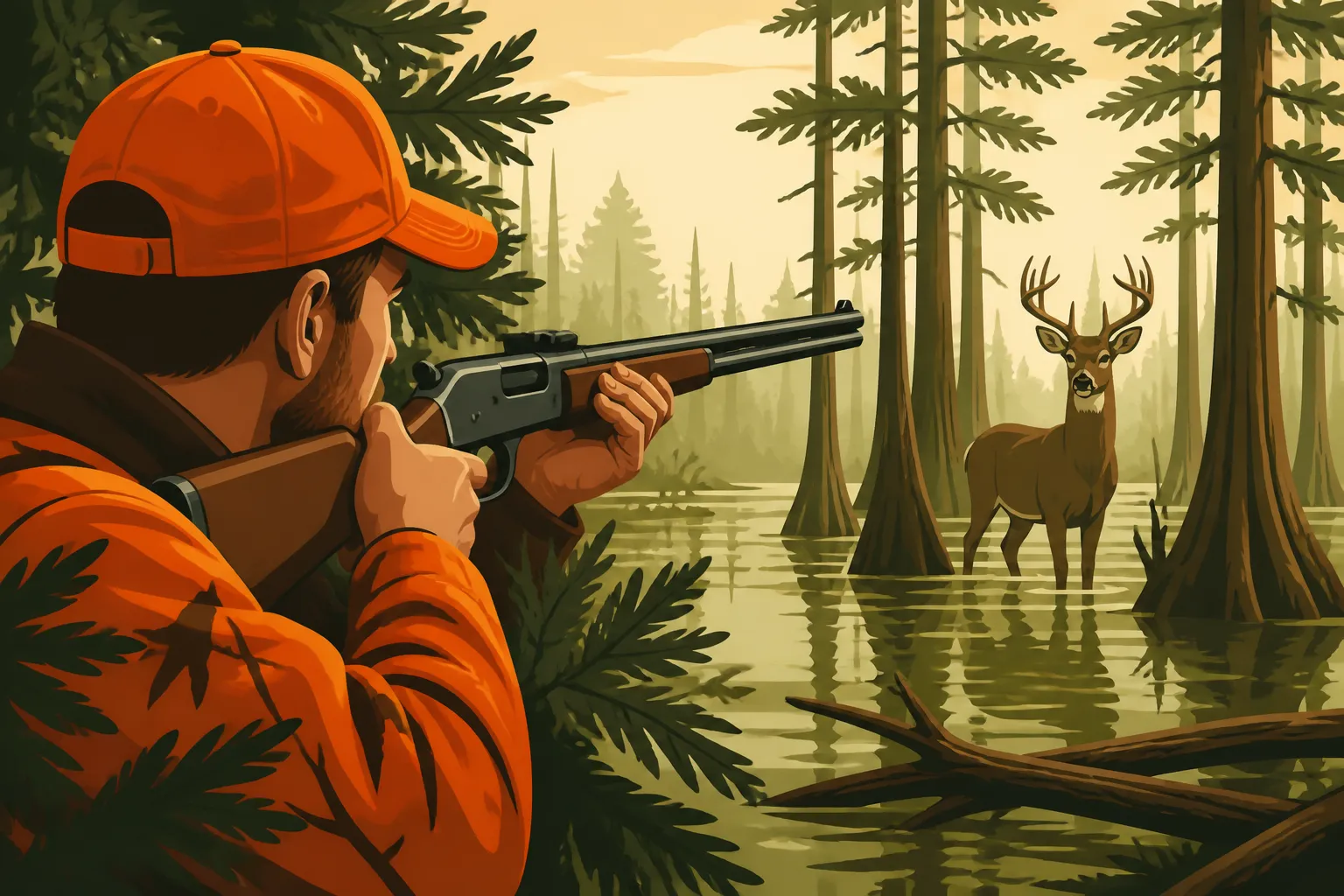
For many Wisconsin deer hunters, the dense, almost impenetrable world of a cedar swamp presents a formidable challenge. The thick cover, often wet underfoot, with visibility sometimes measured in mere yards, makes traditional long-range rifle hunting nearly impossible. It's a place where a lot of hunters feel overwhelmed, pushing deer out before they even know they're there. But for those who embrace the close-quarters nature of this environment, the venerable .30-30 Winchester can be an absolute game-changer, offering a distinct advantage where other calibers fall short. This guide will help you understand why this classic rifle is so effective in Wisconsin's cedar swamps and how to best utilize it.
Why the .30-30 Shines in Dense Cover
When you're slipping through a tangled cedar swamp in northern Wisconsin, or even a smaller pocket in the central part of the state, every footstep feels loud, and every branch seems to grab at your clothes. This isn't the open country where you need to reach out to 300 yards. Here, shots are often under 75 yards, sometimes even as close as 20. In this environment, the .30-30 truly comes into its own.
The Lever-Action Advantage
One of the biggest benefits of a .30-30, particularly the classic lever-action models, is the speed and ease of cycling a follow-up shot. Imagine you're still-hunting, moving deliberately through the thick, shadowed labyrinth of a cedar swamp. Suddenly, a big buck bursts from its bed, running through the dense cover. With a lever-action, your hand is already positioned to cycle the action immediately after the first shot, without having to break your cheek weld or significant sight picture. This quick, fluid motion allows for rapid second or even third shots, which can be critical when a deer is only visible for a fleeting moment between stands of timber or thick brush.
Furthermore, lever-action rifles are inherently reliable. Their simple, robust design means fewer moving parts exposed to the elements, reducing the chance of a malfunction from cold, wet conditions, or the inevitable bumps and scrapes that come with navigating heavy cover. You're not fumbling with magazines in freezing temperatures or trying to quietly manipulate a bolt that might snag on a branch. It's a design that’s been proven for over a century, a testament to its effectiveness in challenging environments like our Wisconsin cedar swamps.
Ballistics for Close Quarters
The ballistics of the .30-30 are perfectly suited for the ranges encountered in thick cover. Most hunters load their .30-30s with 150-grain or 170-grain bullets, which are designed to expand reliably at moderate velocities. At typical cedar swamp ranges—say, 25 to 100 yards—these bullets deliver excellent energy transfer and reliable expansion, creating substantial wound channels that lead to quick, humane kills. The moderate velocity means less risk of significant over-penetration, which can be a concern with some high-velocity magnum cartridges in very close quarters.
Instead, the .30-30 bullet tends to shed its energy within the animal, maximizing impact. This also often results in a more dramatic exit wound, which is absolutely crucial for leaving a clear blood trail. In a cedar swamp, where the ground is often covered in damp duff, fallen branches, and thick undergrowth, a strong blood trail is your best friend when it comes to tracking a deer that doesn't drop in its tracks. You'll want every advantage possible to recover your game in such a challenging environment.
Handling and Maneuverability
Try maneuvering a long, heavy magnum rifle with a big scope through tangled cedar boughs and alder thickets. It's a wrestling match, and you're usually losing. This is where the .30-30, especially a lever-action, truly shines. Most .30-30 rifles are remarkably compact, often featuring shorter barrels (18-20 inches are common) and a lighter overall weight compared to many bolt-action hunting rifles. This compact design makes them incredibly agile in tight spaces. You can carry it easily, shoulder it quickly, and swing it on target without getting caught up in overhead branches or dense brush.
Picture yourself creeping silently, taking a step, then pausing, peering into the shadows. Your rifle needs to be an extension of your body, not an obstacle. The .30-30's natural balance and trim profile mean it's less likely to snag on brush or bump noisily against trees. When a deer appears quickly, you can bring the rifle to bear with minimal movement, allowing for a stealthy and efficient shot. This ability to move quietly and quickly acquire a target is paramount when Still-Hunting Wisconsin Cedar Swamps.
Optimizing Your .30-30 for Wisconsin Cedar Swamps
While the .30-30 is already well-suited for swamp hunting straight out of the box, a few adjustments and considerations can further enhance its effectiveness. It's about tailoring your setup to the specific demands of this unique habitat.
Ammunition Choices for Performance
The market offers several excellent ammunition options for the .30-30 that go beyond the traditional flat-nose soft points. While those classic loads are certainly effective, modern advancements can provide an edge. Look for ammunition designed for deep penetration and controlled expansion. Bullets with heavier construction, perhaps bonded cores, will hold together better through brush and deliver consistent terminal performance on deer. Some manufacturers even produce .30-30 ammunition with polymer-tipped bullets designed for lever-action rifles, which offer a slightly flatter trajectory over longer ranges (though this is less critical in a swamp) and often boast enhanced expansion characteristics.
When selecting ammunition, consider what you want the bullet to do. In thick cover, you want a bullet that won't deflect too easily if it clips a small twig, but more importantly, one that will reliably expand and dump its energy into the deer. A bullet that creates a good exit wound is vital for Tracking a Deer in Wisconsin Snow or wet leaves. Test different loads at the range to see what groups best in your rifle and gives you confidence in its performance.
Sights and Optics for Dark Timber
In the low light conditions often found under a dense cedar canopy, your sighting system is critical. Many .30-30 lever actions come with excellent iron sights, which are incredibly fast to acquire at close range and are robust enough to handle bumps without losing zero. A good set of open sights can be perfectly effective. However, if your eyes aren't what they used to be, or you want a bit more precision, a low-power scope is a fantastic addition. A 1-4x or 2-7x magnification scope offers a wide field of view at its lowest setting, making it easy to track moving deer in thick cover, while still providing enough magnification for precise shot placement if you get a slightly longer clear lane.
Another increasingly popular option is a red dot sight. These sights offer extremely fast target acquisition, are excellent in low light, and are parallax-free within reasonable hunting distances, meaning your point of impact doesn't change much even if your eye isn't perfectly centered behind the optic. The simple red dot is incredibly intuitive and quick to use, making it ideal for the rapid, close-range engagements common in cedar swamps. Whatever your choice, ensure it's durable and waterproof, as Wisconsin swamps are rarely dry.
Carrying and Protection
Navigating a cedar swamp means your rifle will be exposed to moisture, dense vegetation, and occasional bumps. A quality sling is non-negotiable, allowing you to carry the rifle comfortably and keep your hands free for balancing, pushing aside branches, or using your binoculars. Look for a sling that is comfortable for long walks and doesn't make noise when you move.
Consider protecting your rifle's finish and optics. A light coat of gun oil on metal parts helps prevent rust from the damp environment. For scopes and red dots, lens caps are a smart investment to keep moisture and debris off the glass, ensuring a clear sight picture when it matters most. A simple neoprene scope cover can also offer protection against scratches and minor impacts. When you're constantly pushing through thick brush, even small preventative measures can make a big difference in the longevity and reliability of your gear.
Tactics for Hunting Cedar Swamps with a .30-30
Hunting cedar swamps successfully requires a specific mindset and approach. The .30-30, with its characteristics optimized for close range and quick handling, aligns perfectly with these tactics.
Still-Hunting Strategies
Still-hunting is perhaps the most effective method for tackling cedar swamps, and it's where the .30-30 really shines. This involves moving incredibly slowly and deliberately, pausing frequently to observe, listen, and scan the cover ahead. Think of it as a chess match, moving one step at a time, looking for any subtle clue—a flicker of an ear, a patch of brown hide, or the unnatural horizontal line of a deer's back in a vertical world of trees.
Your pace should be agonizingly slow. Take three to five steps, then stop for several minutes, scanning every shadow, every cluster of cedars. Use your binoculars extensively; they can help resolve details in the dim light and dense cover that are invisible to the naked eye. Pay close attention to the wind, as deer will often bed with the wind at their back, watching their trail. The quiet, compact nature of the .30-30 prevents it from becoming a hindrance during these slow, methodical movements. It's ready to come to your shoulder quickly when that sudden, close-range opportunity presents itself. Many public land hunters find great success by getting away from the logging roads and pushing deep into these seemingly impenetrable areas, as Finding Ground Others Walk Past is key to finding mature deer.
Stand Placement in Swamps
While still-hunting is productive, setting up a stand on the edge of, or even within, a cedar swamp can also be incredibly effective, especially during the rut or in late season when deer seek thermal cover. Deer use cedar swamps for bedding, escape cover, and crucial travel corridors. Look for natural funnels, pinch points, or distinct deer trails that run along the edge of the swamp or weave through slightly more open sections within it. Bucks, especially, will often cruise these edges, scent-checking for does without venturing too deep into the densest parts.
A strategically placed treestand overlooking a swamp edge or a well-used trail that leads into a cedar thicket can offer excellent shot opportunities. If you're going deeper, consider a portable ground blind brushed into the existing cover. Make sure your entry and exit routes are well-planned to avoid alerting deer. The .30-30 is ideal for these setups because the shots will almost certainly be close. A wide field of view through your low-power scope or red dot will allow you to pick up deer moving quickly through the thick branches. Think about Hunting a Funnel Between Two Swamps as a prime location for a stand.
Deer Drives and the .30-30
Deer drives are a classic Wisconsin hunting tradition, especially during the Wisconsin's Nine-Day Gun Deer Season, and the .30-30 is a formidable tool for drivers and standers alike in swampy terrain. For drivers pushing through a cedar swamp, the compact, fast-handling rifle is invaluable. You're often crashing through thick brush, trying to keep pace with the other drivers, and deer can break in any direction. The ability to quickly shoulder and fire accurate shots at close range is essential.
For standers positioned on the outside of a swamp or along a transition area, the .30-30's close-range performance is also a huge asset. Deer pushed out of a swamp often move quickly, and they won't present a target for long. Again, the .30-30's quick follow-up shots and moderate recoil allow for rapid, controlled shooting. This isn't about taking Hail Mary shots; it's about making ethical, effective hits on fast-moving game at short distances. When conducting Deer Drives With Three or Four Hunters, communication and knowing your shooting lanes are paramount, and the .30-30 ensures you're ready when a deer breaks cover.
Real-World Considerations and Challenges
Hunting Wisconsin's cedar swamps is not for the faint of heart. It presents unique challenges that go beyond just shot placement. Being prepared for the environment itself is just as critical as your firearm choice.
Dealing with the Environment
Cedar swamps are often cold, damp, and incredibly dense. Dressing in layers is crucial, with waterproof outer layers being non-negotiable. Your hands and feet will be particularly susceptible to the cold and wet, so invest in quality gloves and truly waterproof boots. Remember, you'll be moving slowly, if at all, for long periods, so warmth is key. When preparing for a hunt, I often use mapping tools like GoHunt to mark potential water crossings or particularly thick areas that might slow me down or force a detour, ensuring I can plan my route effectively.
The dense cover also limits visibility, making it easy to get disoriented. Always carry a reliable GPS unit or a smartphone with a mapping app like GoHunt that has offline map capabilities. Mark your starting point and plan your route. Even on public land, it's surprising how quickly you can lose your bearings in a vast, homogeneous swamp. Furthermore, the thick undergrowth can make noise, so practice moving as quietly as possible, picking up your feet, and avoiding snapping branches.
Tracking and Recovery in Swamps
Despite the .30-30's excellent terminal performance, not every deer will drop in its tracks, especially if you catch it on the move. Tracking a deer in a cedar swamp is a whole different beast. The damp ground might not hold tracks well, and a good blood trail can quickly get obscured by fallen leaves, water, or dense brush. This is where patience and meticulous attention to detail become paramount.
If a deer doesn't go down immediately, mark the spot of the shot, take a moment to compose yourself, and then give the deer time. How much time depends on the shot placement, but generally, an hour or more for a solid hit, longer for a questionable one. When you begin tracking, go slowly, looking for even the smallest speck of blood, disturbed leaves, or broken twigs. If the trail goes cold, expand your search in circles or grids. Having a hunting partner to help with the track can be invaluable. Remember that the challenge of Getting a Deer Out of a Wisconsin Swamp can be just as difficult as finding it.
Public Land Access and Regulations
Wisconsin offers vast amounts of Public Hunting Land in Wisconsin, including many areas with significant cedar swamp habitat within county forests and state wildlife areas. Before heading out, always consult the Wisconsin DNR's regulations for the specific area you plan to hunt. Check for any special rules regarding vehicle access, treestand placement, baiting bans (which are common in some counties), or other restrictions. Using a mapping application like GoHunt can help you identify public land boundaries and specific regulations tied to those areas.
Always adhere to blaze orange or blaze pink requirements during applicable seasons, even in thick cover where you might feel "hidden." Safety is paramount, and these rules are in place to ensure all hunters can be seen by others. Understanding the regulations for How Much Blaze Orange Wisconsin Requires is essential for any hunter in Wisconsin. While the solitude of a cedar swamp can be appealing, you're rarely truly alone on public land. Respect other hunters and wildlife, and leave no trace of your presence behind. The .30-30 is a powerful, effective tool for navigating these unique and challenging environments, bringing you closer to the wild heart of Wisconsin.
Disclaimer
This article is for general informational purposes only and does not constitute professional advice. Laws, prices and regulations vary by location and change over time. Consult a qualified professional for guidance on your specific situation.