.308 Versus .270 for Whitetails
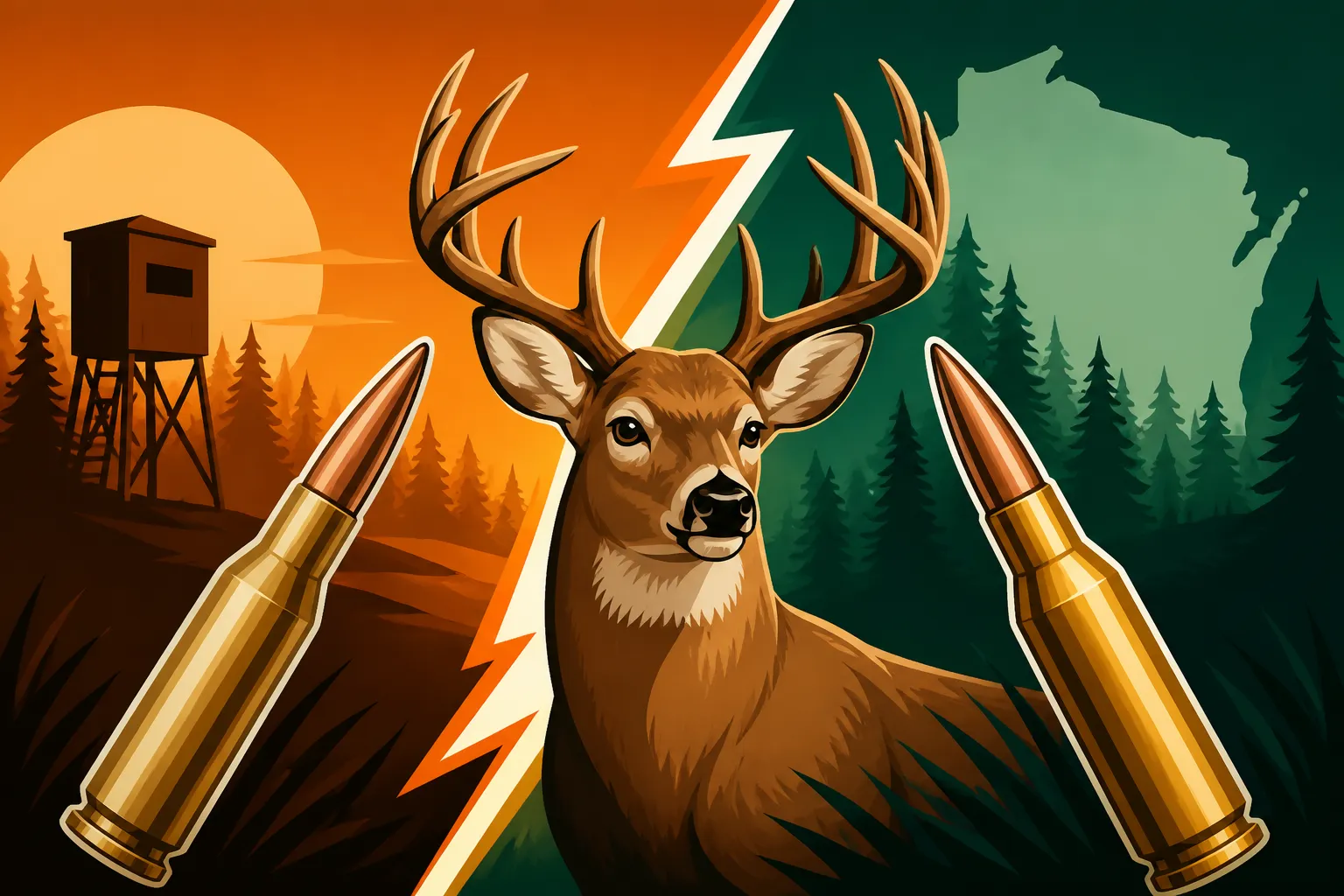
If you're a deer hunter in Wisconsin, you've likely spent countless hours poring over maps, scouting timber, and maybe even dreaming about that perfect shot. But when it comes to choosing the right tool for the job, one of the most common debates revolves around rifle calibers. Today, we're diving deep into two of the most popular and venerable cartridges for whitetails: the venerable .308 Winchester and the lightning-fast .270 Winchester. It's a question many of us grapple with, weighing the pros and cons to ensure we're equipped for whatever the varied Wisconsin landscape throws our way, from the thick northern woods to the open farmland fields. This guide will help you understand the nuances of each, so you can make an informed decision for your next hunting season.
Understanding the .308 Winchester for Wisconsin Whitetails
The .308 Winchester, introduced commercially in 1952, quickly earned a reputation as a compact, efficient, and highly effective cartridge. It's a military-derived round, which often lends it an air of rugged reliability, and for good reason. For deer hunting here in Wisconsin, the .308 isn't just a good choice; for many, it's the only choice they consider, and for very compelling reasons.
The .308's Strengths in Wisconsin's Diverse Terrain
One of the biggest selling points for the .308 is its incredible versatility. Wisconsin's deer habitat is far from monolithic; we have the dense boreal forests up north, the rolling coulees and steep ridges of the Driftless Area Deer Hunting in Wisconsin, and the patchwork of woodlots and sprawling agricultural fields in the southern counties. The .308 seems to handle all these environments with grace. Its effective range for whitetails is typically considered to be out to 300-400 yards with a skilled shooter, which comfortably covers the vast majority of shooting scenarios you'll encounter. Even in the tightest cedar swamps or thickest aspen cuts, where shots are often 50 yards or less, the .308 delivers ample energy without excessive over-penetration on a broadside deer.
The energy retention of a standard 150-grain or 165-grain .308 bullet is more than sufficient for deer, ensuring clean, ethical kills when placed correctly. Hunters appreciate that it offers a very manageable recoil impulse compared to some larger calibers. This is a huge advantage, as it allows for quicker follow-up shots if needed and makes extended practice sessions at the range far more comfortable. When you're spending time patterning your rifle and making sure your Rifle Setups for Wisconsin Deer are dialed in, comfort matters. Moreover, ammunition for the .308 Winchester is incredibly widespread. Almost any sporting goods store, even in smaller Wisconsin towns, will have a good selection of .308 deer loads, often in various bullet types and weights. This means you're rarely left scrambling for a specific box of ammo before opening weekend.
Practical Considerations for .308 in Wisconsin
When you're loading up for a hunt with a .308, you'll find a wealth of bullet choices. For whitetails, common bullet weights range from 150 to 180 grains. Many hunters favor a 150-grain soft point or ballistic tip for its balance of speed and expansion, particularly in the 0-200 yard range typical of many Wisconsin engagements. However, if you're hunting in areas with larger-bodied deer, or anticipate needing more penetration for less-than-ideal angles, a 165 or 180-grain bonded or monolithic bullet can be an excellent choice. These heavier bullets tend to retain more energy and penetrate deeper, which can be crucial when dealing with a big Wisconsin buck. It's always a good idea to experiment with different brands and bullet types to see what performs best in your specific rifle, ensuring maximum accuracy and terminal performance.
Another practical benefit of the .308 is its ability to perform well out of shorter barrels. Many modern hunting rifles chambered in .308 feature barrels in the 20-22 inch range. This shorter barrel length makes the rifle more maneuverable in dense brush, inside ground blinds, or when navigating thick timber in the Hunting the Wisconsin Northern Forest for Deer. You lose very little velocity compared to a longer barrel, making it an ideal choice for hunters who prioritize a compact, quick-handling rifle. Before you head out, make sure your optics are matched to your rifle's capabilities. A good low-light scope, like those discussed in Rifle Scopes for Low-Light Timber, will complement the .308 perfectly in the often dim conditions of a Wisconsin forest. Many hunters rely on resources like GoHunt to research specific rifle models and see how they pair with different optics or ammunition types, providing valuable insights from other hunters who've been there and done that.
Exploring the .270 Winchester for Wisconsin Deer Hunting
Stepping back a bit further in time, the .270 Winchester made its grand entrance in 1925, and it has been a darling of deer hunters ever since. Often praised for its flat-shooting capabilities and excellent ballistics, it quickly gained a reputation as a long-range deer cartridge, even before the advent of modern rangefinders and precise ballistic calculators. It's a caliber that instills confidence, especially when you know you might need to stretch a shot across a wide-open field or down a long ridge.
The .270's Advantages for Longer Shots and Open Country
The primary allure of the .270 Winchester lies in its velocity and flat trajectory. Firing typically lighter, faster bullets (130-150 grains) than the .308, the .270 sends them downrange at impressive speeds, which translates directly into less bullet drop over distance. This characteristic is a significant advantage in areas like Wisconsin's vast agricultural regions, where deer might be feeding in wide-open fields, or when you're hunting the expansive coulees of the Driftless, where a shot might present itself at 250 or 300 yards. When hunting Long Shots Across a Wisconsin Coulee, that flatter trajectory means less guesswork in elevation holds, which can be the difference between a clean kill and a frustrating miss.
For generations, hunters have trusted the .270 because it simply performs. It carries enough energy to dispatch whitetails cleanly at extended ranges, provided the shooter does their part. Its consistent performance has solidified its place as a classic American hunting cartridge, one that continually proves its worth in varied hunting conditions. The speed of the .270 also often translates to a devastating hydrostatic shock upon impact, leading to quick and humane kills when shot placement is accurate.
Real-World Application of the .270 in Wisconsin
When selecting ammunition for your .270, bullet construction is paramount due to its high velocity. While a 130-grain bullet is incredibly popular, you'll want to ensure it's designed for controlled expansion to prevent premature breakup at close ranges, yet still expand reliably at longer distances where velocity has dropped. Bonded bullets or those with heavier jackets are often excellent choices, balancing speed with penetration and weight retention. For bigger bucks, some hunters prefer 150-grain options for that slight edge in energy and stability. Just like with the .308, testing different loads in your rifle is key to finding the optimal combination for accuracy and terminal performance.
While the .270 truly shines in more open country, it's still a perfectly capable cartridge in the timber. However, some hunters express concern about over-penetration on closer shots or potential for bullet fragmentation if a lighter bullet hits brush. These concerns are often overstated with modern bullet designs, but it's something to consider if you exclusively hunt in dense, close-quarters cover. When you're still-hunting through thick woods or setting up on a narrow logging road, the physical length of a rifle with a 22-24 inch barrel, typical for a .270, can feel a bit cumbersome compared to a shorter .308. However, this is largely a matter of personal preference and how accustomed you are to handling your rifle in tight spots. GoHunt's detailed maps can be incredibly useful here, helping you visualize the terrain and anticipate shot distances, which can definitely influence your caliber choice.
Direct Comparison: .308 vs. .270 for the Wisconsin Hunter
Now that we've looked at each caliber individually, let's put them head-to-head. This isn't about finding a "winner" in an absolute sense, but rather understanding where each truly excels and what compromises might be involved. Every hunter has different priorities, and what works best for one might not be ideal for another.
Ballistics and Terminal Performance Side-by-Side
Comparing the ballistics of the .308 and .270 is where the differences really start to emerge. Generally speaking, the .270 will offer a flatter trajectory, especially beyond 200 yards, due to its higher muzzle velocity and often lighter bullets. The .308, on the other hand, typically carries more bullet mass and often slightly more energy at closer ranges, although this difference becomes negligible or even reverses at extended distances depending on bullet weight and design.
Let's look at a generalized comparison:
| Characteristic | .308 Winchester (150-grain) | .270 Winchester (130-grain) |
|---|---|---|
| Muzzle Velocity (FPS) | 2800-2900 | 3000-3100 |
| Muzzle Energy (ft-lbs) | 2600-2800 | 2600-2800 |
| Trajectory (200-yd zero) | Approx. -6" at 300 yds | Approx. -4" at 300 yds |
| Recoil (ft-lbs) | Moderate (15-20) | Moderate (18-22) |
| Bullet Weight Range | 125-180 grains (common: 150-165) | 110-160 grains (common: 130-150) |
Note: These are generalized figures. Actual performance varies significantly based on barrel length, specific load, and bullet design. Always check manufacturer data for precise specifications.
When it comes to terminal performance, both are outstanding deer cartridges. A well-placed shot from either will result in a quick, humane kill. The .270's higher velocity can sometimes create a slightly larger temporary wound cavity, particularly with lighter, faster-expanding bullets. The .308, with its typically heavier bullets, often creates a more substantial permanent wound channel and can offer superior penetration on tough angles or through shoulder bone. The idea of "knockdown power" is largely a myth; shot placement is king. Both calibers will reliably put down a whitetail with a shot to the vitals. The choice often comes down to which one allows you to place that shot most confidently under your specific hunting conditions.
Recoil, Rifle Weight, and Hunter Comfort
Recoil is a very subjective experience, but objectively, the .270 Winchester generally produces slightly more felt recoil than the .308 Winchester, assuming similar rifle weights. We're not talking about a huge difference, but it's noticeable for some shooters. For a new hunter, or someone sensitive to recoil, the lighter kick of the .308 can be an advantage, making it easier to maintain proper shooting form and avoid developing a flinch. This improved comfort can lead to more practice and, ultimately, better accuracy in the field.
Rifle weight is another factor. Both calibers are typically chambered in similar rifle platforms, so the weight difference between two comparable rifles (e.g., a Remington 700 in .308 vs. a Remington 700 in .270) will be minimal. However, as mentioned earlier, .308 rifles are more commonly found with slightly shorter barrels, which can reduce overall length and weight a bit, enhancing maneuverability in dense cover. When you're trekking miles through uneven terrain in pursuit of deer on public land, every ounce and inch can make a difference in your comfort and endurance.
Ammunition Availability and Cost
In Wisconsin, you'll find an excellent selection of ammunition for both the .308 and the .270. They are two of the most popular hunting calibers in North America, so manufacturers produce a wide array of loads for them. However, sometimes local availability can vary. Generally, .308 ammunition might be slightly more prevalent in sheer volume due to its military heritage and widespread use in target shooting, but this is a subtle difference. You shouldn't have trouble finding suitable deer loads for either.
Regarding cost, ammunition prices fluctuate, but typically, .308 and .270 hunting ammunition are in a similar price bracket. You'll find budget-friendly options for practice and premium loads designed for hunting, with prices varying accordingly. Neither caliber stands out as significantly more expensive or cheaper than the other on a consistent basis. Hunters often check community forums on platforms like GoHunt to see what brands and loads other Wisconsin hunters are having success with, and to get a pulse on ammunition availability before heading out for Opening Weekend Tactics in Wisconsin.
Making Your Choice: Matching Caliber to Your Wisconsin Hunt
Choosing between the .308 and .270 is less about which is inherently "better" and more about which is "better for you" and your specific hunting style and location. Both are excellent choices for Choosing a Rifle Caliber for Wisconsin Deer and will reliably harvest whitetails. The decision often boils down to a blend of practical considerations and personal preference.
Terrain, Shot Distance, and Hunting Style
Think about where you primarily hunt in Wisconsin.
- Northern Forest (Thick Timber, Shorter Shots): If your deer hunting mostly takes place in the dense woods of northern Wisconsin, where shots rarely exceed 150 yards and often occur at 50 yards or less, the .308 Winchester might hold a slight edge. Its excellent performance from shorter barrels, manageable recoil, and potent terminal ballistics make it a fantastic choice for navigating thick cover and taking quick, close-range shots. The brush often makes Practical Range in Wisconsin Timber quite short.
- Driftless Area (Coulees, Ridge Tops, Mixed Shots): In the rolling hills and deep valleys of the Driftless Area, you might encounter a wider range of shot distances. Some shots could be close-quarters in a thick bottomland, while others might be across a coulee or down a ridge at 200+ yards. Here, both calibers shine. The .270's flatter trajectory is an advantage for those longer, open shots, especially if you're Hunting Wisconsin Coulees and Ridge Tops. However, a skilled shooter with a .308 is still perfectly capable. Zeroing a Rifle for Mixed Distances is important for both in this terrain.
- Farmland (Open Fields, Woodlots, Longer Shots): For hunters targeting deer in the agricultural regions of southern and central Wisconsin, where deer frequently move across wide-open crop fields, the .270 Winchester truly comes into its own. Its flat trajectory minimizes bullet drop, providing a significant confidence boost for those 200-300 yard shots across a cut cornfield. While the .308 is still highly effective, the .270's speed offers a distinct ballistic advantage in these scenarios. When Hunting Wisconsin Farmland Deer, a long-range capability can be a real asset.
Consider your hunting style as well. Are you a still-hunter who moves slowly through the woods, or do you prefer to sit in a treestand or ground blind, waiting for deer to come to you? Both calibers are adaptable, but a more compact .308 might feel slightly better for extended periods of carrying and maneuvering in dense cover.
Hunter Experience and Personal Preference
Ultimately, the best rifle for you is the one you shoot most accurately and confidently. This often comes down to hunter experience and personal preference.
- Recoil Sensitivity: If you are new to hunting, or particularly sensitive to recoil, the slightly milder recoil of the .308 can make a significant difference. Less recoil leads to less flinching, more comfortable practice sessions, and ultimately, better accuracy when it counts.
- Confidence: Do you feel more confident with a rifle that's known for its flat trajectory, or one that's celebrated for its robust bullet performance in varying conditions? Your psychological comfort with your chosen caliber plays a huge role in your ability to make a clean shot.
- Ammunition Availability: While both are widely available, some hunters prefer the slightly more common presence of .308 in certain rural areas, especially when planning for Ammunition Availability Before Opening Day.
Many experienced hunters will tell you that shot placement trumps caliber any day of the week. Both the .308 and .270 are more than adequate for Wisconsin whitetails. The key is to choose the rifle and caliber that you are most proficient and comfortable with, and then practice, practice, practice. Using a platform like GoHunt, you can research different firearm manufacturers, read user reviews, and even compare ballistic charts to help solidify your decision. It's a great way to ensure your gear, including your chosen caliber, is perfectly suited for your Wisconsin hunting adventures, whether you're focused on Hunting Deer Without Bait in Wisconsin or just enjoying the deer camp traditions.
Disclaimer
This article is for general informational purposes only and does not constitute professional advice. Laws, prices and regulations vary by location and change over time. Consult a qualified professional for guidance on your specific situation.