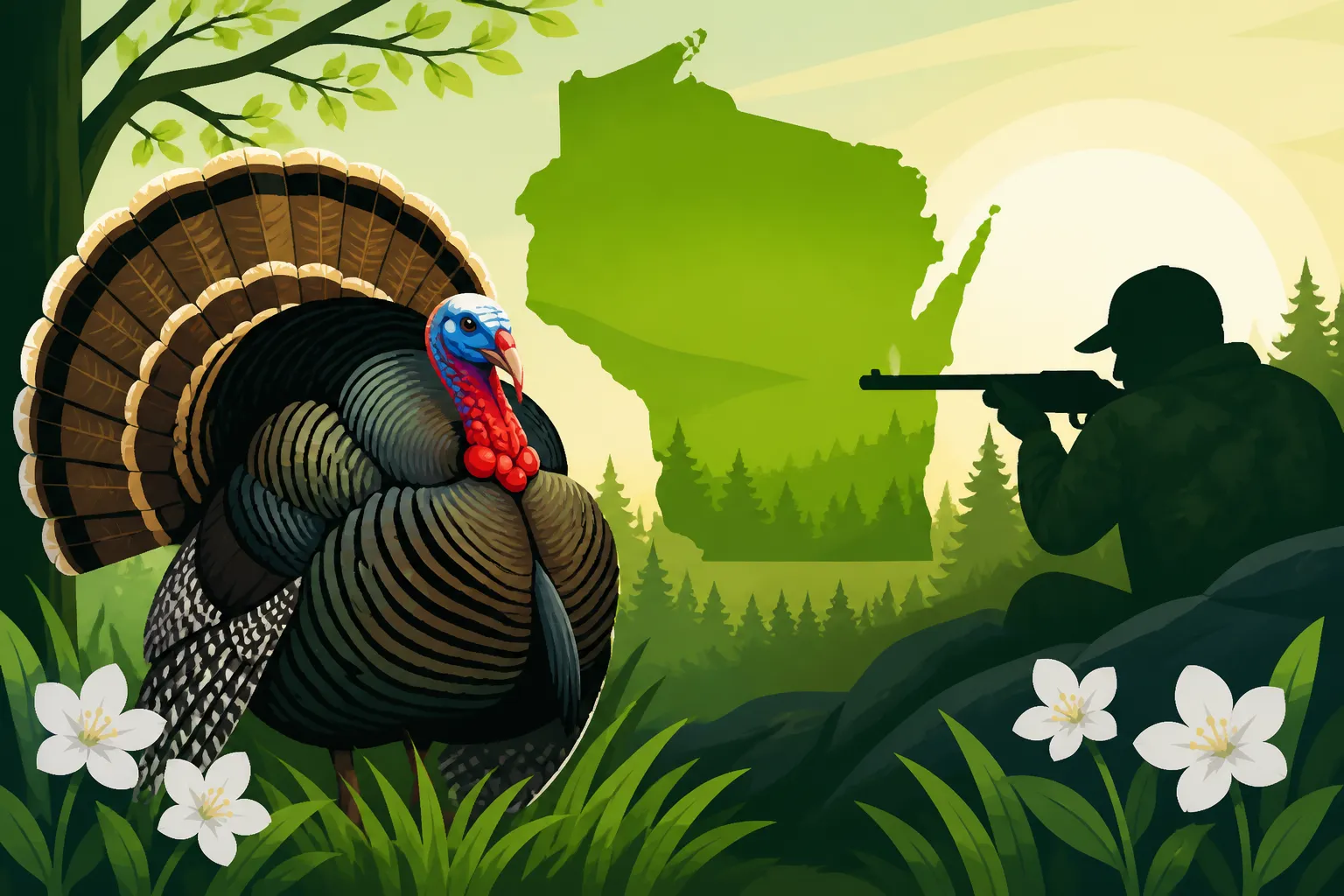
Spring Turkey Hunting in Wisconsin
The alarm clock blares at 3:30 AM, and you’re faced with the cold, hard truth of spring turkey hunting in Wisconsin: it demands dedication, early mornings, and a good dose of stubbornness. It’s easy to feel overwhelmed by regulations, zone maps, and the sheer unpredictability of a gobbler that seems to know your every move. This comprehensive guide is designed to cut through the confusion, offering practical advice and seasoned wisdom to help you confidently chase those elusive longbeards across our diverse Wisconsin landscapes.
Understanding Wisconsin's Spring Turkey Zones and Periods
Spring turkey hunting in Wisconsin is a unique experience, largely shaped by the zone system and the timed hunting periods. It's not as simple as just buying a tag and heading out; understanding this structure is the very first step to success, or at least, getting a chance to hunt at all. Many hunters, especially those new to the state or just getting into turkey hunting, find this aspect pretty confusing, and honestly, it can be a little frustrating to navigate.
Navigating the Zone System
Wisconsin is divided into seven distinct turkey management zones, each with its own allocation of permits and often, differing turkey populations. These zones aren't just arbitrary lines on a map; they represent areas with varying habitats, turkey densities, and hunter pressure. For instance, Zone 1, encompassing much of the state's farmland and driftless region, typically holds the highest turkey populations and thus receives the most permits. On the flip side, zones like Zone 7, covering much of the northern forest, might have lower bird numbers and fewer permits, making drawing a tag there a bit tougher. It's crucial to know which zone you want to hunt, as this dictates where your permit is valid. You can't just hop from Zone 1 to Zone 3 with the same tag; your authorization is strictly for the zone you applied for. This system is designed to manage harvest pressure and ensure sustainable turkey populations across the state, but it certainly requires hunters to do their homework.
The Permit Drawing Process
Because demand often outstrips supply, especially in prime turkey country, Wisconsin employs a permit drawing system for spring turkey hunting. This means you don't just buy a tag; you apply for a specific zone and period, hoping your name is drawn. The application period typically runs from December to early January, giving hunters a window to put in for their desired hunt. If you're a seasoned turkey hunter, you're likely familiar with this annual ritual. If you're new, it can feel like a lottery, and in some ways, it is. The more popular zones and earlier periods (like Period A or B) often have lower drawing odds, meaning you might accumulate a preference point if you're unsuccessful. These preference points are valuable, improving your odds in future drawings, but it might take a few years to draw a coveted early-season tag in a top zone. Understanding this process, including how to check your application status on the Go Wild system, is key.
Leftover Tag Opportunities
Don't despair if you don't draw a permit in the initial lottery! Wisconsin offers Leftover Turkey Authorizations in Wisconsin that go on sale later in the spring, typically in a staggered fashion. These are often permits for less popular zones or later hunting periods (like Period E or F). While the early periods get a lot of attention, there are still excellent opportunities to fill a tag during the later seasons. In fact, some experienced hunters prefer the later periods because the foliage is thicker, meaning you can often get away with more movement, and the birds are sometimes less pressured than those that have been called at for weeks. Keep an eye on the Wisconsin DNR website for exact sales dates, as these leftover tags can sell out quickly, especially for desirable zones. It’s a good strategy to have a backup plan, maybe a zone or period you wouldn't normally consider, just in case you need to snag a leftover tag to ensure you get to chase gobblers this spring.
Scouting for Spring Gobblers Before the Season
Let's be honest, you can't just show up on opening morning and expect to be successful. Turkey hunting, perhaps more than any other type of hunting, rewards diligent pre-season scouting. Those big, mature gobblers didn’t get that way by being easy to find or fool. They know their territory, and you need to know it better. This is where the real work begins, long before you ever set foot in the woods with a shotgun in hand. Many hunters skip this step, thinking they'll figure it out on the fly, and then wonder why they're not hearing any gobblers or seeing any birds. Don't be that hunter.
Pre-Season Roosting and Listening
One of the most exciting and informative parts of pre-season scouting is locating roost sites. Turkeys typically roost in tall, mature trees, often near water or on ridge lines, offering them a good vantage point for safety. Head out to your hunting area about two weeks before the season opens, right around dusk or dawn. Use a locator call – an owl hooter, a crow call, or even a coyote howl – and listen for shock gobblers. Those gobblers often can't resist sounding off when they hear another animal call. Pinpointing where a gobbler sounds off at dawn gives you a huge advantage; it tells you exactly where to set up before first light on opening day. Remember, you're not trying to call them in or disturb them; you're just trying to get them to reveal their location. It's a game of stealth and patience, and it can pay huge dividends. Pay close attention to subtle sounds, too, like turkeys flying down from the roost – it’s a surprisingly loud commotion in the quiet pre-dawn woods.
Locating Key Food Sources and Travel Corridors
Turkeys, like all wildlife, are creatures of habit, driven by their basic needs: food, water, and shelter. In the spring, their diet shifts from mast to green-up, insects, and waste grain. Spend time walking through fields, wood edges, and clearings, looking for areas where turkeys might be feeding. Green alfalfa fields, freshly tilled cornfields, and even open areas with early spring insects can be magnets for turkeys. Similarly, identify natural travel corridors. These might be old logging roads, creek bottoms, saddlebacks between ridges, or pinch points where habitat changes force turkeys to move through a narrow area. These are ideal places to set up, as you know turkeys will likely pass through them at some point during the day. Consider using mapping tools, like those offered by GoHunt, to help identify potential travel routes and funnel points on public land before you even step foot there. This digital scouting can save you a lot of time on the ground.
Interpreting Turkey Sign
Learning to read the "newspaper of the woods" is an invaluable skill for any hunter. Turkeys leave behind plenty of clues about their presence and activities. Look for tracks in soft soil near water sources or field edges. Male turkey tracks are generally larger than hens', and the middle toe on a gobbler track is longer than the outer toes. Droppings are another key indicator: gobbler droppings are typically J-shaped, while hens' are more spiral or blob-shaped. Look for wingtip drags in dusty areas, indicating a strutting gobbler. Scratch marks in leaf litter reveal where turkeys have been foraging. Don't forget about feathers – a primary wing feather means a turkey flew, while body feathers often indicate a feeding or roosting area. The fresher the sign, the closer the turkeys are. Finding a fresh gobbler track or a tell-tale strut mark can confirm that your chosen scouting area holds the bird you're after. This kind of detailed Scouting Wisconsin Public Land Before Season is what truly sets successful hunters apart.
Essential Gear for Wisconsin Spring Turkey Hunting
When you're out chasing longbeards, especially in the unpredictable spring weather of Wisconsin, having the right gear isn't just a convenience – it's crucial for both success and comfort. From your firearm to your calls, every piece plays a role. I've been in the woods when a sudden downpour hits, or when a stubborn gobbler refuses to commit, and I can tell you, being ill-equipped makes an already challenging hunt even tougher. Don't let your gear be the reason you go home empty-handed or soaked to the bone.
Shotguns, Chokes, and Ammunition
Your shotgun is arguably the most important piece of equipment in your turkey hunting arsenal. Most hunters opt for a 12-gauge, though 20-gauge shotguns have become incredibly effective with modern ammunition and chokes. What truly matters is how your gun patterns. A tight pattern is essential for dropping a gobbler cleanly. You'll want to pair your shotgun with a specialized turkey choke, usually an extra-full or super-full constriction, designed to deliver a dense shot pattern out to 40-50 yards. Popular brands like Carlson's or Indian Creek Shotgun Chokes are often favored by serious turkey hunters. As for ammunition, forget your duck loads. You need heavy, hard-hitting turkey loads, often filled with denser-than-lead shot materials like tungsten super shot (TSS). Brands like Federal Premium's Heavyweight TSS or Apex Ammunition are popular, though more budget-friendly options with lead shot are still very effective at closer ranges. The key is to pattern your specific gun, choke, and ammunition combination well before the season, shooting at paper targets at various distances to see where your deadliest pattern is.
Decoy Strategies for Wisconsin Birds
Decoys can be a game-changer, especially on public land or for pressured birds. There's nothing quite like watching a gobbler strut into your setup, completely fooled by your plastic hen. The most common setup involves a single hen, or a hen and a jake. A jake decoy can sometimes entice a dominant gobbler to come in looking for a fight. However, be mindful of hunter pressure; in heavily hunted areas, less can be more. Sometimes, no decoy at all is the best option if birds are extremely wary. The best decoy placement for pressured birds is often where they can see it from a distance, but you are well hidden in natural cover. Positioning a decoy to face away from you can also draw the gobbler's attention towards it, keeping his focus off your hiding spot as he circles in. On private land, or less pressured public land, you might get away with more aggressive setups, like multiple hens or even a full strut gobbler decoy to really challenge an incoming bird.
Calls That Mimic Wisconsin Turkeys
Calling is the art of turkey hunting, and having a diverse selection of Turkey Calls Worth Carrying in Wisconsin can make all the difference. You'll want a variety to mimic different turkey vocalizations and adapt to various situations.
- Mouth Calls (Diaphragm Calls): These are perhaps the most versatile, allowing for hands-free calling. They take practice to master but can produce a wide range of yelps, clucks, purrs, and cutts.
- Slate Calls (Pot Calls): Consisting of a slate or glass surface and a striker, these produce realistic yelps and purrs, often with a slightly different tone than mouth calls. They are great for clear, consistent calling.
- Box Calls: These are easy to use and produce loud, resonant yelps that carry well over long distances, making them excellent locator calls or for reaching distant gobblers.
- Locator Calls: Owl hoots, crow calls, and coyote howls are not meant to mimic turkeys but rather to elicit a shock gobble from a tom, revealing his location without alerting him to your presence.
Practice is paramount. A realistic-sounding call, even if simple, is far better than a complex call executed poorly. Knowing when to call, how loudly, and what type of call to use is a skill that develops over many seasons in the woods.
Clothing and Camouflage Considerations
Staying concealed is paramount in turkey hunting, as turkeys have incredible eyesight. Full camouflage, from head to toe, is essential. This includes a face mask or face paint and gloves. Patterns that mimic the natural environment you'll be hunting in – whether it's the greening hardwoods of early spring or the darker timber of the north – are best. Layering your clothing is also crucial for Wisconsin's notoriously fickle spring weather. Early mornings can be frosty, while midday can turn surprisingly warm. A good base layer, an insulating layer, and a waterproof/windproof outer layer will keep you comfortable and allow you to stay in the field longer. Don't forget comfortable, waterproof boots; you'll be doing a lot of walking, and often in damp, muddy conditions. Good quality clothing that allows for silent movement and provides scent control can also give you an edge, especially when that gobbler is within close range.
Effective Tactics for Spring Gobblers
So, you've done your scouting, you've got your gear dialed in, and the season is finally here. Now comes the exciting part: putting those pieces together to actually call in a Wisconsin gobbler. This is where patience, strategy, and a little bit of luck all come into play. Every gobbler is different, every situation unique, but there are some fundamental tactics that, when applied correctly, significantly increase your odds of success.
Roost Hunting Wisconsin Gobblers
This is often the preferred tactic for opening morning and early periods, especially when turkeys are still establishing their patterns. The goal is to get as close as possible to a roosted gobbler before he flies down, without being detected. Based on your pre-season scouting, you'll know roughly where he's roosting. Arrive at least an hour before first light, move stealthily to your setup location, and get completely hidden. You want to be within 100-150 yards, ideally, but distance will depend on terrain and cover. Once settled, resist the urge to call too much. A few soft tree yelps as light breaks can sometimes entice him to gobble on the limb, and a fly-down cackle followed by some clucks and purrs might be all it takes to convince him to pitch down in your direction. The challenge with Roost Hunting Wisconsin Gobblers is the sheer excitement and the temptation to overcall. Often, patience and minimal calling are more effective as the gobbler will naturally want to come find the "hen" he heard.
Run-and-Gun Turkey Tactics on Public Land
For later in the season, or when birds are scattered and not actively gobbling from the roost, the "run-and-gun" method can be highly effective, particularly on expansive public lands. This strategy involves covering a lot of ground, stopping frequently to call, listening for a response, and then moving quickly and quietly towards any gobblers you hear. It's an active, aggressive approach that works well when you're trying to locate birds that might be moving across large tracts of timber or working field edges. On public land, this often means walking old logging roads, hiking ridges, or cruising through areas where turkeys are known to frequent. The key is to be mobile, calling sparingly at each stop, listening intently for even the faint sound of a distant gobble. Once you hear a bird, quickly assess the terrain, devise a plan of approach, and try to get within 100 yards, setting up with good cover before calling again. This tactic demands physical stamina and a good understanding of topography. If you're using an app like GoHunt for mapping, it can really help you navigate quickly and efficiently across varied terrain.
Setting Up Against a Big Oak
No matter your calling strategy, a good setup is paramount. You need to be completely camouflaged and motionless, ideally with your back against a tree that's wider than your shoulders. This not only breaks up your silhouette but also protects your back from any accidental approach from behind by a keen-eyed gobbler. When Setting Up Against a Big Oak or other suitable tree, consider your shooting lanes. Clear any small branches or obstructions in front of you that might deflect a shot. Think about where the gobbler is likely to approach from, given the terrain and your calling. If you're calling a bird across a field, set up just inside the timber edge. If he's coming down a ridge, find a spot that offers a clear shot as he tops out. Always have your gun shouldered and ready, especially when a bird is getting close. Many a gobbler has been missed because a hunter fumbled with their gun at the last second. Remember, silence and stillness are your allies once you're set up.
Dealing with Hung-Up Birds
This is perhaps the most frustrating aspect of spring turkey hunting. You've done everything right: called him in, he's gobbling his head off, and then… he stops at 80 yards, just out of range, strutting and drumming, waiting for the "hen" to come to him. This is a common problem, especially with mature, pressured gobblers. What do you do?
- Patience: Sometimes, simply going silent for a long period can make the gobbler nervous and convince him to come closer. Give it 15-30 minutes of absolute silence.
- Changing Calls: Try a different type of call (e.g., switch from a slate to a mouth call) or a different vocalization (soft purrs instead of aggressive yelps) to pique his interest.
- Move (Carefully): If the terrain allows, you might try a subtle, slow flank move to get closer, using terrain features to mask your movement. This is risky and requires extreme caution.
- Aggressive Calling: Occasionally, getting aggressive with cutts and yelps can challenge his dominance and provoke him to come investigate.
- Decoy Adjustments: If using decoys, and the bird is hung up, sometimes a slight adjustment or removing one can sometimes work. If he's focused intently on a jake, removing the jake can occasionally make him think he's missed his chance.
It's a chess match, and there's no single perfect answer. The best strategy often depends on the individual bird and the specific circumstances.
Hunting Different Wisconsin Landscapes for Turkeys
Wisconsin's diverse landscape offers a variety of challenges and opportunities for spring turkey hunters. From the rolling hills and agricultural fields of the south to the dense forests of the north, understanding how turkeys behave in these different environments is crucial. What works perfectly in a Driftless Area coulee might be a total bust in a Chequamegon-Nicolet aspen cut.
Turkey Tactics for Driftless Farm Edges
The Driftless Area, with its steep coulees, hardwood ridges, and abundant agricultural fields, is arguably Wisconsin's turkey mecca. Turkeys here have ample food (waste grain, insects, mast) and excellent roosting habitat. When hunting the Turkey Tactics for Driftless Farm Edges, focus on the transitions. Gobblers will often roost on high ridges, pitch down into open fields to feed with hens, and then move back into the timber as the day progresses. Setting up on a field edge, with good cover, just before first light is a classic tactic. Identify benches, saddles, or old logging roads along the coulee sides that connect roosting areas to feeding grounds; these are prime travel routes. Don't be afraid to use a jake or hen decoy here, as birds are generally abundant and can be very responsive. However, be prepared for them to circle widely. The undulating terrain means a gobbler might come into view from an unexpected direction, so maintain constant vigilance. Midday, focus on calling from high points overlooking creek bottoms or small food plots where turkeys might be loafing.
Hunting the Northern Forest Gobblers
Hunting turkeys in Wisconsin's vast northern forests, like the Chequamegon-Nicolet National Forest or large county forests, presents a very different challenge compared to the farmland regions. Turkey densities are generally lower, and the birds are often more nomadic, covering greater distances. They tend to stick to areas with mature hardwoods, often near openings created by logging or natural disturbances.
- Locating Birds: Since gobblers are more spread out, a "run-and-gun" approach with frequent, loud locator calls (especially a box call) is often necessary to find birds. You might walk miles before getting a response.
- Patience and Stealth: Once you locate a bird, the approach needs to be incredibly stealthy. Northern woods often have more dense undergrowth, making silent movement tougher.
- Habitat Focus: Look for clearcuts, aspen regeneration areas, or old burn areas that provide new growth for foraging. Turkeys will also frequent pine plantations with an open understory.
- Calling Strategy: Northern gobblers can sometimes be harder to call in due to lower hen numbers (less competition) or simply less exposure to hunter calls. Start soft, and gradually increase urgency if he's not committing. Sometimes, a quiet approach and a simple series of soft clucks and purrs is more effective than aggressive yelping.
Success in the north often means being persistent, covering ground, and being comfortable with long periods of silence between encounters.
Public Land Challenges and Solutions
Hunting public land for spring turkeys in Wisconsin can be incredibly rewarding, but it comes with its own set of challenges, primarily hunter pressure.
- Early Bird Gets the Worm (and the Spot): On opening weekend, expect competition. Get to your desired location very early, often well before legal shooting light, to secure your spot.
- Finding Unpressured Birds: To find birds that haven't been called at relentlessly, you often have to go where others won't. This means walking further, hiking into rougher terrain, or finding smaller, less obvious parcels. Using an app like GoHunt can help you identify remote corners or overlooked pieces of public land.
- Dealing with Other Hunters: Be aware of other hunters. Wear blaze orange or pink when walking in or out (though not while actively hunting). If you hear another hunter calling or a turkey responding to them, it's best to back out quietly and find another area to avoid conflicts or accidentally "calling in" another hunter.
- Realistic Expectations: Public land birds are often warier. They've heard every call and seen every trick. Be patient, use subtle calling, and be prepared for them to hang up. Sometimes, a less-is-more approach to calling works best.
By understanding the unique dynamics of public land, including navigating access points and finding unpressured pockets, you can significantly increase your odds. Remember, the further you get from the road, the fewer hunters you're likely to encounter.
Post-Harvest Considerations and Regulations
Congratulations! You've successfully outsmarted a wary Wisconsin gobbler. But the hunt isn't over yet. There are important steps to take after the shot, from field dressing to understanding registration requirements, ensuring your hard-earned bird is properly cared for and legally handled. Ignoring these steps can lead to spoiled meat or, worse, legal issues.
Field Dressing and Meat Care
Once your turkey is down, the first priority is to field dress it to cool the meat as quickly as possible, especially on warmer spring days.
- Remove Entrails: Carefully open the body cavity and remove all internal organs. This is a messy but essential step.
- Clean Cavity: If possible, wipe the cavity clean with paper towels or leaves.
- Cooling: If you're a long way from your vehicle, you can fan out the cavity to allow air to circulate. Get the bird back to camp or your vehicle as soon as you can.
- Plucking or Skinning: Back at home, you'll need to decide if you want to pluck the bird (for crispy skin) or skin it. Plucking is more time-consuming but yields more meat. Many hunters simply skin the bird, breasting out the meat and salvaging the leg and thigh meat.
- Refrigeration: Get the meat into a cooler with ice or into a refrigerator promptly. Don't let it sit out in warm temperatures. Proper handling ensures delicious wild turkey for your dinner table. Remember, Cooking a Wild Turkey Breast is a culinary reward for your efforts!
Wisconsin Turkey Registration Rules
Wisconsin requires hunters to register their harvested turkeys. This is a critical step for wildlife management, as it provides the DNR with valuable data on harvest numbers and population health. You generally have until 5:00 PM the day after harvest to register your bird.
- Online Registration: The easiest and most common method is to register online through the Wisconsin DNR's Go Wild system. You'll need your customer ID and tag number, along with details about your harvest (date, time, county, zone, sex of bird).
- Phone Registration: You can also register by phone, though the online system is typically faster and more convenient.
- No Physical Registration Stations: Unlike in some past years, there are no longer physical registration stations. It's all done electronically.
Make sure you understand the specific Wisconsin Turkey Registration Rules for the current season. Failing to register your turkey is a violation and can result in fines. It's a simple step, but one that shouldn't be overlooked.
Carcass Transport and Disease Prevention
While less prevalent than CWD in deer, chronic wasting disease (CWD) and other avian diseases can affect wild turkeys. The Wisconsin DNR actively monitors wildlife health.
- No Statewide Carcass Restrictions for Turkeys: Currently, there are no specific carcass transport restrictions for wild turkeys in Wisconsin like there are for deer in CWD-affected areas. However, it's always good practice to process your bird as close to the harvest location as possible, or at least before crossing state lines, if you plan to hunt elsewhere.
- Reporting Sick Birds: If you encounter a turkey that appears sick or exhibits unusual behavior, or find a deceased bird, it's important to report it to the DNR. This helps them monitor disease outbreaks and protect the overall wild turkey population. You can find contact information for reporting sick animals on the Wisconsin DNR website or through their Go Wild app.
- Hygiene: Always practice good hygiene when handling any wild game. Wear gloves when field dressing, and thoroughly clean all knives, surfaces, and hands afterward. This not only prevents potential disease transmission but also ensures the quality and safety of your meat. Staying informed about Wisconsin Wildlife Disease Monitoring is part of being a responsible hunter.
| Wisconsin Spring Turkey Zone | General Location & Habitat | Typical Turkey Density | Drawing Odds (Early Periods) | Leftover Tag Availability (Likely) |
|---|---|---|---|---|
| Zone 1 | Southern/Western Farmland | High | Low | Low |
| Zone 2 | East Central Farmland | Medium-High | Medium | Medium |
| Zone 3 | West Central Farmland | Medium-High | Medium | Medium |
| Zone 4 | Northeast Forest/Farmland | Medium | Medium-High | Medium-High |
| Zone 5 | Central Forest/Farmland | Medium | Medium-High | High |
| Zone 6 | Northwest Forest | Low | High | High |
| Zone 7 | Northern Forest | Low | High | High |
Disclaimer
The information provided in this guide is for general informational purposes only and is subject to change. Hunting regulations, season dates, and zone boundaries are determined by the Wisconsin Department of Natural Resources (DNR) and can be updated annually. It is the sole responsibility of every hunter to review and comply with all current Wisconsin hunting regulations before heading afield. Always consult the official Wisconsin DNR hunting regulations pamphlet or website for the most accurate and up-to-date information.