Feral Swine in Wisconsin
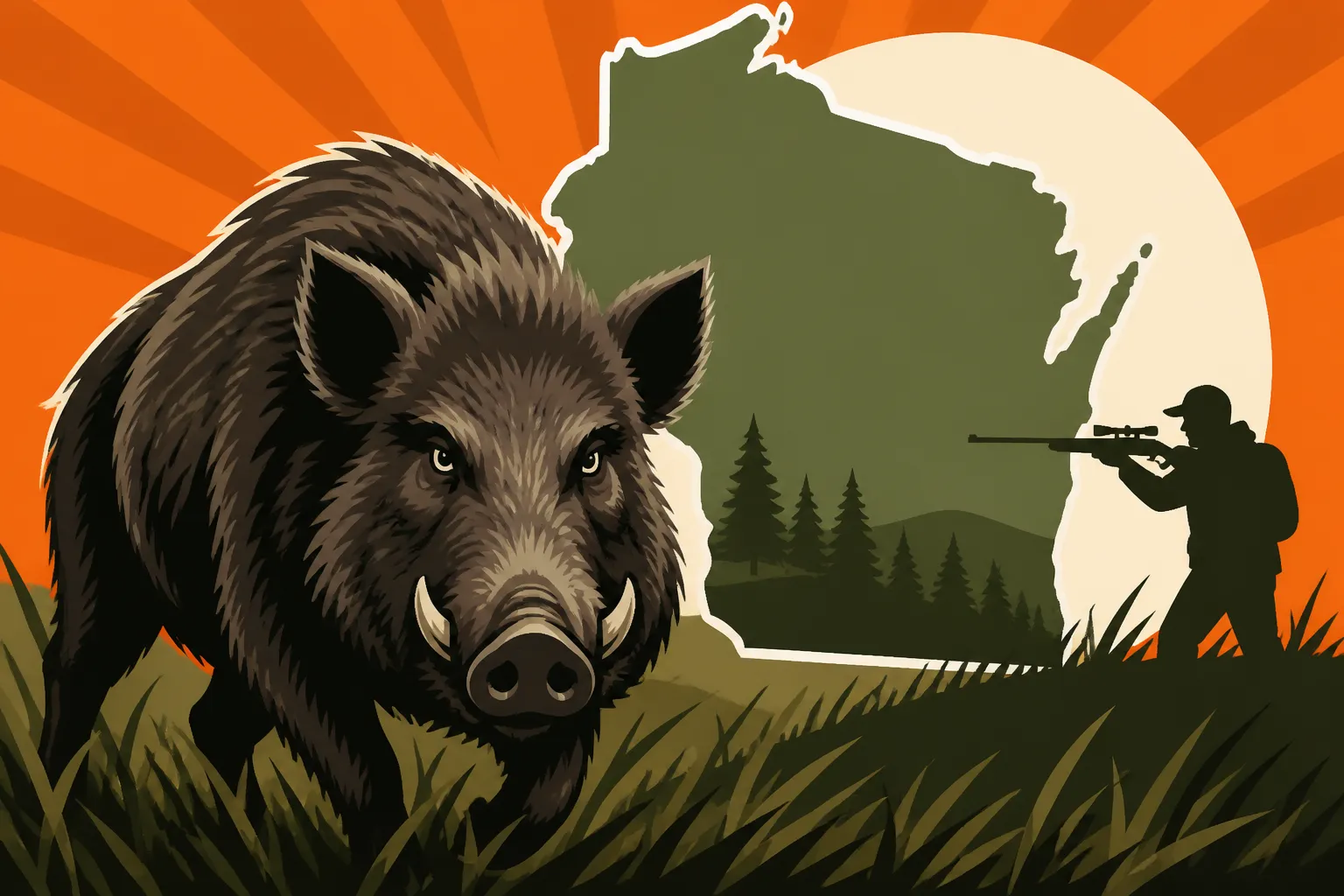
A neighbor swears he saw a black pig rooting along a cornfield edge, and now your hunting group wants to know whether you can shoot it, whether you should, and who needs to hear about it. Feral swine are rare in Wisconsin, but the stakes are high when they show up. This guide explains what they are, the rules, and the right response.
What Feral Swine Are and Why Wisconsin Worries
Domestic Pigs Gone Wild
Feral swine are pigs living free on the landscape rather than under human control. In practice, that covers three overlapping groups: domestic pigs that escaped or were turned loose, Eurasian wild boar, and hybrids of the two. Within a few generations, escaped domestic pigs grow coarser hair, longer snouts and tusks, and start to look and act like wild hogs.
In Wisconsin, most confirmed reports over the years have traced back to escapes from farms, hobby operations or shooting preserves rather than to wild populations spreading in from other states. That is good news, because it means the state has a chance to deal with them before they become established. In much of the southern United States, that window closed long ago.
When you hear someone call them wild hogs, wild boar, feral hogs or razorbacks, they are almost always talking about the same animal. For a record of where they have been reported, see Feral Swine Sightings in Wisconsin.
The Damage They Cause
Feral swine are among the most destructive invasive animals in North America. They root up fields, pastures and wetlands while searching for food, sometimes tearing up large patches in a single night. They eat crops at every stage, from seed corn in spring to ripe grain in fall. They also compete with deer, turkeys and other wildlife for acorns and other mast.
The damage extends beyond agriculture. Rooting increases erosion along streams, muddies water and destroys native plants. Feral swine eat ground-nesting bird eggs, young animals and amphibians. In places where they are established, landowners spend large sums each year fighting them.
Pigs also reproduce fast. A sow can breed before her first birthday and produce more than one litter a year, so a small group can grow into a large one in just a few seasons. That is why wildlife agencies stress early action.
Disease Risks to Livestock and People
Feral swine can carry diseases that threaten domestic pigs and other livestock, including pseudorabies and swine brucellosis. Wisconsin has a large pork industry, and an outbreak tied to feral pigs could be costly. Some of these diseases can also infect people, especially hunters who handle carcasses without protection.
African swine fever has never been found in North America, but agencies watch closely because feral swine could help it spread if it ever arrived. That is one reason disease sampling of any feral pig killed in the state is so valuable.
If you want to read more about how the state tracks wildlife health, Wisconsin Wildlife Disease Monitoring and Wildlife Diseases Wisconsin Hunters Watch cover the bigger picture.
Wisconsin Rules on Feral Swine
Legal Status in the State
Wisconsin treats feral swine as an unprotected species. In general terms, that means there is no closed season and no bag limit, and the state wants them removed rather than managed as a game animal. The details of who can shoot them, where, and with what license are set by state rules that can change, so read the current regulations and check with the Department of Natural Resources before you act.
On private land, the landowner’s permission is required, as with any hunting. Trespass laws apply just as they would for deer or turkeys, and Wisconsin Trespass and Permission Law lays out how that works. On public land, check property rules and any season restrictions, since some lands limit firearm use or hunting outside certain seasons.
Even though pigs are unprotected, all other hunting laws still apply. That includes rules on shooting hours, transporting loaded firearms, hunting from vehicles, and shooting near buildings.
Licenses and Seasons
Because rules on licenses for feral swine hunting can differ by residency and land type, you should confirm current requirements before going after one. Many hunters already carry a license that covers small game or a general hunting license, which may satisfy the requirement. The Go Wild system makes it easy to check what you hold and buy anything missing, and The Wisconsin Go Wild Licence System explains how it works.
If you are out deer hunting and see a feral pig, think carefully before shooting. Make sure the pig is not someone’s livestock that has simply wandered off a farm. A pet or domestic pig loose on a road is not the same as an established feral group, and the owner may have a legal claim to it.
Night hunting and the use of thermal or night vision equipment are tightly regulated in Wisconsin. Do not assume the rules for coyotes apply to pigs. Look at Thermal and Night Vision Rules in Wisconsin before considering any night work.
Reporting Requirements and Expectations
Wisconsin wants to hear about every sighting, track, rooting area or kill. Reports help biologists and federal wildlife services staff decide whether a sighting is an isolated escape or part of a larger problem. Report to the Department of Natural Resources or to the federal wildlife services office that works on feral swine in the state.
If you kill a pig, report it promptly. Staff may want to collect blood or tissue samples for disease testing, and they may ask for details about the location, number of pigs seen, and their appearance. That information is far more useful than any trophy photo.
For a general guide to reporting wildlife health concerns, see Reporting a Sick Animal in Wisconsin.
Why Shooting Is Not Always the Answer
How Sounders Behave
Feral pigs usually live in family groups called sounders, made up of sows and their young. Boars often travel alone or join sounders only to breed. A sounder can include anywhere from a few animals to many, and the group moves together between feeding and bedding areas.
When a hunter shoots one pig out of a sounder, the rest scatter. They learn quickly, become more nocturnal, and may move to new areas, sometimes miles away. That can spread the problem rather than solve it, and it makes later removal efforts harder.
That is why wildlife agencies in many states discourage casual or recreational hog hunting and favor coordinated removal. The goal is to remove an entire sounder at once.
Trapping and Professional Removal
The most effective tools for eliminating feral swine are large corral traps, often triggered remotely when an entire sounder is inside. Wildlife professionals bait the trap and use cameras to watch pig activity over time before closing the gate. This approach can capture a whole group at once.
Aerial removal, night shooting with thermal optics, and trained dogs are other tools used by professionals, usually under specific permits. These methods require planning and coordination with landowners.
If you believe pigs are on your land or a property you hunt, the best response is often to report what you have seen and let professionals plan the removal. You can help by sharing trail camera photos, noting rooting areas and keeping track of times when pigs appear.
When Hunters Can Help
Hunters are often the first to notice feral swine sign. Your eyes on the ground are valuable, and you are likely to spot rooting, wallows and tracks long before anyone else. Report those observations right away.
If you are in a position to take a lone pig legally and safely, and it is clearly not someone’s domestic animal, doing so and reporting it can help. But avoid shooting into a sounder unless you have been asked to as part of a coordinated plan.
Hunting apps and mapping tools such as GoHunt can be a useful way to mark the exact location of sign or a sighting so you can share precise information with wildlife staff. A pin dropped on a map is often more helpful than a vague description of a field edge.
Recognizing Feral Swine Sign
Rooting, Wallows and Rubs
The most obvious sign of feral swine is rooting: patches of ground torn up as though by a small tiller, often in moist soil along field edges, creek bottoms and oak stands. Turkeys and deer can scratch at the ground, but they do not overturn sod the way pigs do.
Wallows are muddy depressions pigs use to cool off and coat themselves with mud. They are often found near water and may have rubs on nearby trees where pigs scratch off mud. These rubs are usually low on the trunk and may have hair stuck in the bark.
The table below compares common sign with similar sign left by native animals.
| Sign | Feral swine | Common look-alike |
|---|---|---|
| Disturbed soil | Deep rooting that overturns sod | Turkey scratching, shallow and scattered |
| Mud holes | Wallows with body impressions | Deer or elk use rarely leaves similar holes |
| Tree rubs | Low on trunk, mud and coarse hair | Deer rubs higher, bark shredded, no mud |
| Tracks | Rounded toes, dewclaws often show | Deer tracks pointed with narrower toes |
| Droppings | Segmented, often with grain or acorns | Deer pellets small and uniform |
Tracks and Trail Camera Photos
Pig tracks look somewhat like deer tracks, but the toes are more rounded and blunt, and the dewclaws often show in soft ground. The track is wider relative to its length than a deer track.
Trail cameras are a great way to confirm a suspected pig. Place a camera on a trail or near rooting, and you may capture pictures of a single pig or a sounder. Photos give wildlife staff valuable information on numbers and size, and they help separate feral pigs from loose domestic animals.
If you are not sure what you are seeing, take photos of tracks with a scale, such as a knife or boot, and send them along with your report.
Telling Feral Pigs From Look-Alikes
At a distance, a black bear on all fours can look like a large dark pig, especially in tall grass. Bears have longer legs, a more rounded profile and no visible tusks or snout disk. A pig’s head is long and wedge-shaped, ending in a flat snout.
Domestic pigs that escape recently often have pink or spotted skin, smoother bodies and less hair. Feral or wild-type pigs are often black, brown or grizzled, with long, coarse hair and a ridge of bristles along the back.
If you are not completely sure what you are looking at, do not shoot. Take photos and report.
Handling a Feral Pig Safely
Protecting Yourself From Disease
If you do kill a feral pig, handle it with care. Wear disposable gloves and eye protection when field dressing, and avoid contact with blood and body fluids. Wash your hands and tools thoroughly when done.
Follow any instructions from wildlife staff, who may want to collect samples. Do not transport a carcass across state lines, and check whether there are rules about moving it within the state.
Use the following process as a basic guide after a kill:
- Make sure the pig is dead and the area is safe.
- Put on gloves and eye protection before touching the animal.
- Note the location, time and number of other pigs seen, and take photos.
- Report the kill to the Department of Natural Resources or the federal wildlife services office as soon as possible.
- Follow their instructions for sampling, disposal or keeping the meat.
- Clean and disinfect knives, gloves and other gear afterward.
Is the Meat Safe to Eat
Feral pork can be eaten, but it should always be cooked thoroughly to kill parasites and bacteria. Trichinella and other parasites are a concern in wild pigs, as with bears. Use a meat thermometer and cook to the temperature recommended by food safety authorities.
Some hunters prefer not to eat feral pigs because of disease risks. If samples are taken for testing, you may want to wait for results before deciding. For general guidance on handling wild meat with similar risks, see Handling Bear Meat Safely.
Final Thoughts
Feral swine are one of the few animals where wildlife agencies want hunters to report a sighting even more than they want them to shoot. Wisconsin still has a chance to keep them from gaining a foothold. Every report helps, and every hunter who knows what pig sign looks like adds another set of eyes on the landscape.
If you hunt farm country, river bottoms or anywhere near a hobby farm, learn the sign and keep a camera handy. And if you see a pig, report it first and think carefully before you pull the trigger. Planning tools such as GoHunt can help you keep your observations organized and shareable from season to season.
Disclaimer
This article is for general informational purposes only and does not constitute professional advice. Laws, prices and regulations vary by location and change over time. Consult a qualified professional for guidance on your specific situation.