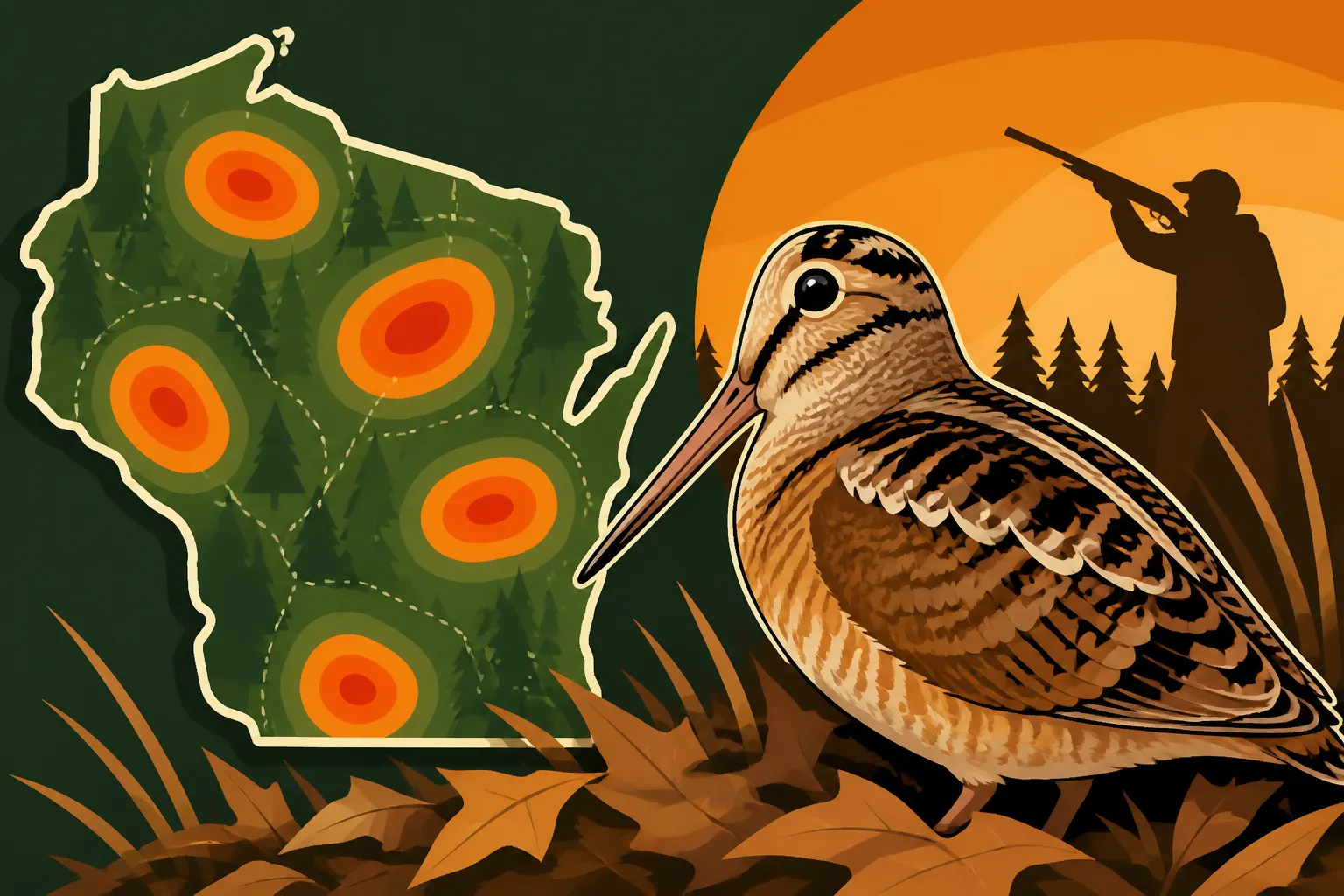
Where Wisconsin Woodcock Concentrate
Finding American woodcock in Wisconsin can feel like trying to catch a shadow – they're notoriously elusive, and when you do find them, they seem to vanish just as quickly. Many hunters struggle to pinpoint exactly where these incredible little timberdoodles prefer to spend their time, leading to frustrating hunts through seemingly ideal cover that turns up nothing. This guide is dedicated to helping you unravel the mystery of woodcock habitats, revealing the specific places and conditions where these delightful migratory birds are most likely to concentrate across Wisconsin.
Understanding Woodcock Habitat Preferences in Wisconsin
Woodcock aren't like pheasants in a cornfield or ducks on a wide-open marsh. Their world is one of dense, young cover and moist earth, a very particular set of circumstances that dictates where they'll live, breed, and feed. Without understanding these core habitat needs, you're essentially walking blind, hoping for a chance encounter. The key is to think like a worm-eater that needs both concealment and easy digging.
The Ideal Cover: Young Forest and Alder Thickets
When you're searching for woodcock, the phrase "young forest" should be ringing in your ears. These aren't vast, mature timber stands where deer roam; these are areas of regenerating trees, often less than 20 years old, that offer a dense, almost impenetrable canopy of saplings and brush close to the ground. Think about areas that have been recently logged, burned, or are simply reverting from old fields. These spots provide the perfect camouflage from aerial predators like hawks and owls, and also offer crucial nesting and roosting cover.
Specifically, look for stands of young aspen and alder thickets. Alders, in particular, are a woodcock magnet. They grow in dense clumps, often along watercourses or in low, moist areas, creating a jungle-like environment. A hunter trying to push through a mature alder stand will quickly realize why woodcock love them – it's tough going, offering maximum security for a small, ground-dwelling bird. Imagine walking an old logging road in northern Wisconsin, and on one side, you have a solid wall of shoulder-high alders, maybe 30-40 yards deep before it opens up to older timber. That's exactly the kind of edge cover that's worth investigating. These are the kinds of spots where a woodcock might flush at your feet, fly twenty yards, and disappear into the next thicket, only to repeat the process. Don't forget, you can dive deeper into specific tactics for these areas by checking out Woodcock Hunting Wisconsin Alder Runs.
Moist Soil and Foraging Grounds
Beyond the dense cover, the single most critical factor for woodcock concentration is soft, moist soil rich in earthworms. Woodcock have long, sensitive bills designed specifically for probing the ground. They don't scratch and peck like chickens; they literally drill into the soil, feeling for the vibrations of earthworms. If the ground is hard-baked and dry, they simply can't feed effectively, and they won't be there. This is why you'll often find them near water sources like small streams, seepages, drainage ditches, and the edges of beaver ponds or cattail marshes.
Consider a late summer or early fall hunt after a prolonged dry spell. You might find what looks like perfect young aspen cover, but if the ground is like concrete, woodcock will be scarce. Conversely, a spot that might seem less "birdy" but has a consistently damp, rich soil base could hold a surprising number of birds. The key is that balance: dense cover for protection, and soft ground for dinner. These foraging grounds are essential for their survival, especially during migration when they need to refuel. It's truly a unique niche in the avian world, and understanding it is your first step to finding them.
Prime Geographic Regions and Counties for Woodcock
While woodcock can be found throughout Wisconsin where suitable habitat exists, certain regions and specific counties consistently offer better opportunities due to the prevalence of their preferred young forest and moist soil environments. These aren't accidental hotspots; they're a direct result of geology, land management, and historical timber practices.
Northern Forest Concentrations
When people talk about prime woodcock hunting in Wisconsin, the conversation invariably turns to the northern forest. This vast expanse of timberland, managed extensively for forestry, provides a constantly regenerating landscape of young aspen and mixed hardwoods, creating a mosaic of ideal cover. Counties like Douglas, Bayfield, Burnett, Sawyer, and Washburn are legendary among upland bird hunters, and for good reason. The sandy soils in many of these areas, combined with numerous small streams, lakes, and low-lying areas, create ample moist foraging grounds within the dense cover.
Logging operations are the unsung heroes for woodcock hunters. As timber companies harvest mature trees, the forest floor springs to life with new growth – a dense explosion of saplings that provides perfect woodcock habitat for the next 10-20 years. Hunters who pay attention to recent timber sales and clearcuts often find goldmines. Imagine scouting a recently logged parcel in Sawyer County; the ground is torn up a bit, but there are already thousands of young aspen shoots coming up, and along the low spots, alders are thriving. That’s a spot worth checking, especially where the edges meet older timber or a small creek. For more on navigating these challenging but rewarding areas, consider reading Hunting the Wisconsin Northern Forest for Deer, as deer and woodcock often share similar young forest edges.
Central Wisconsin Wetlands and River Bottoms
Beyond the deep north, central Wisconsin offers another significant, though often overlooked, region for woodcock. This area, characterized by its extensive wetland complexes, river corridors, and pockets of sandy pine barrens interspersed with lowlands, provides excellent habitat. The Wisconsin River corridor, for instance, with its numerous oxbows, backwaters, and feeder creeks, creates miles of moist bottomland that often host alder and willow thickets. The same goes for the Black River and its tributaries.
Specific areas like the vast county forests and state wildlife areas in Wood, Jackson, Juneau, and Adams counties can be incredibly productive. These public lands often feature a mix of young pines, aspens, and extensive lowland areas with dense shrub growth. The key here is to look for those transition zones where uplands meet wetlands, or where drainage ditches and small streams cut through otherwise dry woods. Picture a sprawling central Wisconsin wetland, perhaps part of a state wildlife area, with higher ground managed for pines. Along the edges of that wetland, where the ground stays perpetually moist and alders are growing thick, you'll likely find woodcock. Don't be afraid to pull out your maps and scout these diverse habitats. Utilizing tools like GoHunt, you can really pinpoint these transition areas and maximize your time in the field, even when looking for something specific like Woodcock Hunting Wisconsin Alder Runs.
Timing Your Hunt: Migration and Seasonal Movements
Woodcock are migratory birds, and their presence in Wisconsin is largely dictated by the calendar and, more specifically, by the weather. You won't find them in the same numbers in September as you will in late October, and understanding these movements is crucial for successful hunting. It's not just about where they concentrate, but when.
Early Season: Resident Birds and Local Pockets
When Wisconsin's woodcock season opens, typically in September, you'll be hunting primarily local, resident birds that were hatched and raised in the state. These birds are often found in relatively small, localized pockets close to their breeding grounds. They might not be as concentrated as the later migratory "flight birds," but they are often more predictable, sticking to areas they know intimately.
During this early period, look for them in those prime young aspen and alder thickets that have consistent moisture. If it's been a dry summer, these early birds will be even more concentrated in the wettest available cover. Hunting these resident birds often involves methodically working through known habitat, perhaps hitting a series of small, promising alder runs or young clearcuts. You might not encounter large flushes, but consistent effort in good local spots can yield birds. Think about how a late September hunt might play out after a summer with minimal rainfall; the birds will be seeking out the few remaining truly moist areas, making them slightly easier to pinpoint in otherwise dry cover. This is a great time to work a young dog and build their confidence on accessible birds before the chaos of the full migration.
Peak Migration: The October Push
The real excitement for many woodcock hunters comes with the peak migration, which typically occurs from mid-October through early November in Wisconsin. This is when the "flight birds" arrive, traveling down from Canada and northern Minnesota, sometimes in significant numbers. These birds are often more concentrated, as they follow migratory corridors and funnel into prime stopover habitats to rest and feed.
Cold fronts are your best friend during this period. A sharp drop in temperature, especially after a period of mild weather, can trigger a mass movement of birds. After a cold night with a north wind, those seemingly empty alder thickets that held a few resident birds might suddenly be teeming with new arrivals. It's like flipping a switch. These birds are often less wary than the resident birds who've had more encounters with hunters, and they are focused on feeding. The challenge here is that they can move through quickly; a spot that's hot one day might be empty the next as the birds continue their journey south. So, staying mobile and flexible is key. This is the time to really put your scouting to the test, and maybe even find those super-concentrated areas we dream of. You can learn more about this phenomenon by reading When Woodcock Migrate Through Wisconsin, which really emphasizes the importance of weather patterns.
Scouting and Finding Woodcock Hotspots
Finding woodcock isn't always about stumbling upon them; it's a deliberate process of scouting, understanding habitat, and putting in the legwork. Even with the best maps and knowledge, you still need to be a detective on the ground.
Reading the Landscape: Maps and Aerial Photos
Before you even step foot in the woods, the best tool you have is a good mapping application. Digital mapping tools, like those available on GoHunt, are invaluable for woodcock scouting. You can scrutinize aerial photos for the tell-tale signs of woodcock habitat from your couch. Look for:
- Alder Thickets: These often appear as dark green, dense, clumpy vegetation, frequently along drainages, stream banks, or in low-lying depressions. They're usually distinguishable from taller, more mature timber.
- Young Aspen Stands/Clearcuts: Look for areas that have been recently logged. These will show as lighter green, often with distinct boundaries, indicating early successional growth. Over time, as the young trees grow, these areas become dense, light-colored patches on the aerial imagery.
- Wetlands and Water Features: Identify small streams, creeks, beaver ponds, and marsh edges. Woodcock need consistent moisture, so proximity to water is a huge clue. Follow those winding blue lines on the map and look for dense cover alongside them.
- Transition Zones: Woodcock often prefer the edges where different habitat types meet – where a young aspen stand transitions into an older forest, or where an upland area drops into a moist lowland. These "edge effects" provide both cover and foraging opportunities.
Using a mapping app like GoHunt allows you to mark potential spots, measure distances, and plan your approach, identifying good entry and exit points. This kind of pre-hunt preparation is critical for making the most of your time in the field. It’s like getting a cheat sheet for Scouting Wisconsin Public Land Before Season – only for woodcock!
Boot Leather and Bird Dogs
Ultimately, there's no substitute for walking the ground, and if you have one, a good bird dog is an absolute game-changer for woodcock. Their superior sense of smell and ability to penetrate thick cover means they'll find birds you would undoubtedly walk past. A dog that can work dense alders and pin a scent, even on a bird that's tight to the cover, is priceless.
Even without a dog, you can still be successful by focusing on observable sign. As you walk through promising cover, keep an eye on the ground for:
- Woodcock Splashes: These are distinct, chalky white droppings, often circular and about the size of a quarter. They're a sure sign that woodcock are using the area.
- Probing Marks: Look for tiny, distinct holes in the soft earth, about the diameter of a pencil. These are the marks left by a woodcock's bill as it probes for worms.
- Feathers: While less common, finding a woodcock feather can confirm their presence, especially if you find flight feathers indicating a roosting spot or a predator kill.
Work promising areas methodically, moving slowly and pausing frequently. Woodcock often hold tight, relying on their incredible camouflage, and will flush just a few feet from you. Pushing through thick alder runs or young aspen regeneration can be physically demanding, but those are the spots most likely to hold birds. Remember, Hunting Grouse and Woodcock Together is often a productive strategy, as their preferred habitats frequently overlap. So, if you're finding one, keep an eye out for the other!
Here's a quick summary of key woodcock habitat indicators:
| Habitat Feature | Description | Importance for Woodcock |
|---|---|---|
| Young Aspen Stands | Dense, regenerating trees, typically 5-20 years old. | Excellent overhead cover from predators, good nesting/roosting. |
| Alder Thickets | Clumpy, dense shrubs, often growing in wet depressions. | Provides dense escape cover, often indicates moist soil. |
| Moist, Loamy Soil | Soft, rich earth, easy for probing. | Essential for foraging on earthworms. |
| Proximity to Water | Small streams, seeps, drainage ditches, marsh edges. | Maintains consistent soil moisture. |
| Edges/Transition Zones | Where young cover meets older timber or wetlands. | Offers both cover and access to different feeding areas. |
| Recent Clearcuts | Areas recently logged and regenerating. | New growth quickly creates ideal young forest habitat. |
Focusing your efforts on these specific types of areas, armed with a good map and a willingness to put in the miles, will drastically increase your chances of finding where Wisconsin's woodcock concentrate.
Disclaimer
This article is for general informational purposes only and does not constitute professional advice. Laws, prices and regulations vary by location and change over time. Consult a qualified professional for guidance on your specific situation.