Chronic Wasting Disease in Wisconsin
There's no sugarcoating it: Chronic Wasting Disease (CWD) is a topic that weighs heavily on the minds of many Wisconsin hunters, causing genuine concern and sometimes confusion. It's frustrating trying to understand the science, navigate changing regulations, and still enjoy the deer hunting traditions we cherish. This guide aims to demystify CWD in Wisconsin, breaking down what it is, how it impacts our deer, and what we, as hunters, can do.
Understanding Chronic Wasting Disease (CWD) in Wisconsin
CWD isn't just a buzzword; it's a serious neurological disease that affects cervids, including white-tailed deer, elk, and moose. When you're out in the woods, the last thing you want to worry about is the health of the deer herd, but understanding CWD is crucial for the long-term sustainability of hunting in our state.
What Exactly Is CWD?
At its core, CWD is caused by abnormal proteins called prions. These aren't bacteria or viruses, which means they don't respond to antibiotics or antiviral medications. Instead, these misfolded prions accumulate in the brain and nervous tissue of infected animals, slowly destroying the brain and body. Think of it like a slow, degenerative process that ultimately leads to the animal's death. It's similar in mechanism to "mad cow disease" (BSE) in cattle or scrapie in sheep, but CWD affects deer and other cervids. The terrifying part is that these prions are incredibly resilient; they can persist in the environment for years, even decades, in soil, plants, and even water, making eradication exceptionally challenging. They're not easily killed by standard disinfectants or even extreme temperatures.
How CWD Affects Deer and the Herd
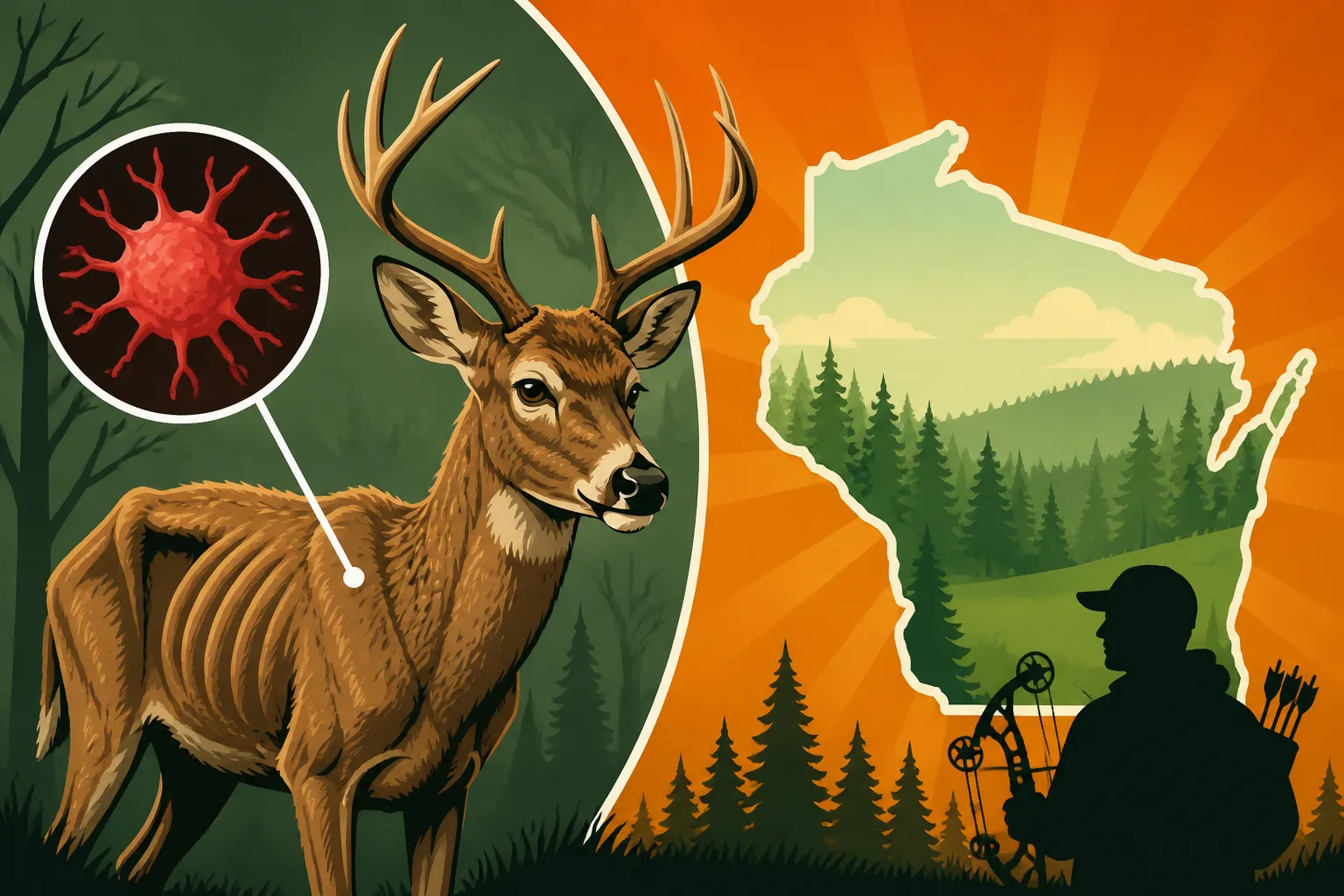
Initially, a deer infected with CWD might show no outward signs. It can take a year or more for symptoms to manifest, which is part of what makes managing this disease so difficult. Once symptoms appear, they typically worsen over weeks or months. Infected deer often become emaciated, hence the "wasting" in its name, but it's more than just losing weight. They might display abnormal behavior, such as a lack of coordination, stumbling, excessive drooling, difficulty swallowing, and a noticeable change in their gait. They also lose their natural fear of humans and can appear lethargic or depressed. For the herd itself, the impact is insidious. CWD leads to increased mortality rates, potentially reducing deer populations over time, and can alter the age structure and overall health of local herds. It also makes deer more susceptible to other diseases and predation, weakening the herd from within. This slow decline can be particularly disheartening for hunters who cherish robust, healthy deer populations in their favorite hunting spots.
The Silent Threat: CWD's Progression
The insidious nature of CWD lies in its silent progression. A deer can be infected and spreading infectious prions for months, or even years, before showing any visible symptoms. This "incubation period" is a major challenge for management because it means seemingly healthy deer can still be vectors for the disease. The prions are shed through saliva, urine, and feces, contaminating the environment where other deer feed and interact. This environmental contamination is what makes CWD so persistent and difficult to control. It's not just about removing sick animals; it's about decontaminating the landscape, which, frankly, isn't a realistic prospect on a large scale. This long, silent phase means that by the time hunters or wildlife officials notice sick deer, the disease has likely already established a firm foothold in the local deer population and environment. It truly highlights why preventative measures and ongoing monitoring, even in areas without visible signs, are so critical.
The History and Spread of CWD in Wisconsin
Wisconsin, a state deeply rooted in its deer hunting heritage, has unfortunately been at the forefront of the CWD battle for over two decades. The discovery of the disease here sent shockwaves through the hunting community and forever changed how we approach deer management.
Where CWD Was First Found in Wisconsin
The discovery of CWD in Wisconsin was a somber moment, marking a turning point in our state's deer management history. It was first detected in February 2002, in three wild white-tailed deer harvested in Dane County, specifically near Mount Horeb. This was a jarring revelation because, at that time, CWD had largely been confined to western states. Its appearance in the heart of the Midwest, in a state so iconic for its deer hunting, immediately raised alarms. The initial reaction was one of disbelief and concern, quickly followed by a concerted effort from the Wisconsin Department of Natural Resources (DNR) to understand the scope of the problem and formulate a response. For many hunters, this news fundamentally shifted their perception of deer hunting, introducing a new, unseen threat to their beloved quarry.
How CWD Spread Across Southern Wisconsin
From those initial detections in Dane County, CWD began to spread, primarily radiating outwards from the epicenter. The spread has been a complex interplay of natural deer movement, potential human-assisted movement (such as moving infected carcasses), and the persistence of prions in the environment. Initially, intensive culling efforts were attempted to try and contain the disease, but these proved controversial and ultimately unsuccessful in eradicating it. Over the years, CWD detections have become more widespread, especially across the southern half of the state. We've seen it move into counties like Iowa, Columbia, Rock, and Walworth, among others. The geographical spread often follows deer concentrations, movement corridors, and, unfortunately, can be exacerbated by practices that congregate deer, such as baiting and feeding. The interconnectedness of our deer populations means that a disease in one area doesn't stay there for long, especially given the range deer cover during their lives, particularly during the rut. The DNR continually monitors this spread, adjusting strategies based on new detections and research. Understanding where the disease has been found is crucial, and the DNR provides maps that show Which Wisconsin Counties Have CWD, which can be very helpful for hunters planning their season.
The Current Landscape: Which Wisconsin Counties Have CWD
Today, CWD is an established presence in many parts of Wisconsin, particularly in the south-central and southwestern regions. The DNR identifies CWD-affected counties, which then trigger specific regulations, such as baiting and feeding bans, and carcass movement restrictions. These regulations are designed to slow the spread of the disease. While the core affected area remains in the Driftless region and parts of the Central Farmland Zone, new detections can occur anywhere. It’s not uncommon to hear of a single positive test in a county that was previously CWD-free, which immediately brings that county under stricter management protocols. This dynamic situation means that hunters absolutely need to stay informed, as the rules can change. You can usually find the most up-to-date information on the DNR website, which details not only the CWD-positive counties but also the adjacent counties that often fall under similar regulations as a preventative measure. When you're planning your hunt, especially if you're traveling, knowing the status of your hunting location is paramount.
To give you a clearer picture, here's a general overview of CWD status and associated rules in Wisconsin. Please remember, this is a simplified snapshot, and conditions can change. Always check the official Wisconsin DNR website for the most current regulations for your specific hunting area.
| Status Category | Example Counties (General) | Associated Rules |
|---|---|---|
| CWD-Affected County | Dane, Iowa, Columbia, Rock, Walworth, Sauk, Lafayette | Mandatory baiting & feeding ban (always active). Carcass movement restrictions (certain parts only). Required CWD testing in some areas/seasons. |
| CWD-Affected (Adjacent) | Green, Grant, Richland, Jefferson, Dodge, Marquette | Mandatory baiting & feeding ban (active for 2 years after CWD detection in an adjacent county). Carcass movement restrictions (certain parts only). Encouraged CWD testing. |
| CWD-Free County | Most northern counties, some central/eastern | No mandatory baiting & feeding ban (unless locally enacted). No carcass movement restrictions related to CWD. |
Note: This table provides a general overview. Always consult the Wisconsin DNR's official CWD maps and regulations for precise, up-to-the-minute information for your specific hunting location.
Navigating CWD as a Wisconsin Hunter
As hunters, we're not just consumers of wildlife; we're stewards. Dealing with CWD means taking personal responsibility and adjusting our practices to protect the resource we cherish. It can feel like a lot to keep track of, but it's part of being a responsible hunter in Wisconsin today.
CWD Testing for Hunters: Why and How
When you harvest a deer in a CWD-affected county, or even an adjacent one, getting it tested isn't just a suggestion; it's a vital part of the state's CWD monitoring and management strategy. The "why" is simple: testing provides critical data on the prevalence and geographical spread of the disease. This information is what the DNR uses to make informed decisions about herd management, special hunts, and regulation changes. It helps them understand if CWD is spreading, if it's becoming more common in certain areas, and ultimately, how effective current management strategies are. It's also important for your peace of mind regarding consumption, as health agencies recommend not eating meat from CWD-positive deer.
So, how do you go about it? The process is straightforward. First, you need to determine if you're hunting in a county where testing is strongly encouraged or even mandatory during certain seasons. The DNR website or the Scouting With the Wisconsin Hunt Wild App will have this information readily available. After harvesting your deer, you'll need to submit the head, or specific lymph node samples, for testing. The DNR operates numerous CWD sampling stations and self-service kiosks across the state, especially during the gun deer season. These kiosks are usually clearly marked and provide instructions on how to collect the lymph nodes or where to drop off a deer head. Some butcher shops also participate as sampling cooperators. The Wisconsin CWD Testing for Hunters page on the DNR website is your go-to resource for locations and detailed instructions. Results typically come back within a few weeks, and you can usually check them online using a tracking number provided at the sampling station. While it adds an extra step to your post-harvest routine, it's a small price to pay for contributing to the health of the herd and ensuring your venison is safe.
Wisconsin Carcass Transport Rules and Why They Matter
One of the most effective ways to slow the spread of CWD is to prevent infected carcasses from moving into unaffected areas. That's why Wisconsin has very specific Wisconsin Carcass Movement Restrictions in place. It can be a real hassle, especially if you hunt in a CWD-affected county and live somewhere else, but these rules are critical. The basic premise is that you cannot transport certain parts of a deer carcass out of a CWD-affected or CWD-susceptible county unless they have been processed to remove all high-risk tissues.
What does this mean in practice? It means that if you bag a deer in, say, Dane County, you can't just throw the whole carcass in the back of your truck and drive it to your cabin up north in a CWD-free zone. The "high-risk" parts are the brain, spinal cord, eyes, spleen, and lymph nodes, as these are where the prions concentrate. So, you can transport boned-out meat, quarters with no spinal column or head attached, hides with no head attached, finished taxidermy mounts, and antlers with clean skull plates. This often means field dressing and then taking your deer to a processor within the CWD-affected county, or being prepared to do extensive butchering yourself at your hunting site. It's a logistical challenge, for sure, and can be frustrating when you're tired after a long day of hunting, but these regulations are in place to protect our White-Tailed Deer Across Wisconsin and prevent new CWD outbreaks. Planning ahead for processing and transport options is key to avoiding issues.
Wisconsin Baiting and Feeding Bans: A Direct Link to CWD Management
Baiting and feeding deer is a contentious issue, and it's directly tied to CWD management in Wisconsin. When CWD is detected in a county, or even an adjacent one, a mandatory ban on baiting and feeding deer is immediately triggered. The reason for this is clear: bait piles and feeding stations unnaturally congregate deer, forcing them into close contact. This increased contact dramatically increases the likelihood of CWD prions being transmitted from an infected deer to a healthy one through saliva, urine, or feces contaminating the shared food source or the ground around it.
For hunters who have traditionally used bait, this ban can be a real adjustment. It means rethinking your entire strategy for attracting deer. But it's a necessary step to mitigate the spread of CWD. The ban isn't just for hunting purposes; it extends to recreational feeding as well, even outside of hunting season. The DNR has clear rules on How Wisconsin Baiting Bans Are Triggered and how long they last, often remaining in effect for two years in adjacent counties even if CWD isn't detected there, as a precautionary measure. While it might feel like a restriction on your hunting freedom, it's a measure taken to protect the long-term health of the deer herd. Instead of bait, hunters in these areas need to focus on scouting, understanding natural food sources, and using scent control and calls to bring deer in. Companies like GoHunt offer digital mapping tools that can help identify natural food sources and travel corridors without relying on bait. It's about shifting to more natural, less interventionist hunting methods that minimize disease transmission risks.
Management and Future Outlook for CWD in Wisconsin
The fight against CWD is ongoing, and it's a collaborative effort between the DNR, researchers, and, crucially, Wisconsin's hunters. How we manage this disease now will shape the future of deer hunting for generations to come.
CWD Prevalence Rates and Monitoring Efforts
Understanding the prevalence of CWD—how common it is in a given deer population—is central to managing the disease. The DNR tirelessly works to gather data through extensive testing programs, which is why hunter participation in submitting deer for testing is so vital. Wisconsin CWD Prevalence Rates vary significantly across the state. In some core affected areas of the southern Driftless, prevalence rates can be disturbingly high, especially in adult bucks, sometimes exceeding 30-40% in localized populations. In other areas, rates might be much lower or even non-existent.
Monitoring efforts are year-round, utilizing hunter-harvested deer during the various Wisconsin Deer Seasons and Zones, as well as road-killed deer and animals that appear sick. This comprehensive approach allows the DNR to track the disease's geographic spread and intensity. The data gathered helps inform management strategies, such as setting antlerless quotas, establishing special hunts, and determining where baiting and feeding bans need to be implemented or maintained. It's a continuous, data-driven process, and every deer tested adds another piece to the complex CWD puzzle. The goal is to detect new outbreaks quickly and understand if existing measures are effectively stabilizing or reducing prevalence where the disease is established. This monitoring also helps researchers understand the long-term impact on Wisconsin Deer Herd Size and population dynamics.
Community Involvement and Hunter Participation
You know, it's easy to feel overwhelmed by the science and the regulations, but one thing is clear: hunters are absolutely critical in the battle against CWD. The DNR can't do it alone. Community involvement and active hunter participation are the bedrock of any successful long-term CWD management strategy in Wisconsin. This isn't just about following rules; it's about being proactive and engaged stewards of our wildlife.
First and foremost, participating in CWD testing is perhaps the most direct and impactful way hunters can contribute. Every deer submitted for testing provides invaluable data that helps the DNR track the disease's spread and prevalence. This data drives management decisions, from county-specific antlerless tag allocations to deciding on baiting bans. It might add a bit of time to your post-harvest routine, but it's an investment in the future of hunting. Secondly, adhering to carcass transport rules, even if they're inconvenient, is essential. Moving infected deer parts is a primary way CWD can jump to new areas. Field dressing thoroughly and either boning out your deer or taking it to a local processor within the CWD zone helps prevent this.
Beyond that, actively supporting and understanding baiting and feeding bans in affected areas is crucial. It’s hard to change traditions, but congregating deer at feed sites creates ideal conditions for CWD transmission. Instead, consider using tools from GoHunt or other mapping resources to scout natural food sources and bedding areas, which is a more sustainable and rewarding hunting strategy anyway. Lastly, reporting sick or abnormal-looking deer to the DNR can help identify new CWD hotspots. These animals can often be tested, providing early detection of the disease in new locations. Being educated and having conversations with fellow hunters about CWD isn't just being a good citizen; it's being a responsible conservationist for the long haul.
The Future of Deer Hunting in a CWD-Affected Landscape
The truth is, CWD isn't going away anytime soon. It's a chronic issue we're going to have to live with, and that means the future of deer hunting in Wisconsin will continue to evolve. It's no longer just about securing a tag and finding a deer; it's about making informed choices and adapting to a new reality. We might see continued shifts in deer populations in heavily affected areas, and the DNR may continue to implement management strategies focused on reducing deer densities where CWD prevalence is high, such as through increased antlerless harvest opportunities. This could mean more complex decisions when applying for your Wisconsin Antlerless Harvest Authorizations.
For hunters, this means a greater emphasis on ethical practices, such as proper carcass disposal, and a willingness to embrace new hunting methods that don't rely on baiting. It might also mean taking a more active role in advocating for responsible land management and habitat restoration that promotes herd health without concentrating animals unnaturally. While the presence of CWD casts a shadow, it also highlights the resilience of our hunting community and our dedication to conservation. Deer hunting will continue, but it will be a more mindful, data-driven, and community-focused pursuit. The challenge is significant, but with continued vigilance and cooperation, we can ensure that future generations of Wisconsinites can still enjoy the rich tradition of deer hunting.
Disclaimer
Please be aware that hunting regulations, seasons, and CWD management protocols are subject to change. Always consult the official Wisconsin Department of Natural Resources (DNR) website and current hunting regulations pamphlet for the most accurate and up-to-date information before planning any hunting activities. This guide is for informational purposes only and should not be considered a substitute for official DNR guidance.