Hunting Grouse and Woodcock Together
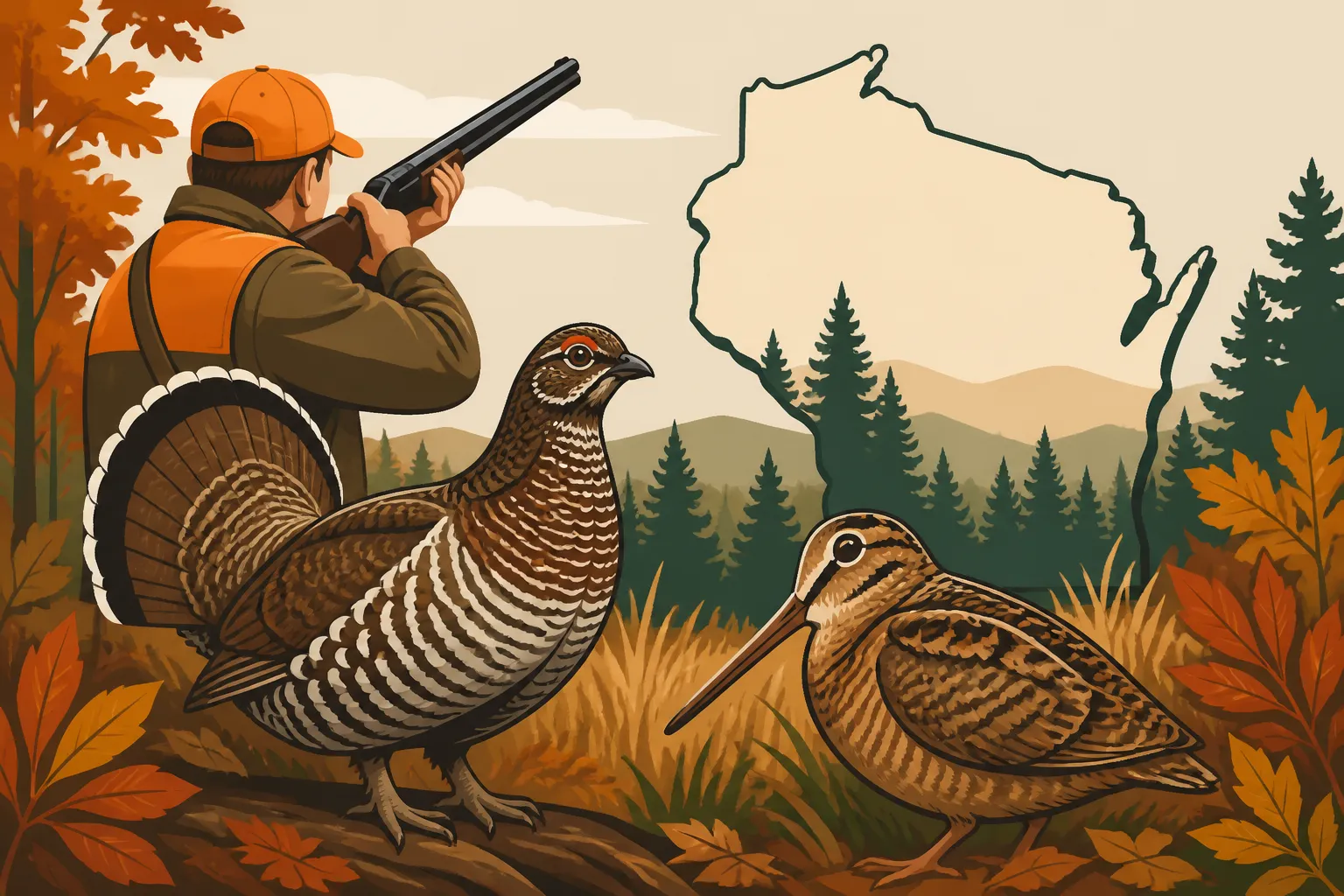
There’s nothing quite like the rush of a ruffed grouse thundering out of an aspen thicket, or the dizzying, whistling flight of a woodcock corkscrewing skyward from a damp alder run. But what if you could consistently find both of these incredible game birds in the same coverts, maximizing your time afield in Wisconsin? Many hunters feel like they need to pick one or the other, or they stumble upon both by pure chance. This guide is all about understanding the subtle habitat overlaps and strategic approaches that will help you effectively hunt grouse and woodcock together, turning those chance encounters into planned successes.
Understanding the Overlap: Habitat is Key
The biggest challenge in hunting grouse and woodcock together is that while they are often found in similar broad regions, their micro-habitats can differ significantly. Grouse tend to prefer drier, thicker cover, while woodcock are famously associated with wet, boggy areas. However, Wisconsin's diverse landscapes offer plenty of transitional zones where these preferences merge, creating prime dual-species hunting opportunities.
Where Grouse Thrive: The Aspen Edge
Ruffed grouse are creatures of young, regenerating forests. They absolutely thrive in dense thickets of aspen, especially those that are 10-25 years old. These areas provide the perfect blend of food (catkins, buds, berries, insects) and impenetrable escape cover. Think of areas where timber has recently been harvested, leaving behind a tangled mess of new growth. These clearcuts often become grouse havens as the aspen, birch, and maple saplings shoot up, creating a dense overhead canopy that predators struggle to penetrate.
When you're searching for grouse, focus on the edges of these aspen stands, especially where they meet slightly older timber or even small clearings. These edges offer easy access for the grouse to feed, while still keeping thick cover within a quick flush. Areas with natural openings, like old logging roads or small clearings within the aspen, can be particularly productive as grouse will use these travel corridors. Even though they are often found deeper in the thick stuff, those "edge effect" areas are golden, offering both food and safety.
Woodcock's Wet Feet: Alder Runs and Young Timber
American woodcock, affectionately known as "timberdoodles," have a completely different, yet sometimes overlapping, habitat preference. These long-billed migrants are primarily insectivores, feasting on earthworms, and therefore require damp, soft soils to probe with their sensitive bills. This leads them to lower, wetter ground, often along creek bottoms, around beaver ponds, or in dense alder swamps. They also favor young, regenerating hardwood stands, especially those with a high density of dogwood, sumac, and willow – basically, places with rich, damp soil that supports a healthy earthworm population.
A classic woodcock cover is an alder run along a stream, or a young, wet aspen stand where the ground stays consistently moist. Unlike grouse, woodcock don't need impenetrable overhead cover as much as they need soft ground. They'll often be found in relatively open understory within these damp areas, as long as there's enough canopy to offer concealment from aerial predators. When you find that tell-tale probing sign on the ground – tiny holes where they've extracted worms – you know you're in prime woodcock territory.
Finding the Sweet Spot: Transition Zones
The magic happens in those transition zones where grouse and woodcock habitat preferences meet and blend. These are often the edges of higher, drier aspen cuts that drop off into a slightly lower, wetter alder or willow bottomland. Or perhaps a young oak-maple forest that has a small, seepy drainage running through it. These "ecotones" are goldmines.
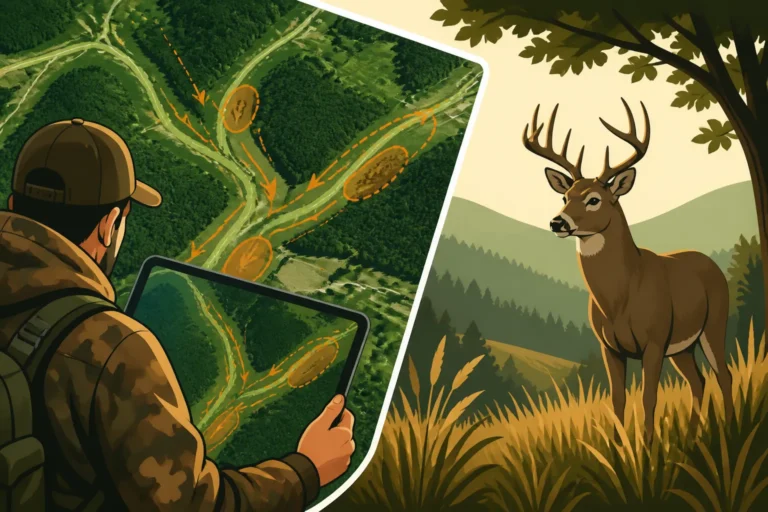
Think of a hilltop clearcut that gradually slopes down into a marshy area. The upper, drier parts will hold grouse, especially along the edges. As you descend, the ground becomes wetter, and you start seeing more alders, willows, and softer soil – this is where the woodcock will be concentrated. The key is to look for these areas on topographical maps and satellite imagery before you even step foot in the woods. A mapping tool like GoHunt can be incredibly useful here, allowing you to identify changes in elevation, water features, and different forest types from your couch. You can mark potential hotspots that contain both dense upland cover and nearby wet bottomlands, saving you valuable time and legwork.
Another prime example is a young, diverse forest that has undergone selective logging or is naturally regenerating after a disturbance. If there are areas with standing water or consistently damp soil, coupled with dense young trees like aspen or birch, you’ve hit the jackpot. These patches offer both species the cover and food they need to thrive. Focus on hunting along these subtle gradient changes, moving from slightly higher ground to lower, wetter areas, and back again. The birds might be separated by only a few dozen yards, but the slight shift in moisture and vegetation density is all it takes. For a deeper dive into specific habitats, you might want to read our guide on Grouse Hunting Wisconsin Aspen Cover or Woodcock Hunting Wisconsin Alder Runs.
Strategic Hunting: Techniques for Dual Success
Once you've identified these promising transition zones, the next step is to develop a hunting strategy that allows you to effectively pursue both species simultaneously. This isn't just about walking through the woods; it's about being observant, understanding bird behavior, and adapting your approach on the fly.
Walking the Line: Covering Ground Effectively
The most effective way to hunt these combined covers is to walk a deliberate path that intercepts both types of habitat. Instead of just plunging straight into the thickest aspen or slogging through the deepest alder, try to walk the "seam." This means paralleling a transition line, or making passes through a block of cover that includes both wet and dry elements. For example, if you have a dense aspen regeneration on a hillside that tapers down to a swampy alder flat, try walking a contour line about halfway down the slope, moving back and forth across the subtle environmental changes.
Keep an eye out for tell-tale signs:
- Grouse: Droppings, dusting bowls, and especially tracks in snow or soft dirt are excellent indicators. Look for areas with a good mix of young trees and berry bushes. Often, grouse will use small game trails or deer runs within the thickets, so paying attention to these pathways can help predict flush locations.
- Woodcock: Their signature "worm holes" in soft, moist soil are unmistakable. Look for these near stagnant water, along seepy spring runs, or in the low spots of young timber. When scouting, you can use an app like GoHunt to look at satellite imagery and topo maps to identify these low, wet areas alongside denser upland cover. This pre-hunt scouting is crucial for developing an efficient walking pattern.
Move at a moderate pace, not too fast to miss birds, and not too slow to let them sneak away. Stop frequently for a few seconds; this often makes a nervous grouse flush. For woodcock, a steady, rhythmic pace is often more effective, as they tend to hold tight until you are almost on top of them. Be ready for sudden flushes from any direction – a grouse might explode from a dry knoll, while a woodcock might twitter out of a puddle-ridden depression just a few yards away.
The Role of a Good Bird Dog
While you can absolutely hunt grouse and woodcock without a dog, a well-trained bird dog is an absolute game-changer, especially for hunting both species simultaneously. A good pointing dog, like a German Shorthaired Pointer, English Setter, or Brittany, will help you locate birds that you would otherwise walk past, holding them on point until you can get into a shooting position. This is invaluable in the dense cover these birds inhabit.
Dogs are particularly helpful with woodcock, which often hold extremely tight, making them easy to overlook in the tangle of an alder swamp. A dog's nose can pinpoint these birds precisely. For grouse, a dog helps put you in a better position for a shot, as they'll typically hold a point longer than an un-dogged grouse might. Furthermore, in thick cover, retrieving downed birds can be incredibly difficult without a dog. A reliable retriever can mean the difference between finding and losing a valuable bird.
When hunting with a dog for both species, ensure your dog is accustomed to the different scents and behaviors. Some dogs might be more inclined towards grouse, others towards woodcock, but training them in diverse coverts can help them adapt to both. Make sure your dog is wearing protective gear, like a brush vest, to prevent injuries from briars and thorns in the dense undergrowth. You can find more information on specific canine gear in Bird Dog Gear for Wisconsin Cover.
Shot Opportunities: Fast and Close
Hunting grouse and woodcock is not about long-range precision. It's about quick reflexes, instinctive shooting, and accepting that many birds will escape unscathed. Both species offer notoriously fast, challenging shots in extremely dense cover.
- Grouse: Often flush like rockets, weaving through trees and disappearing almost as soon as they appear. Your shot window might be a split second. Focus on getting the gun to your shoulder smoothly, swinging through the bird, and trusting your instincts. Don't try to aim meticulously; it's more about pointing and follow-through.
- Woodcock: While their flush is often described as "fluttery" or "whistling," they can be surprisingly quick and erratic. They'll typically ascend vertically for a few feet before leveling off and darting through the trees. The challenge with woodcock is often patience – waiting for them to clear the initial brush and offer a clear (albeit brief) shot.
Be prepared for a variety of shot angles and distances, most of which will be under 25 yards, often much closer. This isn't a sport for high magnification optics; it's pure shotgunning. Carry a shotgun that points naturally for you and practice mounting it quickly at home. Remember that safely identifying your target and having a clear shooting lane are paramount.
Essential Gear and Timing Considerations
Successfully hunting grouse and woodcock together requires not only a good strategy but also the right equipment and an understanding of the best times to be in the woods. Being prepared for the specific conditions of Wisconsin's uplands will make your hunt more enjoyable and productive.
Shotguns, Chokes, and Ammunition
When choosing a firearm for combined grouse and woodcock hunting, versatility is key.
- Gauge: A 20-gauge shotgun is often considered the ideal choice, offering a lighter carry weight than a 12-gauge, which is appreciated on long walks through thick cover, while still delivering plenty of punch for both species. The recoil is also more manageable, allowing for faster follow-up shots. Some hunters prefer a 28-gauge for its even lighter weight and quick handling, but the 20-gauge strikes an excellent balance. You can read more about options in Best Shotgun Gauge for Wisconsin Grouse.
- Action: Side-by-side or over/under shotguns are popular for their quick handling and the ability to have two different chokes. Semi-automatics and pump-actions are also perfectly effective.
- Chokes: This is where the "together" part really comes into play. Since both birds are usually flushed at close range in dense cover, open chokes are your friend. Many hunters opt for an Improved Cylinder (IC) in the first barrel (or for their first shot) and a Modified (M) in the second. This allows for a wider pattern for those close, explosive flushes and a slightly tighter pattern if the bird manages to put a little distance between you and it. A straight Improved Cylinder or even Skeet choke in a single-barrel gun is also very effective. Choke Choice for Fast Flushes delves deeper into this topic.
- Ammunition: For both grouse and woodcock, smaller shot sizes are generally preferred. #7.5 or #8 lead shot is excellent. Lead shot is still perfectly legal for upland bird hunting in Wisconsin. These smaller pellets create a dense pattern, which is crucial for hitting fast-moving targets in tight windows. Remember, these birds aren't heavily armored, so pattern density is more important than raw pellet energy.
Dressing for the Cover: Comfort and Protection
Hunting in dense grouse and woodcock cover often means slogging through briars, thorns, wet grass, and thick underbrush. Your clothing needs to be tough, protective, and comfortable.
- Briar Pants/Chaps: These are non-negotiable. Heavy-duty canvas, brush-proof nylon, or even leather-faced pants or chaps will protect your legs from cuts, scrapes, and punctures. Look for reputable brands known for their upland hunting apparel.
- Upland Vest: A good upland vest is essential for carrying shells, water, a first-aid kit, and most importantly, your birds. Many vests also feature a large game pouch on the back that is easily accessible. Some vests even have integrated water bladders for hydration.
- Boots: Waterproof, ankle-supporting boots are crucial for navigating damp, uneven terrain. Look for boots with good traction to prevent slips in muddy or leaf-covered areas. Brands like Irish Setter or Danner are popular among upland hunters. For more about footwear, check out Boots for Walking Wisconsin Aspen Cuts.
- Visibility: While not legally required for upland hunting outside of the gun deer season, wearing a blaze orange (or fluorescent pink) hat or vest is always a good idea for safety, especially if you're hunting with partners or in areas that might see other hunters.
- Weather Considerations: Wisconsin's fall weather can be highly variable. Dress in layers to adapt to changing temperatures. A good quality rain jacket is a wise addition to your pack, as a sudden shower can turn a pleasant hunt into a miserable one if you're not prepared.
The Best Time to Hunt Both Species
Timing is everything when it comes to maximizing your chances for both grouse and woodcock.
- Season Overlap: The good news is that Wisconsin's Wisconsin Grouse Season Dates and When Wisconsin Woodcock Season Opens overlap significantly. Woodcock typically start their migration through Wisconsin in late September and October, peaking in mid-to-late October before the first hard freezes push them south. Grouse seasons typically open earlier and run much longer.
- Early Fall (Late September/Early October): This period can be excellent. Grouse are often found in slightly more open cover as the leaves are still on the trees, and woodcock are just starting to arrive in good numbers. The weather is usually mild, making for comfortable hunting, though insects can still be an issue.
- Mid-to-Late October: This is arguably the prime window for hunting both species together. The leaves are typically past their peak and beginning to fall, which improves visibility for grouse. Woodcock numbers are often at their highest, as migratory birds from further north pass through or stage in Wisconsin. Look for weather fronts and cold snaps; these can trigger strong woodcock migrations. A hard frost often means woodcock will be moving on, so capitalize on the periods leading up to it.
- November: While some woodcock might linger into early November, especially in the southern parts of the state or during mild years, most will have departed after prolonged cold. However, November can still offer fantastic grouse hunting, particularly after the leaves have completely fallen, making for clearer shooting lanes. This is also when the grouse population's age structure starts to favor more mature birds.
Table: Grouse vs. Woodcock Habitat & Behavior
| Feature | Ruffed Grouse | American Woodcock | Dual-Species Hunting Implications |
|---|---|---|---|
| Preferred Habitat | Young aspen/birch forests (10-25 yrs), thickets, brushy edges, often drier upland. | Alder swamps, wet thickets, moist young hardwoods, boggy areas, soft soil. | Seek out transition zones: higher, dry aspen cuts sloping into moist alder runs or seepy bottoms. Use mapping tools like GoHunt to pinpoint these areas. |
| Primary Food | Buds, catkins (especially aspen), berries, insects, clover, ferns. | Earthworms (probed from soft soil), some insects. | Look for areas with diverse vegetation and consistently damp ground for woodcock, while still having dense, young tree cover for grouse. |
| Flush Behavior | Explosive, thundering, often weaving through trees horizontally. | Fluttering, whistling wings, often rising vertically before leveling off. | Be ready for varied flush patterns. Grouse are often faster horizontally, woodcock faster vertically initially. Maintain gun-up readiness in all cover. |
| Holding Tightness | Varies; can hold tight in dense cover, but often flushes wilder than woodcock. | Extremely tight; often won't flush until almost stepped on. | A good pointing dog is invaluable for woodcock that hold tight, allowing you to get into position. For grouse, be prepared for sudden, close flushes. |
| Migration | Non-migratory; year-round resident. | Migratory; present in WI from spring to late fall. | Target late September through October for peak combined opportunities, especially before hard freezes push woodcock south. |
| Best Shot Size | #7.5 or #8 lead | #8 or #9 lead (or #7.5 if using same for grouse) | #7.5 or #8 lead shot offers a good balance for both, providing sufficient pattern density for close shots. |
| Typical Choke | Improved Cylinder (IC), Skeet | Improved Cylinder (IC), Skeet | Use open chokes like IC or Skeet in both barrels for double guns, or a single IC for pumps/semis, to handle close, fast shots effectively. |
Hunting grouse and woodcock together is truly a classic Wisconsin upland experience. It demands a keen eye for habitat, a willingness to walk through dense cover, and quick shooting skills. But the reward – a mixed bag of two of the finest game birds – is absolutely worth the effort.
Disclaimer
Hunting is an inherently dangerous activity. Always prioritize safety, follow all Wisconsin Department of Natural Resources regulations, and obtain proper licenses and permits before heading afield. This guide is for informational purposes only and does not supersede official hunting laws or safety guidelines. Remember to always practice ethical hunting and good sportsmanship.