Grouse Hunting Wisconsin Aspen Cuts
Let's be real, finding ruffed grouse in Wisconsin can feel like trying to locate a needle in a haystack, especially if you're new to the game or just tired of busting your butt in unproductive cover. These elusive birds are masters of camouflage and burst from cover with a startling speed that can leave even seasoned hunters flustered. But don't throw in the towel yet! This guide is all about honing in on one of their absolute favorite hideouts: the aspen cut. We'll dive deep into why these areas are grouse magnets and how you can effectively hunt them, turning those frustrating hikes into thrilling flushes.
Understanding Wisconsin's Ruffed Grouse Habitat Preferences
To consistently put grouse in your game vest, you first need to think like a grouse. What do they need to survive and thrive? Food, cover from predators, and places to breed. In Wisconsin, few habitats offer this trifecta as perfectly as young aspen stands.
The Critical Role of Aspen in Grouse Survival
Aspen, particularly quaking aspen and bigtooth aspen, isn't just another tree species for ruffed grouse; it's their lifeblood. These trees provide essential food sources throughout the year. In winter, the tender buds of aspen are a primary food source, packed with energy to get them through the cold. If you spend time observing in a mature aspen stand after a fresh snow, you'll often see distinct "cuttings" on the snow — tiny pieces of aspen buds dropped by grouse as they feed. It's a clear sign you're in a productive area.
Beyond food, aspen provides incredible cover. Young aspen stands grow incredibly dense, forming thickets that are nearly impenetrable for larger predators like hawks, owls, or foxes, yet still navigable for a grouse. This dense overhead and lateral cover offers protection from above and makes it incredibly difficult for ground predators to sneak up unnoticed. For drumming grouse, the male's display to attract a mate, a fallen log in a dense aspen regeneration offers both a stage and vital protection. The sound of a drumming grouse echoing through the woods is one of the most exciting signals that you're in prime territory. Understanding their reliance on this tree is the first step to successful Grouse and Woodcock Hunting in Wisconsin and really cracking the code on where to find these birds.
Identifying Ideal Aspen Cuts
Not all aspen is created equal when it comes to grouse. It's not enough to just find any aspen; you need to find the right kind of aspen. Grouse prefer young, regenerating aspen, typically between 8 to 25 years old. This age class provides the dense understory and food sources they depend on. Older, mature aspen stands, while beautiful, tend to have less undergrowth and fewer accessible buds, making them less appealing for grouse.
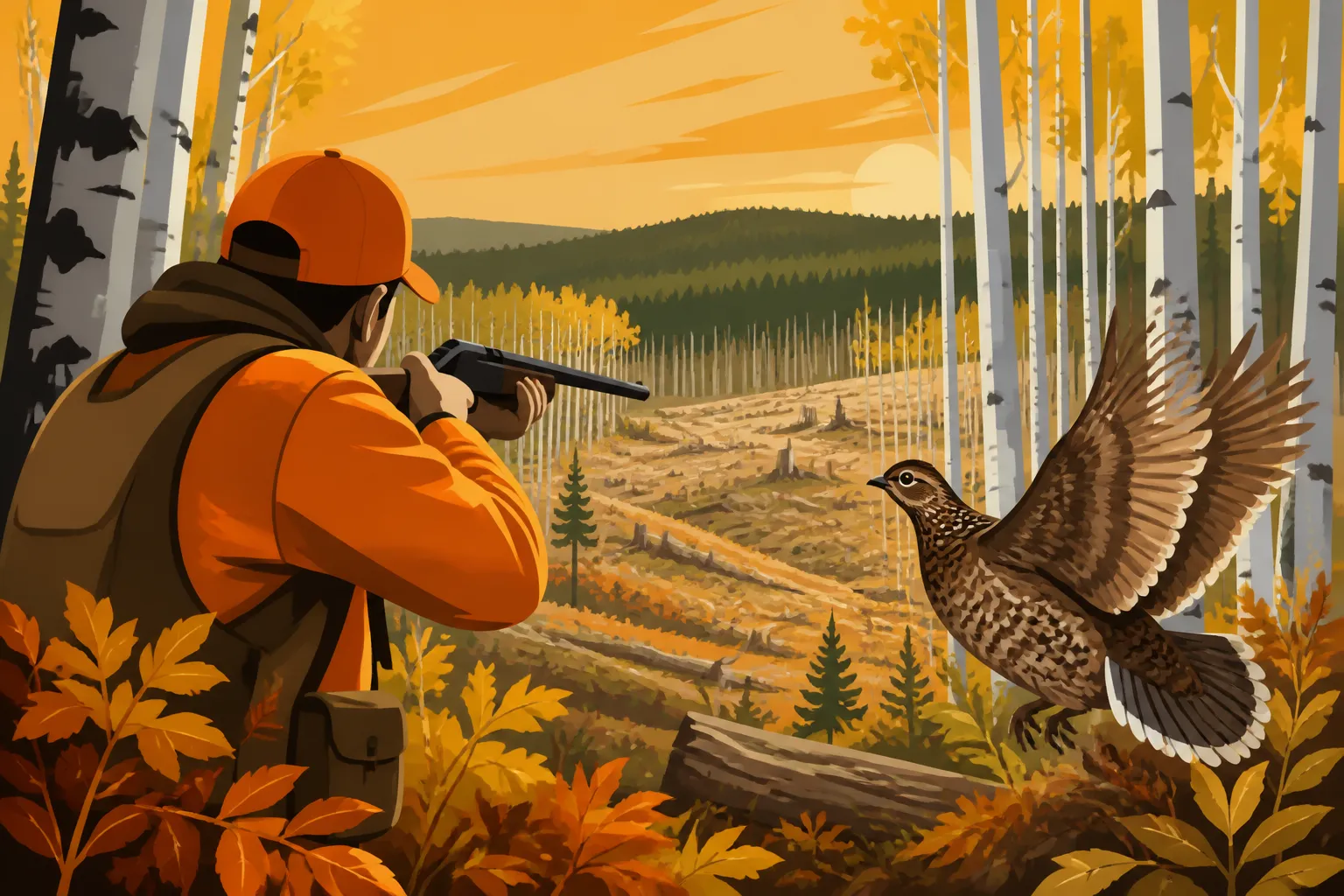
When you're out looking, keep an eye out for areas that have been recently logged or clearcut. These are often the places where aspen is aggressively regenerating, shooting up in thick, vertical stems. The DNR and many private landowners actively manage forests by cutting aspen to promote this regeneration, recognizing its value for wildlife like deer, grouse, and woodcock. You might notice these cuts by the uniform height of the young trees, sometimes with older "leave trees" scattered throughout. Pay close attention to the edges of these cuts, where the dense young aspen meets a more mature forest or other cover types. These transition zones are often travel corridors for grouse. You can delve more into this topic by looking at How Old a Cut Should Be for Grouse to really fine-tune your understanding of ideal habitat age.
Scouting and Locating Aspen Cuts for Grouse
Finding these prime aspen cuts takes a bit of homework and some legwork, but the payoff in flushes is well worth the effort.
Using Maps and Technology to Find Prime Areas
Gone are the days of just blindly walking the woods hoping to stumble upon grouse. Modern technology is a game-changer for scouting, especially when trying to pinpoint specific habitat types like aspen cuts. Start with online mapping tools. The Wisconsin DNR's public access maps are fantastic for identifying public hunting lands, but often don't provide the granular habitat detail you need. That's where satellite imagery, like what you find on Google Earth or specialized hunting apps, comes into play.
Look for areas that appear to have been recently logged. These will show up as lighter green patches with uniform texture, indicating young, regenerating forest. You're trying to spot those distinct timber cuts. Many county forest websites will also provide timber sale maps, showing current and recent logging activity. This kind of information is gold for a grouse hunter! Tools like GoHunt are incredibly useful here because they allow you to layer different maps, see property boundaries, and often highlight recent timber operations or forest types directly on the map. This helps you identify large tracts of public land, like those within the Chequamegon-Nicolet National Forest or many county forests in northern Wisconsin, that might contain prime Hunting Wisconsin Clearcuts and Aspen Cuts. These maps can also help you understand the surrounding landscape, allowing you to predict how grouse might move between different cover types.
Boots-on-the-Ground Reconnaissance
As helpful as technology is, nothing beats putting boots on the ground. Once you've identified potential aspen cuts on a map, it's time to physically scout them. This pre-season work is crucial. Look for actual grouse sign:
- Droppings: Small, cylindrical pellets, often found in dusting areas or under drumming logs.
- Dusting Areas: Small depressions in dry soil or pine needles where grouse "bathe" to remove parasites.
- Drumming Logs: Look for logs, often slightly elevated, with a worn-down, scraped area where a male grouse regularly stands and drums. This is a sure sign of resident birds.
- Cuttings: As mentioned, look for clipped aspen buds on the snow (in winter) or on the ground beneath aspen trees.
Walk through these areas. How dense is the cover? Can you move through it, or is it a complete jungle? Remember, you need to be able to swing your shotgun effectively. Look for natural funnels or edges that might concentrate birds, such as where the aspen cut meets an alder swamp or a mature hardwood ridge. Pay attention to how the terrain lays out; gentle slopes might be easier to hunt than steep, rugged ground. Scouting also helps you figure out your best entry and exit routes, avoiding areas that are too thick or might spook birds unnecessarily on hunting day. This physical scouting builds your confidence and mental map of the area, making your actual hunt far more productive. If you're wondering Why Aspen Cuts Grow Grouse, scouting helps you see the actual, tangible evidence of their habitat value.
Effective Hunting Strategies in Aspen Cuts
Once you've found your aspen cuts, the real fun begins. Hunting grouse effectively requires a blend of patience, persistence, and understanding how these birds react.
Walking Patterns and Pacing for Flushes
When walking through aspen cuts, forget about speed. This isn't a race. A slow, deliberate pace is key. Many successful grouse hunters employ a zig-zag pattern, covering as much ground as possible within the dense cover. Walk for a bit, then pause for 10-15 seconds. Grouse often hold tight, relying on their camouflage, and will only flush when they feel truly threatened or when they think the immediate danger has passed. A sudden pause can make them nervous and trigger a flush.
Focus your attention on the thickest pockets of cover, the edges where the aspen meets other timber, and along any natural openings or game trails. Grouse often like to skirt these edges. If you're hunting with a partner, try to walk abreast, 20-30 yards apart if the cover allows, effectively sweeping the area. This can push birds ahead and often makes them flush within range of one of you. The goal isn't to walk miles, but to thoroughly dissect every promising patch of cover. Many hunters don't use dogs, and that's perfectly fine. If you're going Flushing Grouse Without a Dog, these tactics become even more critical. You are essentially acting as your own "dog," pushing through the cover.
Handling the Shot and Recovering Birds
Grouse flushes are explosive. They burst from cover with a whir of wings, often darting through the trees at incredible speed. This requires quick reflexes and decisive shooting. Practice mounting your shotgun quickly and smoothly before the season. When a bird flushes, focus on getting the gun up, acquiring the bird, and swinging through it. Don't try to stop your swing.
For shotguns, a lighter, fast-handling gun is often preferred in dense cover. Twenty-gauge shotguns are a favorite for Best Shotgun Gauge for Wisconsin Grouse among many upland hunters due to their lighter weight and sufficient power. For chokes, open chokes like Improved Cylinder or Skeet are ideal for the close-range shots typical in aspen cuts, as they provide a wider pattern. You'll want to choose a Choke Choice for Fast Flushes that allows for some forgiveness in the tight quarters. Always use small shot sizes, like 7.5 or 8, which provide a dense pattern for grouse.
Once you've taken a shot, always mark the spot where the bird went down, even if you think you missed. In dense aspen, a downed bird can disappear almost instantly. Pick a landmark – a distinctive tree, a large rock, a patch of brush – and walk directly to it. If you have a dog, they'll make this much easier, but without one, meticulous marking and a systematic search pattern are essential. Expanding your search circle from your marked spot is crucial, as birds can sometimes glide or tumble further than you think.
Hunting Without a Dog
Let's be honest, not everyone has access to a well-trained bird dog, and that's okay. You can absolutely be successful Flushing Grouse Without a Dog in Wisconsin's aspen cuts. It just requires a different approach and even more diligence. As mentioned, a slow, deliberate pace with plenty of pauses is your best friend. Imagine you are the dog, thoroughly working every square foot of cover.
If you're hunting solo, you'll need to be extra vigilant about marking the exact spot a bird flushes from, and even more so where you believe it landed. Use natural landmarks, tie a piece of surveyor's tape, or even drop your hat at the flush point to help orient yourself. One effective strategy when hunting with a partner is to have one person act as the "driver," pushing through the thickest cover, while the other acts as the "blocker," walking slightly ahead or to the side along a more open edge. This can sometimes funnel birds out into a clearer shooting lane for the blocker. It's tough, but incredibly rewarding when you connect on a bird you've worked hard to find yourself.
Timing Your Hunt for Optimal Success
Knowing when to hunt can be almost as important as knowing where to hunt. Wisconsin offers a generous grouse season, allowing for various hunting conditions.
Best Seasons and Weather Conditions
Wisconsin's grouse season typically opens in mid-September and runs through December, sometimes into early January.
- Early Season (September-early October): This is often called the "leaf-on" season. The dense foliage provides maximum cover for grouse, making them incredibly difficult to see until they're almost at your feet. Shots are fast, often at glimpses of birds through the leaves. It's physically demanding walking through the thick, green undergrowth. However, grouse are often less pressured and more concentrated. It's a great time to be in the woods, even if the shooting is challenging. You can learn more about specific timing by checking Wisconsin Grouse Season Dates.
- Late Season (Late October-December): This is when the leaves have fallen, often referred to as "leaf-down" season. Visibility improves dramatically, allowing for slightly longer shots and easier spotting of flushes. The colder weather can also make birds hold tighter, leading to more explosive flushes. However, grouse have also faced more hunting pressure by this point. Fresh snow can be your best friend in late season, as it allows you to track bird movements, spot dusting areas, and identify where grouse are feeding.
As for weather, cold, crisp mornings after a frost can be fantastic. Birds are often active, feeding, and the air makes it easier to hear their wing beats. Overcast days, especially those with a light drizzle, can also be productive, as grouse might hold tighter to cover. Avoid days with heavy rain or strong winds, as these conditions often make birds less active and harder to hear or spot.
The Grouse Population Cycle and Its Impact
One of the most fascinating, and sometimes frustrating, aspects of grouse hunting in Wisconsin is understanding their population cycles. Ruffed grouse populations naturally fluctuate in an approximate 8-10 year cycle, with periods of high numbers followed by significant dips. This cycle is influenced by a complex interplay of factors, including weather, predator populations, and habitat quality.
Understanding Where Wisconsin Sits in the Grouse Cycle can help manage your expectations. In peak years, you might flush dozens of birds in an afternoon, while in low years, you might work just as hard for only a handful of flushes. Even in low years, however, focusing on prime aspen cuts will still be your best bet for finding birds. Habitat remains king, regardless of where we are in the cycle. During low years, these birds become even more concentrated in the best available cover, making precise scouting and hunting of aspen cuts even more important. The Wisconsin Ruffed Grouse Numbers Today typically give an indication of how challenging or rewarding your season might be.
Hunting these cycles teaches patience and resilience. It's part of the wildness of grouse hunting that makes every bird a true trophy.
Key Characteristics of Productive Aspen Cuts for Grouse
Here's a quick reference for what to look for when scouting and hunting aspen cuts.
| Characteristic | Description | Why it's Important for Grouse |
|---|---|---|
| Age of Aspen | 8-25 years old (dense, regenerating stands). | Provides critical dense understory for thermal cover and predator evasion, abundant buds for winter food. |
| Density | Thick, almost impenetrable vertical stems, often from clearcutting. | Offers optimal concealment from aerial predators and ground predators, forcing tight flushes. |
| Mix of Habitat | Adjacent to mature hardwoods, conifer stands, alder swamps, or old logging roads. | Provides diverse food sources, drumming logs, escape routes, and alternative cover types. Edges are often high-traffic areas. |
| Food Sources | Evidence of browsing on aspen buds, nearby berries (dogwood, hawthorn), clover, or acorns. | Grouse require varied food throughout the year, especially in seasons where aspen buds are not as dominant. |
| Water Source | Proximity to small streams, seeps, or marshy areas. | Essential for all wildlife, including grouse, for drinking and insect foraging, especially in drier periods. |
| Sign | Presence of droppings, dusting bowls, drumming logs, and clipped aspen buds ("cuttings"). | Direct evidence of grouse activity, indicating that birds are currently using or have recently used the area. |
| Terrain | Gentler slopes, benches, or relatively flat areas are preferred over extremely steep ground. | Easier for grouse to navigate and for hunters to access and pursue birds, concentrating movement in more manageable areas. |
| Sunlight/Aspect | Areas with good sun exposure that promote vigorous undergrowth and insect populations. | Strong understory growth is directly linked to better cover and food for grouse. South-facing slopes may be used for warming in colder weather. |
| Predator Control | Areas with less obvious sign of heavy predator populations (coyotes, raptors), though hard to quantify. | While difficult to assess directly, areas with strong, dense cover inherently offer better protection from predators, allowing grouse numbers to be healthier. |
Conclusion
Grouse hunting in Wisconsin's aspen cuts is a deeply rewarding experience, combining the thrill of the flush with the satisfaction of understanding and connecting with the natural world. It demands patience, keen observation, and a willingness to put in the work, but when a ruffed rocket explodes from a thicket you meticulously scouted, it's all worth it. By focusing on young, dense aspen, utilizing modern scouting tools like GoHunt, and employing deliberate hunting strategies, you'll dramatically increase your chances of success. So grab your shotgun, lace up your boots, and head into those rustling leaves—your next unforgettable grouse encounter is waiting.
Disclaimer
Hunting is an inherently dangerous activity. Always prioritize safety, understand and adhere to all Wisconsin hunting regulations, and ensure you have proper training and equipment. The information provided in this guide is for informational purposes only and does not supersede official Wisconsin Department of Natural Resources regulations or hunter education guidelines. Be aware of your surroundings, respect private property, and consider hunting with a partner.